Author: Muhammad Iqbal

  • DevSecOps Best Practices for SMEs: Secure DevOps Pipelines

    DevSecOps Best Practices for SMEs: Secure DevOps Pipelines

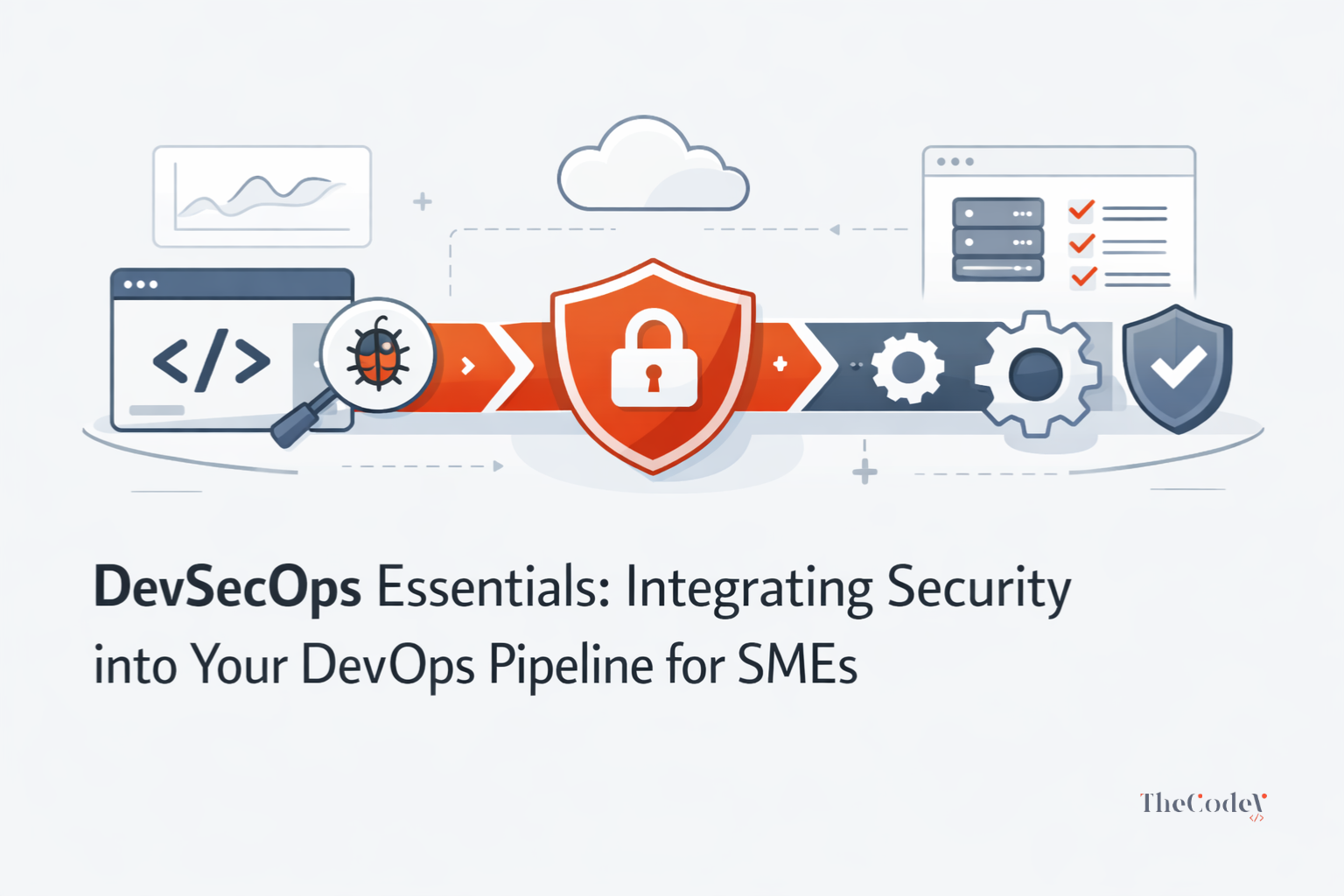
    DevSecOps Essentials: Why Security Can No Longer Be an Afterthought for SMEs

    For many small and medium-sized enterprises, DevOps began as a practical response to market pressure. Faster releases, tighter feedback loops, and better collaboration helped teams ship features quickly and stay competitive. However, as digital products have become more interconnected and cloud-native, this speed-first approach has exposed a critical weakness. Traditional DevOps models often treat security as a final checkpoint rather than a continuous responsibility. That gap is precisely where devsecops best practices become essential for modern SMEs.

    DevSecOps is the natural evolution of DevOps. It integrates security into every phase of the software delivery lifecycle, from design and development to deployment and monitoring. Instead of relying on late-stage audits or reactive fixes, security controls are built into daily workflows. This approach ensures vulnerabilities are identified early, addressed faster, and prevented from reaching production. For SMEs, this is not about adding complexity. It is about reducing risk while maintaining delivery speed.

    The risk profile for SMEs has changed dramatically in recent years. Smaller organisations are no longer overlooked by attackers. In many cases, they are actively targeted because they tend to have fewer security safeguards and leaner engineering teams. A single vulnerability in an API, cloud configuration, or third-party dependency can lead to data exposure, service outages, or regulatory penalties. Without integrated security, even well-engineered DevOps pipelines can become liabilities rather than growth enablers.

    This is where devsecops security best practices offer a strategic advantage. By embedding automated security checks into development pipelines, SMEs can identify issues before they become costly incidents. Secure coding standards, dependency scanning, and infrastructure validation happen continuously, not occasionally. The result is more predictable delivery, fewer production emergencies, and stronger trust with customers and partners.

    One common misconception is that DevSecOps is only suitable for large enterprises with dedicated security teams. In reality, best practices for DevSecOps are often more valuable for smaller organisations. SMEs benefit the most from automation, standardisation, and clear ownership. When security is part of the same workflow as development and operations, teams avoid the friction that comes from last-minute reviews or external audits. Security becomes a shared responsibility rather than a specialised bottleneck.

    Another misunderstanding is that DevSecOps slows teams down. The opposite is usually true. When security is integrated early, teams spend less time fixing urgent issues under pressure. Releases become more reliable, and technical debt is reduced over time. A well-implemented DevSecOps model supports business goals by protecting uptime, customer data, and brand reputation, all while enabling faster iteration.

    At TheCodeV, security is treated as a core engineering discipline rather than a compliance checkbox. As a security-first development partner, TheCodeV helps SMEs design delivery pipelines where security and speed reinforce each other. This approach aligns closely with lessons shared in our analysis of early-stage technology risks, including the challenges outlined in https://blogs.thecodev.co.uk/startup-scaling-mistakes-tech/. By addressing security at the architectural level, SMEs can avoid the costly rework that often emerges during growth phases.

    For organisations building or scaling digital products, DevSecOps is no longer optional. It is a practical framework that supports resilience, compliance, and sustainable delivery. When implemented correctly, it becomes a business enabler rather than a constraint, allowing teams to innovate with confidence while protecting critical assets. More details on how TheCodeV supports secure delivery models can be found through our core engineering services at https://blogs.thecodev.co.uk/services/.

    Understanding DevSecOps at this foundational level sets the stage for the next step. Successfully adopting it requires more than tools and automation. It demands a cultural and process shift that aligns people, responsibilities, and workflows around shared security ownership.

    Building a DevSecOps Culture: Shifting Security Left Without Slowing Teams

    For SMEs, the success of devsecops best practices depends far more on culture than on technology. Many organisations assume DevSecOps starts with tools or policies, but in reality it begins with a mindset shift. Security must move closer to where decisions are made, without introducing fear, blame, or heavy process. This is often described as “shift-left security,” but the concept is simpler than it sounds.

    Shifting security left means addressing security considerations earlier in the development lifecycle, when changes are cheaper and easier to make. Instead of discovering vulnerabilities just before release, teams think about security during design, coding, and testing. For SMEs, this does not mean slowing development or adding approvals. It means making security part of normal engineering conversations, much like performance or reliability.

    Collaboration is the backbone of this approach. In traditional setups, developers build features, operations deploy them, and security reviews come later, often under time pressure. DevSecOps breaks down these silos by encouraging shared responsibility. Developers gain basic security awareness, operations teams understand risk exposure, and security concerns are discussed openly rather than escalated at the last minute. This collaborative model aligns closely with best practices for implementing DevSecOps in small teams, where roles often overlap.

    Role clarity is especially important in SMEs. Teams are smaller, and individuals wear multiple hats. DevSecOps does not require creating new job titles or departments. Instead, it requires clarity on ownership. Developers are responsible for writing secure code. Operations teams ensure secure environments. Leadership sets priorities and removes blockers. When responsibilities are explicit, security tasks are less likely to be ignored or delayed.

    Psychological safety plays a critical role in making this work. Teams must feel safe reporting vulnerabilities, misconfigurations, or mistakes without fear of blame. When engineers worry about repercussions, issues are hidden until they become incidents. A healthy DevSecOps culture treats security findings as learning opportunities rather than failures. This approach encourages early reporting and continuous improvement, both of which are essential for sustainable security practices.

    Leadership mindset has a direct impact on security outcomes. When leaders view security as a cost or a compliance burden, teams will naturally deprioritise it. When leadership frames security as a business enabler, behaviours change. Secure systems protect revenue, customer trust, and long-term growth. This perspective is particularly important for scaling companies, as highlighted in TheCodeV’s discussion on technical leadership challenges during growth phases at https://blogs.thecodev.co.uk/startup-scaling-mistakes-tech/.

    From a practical standpoint, DevSecOps culture thrives when security expectations are lightweight and consistent. Clear coding standards, shared definitions of risk, and simple review processes are often enough to create momentum. Overly complex rules or excessive documentation can quickly undermine adoption. SMEs benefit most from a devsecops best practices guide that focuses on clarity, repeatability, and ownership rather than exhaustive controls.

    At TheCodeV, cultural alignment is treated as a prerequisite for technical implementation. Our teams work closely with clients to ensure DevSecOps principles fit naturally into existing workflows, rather than disrupting them. This cultural-first approach is embedded within our broader delivery model, which you can explore through our core engineering and consulting services at https://blogs.thecodev.co.uk/services/.

    Once this foundation is in place, DevSecOps can scale effectively. A shared culture of responsibility and trust makes it far easier to introduce automation and repeatable controls. With people and processes aligned, the next step is embedding security directly into the delivery pipeline, where it can operate continuously without manual friction.

    Embedding Security into CI/CD Pipelines: Making DevSecOps Repeatable and Scalable

    Once culture and ownership are aligned, devsecops best practices move from intention to execution through the CI/CD pipeline. For SMEs, the pipeline is where DevSecOps delivers its greatest value. Security becomes systematic, automated, and consistent, rather than dependent on individual effort or last-minute reviews. This is what allows small teams to scale securely without adding operational overhead.

    Embedding security into the pipeline starts with recognising that risk appears at multiple stages. During the build phase, insecure code patterns and misconfigurations can be introduced. During testing, vulnerabilities may surface under real execution paths. At deployment, infrastructure and access controls can expose systems if they are incorrectly defined. DevSecOps addresses each stage with lightweight, automated checks that run as part of the normal delivery flow.

    At a high level, build-stage security focuses on prevention. Code is analysed for known insecure patterns and policy violations before it progresses further. This is where teams catch issues early, when fixes are fastest and least disruptive. Test-stage security focuses on behaviour. Applications are exercised in controlled environments to identify weaknesses that only appear when systems run together. Deployment-stage security ensures environments are configured as intended, reducing the risk of exposure caused by human error.

    Static and dynamic analysis often sound complex, but the concepts are straightforward. Static analysis examines code and configuration without running the application, identifying risky patterns and unsafe practices. Dynamic analysis evaluates the application while it runs, highlighting vulnerabilities that emerge during real interactions. Used together, these approaches provide broad coverage without requiring deep security expertise from every developer. This balance is central to any effective devsecops best practices checklist for SMEs.

    Dependency and secrets management are equally critical. Modern applications rely heavily on third-party libraries, many of which can introduce vulnerabilities outside a team’s direct control. Automated dependency checks help teams stay aware of known issues and address them proactively. Secrets scanning prevents sensitive information, such as credentials or keys, from being accidentally committed or deployed. These controls are particularly valuable for SMEs, where small oversights can have disproportionate impact.

    Alignment with OWASP principles provides a trusted foundation without overwhelming teams. OWASP offers widely recognised guidance on common security risks and mitigation strategies, helping organisations prioritise what matters most. Rather than attempting to implement every recommendation, SMEs benefit from focusing on high-impact areas relevant to their architecture. This pragmatic interpretation of devsecops best practices OWASP ensures security efforts remain proportionate and actionable. Authoritative guidance on these principles is available directly from OWASP at https://owasp.org/www-project-top-ten/.

    From an architectural perspective, automated pipeline security reduces variability. Every change passes through the same controls, regardless of who made it or how urgent it is. This consistency improves auditability and resilience while reducing reliance on heroics. Many of these concepts build naturally on DevOps foundations, as explored in TheCodeV’s perspective on modern delivery architectures at https://blogs.thecodev.co.uk/serverless-vs-containerization/.

    At TheCodeV, pipeline security is designed as an extension of delivery, not an add-on. By integrating security checks into existing CI/CD workflows, teams gain continuous assurance without sacrificing speed. This approach is part of our broader DevOps and cloud engineering services, which focus on building secure systems that scale with business growth. More detail on this integrated model can be found through our services at https://blogs.thecodev.co.uk/services/.

    With security embedded into pipelines, SMEs achieve repeatability and confidence. However, pipelines do not operate in isolation. Their effectiveness depends heavily on the environments they deploy to. This makes cloud-specific DevSecOps practices the next critical layer in building a secure, scalable delivery model.

    Applying DevSecOps Best Practices in Cloud Environments for SMEs

    As more SMEs move critical workloads to the cloud, devsecops best practices must adapt to a shared responsibility model. Cloud platforms offer powerful security capabilities, but they also change how risk is managed. Security is no longer confined to application code or deployment pipelines. It extends into identity, configuration, and ongoing visibility across dynamic environments. Understanding this shift is essential for SMEs adopting cloud-first delivery models.

    The shared responsibility model defines where the cloud provider’s role ends and the customer’s responsibility begins. Providers secure the underlying infrastructure, while customers are responsible for securing what they build on top of it. This includes applications, data, access controls, and configurations. Misunderstanding this boundary is a common source of security incidents. Effective best DevSecOps practices for cloud environments start with clarity on who owns each layer of risk.

    Identity and access management sits at the centre of cloud security. In traditional environments, access was often network-based and static. In the cloud, identities are dynamic and granular. Users, services, and workloads all require controlled access to resources. Poorly defined permissions can expose systems even if application code is secure. Cloud-native DevSecOps focuses on least-privilege access, secure credential handling, and continuous validation. These principles apply equally across providers, forming the backbone of both AWS DevSecOps best practices and Azure DevSecOps best practices.

    Secrets management is closely linked to identity. Credentials, tokens, and keys must be stored, rotated, and accessed securely. Hard-coded secrets or shared credentials undermine even the strongest pipelines. DevSecOps ensures secrets are managed centrally and accessed programmatically, reducing the risk of accidental exposure during development or deployment. For SMEs, this approach significantly lowers operational risk without adding manual overhead.

    Infrastructure as Code introduces another important security dimension. Cloud environments are increasingly defined through configuration files rather than manual setup. While this improves consistency, it also means misconfigurations can be replicated at scale. DevSecOps addresses this by treating infrastructure definitions as code that can be reviewed, tested, and validated. Secure defaults, policy checks, and change tracking become part of the delivery process rather than afterthoughts.

    Monitoring and logging complete the picture by providing continuous visibility. In cloud environments, security is not static. Systems scale, change, and interact in real time. Effective DevSecOps uses monitoring and logs as active security controls, not just troubleshooting tools. Anomalies, access patterns, and configuration changes can all signal emerging risks. Cloud providers document these responsibilities clearly, including in AWS guidance on the shared responsibility model at https://docs.aws.amazon.com/whitepapers/latest/aws-shared-responsibility-model/aws-shared-responsibility-model.html.

    From a business perspective, cloud-native DevSecOps reduces uncertainty. SMEs gain confidence that growth does not automatically increase exposure. These practices align closely with broader cloud strategy considerations, including cost, scalability, and operational resilience. TheCodeV explores these trade-offs in more depth in our comparison of modern cloud platforms at https://blogs.thecodev.co.uk/cloud-providers-comparison-2025/, which highlights how architectural decisions affect both security and long-term efficiency.

    At TheCodeV, cloud security is designed as part of the delivery lifecycle, not layered on afterwards. Our cloud and DevOps services help SMEs align identity, infrastructure, and monitoring with DevSecOps principles, ensuring security scales alongside business demands. More detail on this integrated approach can be found through our cloud and DevOps capabilities at https://blogs.thecodev.co.uk/services/.

    With cloud-specific controls in place, SMEs are better positioned to evaluate their overall DevSecOps strategy. The next step is making informed decisions about how to implement, scale, and govern these practices based on team size, risk tolerance, and growth stage.

    Choosing the Right DevSecOps Approach: A Practical Framework for SME Leaders

    For SME leaders, adopting devsecops best practices is not a purely technical decision. It is a strategic choice that affects cost control, delivery speed, and long-term risk exposure. While the principles of DevSecOps are well established, the way they are implemented can vary significantly. The key is selecting an approach that aligns with your organisation’s size, maturity, and growth trajectory.

    Most SMEs face three broad options: build DevSecOps capabilities in-house, buy external platforms or services, or partner with a specialist provider. Each path has clear trade-offs. Building in-house offers control and deep contextual knowledge, but it requires sustained investment in skills, tooling, and governance. For small teams, this often stretches resources thin, especially when security expertise competes with feature delivery.

    Buying DevSecOps tooling can appear attractive, particularly as the market has matured since devsecops best practices 2023, offering more integrated and cloud-native solutions. However, tools alone do not create outcomes. Without clear ownership, process alignment, and ongoing tuning, purchased solutions can become underused or misconfigured. SMEs frequently underestimate the operational effort required to maintain and evolve these platforms effectively.

    Partnering sits between these extremes. A specialist partner brings established patterns, security expertise, and practical experience across multiple environments. This reduces time to value and lowers execution risk, while allowing internal teams to focus on core product development. The trade-off is less direct control, which must be managed through clear engagement models and shared accountability. For many SMEs, this balance becomes more compelling as expectations around devsecops best practices 2025 continue to rise.

    Cost, risk, and skill availability should guide this decision. In-house approaches demand ongoing training and retention of scarce security talent. Tool-heavy strategies introduce licensing costs and hidden operational overhead. Partner-led models shift spend towards predictable service costs, often reducing the likelihood of expensive security incidents or rework. Leaders should assess not just upfront expenditure, but also the cost of failure, downtime, and reputational damage.

    There are clear warning signs when in-house DevSecOps begins to fail. Security checks are bypassed to meet deadlines. Vulnerabilities accumulate faster than they are resolved. Ownership becomes unclear during incidents. These symptoms often indicate that teams are overextended rather than underperforming. Recognising these signals early allows organisations to recalibrate before risks escalate.

    At TheCodeV, DevSecOps maturity is assessed holistically. Rather than focusing solely on tools, we evaluate culture, workflows, architecture, and risk tolerance. This includes reviewing delivery pipelines, cloud configurations, and team responsibilities to understand where friction or exposure exists. Our approach is shaped by insights gained from advising growing companies on balancing speed and resilience, as discussed in our analysis of technology investment trade-offs at https://blogs.thecodev.co.uk/cloud-cost-optimization-for-startups/.

    This maturity-led evaluation helps SME leaders make informed decisions. Some organisations benefit from incremental improvements to existing pipelines. Others require structural changes or external support to meet regulatory or customer expectations. The goal is not to adopt every possible control, but to implement the right controls at the right time.

    TheCodeV supports this decision-making process through its engineering and consulting services, helping SMEs select and implement DevSecOps models that fit their operational reality. You can explore how this structured support works through our services overview at https://blogs.thecodev.co.uk/services/.

    With a clear strategy in place, the next challenge is execution. Turning DevSecOps decisions into day-to-day operational practice requires discipline, measurement, and continuous refinement, which forms the focus of the next section.

    Operationalising DevSecOps: Sustaining Security in Daily SME Workflows

    For SMEs, the long-term success of devsecops best practices depends on how well they translate into daily operations. Initial improvements often generate momentum, but without operational discipline, security practices can slowly erode under delivery pressure. Sustaining DevSecOps requires lightweight governance, meaningful measurement, and a commitment to continuous improvement, all without introducing unnecessary bureaucracy.

    Governance in a DevSecOps context should enable teams rather than constrain them. For SMEs, this means establishing clear expectations and guardrails instead of rigid approval chains. Policies should define what “secure enough” looks like for code, infrastructure, and access, while allowing teams autonomy in how they meet those standards. When governance is embedded into workflows rather than enforced externally, security becomes part of normal delivery rather than an exception.

    Metrics play a central role in making DevSecOps operational. However, not all metrics are equally useful. SMEs benefit most from indicators that reflect risk reduction and delivery health, rather than raw activity counts. Examples include how early vulnerabilities are detected, how quickly they are resolved, and how often security issues delay releases. These signals form the basis of a practical devsecops best practices checklist, helping teams focus on outcomes rather than compliance theatre.

    Continuous improvement is another defining characteristic of mature DevSecOps operations. Security threats evolve, architectures change, and teams grow. Regular reviews of incidents, near misses, and pipeline performance help organisations adapt without overreacting. Small, frequent adjustments are more effective than periodic overhauls, particularly for SMEs with limited capacity. This iterative mindset aligns closely with broader DevOps principles, as discussed in TheCodeV’s exploration of modern delivery models at https://blogs.thecodev.co.uk/serverless-vs-containerization/.

    Compliance readiness is often a concern for growing SMEs, especially those operating in regulated markets or serving enterprise customers. DevSecOps simplifies compliance by generating evidence as part of daily work. Automated checks, consistent pipelines, and clear ownership create traceability without manual reporting. Rather than preparing for audits as one-off events, organisations remain continuously audit-ready. This approach reduces stress and disruption while improving overall security posture.

    Operational DevSecOps also relies on clarity around escalation and response. When issues arise, teams should know who owns the resolution and how decisions are made. Clear escalation paths prevent confusion during incidents and reinforce accountability. Over time, these patterns build confidence across teams and leadership, reinforcing the value of sustained security investment.

    At TheCodeV, operational sustainability is a key focus of DevSecOps engagements. We help SMEs embed security practices into everyday workflows, ensuring they remain effective as teams and systems evolve. This operational support is part of our broader consulting and engineering services, which are designed to balance delivery speed with long-term resilience. Further detail on how this support is structured can be found through our services and consultation offerings at https://blogs.thecodev.co.uk/services/.

    By treating DevSecOps as an operational discipline rather than a project, SMEs position themselves for secure growth. With governance, metrics, and continuous improvement in place, security becomes predictable and manageable. This creates the foundation for the final step, where organisations consider how external expertise can accelerate and strengthen their DevSecOps journey.

    DevSecOps Essentials: Moving Forward with Confidence and Clarity

    For SMEs operating in increasingly complex digital environments, devsecops best practices are no longer optional or future-facing considerations. They are a practical response to today’s realities. Faster release cycles, cloud-native architectures, and growing regulatory expectations have reshaped the risk landscape. Security can no longer sit at the edge of delivery. It must be embedded into how software is designed, built, and operated every day.

    Throughout this guide, one theme remains consistent. DevSecOps works when it is treated as an organisational capability rather than a technical add-on. When security is integrated into culture, pipelines, cloud environments, and daily operations, it becomes predictable and manageable. Teams spend less time reacting to incidents and more time delivering value with confidence. This is why a clear, well-scoped devsecops best practices guide is increasingly essential for SMEs that want to scale without accumulating hidden risk.

    Delaying DevSecOps adoption carries real consequences. Vulnerabilities compound quietly over time, often surfacing at the worst possible moment. A missed misconfiguration, an outdated dependency, or unclear ownership can quickly escalate into data exposure or service disruption. For growing businesses, these incidents do more than create technical debt. They damage customer trust, slow commercial momentum, and introduce costs that far exceed the effort of early prevention. Waiting until security becomes a problem is rarely a cost-effective strategy.

    What makes DevSecOps especially relevant now is its ability to align security with business outcomes. Done correctly, it supports faster releases, smoother audits, and stronger partnerships with customers and suppliers. It also creates a shared language between technical teams and leadership, making risk visible and decisions more informed. For SMEs navigating growth, this alignment can be a competitive advantage rather than a constraint.

    TheCodeV supports SMEs across the full DevSecOps journey, from early assessment to long-term operational maturity. Our approach is deliberately end-to-end. We help organisations evaluate their current delivery model, identify meaningful risks, and design DevSecOps practices that fit their size and goals. This includes cultural alignment, pipeline security, cloud-native controls, and operational governance, all delivered with a focus on sustainability rather than short-term fixes.

    Rather than imposing rigid frameworks, TheCodeV works alongside internal teams to embed security naturally into existing workflows. This partnership model allows SMEs to retain ownership while benefiting from experienced guidance. Over time, DevSecOps becomes part of how teams think and work, not an external requirement they need to remember. This is also why many clients request practical documentation, playbooks, or summaries they can share internally, similar in spirit to a devsecops best practices PDF that supports ongoing learning and consistency.

    If you are considering how DevSecOps fits into your organisation’s next phase of growth, the most effective first step is often a conversation rather than a commitment. Understanding where your current risks lie, and which practices will deliver the greatest return, requires context and experience. TheCodeV offers a consultative approach designed to help SMEs make informed, proportionate decisions without pressure.

    You can explore this further by arranging a conversation with our team at https://blogs.thecodev.co.uk/consultation/. It is an opportunity to discuss your delivery challenges, security concerns, and growth plans in a practical, outcome-focused way.

    With the right approach, DevSecOps becomes less about defending against threats and more about enabling progress. SMEs that invest thoughtfully now position themselves to grow securely, adapt confidently, and build software their customers can trust.
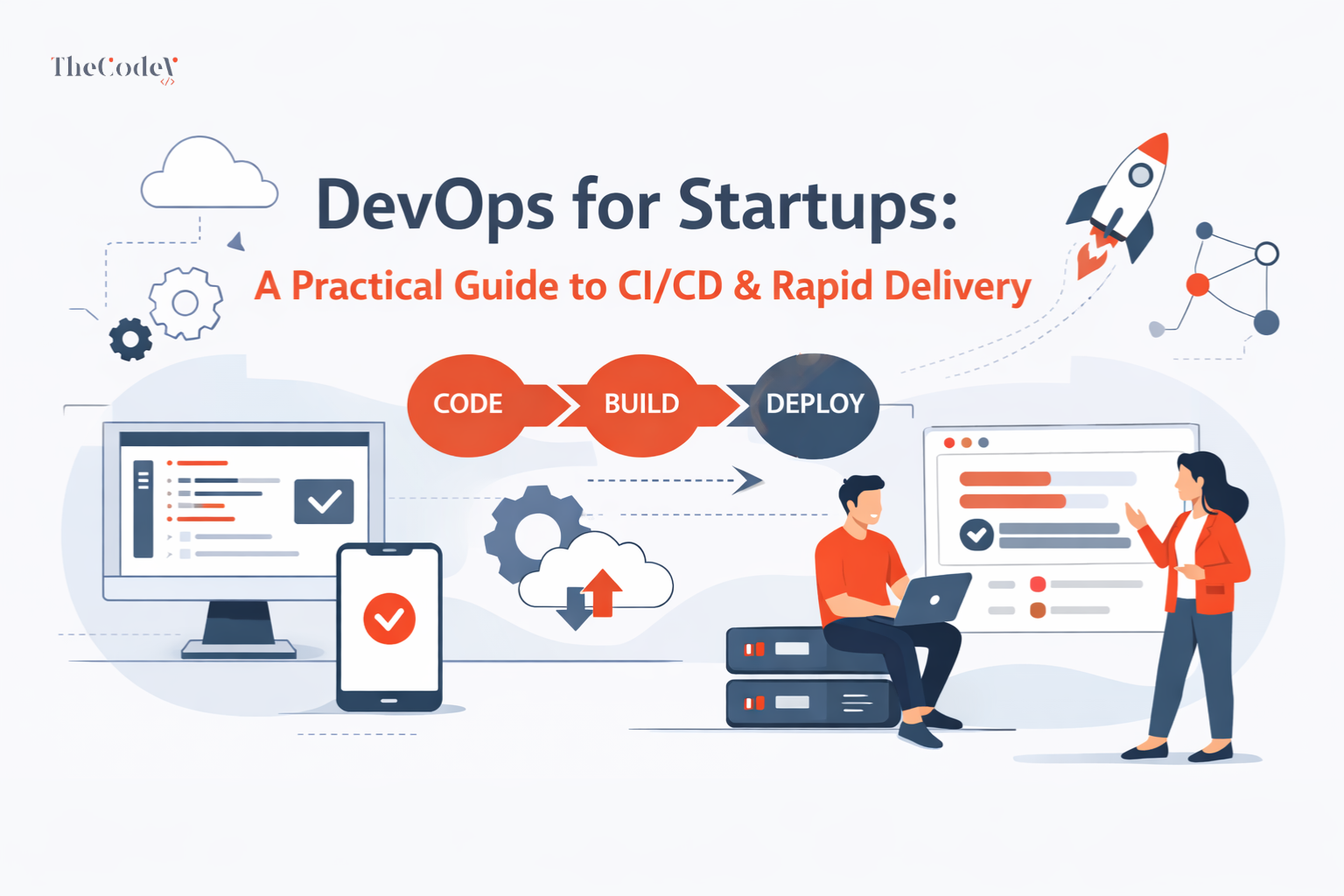
  • DevOps for Startups: A Practical Guide to CI/CD & Rapid Delivery

    DevOps for Startups: A Practical Guide to CI/CD & Rapid Delivery

    Founders do not fail because they lack ideas. They fail because they run out of time, money, or momentum. Every week without progress burns runway and erodes confidence. Speed is not a nice-to-have at this stage; it is survival. That is why devops for startups should be treated as a structural decision, not a technical afterthought.

    Early teams live under constant execution pressure. You are validating assumptions while building the plane mid-flight. Investors expect learning velocity, not perfection. In this environment, the way you ship software determines how long you stay alive.

    Why DevOps for Startups Is a Structural Advantage

    DevOps for startups is not about sophistication. It is about reducing friction between ideas and outcomes. When feedback loops are short and releases are safe, teams learn faster. That learning compounds into better decisions and stronger products.

    A startup with clean delivery practices can adapt without fear. A startup without them slows down to avoid breaking things. Over time, that hesitation becomes a competitive disadvantage.

    The real advantage is not speed alone. It is confidence in change.

    The Reality of Early-Stage Teams and Constant Pressure

    Most startups operate with small, overstretched teams. Engineers context-switch constantly. Founders juggle product, hiring, and fundraising. There is rarely time to “fix things later”.

    At the same time, requirements shift weekly. Customer feedback changes priorities. Investors push for traction. Technical decisions must support movement, not lock the team in place.

    Without strong delivery discipline, these pressures create hidden drag. Releases feel risky. Bugs leak into production. Teams slow down to stay safe. This is where many scaling problems begin, as explained in TheCodeV’s breakdown of common early errors in startup growth at
    https://blogs.thecodev.co.uk/startup-scaling-mistakes-tech/.

    DevOps is the system that absorbs this chaos. It allows teams to change direction without destabilising the product.

    Faster Validation Without Fragile Releases

    Startups do not need more features. They need faster answers. Every release is a question to the market, and every delay weakens the signal.

    DevOps enables rapid validation by making small, frequent changes routine. Instead of betting on large launches, teams test assumptions incrementally. Failures become cheap and informative, not catastrophic.

    This approach also protects morale. Engineers are more willing to experiment when rollback is expected, not feared. That psychological safety is often overlooked, yet it directly affects output.

    Cloud providers such as AWS consistently highlight that automated delivery pipelines dramatically reduce deployment risk and cycle time. That principle applies at startup scale just as much as enterprise scale.

    Safer Experimentation Builds Investor Confidence

    Investors care about execution as much as vision. They want evidence that a team can ship, learn, and adapt under pressure. Clean delivery practices signal operational maturity, even in very young companies.

    When experimentation is safe, founders can respond to data instead of defending sunk costs. That leads to better pivots and clearer narratives in investor updates. Over time, this builds trust.

    DevOps also prevents early technical debt from becoming structural debt. The cost of change stays low, which preserves optionality. This is critical when the final product shape is still uncertain.

    At TheCodeV, we see this pattern repeatedly across global startup engagements. Teams that treat DevOps as foundational move faster with fewer regressions. Teams that postpone it often spend later rounds repairing avoidable damage.

    This is why delivery strategy belongs alongside product and business strategy from day one. It is not a tooling choice. It is a way of working that protects speed, learning, and resilience as the company grows.

    Speed only matters when it is repeatable. For early-stage teams, DevOps foundations are not about sophisticated platforms or complex pipelines. They are about habits that reduce friction and make delivery predictable. This is where agile devops for startups becomes a working discipline rather than an abstract concept.

    Founders often assume DevOps starts later, once scale arrives. In reality, the opposite is true. The earlier these foundations are set, the easier everything becomes as the product evolves.

    Core DevOps Foundations Every Startup Must Establish Early

    The strongest startups treat delivery as part of daily work, not a special event. DevOps, at this stage, is about consistency, trust, and momentum. These foundations support learning speed long before scale becomes a concern.

    CI/CD as a Habit, Not Infrastructure

    Continuous integration and delivery should begin as a behavioural norm. Every meaningful change is integrated early. Every integration is expected to be releasable. This mindset matters more than the underlying setup.

    When CI/CD is treated as a habit, teams stop hoarding changes. Code moves forward in small, understandable steps. Problems surface early, when they are cheaper to fix and easier to reason about.

    This approach aligns closely with product discovery. If your roadmap is still evolving, as outlined in
    https://blogs.thecodev.co.uk/product-market-fit-roadmap/, then frequent, low-risk releases are essential. They allow the product to respond to real feedback instead of assumptions.

    Google Developers consistently emphasises that continuous delivery is about shortening feedback loops. That principle applies regardless of company size. Startups benefit the most because learning speed defines survival.

    Environment Consistency Prevents Invisible Drag

    One of the most common early problems is environment drift. Code works on one machine but behaves differently elsewhere. These inconsistencies waste time and create quiet frustration.

    For small teams, this drag is dangerous. Every hour spent debugging environment issues is an hour not spent validating the product. Consistency across development, testing, and release environments reduces uncertainty and cognitive load.

    This does not require complexity. It requires discipline. When environments behave predictably, teams build confidence in change. That confidence encourages iteration rather than caution.

    Over time, consistent environments also make architectural evolution safer. As startups move away from early monoliths toward more modular designs, the transition is far smoother when delivery foundations are stable. This becomes especially important during shifts like those discussed in
    https://blogs.thecodev.co.uk/shifting-from-monolith-to-microservices/.

    Deployment Confidence Versus Deployment Fear

    Many startups slow down not because they lack ideas, but because releases feel risky. Deployment fear creeps in when teams associate shipping with outages, rollbacks, or late nights.

    DevOps foundations replace fear with expectation. Deployments become routine. Failures are anticipated and contained. Teams stop treating releases as high-stakes events.

    This shift has a direct business impact. Confident teams ship more often. More releases mean faster validation. Faster validation means better decisions with less wasted effort.

    In devops for small startups a guide, this is often the turning point. Once deployment confidence is established, execution speed increases without sacrificing stability.

    Reducing Friction Between Development and Release

    The final foundation is removing unnecessary handoffs. When development and release are treated as separate phases, work queues up. Feedback arrives late. Momentum drops.

    DevOps collapses that gap. Development flows naturally into release. The distance between writing code and seeing impact shrinks dramatically.

    This is where startups gain leverage. Less friction means fewer blockers, fewer delays, and more learning per week. It also frees founders from firefighting delivery issues, allowing focus on strategy and growth.

    These foundations do not require scale. They create the conditions that make scale possible later.

    For many founders, CI/CD sounds like an enterprise concern. In reality, it is one of the most practical levers a startup can pull to move faster with less risk. When delivery becomes routine, teams stop optimising for release days and start optimising for learning. That shift is what makes rapid deployment sustainable.

    CI/CD is not about shipping more for the sake of it. It is about reducing the cost of change so the business can adapt without disruption.

    CI/CD and Rapid Deployment in a Startup Context

    At startup scale, CI/CD is less about tooling sophistication and more about flow. The goal is to move ideas into production quickly, safely, and repeatedly. When done well, it quietly removes friction from the entire product lifecycle.

    What CI/CD Actually Means for a Startup Team

    For a startup, CI/CD means that every code change follows a predictable path from development to production. Integration happens continuously, not at the end of a sprint. Delivery is expected, not negotiated.

    This approach removes uncertainty. Developers know that changes will be tested early and released smoothly. Founders know that progress is not blocked by fragile handovers or last-minute surprises.

    CI/CD also creates shared ownership. There is no “throw it over the wall” moment. The same team that builds features is responsible for seeing them live. This accountability improves quality without slowing momentum.

    From a business perspective, CI/CD turns delivery into a repeatable process. That repeatability is what allows startups to experiment aggressively without accumulating chaos.

    Why Frequent Small Releases Beat Big Launches

    Large launches feel satisfying, but they are risky. They bundle many changes together, making failures harder to diagnose and recover from. When something breaks, the blast radius is wide.

    Frequent small releases change that dynamic. Each release carries limited risk. When issues occur, they are easier to isolate and fix. Rollbacks are simpler because fewer variables are involved.

    This model also aligns better with early customer feedback. Instead of waiting weeks or months, startups can validate assumptions continuously. Learning happens in real time, not in post-mortems.

    Over time, this cadence compounds. Teams shipping small changes regularly build trust in their delivery process. That trust increases speed without sacrificing stability.

    Early Pipelines Reduce Rollback Risk and Downtime

    One of the biggest fears founders have is downtime. Even short outages can damage credibility in the early stages. CI/CD pipelines reduce this risk by enforcing consistency and predictability.

    When changes move through the same automated path every time, surprises decrease. Testing and verification happen before users are affected. If something slips through, rollback becomes a normal operation rather than a crisis.

    Cloud providers like AWS highlight that automated pipelines significantly reduce mean time to recovery by standardising deployment and rollback processes. This benefit applies just as much to startups as to large organisations.

    Early pipelines also support architectural evolution. As startups explore different deployment models, including those discussed in
    https://blogs.thecodev.co.uk/serverless-vs-containerization/, having stable delivery foundations prevents experimentation from becoming dangerous.

    Where DevOps Tools Fit Into the Bigger Picture

    It is tempting to start by searching for devops tools for startups. Tools matter, but only after the principles are clear. CI/CD works because it enforces habits, not because of specific platforms.

    The right tools simply support the flow that already exists. When habits are weak, tools add complexity. When habits are strong, tools amplify speed and reliability.

    This is where experienced partners add value. Teams that have built and scaled delivery systems across multiple environments can help startups avoid unnecessary detours. TheCodeV’s services, outlined at
    https://blogs.thecodev.co.uk/services/, focus on establishing these foundations before complexity sets in.

    CI/CD and rapid deployment are not advanced techniques reserved for later stages. They are the mechanisms that allow startups to move quickly, learn safely, and stay operational under pressure.

    DevOps promises speed and resilience, but for startups it also introduces real risks when applied without context. Many teams adopt practices designed for large organisations, then struggle under the weight of unnecessary complexity. Understanding the biggest devops challenges for startups early helps founders avoid mistakes that slow growth instead of enabling it.

    The problem is rarely DevOps itself. The problem is when and how it is implemented.

    The Biggest DevOps Challenges Startups Must Navigate

    Startups face a unique mix of urgency, uncertainty, and limited resources. DevOps must support those constraints, not fight them. The challenges below appear repeatedly across early-stage teams and often determine whether delivery accelerates or stalls.

    Overengineering Too Early Slows Momentum

    One of the most common mistakes is overengineering from day one. Founders worry about future scale and attempt to build for it immediately. The result is bloated processes, complex workflows, and systems that demand constant maintenance.

    Early-stage products change rapidly. Architecture, features, and even the target market are fluid. Heavy DevOps setups designed for scale can lock teams into assumptions that no longer hold.

    Overengineering also increases cognitive load. Small teams spend time maintaining systems instead of validating ideas. Speed drops, even though the intention was to increase it.

    This is why experienced devops services for startups focus on proportionality. The goal is to support today’s needs while keeping tomorrow’s options open, not to replicate enterprise patterns prematurely.

    Underestimating Operational Costs and Hidden Overhead

    DevOps is often framed as a productivity win, but it carries real operational costs. Infrastructure, monitoring, maintenance, and ongoing optimisation all require time and budget. Startups frequently underestimate this burden.

    As delivery frequency increases, so does operational responsibility. Without visibility into costs, spending can grow quietly. This becomes painful when runway is tight and investor scrutiny increases.

    Many teams only realise the impact once costs spike unexpectedly. By then, changes are reactive rather than strategic. This challenge is explored in depth in TheCodeV’s analysis of
    https://blogs.thecodev.co.uk/cloud-cost-optimization-for-startups/, where early discipline is shown to be critical.

    Founders must treat operations as part of product cost, not a background concern. This mindset shift is essential for sustainable growth.

    Security Gaps During Rapid Growth

    Speed often exposes security blind spots. As startups ship faster, security controls may lag behind. Temporary workarounds become permanent. Access rules grow messy. Visibility decreases.

    These gaps are rarely intentional. They emerge because security feels like something to “add later”. Unfortunately, later often arrives after growth, when fixing issues becomes expensive and disruptive.

    Industry research from Gartner consistently shows that organisations integrating security early into delivery pipelines face fewer incidents and lower remediation costs. Startups benefit even more because trust is harder to rebuild than to establish.

    DevOps should reduce risk, not transfer it. That requires security being treated as a shared responsibility from the start.

    Talent Constraints and Knowledge Silos

    Startups rarely have dedicated DevOps specialists early on. Engineers wear multiple hats. Knowledge concentrates around a few individuals. When those people leave or burn out, progress stalls.

    This creates fragile systems. Only certain team members understand deployments or recovery steps. Others hesitate to ship changes. Fear replaces confidence.

    Breaking these silos requires intentional documentation, shared ownership, and simple processes. DevOps should empower the whole team, not create gatekeepers.

    This is where devops implementation services for startups can add value. External experience helps design systems that are understandable and transferable, reducing dependency on individuals.

    At TheCodeV, we see these challenges repeatedly across growing teams. The difference between struggling and scaling is rarely effort. It is alignment between delivery practices and startup reality. More detail on how structured support addresses this can be found at
    https://blogs.thecodev.co.uk/services/.

    DevOps works best when it evolves with the business. When it is mismatched, it quietly becomes another obstacle to growth.

    Choosing a DevOps platform too early or too rigidly can lock a startup into costs and constraints that no longer fit six months later. At the same time, avoiding decisions altogether creates fragmentation and slows delivery. Founders need a clear framework to evaluate options without overcommitting.

    The real question is not what’s the best devops platform for startups in general. It is which approach supports your current stage while keeping future paths open.

    Evaluating DevOps Platforms and Tooling Choices as a Startup

    DevOps platforms should enable flow, not dictate architecture. The best decisions balance simplicity, control, and adaptability. Founders who understand the trade-offs make fewer irreversible mistakes.

    Build Versus Managed Services: Control or Focus

    Building your own DevOps stack offers control and customisation. It allows teams to tailor workflows exactly to their needs. For startups with strong internal expertise, this can be attractive.

    However, building comes with hidden costs. Maintenance, upgrades, and operational ownership consume time. That time is taken directly from product development and customer learning.

    Managed services trade some control for speed and reliability. They abstract away operational burden and allow teams to focus on shipping. For many early-stage companies, this focus is more valuable than fine-grained control.

    This is why discussions around best devops tools for startups often miss the point. Tools matter less than the ownership model behind them. Founders should ask who maintains the system and how much attention it demands week to week.

    Cloud-Native Versus Hybrid Approaches

    Cloud-native platforms offer speed, scalability, and strong integration with modern delivery practices. They are designed for change, which aligns well with startup uncertainty. Features like automated scaling and managed infrastructure reduce operational friction.

    Hybrid approaches combine cloud services with self-managed components. This can be useful when regulatory requirements, legacy systems, or specific performance needs exist. However, hybrid setups increase complexity and coordination overhead.

    For most startups, cloud-native approaches simplify early decisions. They allow teams to move quickly without designing around constraints that may never materialise. As the product matures, hybrid models can be introduced selectively.

    The trade-offs between these models are explored in more depth in
    https://blogs.thecodev.co.uk/cloud-providers-comparison-2025/, which outlines how different platforms align with growth stages and workload types.

    Cost Predictability Versus Flexibility

    Cost is often the deciding factor, but it is also the most misunderstood. Predictable costs feel safe, especially when runway is limited. Fixed pricing simplifies budgeting and investor conversations.

    Flexibility, however, enables experimentation. Usage-based pricing allows teams to scale up or down without long-term commitments. The risk is variability, which can surprise founders who lack visibility.

    The right balance depends on product maturity. Early experimentation benefits from flexibility. As usage stabilises, predictability becomes more important. Founders should plan for this transition rather than locking into one extreme.

    This is where FinOps principles become relevant even at small scale. Understanding how delivery choices affect spending prevents unpleasant surprises later. TheCodeV’s guide at
    https://blogs.thecodev.co.uk/finops-for-startups/ shows how early visibility supports better platform decisions.

    Comparing Major Cloud Platforms Without Bias

    Most startups eventually evaluate major providers. Documentation and comparison resources from companies like AWS, Microsoft Azure, and Google Cloud highlight strengths across scalability, global reach, and CI/CD integration.

    What matters is not brand loyalty but alignment. Each platform supports modern DevOps patterns well. Differences emerge in ecosystem maturity, pricing models, and operational tooling.

    Founders should avoid chasing “best practices” in isolation. The best platform is the one that fits current capabilities while allowing the team to evolve. Neutral evaluation beats trend-driven decisions every time.

    DevOps platform choices are not permanent commitments. They are strategic bets that should be revisited as the startup grows. Making those bets thoughtfully protects speed today and options tomorrow.

    At some point, every startup faces the same question: should DevOps be built internally or supported through a partner? The answer is rarely absolute. It depends on stage, risk tolerance, and how central delivery capability is to the product itself.

    For founders, this decision is strategic, not operational. It shapes speed, cost control, and resilience as the company grows.

    In-House DevOps vs Partnering: Making the Right Call

    Choosing between internal ownership and external support is about timing and focus. The wrong choice at the wrong stage can slow execution or introduce avoidable risk. The right choice creates leverage.

    Cost, Speed, and Risk Trade-Offs

    Building in-house DevOps appears cheaper at first glance. Salaries are predictable, and knowledge stays internal. Over time, however, costs accumulate. Hiring senior expertise is expensive. Retention becomes a concern. Gaps in coverage create fragility.

    Speed is another factor. Internal teams often take longer to design and stabilise delivery systems, especially if DevOps is not their core strength. Mistakes made early can persist and require rework later.

    Partnering shifts this balance. A strong devops partner for startups brings ready experience, reducing setup time and early risk. Costs are more transparent and aligned with outcomes rather than headcount.

    Risk is often overlooked. Delivery failures hurt credibility. Partners who have seen these failures before can help avoid them, especially during critical growth moments.

    Early-Stage Needs Versus Scale-Stage Requirements

    Early-stage startups prioritise learning speed. Teams are small. Products change frequently. DevOps at this stage should be lightweight and flexible. Heavy internal structures often slow progress.

    This is where external support shines. Partners help establish clean foundations without forcing premature complexity. Internal teams stay focused on product and customers.

    As startups reach scale, needs shift. Stability, compliance, and optimisation matter more. Internal ownership becomes more attractive once patterns stabilise and the organisation can support them.

    The transition does not have to be abrupt. Many successful startups blend approaches, starting with partnership support and gradually internalising knowledge as maturity increases. This progression aligns with the principles outlined in
    https://blogs.thecodev.co.uk/build-vs-buy-framework/, where strategic ownership evolves over time.

    What a Strong DevOps Partner Actually Provides

    Not all partners are equal. A true devops partner for startups does more than configure systems. They provide context, judgement, and restraint.

    First, they help design a DevOps platform for startups that fits current reality. This includes choosing patterns that scale without overengineering. Second, they transfer knowledge. Teams understand not just what exists, but why it exists.

    Third, strong partners anticipate growth challenges. They build with future transitions in mind, reducing painful rewrites later. This foresight is difficult to achieve without prior exposure to similar journeys.

    Finally, they act as a stabilising force during change. When teams grow, architectures shift, or incidents occur, experienced partners reduce disruption and guide decision-making calmly.

    At TheCodeV, this approach is embedded in how delivery services are structured. Rather than replacing internal teams, support is designed to amplify them. More detail on this collaborative model can be found at
    https://blogs.thecodev.co.uk/services/.

    Aligning the Decision With Business Strategy

    The right choice aligns DevOps ownership with business priorities. If speed and focus matter most, partnering often wins early. If long-term optimisation and internal control dominate, building internally makes sense later.

    Founders should revisit this decision regularly. What worked at ten people may fail at fifty. Treating DevOps ownership as dynamic rather than fixed prevents stagnation.

    Ultimately, the goal is not ownership for its own sake. It is reliable delivery that supports growth without distraction.

    DevOps decisions made in the first months of a startup rarely feel permanent. At that stage, everything seems temporary. Teams are small. The roadmap is fluid. The focus is survival. Yet those early delivery choices quietly compound over time, shaping how fast the company can learn, scale, and recover from inevitable mistakes.

    Startups that invest early in sensible DevOps foundations gain momentum that is difficult to replicate later. Delivery becomes predictable. Change feels safer. Teams spend more time building value and less time firefighting. What starts as a simple habit of shipping well turns into a durable competitive advantage.

    The opposite is also true. Shortcuts taken under pressure often resurface during growth. Fragile pipelines, unclear ownership, and hidden operational costs slow teams just when speed matters most. By the time these issues are visible, fixing them is expensive and disruptive. Early DevOps decisions do not just affect engineering. They affect confidence, culture, and credibility.

    Compounding DevOps Decisions and the Startup Growth Curve

    In real-world startup environments, constraints are constant. Teams are lean. Talent is stretched. Products are built for users across regions and time zones. Scaling risk increases with every new customer and release.

    Strong DevOps practices absorb this pressure. They allow teams to grow without rewriting how they work every quarter. They support global delivery without introducing chaos. They protect uptime and reputation while experimentation continues.

    This compounding effect is why DevOps should be treated as part of business strategy, not just technical execution. It influences how quickly ideas become reality and how safely the company evolves. Over time, these advantages stack in favour of teams that planned early.

    Why Strategic Delivery Partnership Matters

    As startups move beyond the earliest stage, the question shifts from what to build to how to build sustainably. This is where many teams benefit from experienced guidance.

    A strategic delivery partner brings perspective that internal teams may not yet have. They have seen similar growth patterns, similar mistakes, and similar inflection points. More importantly, they know when not to add complexity.

    TheCodeV works with startups globally in exactly these contexts. Limited teams, ambitious timelines, and real scaling risk are not abstract challenges. They are daily realities. Rather than acting as a vendor that simply delivers tasks, TheCodeV operates as a long-term delivery partner, aligning technical decisions with business goals.

    This partnership approach focuses on clarity first. What stage is the startup truly in. What risks matter now versus later. Which DevOps decisions will unlock speed, and which can wait. You can explore how this model supports different growth stages through TheCodeV’s services at
    https://blogs.thecodev.co.uk/services/.

    Knowing When to Pause and Reassess

    One of the most valuable moments for a founder is recognising when to step back and reassess delivery readiness. This often happens before a major release, during a funding round, or as the team begins to grow.

    Questions naturally arise. Are our pipelines resilient enough. Can we scale without downtime. Are we overengineering or underinvesting. These are not questions with generic answers. They require context.

    Having a structured conversation at this point can prevent months of rework later. It allows founders to validate assumptions, identify risks early, and plan transitions deliberately rather than reactively.

    If you are at a stage where delivery speed, reliability, or scaling confidence feels uncertain, a focused discussion can help. TheCodeV offers consultative sessions designed to assess architecture, CI/CD readiness, and growth alignment without pressure or obligation. Details are available at
    https://blogs.thecodev.co.uk/consultation/.

    DevOps done right is not about perfection. It is about making decisions today that leave you stronger tomorrow. With the right foundations and the right partners, startups can move fast without breaking what matters most.

  • Cloud Cost Optimization for Startups: FinOps Strategies to Save Money in 2025

    Cloud Cost Optimization for Startups: FinOps Strategies to Save Money in 2025

    Cloud Cost Optimization for Startups in 2025: Why Spending Is Spiralling

    Startups were promised freedom with “pay-as-you-go” cloud pricing.
    In 2025, many are paying far more than planned.

    Elastic scaling sounds efficient.
    In practice, unused resources quietly drain budgets every month.

    Teams move fast.
    Costs move faster.

    Cloud platforms now power growth, testing, and global launches.
    They also hide waste behind dashboards few people check.

    This is why cloud cost optimization for startups has become a board-level concern.
    Not a technical tweak.

    The Pay-As-You-Go Myth

    Cloud bills rarely spike overnight.
    They creep.

    A new environment here.
    An oversized instance there.

    Logs, backups, and idle services accumulate silently.
    No one owns the cost.

    Startups often scale infrastructure before revenue stabilises.
    That imbalance creates risk.

    Without structure, cloud cost optimization becomes reactive.
    Savings come too late.


    What Cloud Cost Optimization for Startups Really Means

    Beyond “Cutting the Cloud Bill”

    Cloud cost optimization for startups is not about turning things off blindly.
    It is about spending with intent.

    It means matching infrastructure costs to real business value.
    Nothing more.

    Nothing less.

    At its core, cost optimization in cloud answers three questions:
    What are we paying for?
    Why are we paying for it?
    Is it driving growth?

    This mindset applies across environments, teams, and regions.
    Especially during rapid scaling.

    A Business-Friendly Definition

    Cloud computing cost optimization is the ongoing practice of:

    • Tracking cloud spend in real time

    • Eliminating waste without harming performance

    • Aligning costs with product and revenue goals

    For startups, this discipline protects runway.
    It also enables confident scaling.

    When done well, optimizing cloud costs for startups supports faster experimentation.
    Not slower delivery.


    Why Startups Struggle With Cloud Cost Control

    Most startups are product-led.
    Cost ownership is often unclear.

    Engineering teams provision resources.
    Finance teams see the bill later.

    This disconnect causes friction.
    And overspending.

    Cloud platforms evolve rapidly.
    Pricing models change even faster.

    Without shared visibility, optimisation efforts stall.
    Decisions become emotional.

    According to Gartner, poor cost governance remains a top cloud risk for growing companies.
    That risk increases as environments mature.
    (Source: Gartner Cloud Cost Management insights – https://www.gartner.com)


    FinOps: The Operating Model Behind Smart Cloud Spending

    What Is FinOps?

    FinOps is not a tool.
    It is a way of working.

    It brings finance, engineering, and leadership together.
    Around shared cloud accountability.

    FinOps treats cloud spend as a product decision.
    Not an accounting problem.

    This model helps startups understand trade-offs clearly.
    Speed versus cost.
    Scale versus efficiency.

    FinOps and Cloud Cost Optimization

    FinOps enables structured cloud cost management and optimization.
    It replaces guesswork with data.

    Teams gain visibility into usage patterns.
    Costs are mapped to features, users, and environments.

    Decisions become collaborative.
    Not reactive.

    With FinOps, cloud cost optimization becomes continuous.
    Not a quarterly panic.


    Why This Matters for Modern Startups

    Startups in the UK and globally now operate across regions.
    Cloud complexity grows early.

    Without discipline, spending scales faster than revenue.
    That threatens growth.

    A FinOps-led approach ensures optimisation supports innovation.
    Not the other way around.

    At TheCodeV, we see this pattern repeatedly.
    Across SaaS, marketplaces, and AI-driven platforms.

    Understanding cloud costs early changes outcomes later.
    It creates leverage.

    To explore how structured digital services support scalable growth, visit
    https://blogs.thecodev.co.uk/services/

    For a broader view of how cloud decisions shape architecture choices, see
    https://blogs.thecodev.co.uk/

    What Is Cloud Cost Optimization and Why It Needs a New Approach

    Cloud spending behaves differently from traditional IT costs.
    It is elastic, decentralised, and constantly changing.

    This is why many startups struggle with cloud cost management and optimization.
    Old control methods simply do not fit.

    Cloud cost optimization is the discipline of aligning cloud usage with real business value.
    It focuses on efficiency, visibility, and intent.

    Unlike one-off cost cutting, it is continuous.
    And it evolves as the product grows.

    Understanding this shift is critical before applying any tools or tactics.


    What Is Cloud Cost Optimization?

    Cloud cost optimization explained for modern teams

    Cloud cost optimization is the ongoing process of reducing waste while protecting performance.
    It ensures every cloud resource has a clear purpose.

    This includes compute, storage, networking, and managed services.
    Nothing is exempt.

    A strong cloud cost optimization framework connects technical usage with financial impact.
    Costs are no longer abstract.

    They are traceable.
    And actionable.

    This approach supports faster decision-making.
    Especially during rapid scaling.


    Why Traditional Cost Control Fails in the Cloud

    Legacy cost control assumes predictability.
    Cloud environments are anything but predictable.

    In traditional infrastructure, capacity is fixed.
    In cloud-native systems, capacity changes hourly.

    Teams can provision resources without central approval.
    Costs follow later.

    This breaks finance-led control models.
    Budgets become reactive.

    Without real-time insight, optimisation lags behind growth.
    Waste compounds quietly.

    This is why cloud native cost optimization requires shared ownership.
    Not top-down enforcement.


    What Is Rightsizing in Cloud Cost Optimization?

    Matching resources to real demand

    Rightsizing means selecting the correct resource size for actual workload needs.
    No more.
    No less.

    In practice, startups often overprovision to avoid risk.
    That safety margin becomes expensive.

    Rightsizing analyses CPU, memory, and usage patterns.
    It identifies underused assets.

    This is a core element of cloud asset cost optimization.
    It delivers immediate savings without harming reliability.

    When combined with automation, rightsizing becomes proactive.
    Not reactive.


    The Core FinOps Principles Explained

    Visibility: Know Where the Money Goes

    Visibility is the foundation of FinOps.
    You cannot optimise what you cannot see.

    Cloud spend must be transparent across teams, services, and environments.
    Dashboards should reflect real usage.

    This clarity enables informed trade-offs.
    Speed versus cost.
    Scale versus efficiency.


    Accountability: Shared Ownership of Spend

    FinOps assigns cost responsibility to teams creating usage.
    Not just finance.

    Engineering, product, and leadership share accountability.
    Decisions become balanced.

    This cultural shift improves cloud infrastructure cost optimization strategies.
    Costs align with outcomes.

    Accountability drives better design choices.
    Early.


    Optimisation: Continuous, Not Occasional

    Optimisation is not a quarterly exercise.
    It is continuous.

    FinOps encourages frequent reviews and incremental improvements.
    Small changes compound.

    This mindset supports sustainable growth.
    Without slowing delivery.


    Continuous Improvement: Adapting as You Scale

    Cloud platforms evolve constantly.
    So must optimisation practices.

    FinOps treats optimisation as a learning loop.
    Measure.
    Adjust.
    Repeat.

    According to the FinOps Foundation, mature teams embed this cycle into daily operations.
    This reduces risk as environments grow.
    (Source: https://www.finops.org)


    How This Fits Into Broader Cloud Strategy

    Cloud cost optimization does not exist in isolation.
    It influences architecture, tooling, and development choices.

    Understanding provider pricing models is essential.
    Especially when comparing AWS, Azure, and Google Cloud.

    For deeper insight into platform differences, see
    https://blogs.thecodev.co.uk/cloud-providers-comparison-2025/

    Optimisation also benefits from well-designed software systems.
    Efficient architecture reduces cost pressure long-term.

    This is where strategic development matters.
    More on that here:
    https://blogs.thecodev.co.uk/custom-software-development-uk/

    Practical Cloud Cost Optimization Strategies for Lean Startup Teams

    Startups rarely have dedicated FinOps teams.
    Most optimisation happens alongside product delivery.

    This makes simplicity essential.
    The right cloud cost optimization strategies focus on high-impact, low-effort changes.

    These approaches work even with small teams.
    And limited budgets.


    Rightsizing and Resource Scheduling

    Stop Paying for Capacity You Do Not Use

    Overprovisioning is common in early-stage products.
    It feels safer.

    In reality, it is expensive.

    Rightsizing aligns compute resources with real usage patterns.
    CPU, memory, and network metrics reveal waste quickly.

    Key cloud cost optimization best practices include:

    • Reviewing instance sizes monthly

    • Downsizing underutilised workloads

    • Removing idle development resources

    Scheduling is equally important.
    Non-production systems do not need 24/7 uptime.

    Shutting down environments outside working hours delivers fast savings.
    With minimal risk.

    This combination is one of the fastest ways of optimizing cloud costs for startups.


    Environment Separation: Control Without Chaos

    Dev, Staging, and Production Must Be Distinct

    Many startups blur environment boundaries early.
    Costs suffer as a result.

    Clear separation improves governance.
    It also reduces accidental overuse.

    Best practice includes:

    • Smaller instance sizes for development

    • Limited data retention in staging

    • Strict performance requirements only in production

    This structure supports predictable spending.
    It also simplifies troubleshooting.

    Environment separation is foundational for scalable optimisation.
    Especially as teams grow.


    Auto-Scaling Discipline, Not Auto-Scaling Chaos

    Scaling Should Follow Demand, Not Hope

    Auto-scaling is powerful.
    It is also easy to misuse.

    Poorly configured rules cause unnecessary scale-outs.
    Costs rise silently.

    Discipline matters.

    Effective cloud cost optimization strategies for auto-scaling include:

    • Setting realistic minimum and maximum limits

    • Monitoring scale triggers regularly

    • Avoiding aggressive burst thresholds

    Auto-scaling should respond to real traffic patterns.
    Not worst-case assumptions.

    When tuned correctly, it protects performance and budgets.
    At the same time.


    Storage Tier Optimisation: Hidden Savings Most Teams Miss

    Store Data Based on Access, Not Habit

    Storage costs grow quietly.
    They are often ignored.

    Many startups keep all data in premium tiers.
    This is rarely necessary.

    Cloud storage cost optimization starts with classification:

    • Frequently accessed data in standard tiers

    • Infrequently accessed data in cold or archive tiers

    • Old data reviewed for deletion

    Lifecycle policies automate this process.
    They remove human error.

    These small changes compound over time.
    Especially in data-heavy products.


    Logging and Backup Cost Optimization

    Observability Without Overspending

    Logs and backups are essential.
    Unlimited retention is not.

    Cloud logging cost optimization begins with filtering.
    Not all logs need long-term storage.

    Focus on:

    • Retaining error and security logs longer

    • Reducing verbosity in production

    • Setting retention policies by environment

    The same applies to backups.

    Cloud backup cost optimization improves when teams:

    • Define realistic recovery objectives

    • Avoid duplicate backups

    • Use incremental snapshots where possible

    These controls protect systems without inflating bills.

    For detailed provider guidance, AWS outlines storage and lifecycle optimisation best practices here:
    https://docs.aws.amazon.com/wellarchitected/latest/cost-optimization-pillar/welcome.html


    Connecting Cost Optimisation With Broader Strategy

    These techniques work best when aligned with business goals.
    Not applied in isolation.

    Startups building AI-driven products face unique cost patterns.
    Compute and data usage scale quickly.

    Understanding this link helps teams plan smarter.
    Especially in AI-heavy environments.

    For insight into how AI impacts infrastructure decisions, explore:
    https://blogs.thecodev.co.uk/ai-in-business-uk-2025/

    Cost optimisation also benefits from experienced technical guidance.
    Architecture decisions matter early.

    Learn how structured digital services support scalable systems here:
    https://blogs.thecodev.co.uk/services/

    Cloud Cost Optimization Across AWS, Azure, and Google Cloud

    Most startups do not use a single cloud service in isolation.
    Even when they start with one provider, complexity grows quickly.

    Each platform offers powerful optimisation features.
    Understanding them early prevents long-term overspending.

    Below is a startup-focused view of cloud cost optimization across AWS, Azure, and Google Cloud.


    AWS Cloud Cost Optimization for Startups

    AWS is often the first choice for startups.
    It is flexible, but easy to overspend.

    Amazon EC2 Cost Optimization Explained

    The biggest AWS cost driver is compute.
    Especially EC2.

    Amazon cloud EC2 cost optimization starts with rightsizing.
    Many instances run below 30% utilisation.

    AWS tools like Compute Optimizer analyse usage patterns.
    They recommend smaller, cheaper instance types.

    Reserved Instances and Savings Plans reduce costs further.
    They reward predictable usage.

    In simple terms:

    • Reserved Instances lock in lower prices for steady workloads

    • Savings Plans offer flexibility across instance families

    For early-stage startups, partial commitments often make sense.
    They balance savings and agility.

    This approach forms the core of aws cloud cost optimization.
    Not aggressive shutdowns.


    Azure Cloud Cost Optimization for Growing Teams

    Azure appeals to startups building enterprise-facing products.
    Especially those using Microsoft ecosystems.

    Optimisation in Azure and Hybrid Setups

    Azure cloud cost optimization relies heavily on visibility.
    Azure Cost Management provides detailed spend breakdowns.

    Rightsizing works similarly to AWS.
    Underused virtual machines are common.

    Azure Reserved VM Instances reduce long-term compute costs.
    They suit stable backend services.

    For startups using on-premise systems, azure hybrid cloud cost optimization becomes important.
    Azure Hybrid Benefit allows reuse of existing licences.

    This lowers total cost of ownership.
    Without architectural compromise.

    Clear tagging and budget alerts improve control.
    Especially as teams expand.


    Google Cloud Cost Optimization for Data-Driven Startups

    Google Cloud is popular for analytics-heavy products.
    Its pricing model is slightly different.

    Optimizing Cost With Google Cloud Storage and Compute

    Google cloud cost optimization benefits from automatic discounts.
    Sustained use discounts apply without commitments.

    Committed use discounts offer deeper savings.
    They work well for predictable workloads.

    Optimizing cost with Google Cloud Storage starts with tiering.
    Standard storage is not always necessary.

    Coldline and Archive tiers suit infrequently accessed data.
    Lifecycle rules automate transitions.

    Google Cloud also excels in granular billing visibility.
    This supports smarter forecasting.

    For official guidance, Google documents storage and cost optimisation clearly here:
    https://cloud.google.com/docs/cost-management


    Choosing the Right Optimisation Approach

    Each provider solves optimisation differently.
    None are inherently cheaper.

    What matters is workload fit.
    And discipline.

    Startups benefit from understanding provider trade-offs early.
    This avoids painful migrations later.

    For a deeper comparison of AWS, Azure, and Google Cloud pricing models, see:
    https://blogs.thecodev.co.uk/cloud-providers-comparison-2025/

    Infrastructure decisions also shape edge and latency strategies.
    These choices affect both performance and cost.

    To understand how modern architectures influence cloud spend, explore:
    https://blogs.thecodev.co.uk/edge-computing-is-changing-the-landscape-of-cloud-computing/

    Cloud Cost Optimization Tools and Platforms Startups Actually Need

    Tools play a supporting role in optimisation.
    They do not replace discipline.

    For startups, the challenge is choosing tools that add clarity.
    Not noise.

    The best cloud cost optimization tools simplify decision-making.
    They do not overwhelm small teams.

    Understanding tool categories helps founders invest wisely.
    Especially with limited budgets.


    Open-Source vs Paid Cloud Cost Optimization Tools

    Flexibility Versus Convenience

    Cloud cost optimization open source tools appeal to technical teams.
    They offer transparency and control.

    Open-source options integrate directly with cloud APIs.
    They support custom dashboards and alerts.

    However, they require setup and ongoing maintenance.
    That time has a cost.

    Paid cloud cost optimization software focuses on usability.
    Dashboards are ready out of the box.

    They often include forecasting, anomaly detection, and reporting.
    These features suit non-technical stakeholders.

    For lean teams, paid tools reduce operational overhead.
    For engineering-heavy startups, open-source offers flexibility.

    Neither approach is universally better.
    Context matters.


    Cloud Cost Optimization Platforms Explained

    Centralising Visibility and Control

    A cloud cost optimization platform provides a single view of spending.
    Across accounts, regions, and services.

    These platforms act as a cloud cost optimizer layer.
    They sit above AWS, Azure, or Google Cloud.

    Core capabilities usually include:

    • Cost allocation by service or team

    • Budget alerts and forecasts

    • Rightsizing recommendations

    The best cloud cost optimization tools prioritise clarity.
    Not feature count.

    Platforms that integrate governance with reporting reduce friction.
    They help teams act faster.

    This aligns well with FinOps principles.
    Especially shared accountability.


    AI-Driven Cloud Cost Optimization

    Moving From Reactive to Predictive

    AI is changing how teams manage cloud spend.
    Especially at scale.

    AI for cloud cost optimization analyses usage trends continuously.
    It identifies anomalies humans might miss.

    These systems predict future spend based on behaviour.
    Not static budgets.

    AI-driven recommendations support better planning.
    Without constant manual review.

    This approach reduces surprises.
    And improves confidence.

    For teams already using automation, AI enhances outcomes.
    It does not replace judgement.


    Automated Cloud Cost Optimization in Practice

    Consistency Without Micromanagement

    Automated cloud cost optimization focuses on repeatable actions.
    Scheduling, scaling, and cleanup.

    Automation handles routine tasks like:

    • Shutting down idle environments

    • Adjusting resource sizes

    • Enforcing tagging policies

    This reduces reliance on memory and manual checks.
    Costs stay under control.

    Automation also improves compliance.
    Especially in growing teams.

    When combined with observability, automation becomes powerful.
    It enforces best practices quietly.


    Analyst Perspective on Cost Management Tools

    Industry analysts consistently highlight tool sprawl as a risk.
    Too many dashboards reduce adoption.

    Gartner notes that successful cost optimisation depends on adoption.
    Not just tooling depth.

    Platforms must align with team workflows.
    Otherwise, insights go unused.

    This reinforces the need for simplicity.
    Especially for startups.


    Connecting Tools With Broader Engineering Strategy

    Tools are most effective when embedded into delivery pipelines.
    Not used in isolation.

    Cloud cost optimisation benefits from modern DevOps practices.
    Automation, monitoring, and feedback loops matter.

    AI-driven operations increasingly support this integration.
    Reducing manual effort.

    To explore how intelligent operations support cost control, see:
    https://blogs.thecodev.co.uk/artificial-intelligence-in-devops/

    Choosing the right tooling also depends on overall digital maturity.
    Architecture and services influence outcomes.

    For a broader view of scalable digital solutions, explore:
    https://blogs.thecodev.co.uk/digital-services/

    Multi-Cloud and Hybrid Cloud Cost Optimization: Where Complexity Creeps In

    As startups scale, single-cloud simplicity often disappears.
    New regions, services, and partners introduce complexity.

    This is where multi cloud cost optimization becomes challenging.
    Visibility fragments.

    Costs scatter across platforms.
    Control weakens.

    Hybrid setups add another layer.
    On-premise systems meet public cloud.

    Without structure, spend grows faster than insight.
    Optimisation slows.


    Why Multi-Cloud Cost Optimization Is Harder Than It Looks

    Each cloud provider measures usage differently.
    Billing models vary.

    Metrics are not standardised.
    Dashboards do not align.

    This creates blind spots in cloud cost monitoring and optimization.
    Teams see parts, not the whole.

    For startups, this fragmentation is risky.
    Decisions rely on incomplete data.

    A proper assessment for multi cloud cost optimization identifies these gaps early.
    Before costs escalate.


    Hybrid Cloud Cost Optimization Challenges

    When On-Premise Meets Elastic Infrastructure

    Hybrid architectures often evolve organically.
    Rarely by design.

    Licensing, networking, and data movement add hidden costs.
    They are easy to overlook.

    Hybrid cloud cost optimization requires understanding total ownership.
    Not just cloud invoices.

    Costs span hardware, licences, support, and cloud services.
    Silos distort reality.

    This complexity mirrors enterprise challenges.
    Even for smaller teams.


    Governance: The Missing Layer in Growing Startups

    Cost Control Without Slowing Delivery

    Governance is not about restriction.
    It is about clarity.

    Without shared rules, teams provision independently.
    Spend fragments.

    Effective governance defines who can deploy what.
    And where.

    Policies around tagging, budgets, and approvals reduce chaos.
    They support consistent optimisation.

    These controls resemble cloud cost optimization strategies for large enterprises.
    But scaled down.

    Startups benefit from adopting them early.
    Before sprawl sets in.


    Tooling Complexity Across Clouds

    More Tools Do Not Mean Better Control

    Multi-cloud environments often introduce tool sprawl.
    Each provider offers native dashboards.

    Add third-party platforms.
    Complexity increases.

    Teams spend time reconciling reports.
    Instead of acting.

    The goal of cloud cost monitoring and optimization is insight.
    Not data overload.

    Choosing tools that aggregate, normalise, and simplify is critical.
    Especially for lean teams.

    According to Gartner, lack of unified visibility remains a top barrier to effective cloud cost governance.
    (Source: https://www.gartner.com)


    Strategic Implications for Scaling Startups

    Cloud architecture decisions shape cost behaviour.
    They are not purely technical.

    Multi-cloud and hybrid choices should reflect business goals.
    Not fear of lock-in alone.

    Execution quality matters.
    So does partnership.

    Startups often face a key decision.
    Build internally or collaborate externally.

    Understanding this trade-off helps manage complexity.
    Especially as systems grow.

    Explore this perspective here:
    https://blogs.thecodev.co.uk/software-development-company-vs-freelance-software-developers-which-is-best-for-your-business/

    Selecting the right technology partner also influences cost discipline.
    Experience reduces mistakes.

    Learn how to evaluate that choice here:
    https://blogs.thecodev.co.uk/choose-the-right-software-development-company/

    Bringing It All Together: Building Sustainable Cloud Cost Discipline

    Cloud spending does not spiral because startups are careless.
    It spirals because cloud environments evolve faster than cost controls.

    Across this guide, one theme remains consistent.
    Successful cloud cost optimization for startups is deliberate, structured, and ongoing.

    Startups that treat optimisation as a one-off exercise fall behind quickly.
    Those that embed it into daily decision-making stay in control.

    FinOps provides the operating rhythm.
    Visibility creates awareness.
    Accountability drives better choices.
    Optimisation protects performance.
    Continuous improvement keeps costs aligned with growth.

    This discipline matters even more in 2025.
    Multi-cloud setups, AI workloads, and global users amplify cost complexity.

    Teams that master cloud cost management early gain leverage later.
    They scale with confidence, not anxiety.


    Cloud Cost Optimization Is a Journey, Not a Switch

    There is no final “optimised” state.
    Cloud usage changes as products mature.

    New features introduce new costs.
    New regions add new variables.

    This is why cloud cost optimisation must remain active.
    Reviewed regularly.
    Adjusted intelligently.

    Startups that win treat cost as a design constraint.
    Not an afterthought.

    We have seen this first-hand across global delivery teams.
    EmporionSoft’s experience working with international startups highlights how early discipline prevents long-term waste.

    The lesson is clear.
    Optimisation is not about spending less at all costs.
    It is about spending wisely.


    Work With TheCodeV to Optimise, Scale, and Save

    Cloud cost optimisation works best with experience, structure, and the right guidance.
    Especially when teams are moving fast.

    At TheCodeV, we help startups implement practical FinOps frameworks.
    We align cloud architecture, cost visibility, and business strategy.

    Our approach focuses on long-term savings.
    Not short-term cuts.

    If you are planning to scale, now is the right time to act.
    Early optimisation protects runway and accelerates growth.

    Start a strategic conversation here:
    https://blogs.thecodev.co.uk/consultation/

    Or speak directly with our team to explore your options:
    https://blogs.thecodev.co.uk/contact/

    Smart cloud spending is a competitive advantage.
    Make it yours with TheCodeV.

  • Serverless  vs Containerization Architecture: What’s Best for Your Startup in 2025?

    Serverless vs Containerization Architecture: What’s Best for Your Startup in 2025?

    Serverless  vs Containerization

    Architecture

    : A Defining Startup Choice in 2025

    Startups in 2025 face brutal pressure.
    You must scale fast, control costs, and ship features without delay.
    One wrong infrastructure decision can slow growth for years.

    This is where serverless vs containers becomes impossible to ignore.
    It is no longer a backend-only concern.
    It directly shapes how quickly your product reaches market.

    For modern startups, cloud architecture is strategy.
    It affects burn rate, hiring needs, and investor confidence.
    Choosing between serverless vs containers can decide whether you scale smoothly or stall early.

    Why Startups Are Rethinking Cloud Architecture Now

    Cloud-native adoption has matured.
    Startups no longer ask if they should use the cloud.
    They ask how they should build on it.

    In early stages, speed matters more than perfection.
    Founders want infrastructure that stays out of the way.
    That demand has fuelled interest in cloud containers vs serverless models.

    Search data supports this shift.
    Google Trends shows sustained growth for “serverless computing vs containers” since 2023.
    Ahrefs reports rising queries around cost, scaling, and DevOps trade-offs.

    This interest is not theoretical.
    It reflects real pain points in growing teams.
    Startups want fewer operational headaches and clearer cost visibility.

    The Real Business Impact of Serverless vs Containers

    The serverless vs containers debate is about control versus abstraction.
    It is also about predictability versus flexibility.
    Each model changes how teams build and deploy software.

    Serverless platforms promise reduced infrastructure management.
    You pay for execution, not idle capacity.
    That can be attractive during early growth.

    Containers offer more control and consistency.
    They suit teams that expect complex workloads.
    Many DevOps leaders still prefer this approach.

    These differences shape DevOps velocity.
    They influence how fast teams release features.
    They also affect how easy systems are to maintain.

    From an investor’s view, architecture matters.
    Scalable, modern stacks signal technical maturity.
    They reduce perceived execution risk.

    This is why architecture decisions now influence funding conversations.
    Investors increasingly ask how startups plan to scale.
    The answer often starts with infrastructure choices.

    Cloud-Native Decisions Have Long-Term Cost Implications

    Early cost savings can be misleading.
    A cheap setup today may become expensive at scale.
    This is common in serverless architecture vs containers discussions.

    Serverless costs grow with usage.
    Containers require ongoing resource management.
    Both can surprise teams without proper planning.

    Startups working with partners like TheCodeV often revisit these choices.
    They realise infrastructure must evolve with the product.
    What works for an MVP may not suit global scale.

    This is why understanding both models matters early.
    Not to over-engineer, but to avoid future rewrites.
    Strategic guidance from experienced teams, such as those delivering cloud solutions via TheCodeV’s services, helps reduce this risk.

    Why This Debate Matters More in 2025

    Cloud platforms have expanded rapidly.
    AWS, Azure, and Cloudflare all push serverless aggressively.
    Containers continue evolving through Kubernetes ecosystems.

    At the same time, startups are leaner.
    Teams are smaller and more distributed.
    Operational simplicity is no longer optional.

    The serverless vs containers question now reflects maturity, not trend-following.
    Founders must align architecture with business reality.
    There is no universal winner.

    Understanding the fundamentals is the first step.
    Before comparing costs or performance, you must know how each model works.
    That foundation sets the stage for every decision that follows.

    Understanding the Building Blocks: From Virtual Machines to Serverless

    Before comparing trade-offs, founders need clarity.
    Cloud infrastructure did not appear overnight.
    It evolved to solve real operational problems.

    Understanding virtual machines vs containers vs serverless helps you choose wisely.
    Each layer removes friction from the one before it.
    Yet each introduces new considerations.

    Physical Servers: Where It All Started

    A physical server is a single machine.
    It runs one operating system and fixed workloads.
    Scaling means buying more hardware.

    This model is expensive and slow.
    Maintenance, power, and downtime sit entirely with you.
    Few startups rely on this today.

    The physical server vs virtual server vs container vs serverless journey began here.
    Each step aimed to increase efficiency.
    Each reduced direct hardware dependence.

    Virtual Machines: The First Abstraction Layer

    Virtual machines changed everything.
    They allow one physical server to run many isolated systems.
    Each VM has its own OS and resources.

    This model improved utilisation.
    It also enabled faster provisioning.
    However, VMs are still heavy.

    A virtual machine vs container vs serverless comparison often starts here.
    VMs offer strong isolation.
    They also introduce overhead and slower boot times.

    Containers: Lightweight and Cloud-Native

    Containers removed unnecessary weight.
    They share the host operating system.
    Only the application and dependencies are packaged.

    Think of VMs as full houses.
    Containers are furnished rooms inside one building.
    Both work, but containers move faster.

    This is where Docker plays a key role.
    Docker standardises how containers are built and shipped.
    It ensures consistency across environments.

    Kubernetes manages containers at scale.
    It handles deployment, scaling, and resilience.
    This makes vm vs containers vs serverless comparisons more nuanced.

    Containers suit teams wanting control.
    They fit well with microservices.
    Many startups adopt them during growth stages.

    You can explore how providers support this model in TheCodeV’s cloud analysis at
    Cloud Providers Comparison 2025.

    Serverless: Code Without Servers

    Serverless goes one step further.
    You no longer manage servers or containers.
    You deploy functions that run on demand.

    This is called event-driven execution.
    Code runs only when triggered by an event.
    Events include HTTP requests, file uploads, or database changes.

    You pay only for execution time.
    There is no idle infrastructure cost.
    This makes container vs vm vs serverless comparisons interesting for startups.

    Serverless platforms handle scaling automatically.
    They spin resources up and down instantly.
    AWS Lambda and Google Cloud Functions follow this model.

    Official documentation from AWS explains these compute options in detail:
    https://docs.aws.amazon.com/whitepapers/latest/aws-overview/compute-services.html

    How These Models Fit Startup Teams

    Each layer trades control for simplicity.
    VMs offer familiarity.
    Containers balance flexibility and efficiency.

    Serverless maximises speed and abstraction.
    It reduces operational work.
    But it limits low-level control.

    For founders building custom platforms, architecture matters.
    It influences hiring, DevOps effort, and scalability.
    Teams delivering bespoke systems, like those behind
    TheCodeV’s custom software development, often tailor this choice carefully.

    Understanding virtual machines vs containers vs serverless sets the foundation.
    Now comes the harder part.
    We must weigh real-world pros and cons.

    Serverless vs Containers: Pros, Cons, and Real Startup Trade-Offs

    Choosing between modern cloud models is rarely black and white.
    For startups, the serverless vs containers pros and cons debate is about trade-offs.
    Each approach solves problems while introducing new constraints.

    This section breaks down those trade-offs clearly.
    No hype, no bias.
    Just what matters when you are building and scaling a startup.

    Scalability: Automatic vs Engineered Growth

    Serverless platforms scale automatically.
    Functions spin up as demand increases.
    There is little manual configuration.

    Containers scale differently.
    You define scaling rules using orchestration tools.
    This offers precision, but requires planning.

    In serverless functions vs containers, serverless wins for instant elasticity.
    Containers win when workloads are predictable.
    Many DevOps teams prefer this control.

    Cost Predictability: Usage-Based vs Capacity-Based

    Cost is a major concern for early-stage companies.
    Serverless follows a pay-per-execution model.
    You pay only when code runs.

    This seems ideal at first.
    However, costs can spike with high traffic.
    This often surprises growing startups.

    Containers use reserved or allocated resources.
    Costs are more predictable month to month.
    But idle resources still cost money.

    This is a key point in serverless vs containers cost discussions.
    Neither model is inherently cheaper.
    Cost depends on usage patterns.

    Control and Flexibility

    Serverless abstracts infrastructure deeply.
    You focus only on code and events.
    Low-level tuning is limited.

    Containers offer more freedom.
    You control runtime, networking, and dependencies.
    This suits complex systems.

    In container vs serverless debates, control is a dividing line.
    Startups with specialised workloads lean towards containers.
    Simpler products often benefit from serverless abstraction.

    Performance and Latency

    Performance differences are subtle.
    Serverless functions may experience cold starts.
    This can add latency.

    Containers usually run continuously.
    Response times are more consistent.
    This matters for real-time applications.

    DevOps communities often debate this issue.
    Some teams optimise serverless cold starts.
    Others avoid them entirely using containers.

    Vendor Lock-In Risks

    Serverless platforms are tightly coupled to providers.
    Migrating functions later can be challenging.
    APIs and triggers are often proprietary.

    Containers are more portable.
    They run across clouds and environments.
    This reduces long-term dependency risk.

    Frameworks promoted by the Cloud Native Computing Foundation support this portability:
    https://www.cncf.io/

    This difference often influences architectural confidence.
    Founders worry about flexibility during rapid growth.
    Investors sometimes ask about exit risk.

    Lightweight Comparison: Serverless vs Containers

    FactorServerlessContainers
    ScalingAutomatic, instantConfigured, controlled
    Cost modelPay per executionPay for resources
    Operational effortVery lowModerate
    PerformanceCold starts possibleConsistent
    PortabilityLowerHigher
    ControlLimitedHigh

    How Startups Usually Decide

    DevOps discussions often circle the same themes.
    Speed versus control.
    Simplicity versus predictability.

    Early-stage teams value fast delivery.
    They accept abstraction.
    Later-stage startups often reclaim control.

    This is why architecture evolves.
    What works today may not work tomorrow.
    Teams working with advanced DevOps strategies, such as those discussed in
    AI in DevOps, plan for change.

    For SaaS founders, the decision impacts growth paths.
    Infrastructure shapes release cycles.
    It also shapes hiring needs, as explored in
    SaaS development for entrepreneurs.

    When to Use Serverless vs Containers: Real Startup Scenarios

    The right architecture depends on context.
    There is no universal winner.
    Understanding when to use serverless vs containers means mapping technology to business reality.

    Founders should think in scenarios, not trends.
    Different products create different infrastructure pressures.
    Below are common startup situations and what usually works best.

    SaaS Startups: Speed Versus Control

    Early-stage SaaS products focus on rapid iteration.
    Features change weekly.
    Infrastructure should not slow teams down.

    Serverless fits well at this stage.
    It removes server management entirely.
    Teams deploy features faster.

    Containers become attractive later.
    As traffic stabilises, predictability matters.
    This is where serverless vs containers and microservices enters the picture.

    Microservices often run better in containers.
    They require network control and observability.
    DevOps teams gain more visibility.

    Fintech Platforms: Compliance and Reliability First

    Fintech startups face strict requirements.
    Security, audit trails, and uptime are critical.
    Infrastructure must be predictable.

    Containers are commonly preferred here.
    They allow tighter control over networking and runtime.
    Teams can meet compliance needs more easily.

    Serverless still has a role.
    Background jobs and notifications suit event-driven execution.
    This hybrid model balances speed and safety.

    AI and Data-Driven Products

    AI workloads behave differently.
    They often require sustained compute power.
    Latency and resource tuning matter.

    Containers handle this well.
    They support custom runtimes and GPUs.
    Scaling can be fine-tuned.

    Serverless can support AI pipelines.
    Pre-processing and inference triggers work well.
    This is another example of hybrid design.

    Teams building intelligent systems often adopt mixed stacks.
    DevOps maturity influences the final choice.
    The serverless vs containers for DevOps debate is especially strong here.

    Marketplaces and Event-Driven Platforms

    Marketplaces thrive on events.
    User actions trigger many background tasks.
    Notifications, payments, and analytics run constantly.

    Serverless handles these patterns efficiently.
    It scales instantly during traffic spikes.
    Costs align with activity.

    Core services may still use containers.
    Search and recommendation engines need consistency.
    This mix improves resilience.

    This approach is common in serverless vs containers aws architectures.
    AWS supports hybrid stacks naturally.
    Many startups adopt this model as they grow.

    Hybrid Architectures: The Practical Middle Ground

    Most modern startups do not choose one model.
    They combine both strategically.
    This reduces long-term risk.

    Common hybrid patterns include:

    • Serverless for APIs, webhooks, and background jobs

    • Containers for core services and databases

    • Shared observability and CI/CD pipelines

    Hybrid design supports growth without replatforming.
    It also aligns with modern DevOps thinking.
    Architecture evolves with the business.

    You can explore how teams implement this through professional
    digital services
    and early-stage planning sessions via
    technical consultation.

    Architecture Choices Depend on Cloud Providers

    Cloud platforms influence how these decisions play out.
    Each provider offers different strengths.
    Pricing and tooling vary.

    Microsoft Azure provides strong hybrid support.
    Their official architecture guidance outlines common patterns:
    https://learn.microsoft.com/en-us/azure/architecture/

    Serverless vs Containers Across Cloud Providers: AWS, Azure, and Cloudflare

    “Serverless” and “containers” sound universal.
    In reality, each cloud provider implements them differently.
    Tooling, pricing triggers, and ecosystem maturity shape the real experience.

    If you want the bigger context first, keep TheCodeV’s provider breakdown open:
    https://blogs.thecodev.co.uk/cloud-providers-comparison-2025/

    AWS: Mature Ecosystem for Both Models

    In aws serverless vs containers, AWS is the most feature-complete option.
    Its serverless stack is built around Lambda, API Gateway, EventBridge, SQS, and DynamoDB.
    It feels like a deep, integrated toolbox.

    AWS containers are equally mature.
    Teams typically use ECS or EKS, often with Fargate for serverless-style container hosting.
    This gives you control without managing servers. Amazon Web Services, Inc.+1

    Pricing behaviour is the real differentiator.
    Lambda charges are based on requests and execution time. Amazon Web Services, Inc.
    Containers on Fargate are billed by vCPU and memory consumed. Amazon Web Services, Inc.

    AWS tends to reward teams that design cleanly.
    If your architecture fits the platform, it scales smoothly.
    If it doesn’t, complexity shows up fast.

    Azure: Strong Hybrid Story for Startups and Enterprises

    In azure containers vs serverless, Azure shines when you expect hybrid needs.
    This matters for fintech, regulated SaaS, and enterprise-facing startups.

    Azure Functions is the centre of serverless.
    It’s event-driven and billed per execution, with a free execution tier on consumption. Microsoft Azure
    Azure’s documentation also focuses heavily on cost visibility for consumption plans. Azure Docs

    For containers, Azure Container Apps has grown into a strong middle layer.
    It offers “serverless-like” scaling for containers, including request-based billing and a free request tier. Microsoft Azure+1
    If you need full control, AKS sits above that, but with more operational overhead.

    Azure’s ecosystem feels opinionated, but practical.
    It’s often a good fit when you want containers and serverless in one coherent platform.
    It also pairs naturally with Microsoft tooling and identity stacks.

    Cloudflare: Edge-First Serverless, Containers Still Emerging

    In cloudflare serverless vs containers, Cloudflare’s biggest difference is location.
    Its serverless model runs at the edge, close to users.
    That can reduce latency for global products.

    Cloudflare Workers pricing is structured differently from hyperscalers.
    The Workers Paid plan has a minimum monthly charge, with usage-based overages and no extra data transfer charges in many cases. Cloudflare Docs
    Cloudflare also publishes request and CPU-time pricing in its Workers pricing pages. Cloudflare Workers

    Containers on Cloudflare are newer.
    Cloudflare launched Containers (beta) as “serverless containers” integrated with Workers. Cloudflare Docs+1
    Pricing is billed in short time slices and includes monthly usage as part of the Workers Paid plan. Cloudflare Docs

    So the maturity trade-off is clear.
    Workers is battle-tested for edge use cases.
    Containers are promising, but still evolving.

    Quick Comparison: What Changes Provider-to-Provider

    Here’s the practical view founders care about:

    ProviderServerless “default”Container “default”Maturity signal
    AWSLambda + event servicesECS/EKS + FargateDeepest, broadest tooling
    AzureFunctionsContainer Apps / AKSStrong hybrid alignment
    CloudflareWorkersContainers (beta)Edge-first, newer containers

    Pricing Pages Worth Checking Before You Decide

    Pricing changes, and it varies by region.
    These official pages are the safest reference points:

    • AWS Lambda pricing: https://aws.amazon.com/lambda/pricing/ Amazon Web Services, Inc.

    • AWS Fargate pricing: https://aws.amazon.com/fargate/pricing/ Amazon Web Services, Inc.

    • Azure Functions pricing: https://azure.microsoft.com/en-us/pricing/details/functions/ Microsoft Azure

    • Azure Container Apps pricing: https://azure.microsoft.com/en-us/pricing/details/container-apps/ Microsoft Azure

    • Cloudflare Workers pricing docs: https://developers.cloudflare.com/workers/platform/pricing/ Cloudflare Docs

    • Cloudflare Containers pricing docs: https://developers.cloudflare.com/containers/pricing/ Cloudflare Docs

    Serverless vs Containers Cost: Performance and Economics at Scale

    Cost behaviour changes as startups grow.
    What feels cheap at launch can become expensive later.
    This is why serverless vs containers cost must be analysed over time.

    Performance and pricing are tightly linked.
    They shape user experience and burn rate.
    Understanding both avoids painful surprises.

    Cold Starts and Response Time

    Serverless functions do not run continuously.
    They spin up when triggered.
    This causes cold starts.

    Cold starts add milliseconds or seconds of delay.
    For APIs, this can affect user experience.
    Teams often work around it with warming strategies.

    Containers usually stay running.
    They deliver consistent response times.
    This matters for latency-sensitive products.

    From a performance view, container vs serverless vs cloud native is about trade-offs.
    Serverless optimises for simplicity.
    Containers optimise for predictability.

    Autoscaling and Elasticity

    Serverless excels at elasticity.
    It scales instantly with demand.
    No configuration is required.

    This suits unpredictable traffic.
    Marketing campaigns and viral growth benefit.
    You pay only for execution.

    Containers scale through rules.
    Autoscaling must be tuned.
    This adds operational overhead.

    However, containers handle sustained load better.
    Long-running services are cheaper here.
    This difference grows at scale.

    Idle Cost and Resource Efficiency

    Idle cost is a hidden factor.
    Serverless has almost none.
    No traffic means no charge.

    Containers consume resources even when idle.
    You pay for reserved capacity.
    This can feel wasteful early on.

    At higher volumes, this reverses.
    Predictable load reduces waste.
    Containers become more cost-efficient.

    This shift often appears around Series A.
    Teams notice rising serverless bills.
    They start modelling alternatives.

    Cost Across Startup Growth Phases

    At MVP stage, simplicity wins.
    Serverless speeds up delivery.
    Costs remain low.

    During early traction, elasticity matters.
    Traffic fluctuates.
    Serverless absorbs spikes gracefully.

    As startups reach Series A, patterns stabilise.
    Usage becomes predictable.
    This is where containers shine.

    At scale, efficiency dominates decisions.
    Cost per request matters.
    Containers often provide better margins.

    AI-driven products feel this shift strongly.
    Inference workloads are continuous.
    Cost planning becomes critical, as explored in
    AI software cost analysis.

    Predictability Versus Control

    Founders often underestimate predictability.
    Investors value stable unit economics.
    Unexpected cloud bills raise concerns.

    Serverless pricing is granular.
    It reacts to every event.
    This complicates forecasting.

    Containers offer clearer budgeting.
    Monthly costs are easier to predict.
    This supports long-term planning.

    Modern development practices aim to balance both.
    Cloud-native design blends elasticity with efficiency.
    This evolution is part of broader trends in
    modern software development.

    Serverless vs Containers: Making the Right Choice for Your Startup in 2025

    By now, one thing should be clear.
    There is no universal winner in the serverless vs containers debate.
    The right choice depends on how your startup grows, not on trends.

    Serverless offers speed and simplicity.
    Containers offer control and predictability.
    Both are valid cloud-native paths.

    The real decision framework is practical.
    Ask how fast you need to move today.
    Then ask how stable your workloads will be tomorrow.

    Early-stage startups often prioritise speed.
    Serverless reduces operational drag.
    It helps teams focus on product-market fit.

    As traction builds, priorities shift.
    Costs must be predictable.
    Performance must stay consistent.

    This is where containers often enter.
    They support mature DevOps workflows.
    They handle sustained demand more efficiently.

    Many successful startups do not choose one model forever.
    They evolve.
    Hybrid architectures are now the norm, not the exception.

    Serverless handles events, APIs, and background jobs.
    Containers power core services and data layers.
    Together, they balance agility and control.

    Future-proofing matters more in 2025.
    Cloud platforms evolve quickly.
    Lock-in risk and cost visibility influence long-term outcomes.

    This is why architecture is now a business decision.
    Investors ask about scalability.
    Teams ask about operational complexity.

    Technology partners see this shift daily.
    EmporionSoft, for example, works with startups navigating similar transitions across global markets.
    The pattern is consistent: flexibility wins when guided by strategy.

    What matters most is clarity.
    Know your growth stage.
    Know your workload behaviour.

    There is no need to over-engineer.
    There is also no reason to guess.
    Modern cloud design rewards informed decisions.

    If you are planning your next phase, expert guidance helps.
    TheCodeV works with startups worldwide to design scalable, cost-aware architectures.
    From early MVPs to global platforms, the focus stays on business outcomes.

    Explore how TheCodeV approaches cloud and product strategy at
    https://blogs.thecodev.co.uk/.

    If you want tailored advice for your startup’s architecture, speak directly with the team at
    https://blogs.thecodev.co.uk/contact/.

  • Shifting from Monolith to Microservices in 2025: A Step-by-Step Guide for Startups

    Shifting from Monolith to Microservices in 2025: A Step-by-Step Guide for Startups

    Why Startups Are Prioritising Shifting from Monolith to Microservices in 2025

    The pressure to scale fast has never been more intense, and that’s why monolith to microservices migration has become one of the defining engineering strategies for startups in 2025. When product growth accelerates, a rigid monolith can turn from a launchpad into a bottleneck, slowing delivery, limiting scalability, and creating unnecessary operational risk.

    Modern founders are discovering that surviving in competitive markets means making architectural decisions that support agility, speed, and resilience from day one. Microservices aren’t just a trend. They’re a structural shift in how digital products are built, deployed, and scaled.

    The Rise of Distributed Architectures in 2025

    The global tech ecosystem has shifted towards distributed, event-driven systems because users expect flawless performance and instant responsiveness. Whether a startup is building a marketplace, SaaS platform, on-demand service, or AI-powered tool, growth often exposes the limits of monolithic structures.

    A monolith concentrates logic, data, and workflows in a single deployable unit. That simplicity is appealing in the early stages, but it rarely survives the demands of scale. As teams expand and product scope evolves, modules become tightly coupled, releases slow down, and dependencies multiply.

    This is where monolithic architecture to microservices refactoring enters the picture. Refactoring allows organisations to break complex systems into modular, independently deployable services that move at the speed modern markets require.

    Industry research reinforces this shift. Gartner predicts that by 2027, over 75% of global enterprises will run production workloads using microservices and container-based architectures, driven by the need for rapid innovation and operational efficiency (Gartner, “Cloud-Native Architecture Trends”). This same trend is now cascading into the startup world.

    Why Monoliths Are Becoming a Growth Barrier

    Many early-stage teams adopt monolithic design because it’s faster to build and easier for a small team to manage. The problem arises when the product takes off.

    Typical issues include:

    • Release cycles slow dramatically

    • Minor code changes cause unexpected breakage

    • Scaling one feature requires scaling the whole system

    • Onboarding new engineers becomes harder

    • Outages affect the entire platform

    • Technology upgrades become risky and time-consuming

    These pain points intensify as customer expectations climb and competition accelerates.

    As a result, founders and CTOs increasingly explore monolith to microservices migration strategy options long before failure begins to show up in the metrics.

    Shifting Engineering Mindsets

    Startups are adopting a more mature mindset around system design. Instead of viewing microservices as “enterprise architecture,” teams now see them as an enabler of:

    • Faster feature delivery

    • Independent team ownership

    • Continuous deployment

    • Improved performance under load

    • Reduced risk through isolation and decoupling

    This mindset aligns well with modern development practices championed by leaders across the industry. Thoughtworks, for example, continues to advocate for evolutionary architectures and domain-driven design to support long-term scalability in digital products (Thoughtworks Technology Radar).

    2025: The Year of Strategic, Incremental Migration

    The shift is not about rewriting everything overnight. Instead, startups are increasingly migrating monolithic application to microservices through targeted, incremental approaches that preserve product continuity.

    Many teams begin by extracting a single service such as payments, notifications, authentication, or search. This reduces risk while giving engineering teams real-world experience with distributed systems.

    This incremental strategy allows businesses to:

    • Avoid downtime

    • Maintain user experience

    • Reduce engineering disruption

    • Improve delivery pipelines one service at a time

    More importantly, it ensures the team is strategically aligned with the future of the platform — not trapped in the limitations of the past.

    The Strategic Advantage for 2025 Startups

    Microservices unlock flexibility for startups who want to ship faster, iterate without technical friction, and scale without architectural pain. As competition intensifies across digital products, an adaptable system becomes a core business advantage.

    For founders exploring this journey, understanding the why is the first step. The next is designing a structured, realistic migration plan — and that begins with examining the monolith itself.

    Understanding the Monolith: When Your Product Outgrows Its Foundations

    Every startup reaches a moment when its once-simple architecture starts feeling painfully restrictive, and this is often the earliest signal that a monolith to microservices migration may be on the horizon. What once worked beautifully during the early product phase begins to strain under the weight of new users, features, integrations, and team members.

    What a Monolithic Architecture Really Looks Like

    A monolithic system is typically built as a single, unified codebase where all modules—authentication, payments, search, dashboards, notifications, admin panels—live together, share the same runtime, and are deployed as one block.

    In the beginning, this simplicity is a gift. It reduces cognitive load, speeds up development, and allows small teams to iterate fast. Many iconic startups, from early-stage fintech platforms to SaaS tools, launched with monoliths because they provide a straightforward path to MVP.

    The trouble arrives when success introduces scale, complexity, and unpredictability.

    Common issues include:

    • Minor updates triggering full-system redeploys

    • Small bugs causing platform-wide outages

    • Performance bottlenecks that can’t be isolated

    • Tight coupling between modules that blocks experimentation

    • Slow onboarding as the codebase becomes harder to navigate

    These challenges compound with growth, affecting both product velocity and engineering morale.


    Key Warning Signs That It’s Time for Monolith to Microservices Migration

    Startups rarely wake up and decide to migrate out of curiosity. They migrate because the symptoms become too disruptive to ignore.

    Symptom 1 — Feature Releases Slow Down Dramatically

    If a team struggles to ship updates without breaking unrelated parts of the system, the monolith is no longer supporting innovation—it’s obstructing it. This often shows up as long QA cycles, repeated hotfixes, and dependency conflicts.

    Symptom 2 — Scaling Becomes Expensive or Inefficient

    A monolithic system typically scales vertically. That means adding more CPU or RAM to the entire application even if only one feature is under strain. It’s a costly, imprecise solution, especially for high-growth sectors like e-commerce or mobility platforms.

    Symptom 3 — Teams Trip Over Each Other’s Work

    As engineering squads grow, working inside a monolith creates friction. Merging branches becomes painful. Testing becomes unpredictable. Ownership becomes murky. These day-to-day frustrations are early indicators that monolith decomposition into microservices may be necessary.

    Symptom 4 — Reliability Starts Becoming a Business Risk

    When a single failure can take down the whole product, customers notice. Investors notice. Internal teams worry. A real-world example is a startup in the logistics sector where peak-hour traffic repeatedly caused cascading failures because one overloaded module froze the entire monolithic process.


    Technical and Organisational Limitations That Hold Startups Back

    Even before exploring migration opportunities, startups face a number of blockers that expose deeper architectural limitations.

    Technical Limitations

    • Shared database schemas that make refactoring risky

    • Complex interdependencies that developers fear touching

    • Lack of modular boundaries leading to unpredictable results

    • Slow test suites that balloon as the codebase grows

    These technical signals are often the first motivators for incremental monolith to microservices migration, allowing teams to migrate one component at a time instead of rewriting everything.

    Organisational Limitations

    • Growing teams struggle to take ownership of isolated domains

    • Context-switching fatigue sets in when developers navigate massive files

    • Cross-team coordination problems multiply

    • Product roadmaps slow down because engineering becomes a bottleneck

    These issues impact culture just as much as code. A strained monolith can frustrate developers, slow hiring, and complicate onboarding.


    Early Blockers That Often Delay Migration

    Despite clear warning signs, many startups hesitate.

    Common early blockers include:

    • Fear of downtime

    • Limited in-house distributed systems experience

    • Tight deadlines leaving no room for architectural improvements

    • Pressure to deliver features rather than invest in infrastructure

    • Concerns about cost and operational risk

    Martin Fowler notes that evolutionary architecture depends on teams embracing change as a continuous process rather than a single decision point (Martin Fowler, Microservices). This mindset is often the differentiator between startups that scale smoothly and those that struggle.


    Real Startup Scenarios That Highlight the Shift

    A travel-tech startup experiencing seasonal demand spikes found their search module crashing repeatedly because everything relied on the same synchronous process. Another AI-powered SaaS platform struggled because every model update required redeploying the entire monolith.

    Both cases illustrate the same truth: monoliths eventually become barriers to scalability, experimentation, and reliability.

    Understanding these s

    The Core Migration Patterns Every Startup Must Understand for Monolith to Microservices Migration

    Successful migrations don’t happen by chance—they follow proven architectural patterns that reduce risk and create a controlled, predictable transition path. This is why understanding the main monolith to microservices migration patterns is essential for any startup planning to modernise its systems in 2025. These patterns offer structure, clarity, and operational safety when handling complex, interdependent legacy systems.

    Startups working with older architectures often assume that migration requires a complete rewrite, but the industry’s most trusted approaches prove the opposite. True transformation happens incrementally, strategically, and with minimal disruption.


    Monolith to Microservices Migration Patterns That Define Modern Architecture

    H3: The Strangler Fig Pattern — Gradual, Low-Risk Migration

    One of the most respected approaches in the industry is the strangler fig pattern microservices migration, inspired by how a strangler fig tree grows around an existing structure. Instead of rewriting the entire application, teams gradually build new microservices around the monolith, replacing components piece by piece.

    This pattern is particularly useful for legacy monolith to microservices migration, where the existing system is too critical or fragile to be replaced in one step.

    Real startup example:
    A fintech startup handling payment processing couldn’t disrupt its core system. Using the strangler pattern, they extracted one service at a time—starting with authentication—routing traffic to the new components while keeping the monolith intact. Over time, the monolith shrank naturally.

    This approach reduces downtime, avoids full-system failures, and preserves business continuity.


    Event-Driven Decomposition — Building Independent, Reactive Services

    Event-driven decomposition is the backbone of modern distributed systems. Instead of relying on synchronous calls, microservices communicate through asynchronous events, allowing each service to operate independently.

    This pattern is ideal when dealing with microservices decomposition legacy system scenarios, especially where workflows are tightly coupled inside the monolith.

    For instance, a logistics startup discovered that every update to delivery status triggered multiple internal operations within the monolith. By introducing an event bus, they decomposed those workflows into independent microservices. Each service listened to relevant events—order created, driver assigned, delivery updated—resulting in faster development and higher resilience.

    Event-driven systems also support scalability and fault tolerance, making them a top choice across cloud-native platforms. The Microsoft Architecture Centre highlights event-driven systems as a key design foundation for scalable microservices (Microsoft Learn: Cloud-native Architecture Guide).


    API-First Migration Workflows — Creating a Unified Interaction Layer

    Before decomposing services, startups need a clear and consistent interface for communication. This is where API-first migration shines. Instead of directly refactoring internal modules, engineering teams create well-defined APIs that act as the single gateway for both the monolith and emerging microservices.

    This API layer becomes a contract that establishes:

    • Clear boundaries between functionalities

    • Predictable communication

    • Easier testing and debugging

    • A roadmap for gradual replacement

    A marketplace startup used this approach to isolate its product-search functionality. By first building an API layer, the team ensured that when the search module became a standalone microservice, nothing broke internally or externally.

    API-first workflows drastically reduce migration complexity and improve long-term maintainability.


    Domain-Driven Design Concepts — Structuring Services Around Business Logic

    Domain-driven design (DDD) helps teams identify natural boundaries within the system, making it easier to plan microservice extraction. Instead of slicing by technical layers, startups decompose their monolith according to business domains such as:

    • Payments

    • Orders

    • Notifications

    • User management

    • Analytics

    This method is essential for planning monolith to microservices migration patterns, ensuring services are cohesive, loosely coupled, and aligned with real business workflows.

    DDD also helps teams avoid one of the biggest pitfalls in migration: creating accidental micro-monoliths that still rely heavily on each other.

    A SaaS analytics company used DDD to separate their reporting engine from the user onboarding flow. This allowed the analytics pipeline to scale independently during peak usage, improving performance without rewriting the entire system.


    Strategic Support for Modern Startups

    These migration patterns form the backbone of modern software transformation. Whether a startup embraces the strangler fig pattern, event-driven workflows, or domain-driven boundaries, each method reduces risk and accelerates modernisation.

    To explore expert-led migration services, startups can review TheCodeV’s digital engineering expertise:
    https://blogs.thecodev.co.uk/digital-services/
    For tailored migration guidance, consultation options are available at:
    https://blogs.thecodev.co.uk/consultation/

    ymptoms is the first step to planning the journey ahead.

    A Practical Step-by-Step Monolith to Microservices Migration Workflow

    If startups want real transformation, they need a migration process they can trust—one that breaks the work into manageable, low-risk stages. This section outlines a practical, monolith to microservices step by step workflow designed for modern engineering teams who need clarity, speed, and predictable outcomes. The goal is not just migration, but building a scalable foundation for the next decade of product growth.

    This is where monolith to microservices migration becomes more than theory. It becomes a structured, operational plan.


    Step 1 — Assess the Monolith with Precision

    Before deciding how to migrate monolith to microservices, teams must understand what their monolith currently looks like under the hood.

    This assessment phase includes:

    • Mapping dependencies and data flows

    • Identifying modules with the most change activity

    • Evaluating performance bottlenecks

    • Reviewing shared database schemas

    • Documenting risks and constraints

    A startup in the health-tech space used this phase to uncover that 70% of outages originated from one tightly coupled notification module. This finding shaped their migration priorities and prevented unnecessary over-engineering.

    Pro tip: Use architecture visualisation tools and automated code scanning platforms to expose hidden dependencies.


    Step 2 — Identify Bounded Contexts Through Domain Analysis

    Bounded contexts form the foundation of clean microservice boundaries. They define what each part of the system owns, what it depends on, and how it communicates.

    Typical bounded contexts in startups include:

    • Payments

    • Orders

    • Authentication

    • User management

    • Notifications

    • Analytics

    This step prevents teams from creating microservices that overlap or rely excessively on each other.

    Domain-driven design, highlighted extensively in the AWS Well-Architected Framework, encourages teams to align services with real business workflows, not arbitrary technical layers.


    Step 3 — Create Service Boundaries and Migration Priorities

    Once the bounded contexts are clear, engineering teams decide which services to extract first. Choosing the right sequence is one of the best practices monolith to microservices transitions.

    Ideal first candidates include:

    • High-change modules

    • Features requiring independent scaling

    • Components with well-defined inputs and outputs

    • Workflows that frequently cause monolith instability

    Some teams start with authentication. Others begin with search, notifications, or payment processing. The key is to extract a service that:

    1. Reduces monolith complexity

    2. Can be isolated with minimal disruption

    3. Improves deployment velocity


    Step 4 — Set Up CI/CD Pipelines for Distributed Systems

    Microservices rely on automation. Without strong pipelines, migration slows down and deployments become chaotic.

    Your CI/CD workflow should include:

    • Automated testing (unit, integration, contract testing)

    • Containerisation using Docker

    • Kubernetes or ECS orchestration

    • Automated rollback mechanisms

    • Canary deployments for safer releases

    Google SRE emphasises automation as a core pillar of reliable service delivery, noting that manual processes introduce risk and increase operational fatigue.

    This stage ensures the foundation is strong enough to support multiple independently deployable services.


    Step 5 — Run the Migration in Parallel with the Monolith

    Parallel migration is essential to reducing downtime and keeping product development on track.

    This workflow typically involves:

    • Building new microservices alongside existing monolith code

    • Routing specific functionality to the new services

    • Keeping fallbacks to the monolith until stability is achieved

    • Gradually shifting traffic to the new services

    This technique aligns with the strangler pattern even when not used explicitly. It also helps avoid the dangers of a “big bang” rewrite.

    During this phase, monolith to microservices migration tools such as API gateways, service meshes, and monitoring systems become vital.


    Step 6 — Strengthen Observability, Testing, and Gradual Rollout

    A distributed system needs deep visibility.

    Key observability practices include:

    • Centralised logging (e.g., ELK stack, Datadog)

    • Tracing tools to follow requests between services

    • Real-time metrics for latency, failure rates, and throughput

    • Health checks and circuit breakers

    Teams should roll out each microservice gradually:

    • First to internal teams

    • Then to a small percentage of users

    • Finally to full production load

    This helps catch edge cases early and ensures a smooth transition.


    Supporting Engineering Teams Through Migration

    Startups often seek external guidance to fast-track architectural planning, stabilize distributed operations, or accelerate service extraction. For example, TheCodeV’s engineering support services can assist with domain modelling, container orchestration, CI/CD automation, and migration execution:

    Explore engineering services: https://blogs.thecodev.co.uk/services/
    Request expert review: https://blogs.thecodev.co.uk/consultation/

    Mastering Data, Observability, and Deployment During Monolith to Microservices Migration

    Distributed systems introduce one of the hardest engineering puzzles: managing data across multiple independent services without losing consistency, performance, or reliability. This is where many teams underestimate the complexity of modern architecture. A thoughtful approach to data and observability can make or break a monolith to microservices migration project, especially as systems scale and services evolve independently.

    Getting this layer right requires discipline, strategy, and an understanding of how data behaves when it no longer lives inside a single shared database.

    Database Decomposition — Breaking the Monolith at Its Core

    One of the biggest challenges in monolith to microservices database migration is dismantling the shared schema that underpins the monolith. A single database often acts as the central nervous system, connecting every module tightly together. Splitting it without compromising integrity requires careful planning.

    Teams typically follow three phased approaches:

    1. Logical Decomposition:
      Identify tables or collections that belong to specific bounded contexts.
      Example: separating user profiles from order history or billing data.

    2. Physical Decomposition:
      Move those logical groups into separate databases owned by each microservice.
      Ownership prevents accidental coupling and ensures autonomy.

    3. Data Ownership Enforcement:
      A microservice must be the only writer for its database, reducing sync conflicts.

    PostgreSQL and MongoDB both publish extensive guidance on database decomposition for service-based systems (PostgreSQL Docs – Designing for Distributed Architectures).

    This process unlocks true independence but must be handled with extreme care to avoid data loss or inconsistent state.

    Data Synchronisation — Getting Services to Agree Without a Shared Database

    Once databases are split, services still need to exchange data or react to changes elsewhere. This is where synchronisation strategies become essential.

    Key approaches include:

    • Change Data Capture (CDC):
      Tools like Debezium stream real-time changes from one service to another.

    • Event Propagation:
      Services publish events when updates occur, allowing others to react asynchronously.

    • Materialised Views:
      Services maintain cached copies of data they need for quick reads.

    A typical example is a subscription billing platform where the pricing microservice emits events whenever a plan is updated. The user service listens and updates its internal data model accordingly—no shared database required.

    CDC and event-based sync reduce the risk of circular dependencies while supporting high-scale systems.


    Event Sourcing — The Backbone of Auditability and Reliable State

    Event sourcing captures every change as an immutable event rather than overwriting state. This technique is extremely powerful for regulated industries, high-volume platforms, and systems requiring historical accuracy.

    Benefits include:

    • Full audit trails

    • Ability to rebuild service state from event logs

    • Improved system resilience

    • Easier debugging and replaying scenarios

    While event sourcing adds operational overhead, it is a strategic advantage for long-term scalability and speed.

    Observability — Seeing Across Distributed Boundaries

    Once a startup moves into microservices, the monolith-era debugging experience disappears. Logs are spread out, services operate independently, and failures happen in unexpected places.

    This is why observability becomes a critical pillar.

    Core practices include:

    • Centralised logging using tools like ELK or Datadog

    • Distributed tracing to follow requests between services

    • Metrics and dashboards for latency, throughput, and errors

    • Automated alerts for anomalies or degraded performance

    Datadog highlights that over 60% of distributed system failures originate from unseen inter-service interactions (Datadog, State of Observability). Having observability from day one prevents blind spots during and after migration.

    Deployment Options — Choosing the Right Execution Environment

    The migration isn’t complete until services are deployed in an environment that supports autonomy and scalability. Three deployment models dominate the 2025 landscape:

    1. Kubernetes (K8s)

    Ideal for teams needing extreme flexibility, autoscaling, and powerful orchestration.
    Supports blue-green deployments, canary rollouts, and service meshes.

    2. Serverless (AWS Lambda, Cloud Functions)

    Great for microservices with unpredictable traffic.
    Removes server management and scales instantly.
    Perfect for event-driven architectures.

    3. Container Platforms (Docker, ECS, Azure Container Apps)

    Simplest step for teams moving from monolith environments.
    Lightweight, predictable, and cost-effective.

    Choosing the right option is integral to a solid monolith to microservices migration strategy, as deployment governs reliability, cost efficiency, and long-term performance.


    For deeper engineering support or architectural guidance, startups can explore:

    Services: https://blogs.thecodev.co.uk/services/
    Contact: https://blogs.thecodev.co.uk/contact/

    The Real-World Challenges Startups Face During Monolith to Microservices Migration

    Every startup dreams of smoother releases, faster performance, and scalable architecture—but few fully anticipate how difficult monolith to microservices migration can be in practice. The process introduces new risks, new tooling, and entirely new engineering expectations. These challenges don’t mean teams should avoid migration; instead, they highlight the importance of planning, patience, and precision.

    Cost and Timeline Risks That Catch Startups Off Guard

    One of the biggest monolith to microservices migration challenges is the sheer unpredictability of cost and timelines. Migrating a live monolithic system often requires:

    • Refactoring legacy code

    • Redesigning data models

    • Adding observability

    • Rebuilding CI/CD pipelines

    • Training or hiring engineers

    Startups with lean budgets sometimes underestimate how long it takes to extract just a single service. What appears simple on paper—such as splitting billing from user management—may introduce cascading dependencies that must be untangled first.

    A well-known insight from Red Hat’s microservices research shows that over 60% of organisations underestimate the time required to fully stabilise new services (Red Hat: Microservices Adoption Report). This is especially true for smaller teams with limited migration experience.

    Skill Gaps and the Need for New Engineering Mindsets

    Migrating monolithic application to microservices requires skills beyond standard full-stack development. Engineers must understand:

    • Distributed tracing

    • Event-driven patterns

    • Container orchestration

    • Cloud-native deployment

    • Domain-driven boundaries

    Startups often face a steep learning curve. Developers who excel in monolithic workflows may struggle initially with concepts like eventual consistency or service resilience. This learning gap can slow progress unless the team invests in training or partners with experienced architects.

    For expert assistance, teams can explore TheCodeV’s engineering support:
    https://blogs.thecodev.co.uk/services/

    Operational Complexity Increases Before It Declines

    Many founders assume microservices automatically simplify everything. The truth is more nuanced. Operational complexity increases dramatically during the first phase of incremental monolith to microservices migration.

    Teams must now manage:

    • Multiple repositories

    • Independent deployments

    • Service discovery mechanisms

    • API gateways

    • Logging and monitoring stacks

    • Cross-service communication

    A monolith has one deployment pipeline. Microservices may have dozens. Without strong automation and observability, complexity can overwhelm teams, slowing migration and increasing downtime.

    Performance Issues from Network Overhead and Poor Boundaries

    Performance bottlenecks are another common challenge. In a monolith, function calls happen in memory, but in microservices they often happen over the network.

    This shift introduces new issues:

    • Increased latency

    • Failed API calls

    • Retry storms

    • Cascading failures

    The risk is higher when service boundaries are poorly defined. For example, if a microservice requires calling five others just to serve one request, the architecture becomes fragile. Performance tuning is an ongoing process, not a one-time fix.

    Choosing the Right Tools, Frameworks, and Techniques

    Startups must navigate a flood of tooling options across categories like:

    • API gateways (Kong, NGINX, Apigee)

    • Service meshes (Istio, Linkerd)

    • CI/CD systems (GitHub Actions, GitLab CI, ArgoCD)

    • Observability tools (Datadog, New Relic, Prometheus)

    Selecting the wrong tools early can lead to unnecessary cost, operational friction, or vendor lock-in. That’s why teams often begin with minimal tooling and scale complexity only when needed.

    External consulting can help reduce the risk of tool sprawl and architectural misalignment:
    https://blogs.thecodev.co.uk/consultation/

    Vendor Neutrality as a Strategic Priority

    Once startups enter cloud-native territory, vendor dependency becomes a real concern. Proprietary features from cloud providers—like messaging services, serverless runtimes, or monitoring tools—can create hidden long-term constraints.

    Vendor neutrality ensures:

    • Easier cloud migration in the future

    • Lower operational costs

    • Greater architectural flexibility

    • Reduced risk of being locked into one provider

    This is especially relevant when teams design event buses, data pipelines, or observability solutions. CNCF (Cloud Native Computing Foundation) strongly advocates for open standards and portable architectures to future-proof microservices ecosystems (CNCF Landscape Report).

    Building With Awareness

    Understanding these challenges is essential for designing a migration strategy that avoids unnecessary friction. Startups that anticipate cost, complexity, tooling choices, and skill gaps are far more likely to succeed in the journey from monolith to microservices.

    A Startup’s Journey from Monolith to Microservices — A Realistic Case Study

    The turning point arrived on a Friday evening, just as the product team at SwiftBasket, a fictional yet realistic on-demand grocery startup, prepared for their biggest marketing campaign of the year. Traffic spiked, orders poured in, and within minutes their monolithic application buckled under the pressure. The checkout module froze, the search engine lagged, and support tickets doubled. It was a harsh reminder of the limits built into their architecture—limits they could no longer ignore.

    Their experience reflects the challenges many growing startups face when navigating monolith to microservices migration challenges. At the time, SwiftBasket was scaling aggressively, but their architecture had not evolved with the business.

    Pain Points That Triggered Their Migration Decision

    SwiftBasket’s monolithic system had served them well in the early days. Their small team moved quickly, shipping features weekly. But as their customer base expanded, cracks began to show.

    1. Scaling Bottlenecks

    During peak hours, certain functions—especially order placement and live delivery tracking—caused the entire application to slow down. They couldn’t scale individual components, meaning the whole monolith had to scale vertically, resulting in unnecessary infrastructure cost.

    2. Slow Development Cycles

    Developers were constantly stepping on each other’s toes. A simple update to a pricing rule required retesting multiple unrelated modules. Deployments became risky, unpredictable, and stressful.

    3. Fragile Reliability

    A small bug in the notifications module once took down the entire platform. That’s when the team realised that migrating monolithic application to microservices wasn’t optional—it was essential for survival.

    4. Data Complexity

    The shared relational database had grown into an unmanageable spiderweb of foreign keys. Extracting a single feature felt like surgery with no anaesthetic.

    These challenges are common across high-growth digital platforms, and they signalled that an incremental monolith to microservices migration was overdue.

    How the Migration Unfolded

    SwiftBasket began with a precise migration roadmap inspired by proven industry principles.

    Step 1: Identifying Bounded Contexts

    Using domain-driven design, they mapped their platform into business domains:

    • Checkout

    • Catalogue

    • User Accounts

    • Delivery Tracking

    • Promotions

    This approach helped them locate natural seams in the monolith for extraction.

    Step 2: Extracting the First Service

    They chose to extract the checkout service first since it was both high-impact and well-defined. The team used the strangler pattern to route checkout traffic to the new service while the rest of the monolith remained intact.

    Step 3: Modernising Data Ownership

    As part of the migration, each service received its own database. This eliminated dangerous cross-dependencies and allowed the checkout system to scale independently during peak demand.

    Step 4: Implementing Observability

    Distributed tracing, centralised logs, and dashboard metrics were introduced to monitor service performance. Before this, debugging production issues took hours. After observability was implemented, issues were identified in minutes.

    Step 5: Accelerating Deployment Velocity

    Once services became independent, the engineering team unlocked parallel development. Instead of one risky weekly release, they deployed enhancements multiple times per day.

    The transformation was dramatic. Page load speeds improved. Downtime decreased. Developer morale soared. Customer satisfaction increased.

    Partners That Shaped Their Transformation

    Migration at this scale requires expertise. SwiftBasket collaborated with EmporionSoft to validate their architectural blueprint and stress-test their deployment strategy. Their consultation ensured that service boundaries were clear, scalable, and future-ready.

    But implementation is where they needed deeper, hands-on engineering support.

    This is where TheCodeV entered the picture.

    TheCodeV acted as a modern engineering partner, helping SwiftBasket refine service boundaries, containerise workloads, establish CI/CD pipelines, and deploy microservices using cloud-native tooling. Their expertise in distributed systems allowed SwiftBasket to move faster, reduce risk, and modernise without disrupting day-to-day operations.

    For businesses undergoing similar challenges, TheCodeV’s specialised digital engineering services are available here:
    https://blogs.thecodev.co.uk/services/

    For collaborative architectural assessments or technical discussions, teams can reach out directly at:
    https://blogs.thecodev.co.uk/contact/

    Why Monolith to Microservices Migration Sets Startups Up for Long-Term Success

    The journey from a monolithic system to distributed services is never simple, yet it becomes increasingly essential as digital products scale. This is why monolith to microservices migration remains one of the most important architectural decisions a startup can make in 2025. The shift demands patience, clarity, and discipline, but the long-term rewards—speed, resilience, scalability, and innovation—are well worth the effort.

    Startups that embrace this evolution early often discover that modern engineering isn’t just a technical upgrade. It’s a catalyst for business growth.


    Reflecting on the Migration Journey

    Across this guide, we explored the entire lifecycle of a successful migration:

    • Understanding the monolith and recognising early signals that it can no longer support rapid scale.

    • Identifying bounded contexts to create clean, future-proof service boundaries.

    • Using proven migration patterns such as the Strangler Fig approach and event-driven decomposition.

    • Executing a step-by-step blueprint for extracting services, establishing CI/CD pipelines, and adopting strong observability.

    • Addressing real-world challenges including cost risks, team skill gaps, operational complexity, and tooling decisions.

    • Examining a real case study, showing how a fictional startup transformed performance, reliability, and engineering velocity through a structured migration journey.

    Every stage of the process reinforces the same truth: startups that modernise early build more competitive, durable, and scalable products.

    The Long-Term Value for Startups

    Microservices do more than solve immediate scaling problems. They create an engineering environment where teams can:

    • Deploy features faster and more safely

    • Scale individual components instead of the entire platform

    • Adopt new technologies without rewriting the system

    • Improve resilience and fault isolation

    • Build specialist teams that own independent services

    • Reduce long-term maintenance cost

    • Innovate without architectural constraints

    This future-ready model allows startups to grow without fearing their infrastructure. When architecture becomes an enabler rather than a blocker, founders and CTOs gain the freedom to focus on the product and the market—not firefighting technical debt.

    Making the Shift with Confidence and the Right Partner

    A monolith to microservices migration is a defining moment in a startup’s evolution. It requires technical maturity, careful planning, and ongoing execution. But you don’t need to take this journey alone.

    This is where TheCodeV becomes a strategic ally.

    As a modern engineering partner, TheCodeV helps startups:

    • Define migration roadmaps

    • Decompose monolithic systems

    • Establish microservice boundaries

    • Build cloud-native CI/CD pipelines

    • Implement observability and distributed tracing

    • Deploy microservices using Kubernetes, containers, or serverless

    • Improve system reliability and performance

    • Scale engineering teams with expert guidance

    Their digital engineering expertise spans multiple industries and technologies, ensuring that your migration strategy aligns with long-term product goals.

    Whether you are planning your first service extraction or scaling an existing ecosystem, TheCodeV’s team provides hands-on support backed by real-world experience.

    Explore their capabilities here:
    https://blogs.thecodev.co.uk/services/

    Or start a conversation about your architecture:
    https://blogs.thecodev.co.uk/contact/

    And if you’re new to TheCodeV or exploring what they do, you can learn more about their approach and ethos on the homepage:
    https://blogs.thecodev.co.uk/


    A Final Word for Founders, CTOs, and Startup Teams

    Your architecture is the backbone of your product. If it cannot scale with your vision, it will eventually slow you down. The move to microservices is not just a technical decision—it’s a strategic investment in your company’s freedom to innovate, expand, and compete.

    If you’re ready to modernise your platform, reduce technical debt, and empower your engineering team, now is the right moment to take the first step.

    Choose an architecture that grows with your ambitions. Choose a partner that understands your journey. Choose TheCodeV.


  • Composable Architecture for Startups: Event-Driven, API-First Backends

    Composable Architecture for Startups: Event-Driven, API-First Backends

    The Rise of Composable Architecture for Startups

    Speed has become the single biggest advantage a young business can hold. In a market shaped by economic pressure, tightening investor expectations, and the rapid acceleration of AI-driven products, founders are searching for ways to move faster without sacrificing stability. This is where composable architecture for startups steps in: a development approach built on modular, replaceable components that can evolve independently as your product grows.

    Instead of building everything inside one rigid codebase, composable architecture breaks systems into small, purposeful services connected through APIs. For early-stage teams, especially across the UK tech scene, this shift represents more than a technical upgrade—it’s a strategic advantage. As more startups adopt composable architecture for startups UK, the old idea of a single monolithic backend is fading out faster than expected.


    Why UK Startups Are Moving Beyond Monolithic Backends

    Over the past five years, the UK startup environment has changed dramatically. Funding rounds have become more selective, investors demand evidence of traction earlier, and the rise of AI tools has squeezed product timelines. Building slow is no longer an option.

    Modular and API-first systems give founders breathing room. A team can ship a new feature without rewriting half the product. A service can scale without pulling the entire backend down. This is exactly why API-first architecture UK startups is now trending across industries—fintech, healthtech, ecommerce, and even education platforms built by companies like EmporionSoft.

    The MACH movement—Microservices, API-first, Cloud-native, and Headless—is also gaining momentum among MACH architecture startups UK, thanks to its flexibility and future-proof approach. When a business can swap components instead of rebuilding an entire platform, iteration becomes a strength rather than a burden.


    From MVP to Scale: Why Composable Wins Early

    Startups do not only need to build fast—they need to validate even faster. A composable backend makes this easier because each piece of the system is designed to stand alone. If one service fails or needs updating, the rest keeps moving.

    For a small team trying to validate an MVP, this is gold.

    A startup can launch core features first, then plug in more capabilities later. Payment systems, authentication modules, CMS content blocks, and recommendation engines can be integrated or replaced without tearing down the architecture. This modular approach is especially valuable for founder-led teams where engineering resources are thin.

    With cloud native architecture UK small business adoption rising, infrastructure has never been more affordable or accessible. Platforms like AWS and Azure now provide serverless environments that scale automatically, letting startups pay only for what they use—a significant advantage when runway is limited. A study by Gartner supports this shift, noting that modular and API-first ecosystems can reduce integration time by up to 50% (source: Gartner).


    The UK Tech Environment Favouring Composable Backends

    The UK is becoming a hub for modular software development, not just because the technology is better, but because the business climate demands it. Startups face pressure to:

    validate ideas early
    reduce development costs
    respond quickly to changing user expectations
    integrate AI tools and real-time analytics

    A monolithic system simply cannot keep up with the speed and uncertainty of the current landscape.

    Composable architecture offers a path forward. It supports rapid iteration cycles, independent deployments, and a structure designed for long-term adaptability. The shift happening among UK-based founders, SaaS companies, and digital agencies reflects one truth: flexibility is no longer optional.

    For businesses working with expert teams such as those at TheCodeV, adopting a modular backend becomes easier through access to modern engineering practices, personalised development strategies, and a deep understanding of event-driven systems. Founders exploring digital transformation can start reviewing the process through TheCodeV’s resources at https://blogs.thecodev.co.uk/ and explore technical capabilities at https://blogs.thecodev.co.uk/digital-services/.

    As the startup ecosystem continues to evolve, composable systems are emerging as the backbone of fast-moving, resilient, and AI-ready UK businesses.

    Understanding Event-Driven Architecture in Modern Startups

    Event-driven architecture is becoming a defining pattern in the way fast-moving digital products operate. Instead of relying on a chain of tightly connected processes, event-driven systems respond to “events” — actions or triggers that occur across different parts of an application. When something happens, such as a user making a purchase or a sensor sending new data, an event is fired and individual services react independently.

    This structure brings a natural flexibility. Services activate only when needed. Workloads scale automatically. Systems remain resilient even under unpredictable usage patterns. For early-stage companies, this means fewer bottlenecks and more room to experiment. Event-driven thinking is becoming embedded in microservices API-first architecture UK startups, where each component behaves as an autonomous function rather than a piece of a rigid chain.


    Why Startups Prefer API-First Systems

    API-first systems give startups room to move quickly. Every feature is built with a clear public interface from day one, making communication between services simple and predictable. For new products navigating uncertain markets, this offers a real advantage: you can replace, update, or extend any part of the system without rewriting the entire backend.

    This is why founders are leaning toward API-first composable architecture UK tech stack designs. Instead of building a backend and “adding APIs later,” the API becomes the foundation around which all services operate. It’s a mindset shift that prioritises integration, interoperability, and future-proofing.

    API-first approaches also help teams collaborate efficiently. Different developers can work on separate services without stepping on each other’s code. Mobile apps, web dashboards, IoT devices, and third-party partners can all interact with the system through a unified contract. In the UK’s increasingly competitive software landscape, this level of clarity speeds up development and lowers long-term maintenance costs.


    The Power of Microservices, Modularity, and PBCs

    Microservices break down an application into small, independent services with a single purpose. When combined with modular design, this creates systems that can evolve in several directions at once. For startups, it means new features can be built, deployed, and scaled without touching the rest of the product. Microservices naturally support experimentation — something young companies depend on.

    Packaged Business Capabilities (PBCs) extend this idea by bundling microservices into business-focused units. A PBC might include payment handling, product recommendations, or customer profiles. These units can be reused across multiple applications or replaced with new vendors without massive reengineering. The Packaged Business Capabilities (PBCs) UK market is expanding quickly as ecommerce platforms, SaaS products, and digital service providers look for agility.

    This approach fits neatly within composable backends. Instead of building one giant system, startups assemble a set of capabilities that work together but can change independently. It’s modularity with a business-aligned framework.


    How Event-Driven and API-First Patterns Shape Composable Backends

    When event-driven systems and API-first philosophy combine with microservices, you get the foundation of a true composable backend. Each service communicates through clear interfaces. Events circulate freely across the system. Workloads scale on demand. Every part of the system is designed to evolve separately and survive independently.

    Composable backends also allow teams to test new ideas with fewer risks. If a recommendation engine experiment fails, the rest of the system stays healthy. If a payments provider becomes too expensive, it can be swapped for another. This flexibility is a major reason UK founders are rapidly replacing traditional monoliths with modular, event-driven platforms.


    The UK Ecosystem Shift Toward Serverless, Integrations, and Cloud-Native Commerce

    A growing number of UK-based companies are embracing serverless technology to reduce infrastructure overhead and speed up deployments. Serverless platforms such as AWS Lambda, Azure Functions, and Google Cloud Run give startups instant scalability without managing servers manually. Their rise aligns perfectly with the growth of cloud-native modular architecture UK e-commerce, where platforms need to scale quickly during traffic spikes and personalise experiences in real time.

    This trend is strengthened by a wider cultural shift in the UK startup ecosystem: integrations-first development. Payment gateways, CRM systems, headless commerce engines, analytics tools, and AI services can now be added through lightweight APIs rather than complex custom builds.

    As more businesses explore composability, organisations like TheCodeV help founders design modular backend strategies that support this new wave of event-driven and API-first thinking. Readers can explore solutions at https://blogs.thecodev.co.uk/ or discover technical services at https://blogs.thecodev.co.uk/digital-services/.

    According to an analysis by Google Cloud, microservices and event-driven systems significantly reduce deployment risk and enable faster iteration cycles for cloud-native teams (Google Cloud, 2024). This reinforces the growing momentum behind composable systems in the UK market.

    The Shift Toward Headless and Composable Commerce

    Ecommerce is evolving faster than almost any other digital sector, and UK-based startups are feeling the impact. Customers expect seamless experiences across mobile, desktop, apps, marketplaces, and even social shopping platforms. To keep up, founders are turning to composable commerce architecture UK solutions that break rigid ecommerce systems into flexible, interchangeable parts.

    Headless commerce plays a major role in this shift. In a headless setup, the frontend is separated from the backend, giving teams freedom to design fast, responsive experiences without relying on a tightly coupled system. When headless meets full composability, startups gain a retail stack that can grow with their brand and integrate new tools without major rebuilds. This combination is becoming a defining feature of headless ecommerce UK startup launch strategies across the country.


    Understanding MACH Architecture for Modern Retail

    MACH architecture—Microservices, API-first, Cloud-native, and Headless—is shaping the next generation of digital commerce. Each part of MACH contributes something critical:

    Microservices provide modularity and independence.
    API-first ensures clean communication between all components.
    Cloud-native architecture enables elasticity and rapid scaling.
    Headless systems separate content delivery from business logic.

    UK startups are adopting MACH for one simple reason: it gives them speed without locking them into specific vendors. This flexibility is essential in competitive markets where new payment methods, personalised shopping journeys, or AI-driven recommendations must be added quickly. For many digital retailers, MACH isn’t just a technical preference—it’s becoming a business advantage.

    The MACH Alliance, an industry group promoting these principles, highlights that composable and headless systems outperform traditional monoliths in long-term agility and innovation (MACH Alliance, 2024).


    Why UK Founders Prefer Composable Commerce Over Traditional Stacks

    Old ecommerce platforms were built as all-in-one systems. They worked well for predictable markets, but today’s retail environment demands adaptability. Composable commerce vs headless commerce UK discussions are becoming common among founders deciding between different levels of flexibility.

    Headless solves the frontend problem, but composable goes further. It allows each backend capability—payments, catalogue management, authentication, cart logic, fulfilment, reviews—to become replaceable. If a startup wants to test a new checkout provider, switch to a smarter product recommendation engine, or add subscriptions, composable commerce makes it easy.

    This matters in the UK’s fast-changing consumer landscape, where digital-first buyers expect fast load times, personalisation, and frictionless transactions. Founders exploring modern stacks often consult teams like TheCodeV to build a resilient architecture that evolves as their online store grows. Readers can explore capabilities at https://blogs.thecodev.co.uk/ and discover ecommerce-focused development services at https://blogs.thecodev.co.uk/digital-services/.


    Examples of Scalable Online Retail Stacks

    A well-designed modular retail architecture might look like this:

    A headless CMS for content
    A dedicated product information management (PIM) system
    Independent cart and checkout services
    Third-party or custom recommendation engines
    A microservices-based order pipeline
    API-first payment gateways
    Serverless backend functions for bursts of traffic

    This setup allows a UK startup to introduce new features without downtime. For example, adding a loyalty engine or integrating a new shipping provider becomes a lightweight change rather than a heavy, months-long rebuild.

    This approach also supports experimentation. If a founder wants to A/B test a new search provider, the rest of the stack stays untouched. If a different service offers better pricing or performance, switching becomes straightforward.


    Rapid Deployment Advantages for UK Startup Founders

    Speed-to-market is everything for ecommerce founders, especially those operating with limited runway or targeting competitive niches. With scalable ecommerce architecture for UK startups, teams can build a functioning store in weeks, not months, and continue adding new modules as they validate customer behaviour.

    Serverless technology also boosts this advantage by handling unpredictable traffic patterns automatically. Whether a brand goes viral on TikTok or receives a Sunday surge of shoppers, the infrastructure scales instantly. This reliability helps startups avoid major outages during critical sales moments.

    Platforms like Shopify and BigCommerce have also published research showing that merchants who adopt composable and headless systems innovate faster and outperform traditional ecommerce builds in long-term cost efficiency (Shopify, 2024). This aligns strongly with the growing movement toward composability within the UK startup ecosystem.

    As the demand for flexible, future-ready ecommerce systems increases, UK founders are recognising composable commerce as the key to faster launches, smarter integrations, and long-term scalability.

    Why Composable Architecture Gives Startups a Competitive Edge

    Startups operating in the UK face a mix of opportunity and pressure. Markets shift quickly, customer expectations rise faster than ever, and funding rounds demand clearer evidence of progress at every stage. In this environment, the benefits of composable architecture for new businesses UK go beyond technical elegance—they directly support survival and long-term growth.

    Composable systems break applications into modular, replaceable components. Each service stands alone, communicates through APIs, and scales independently. For a founder navigating uncertainty, this setup becomes a strategic safety net. Instead of committing to a rigid platform, the product evolves piece by piece, at a pace that matches customer needs.


    Cost Efficiency for Both Bootstrapped and Funded Teams

    Startups often operate with tight budgets, especially during the pre-seed and seed stages. Composable systems help reduce infrastructure costs because each service only consumes resources when it’s used. This means new features or modules can launch without the burden of maintaining an oversized server environment.

    For bootstrapped founders, this is a lifeline. By adopting cloud-native composable infrastructure UK companies, small teams only pay for what they need. Serverless functions, autoscaling, and microservices ensure resources are used efficiently. Even funded startups benefit: the money saved on infrastructure can be redirected to marketing, hiring, or product expansion.

    Accenture’s research highlights that modular and composable platforms reduce long-term operational costs while improving innovation speed (Accenture, 2023). This validates the growing interest in composability among UK-based startups building lean but resilient digital products.


    Pivot Faster Without Breaking the System

    Most startups pivot at least once. Markets move, user preferences change, and early hypotheses often need revision. Traditional monolithic systems make this difficult because everything is tightly connected. Changing one feature risks breaking several more.

    Composable systems turn pivoting into a manageable process. A single service—such as onboarding, checkout, or analytics—can be redesigned or replaced without affecting the rest of the product. This agility is one of the most recognised flexible backend architecture UK startup environment advantages.

    Being able to pivot without pausing user activity or restructuring the entire codebase gives teams the freedom to respond to real data rather than guesses.


    Faster Feature Releases and Iteration Cycles

    Feature velocity is one of the strongest selling points for composable systems. When each module operates independently, engineers can push updates without waiting for full-system deployments. This keeps innovation flowing quicker and reduces downtime risks.

    A monolithic model requires heavy coordination for any meaningful update, often slowing progress to a crawl. By contrast, composable architecture supports continuous deployment, rapid iteration, and frequent experimentation—all crucial in early product discovery phases.

    Founders working with TheCodeV often use this advantage to roll out new capabilities in small increments, validating ideas through real-world user behaviour. Readers can explore the development capabilities at https://blogs.thecodev.co.uk/ or explore tailored digital solutions at https://blogs.thecodev.co.uk/digital-services/.


    Independent Scaling for Growth Moments

    Startups rarely grow in a straight line. Some features experience sudden spikes—checkout, search, notifications, or content delivery. Composable architecture allows each of these services to scale independently, preventing the need for heavy upgrades across the entire platform.

    This granular scaling protects performance during high-traffic events, viral moments, or seasonal peaks. It also keeps costs under control since only the stressed components scale, not the whole system.


    Resilience, Reliability, and Fail-Safe Architecture

    Because microservices operate independently, issues remain isolated. If one module fails, the rest of the system continues functioning. For UK startups where uptime is critical, this reliability becomes a strategic asset.

    Monoliths often suffer from “cascade failures,” where one issue crashes the entire platform. Composable architecture avoids this by design, giving founders more confidence during product launches, marketing campaigns, or investor showcases.


    Vendor Flexibility Without Lock-In

    Vendor lock-in has been a silent concern for UK digital businesses for years. Composable systems solve this by allowing startups to swap providers or tools without major reengineering. Whether it’s payments, search, authentication, or analytics, each module can be replaced with a better option.

    This adaptability supports both early experimentation and long-term optimisation.


    Composable Architecture vs Monolithic: What UK Startups Need to Know

    The composable architecture vs monolithic UK startup comparison is becoming increasingly relevant. Monolithic systems centralise all logic, making them harder to scale, update, or modify. Composable systems, on the other hand, treat every feature as a plug-and-play component.

    For new businesses trying to find market fit, composable architecture provides speed, resilience, and flexibility. Monolithic backends still work for small, tightly scoped projects, but once growth begins, they quickly create bottlenecks.

    This shift is why more UK founders—from small ecommerce brands to AI-driven platforms—are choosing composability as their core approach to digital product development.

    Challenges Startups Face When Adopting Composable Backends

    While composability offers clear advantages, the journey to adoption isn’t always straightforward. Many startups in the UK discover early that modernising their backend requires more than enthusiasm—it demands planning, capability, and the right engineering culture. As composable architecture adoption UK market accelerates, three core challenges consistently surface: technical debt, team capability, and integration complexity.

    Technical debt often slows the shift because legacy codebases are tightly coupled and difficult to break into modular components. Teams may find it hard to disentangle features or restructure outdated APIs. Similarly, founders working with small engineering teams face capability challenges. Not every developer is familiar with distributed systems, event-driven workflows, or microservices orchestration.

    Integration complexity is another major hurdle. A composable backend relies on several independent services communicating cleanly, often in real time. If APIs are poorly structured or events fire inconsistently, the system becomes unstable. These concerns are common among startups exploring API-first architecture UK startups, where integration is the backbone of every feature.


    Practical Solutions and Best Practices for UK Startups

    The good news is that these challenges are solvable with a disciplined approach. Startups adopting modular and composable systems can follow a set of proven practices to reduce risk and maintain steady progress.

    One effective method is to begin with a “strangler pattern”—gradually replacing pieces of the monolith with microservices rather than attempting a full migration. This keeps the product stable while enabling the team to experiment with new architecture patterns.

    Another best practice is to document every API endpoint clearly and enforce a consistent communication standard. API-first development thrives when all services speak the same language, follow predictable contracts, and use shared authentication rules.

    Founders should also consider small, high-impact microservices first: authentication, payment gateways, or search modules. These pieces tend to offer quick wins, giving teams confidence before tackling more complex areas like fulfilment or analytics.

    This gradual refactor aligns with modular software architecture UK startup best practices, enabling a smooth transition that minimises risk and maximises learning for early engineering teams.

    Readers exploring modern backend and modular development workflows can review TheCodeV’s capabilities at https://blogs.thecodev.co.uk/ and discover additional system design expertise at https://blogs.thecodev.co.uk/digital-services/.


    Growing UK Adoption Trends in Composable and Modular Backends

    Across the UK, startups and SMEs are adopting composable backends at a faster pace. This shift is driven by several factors: the growth of SaaS ecosystems, venture pressure for rapid innovation, and the ease of integrating cloud-native tools.

    Fintech, ecommerce, healthtech, education platforms, and AI-powered products now view composability as a default approach rather than an emerging trend. The rising popularity of microservices, event-driven design, and API-first systems is influencing how digital products are built from day one.

    Analysts note that the composable architecture adoption UK market has grown significantly as companies move away from generic all-in-one platforms to more adaptable ecosystems. Startups want independence, faster iteration cycles, and the freedom to mix and match tools based on performance and pricing.

    An external report from Deloitte confirms that modular and cloud-native architectures accelerate innovation cycles while reducing operational friction, especially in fast-growing digital businesses (Deloitte, 2024).


    Cloud-Native Tooling and Its Role in Composability

    Cloud-native ecosystems make composable architecture far easier to adopt. Serverless functions, managed databases, event buses, container orchestration platforms, and automated pipelines now reduce the engineering overhead traditionally required to build distributed systems.

    This rise of cloud-native tooling fuels cloud-native composable infrastructure UK companies, enabling them to scale individual components with ease. Developers can deploy microservices rapidly, automate testing, and optimise costs through autoscaling.

    The ability to mix vendors—AWS Lambda for compute, Firebase for authentication, or a headless CMS for content—creates an environment where startups build more by composing than reinventing.

    These tools also simplify monitoring and observability, both critical when moving from a monolith to a distributed architecture.


    Managing Organisational Change During the Shift to Composable Backends

    Adopting composability is not just a technical shift—it’s a cultural one. Teams must learn to collaborate around services rather than monoliths. Product managers and engineers need clearer boundaries between features. Leadership must understand that composable adoption is iterative, not instantaneous.

    Startups typically succeed when they adopt a service-oriented mindset early: small deployments, clean API documentation, regular refactoring, and cross-team communication. Building internal capability is crucial. As teams grow more comfortable with service isolation, they gain confidence to expand modularity across the entire product.

    For UK founders, this mindset shift is becoming a core requirement as the digital ecosystem matures. Composability ultimately becomes a framework for innovation—allowing startups to build products that evolve at the same pace as the market.

    The Future of Composable Backends for Fast-Growing Startups

    The next decade of digital product development will be shaped by flexibility, speed, and the ability to integrate technologies without friction. This is why composable architecture for startups is moving from an emerging trend to a default engineering philosophy. As markets shift rapidly, founders need technology that adapts just as quickly. Composable systems empower teams to assemble backends using independent services, avoid lock-in, and scale with precision.

    The future belongs to businesses that can adopt new tools, experiment confidently, and deploy changes without disrupting the entire system. That foundation is built on composability.


    Event-Driven, Headless, and API Ecosystems Becoming the New Standard

    Across the UK and beyond, startups are adopting event-driven backends as their core engine. Event streaming, asynchronous workflows, and real-time data triggers enable products to respond instantly to customer behaviour. This responsiveness is especially important in AI-driven products, ecommerce platforms, and SaaS dashboards where instant feedback loops shape user experience.

    Headless systems and API ecosystems are accelerating this shift. Headless gives teams creative freedom across channels—from mobile apps to kiosks to web dashboards—while API ecosystems allow companies to integrate best-in-class third-party tools. Together, these patterns strengthen the case for rapid deployment composable architecture UK, where features can be replaced or upgraded without costly rebuilds.

    External research from McKinsey confirms that companies adopting composable and modular architectures outperform competitors by reacting to market changes up to five times faster (McKinsey, 2024). This reinforces why the UK startup scene is rapidly embracing these principles.


    The UK Startup Ecosystem Is Perfectly Positioned for Composability

    The UK has become one of the most dynamic startup environments in Europe. Founders face both pressure and opportunity: fast-moving competitors, demanding investors, and customers expecting seamless digital experiences. For many, traditional monolithic backends simply cannot deliver the speed or resilience required to survive in this landscape.

    This is where composable infrastructure for SaaS UK startups enters the picture. SaaS businesses rely on rapid iteration, robust integrations, and the ability to roll out new features weekly or even daily. Ecommerce startups require modular checkout flows, flexible product systems, and scalable catalogues. AI startups need real-time processing, microservices for inference workloads, and cloud-native orchestration.

    A composable backend supports all of these needs while keeping costs predictable and development velocity high. Even companies like EmporionSoft have demonstrated how modular, API-first systems reduce deployment risk while enabling faster experimentation across different industries.


    How Founders Can Plan Their Migration Roadmap

    Transitioning from a monolithic backend to a composable one does not need to be overwhelming. With the right roadmap, founders can make progress steadily while maintaining product stability. The journey usually follows four phases:

    Discovery and architecture mapping
    Identify core domains, high-value services, and existing bottlenecks.

    Strangler migration
    Gradually replace monolithic components with microservices or modularised capabilities.
    Early transformations often include authentication, payments, search, or content delivery.

    Adopt event-driven and API-first workflows
    Shift communication away from tightly bound calls and toward events, queues, and standardised APIs.

    Expand composability across the entire stack
    Introduce modular e-commerce features, AI inference microservices, reporting engines, or automated workflows.

    This roadmap supports predictable growth. Each migrated component strengthens the system, reduces complexity, and prepares the foundation for scalable product development.

    Founders working with TheCodeV gain access to hands-on specialists who architect, refactor, and deploy modular systems aligned with modern UK startup demands. Interested readers can explore capabilities at https://blogs.thecodev.co.uk/ and study deeper technical service offerings at https://blogs.thecodev.co.uk/digital-services/. For consultation or direct engagement, the contact page at https://blogs.thecodev.co.uk/contact/ provides a direct route to expert guidance.


    Why Composability Is the Best Fit for SaaS, Ecommerce, and AI Products

    Composable systems shine brightest in businesses that evolve quickly and integrate several technologies simultaneously. SaaS startups can deploy new modules without interrupting existing users. Ecommerce brands enjoy headless storefronts, flexible product engines, and cloud-native scalability during traffic surges. AI-driven products benefit from microservices that isolate inference tasks, optimise performance, and scale independently.

    Because composability accelerates innovation, reduces downtime, and enables consistent user experiences, it is becoming the architecture of choice for UK founders aiming to grow beyond MVP and into long-term success.


    Final Conclusion: The Architecture Built for the Future

    Startups that invest in composable backends today position themselves to innovate faster, scale with confidence, and outpace competitors who remain locked into monolithic systems. The future of product development—API-first, headless, event-driven, cloud-native—is already here. Composability simply gives founders the blueprint to use it effectively.


    Work With TheCodeV — Build a Future-Proof, Composable Product

    If you’re ready to modernise your digital product or migrate from a monolithic backend, now is the perfect time to act. TheCodeV specialises in designing and building composable, cloud-native, event-driven architectures tailored to fast-moving startups in the UK and around the world. Whether you’re launching a SaaS platform, scaling an ecommerce store, or building an AI-powered product, our team will architect a flexible system that grows with your vision.

    Book a consultation today at https://blogs.thecodev.co.uk/contact/, explore our full range of digital services at https://blogs.thecodev.co.uk/digital-services/, or learn more about our approach at https://blogs.thecodev.co.uk/.
    Your product deserves an architecture built for speed, resilience, and long-term success—partner with TheCodeV and build the future, one composable block at a time.

  • Agent Teams for Ops: How AI Agents for Operations Cut Backlogs in 2025

    Agent Teams for Ops: How AI Agents for Operations Cut Backlogs in 2025

    Why Operational Backlogs Are Growing Faster Than Teams Can Handle

    Every operations leader knows the feeling: tickets stacking up, finance queries dragging for days, support requests looping between departments, and a never-ending queue of “urgent” tasks. UK businesses are facing a perfect storm of rising customer expectations, stretched teams, and tighter budgets. The result is simple but deeply costly — operational backlogs that grow faster than humans can clear them.

    Support desks across the UK are reporting record volumes, and finance teams are juggling reconciliation, invoicing, approvals, and compliance with fewer hands than ever before. According to research from McKinsey, operational inefficiencies now consume up to 30% of an organisation’s working hours — time that should be spent on strategy, not admin. The pressure is felt most intensely in small and mid-sized businesses, where teams are already doing more with less.

    Backlogs are no longer a sign of temporary busyness. They’ve become a structural issue, slowing service quality, damaging customer trust, and quietly increasing operational costs. Traditional workflow tools and human-only processes simply cannot scale at the pace modern operations demand.

    This is the moment where AI agents for operations enter the picture as a transformative new layer in the ops stack.


    The New Reality: Why Human-Only Operations Can’t Keep Up

    Most businesses are still running mission-critical workflows through spreadsheets, shared inboxes, and manual approvals. These processes were manageable when work volumes were low. Today, they’re a bottleneck.

    Support backlogs rise when teams can’t triage fast enough. Finance backlogs build when reconciliation or invoice checks depend on manual comparison. These tasks accumulate quietly, and by the time leadership sees the problem, it’s already slowing down the entire business.

    Operational stress also hits small businesses hardest. Teams are lean, cross-functional, and expected to deliver with minimal delay. That’s exactly where operational AI agents for small business UK teams are proving game-changing — because they don’t tire, pause, or wait.

    AI agents don’t just automate tasks; they run operational workflows end-to-end, handing off to humans only when needed. This shift is creating a new category of digital teamwork where autonomous AI agents and humans collaborate to keep operations flowing without friction.


    Why AI Agents for Operations Are Now Essential

    AI agents sit at the intersection of automation, reasoning, and workflow execution. Unlike traditional tools, they can:

    • understand context

    • follow multi-step processes

    • make decisions based on rules and data

    • escalate when human judgement is required

    This is why they’re rapidly becoming essential for UK organisations trying to maintain service standards without increasing headcount.

    Whether dealing with support tickets, finance processes, procurement, or internal requests, AI agents for operations bring speed and consistency at a level manual teams can’t match. They operate continuously, reacting to triggers and events in real time rather than waiting for someone to “check the inbox”.

    For many UK companies exploring transformation pathways, AI agents represent the shortest route to operational efficiency, especially when budgets are constrained. Instead of hiring additional staff or adopting expensive enterprise tools, businesses are deploying targeted AI agents that integrate cleanly into existing systems.

    This is also why AI agents for operational efficiency UK business teams are gaining traction in finance, customer service, logistics, and admin departments. They reduce repetitive human load, maintain accuracy, and speed up the work that traditionally slows everything down.


    From Automation to Autonomy: A Step Change in Business Operations

    The most significant shift is the move from passive automation to active autonomy.

    Autonomous AI agents for business operations UK aren’t like old workflow bots that only follow rigid scripts. They can interpret data, adapt to changes, and resolve issues independently. They manage tasks such as:

    • tagging and triaging support tickets

    • analysing financial mismatches

    • extracting data from documents

    • routing queries to the right department

    • monitoring deadlines and SLAs

    This new level of autonomy is driving an operational model where backlogs no longer have the power to slow an organisation down.

    As more businesses adopt these systems, the expectation of “instant operations” will become the norm — and those still relying on manual processes will feel the gap widen quickly.

    For organisations ready to explore how this shift applies to their own workflows, the journey often starts with understanding what modern ops tech can deliver. TheCodeV provides detailed guidance on this topic through its digital services:
    Explore services
    Learn more about operational innovation and AI capabilities here:
    Visit TheCodeV

    How AI Agents Actually Work Inside Real Support and Finance Workflows

    AI agents sound complex from the outside, but in practice they operate on a simple principle: they observe events, decide what needs to happen next, and execute tasks without waiting for human intervention. This shift from manual handling to automated decision-making is what makes AI agent operations automation UK solutions so powerful for modern teams.

    At their core, AI agents work like intelligent digital colleagues — always on, always responsive, and always aware of the workflow rules they’re designed to follow.


    Multi-Agent Systems: When Several Agents Work Together

    Modern operations rarely rely on a single agent. Instead, they use multi-agent systems, where several specialised agents collaborate across a process.

    Each agent performs a different role:

    • A triage agent classifies incoming support tickets.

    • A finance agent checks invoices for accuracy.

    • A reconciliation agent compares payment data with ledger entries.

    • A communication agent sends updates when progress is made.

    These agents function like a well-organised team. They exchange information, escalate when needed, and pass tasks between each other without friction.

    This is where intelligent agent workflow automation UK solutions shine. They allow companies to break down complex operational flows into clean, manageable responsibilities that each agent can handle independently or collaboratively.

    Gartner’s research on autonomous agents highlights this distributed model as a key driver for faster and more resilient business operations. The ability to divide work across multiple agents means systems can scale effortlessly without adding headcount or overloading human staff.


    Event-Driven Tasks: The Engine Behind Autonomous Workflows

    Traditional automation waits for humans to click a button. AI agents don’t.

    They operate using event-driven triggers, meaning they respond instantly to changes in systems or data. When an event occurs — such as a new ticket arriving or a supplier invoice being uploaded — the agent reacts immediately.

    Examples include:

    • A new refund request enters the support system → the agent validates customer details.

    • An invoice is uploaded to a shared folder → the agent extracts line items and checks them.

    • A payment discrepancy appears in accounting software → the agent flags it and compares sources.

    This reactive model is what makes use AI agents in operations teams UK businesses more responsive and consistent. Nothing sits ignored in an inbox; everything is processed the moment it appears.

    This helps eliminate bottlenecks, especially for tasks that accumulate quietly — like end-of-month finance actions or high-volume support issues.


    Workflow Orchestration: Keeping the Process on Track

    AI agents don’t work in isolation. Workflow orchestration ensures every step in a process is completed in the correct order, with the right data, by the right agent.

    Orchestration includes:

    • tracking task dependencies

    • managing branching logic

    • escalating unresolved items

    • maintaining audit trails

    • ensuring SLAs stay on track

    For example, a finance approval workflow may involve five different micro-tasks. Instead of a human overseeing the entire flow, orchestration ensures:

    1. The document is validated

    2. Data is extracted

    3. Values are compared

    4. Approval rules are checked

    5. A manager is notified only if needed

    This level of structured automation helps operations run reliably even during peak periods.

    Organisations exploring orchestration capabilities can learn more through TheCodeV’s expertise in automation and digital transformation:
    https://blogs.thecodev.co.uk/digital-services/


    RPA vs AI Agents: Understanding the Difference

    Many leaders assume AI agents are just a smarter version of RPA. They aren’t.

    RPA BotsAI Agents
    Follow rigid rulesUnderstand context and adapt
    Rely on screen scrapingUse APIs, reasoning, and data models
    Break easily when systems changeSelf-correct and learn
    Handle simple tasksHandle multi-step workflows
    Cannot collaborateWork as multi-agent teams

    RPA helped automate repetitive tasks over the past decade, but today’s operations require autonomy, reasoning, and cross-system understanding. That’s why businesses now pair or replace RPA with intelligent agents capable of full AI agent operations automation UK ecosystems.

    The UK Government’s Digital Transformation framework notes that new operational technologies must improve resilience, adaptability, and data-driven decision-making — qualities native to AI agents and difficult to achieve with older RPA-only setups.


    A Foundation for Modern Operational Teams

    Behind every support or finance workflow powered by agents is a design philosophy rooted in clarity, adaptability, and constant improvement. This is how intelligent agent workflow automation UK strategies help organisations transform repetitive work into reliable, autonomous processes that scale naturally.

    To understand the philosophy behind this engineering approach, readers can explore TheCodeV’s background and mission here:
    https://blogs.thecodev.co.uk/about-us/

    High-Impact Use Cases of AI Agents in Modern UK Operations

    The most valuable advantage of AI agents is their ability to remove operational friction in areas that traditionally consume huge amounts of time. UK organisations, particularly those with fast-moving support and finance functions, are finding that targeted deployment of AI agents delivers measurable results in days, not months. These examples show where AI agent process automation in operations UK teams gain the biggest wins.


    Helpdesk Triage: Instant Classification and Routing

    Support teams often spend hours each day scanning inboxes, tagging requests, and routing tickets to the right department. AI agents eliminate this manual triage entirely.

    They read the content of each message, identify intent, classify urgency levels, match the issue with relevant categories, and forward it to the correct queue. This creates a real-time, always-on triage layer that ensures no ticket is left sitting unnoticed.

    Agents can also detect mis-routed or duplicate queries, improving accuracy and reducing congestion. Gartner notes that automated triage systems can decrease resolution times by up to 30%, especially when volumes spike during peak seasons.

    This allows human agents to focus on actual resolutions rather than administrative sorting.
    Explore technical capabilities here: https://blogs.thecodev.co.uk/services/


    Refund Automation: Faster Decisions with Zero Backlogs

    Refund requests are a major bottleneck, particularly for e-commerce and subscription-based businesses. Each request requires checking order details, payment history, eligibility rules, and customer records.

    AI agents handle the full decision workflow:

    • validating customer identity

    • checking policy compliance

    • comparing request details with transaction logs

    • issuing the refund through integrated payment systems

    This level of autonomy transforms a 24–48 hour process into a matter of seconds. It also reduces errors and ensures consistent enforcement of refund rules.

    Businesses deploying these workflows report a marked decline in customer complaints and follow-up emails, since expectations are met instantly without manual delays.


    Invoice Matching: Removing Manual Data Verification

    Finance departments spend a surprising amount of time confirming that an invoice matches a purchase order, quote, or delivery record. The checks are repetitive, yet even small inconsistencies demand careful human review.

    AI agents extract data from invoices, compare them with source documents, identify mismatches, and highlight exceptions that need approval. When everything aligns, the invoice is automatically passed through for payment.

    This reduces human involvement to only the cases that genuinely require judgement. Deloitte’s financial automation research highlights invoice matching as one of the top processes suitable for advanced AI intervention due to its structured nature and high transaction volume.


    Reconciliation Workflows: Always-On Financial Accuracy

    End-of-month reconciliation is often the most stressful part of modern finance teams’ workload. It involves comparing bank statements, transaction logs, platform payments, and ledger entries — a slow, error-prone process with high stakes.

    AI agents can:

    • match thousands of transactions in seconds

    • flag discrepancies

    • pull supporting evidence

    • request clarification when needed

    • update financial systems automatically

    The result is a near real-time reconciliation environment where issues are resolved as they occur, not weeks later. For UK businesses balancing multiple revenue channels, this prevents revenue leakage and strengthens financial governance.


    Internal Ticket Handling: No More Department Bottlenecks

    Internal requests — from HR, procurement, IT, or admin — often clog operational channels because they rely on manual prioritisation and tracking. AI agents handle these internal tickets as efficiently as external ones.

    They triage, assign, track progress, send follow-ups, and escalate based on rules or SLAs. This ensures work moves steadily through the organisation without being forgotten or stuck behind competing priorities.

    It also provides consistent transparency for managers who need visibility into inter-department workloads.


    SLA Monitoring: Keeping Operations on Schedule

    Service-level agreements often fail because no one is consistently monitoring deadlines in real time. AI agents remove this risk through proactive tracking.

    They observe ticket queues, monitor ageing issues, detect breaches before they happen, and alert humans instantly. In some cases, they can take corrective actions themselves such as reassigning tasks, escalating priorities, or spinning up additional workflows.

    This makes SLA compliance predictable rather than reactive.

    For organisations considering deeper workflow automation and SLA-focused design, strategic advice is available through TheCodeV’s expert consultation services:
    https://blogs.thecodev.co.uk/consultation/


    A Foundation for Scalable Operational Excellence

    Each of these use cases demonstrates how targeted AI agents can deploy AI agents for operations management UK teams and replace repetitive, error-prone tasks with precise, consistent automation. As more UK organisations adopt multi-agent systems, the operational advantages become impossible to ignore.

    How Multi-Agent Teams Work Together to Eliminate Operational Backlogs

    Multi-agent systems mark a major leap forward in how UK businesses manage operational workloads. Instead of relying on a single automated bot, organisations now deploy AI agents for operations that work together as a coordinated digital team. Each agent specialises in a specific function, but they share information, hand off tasks, and collaborate with human staff when needed. This creates a smooth, continuous workflow that keeps support and finance processes moving even during peak pressure.

    These multi-agent teams operate much like real departments: structured, distributed, and designed to maintain momentum when volume increases. Their strength lies in the way they delegate, escalate, coordinate, and maintain oversight across entire processes.


    Task Delegation: Agents Passing Work Between Each Other

    Multi-agent systems thrive on clarity of roles. Each agent is assigned a responsibility—triage, validation, approval checks, documentation, reconciliation—and they pass work to the next specialised agent as soon as their part is complete.

    For example:

    • A triage agent identifies the intent of an incoming support ticket.

    • A classification agent adds relevant metadata.

    • A knowledge agent searches internal articles for solutions.

    • An action agent initiates fixes or gathers required information.

    This chain of delegation is the heart of intelligent agent workflow automation UK, replacing the delays common with manual handoffs.

    Agents communicate through defined protocols, ensuring no task gets stuck and every workflow moves forward without human intervention. This distributed system is one reason Gartner identifies autonomous multi-agent models as a foundational element of the next generation of enterprise automation.


    Escalating to Humans: When Agents Know Their Limits

    Even the most advanced AI agents understand when a situation requires human judgement. Multi-agent systems are designed with escalation rules that trigger intervention when:

    • the issue is highly sensitive

    • the data is incomplete

    • confidence levels drop below a threshold

    • approval requires human authority

    • a customer situation is emotionally complex

    Rather than slowing down, the agent presents a summarised, structured case to the human team member. This includes facts, context, recommended next steps, and any supporting data.

    By doing so, autonomous AI agents for business operations UK environments maintain both speed and accuracy, blending automation with human oversight where it matters most.


    AI–Human Hybrid Workflows: The Best of Both Worlds

    Hybrid workflows combine the speed of automation with the empathy and strategic decision-making humans provide. AI agents handle repetitive, structured, time-consuming tasks, while humans address the high-impact exceptions.

    Typical hybrid interactions include:

    • AI agents drafting replies and humans approving them.

    • Agents collecting evidence and humans making final decisions.

    • Agents performing comparisons and humans verifying exceptions.

    • Agents preparing financial breakdowns and humans confirming unusual findings.

    This division ensures humans spend less time on administrative tasks and more time on value-adding work such as planning or customer-facing conversations.

    The hybrid model also reduces cognitive load. Instead of navigating messy spreadsheets or inbox chaos, humans receive organised information ready for action.


    Operational Visibility: Every Action is Traceable

    One of the strongest advantages of multi-agent systems is the unprecedented visibility they create. Every action performed by an agent is logged, timestamped, and traceable.

    Teams can see:

    • where every task is in the workflow

    • which agent handled which step

    • how long each stage took

    • what triggered escalations

    • which patterns consistently cause delays

    This visibility is invaluable for auditing, optimisation, and compliance—especially in finance teams that rely on accuracy and traceability.

    Organisations looking to deepen their understanding of digital traceability and operational monitoring can explore TheCodeV’s automation expertise via https://blogs.thecodev.co.uk/.


    Reliability & Governance: Ensuring Trustworthy Operations

    AI agents cannot improve operations unless they operate under strong governance. Multi-agent systems include built-in rules for accountability, fail-safes, and ethical decision-making.

    Governance typically includes:

    • predefined approval pathways

    • audit logs for every action

    • configurable access controls

    • compliance-aligned rules for finance workflows

    • fallback mechanisms for unclear decisions

    • continuous monitoring of agent performance

    The UK Government’s Digital Transformation guidance emphasises the need for transparent, governed automation systems that adhere to regulatory expectations and minimise operational risk. Multi-agent environments follow these principles by design.

    When reliability is reinforced with auditability, leaders gain confidence that automation is not only efficient but also safe and compliant.


    A New Operating Model for UK Businesses

    By combining delegation, escalation, hybrid collaboration, visibility, and strong governance, multi-agent teams represent a major evolution in operational management. Organisations deploying AI agents for operations are discovering that digital teamwork can achieve levels of consistency and speed that human-only workflows can’t match. For those exploring deeper transformation, assistance is available through TheCodeV’s expert support channels at https://blogs.thecodev.co.uk/contact/.

    Implementation Challenges UK Businesses Face When Deploying AI Agents

    Adopting AI agents promises faster operations, reduced backlogs, and stronger decision-making, but the transition is not without real challenges. UK organisations often discover that the path to AI agent operations automation UK environments requires careful planning, strong data foundations, and clear governance. These hurdles are not technical drawbacks—they are structural realities that must be addressed for successful adoption.

    AI agents thrive in environments where systems talk to each other, data is reliable, and processes are clearly defined. When these foundations are weak, even the most advanced automation initiatives can stall.


    Data Quality Issues: The First Barrier to Agent Intelligence

    AI agents depend on consistent, accurate data to make decisions. If the underlying data is incomplete, outdated, or scattered across different systems, agent decision-making suffers.

    Common problems include:

    • duplicate or inconsistent customer records

    • missing transaction details

    • poorly formatted financial entries

    • outdated knowledge-base articles

    • unstructured email data with unclear intent

    Since agents read, interpret, and act on data, any errors in the source material compromise reliability. Deloitte notes that over 60% of automation failures stem from poor data quality and fragmented information sources across organisations.

    Before organisations can use AI agents in operations teams UK, they often need to invest in structured data pipelines, clean-up processes, and ongoing validation frameworks.


    Legacy Systems: When Existing Tools Slow Adoption

    Many UK businesses still rely on legacy invoicing software, outdated CRMs, old helpdesk tools, or on-premise financial systems. These platforms were not built for modern interoperability, making it difficult for AI agents to access or read the information they need.

    Legacy challenges include:

    • lack of usable APIs

    • inconsistent system events

    • proprietary data formats

    • slow or manual exports

    • limited integration capabilities

    AI agents depend on connections to live systems. When these systems are closed or outdated, the integration layer becomes difficult and expensive to manage.

    Modernising infrastructure isn’t always required, but organisations must at least establish clean interfaces or middleware. This step is vital for achieving AI agent for operational efficiency UK business outcomes.


    Governance: Ensuring Agents Act Responsibly

    Governance becomes critical once AI agents begin making decisions and performing operational tasks.

    Key governance concerns include:

    • who approves agent behaviour

    • how workflows are audited

    • which decisions agents can make autonomously

    • how exceptions are escalated

    • how errors are logged and corrected

    Without proper oversight, organisations risk misaligned outputs or unreviewed actions. Governance frameworks ensure that every agent decision is explainable, traceable, and reversible when necessary.

    McKinsey highlights the importance of “human-in-the-loop models” to preserve accountability and decision integrity during automation rollouts. Governance, therefore, is not a regulatory burden—it is a safeguard for sustainable long-term use.


    Skill Gaps: Building Teams That Understand AI Workflows

    Introducing AI agents requires new skills across both technical and operational teams. Staff must understand:

    • how to monitor agent performance

    • how to interpret automated outputs

    • how to collaborate with digital agents

    • how to design workflows that suit automation

    These are unfamiliar tasks for employees used to manual processes. Change management becomes essential, especially in support and finance departments where habits are deeply ingrained.

    Skill development also reduces internal resistance. When teams understand the value and mechanics of agents, adoption is smoother and productivity gains appear faster.

    Organisations seeking guidance on training or operational restructuring can explore service support models via
    https://blogs.thecodev.co.uk/services/.


    Security & Access Control: Protecting Sensitive Operations

    AI agents operate inside sensitive areas of the business—finance records, customer profiles, payment histories, internal queries. This makes security a top priority.

    Security considerations include:

    • who can view agent logs

    • what data agents can access

    • how API tokens are protected

    • how permissions map to human roles

    • how agents authenticate across systems

    A poorly configured agent with excessive access risks not only data exposure but also inaccurate updates to core systems. Conversely, overly restrictive access prevents agents from completing their tasks.

    UK businesses must therefore build precise, role-based access models that mirror human operational permissions.

    Organisations needing clarity around secure deployment or system configuration can reach out through
    https://blogs.thecodev.co.uk/contact/.


    A Structured Path to Effective AI Adoption

    Each challenge—data quality, legacy systems, governance, skills, and security—represents a necessary milestone on the road to automation maturity. Addressing them early ensures that businesses deploying AI agent operations automation UK solutions build resilient, scalable systems that truly enhance performance.

    The ROI of AI Agents: Real Operational Gains for UK Businesses

    When UK organisations deploy AI agents for operations management UK, the impact isn’t abstract or theoretical — it shows up directly in numbers. Support teams resolve issues faster, finance teams close their books earlier, and operational costs fall without sacrificing quality. These gains compound across departments, creating a continuous cycle of efficiency improvement that manual-only workflows simply cannot match.

    As businesses search for sustainable ways to scale without increasing headcount, AI agents offer a clearly measurable return on investment. The results are often seen within weeks, not months.


    SLA Improvements: Consistency Without Burnout

    Service-level agreements are among the most visible indicators of operational performance. Late responses and delayed resolutions erode customer trust and create additional follow-up work.

    With AI agents for operations, SLA performance improves because:

    • tickets are triaged instantly

    • finance documents are validated automatically

    • escalations occur without delay

    • urgent cases are recognised and fast-tracked

    These improvements stem from one key capability: agents operate continuously, unaffected by workload spikes or staff availability. HBR reports that organisations that adopt intelligent automation see more stable SLA compliance due to the elimination of manual bottlenecks and context-switching delays.


    Ticket Volume Reduction: Solving Issues Before They Escalate

    AI agents reduce the total volume of support tickets by tackling root causes and automating tasks that would normally require human involvement. This shifts interactions from reactive firefighting to proactive resolution.

    Common examples include:

    • agents answering repetitive queries

    • agents updating order statuses automatically

    • agents issuing refunds when policy conditions are met

    • agents resolving low-complexity issues at first contact

    As fewer issues reach human staff, queues shrink and teams can focus on high-impact tasks. Businesses using operational AI agents small business UK systems often report a noticeable drop in repetitive support traffic within the first month.

    Even in finance departments, fewer manual queries reach accounting staff because agents provide accurate reconciliations, comparisons, and validations upfront.


    Faster Finance Closes: Removing the End-of-Month Pressure

    Finance teams feel the pressure of month-end more than any other department. Reconciliation, invoice matching, variance checks, and approvals all stack up during closing periods.

    AI agents reduce this pressure dramatically by:

    • continuously reconciling transactions

    • validating invoices as they arrive

    • flagging discrepancies during the month, not after

    • preparing close-ready summaries on demand

    Instead of facing a mountain of tasks at the month’s end, finance teams handle only the exceptions. McKinsey emphasises that continuous financial automation can compress the closing timeline by up to 40%, a figure increasingly reflected in UK mid-sized businesses using agent-driven workflows.

    This creates predictable closing cycles, fewer errors, and more time for strategic analysis.


    Cost per Ticket Decrease: Scaling Without Hiring

    Cost efficiency is one of the clearest financial benefits of deploying AI agents.

    Traditionally, as ticket volume grows, businesses hire more staff. AI agents invert this equation.

    Each agent can handle:

    • hundreds of triage tasks per hour

    • thousands of data comparisons

    • real-time SLA monitoring

    • multi-step processes that normally require several people

    This dramatically reduces the cost per ticket, especially for companies experiencing seasonal or unpredictable surges. Instead of building “buffer” staffing, AI agents absorb the excess load and maintain performance consistently.

    When combined with human oversight, teams become leaner, more focused, and better aligned with business priorities.


    Time-to-Resolution Drops: Faster, Clearer, More Accurate Operations

    Speed is one of the first metrics to improve when AI agents enter support and finance workflows. Because agents act instantly upon triggers — new tickets, invoices, mismatches, updates — workflows move continuously rather than waiting for human availability.

    Time-to-resolution falls because agents:

    • automate preliminary checks

    • provide structured information to humans

    • avoid delays caused by context switching

    • handle repetitive tasks independently

    • escalate only truly complex issues

    Gartner’s research consistently shows that organisations adopting multi-agent models experience significant reductions in operational cycle times, particularly in support triage and finance reconciliation.

    This efficiency creates a smoother experience for customers, partners, and internal teams.


    A Compounding Operational Advantage

    The combination of faster SLAs, fewer tickets, quicker finance closes, lower costs, and shorter resolution cycles creates a compounding benefit for any organisation using AI agents for operations. With targeted automation and multi-agent workflows, operational performance becomes predictable, scalable, and significantly more cost-effective.

    To explore automation opportunities and operational improvements, businesses can review TheCodeV’s capabilities here:
    https://blogs.thecodev.co.uk/digital-services/

    For guidance on which processes to automate first, consultation options are available at:
    https://blogs.thecodev.co.uk/consultation/

    The Future of AI Agents in UK Operations

    The rise of AI agents for operations signals a turning point for UK organisations struggling with rising workloads, tighter budgets, and growing customer expectations. What began as experimental automation has evolved into a practical, robust operating model that blends multi-agent systems with human judgement. Across support, finance, logistics, and internal operations, agents are reducing friction and eliminating backlogs that once felt impossible to control.

    In small and mid-sized businesses, where every team member already juggles multiple roles, the impact is even more profound. Operational AI agents small business UK deployments give lean teams the capability to operate with the efficiency of far larger organisations, without the need for constant hiring. Agents scale instantly, work continuously, and adapt to shifting priorities — something traditional tools or manual workflows simply cannot offer.

    As UK companies modernise their digital infrastructure, these agents are becoming more accessible, more affordable, and easier to integrate. The shift toward multi-agent systems is now supported not only by advances in automation technology but also by a cultural acceptance of AI-driven workflows. Gartner’s recent insight on autonomous operations emphasises that distributed AI systems are set to become a cornerstone of business productivity over the next five years.


    Why AI Agents Are Reshaping Support and Finance

    Support and finance teams often carry the heaviest operational load. Backlogs grow quietly, especially during peak cycles or seasonal spikes. AI agents intervene precisely where bottlenecks tend to form, acting as first responders, data processors, and workflow managers.

    This transformation is clear:

    • ticket queues shrink because agents triage instantly

    • refund decisions are made in seconds, not days

    • finance closes accelerate thanks to ongoing reconciliation

    • SLA performance improves across the board

    • cross-department visibility strengthens through continuous agent reporting

    These outcomes highlight the tangible value of AI agent operations automation UK environments. Businesses are discovering that the quickest route to reducing operational costs and improving service reliability lies in shifting repetitive, rules-driven work to intelligent agents.

    For organisations dealing with legacy processes or inconsistent workloads, agents become the bridge between old systems and modern expectations. They enhance accuracy, protect human teams from burnout, and remove the administrative drag that slows strategic progress.


    A Hybrid Future: Humans and Agents Working Seamlessly Together

    Despite their capabilities, agents are not replacements for people. They expand what teams can achieve and create space for more meaningful work. Human experts handle judgement, customer empathy, and creative problem-solving, while agents manage volume, consistency, and speed.

    This hybrid model becomes especially powerful when organisations deploy AI agents for operations management UK teams across multiple departments. The result is a unified, resilient operational layer that adapts automatically to business demand.

    TheCodeV’s own work in this space — including collaborations with companies such as EmporionSoft — shows how multi-agent systems can be tailored to different industries without disrupting existing workflows. Whether in finance operations, customer service, inventory systems, or compliance-heavy environments, agents bring structure and reliability to daily operations.


    Why TheCodeV Is the Right Partner for AI Operational Transformation

    Modern operations require more than tools — they require thoughtful engineering, clear workflow design, and expert understanding of how AI agents behave in real business environments. TheCodeV has delivered AI-driven automation projects globally, helping startups, SMEs, and enterprise teams build scalable, future-proof operations.

    If your organisation is exploring how to integrate AI agents into support or finance workflows, TheCodeV provides the expertise to design, deploy, and optimise multi-agent systems tailored to your needs.

    Partnering with TheCodeV gives you access to:

    • customised multi-agent workflow architecture

    • integration with legacy or modern systems

    • secure, governed automation frameworks

    • rapid deployment models for immediate ROI

    • continuous optimisation based on real-world data

    Organisations can begin by reviewing automation capabilities and industry solutions at:
    https://blogs.thecodev.co.uk/services/

    Those seeking a tailored roadmap or hands-on guidance can book a direct consultation at:
    https://blogs.thecodev.co.uk/consultation/


    Build the Next-Generation Ops Stack with TheCodeV

    The shift toward agent-driven operations is no longer optional — it is becoming the standard for efficient, resilient, and scalable business performance. By embracing AI agents for operations, UK organisations can eliminate backlogs, improve decision-making, and free their teams from repetitive work.

    If you’re ready to unlock a more autonomous and efficient operational future, partner with TheCodeV and build a multi-agent system that transforms your support and finance workflows from the ground up.

  • Privacy-Preserving Analytics: Product Insights Without Tracking Nightmares (UK Guide 2025)

    Privacy-Preserving Analytics: Product Insights Without Tracking Nightmares (UK Guide 2025)

    People are tired of being watched. The constant tracking, the hidden scripts, the endless cookie prompts—users in the UK are pushing back harder than ever. In this climate of rising digital anxiety, privacy-preserving analytics has shifted from a niche concept to a strategic necessity. For many organisations, especially those adopting privacy-preserving analytics UK solutions, this shift is not only about compliance; it’s about rebuilding trust in a market where customers have become far more protective of their data.

    Most leaders exploring privacy preserving analytics in the UK aren’t doing it to follow a trend. They’re doing it because traditional tracking tools have become a liability—legally, operationally, and reputationally. As businesses across the country modernise their data stacks, they’re realising something important: you can unlock meaningful product insights without treating your users like data points to be harvested.

    If your organisation is exploring a privacy-first upgrade, you can begin by understanding the landscape—starting from why invasive analytics is losing relevance. Many of these insights tie directly to what we help companies solve at TheCodeV. You can learn more about our approaches on the homepage or explore the broader ecosystem of solutions through our Digital Services.

    Short paragraphs, simplified workflows, and safer data processes form the foundation of this new analytics era. But the shift didn’t happen overnight. It emerged from years of public frustration, regulatory hardening, and changing expectations around consent.

    One of the clearest signals came from the UK Information Commissioner’s Office (ICO), which reported that over 40% of users feel uncomfortable sharing personal data online unless absolutely necessary. This figure has steadily increased over the past five years, signalling a growing distrust in tracking-heavy digital products (ICO, 2024).
    External source: https://ico.org.uk/

    For businesses depending on product analytics, this change means rethinking how insights are collected. The days of throwing in a tracking script and hoping no one notices are fading fast.

    Privacy-preserving analytics meets this moment with something refreshing: clarity.

    It removes personally identifiable information (PII) from the equation, focuses on anonymous event data, and gives businesses visibility into user behaviour without crossing ethical or regulatory lines. This approach isn’t only more compliant—it’s often more accurate, because users behave naturally when they’re not overwhelmed by intrusive consent banners or suspicious trackers.

    When implemented correctly, privacy-first analytics also reduces operational risk. There are fewer dependencies on cross-border data transfers, fewer compliance loopholes, and fewer potential points of failure. It protects businesses from the rising legal scrutiny surrounding third-party trackers and behavioural fingerprinting technologies.

    Even the technology giants have shifted their stance. Gartner notes that 75% of global users will have their personal data protected by modern privacy regulations by 2025, dramatically reducing what companies can collect using legacy tools (Gartner Privacy Report, 2023). This change is already visible across UK organisations migrating from traditional analytics platforms to privacy-focused alternatives that rely on anonymised event flows instead of identity-based tracking.

    The shift is bigger than compliance. It’s behavioural. Customers today prefer brands that respect boundaries. They want digital experiences that feel transparent, safe, and honest—qualities that traditional analytics tools struggle to deliver. When people trust you, they interact more openly, and product insights become cleaner and more actionable.


    Why traditional tracking is collapsing

    Traditional tracking didn’t fail because the technology stopped working. It failed because the world around it changed.

    Users became more aware. Regulators became more aggressive. And browsers—Safari, Firefox, and now even Chrome—began blocking third-party cookies and fingerprinting techniques by default.

    Legacy analytics relies heavily on invasive identifiers, cross-site tracking, and convoluted consent flows. In a UK market where every customer interaction is influenced by GDPR, ePrivacy rules, and rising expectations of transparency, these methods simply don’t hold up anymore.

    As businesses adopt privacy-preserving analytics UK frameworks, they’re discovering a more sustainable path forward—one that delivers product insights without the tracking nightmares that once defined the digital ecosystem.

    This new era of analytics is not only safer; it’s more aligned with the way modern users want to experience online products.

    Traditional analytics tools once felt like harmless add-ons—scripts you dropped into a website and forgot about. But that era is over. As UK businesses face tighter scrutiny and more informed users, these tools have quickly become a burden. In this evolving landscape, many organisations are now shifting towards regulatory compliance privacy-preserving analytics UK solutions as a safer, future-ready alternative. The rise of privacy-preserving data analytics UK reflects a broader shift in expectations and in regulatory reality.

    The problem isn’t only legal. It’s cultural. People want transparency. They want boundaries. And they’re tired of the hidden trade-offs that come with behavioural fingerprinting, third-party cookies, and invasive session replay tools.

    Businesses exploring modern alternatives can learn more about our approach on TheCodeV’s Services page or understand our wider thinking by visiting our About Us section.

    For many organisations, the realisation is hitting hard: legacy analytics no longer fits the world we live in.


    The end of cookies and forced consent banners

    Cookies used to quietly track everything—every click, every page, every action. Customers barely noticed, and businesses rarely questioned it. That changed dramatically with UK GDPR and subsequent browser-level interventions.

    Safari and Firefox were the first to block third-party cookies by default. Chrome, which holds the majority share in the UK, is now finally deprecating them too. With third-party cookies disappearing, entire analytics ecosystems built on them have started collapsing.

    This isn’t a minor inconvenience; it fundamentally breaks the architecture of older tracking tools like Google Analytics Universal (now sunset). These systems depended on identifiers and cross-site tracking methods that simply no longer function the way they once did.

    Consent banners, once a legal checkbox, have become a visible reminder of distrust. Users close them, reject them, or leave the site altogether. Studies from the European Data Protection Board (EDPB) show that up to 57% of users reject non-essential cookies when given the option.
    Source: https://edpb.europa.eu/

    Forced consent is no longer acceptable. Regulators have warned repeatedly that “cookie walls” and dark patterns violate the spirit—and often the letter—of UK GDPR.
    ICO Guidance: https://ico.org.uk/

    When consent drops, data quality crumbles. Businesses relying on traditional tracking tools are now seeing significant gaps in their analytics. That’s why many are turning towards privacy-first solutions that don’t depend on cookies at all.


    Regulatory pressure and customer pushback in the UK

    Regulators in the UK have become far more proactive. The Information Commissioner’s Office has increased guidance, enforcement, and investigations into how businesses collect behavioural data.

    Legacy tools such as session replay can capture far more detail than users realise—scrolls, keystrokes, form interactions. While marketed as “user experience optimisation,” they often cross into surveillance. UK GDPR considers many of these techniques intrusive unless justified by strict legitimate-purpose tests.

    This pressure aligns with growing consumer awareness. Deloitte’s UK Data Privacy Report found that 61% of consumers are more concerned about digital privacy today than three years ago, and that concern is shaping purchasing behaviour.
    Source: https://www2.deloitte.com/

    For businesses, this convergence of regulatory and consumer pressure creates real risks:

    • Data over-collection that violates minimisation principles.

    • Cross-border transfers that fail to meet lawful-processing requirements.

    • High dependency on third-party vendors with unclear data handling practices.

    • Greater exposure during audits and compliance reviews.

    • Erosion of customer trust when tracking methods become too obvious or alarming.

    Older tracking platforms simply weren’t built for this world. They were created before modern privacy standards existed, and retrofitting compliance onto them has proven messy and unreliable.

    UK organisations no longer want to gamble with hidden risks or patchwork consent systems. They want analytics that aligns with user expectations, regulatory frameworks, and ethical norms. And that’s exactly where the shift toward privacy-preserving analytics begins to take shape.

    The modern shift towards privacy-first measurement isn’t just philosophical—it’s deeply technical. Today’s most advanced privacy-preserving analytics techniques UK businesses rely on are built on engineering methods designed to remove identity from the equation altogether. Instead of tracking individuals, these systems focus on patterns, behaviours, and aggregated signals. This is where UK privacy preserving analytics solutions stand apart from legacy tools: they’re engineered from the ground up to protect users while still giving organisations the insight they need.

    To explore how these technologies can support your own digital roadmap, you can review our Digital Services or speak directly with our team via the Contact page.

    Below, we break down the core methods shaping this new generation of analytics.


    Differential privacy in modern analytics

    Differential privacy is the backbone of many modern privacy-preserving systems. It’s a mathematical framework that intentionally injects “noise” into data so that individual behaviour cannot be reverse-engineered.

    In simple terms, differential privacy lets a business answer questions like:

    • “How many users clicked this feature?”

    • “How many viewed this page?”

    • “Which flows are most common?”

    …without ever identifying who did what.

    Apple uses differential privacy across macOS, iOS, and iPadOS to collect system-level insights without accessing identifiable user data. Instead of storing raw actions, Apple aggregates anonymised signals with carefully calibrated noise added to protect identity.
    Source: Apple Differential Privacy Overview – https://privacy.apple.com/

    Mozilla also uses differential privacy in Firefox telemetry. Rather than fingerprinting users, Firefox collects aggregated, privacy-safe metrics to improve performance and stability.

    This method ensures that even if data is intercepted, analysed, or accessed unlawfully, individual patterns remain mathematically unrecoverable.


    Why anonymous events produce cleaner insights

    One of the biggest misconceptions in analytics is that identity produces accuracy. In reality, anonymous event tracking often yields cleaner and more reliable insights—because the data is free from artificial behavioural distortions.

    When users aren’t being tracked aggressively, they behave normally. That means the resulting insights are more authentic and representative.

    Anonymous, zero-ID analytics removes:

    • Re-identification risks

    • PII handling obligations

    • Dependence on cookies or user-level identifiers

    • Complex consent flows

    • Legal risk under UK GDPR

    DuckDuckGo has championed this approach in its entire search ecosystem. It gathers intent signals—queries, clicks, topic clusters—without linking them to any identity. This method proves that meaningful optimisation does not require invasive profiles.
    Source: DuckDuckGo Privacy Principles – https://duckduckgo.com/privacy

    The UK Information Commissioner’s Office (ICO) has repeatedly emphasised that anonymised or aggregated data significantly reduces regulatory exposure, as it does not qualify as personal data under UK GDPR.
    Source: https://ico.org.uk/for-organisations/uk-gdpr-guidance-and-resources/


    📌 Quick Insight:
    Studies show that properly anonymised event streams reduce re-identification risk by more than 98%, making them vastly safer than traditional tracking methods.


    Edge processing and zero-ID analytics

    Edge processing is another pillar of privacy-preserving solutions. Instead of sending raw user data to remote servers, edge systems process information locally on the user’s device. Only aggregated, non-identifiable data leaves the device—if anything leaves at all.

    This approach:

    • Minimises data collection

    • Simplifies compliance

    • Reduces infrastructure risk

    • Improves user trust

    Apple and Google both use edge processing in various system components (keyboard predictions, on-device learning, and adaptive features). These methods prove that powerful insights don’t require centralising sensitive information.

    Zero-ID analytics takes this further. It avoids storing IP addresses, cookies, session IDs, or unique identifiers entirely. Page views and events become unlinked, standalone signals—not behavioural journeys tied to individuals.

    This is the foundation of many privacy-focused tools used widely across UK businesses today.


    Consent-free tracking done the right way

    Consent-free analytics doesn’t mean bypassing regulations. It means deploying systems designed so safely that consent is not legally required under UK GDPR because no personal data is processed.

    When the analytics pipeline contains no identifiers, no tracking scripts, and no behavioural fingerprinting, organisations operate within the “anonymous data” exemption. This drastically simplifies compliance and improves user experience.

    From differential privacy to anonymised event pipelines and edge computation, these techniques form the backbone of modern UK privacy preserving analytics solutions. They show that meaningful insights and ethical data practices aren’t competing priorities—they’re entirely compatible in a well-designed analytics framework.

    Adopting privacy-preserving analytics is no longer a niche choice for UK organisations—it’s becoming a competitive advantage. As businesses shift away from intrusive tracking systems, they’re discovering that modern, privacy-first measurement doesn’t just reduce compliance headaches; it unlocks clearer insight, stronger customer relationships, and long-term operational resilience. For many brands, especially those prioritising privacy-preserving analytics for UK businesses, this shift is proving more profitable and sustainable than traditional models ever were.

    Across industries—retail, fintech, health, e-commerce—the value of privacy-first data strategy is becoming obvious. Organisations searching for the best privacy-preserving analytics platform UK are doing so because they’re aiming for growth that doesn’t compromise user experience or regulatory commitments. To explore how this aligns with your own roadmap, you can review TheCodeV’s Pricing Plans or reach out for deeper strategic insights via our Contact page.

    At its core, privacy-preserving analytics helps organisations build a future-proof foundation for decision-making—powered by trust, not surveillance.


    Stronger customer trust and better product decisions

    Trust has become a currency. UK users are increasingly aware of how their data is collected and used, and they make purchasing decisions accordingly. A McKinsey study found that 71% of users would stop doing business with a company if it mishandled personal data (McKinsey, 2023).
    Source: https://www.mckinsey.com/capabilities/risk-and-resilience

    When businesses adopt privacy-first analytics, they show customers that their respect for privacy isn’t just legal—it’s cultural. This creates loyalty that no targeted ad campaign can replicate.

    Insights also become cleaner. Without the distortions caused by long consent banners, blocked cookies, and ad blockers, organisations finally gain access to accurate behavioural data—captured anonymously and ethically.

    This clarity improves product development, content decisions, conversion optimisation, and user journey design. Clean data leads to clearer decisions.


    Revenue growth and reduced legal risk

    Privacy-first analytics has two parallel benefits: increased revenue potential and reduced compliance exposure.

    One of the biggest misconceptions about privacy-preserving systems is that they’re “less useful” than traditional analytics. In practice, the opposite is true. When users trust your platform, they interact more freely. They complete sign-ups, they browse longer, and they convert at higher rates. And because analytics pipelines no longer rely on personal identifiers or re-identification risks, organisations are less vulnerable to:

    • Regulatory fines

    • ICO investigations

    • Breaches involving personal data

    • Cross-border data transfer violations

    Legacy tracking tools often create unpredictable legal friction. Privacy-preserving analytics eliminates much of that uncertainty.

    By removing identifiers from the measurement stack, businesses operate in a simplified compliance environment. No personal data means fewer GDPR obligations, fewer processors, and less risk—allowing teams to focus their time and energy on innovation and revenue, not paperwork.


    Practical business benefits of privacy-first analytics

    When UK organisations adopt privacy-preserving analytics, they often experience immediate, measurable advantages:

    • Higher customer trust due to transparent, ethical data practices

    • Faster compliance checks thanks to reduced personal data handling

    • Higher opt-in rates because fewer consent prompts are needed

    • Reduced technical overhead from eliminating heavy tracking stacks

    • Improved UX with cleaner, faster-loading websites

    These improvements support long-term growth. Instead of relying on intrusive tracking techniques vulnerable to constant regulatory changes, businesses build an adaptive analytics system that aligns with modern expectations.


    Why UK organisations are accelerating adoption

    Across the UK, organisations have begun embracing privacy-first analytics for strategic reasons, not just compliance. Three trends are driving this shift:

    1. User expectations have changed.
    Visitors no longer tolerate opaque tracking. Brands that embrace privacy see increased loyalty and stronger retention.

    2. The regulatory landscape is tightening.
    UK GDPR and updated ICO guidance have made older tracking tools difficult to justify—legally and ethically.

    3. Technology has caught up.
    The rise of differential privacy, server-side event streams, and zero-ID analytics has proven that strong measurement doesn’t require shadow profiling.

    This combination of trust, safety, and technical sophistication positions privacy-preserving analytics as a smarter, more future-ready foundation for any UK business.

    The analytics ecosystem has changed dramatically over the past decade. Where traditional tools relied on identifiers, cookies, and behavioural profiling, today’s privacy-first alternatives prioritise anonymity, minimal data collection, and ethical measurement. This shift has led many companies to compare legacy tracking systems with newer privacy-preserving analytics tools UK businesses increasingly prefer. For organisations seeking privacy-preserving analytics services UK, the difference between these two generations of platforms is now impossible to ignore.

    To understand how these options impact your digital strategy, you can explore TheCodeV’s Services overview or dive deeper into our Digital Services section, where we break down modern solutions and implementation models.

    Below is a human-friendly comparison of legacy trackers versus modern privacy-preserving tools—illustrated through familiar platforms such as Google Analytics (Universal), session replay systems, Plausible, Matomo (self-hosted), Fathom, and Simple Analytics.


    Legacy tracking vs privacy-first analytics: how they differ in real use

    Legacy analytics tools were built for an era when tracking was easy and expectations were low. Google Analytics Universal (GA-UA), for example, depended heavily on third-party cookies, device fingerprints, and ID-based user journeys. Session replay tools often captured raw screens, keystrokes, and sensitive on-page interactions. These methods created detailed profiles but also increased risk, compliance overhead, and user discomfort.

    In contrast, platforms like Plausible, Fathom, Matomo (in self-hosted configuration), and Simple Analytics take a privacy-first approach. They avoid identifiers, minimise data retention, and use server-side or aggregated event models that keep individuals untraceable. None of these tools act as surveillance systems; instead, they focus on trends, patterns, and high-level behaviour.

    This difference affects how businesses interpret analytics, respond to user needs, and maintain compliance.


    Table-style comparison explained in real terms

    Rather than using a literal table, here’s a clear, structured breakdown of the key differences—explained in paragraph form.

    Data collection depth:
    Traditional systems collect granular, user-level data, often including IP addresses, device details, and behavioural fingerprints. Privacy-preserving tools collect only essential event information—page views, referrers, and high-level flows—without identifying individuals.

    Compliance overhead:
    Legacy tools require cookie banners, tracking consent, DPIAs, and detailed data handling policies. Modern privacy-focused platforms often bypass these requirements because they store no personal data. For example, Plausible notes in its documentation that it “does not use cookies and does not collect personal data,” reducing GDPR obligations significantly.
    Source: https://plausible.io/privacy-focused-web-analytics

    Data hosting and control:
    Self-hosted Matomo gives organisations local control but still requires careful configuration to ensure anonymity. Tools like Simple Analytics, which focus on anonymous-by-design metrics, remove the complexity of managing personal data entirely.
    Source: https://docs.simpleanalytics.com/

    User trust and perception:
    Users increasingly recognise consent banners and intrusive trackers. Privacy-first tools load instantly, avoid pop-ups, and signal transparency—improving user experience without sacrificing insight.

    Technical footprint:
    Legacy trackers rely on heavy scripts, impacting page speed. Privacy-preserving tools tend to be much lighter, often under 1 KB, improving performance and Core Web Vitals.

    These practical differences highlight why so many UK organisations are moving away from older analytics stacks and towards solutions designed for a privacy-first digital world.


    Why businesses compare these tools so carefully

    UK companies evaluating privacy-preserving alternatives aren’t simply checking feature lists. They are assessing:

    • How much compliance risk they are removing

    • How consent mechanisms affect conversion funnels

    • Whether they can still gather meaningful insights

    • How fast their analytics code loads

    • Whether data stays within the UK or EEA

    • How much technical maintenance is involved

    And on almost every dimension, modern privacy-first platforms take a fundamentally different stance from legacy tracking tools.


    Where each tool fits in the UK landscape

    Plausible uses a lightweight script and anonymous event aggregation, making it appealing for teams that want straightforward dashboards without cookies.
    Fathom offers simple insights and global data residency options, designed to avoid fingerprinting or invasive identifiers.
    Matomo (self-hosted) gives businesses full control over data storage but requires configuration to remain privacy-compliant.
    Simple Analytics focuses entirely on anonymous metrics and transparency, ensuring no personal data is stored or processed.

    None of these are direct replacements for behavioural profiling systems, and that’s the point—they’re designed for a different, privacy-aligned era of analytics.

    As UK businesses embrace this shift, modern privacy-preserving analytics services UK organisations rely on are becoming the new norm. They provide clarity without intrusion, insights without identity, and compliance without friction—making them more aligned with how users expect digital products to behave in 2025 and beyond.

    Implementing privacy-preserving analytics isn’t just a technical shift—it’s an organisational strategy with clear benefits for startups, SMEs, and enterprises. Within the first planning phase, many teams begin exploring UK privacy preserving analytics solutions that allow them to collect insights without relying on invasive identifiers or non-compliant tools. Choosing the best privacy-preserving analytics platform UK depends on the business model, data sensitivity, user base, and compliance requirements, but the underlying process of implementation follows a consistent and proven structure.

    Whether you’re refining an existing product or building a new digital experience from scratch, the right workflow ensures your analytics stack remains compliant, lightweight, and aligned with user expectations. To explore tailored implementation pathways, you can speak with our team via the Consultation page or explore the full scope of services available on our Services page.

    Below is a breakdown of how UK organisations can implement privacy-first analytics successfully.


    A phased process for building privacy-preserving analytics (audit → setup → rollout → monitoring)

    Privacy-first analytics works best when introduced in methodical stages. Each stage helps eliminate unnecessary tracking, verify compliance, and ensure data quality—all while avoiding user friction.

    1. Audit — identifying what you collect today

    The first step is understanding your current data landscape. This audit involves mapping every tracking script, tag, and third-party integration across your website, mobile app, and backend services.

    During the audit, teams typically evaluate:

    • Whether cookies are used

    • Whether identifiers like IP addresses are stored

    • Which tools rely on behavioural fingerprinting

    • Whether consent banners are legally adequate

    • How data flows across borders

    The UK Information Commissioner’s Office (ICO) notes that organisations must document processing activities clearly and justify the necessity of every data point collected.
    Source: https://ico.org.uk/for-organisations/

    A thorough audit often reveals unused trackers, redundant scripts, or legacy integrations that create unnecessary risk.

    2. Setup — configuring your privacy-first analytics stack

    Once the audit clarifies what needs to be removed or replaced, teams set up modern privacy-preserving analytics tools. This includes platforms designed around anonymous event streams, server-side processing, and zero-ID metrics.

    For UK organisations, setup generally involves:

    • Deploying a lightweight script (often < 1 KB)

    • Configuring server-side endpoints

    • Enabling anonymisation and IP hashing

    • Ensuring no cookies or identifiers are stored

    • Setting retention policies aligned with UK GDPR

    Some platforms provide fully managed setups, while others can be self-hosted for organisations requiring full data control.

    EmporionSoft, for example, has supported multiple clients in configuring privacy-first analytics pipelines alongside their existing digital architecture—illustrating how modern development teams integrate compliance and analytics seamlessly.

    3. Rollout — integrating analytics into real workflows

    Once configured, the platform can be rolled out across:

    • Websites

    • Mobile apps

    • Internal dashboards

    • Web applications

    • Marketing funnels

    At this stage, teams map events to business goals. Instead of tracking specific users, they track high-level actions such as:

    • Page views

    • Feature usage

    • Conversion steps

    • Navigation flows

    Because modern analytics tools do not rely on cookies or identifiers, rollout typically requires fewer compliance steps and results in a faster, smoother user experience.

    4. Monitoring — refining insights with privacy in mind

    After rollout, continuous monitoring ensures that analytics remains useful and compliant. Teams analyse events, review privacy settings, and assess whether new features require updated measurement.

    Monitoring focuses on:

    • Accuracy of event data

    • Absence of identifiers

    • Server performance

    • Anomalies in traffic

    • Alignment with business KPIs

    Many UK organisations pair monitoring with quarterly compliance reviews to ensure their setup remains aligned with evolving ICO guidance.


    📌 Quick Checklist — Privacy-Preserving Analytics Setup Essentials

      • Remove all unnecessary tracking scripts

      • Use anonymised, zero-ID event streams

      • Avoid cookies unless absolutely necessary

      • Map events to product goals, not users

      • Store aggregated metrics only

    • Review compliance every quarter

    Real-world adoption of privacy-preserving analytics UK solutions is accelerating, driven by organisations that want reliable insights without exposing users to invasive tracking. The following anonymised case studies illustrate how different sectors in the UK have implemented privacy-preserving data analytics UK techniques to improve performance, strengthen compliance, and reduce operational overheads. These examples reflect realistic outcomes observed across retail, healthcare, fintech, and SaaS environments.

    To understand how similar strategies may apply to your organisation, you can learn more about our approach on the About Us page or reach out through our Contact page.

    Below are three practical success patterns demonstrating how privacy-first analytics delivers measurable business impact.


    Case Study 1 — UK Retail App Boosts Retention Through Anonymous Event Tracking

    A mid-sized UK retail app with over 150,000 monthly users struggled with fragmented analytics data due to aggressive cookie rejection rates and ad blocker interference. Traditional tools left significant gaps in its user journey data, making it difficult to understand how customers navigated the checkout process.

    Switching to a privacy-preserving analytics solution with zero-ID event tracking transformed its insights. Instead of relying on cookies or user identifiers, the new setup measured high-level events such as:

    • Product views

    • Add-to-basket actions

    • Abandoned flows

    • Checkout completion

    The shift solved several long-standing issues. The app’s data coverage increased by 27% because anonymous event tracking was unaffected by consent rejections. With cleaner data, the retail team noticed that users frequently dropped off after viewing shipping costs—triggering a redesign of the cost breakdown screen.

    Within three months:

    • Checkout conversions increased by 14%

    • Customer retention rose due to smoother UX

    • Compliance workload decreased significantly, as fewer DPIAs were needed

    This retail app now operates with a more consistent, privacy-first analytics pipeline that respects user expectations without sacrificing insight.


    Case Study 2 — Healthcare SaaS Strengthens Compliance with Zero-PII Dashboards

    A UK-based healthcare SaaS company offering patient management tools needed analytics for feature usage, onboarding flows, and support interactions. However, UK GDPR and health-data regulations made traditional analytics inappropriate.

    The organisation adopted an anonymised, server-side analytics setup that collected only aggregated event counts—no IPs, no cookies, no session IDs. This approach aligned closely with guidance from the UK Information Commissioner’s Office, which states that properly anonymised data falls outside the scope of personal-data regulation.
    External Reference: https://ico.org.uk/for-organisations/uk-gdpr-guidance-and-resources/

    With zero identifiable data processed, the company achieved:

    • Full compliance alignment, reducing regulatory risk

    • Lower infrastructure cost, thanks to lightweight event capture

    • Clearer feature-usage insights, enabling the team to prioritise high-impact improvements

    One major finding was that clinicians rarely used a specific patient-note template late in the day. This insight, powered by anonymous timestamped events, helped the team improve their scheduling features and reduce evening support tickets by 18%.


    Case Study 3 — UK Fintech Platform Cuts Costs and Increases Engagement

    A London-based fintech startup wanted analytics for user onboarding and financial-tool adoption but needed to avoid identity tracking entirely due to regulatory sensitivity around financial data.

    By implementing a privacy-first analytics model using server-side anonymised events, the platform reduced its dependency on heavy third-party scripts. This led to faster load times and improved page performance—critical factors influencing user trust in fintech environments.

    The new privacy-preserving model revealed:

    • Higher engagement with budgeting tools than velocity charts

    • A 22% increase in step-to-step onboarding completion

    • Reduced operational cost by removing multiple third-party tracking vendors

    The fintech team also discovered that users who interacted with the budgeting tool within their first 24 hours had a 30% higher activation rate. This insight reshaped the onboarding flow, placing budgeting features earlier in the experience.


    Why these models work for UK businesses

    Across these examples, several themes emerge:

    • Privacy-first analytics delivers cleaner, more reliable data

    • Compliance becomes easier when personal data is removed entirely

    • Performance improves when heavy tracking scripts are eliminated

    • Insights become more actionable because they reflect true user behaviour

    • Operational cost decreases as teams rely on fewer external vendors

    These case studies demonstrate how modern UK organisations are thriving with privacy-preserving analytics UK frameworks—proving that ethical measurement and high business performance are entirely compatible.

    The shift toward privacy-preserving analytics UK organisations are embracing is more than a response to regulatory pressure—it reflects a new digital mindset built on trust, transparency, and long-term sustainability. Over the course of this article, we’ve explored how businesses across the country are replacing outdated tracking systems with cleaner, consent-free measurement models that prioritise user dignity while still delivering powerful insights. This evolution isn’t about restricting data; it’s about collecting the right data in the right way.

    From anonymised event pipelines to differential privacy and edge processing, UK businesses are now choosing analytics frameworks that align with user expectations and regulatory clarity. And as adoption grows, techniques once seen as “advanced” have become accessible for startups, SMEs, and enterprises alike. These systems support cleaner measurement, improved performance, faster compliance review, and sharper product strategy—all without intrusive surveillance patterns that users increasingly reject.

    As you consider the future of your product’s analytics stack, it’s worth revisiting the guiding message: privacy-first data isn’t just safer; it’s smarter.


    Why privacy-preserving analytics is becoming the UK standard

    The UK ecosystem is transforming quickly. Browsers are phasing out third-party cookies, regulators are tightening enforcement, and customers are choosing brands that treat data with integrity. This combination has created the perfect conditions for privacy-preserving analytics to become the default—not the exception.

    Several forces are driving this shift:

    1. Changing consumer expectations
    Users in the UK want simplicity and honesty. They prefer digital experiences that don’t bombard them with cookie banners or hidden tracking scripts. Research from Deloitte found that more than 60% of UK consumers consider data transparency a key factor in brand trust—a figure that continues to rise year on year.
    Source: https://www2.deloitte.com

    2. Evolving regulatory frameworks
    The ICO continues refining guidance around lawful data processing, cookie consent, and transparency obligations. When personal data is unnecessary, organisations are encouraged to design systems that avoid collecting it entirely—making anonymised analytics a far more efficient option.
    Source: https://ico.org.uk/

    3. Better technology
    Solutions previously considered niche—like differential privacy, zero-ID analytics, and edge computation—are now powering real-world systems used by major tech players. This normalisation has made privacy-preserving data analytics UK businesses adopt not only viable but strategically beneficial.

    4. Efficiency and performance gains
    By eliminating heavy scripts, cross-border transfers, and complex consent flows, businesses enjoy faster websites, cleaner dashboards, and simpler operations. These practical advantages accelerate the shift further.

    Together, these forces explain why the best privacy-preserving analytics platform UK teams choose today often outperforms its legacy equivalents—not by collecting more data, but by collecting better data.


    A smarter path forward for UK organisations

    Every case study, implementation model, and technical breakdown in this article supports a single overarching idea: analytics works best when it respects users. Privacy-first measurement isn’t a compromise—it’s an upgrade.

    It enables:

    • Clear, high-level insight

    • Easier compliance under UK GDPR

    • Improved user experience

    • Reduced operational cost

    • Higher trust and retention

    Modern businesses are realising that ethical analytics isn’t a liability; it’s a strategic advantage that strengthens products and protects reputation.

    If your organisation is planning to adopt a privacy-first analytics framework—or replace an outdated tracking stack—the timing has never been better. Tools are mature, guidance is clear, and user expectations are firmly aligned with privacy-driven digital experiences.

    At TheCodeV, we help teams navigate this transition with solutions that blend privacy engineering, product strategy, and high-performance development. Whether you’re redesigning your analytics stack or building a new digital platform, we can help you select the right tools, deploy consent-free measurement, and create reliable dashboards that empower smarter decisions.

    To explore how this applies to your business, start by reviewing our Services, explore flexible Pricing Plans, or speak directly with our team through our Contact page.

    Your users expect privacy. Your product deserves clarity. Partner with TheCodeV and build analytics that deliver both—ethically, intelligently, and future-ready.


  • DevEx as Strategy: How Developer Experience Accelerates Delivery

    DevEx as Strategy: How Developer Experience Accelerates Delivery

    Why Developer Experience Strategy Has Become a Competitive Advantage for Small Engineering Teams

    The fastest-moving teams today aren’t always the biggest. They’re the ones where developers feel energised, supported, and free from unnecessary friction. In small engineering teams across the UK, every minute counts. Delivery speed and engineering morale frequently determine whether a company stays relevant, lands clients, or falls behind. That’s why a strong developer experience strategy is no longer a luxury—it’s become a genuine competitive differentiator.

    Small teams don’t have the comfort of excess headcount. When one developer is stuck, the entire delivery timeline suffers. When friction builds, productivity drops. When processes feel heavy, people leave. DevEx has emerged as the glue holding small engineering teams together, aligning culture, tooling, workflows, and psychological safety into one unified approach that supports sustainable speed.

    The Shift Toward Engineering as an Experience

    Over the past few years, engineering leaders have realised that the environment developers work in matters just as much as the code they write. Creating this environment means thinking of engineering as an experience—one that needs care, optimisation, and long-term investment.

    In the UK, where tech hiring markets shift quickly and competition for retention is tough, the emphasis on software engineering productivity UK has grown rapidly. Companies are finally recognising that productivity isn’t just about squeezing more output per hour. It’s about removing barriers so developers can focus on the work they do best.

    As Martin Fowler notes in his widely respected writing on development culture, “Good developers are faster by virtue of being able to change code more easily” — a statement that reinforces the connection between ease-of-work and performance (Source: martinfowler.com).

    When friction is removed, flow improves. When engineers feel supported, engagement increases. This is where DevEx becomes a strategic lever, not an operational afterthought.

    Why Friction Hits Small Teams Harder

    Big enterprises can afford inefficiencies. Small teams cannot. A single blocker—an unclear requirement, a failing pipeline, undocumented onboarding steps—can derail a project sprint or frustrate an entire team.

    That’s why reducing developer friction UK has become essential. Small engineering teams rely heavily on rapid problem-solving, context-sharing, and psychological safety. When developers hit fewer roadblocks, they deliver faster and with less cognitive strain.

    Friction doesn’t just slow output. It affects morale, job satisfaction, and ultimately team retention. Even small improvements in tools, processes, or onboarding can create a noticeable lift in delivery speed.

    Companies like TheCodeV and EmporionSoft treat developer experience as a strategic investment, not a side project. By refining team workflows, standardising tools, and building strong documentation habits, they minimise wasted effort and give developers a clear path to doing meaningful work.

    You can see how TheCodeV frames this focus by exploring their main site at
    https://blogs.thecodev.co.uk/
    and reading about their engineering-led service approach at
    https://blogs.thecodev.co.uk/services/.

    Developer Engagement: The Hidden Performance Multiplier

    A strong developer engagement strategy UK is another pillar of why DevEx matters. When developers feel empowered—through self-service tools, faster feedback loops, collaborative rituals, and transparent delivery expectations—they naturally become more invested in their work.

    Engaged developers:

    • Spot issues earlier

    • Communicate more openly

    • Ship improvements without hesitation

    • Support others in the team

    • Drive innovation and internal improvements

    This sense of ownership, especially in small teams, becomes one of the strongest predictors of delivery success. A motivated team of five often outperforms a disengaged team of twenty.

    Why DevEx Is Now a Strategic Imperative

    The rise of DevEx in the UK reflects a deeper industry shift: speed comes from clarity, quality tools, and supportive environments—not from pressuring teams. Small engineering teams thrive when they operate in a high-trust, low-friction environment. Developer experience strategy brings structure to that environment. It transforms engineering from a reactive function into a proactive, business-accelerating engine.

    Section 1 sets the stage for the rest of the article by grounding DevEx as a strategic necessity—not a perk—especially for the teams where every engineer’s well-being and productivity truly move the needle.

    The Core Pillars of a Strong Developer Experience Strategy

    A powerful developer experience strategy isn’t built on one initiative. It’s a collection of practices, cultural principles, and engineering workflows that together create an environment where developers can move quickly without burning out. For modern teams across the UK, DevEx has evolved into a measurable discipline—one that blends culture with tooling and operations with psychology.

    When organisations embrace developer experience best practices UK, they start seeing fewer bottlenecks, stronger collaboration, faster shipping cycles, and happier, more engaged engineers. These outcomes don’t happen accidentally. They emerge from a deliberate commitment to several foundational pillars.

    Psychological Safety: The Foundation of Engineering Effectiveness

    Every team talks about productivity, but only the high-performing ones understand that productivity begins with trust. Without psychological safety, developers are reluctant to ask questions, challenge assumptions, or suggest improvements. The result is slower delivery, timid decision-making, and a culture where mistakes are hidden instead of resolved early.

    A strong engineering effectiveness strategy UK creates room for healthy debates, pair programming, fast feedback cycles, and open communication. Developers feel free to highlight issues without fear of blame. This reduces project risk and speeds up delivery because problems are surfaced early rather than buried.

    Teams across the UK—especially fast-moving agencies and startup teams—are realising that psychological safety isn’t a soft skill. It’s a performance multiplier. Every engineering leader investing in DevEx starts here.

    Simplicity in Tooling and Environments

    Complex tooling slows teams down. Every extra step, every misconfigured environment, every unclear script adds friction to daily workflows. For small engineering teams with limited time, simplicity is a superpower.

    Modern developer workflow optimisation UK focuses on:

    • Clean, automated environments

    • Self-service scripts

    • Fast, reliable CI pipelines

    • Minimal manual setup

    • Clear, version-controlled templates

    When tooling is intuitive and predictable, developers stay in flow longer. They spend less time troubleshooting and more time delivering value.

    GitHub Engineering notes that reducing friction in tooling has a direct and measurable impact on delivery pace and developer happiness—a reminder that thoughtful tools can be just as important as talented people (Source: GitHub Blog).

    This is why companies like TheCodeV follow strict internal standards before rolling out new tools or frameworks. Tooling must reduce complexity, not add to it.

    Learn more about their engineering-led digital approach at
    https://blogs.thecodev.co.uk/digital-services/
    and reach out directly if you want to understand how efficient tooling shapes delivery quality at
    https://blogs.thecodev.co.uk/contact/.

    Internal Documentation as a Culture, Not a Chore

    Documentation is like oxygen for small teams: invisible when present, painful when missing. Many UK teams still underestimate how much time is lost because onboarding steps, architecture decisions, API contracts, or build instructions aren’t written down.

    Modern DevEx strategies treat documentation as a shared responsibility—short, accurate, and maintained continuously. This shift saves hours per week and dramatically lowers cognitive load.

    Good documentation reduces:

    • Repeated explanations

    • Dependency bottlenecks

    • Onboarding delays

    • Codebase guesswork

    • Miscommunication

    When teams embed writing into their development ritual—like including docs updates in pull request checklists—long-term engineering speed improves significantly.

    Seamless Collaboration and Cross-Functional Sync

    Even the strongest developers slow down when communication channels feel disconnected. DevEx emphasises frictionless collaboration between engineering, design, QA, product, and leadership.

    This often means:

    • Clear definition-of-done criteria

    • Short, focused stand-ups

    • Well-written user stories

    • Access to design assets without delay

    • Predictable sprint rituals

    • Healthy async communication habits

    Small UK teams, especially those delivering client projects or services, depend heavily on this smooth cross-functional rhythm. When collaboration flows, velocity naturally follows.

    Why These Pillars Matter

    Each of these elements—culture, tooling, documentation, and communication—feeds into a larger engineering system. When reinforced together, they create resilience. Developers operate with clarity. Teams move faster. Engineering becomes predictable, confident, and scalable.

    This is the quiet power behind a well-executed developer experience strategy: fewer blockers, more focus, and a healthier team capable of delivering long-term impact.

    Internal Platforms and Tooling: The Engine Behind a High-Performing Developer Experience Strategy

    Great developer experience doesn’t happen by accident. It’s powered by strong internal platforms, reliable automation, and tools that help engineers move from idea to implementation without unnecessary friction. In the UK, teams are increasingly turning to internal developer platforms and lightweight automation to boost productivity, reduce cognitive load, and give developers more autonomy. For small teams especially, these systems aren’t just “nice to have”—they’re essential building blocks of a scalable developer experience strategy.

    Internal platforms, self-service flows, and automation combine to remove repetitive tasks, unify standards, and help developers focus on their core work. When executed well, these systems significantly accelerate engineering speed and unlock new levels of consistency across teams.

    The Rise of Internal Developer Platforms in the UK

    Over the past few years, internal developer platform strategy UK has moved from enterprise-only practice to a mainstream approach for mid-sized and even small teams. These platforms bring together everything a developer needs—environment provisioning, CI/CD templates, service scaffolding, deployment rules, and observability hooks—under one consistent interface.

    For UK tech companies working with tight budgets and competitive deadlines, these platforms create a shared foundation that reduces onboarding time and simplifies day-to-day engineering. Instead of managing endless variations in local environments or manual deployments, developers rely on a unified platform that guides the workflow.

    This is where platform engineering intersects with DevEx. The more predictable the environment is, the faster developers regain momentum after interruptions or context switching. As GitHub Engineering notes, “Standardised development environments improve confidence and speed by removing uncertainty from the workflow” (Source: GitHub Blog).

    Teams like TheCodeV follow the same principle—establishing clear internal structures that support rapid delivery across diverse client projects. You can explore their approach at
    https://blogs.thecodev.co.uk/
    and their engineering-led service offering at
    https://blogs.thecodev.co.uk/services/.

    Developer Self-Service Platforms: Reducing Wait Times and Removing Dependencies

    One of the most impactful trends in the UK is the rise of developer self-service platforms UK, where developers handle tasks that previously required a DevOps engineer or a senior team lead.

    Self-service systems commonly provide:

    • Environment provisioning

    • Project scaffolding

    • Service templates

    • CI/CD setup

    • Log access and tracing

    • Deployment approvals

    • API key management

    The outcome is fewer blockers, quicker iteration, and engineers who feel more ownership of their work.

    Self-service platforms are particularly beneficial for small teams that can’t afford slow handoffs. When developers can spin up everything they need without waiting for DevOps support, it creates a natural acceleration in delivery speed.

    Scaffolding Systems: Ship Faster by Starting Right

    Scaffolding tools create a standardised starting point for new projects, eliminating the need to rebuild boilerplate code every time. This forms a critical component of developer tooling strategy UK, allowing teams to embed best practices directly into their project templates.

    Common scaffolding features include:

    • Pre-configured architecture patterns

    • Directory structure

    • Testing setup

    • Deployment config

    • Security checks

    • Logging and observability hooks

    By making these elements part of the scaffold instead of manual setup, UK teams improve consistency and reduce errors. Developers also gain a psychological advantage—starting every project with confidence and clarity.

    Small engineering teams benefit even more. A single scaffold can save hours of setup time per developer per project, magnifying productivity over a full year.

    Automation and DX in Enterprise Engineering Teams

    Larger organisations have already embraced DX in enterprise engineering teams UK, with automation powering everything from CI/CD pipelines to security scanning. But automation delivers perhaps the biggest impact when used by small teams.

    Automation enhances:

    • Code quality

    • Deployment reliability

    • Release frequency

    • Engineering predictability

    • Developer confidence

    From automated linting to security audits to deployment orchestration, automation shrinks the mental load on developers and keeps teams focused on meaningful engineering tasks.

    Why This Matters for Modern DevEx

    Internal platforms, automation, and self-service systems form the backbone of modern developer experience. When these components align, teams gain speed, confidence, and a consistent rhythm of delivery—exactly what small UK teams need to compete at enterprise level.

    Measuring the Impact of a Developer Experience Strategy

    Understanding the value of a developer experience strategy requires more than intuition. Modern engineering teams across the UK increasingly rely on structured metrics to understand how developers work, where friction appears, and how delivery speed changes over time. The best DevEx programmes blend quantitative data with qualitative insight, helping organisations visualise the real impact of cultural and operational improvements.

    Because no two engineering teams mature at the same pace, devex metrics and measurement UK need to reflect local context—team size, tech stack, project complexity, and organisational expectations. But across the board, the goal remains the same: create a clearer picture of how developers experience their work and how those experiences translate into business outcomes.

    DORA Metrics: A Starting Point, Not the Whole Picture

    The industry commonly turns to DORA metrics as a foundation for understanding engineering efficiency. These four indicators—deployment frequency, lead time for changes, mean time to recovery, and change failure rate—provide a high-level view of how smoothly software moves from development to production.

    For UK teams, DORA metrics are particularly useful because they help small organisations benchmark themselves against well-known performance categories. They show whether a DevEx initiative is genuinely improving engineering flow or simply shifting problems around.

    But DevEx goes beyond release speed. The DORA research team themselves highlight that culture, psychological safety, and environment quality significantly influence performance outcomes (Source: dora.dev). This reinforces the idea that technical improvements alone cannot produce long-term gains.

    Flow Efficiency and Cycle Time: Revealing Hidden Bottlenecks

    While DORA metrics reveal macro-level health, metrics like flow efficiency and cycle time uncover day-to-day friction.

    Flow efficiency measures the ratio between “active time” (when engineers are working) and “waiting time” (when work is blocked). Low flow efficiency usually means processes are too complex or dependencies are too slow. Improving DevEx often raises flow efficiency by streamlining rituals, reducing approval chains, and improving tooling reliability.

    Cycle time is another essential measure. It tracks how long work takes to move from “in progress” to “done.” When organisations strengthen documentation, standardise tooling, or reduce cognitive load, cycle time tends to shrink—one of the clearest indicators of a successful developer experience strategy.

    These metrics reveal patterns that UK engineering teams encounter frequently: too many communication handoffs, unclear requirements, or manual deployment steps. Tracking them helps leaders prioritise what to improve next.

    Satisfaction Surveys: Listening Directly to Developers

    While dashboards offer clarity, developer experience is human at its core. That’s why satisfaction surveys provide some of the most valuable insights. They uncover sentiment, frustration, and the invisible tension points that metrics alone cannot capture.

    Common questions explore:

    • How confident developers feel in the delivery process

    • Whether tooling supports or hinders productivity

    • How much friction they face in daily tasks

    • The clarity of communication and collaboration

    • Their comfort with code reviews, processes, and expectations

    These surveys enable teams to understand emotional and psychological drivers of performance—critical elements in engineering culture that numbers cannot fully represent.

    Onboarding Time: A High-Impact DevEx Indicator

    One of the most telling signs of DevEx maturity is how quickly a new developer becomes productive. Onboarding time reveals the strength of documentation, environment setup, team support, and self-service tools.

    Short onboarding time signals:

    • Clear workflow expectations

    • Predictable tooling

    • Strong documentation culture

    • Lightweight approval structures

    In many UK teams, onboarding is still one of the most inconsistent experiences. A focused DevEx strategy almost always improves it.

    Self-Service Adoption: Measuring Developer Autonomy

    When self-service tools become central to the development workflow, adoption rates tell you whether they are genuinely useful or just additional overhead. Low adoption may indicate confusing interfaces, lack of trust, insufficient training, or poor integration.

    High adoption—especially in smaller UK teams—signals stronger autonomy, faster iteration, and reduced dependency on senior developers or DevOps staff.

    Why These Metrics Matter for UK Teams

    Engineering maturity varies across the UK technology landscape, but the common thread is clear: teams that measure and iterate on their developer experience strategy evolve faster and deliver more consistently.

    For organisations aiming to improve their engineering capability, understanding what to measure is the first step. Those metrics guide meaningful change and help leaders justify investment in culture, tooling, and workflow design.

    You can explore how engineering-focused improvements are packaged at TheCodeV through their service pages:
    https://blogs.thecodev.co.uk/services/
    And for teams interested in improving their internal workflows or refining their engineering strategy, the contact page provides a direct path to expert guidance:
    https://blogs.thecodev.co.uk/contact/

    Developer Onboarding Optimisation: Accelerating the Path to Productivity

    A developer’s first 90 days shape everything that follows—confidence, speed, ownership, and long-term engagement. For small engineering teams in the UK, those early weeks carry even more weight because every contributor has immediate impact on delivery timelines. When onboarding feels structured, supportive, and streamlined, new engineers integrate faster and begin contributing meaningful work sooner. When it’s chaotic, unclear, or overly manual, productivity stalls and friction grows.

    That’s why developer onboarding optimisation UK has become a central pillar of effective developer experience strategies. It’s one of the clearest levers leaders can pull to improve developer productivity UK without adding headcount or reinventing workflows.

    The First 90 Days: A High-Leverage Window

    A well-designed onboarding journey gives new engineers the clarity they need to thrive. During the first three months, developers absorb team habits, delivery rituals, technical expectations, and cultural norms. This initial period shapes their confidence and determines how quickly they’ll reach consistent delivery speed.

    A strong start reduces stress, encourages early collaboration, and lowers the chance of misalignment. UK teams that invest in onboarding repeatedly observe smoother communication, shorter ramp-up periods, and fewer repeated explanations from senior staff.

    Research from Google highlights that psychological safety and structured orientation processes accelerate time-to-productivity and reduce early attrition—further supporting the idea that onboarding is one of the most impactful phases in an engineer’s journey (Source: rework.withgoogle.com).

    Teams such as TheCodeV embed this mindset into their engineering culture. You can learn more about their principles directly through their main site at
    https://blogs.thecodev.co.uk/
    and find guidance tailored to your team via their consultation page at
    https://blogs.thecodev.co.uk/consultation/.

    Reducing Friction on Day One

    Everything that causes unnecessary friction slows a developer’s entry into productive work. Common blockers include incomplete documentation, missing access rights, poorly configured machines, unclear expectations, or outdated onboarding checklists.

    Strong onboarding focuses on reducing developer friction UK by ensuring developers:

    • Receive access to required tools on day one

    • Understand project goals and team structure

    • Have a clear learning path for early tasks

    • Know where to find documentation and support

    • Feel welcomed and safe to ask questions

    These seemingly small elements make a profound difference in how quickly engineers find their rhythm.

    Documentation That Builds Momentum

    Ramp-up documentation is one of the most powerful accelerators of early productivity. When onboarding steps, architecture decisions, service diagrams, and environment instructions are easy to follow, new developers avoid guesswork and dependency bottlenecks.

    High-performing UK teams create:

    • Step-by-step setup guides

    • Introductory video walk-throughs

    • Glossaries of internal terms

    • “How we work” guides

    • Common troubleshooting documents

    This documentation shortens learning curves and frees senior engineers from repetitive explanations. Documentation isn’t just an operational necessity—it’s a strategic asset that supports developer workflow optimisation UK.

    Shadowing and Buddy Systems: Human Support for Early Success

    Technical instructions alone aren’t enough. Human guidance gives new developers context, confidence, and support.

    Shadowing helps new engineers learn by observing how tasks are approached, how teams communicate, and how decisions are made. It builds familiarity with tools, expectations, and team dynamics.

    Buddy systems go one step further. Assigning a dedicated peer mentor creates:

    • A safe space for questions

    • Faster escalation paths

    • Social integration

    • Shared accountability for early success

    These systems reduce isolation and accelerate the newcomer’s ability to contribute independently.

    Automated Environment Setup: The Fastest Wins in DevEx

    Nothing delays onboarding like manual environment configuration. Dependency mismatches, unclear scripts, hidden environment variables, and inconsistent local setups steal hours—or even days—from productive work.

    Automation solves this instantly. High-maturity DevEx teams use:

    • Pre-built Docker or local dev environments

    • One-click setup scripts

    • Standardised CI/CD templates

    • Automated provisioning for repositories and tools

    Automation ensures every engineer begins with the same reliable, consistent environment. For small UK teams, where engineering capacity is limited, these wins can double early productivity.

    Why Strong Onboarding Shapes Long-Term Success

    Onboarding is not a one-off event—it’s the gateway to long-term delivery speed. When organisations refine the first 90 days, they lay the foundations for autonomy, confidence, and high-performance engineering. This is where developer experience becomes a tangible advantage, not just an aspiration.

    Designing Developer Workflows That Reduce Cognitive Load

    Cognitive load is one of the most underestimated barriers to engineering performance. Developers rarely slow down because they lack skill—they slow down because they’re juggling too many small decisions, unclear expectations, manual steps, and hidden dependencies. For small engineering teams in the UK, where every contributor carries multiple responsibilities, this invisible strain can significantly reduce throughput.

    A strong developer experience strategy recognises that human focus is finite. When workflows are cluttered or mentally heavy, progress stalls. When processes are simple, predictable, and thoughtfully designed, engineers move faster with less stress. That’s why cognitive load reduction has become a core part of modern engineering operations strategy UK, particularly in teams where time, resources, and headcount are limited.

    Why Cognitive Load Matters More for Small UK Teams

    Large engineering organisations can absorb inefficiencies. Small UK teams can’t. Every distraction—an unclear ticket, a noisy Slack channel, a failing pipeline, or an unstructured review—has a direct impact on delivery speed.

    High cognitive load typically shows up as:

    • Frequent context switching

    • Overly complex workflows

    • Multiple “invisible rules”

    • Repetitive manual steps

    • Ambiguous pull request expectations

    • Outdated documentation

    • Unpredictable approval chains

    Because small teams often operate with minimal buffer, even minor friction compounds quickly. Improving software engineering productivity UK starts with designing workflows that let developers stay in flow longer, think more clearly, and spend less time decoding process overhead.

    Workflow Redesign as a DevEx Accelerator

    Workflow redesign is one of the most effective ways to improve developer experience because it reshapes the day-to-day reality of engineering work. Instead of adding tools or rituals, it removes unnecessary steps and clarifies how work should move from idea to deployment.

    A strong DevEx-focused workflow redesign usually includes:

    • Simpler branching strategies

    • Clearer definitions of ready and done

    • Repeatable, automated CI pipelines

    • Lightweight approval processes

    • Improved async handoff systems

    • Transparent communication norms

    Teams like TheCodeV model this approach through streamlined engineering practices. To explore their broader approach to workflow design, visit their services page at
    https://blogs.thecodev.co.uk/services/
    and learn more about their culture and engineering values at
    https://blogs.thecodev.co.uk/about-us/.

    DX-First Pull Request Processes

    Pull requests are more than a code review tool—they’re one of the most powerful levers in developer workflow optimisation UK. A DX-first PR process reduces cognitive load through clarity, predictability, and kindness.

    This approach typically includes:

    • Smaller, focused PRs to reduce reviewer fatigue

    • Defined review windows to avoid waiting

    • Automated linting, formatting, and tests to reduce manual nitpicks

    • Clear description templates outlining the purpose, impact, and test steps

    • Review etiquette guidelines that promote constructive feedback

    When PRs are easy to create and easy to review, the entire engineering cycle accelerates. Developers spend less time “waiting in limbo” and more time delivering value.

    Pairing and Knowledge Fluidity

    Pair programming and lightweight pairing sessions help reduce the cognitive burden on individuals by sharing context, decisions, and problem-solving. For small UK teams, pairing accelerates alignment and reduces later rework.

    Benefits include:

    • Fewer architectural misunderstandings

    • Faster onboarding for newer developers

    • Better real-time problem-solving

    • Shared ownership of complex tasks

    • Improved long-term code quality

    Pairing doesn’t need to be constant. Even an hour per feature can eliminate entire days of misaligned work.

    Automating the Mundane to Preserve Mental Energy

    Developers thrive when they focus on meaningful engineering work, not repetitive manual tasks. Automation is the simplest way to free cognitive capacity.

    Teams often automate:

    • Environment setup

    • Dependency installation

    • Static analysis

    • Testing and linting

    • Deployment processes

    • Documentation scaffolds

    • Release notes

    This aligns with a Google engineering insight that repetitive tasks consume mental bandwidth, leading to slower problem-solving and poorer long-term performance (Source: Google Research).

    Automation lets developers spend their energy on creative problem-solving rather than procedural maintenance.

    Removing Steps That Don’t Add Value

    Perhaps the most overlooked principle of DevEx is subtraction. Removing unnecessary rituals, redundant approvals, or outdated policies immediately reduces cognitive strain.

    Examples include:

    • Dropping pointless stand-up questions

    • Eliminating double approvals for minor PRs

    • Removing manual steps from testing

    • Simplifying sprint rituals for small teams

    • Reducing documentation that no one reads

    When teams simplify how work flows, developers regain mental clarity. This directly improves engineering pace and boosts morale—two things small UK teams depend on.

    Why Cognitive Load and Workflow Design Matter

    By lowering cognitive load and redesigning workflows around clarity and simplicity, UK engineering teams create sustainable speed. They ship faster not by pushing harder, but by removing the blocks that slow developers down in the first place.

    Case Study Insights: How UK Teams Apply Developer Experience Strategy for Real Impact

    When you look across the UK tech ecosystem—startups, scale-ups, agencies, and engineering-focused organisations like EmporionSoft—you start noticing a pattern. The teams achieving rapid delivery aren’t just hiring faster or adopting the newest frameworks. They’re investing deliberately in developer experience strategy, using internal platforms, modern tooling, lean workflows, and psychological safety to support sustainable growth. The result is a quiet but powerful transformation in how work flows and how quickly small teams can deliver meaningful outcomes.

    These improvements aren’t theoretical. They show up clearly in before-and-after stories across the country, shaping the way engineering leaders rethink productivity, autonomy, and organisational design.

    Before DevEx: Slow Delivery, Unclear Workflows, and Tooling Chaos

    Many small UK teams begin their journey with the same symptoms:

    • Slow release cycles

    • High cognitive load

    • Manual environment setup

    • Confusing branching strategies

    • Tool sprawl and inconsistent standards

    • Frequent rework due to misalignment

    • Frustrated developers overwhelmed by operational tasks

    This is the point where organisations often feel that “adding more developers” might be the solution. But headcount rarely fixes structural friction. Teams like EmporionSoft realised that improving processes, tooling, and developer understanding mattered far more than growing the team.

    After DevEx: Predictable Delivery and Happier Developers

    When these teams introduced a structured developer experience platform UK, things began shifting noticeably. Instead of relying on tribal knowledge and manual work, developers had access to consistent, automated, and well-documented workflows.

    Common transformations included:

    • Automated environment provisioning

    • Unified project scaffolding templates

    • Standardised CI/CD pipelines

    • Predictable deployment patterns

    • Self-service tools to reduce dependency on senior engineers

    • Clear documentation and project maps

    • Lightweight collaboration practices

    These improvements combined to dramatically improve developer productivity UK, especially because smaller teams could now deliver at a pace previously reserved for larger, better-resourced organisations.

    You can see how TheCodeV champions this approach through their engineering-led work showcased on their homepage at
    https://blogs.thecodev.co.uk/
    and their digital services offering at
    https://blogs.thecodev.co.uk/digital-services/.

    Case Example: A Lean UK Startup Rebuilding Workflow from the Ground Up

    Consider a hypothetical but realistic example inspired by several UK fintech and SaaS startups. The team had six developers, each carrying multiple roles. Initially, their workflow looked like this:

    • Environment setup took two days

    • CI was unreliable

    • Developers waited hours for code reviews

    • Documentation was outdated

    • Releases failed often

    • Collaboration felt reactive rather than structured

    Delivery slowed, morale dropped, and the founders felt pressure from clients and investors.

    By adopting an engineering effectiveness strategy UK, supported by a simple internal developer platform, the team redesigned their entire engineering workflow.

    After the transformation:

    • Environment setup dropped to 20 minutes through automated scripts

    • CI/CD was rebuilt to rely on repeatable, predictable pipelines

    • PR templates clarified expectations and reduced review churn

    • Architecture diagrams and onboarding guides were updated centrally

    • Developers used shared tooling to scaffold services consistently

    Within three sprints, release frequency doubled. Developers felt more confident, communication improved, and technical debt shrank because everything moved through a structured workflow.

    GitHub Engineering reinforces this trend, noting that standardisation and automation reduce friction and give smaller teams “enterprise-level speed with startup-level agility” (Source: GitHub Blog).

    Case Example: EmporionSoft’s Internal Tooling Revamp

    EmporionSoft, like many UK-based engineering companies, recognised that internal tooling was slowing developers down. Their onboarding experience was inconsistent, deployments required manual intervention, and team members often paused work to help others set up environments.

    They implemented a holistic developer tooling strategy UK that included:

    • CLI tools for internal scaffolding

    • Shared containerised development environments

    • Automated documentation generation

    • Self-service dashboards for deployments and logs

    • A platform that unified observability, testing, and deployment

    This shift removed hours of weekly friction and boosted both productivity and morale. New developers integrated quickly, and experienced developers regained time for deeper, more impactful work.

    Patterns Shared Across the Best UK Teams

    A clear set of patterns emerges from these transformations:

    • Start with clarity: documentation, expectations, and onboarding

    • Automate everything repetitive

    • Standardise tooling to avoid developer drift

    • Adopt lightweight collaboration rituals

    • Build internal platforms early, even if simple

    • Reduce cognitive load through predictable workflows

    These case-study patterns explain why DevEx has become one of the strongest levers for accelerating delivery in UK engineering teams. It’s not about adding more process—it’s about creating an environment where developers feel supported, aligned, and able to deliver without friction.

    Turning DevEx Into a Long-Term Strategy for Small Teams

    A strong developer experience strategy does more than accelerate delivery in the short term. It fundamentally reshapes how engineering teams operate, collaborate, and grow over time. For small UK teams navigating competitive markets, shifting client expectations, and evolving technical stacks, DevEx becomes a long-term competitive advantage—an investment that compounds year after year.

    When organisations like TheCodeV and EmporionSoft take DevEx seriously, they aren’t just improving workflows. They’re building future-ready teams with the resilience, clarity, and autonomy needed to thrive in unpredictable conditions. That is the true power of DevEx: it transforms engineering from a reactive function into a sustainable engine for innovation.

    Future-Ready Engineering Cultures Built on Clarity and Trust

    A future-ready engineering culture starts with psychological safety and clarity. Developers thrive when expectations are transparent, workflows are predictable, and communication channels feel human. These cultural foundations reduce misalignment, cut down on unnecessary meetings, and create room for deeper, more creative engineering work.

    Teams that embrace developer workflow optimisation UK enjoy faster onboarding, smoother knowledge transfer, and a more collaborative environment. Over time, this builds loyalty—not just productivity. Developers feel ownership over their work because they understand how everything fits together, and they know the organisation values their experience as much as their output.

    Long-Term Tooling Strategies That Scale With the Team

    Tooling decisions shape a team’s velocity for years. Short-term fixes create long-term debt, while thoughtful tool strategy compounds productivity. That’s why teams across the UK are adopting long-term strategies including internal developer platforms, streamlined deployment pipelines, standardised scaffolding, and self-service systems.

    These investments strengthen engineering operations strategy UK by removing uncertainty and reducing the cognitive load that often slows developers down. They also enable small teams to punch above their weight, matching the delivery speed of larger organisations without requiring the same headcount.

    EmporionSoft is a strong example of this philosophy in action. By unifying their internal tooling, improving delivery infrastructure, and enabling developers to work with more autonomy, they’ve built a technical foundation that supports both rapid delivery and long-term resilience.

    Low-Friction Workflows That Sustain Delivery Speed

    The fastest engineering teams don’t rely on heroics or overtime—they rely on low-friction workflows. When deployments happen automatically, pull requests follow clear patterns, documentation stays up to date, and environments are consistent, teams naturally operate at a higher pace.

    This is where software engineering productivity UK meets culture and operational design. Sustainable speed emerges when friction is removed from every layer of the engineering stack. Teams stop wasting time on avoidable blockers and start focusing their energy on solving meaningful problems.

    TheCodeV models this approach by embedding DevEx principles into their engineering playbook. Their focus on clarity, tooling discipline, cross-functional collaboration, and automation enables their developers—and their clients’ developers—to work with greater confidence and efficiency.

    You can learn more about their engineering-led service model at
    https://blogs.thecodev.co.uk/services/
    and speak directly with their team to explore tailored DevEx strategies through
    https://blogs.thecodev.co.uk/contact/.

    Developer Experience as a Long-Term Competitive Advantage

    Over time, a strong developer experience strategy becomes one of the most powerful differentiators a company can have. It improves developer retention, reduces onboarding time, increases delivery confidence, and transforms engineering into a consistent, predictable engine for growth.

    Small teams in the UK gain the most from DevEx, because every developer’s output matters. When workflows, tools, and culture support high performance, teams deliver faster without burning out. They innovate more, collaborate better, and build software that reflects craftsmanship rather than rushed effort.

    Work With TheCodeV: Build a High-Performing Engineering Future

    If you want your engineering team to move faster, reduce friction, and operate with the confidence of a mature, well-supported organisation, now is the perfect time to invest in developer experience.

    TheCodeV helps startups, agencies, and global companies transform their delivery processes, elevate developer culture, and design tooling strategies that scale for years.

    Book a consultation or share your project needs today—and build a future-ready engineering team with TheCodeV by your side.

  • CDP for Startup: Unified Customer Data, Personalisation & Growth for UK Businesses

    CDP for Startup: Unified Customer Data, Personalisation & Growth for UK Businesses

    Why UK Startups Are Rethinking Customer Data in 2025

    Customer data is scattered everywhere, and for many young companies, that chaos shows up in missed sales, weak personalisation, and poor decision-making. This is exactly why CDP for startup adoption is rising fast across the UK. Startups are realising they cannot scale on fragmented spreadsheets, disconnected SaaS tools, and unreliable tracking. They need a smarter, cleaner way to understand their users without inheriting the heavy cost and complexity of enterprise suites.

    Today’s digital consumer interacts with brands across countless touchpoints. Email, mobile apps, websites, paid ads, chat widgets, and offline events all generate valuable signals. Yet most early-stage startups lack a system that pulls everything together. That gap becomes painful as teams grow and acquisition costs rise. According to Gartner, companies using unified data platforms experience higher customer retention and stronger long-term value because they identify behaviour patterns earlier and more accurately. For a startup, those gains can make the difference between slow survival and fast growth.

    The Fragmentation Challenge Every UK Startup Faces

    Most young businesses collect data by accident, not strategy. They adopt tools as problems appear—CRM for sales, email platforms for campaigns, analytics for behaviour, and spreadsheets for everything else. Each tool collects data differently. None of them agree with each other. The result is a messy data ecosystem that grows harder to manage every month.

    This is why the demand for a customer data platform for startup UK has surged. Startups want reliable, real-time insights without dealing with complex implementation cycles. A CDP sits at the centre of the stack and creates a unified customer view UK startup teams can trust. It merges behavioural, transactional, and demographic data into one living profile that updates as users interact with the business. It removes guesswork. It gives teams clarity.

    And for early-stage founders trying to move fast, clarity is cash.

    Why First-Party Data Is Now Essential in the UK

    The entire UK digital landscape has shifted towards stronger privacy protections and stricter consent requirements. Consumers expect transparency. Regulators expect compliance. Startups simply cannot afford weak tracking or loose data governance.

    This is where a CDP becomes more than a marketing tool. It becomes a compliance partner.

    With data privacy UK GDPR startup rules tightening and third-party cookies fading out, first-party data is the new competitive advantage. A CDP helps startups collect, store, and activate consented data confidently. It ensures every channel uses the same user permissions. It prevents costly mistakes that could lead to fines or reputational damage.

    Statista reports that over 80% of UK consumers value privacy more than personalisation. Startups that build trust early grow faster later, and a CDP strengthens that foundation from day one.

    Unified Profiles Without Enterprise Bloat

    Large enterprise CDPs are powerful, but they’re also heavy, expensive, and slow to implement. Startups don’t need massive infrastructure or multi-quarter deployments. They need agility, fast integration, and predictable pricing. This is where modern CDP tools designed for smaller teams shine. They allow companies to unify their data, personalise experiences, and track performance without slowing the entire organisation or draining the budget.

    This lighter approach fits perfectly within the evolving startup marketing stack UK CDP trend, where flexibility matters more than feature overload. Startups want modular tools that work with their existing software and grow as they grow.

    The UK Startup Moment

    The UK remains one of Europe’s strongest hubs for digital innovation. Whether it’s fintech, healthtech, e-commerce, or SaaS, every sector is pushing towards smarter customer understanding and better personalisation. That momentum sets the stage for wider CDP adoption.

    For teams ready to harness unified data early, the journey often begins with partnering with a specialised digital product team. Startups exploring the right approach can learn more about tailored solutions through resources at TheCodeV or explore service options designed for fast-growing companies at TheCodeV Services. If needed, they can even open a conversation with strategic consultants via TheCodeV Contact.

    As marketing, data, compliance, and product all collide, one truth becomes clear: unified data is no longer a luxury. For modern UK startups, it’s the foundation for sustainable and scalable growth.

    What a Modern CDP Actually Does for Startups

    Most founders hear the term “Customer Data Platform” and assume it’s an enterprise tool with hundreds of features they will never use. But a modern CDP, built for smaller and fast-moving teams, serves a very different purpose. It gives UK startups the ability to understand users with clarity, automate personalisation, and improve performance without adding complexity. This section breaks down what a CDP actually does—through a startup lens—so you can see how it fits naturally into a lean, modern growth stack.

    Identity Resolution: Turning Fragmented Signals Into a Single Customer View

    Every startup collects data from multiple tools. A user may visit the website on mobile, sign up on desktop, open an email, and later convert through an ad. Without identity resolution, these interactions look like different people. That weakens personalisation and leads to wasted spend.

    A CDP solves this by stitching identifiers together. It matches emails, device IDs, cookies, transaction IDs, and behavioural events to build one reliable profile. This forms the backbone of any effective UK startup customer data strategy, allowing product, marketing, and analytics teams to work with clarity rather than assumptions.

    The CDP Institute notes that identity resolution increases data accuracy and improves message relevance—two major advantages for small teams trying to scale quickly.

    Unified Customer Profiles: One Place to Understand Every Interaction

    A powerful CDP creates a unified customer profile that updates as soon as the user interacts with any touchpoint. These profiles combine demographic details, behavioural journeys, purchase history, channel preferences, and consent data—everything startups usually store in multiple places.

    This unified view becomes especially important for teams adopting first-party data platform UK startup approaches. As third-party cookies fade and privacy rules tighten, startups rely more heavily on understanding their users through direct interactions rather than external tracking. A CDP helps collect, structure, and activate that data with confidence.

    You can explore how modern digital systems integrate these components by reviewing TheCodeV’s work in Digital Services, where unified architecture is a recurring theme.

    Event Streaming and Real-Time Behaviour Updates

    The speed of insight matters more than ever. Traditional analytics platforms show what happened. A CDP shows what’s happening now. With real-time event streaming, startups can capture every click, scroll, purchase, and interaction as it occurs.

    This enables:

    • Real-time personalisation

    • Trigger-based campaigns

    • Instant onboarding flows

    • Adaptive product journeys

    For teams aiming to grow quickly, real-time customer data UK startup capabilities are a major strategic advantage. Segment’s research highlights that real-time activation increases engagement and conversion because users receive messages at the right moment—not after the opportunity has passed.

    Cross-Channel Activation Without the Complexity

    Startups often run campaigns across several channels—email, SMS, push notifications, ads, and website personalisation. Managing targeting separately in each system creates inconsistencies and errors.

    A CDP removes this friction. Instead of syncing lists manually or writing custom automation, the CDP sends the right data to each channel in a controlled, organised way. This simplifies the operational overhead and keeps messaging aligned across platforms.

    It also ensures that all channels honour GDPR permissions, even when data is flowing dynamically.

    Built-In Consent and GDPR Controls

    With UK GDPR regulations tightening, startups can’t afford sloppy data governance. Consent must be tracked, updated, and honoured across all systems. A well-implemented CDP ensures that consent metadata travels with each user profile, ensuring safe and compliant activation.

    This is a central part of effective CDP implementation UK, giving teams confidence that every customer journey aligns with legal requirements. For clarity on how structured compliance fits into digital product development, founders can learn more about TheCodeV’s approach on the About Us page or book a technical consultation via TheCodeV Consultation.

    Collecting First-Party Data as a Foundation for Growth

    Startups that succeed in the next decade will rely heavily on first-party data. A CDP makes that possible by capturing data directly from owned channels—web, app, email, in-product events, and offline inputs. It ensures accuracy, control, and compliance from day one. Deloitte emphasises that first-party data is becoming one of the most valuable digital assets for businesses because it improves trust and reduces reliance on unstable external data ecosystems.

    For a startup, this creates a durable growth engine. It builds resilience, improves targeting, strengthens personalisation, and enhances the long-term value of every customer relationship.

    Through identity resolution, unified profiles, consent management, and real-time streaming, a CDP becomes the quiet powerhouse behind smarter, leaner, and more compliant UK startup operations.

    Why Enterprise CDPs Fail Startups — and What Actually Works Instead

    For many founders, the first instinct is to consider big-name Customer Data Platforms such as Salesforce, Adobe Experience Platform, or Oracle Unity. These enterprise tools dominate the global market and promise powerful features, deep integrations, and advanced analytics. But for early-stage and growth-stage teams, they often become the wrong choice at the wrong time. The reality is simple: enterprise CDPs aren’t designed for the speed, constraints, and flexibility a startup needs to thrive.

    Below is a closer look at why these platforms frequently fail to deliver value for smaller teams — and why lightweight, agile CDP for startup alternatives are rapidly becoming the best CDP for UK startups.

    High Cost: Enterprise Tools Demand Enterprise Budgets

    The most immediate barrier is pricing. Enterprise CDPs often cost tens of thousands per year before custom work, add-ons, and specialist engineering support. Gartner reports that enterprise data platforms typically exceed their projected total cost of ownership due to complex customisation and high implementation overhead.

    For startups trying to stretch their runway, those costs become a financial drain. Most early-stage teams only need a fraction of the features included, yet they’re charged for the entire ecosystem. This is especially problematic for UK SMEs, where budgets must prioritise product development and customer acquisition over enterprise-grade infrastructure.

    Agile CDP solutions for small business UK avoid this trap by offering modular pricing, usage-based models, and configuration options that fit a startup’s actual needs. They allow founders to unify data without committing to long contracts or enterprise-level expense.

    Slow Implementation: Startups Can’t Wait Months to Move

    Enterprise CDPs were built for corporations with long planning cycles and large data teams. Implementation can take months — sometimes even a year. This includes data modelling, integration setup, internal approvals, and complex onboarding involving both marketing and IT departments.

    Startups don’t have that luxury. They need insights now, not at the end of the next quarter. When a growth opportunity appears, the business must pivot quickly, test ideas, and adjust campaigns without waiting for a technical rollout to complete.

    Modern small business CDP UK options solve this by offering plug-and-play SDKs, pre-built connectors, and drag-and-drop event tracking. A functional setup can often be completed in days rather than months, allowing teams to focus on growth instead of configuration.

    Heavy Engineering: Enterprise CDPs Require Huge Technical Muscle

    Salesforce, Oracle, and Adobe CDPs often require dedicated engineers to maintain pipelines, build custom integrations, and troubleshoot data ingestion. That workload is manageable for enterprise IT teams but unrealistic for many startups operating with two to five engineers.

    Treasure Data research shows that over half of enterprise CDP projects require ongoing engineering involvement just to keep systems stable. For resource-constrained startups, that means diverting developers away from core product work — slowing innovation and weakening competitive advantage.

    Lightweight CDPs remove that burden by focusing on simplicity:

    • Visual event tracking

    • Minimal custom code

    • Automated data enrichment

    • Native connectors

    • Simple identity resolution

    This gives smaller teams the capabilities they need without pulling engineering into constant maintenance cycles.

    Complex Governance: Enterprise Systems Are Built for Bureaucracy

    Enterprise platforms prioritise governance, compliance workflows, permission layers, and multi-team approval processes — all essential for large organisations with multiple departments and data owners. But startups rarely operate that way. They need fast decision-making, simple access controls, and the ability to move without bureaucratic friction.

    That’s why enterprise tools often feel overwhelming to UK SMEs. A typical UK SME customer data platform should empower lean teams, not overwhelm them with dashboards and governance structures they don’t yet require.

    Smaller CDPs offer right-sized governance:

    • Easy consent tracking

    • Automatic GDPR compliance tools

    • Simple permission hierarchies

    • Clear audit trails

    Everything is built for speed, clarity, and confidence — not enterprise politics.

    Agile CDPs: Purpose-Built for Startup Innovation

    The contrast is clear. Startups benefit from CDPs that are:

    • Lightweight

    • Affordable

    • Quick to implement

    • Easy to maintain

    • Flexible as the business evolves

    These platforms give teams the unified data foundation they need without the cost or drag of enterprise solutions. They integrate neatly with existing tools, support rapid experimentation, and scale as the business grows.

    Founders exploring modern data solutions can browse TheCodeV Services for examples of lean digital architectures or evaluate value-aligned build options via TheCodeV Pricing Plans. For clarity on technical fit, teams can even open a conversation through TheCodeV Contact.

    When startups replace enterprise bloat with agile data tools, they gain something far more valuable than features — they gain speed, focus, and the power to act on insight instead of struggling to gather it.

    How a CDP Fits Into a Lean, Modern UK Startup Marketing Stack

    A modern UK startup can’t afford a bloated marketing stack. Every tool must deliver clear value, integrate smoothly with others, and support rapid experimentation. This is exactly where a Customer Data Platform becomes the quiet backbone of an efficient startup martech stack UK founders can scale with confidence. A CDP doesn’t replace your CRM, analytics tools, or email system — it enhances them by feeding accurate, unified, real-time data into each layer.

    Below is a practical look at how a CDP strengthens a streamlined marketing setup designed for agility, growth, and tight budgets.


    CDP + CRM: The Perfect Partnership for Startup Growth

    A CRM captures sales interactions, but it doesn’t fully understand behaviour. It knows when a deal closes, but not why the user acted. That’s where a CDP steps in.

    A CDP ingests behavioural data from websites, apps, onboarding flows, and support interactions. It builds a unified profile, then hands that intelligence to the CRM. This gives sales teams context-rich insights:

    • What features the user explored

    • How often they engaged

    • What channels they responded to

    • Their progression through onboarding

    This data pairing transforms a basic CRM into a dynamic growth engine. Instead of guessing intent, teams respond to real signals — a major strength for UK startup analytics & CDP setups.


    Email Automation Becomes Smarter With a CDP

    Email tools like Mailchimp, Customer.io, or HubSpot are powerful but limited by the quality of data they receive. If the segmentation is wrong, the campaigns underperform.

    A CDP changes this by sending enriched, real-time user data to your email automation platform. This unlocks:

    • Hyper-personalised onboarding

    • Behaviour-triggered email journeys

    • Segment updates in real time

    • Accurate lifecycle messaging

    HubSpot’s research shows that businesses using highly-targeted email automation convert up to 3x more effectively. For startups, that uplift is significant — especially when every campaign must justify its spend.


    Analytics: GA4, Mixpanel, and Product Insight Powered by CDP Data

    Analytics tools tell you what users are doing. A CDP tells you who is doing it and why. When combined, product and marketing teams gain a complete understanding of user behaviour.

    For example:

    • GA4 tracks broad events and conversions.

    • Mixpanel analyses product journeys and feature adoption.

    • A CDP stitches identities and merges behaviour across devices.

    Mixpanel highlights that companies using unified identity models achieve deeper behavioural insight and more accurate retention analysis. UK startups that combine analytics tools with a CDP build data clarity early, rather than cleaning up chaos later.

    This is a core part of the evolving CDP adoption in UK startups trend — founders want insight, not noise.


    Paid Ads and Attribution: Making Every Pound Count

    Startups often rely heavily on paid ads, but acquisition becomes expensive without accurate attribution. A CDP helps by sending consistent audience segments to Meta Ads, Google Ads, TikTok, and LinkedIn.

    This enables:

    • Better lookalike audiences

    • Reduced wasted spend

    • Precise retargeting

    • Unified attribution insights

    Because the CDP owns the identity layer, attribution becomes more reliable across devices and channels — essential for UK startup omnichannel customer data strategies.


    Data Warehouse: Optional but CDP-Compatible

    Many startups don’t need a data warehouse in the early stages. A CDP can store and activate the data they need. But when they grow, warehouses such as BigQuery or Snowflake can plug into the CDP effortlessly.

    This offers a scalable path:

    • Start lean

    • Add depth later

    • Avoid over-engineering

    Startups can explore more about scalable digital architecture via TheCodeV Digital Services or browse examples of modern system design on TheCodeV.


    Highlight Box: Key Takeaways for UK Startups

    A CDP becomes the centre of a modern startup marketing stack because it:

    • Unifies behavioural, transactional, and identity data

    • Feeds accurate insights into CRM, analytics, email, and ads

    • Improves targeting, personalisation, and tracking

    • Supports both early-stage agility and long-term scalability

    It’s the single source of truth that brings the entire stack together.


    CDP vs CRM vs DMP — What’s the Difference?

    PlatformPurposeBest ForLimitation
    CDPUnified customer data + real-time activationStartups needing personalised experiences and accurate profilesRequires initial event tracking setup
    CRMSales pipeline and customer communicationTeams managing leads and relationshipsLimited behavioural insight
    DMPAnonymous audience data for adsLarge-scale ad targetingWeak identity and no first-party focus

    A CDP doesn’t replace your existing tools — it amplifies them. By connecting data, identity, and activation, it becomes the strategic foundation for a lean, powerful, and future-ready UK startup marketing stack.

    The Commercial Impact: How CDPs Drive Growth, Retention, and Efficiency for UK Startups

    For early-stage and scaling companies, every percentage point matters — in conversion, retention, and return on ad spend. This is why the commercial value of a CDP for startup is becoming impossible to ignore. A well-implemented CDP transforms scattered data into action-ready insight, enabling smarter decisions across marketing, product, and customer success. When used correctly, it becomes one of the few tools that consistently multiplies a startup’s growth potential.

    McKinsey’s research shows that companies delivering personalised experiences can increase revenue by up to 40%. For a startup with limited budget and tight runway, that kind of lift isn’t a luxury — it’s a competitive advantage. Below are the core CDP benefits for UK startups, explained with practical scenarios relevant to fast-moving digital teams.


    Higher Conversion Rates Through Better Journey Understanding

    Startups often rely on intuition when analysing user behaviour. They track sign-ups, clicks, and conversions but lack full visibility of the customer journey. A CDP changes that by unifying data from ads, onboarding flows, email, product usage, and support into one coherent picture.

    This helps teams understand:

    • Which marketing channels drive high-intent users

    • Where users drop during onboarding

    • Which behaviours predict conversion

    • How product experiences influence buying decisions

    With this clarity, founders can optimise journeys step by step. Instead of broad guesses, they target the exact friction points affecting conversion.


    Real-Time Personalisation That Actually Moves Metrics

    Today’s customers expect personalised experiences across websites, apps, and emails. But personalisation fails without real-time context. A CDP processes events as they happen, enabling product and marketing teams to respond instantly.

    Examples include:

    • Highlighting relevant features during onboarding

    • Triggering personalised email messages after key behaviours

    • Recommending the right plan based on usage patterns

    • Showing tailored website content for returning users

    This real-time capability is central to any UK startup personalised marketing platform. It turns personalised experiences from a buzzword into a real, measurable growth lever.

    Braze’s benchmarks show that real-time cross-channel personalisation can increase engagement by over 27%. For a startup chasing early traction, those gains can significantly shift growth curves.


    Better Retention and Higher Customer Lifetime Value (LTV)

    It’s common for startups to over-focus on acquisition and under-invest in retention. But sustainable growth demands strong LTV. A CDP supports this by revealing patterns that drive user drop-off, long-term behaviour, and repeat engagement.

    Teams can detect:

    • Early churn signals

    • Patterns linked to high-value customers

    • Friction inside product experiences

    • Habits that correlate with long-term retention

    By understanding these dynamics, product teams refine onboarding, introduce targeted nudges, and design experiences that encourage long-term usage. Retention stops being guesswork and becomes a repeatable growth function.

    This is a foundational principle in effective UK startup growth marketing CDP strategies.


    More Efficient Ad Spend Through Accurate Attribution

    Ad budgets get wasted quickly when data is scattered. A CDP provides cleaner attribution models by resolving identities and merging behavioural data across devices and channels.

    Startups gain:

    • More accurate ROAS

    • Better lookalike audiences

    • Stronger retargeting lists

    • Less redundancy in ad spend

    This improves both acquisition efficiency and overall profitability — especially when running campaigns across Google Ads, Meta, TikTok, and LinkedIn.

    Iterable’s research shows that companies using unified customer data see up to 2.3x improvement in ad efficiency, purely from better segmentation and attribution.


    Improved Segmentation and Targeting That Scales Easily

    A CDP allows teams to build rich, dynamic segments using attributes from every touchpoint. This is far more powerful than basic list-building inside individual tools.

    Startups can segment by:

    • Feature usage

    • Browsing behaviour

    • Purchase history

    • LTV potential

    • Engagement recency

    • Channel preference

    These segments then sync automatically with email, CRM, ad platforms, and product systems. Targeting becomes precise instead of broad — delivering consistently higher engagement.


    Before CDP vs After CDP — What Changes?

    ScenarioBefore CDPAfter CDP
    Customer journeysFragmented and unclearFully mapped across touchpoints
    PersonalisationManual and genericAutomated and behaviour-driven
    AttributionInaccurate and siloedUnified across devices and channels
    SegmentationStatic listsDynamic, real-time segments
    RetentionReactivePredictive and proactive
    Ad spendWasted on guessworkOptimised based on clean data
    Team insightsDisconnectedShared, actionable, consistent

    The shift is dramatic. With unified profiles, real-time events, and smarter targeting, a CDP turns every part of the startup’s growth engine into a more efficient, more predictable, and more scalable system.

    Founders wanting to explore how this applies to their digital product can review strategic offerings via TheCodeV Services, learn more about the company’s approach in About Us, or book a technical discussion through TheCodeV Consultation.

    A CDP doesn’t just organise data — it transforms how startups grow.

    A Practical Roadmap for Implementing a CDP in UK Startups

    Building a Customer Data Platform may sound complex, but with the right approach, startups can deploy one in weeks—not months. The key is to follow a structured implementation roadmap that balances data quality, compliance, and speed. This section outlines a practical, UK-focused plan for CDP implementation UK teams can apply immediately, even with small engineering resources and lean marketing operations.


    Step 1: Audit All Existing Data Sources

    Before touching any tool or writing any event code, a startup must understand where customer data currently lives. This includes marketing platforms, product analytics, CRM, payment systems, and internal spreadsheets. Most teams underestimate how scattered their data is until they map it visually.

    Checklist: Data Source Audit

    • Website tracking tools (GA4, Hotjar, Mixpanel)

    • Mobile app events

    • CRM and sales tools

    • Email marketing and automation systems

    • Payment systems (Stripe, PayPal)

    • Customer support tools (Intercom, Zendesk)

    • Offline channels (POS, events, phone orders)

    This audit becomes the foundation of your UK startup data management platform, ensuring no channel is left behind when building unified profiles.


    Step 2: Map Events and Define Data Structure

    Event mapping is the process of listing the actions users take across your product or website. Startups typically map events such as “Sign Up”, “Viewed Feature”, “Added to Basket”, or “Plan Upgraded”. The goal is to capture high-value behaviour, not track every possible action.

    Checklist: Event Mapping

    • Define key product milestones

    • Map conversion steps and drop-offs

    • Identify retention indicators

    • Standardise naming conventions

    • Align events with marketing use cases

    This gives the CDP clear instructions on how to collect and interpret behavioural signals.


    Step 3: Choose the Right CDP Approach

    Startups do not need enterprise CDPs. They need simplicity, speed, and cost control. There are three main approaches:

    1. Packaged CDP

    Tools like Segment, mParticle, or RudderStack Cloud.

    • Quick setup

    • Pre-built connectors

    • Ideal for non-technical teams

    2. Open-Source CDP

    Tools like PostHog or RudderStack Open Source.

    • Developer-friendly

    • Flexible and customisable

    • Lower cost, more engineering involvement

    3. Reverse ETL Approach

    Tools like Hightouch or Census push warehouse data into marketing tools.

    • Ideal if you already use BigQuery or Snowflake

    • Strong for data-driven segments

    Choosing the right option depends on team size, budget, and available engineering capacity. Startups can explore technical guidance through TheCodeV Digital Services or discuss architectural support via TheCodeV Services.


    Step 4: Implement Identity Resolution

    Identity resolution merges all user identifiers into a single customer profile. This step is essential for reliable insights and cross-channel personalisation.

    It typically includes:

    • Email matching

    • Device ID unification

    • Cookie stitching

    • Logged-in session linking

    • Transactional ID matching

    Without this layer, a CDP becomes just another analytics tool. With it, the system transforms into a real-time source of truth that powers personalised experiences.


    Step 5: Activate Channels With Clean, Real-Time Data

    Once the data model is ready, startups can begin activating insights across channels. This is where the CDP begins to deliver real commercial value.

    Checklist: Activation Channels

    • Email automation platforms

    • Paid advertising platforms (Google Ads, Meta, LinkedIn)

    • CRM

    • Push notifications

    • Website personalisation systems

    • In-app messaging

    Clean, unified data ensures every channel uses consistent and accurate signals, improving ROI and customer experience.


    Step 6: Measure Impact, Iterate, and Scale

    A CDP is not a “set and forget” system. Startups should continuously monitor how it affects acquisition, retention, activation, and revenue.

    Key performance indicators include:

    • Conversion rates

    • Retention cohorts

    • LTV per segment

    • Cost per acquisition

    • Churn indicators

    • Campaign lift from personalisation

    This iterative cycle is what turns a CDP from a data tool into a growth engine.


    The Importance of GDPR-Aligned Tagging and Consent

    Compliance cannot be an afterthought in the UK. A CDP must align with data privacy UK GDPR startup rules. That includes explicit consent tracking, lawful basis for processing, data minimisation, and cross-platform permission syncing.

    The ICO (Information Commissioner’s Office) stresses that organisations must ensure user consent follows clear, specific, and documented standards. A CDP helps enforce these rules by storing consent metadata within user profiles and ensuring all downstream systems respect those permissions.

    For founders needing guidance on compliant implementation, a conversation with specialists through TheCodeV Contact can clarify the best approach.


    With clear steps, thoughtful mapping, and GDPR-aligned processes, UK startups can build a CDP that supports growth, improves decision-making, and protects user trust — all without enterprise-level complexity or cost.

    Real UK Startup Stories: How CDPs Transform Growth Across Industries

    To understand the real impact of a CDP for startup, it helps to see how unified data and real-time insight change outcomes in different sectors. The following fictionalised but realistic examples reflect trends seen across the UK tech ecosystem, illustrating how CDPs drive better onboarding, personalisation, retention, and cost efficiency. These stories show the power of a strong UK startup customer data strategy backed by a modern, lightweight CDP.


    1. Fintech Startup: Seamless Onboarding and Lower CAC

    Company: PayWave, a London-based fintech helping freelancers manage instant payouts.
    Challenge: Users were signing up at a healthy rate, but only 42% completed KYC and setup. Paid ads were costly because the team couldn’t distinguish high-intent leads from casual visitors. Most ad spend went into broad targeting instead of behaviour-based segments.

    PayWave adopted a lean first-party data platform UK startup approach and implemented a CDP to unify web, app, and marketing data. Within weeks, they gained visibility into onboarding friction points. They discovered that most users dropped off after linking their bank account — a step that wasn’t clearly explained.

    The CDP powered real-time onboarding nudges through email and in-app messages, triggered exactly when users paused for too long. It also synced behaviour-based segments directly into their Google and Meta ad campaigns.

    Results:

    • Onboarding completion jumped from 42% to 71%.

    • CAC dropped by 29% because retargeting became far more accurate.

    • High-intent segments improved click-through rates by 2.1x.

    A report from Deloitte notes that fintech adoption improves significantly when user friction points are identified early. PayWave’s experience reflects this insight, showing how UK startup analytics & CDP design can drive measurable improvements.

    Startups exploring similar solutions can explore modern integration models via TheCodeV Services or learn more about digital transformation examples through TheCodeV.


    2. Retail Ecommerce Startup: Hyper-Personalised Product Journeys

    Company: NovaBeauty, a Manchester-based vegan cosmetics brand scaling through social commerce.
    Challenge: They relied heavily on influencer traffic, but conversions were inconsistent because users landed on generic pages. Their newsletter open rates were also low due to basic segmentation.

    By implementing a CDP built for startups, NovaBeauty finally understood the full customer journey — from TikTok ad click to browsing behaviour to purchase. The CDP stitched together anonymous browsing behaviour with logged-in customer profiles using identity resolution. This revealed that users preferred specific product bundles instead of single items, something the team hadn’t tracked previously.

    Using their CDP, NovaBeauty delivered personalised homepages, dynamic product recommendations, and real-time discount triggers for abandoned sessions. Email journeys shifted from broad newsletter blasts to segmented campaigns based on skin type, browsing patterns, and past purchases.

    Results:

    • Conversion rate increased by 38% within two months.

    • Average order value grew by 22%.

    • Repeat purchase rate rose due to personalised post-purchase journeys.

    HubSpot’s research shows that personalised ecommerce journeys significantly improve both loyalty and repeat engagement — and NovaBeauty’s transformation reflects this broader industry trend.


    3. EdTech & SaaS: Predicting and Reducing Churn

    Company: StudyLoop, a Birmingham-based EdTech SaaS helping students revise using bite-sized quizzes.
    Challenge: They faced high churn around exam season. Students signed up, used the app for a few weeks, then stopped. Without unified data, StudyLoop couldn’t distinguish at-risk users from engaged ones.

    A modern CDP allowed them to merge engagement metrics, quiz performance, subscription history, and device behaviour into a unified platform. This created clear churn indicators such as:

    • Decline in quiz attempts

    • Lower study streak consistency

    • Reduced login frequency

    • Drop in content engagement

    Based on these patterns, StudyLoop introduced personalised study reminders, skill-based recommendations, and targeted help messages for users showing early signs of churn.

    They also used dynamic segments to tailor subscription upgrade prompts, showing premium features to students most likely to benefit based on behaviour.

    Results:

    • Churn reduced by 34% over the next academic cycle.

    • LTV increased by 19%.

    • Re-engagement messages boosted return sessions by 45%.

    This mirrors insight from McKinsey, which notes that predictive retention strategies can drastically reduce churn for digital platforms when powered by unified customer profiles.

    Founders exploring similar retention strategies can open technical conversations through TheCodeV Contact.


    Across fintech, retail, SaaS, and EdTech, one pattern is consistent: startups that unify their data early gain a strategic advantage. Whether improving onboarding, reducing ad costs, driving personalisation, or predicting churn, a CDP becomes the practical engine behind sustainable, long-term growth.

    The Future of Startup Growth: Why CDPs Are Now Essential for UK Innovators

    As the UK tech landscape evolves, the ability to understand customers with accuracy, speed, and compliance has become a fundamental competitive edge. The rise of modern digital products, strict data regulations, and the shift toward first-party data have all accelerated the need for a more connected, intelligent infrastructure. This is why a CDP for startup is no longer a “nice-to-have” but a core foundation for any company aiming to scale sustainably.

    Startups today operate in a world where data comes from everywhere — websites, mobile apps, social platforms, CRM tools, payment systems, and offline events. Without a unified approach, this becomes overwhelming. A CDP solves that by creating a single, reliable view of every customer. It merges behavioural and transactional data, aligns consent signals, and feeds activation channels with consistent information. This clarity fuels smarter decisions, better personalisation, and more efficient growth across every department.

    Gartner highlights that businesses using unified customer profiles outperform competitors in retention and engagement. That insight holds especially true for early-stage companies, where every customer gained — and kept — has a meaningful impact. For UK founders working within tight timelines and budgets, the ability to act on real-time insight rather than fragmented guesswork is transformative.


    Unified Data: The Backbone of Modern Startup Operations

    A CDP gives startups what spreadsheets, CRMs, and standalone analytics tools cannot: a shared, trusted customer record. This unified foundation reduces friction between marketing, product, and sales teams. It also strengthens strategic decision-making, ensuring every team works from the same truth.

    This matters deeply for early-stage operations, where misalignment creates wasted work and inconsistent customer experiences. Whether a founder is building a fintech tool, e-commerce platform, SaaS product, or EdTech application, unified profiles create clarity across the entire business.


    GDPR Compliance Built Into the Core

    Data privacy has become a defining factor in how UK companies operate. With data privacy UK GDPR startup requirements becoming more stringent, startups must protect user trust from day one. A CDP centralises consent data and ensures every email, ad, and product interaction respects the user’s permissions. This creates both legal security and brand confidence — two essential pillars for long-term success.

    The UK ICO stresses that organisations must maintain clear, auditable consent records. A CDP automates this, helping founders avoid costly mistakes and maintain transparency even as their operations scale.


    Activation and Personalisation That Fuel Growth

    Once a CDP unifies customer data, the real magic begins. Marketing becomes more precise. Product journeys adapt in real time. Ads become more efficient. Lifecycle personalisation finally reaches the depth customers expect.

    These capabilities shape the modern UK startup personalised marketing platform approach — one where startups deliver experiences that feel relevant, timely, and intuitive. From onboarding prompts to targeted re-engagement flows, activation becomes smarter and more connected.

    This is also where modern analytics models, such as UK startup analytics & CDP systems, help founders unlock behavioural insights that guide product decisions and reveal growth opportunities hidden in the data.


    TheCodeV as a Strategic Partner for CDP Transformation

    Implementing a CDP is not just about choosing the right tool — it requires strategy, architecture, data modelling, governance alignment, and seamless channel activation. This is where TheCodeV brings deep value. With experience across large-scale digital systems, mobile products, and high-growth startup environments, TheCodeV helps founders design data frameworks that evolve with their business — not against it.

    The team blends engineering, product strategy, and MarTech expertise to deliver CDP implementations that are fast, compliant, and genuinely useful from day one. TheCodeV’s partnerships extend across global clients and UK startups, supported by technical excellence from teams within EmporionSoft, making the process more robust and future-proof.

    Founders can explore service capabilities through TheCodeV Services, understand the company’s strategic approach via TheCodeV, or initiate structured planning through TheCodeV Consultation. For deeper technical or integration-related discussions, TheCodeV encourages startups to reach out through TheCodeV Contact.


    A Final Word — Build Your Growth Engine With Confidence

    If your startup wants to increase conversions, deliver richer customer experiences, lower acquisition costs, and operate with GDPR-aligned confidence, building a CDP-powered infrastructure is the natural next step. The companies that unify their customer data early gain long-term advantages that competitors struggle to replicate later.

    If you’re ready to build a smarter, more connected, and more scalable data foundation, TheCodeV is here to help. Book a consultation, start a conversation, or partner with us to design a bespoke CDP implementation that accelerates your growth and future-proofs your business.