Category: Mobile App Development

Build powerful mobile apps with expert tips, tools, and tutorials. Discover the latest in iOS, Android, and cross-platform development techniques.

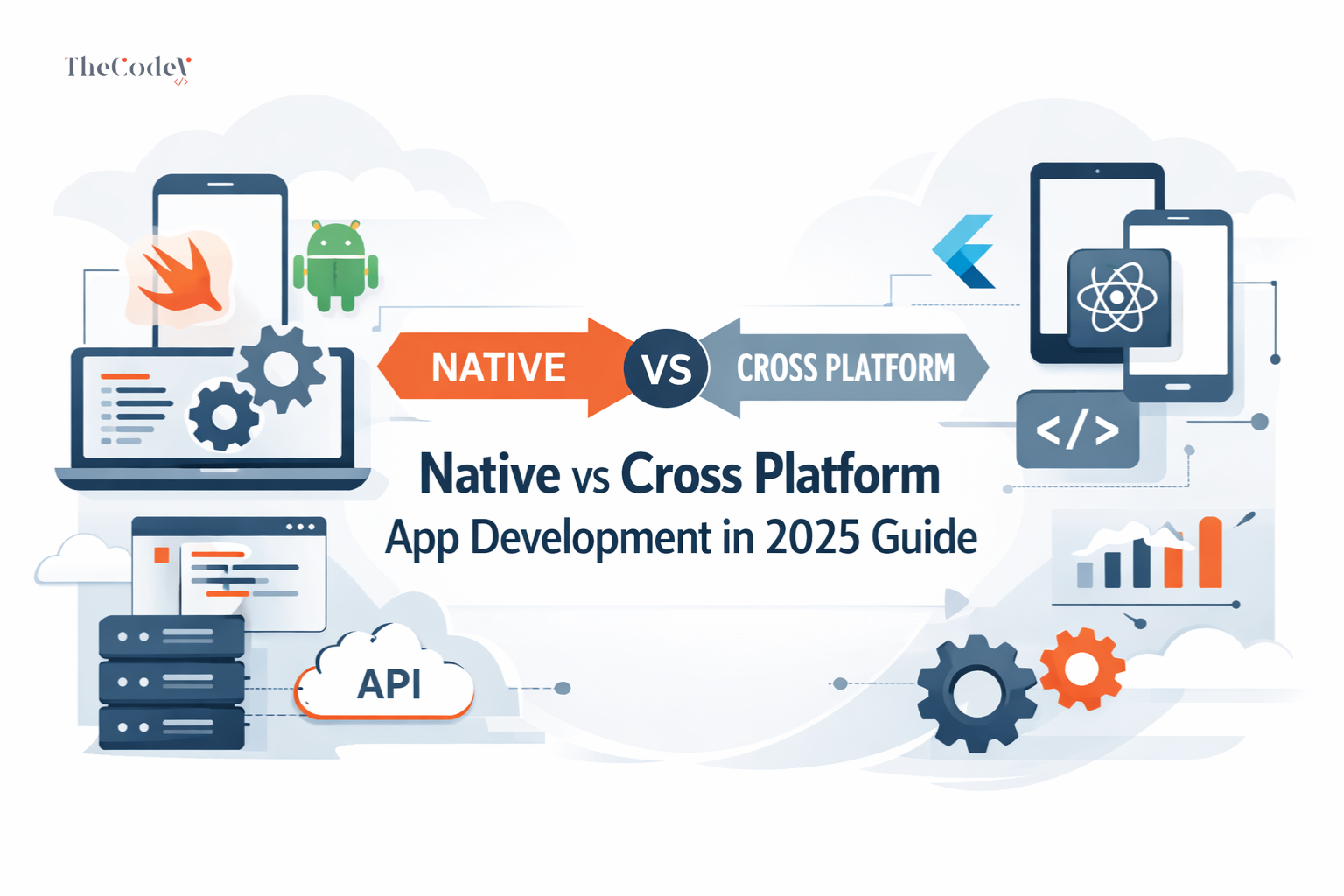
  • Native vs Cross-Platform App Development 2026: React Native, Flutter & Full Comparison

    Native vs Cross-Platform App Development 2026: React Native, Flutter & Full Comparison

    Native vs Cross-Platform Mobile App Development in 2025: Setting the Context

    In 2025, mobile apps sit at the core of digital business strategy, not on the sidelines. Customers expect fast, intuitive, and reliable mobile experiences, while businesses demand shorter development cycles and measurable returns. This is why the debate around native vs cross platform app development has become more strategic than ever. The choice you make at this stage directly influences performance, scalability, cost control, and long-term product viability.

    The mobile ecosystem has matured significantly over the past few years. Native platforms such as iOS and Android continue to push hardware-level performance, security, and user experience forward. At the same time, cross-platform frameworks have evolved, promising faster delivery and greater efficiency through shared codebases. As a result, the discussion around native vs cross-platform app pros and cons is no longer about which approach is “better,” but which is more suitable for a specific business goal.

    For many organisations, this decision extends far beyond technical architecture. It affects hiring strategy, release cycles, maintenance overhead, and ultimately, return on investment. A poorly aligned choice can lead to performance bottlenecks, rising costs, or painful rewrites later. This is why understanding when to choose native vs cross-platform development has become a priority for founders, CTOs, and product leaders alike.

    Businesses operating in competitive markets are also under pressure to launch quickly without compromising quality. Cross-platform development often appeals at this stage due to reduced development time and initial cost advantages. However, as products scale, factors such as responsiveness, platform-specific features, and long-term maintainability become more critical. These realities make performance differences native vs cross-platform a key concern in 2025 planning.

    At TheCodeV, we work with startups and enterprises across multiple regions, and this question surfaces in almost every mobile engagement. Some clients prioritise speed and flexibility, while others demand uncompromising performance and security from day one. Aligning the development approach with the business roadmap is often the difference between sustainable growth and technical debt.

    Industry trends also show increasing interest in hybrid decision-making rather than one-size-fits-all solutions. Searches around the best approach for mobile app development 2026 reflect a growing awareness that the right choice depends on product complexity, audience expectations, and future expansion plans. This shift highlights the need for informed, context-driven decisions rather than defaulting to popular frameworks.

    This guide is designed to provide that clarity. It explores native vs cross platform app development from both technical and commercial perspectives, helping you understand the trade-offs that matter in real-world scenarios. If mobile development is part of a wider digital roadmap, TheCodeV’s Digital Services support businesses through strategy, design, and scalable implementation.

    To make the right choice in 2025, you first need a clear understanding of what native development truly offers. The next section explores native apps in detail, outlining their strengths, limitations, and ideal use cases.

    Native App Development in 2025: Strengths, Limitations, and Ideal Use Cases

    Native app development refers to building mobile applications specifically for a single platform, typically iOS or Android, using platform-approved languages and tools. For iOS, this means Swift or Objective-C, while Android relies on Kotlin or Java. In the native vs cross platform app development debate, native apps are often positioned as the premium option because they are built to work directly with the operating system, without abstraction layers. This direct access enables tighter integration with device hardware and system APIs. As a result, native apps continue to set the benchmark for performance and user experience in 2025.

    One of the strongest advantages of native development is performance consistency. Native apps load faster, respond more smoothly to user interactions, and handle complex animations with ease. This becomes especially important for applications that rely on real-time data, advanced graphics, or background processing. These performance differences native vs cross-platform are often most noticeable at scale, where milliseconds directly affect user retention. For brands that compete on experience, this performance edge is difficult to ignore.

    Security is another area where native apps excel. Because they rely on platform-level security frameworks, native apps benefit from frequent OS updates, sandboxing, and stricter permission controls. This makes native development particularly attractive for fintech, healthcare, and enterprise-grade applications. These are classic examples of native app advantages for enterprise apps, where compliance, data protection, and long-term stability are non-negotiable requirements.

    Native apps also deliver superior user experience by fully aligning with platform design guidelines. Navigation patterns, gestures, and accessibility features feel natural because they follow iOS and Android conventions exactly. This familiarity reduces learning curves for users and improves engagement. When discussing when to choose native vs cross-platform development, UX quality is often a deciding factor for customer-facing products with high usage frequency.

    However, native development does come with trade-offs. Building separate apps for iOS and Android requires distinct codebases, teams, and timelines. This naturally increases upfront development cost and ongoing maintenance. For early-stage startups or MVPs, this cost structure may feel restrictive, especially when speed to market is critical. These realities are central to any native vs cross-platform cost comparison.

    From a long-term perspective, native apps tend to age better. They adapt more smoothly to OS updates and new device capabilities, reducing technical debt over time. This is why many large organisations accept higher initial investment in exchange for lower risk and stronger longevity. At TheCodeV, enterprise clients often choose native development when scalability and reliability outweigh short-term savings.

    Native development is best suited for apps that demand peak performance, advanced hardware access, or strict security standards. Examples include banking platforms, complex SaaS products, IoT controllers, and high-traffic consumer apps. Businesses planning multi-year roadmaps often align native apps with broader systems built through Custom Software Development UK services.

    Industry leaders continue to reinforce the value of native development through ongoing platform innovation. Apple’s official guidance highlights how native APIs unlock full device potential and long-term performance benefits, as outlined in Apple’s developer resources on native iOS development. This reinforces why native apps remain a strategic choice, not a legacy one.

    Understanding native development sets the foundation for a fair comparison. The next section explores cross-platform app development, examining where it delivers real value and where its limitations still matter in 2025.

    Cross-Platform App Development in 2025: Efficiency, Speed, and Practical Trade-offs

    Cross-platform app development focuses on building a single application that runs on multiple platforms, typically iOS and Android, from a shared codebase. In the ongoing native vs cross platform app development discussion, this approach is often associated with speed, flexibility, and reduced upfront costs. Frameworks such as React Native, Flutter, and Xamarin have matured significantly, making cross-platform a serious option rather than a compromise in 2025.

    One of the biggest advantages of cross-platform development is efficiency. Teams can reuse a large portion of code across platforms, which directly reduces development time and resource requirements. This code reusability in cross-platform apps allows businesses to launch faster and iterate more frequently. For startups and early-stage products, this speed-to-market advantage can be the difference between gaining traction and falling behind competitors.

    Cost control is another major driver. With a single development team and shared logic, initial build costs are typically lower compared to maintaining separate native codebases. This makes cross-platform development particularly attractive when budgets are limited or timelines are tight. In many native vs cross-platform cost comparison scenarios, cross-platform wins in the short term, especially for MVPs and proof-of-concept products.

    Cross-platform solutions also simplify long-term updates when app features are mostly business-driven rather than hardware-dependent. Changes to core functionality can be rolled out simultaneously across platforms, reducing operational overhead. This is why cross-platform app benefits for startups often extend beyond launch and into early scaling phases. When rapid iteration matters more than deep platform customisation, shared development can be highly effective.

    However, cross-platform development still involves trade-offs that must be understood clearly. Performance can vary depending on framework choice and app complexity. While many use cases perform well, apps with heavy animations, real-time processing, or advanced device features may expose limitations. These realities often surface in discussions around react native vs native app performance or flutter vs native app development, particularly as user expectations rise.

    Another consideration is platform-specific behaviour. Even with shared code, subtle differences between iOS and Android still require platform-level adjustments. Over time, these exceptions can accumulate, partially reducing the simplicity that cross-platform promises. This is why understanding when to choose native vs cross-platform development is critical before committing to a long-term roadmap.

    At TheCodeV, cross-platform development is often recommended for SaaS products, internal tools, and customer-facing apps where speed, consistency, and cost efficiency outweigh platform-specific optimisation. It also pairs well with lean product strategies supported by SaaS Development for Entrepreneurs and rapid validation cycles.

    Industry backing has strengthened confidence in this approach. Google’s official Flutter documentation highlights how modern rendering engines and native compilation improve performance and UI consistency across platforms, reinforcing cross-platform’s growing credibility. This evolution has made the choice less about compromise and more about alignment with business goals.

    Cross-platform development is not a universal solution, but it is no longer a risky one. To decide wisely, performance and technical depth must be compared side by side with native approaches. The next section examines real-world performance differences between native and cross-platform apps in 2025.

    Performance Comparison in 2025: Native vs Cross-Platform Under Real-World Conditions

    Performance is often the deciding factor in the native vs cross platform app development debate, especially once an app reaches real users at scale. In 2025, users expect instant load times, fluid animations, and zero lag across devices. Even small delays can hurt retention, reviews, and revenue. That’s why understanding performance differences native vs cross-platform matters far beyond benchmarks and demos.

    Native apps still lead when it comes to raw performance. Because they are built directly against iOS and Android APIs, they execute faster and respond more predictably under load. Startup times are typically shorter, animations feel smoother, and background processes behave more reliably. For apps with complex logic, real-time interactions, or heavy UI transitions, native performance remains difficult to match consistently.

    Cross-platform frameworks have improved significantly, but they introduce abstraction layers that can affect execution. In comparisons such as react native vs native app performance, React Native relies on a bridge between JavaScript and native code. While modern optimisations have reduced overhead, performance can still degrade in animation-heavy or computation-intensive scenarios. These gaps are more visible as apps grow in complexity.

    Flutter approaches performance differently by compiling directly to native machine code and rendering its own UI. This has narrowed the gap in many cases, especially for visually rich interfaces. However, flutter vs native app development comparisons still show limitations when accessing low-level platform features or handling advanced background tasks. Native apps retain finer control over memory, threading, and system behaviour.

    Xamarin, now largely replaced by newer frameworks, historically struggled with performance parity due to dependency on managed runtimes. In xamarin vs native vs flutter comparisons, Xamarin apps often required additional optimisation to reach acceptable performance levels. This highlights a key lesson: framework choice alone does not guarantee efficiency without careful architecture.

    Performance is not just about speed; it’s also about stability. Native apps tend to behave more predictably across OS updates because they align closely with platform lifecycles. Cross-platform apps may require framework updates to remain compatible, adding another layer of dependency. This difference becomes important for businesses planning long-term products rather than short-lived releases.

    At TheCodeV, performance discussions are usually framed around business impact rather than technical purity. For internal tools or early-stage products, cross-platform performance is often more than sufficient. For consumer-facing apps competing on experience, native development frequently delivers measurable advantages. These decisions are often aligned with broader product planning supported through Services and ongoing optimisation.

    Industry research continues to support this balanced view. Gartner’s mobile application insights highlight that while cross-platform tools reduce development effort, native apps still outperform in high-demand scenarios and mission-critical systems. This reinforces the idea that performance should be evaluated in context, not in isolation.

    Ultimately, performance is about fit. Understanding how your app behaves under real usage conditions is more important than theoretical comparisons. The next section explores how cost, ROI, and long-term maintenance factor into choosing between native and cross-platform development in 2025.

    Cost, ROI, and Long-Term Maintenance: Native vs Cross-Platform in 2025

    Cost is often the first concern raised when comparing native vs cross platform app development, but focusing only on upfront pricing can be misleading. In 2025, the real financial impact of your decision shows up over time—through maintenance, scaling, updates, and overall return on investment. Understanding the full native vs cross-platform cost comparison requires looking beyond the initial build.

    Native app development typically involves higher upfront costs. Separate codebases for iOS and Android mean more development hours, specialised engineers, and longer timelines. This investment can feel heavy at the start, especially for early-stage products. However, native apps often benefit from lower performance-related fixes and fewer workarounds later, which stabilises costs as the product matures.

    Cross-platform development usually reduces initial spending. A shared codebase allows teams to build and deploy faster, using fewer resources. This makes cross-platform attractive for MVPs, startups, and budget-conscious projects. In short-term scenarios, cross-platform often wins the cost debate, particularly when speed to market directly affects validation or funding opportunities.

    Long-term maintenance shifts the equation. Native apps tend to integrate smoothly with OS updates, reducing unexpected breakages. Cross-platform apps rely on third-party frameworks, which introduces dependency risk. When frameworks update slowly or change direction, maintenance costs can rise. These factors directly influence app development ROI native vs cross-platform, especially for products with multi-year roadmaps.

    Scaling also impacts ROI. As user bases grow, performance optimisations, feature expansion, and platform-specific enhancements become more important. Native apps scale more predictably in complex environments, while cross-platform apps may require selective native rewrites. This is where early cost savings can erode if scaling wasn’t considered from the start.

    Another often-overlooked cost factor is team structure. Native development may require larger or more specialised teams, while cross-platform teams are typically smaller and more flexible. Businesses working with partners like TheCodeV often weigh these factors alongside delivery timelines and internal capabilities before committing to a model.

    For companies evaluating budgets realistically, referencing structured planning resources such as Mobile App Development Costs helps align expectations early. Strategic consultation at this stage often prevents expensive pivots later, particularly when products evolve faster than expected.

    Cloud and infrastructure costs also play a role in ROI. According to insights from AWS, efficient mobile architectures reduce backend load and operational expense, regardless of frontend approach. However, frontend performance inefficiencies can still increase API calls and server demand over time, indirectly affecting costs.

    Ultimately, the “cheaper” option depends on how long your app lives and how far it grows. Short-term efficiency and long-term value rarely align perfectly. The next section focuses on how businesses in 2025 and beyond can choose the right approach based on product type, scale, and future vision.

    Choosing the Right Approach in 2025–2026: A Strategic Perspective

    By 2025, the question is no longer whether native or cross-platform development is viable. Both approaches are proven. The real challenge is deciding which one aligns best with your product vision, growth plans, and operational reality. In the broader native vs cross platform app development discussion, context matters more than trends or tool popularity.

    For startups and early-stage products, speed and validation usually take priority. Cross-platform development often fits this phase well, allowing teams to test ideas quickly and reach users on multiple platforms with limited resources. This is why cross-platform app benefits for startups remain compelling, particularly when the goal is market entry rather than technical perfection. In these cases, early traction matters more than deep platform optimisation.

    Growing businesses and scale-ups sit in the middle. They often start with cross-platform solutions, then selectively invest in native components as requirements evolve. This hybrid mindset reflects modern mobile app development trends native vs cross-platform, where flexibility and adaptability drive technical decisions. The key is planning for evolution rather than locking into assumptions made at launch.

    Enterprises and long-term platforms usually prioritise stability, performance, and security from the outset. For these organisations, native app advantages for enterprise apps often justify higher upfront investment. Native development offers tighter control over user experience, better compliance handling, and smoother integration with existing systems. These factors reduce operational risk over time.

    Decision-making also depends on how critical the app is to the business. Customer-facing products that define brand perception often demand native-level polish. Internal tools, dashboards, or companion apps may not. Understanding when to choose native vs cross-platform development means mapping technical impact directly to business value.

    At TheCodeV, these decisions are rarely made in isolation. They are part of broader digital roadmaps involving backend systems, cloud infrastructure, and long-term maintenance planning. This holistic view is often supported through tailored Consultation and discovery phases before development begins.

    Industry research reinforces this strategic approach. Gartner’s analysis of mobile application strategies emphasises aligning platform choices with user expectations, lifecycle length, and total cost of ownership rather than chasing short-term savings. This perspective has become increasingly relevant as mobile products grow more complex.

    Ultimately, there is no single “right” answer for every business in 2025 or 2026. The best approach balances technical capability with commercial reality. The final section brings these insights together, summarising key takeaways and outlining how businesses can move forward with confidence.

    Making the Right Mobile App Development Choice in 2025

    Choosing between native and cross-platform development in 2025 is less about technology trends and more about strategic clarity. Both approaches are mature, widely adopted, and capable of delivering successful products when used in the right context. The real value comes from aligning your technical decision with business goals, user expectations, and long-term scalability.

    Native development continues to lead in performance, security, and deep platform integration. It is often the preferred choice for enterprise-grade applications, high-traffic consumer apps, and products where user experience defines brand value. While the initial investment is higher, native apps typically deliver stronger long-term stability and predictable scaling. For organisations planning multi-year growth, this approach often supports a healthier return over time.

    Cross-platform development, on the other hand, excels in speed, efficiency, and cost control. It enables faster launches, simplified maintenance, and easier iteration—making it a strong fit for startups, MVPs, and businesses validating new ideas. With modern frameworks closing much of the performance gap, cross-platform solutions now power many successful production apps. When time-to-market and budget flexibility matter most, this approach offers clear advantages.

    What matters most is understanding the lifecycle of your product. Short-term experimentation, internal tools, or region-specific launches may benefit from cross-platform efficiency. Mission-critical platforms, security-sensitive applications, and experience-driven products often justify native investment. This balance sits at the heart of the native vs cross platform app development decision and directly influences app development ROI.

    At TheCodeV, we approach mobile development as part of a wider digital ecosystem. Our teams work with businesses across the UK and globally, helping them evaluate requirements, risks, and growth plans before committing to a technical path. Whether you’re building a new product, scaling an existing app, or reassessing your current architecture, strategic guidance early on can prevent costly pivots later.

    If you’re considering mobile app development and want a solution tailored to your business goals, explore our Services or start a conversation through our Consultation page. You can also reach out directly via our Contact page to discuss your project with our experts.

    The right approach isn’t about choosing sides—it’s about choosing wisely. With the right strategy and the right partner, both native and cross-platform development can deliver powerful results in 2025 and beyond.
  • The Custom Software Development ROI vs Off-the-Shelf Solutions in 2025

    The Custom Software Development ROI vs Off-the-Shelf Solutions in 2025

    Introduction & Market Context

    In 2025, every business investment is being scrutinised for return. When considering whether to build or buy software, the metric that matters most is Custom software development ROI. The potential returns from custom software such as aligning precisely with business processes or scaling uniquely—must be weighed against the faster deployment and lower upfront cost of off-the-shelf solutions. For executives and technology leaders, understanding this ROI determines whether the investment earns dividends or becomes a costly burden.

    What Are Custom Software vs Off-the-Shelf Solutions?

    Custom software development means creating a software application tailored to the exact needs of a business. It is built from scratch or heavily customised, integrating with internal processes, workflows, and systems. Off-the-shelf software (sometimes known as commercial software) refers to pre-built, standardised solutions that serve broader markets with limited customisation, often under licensing or subscription models.

    Custom software offers differentiators—unique features, proprietary integrations, control—and demands higher upfront investment. Off-the-shelf solutions deliver faster time to value, usual lower entry costs, and vendor support. The core question for decision-makers in 2025 is: which delivers greater value over time?

    Why ROI Matters More Than Ever in 2025

    The urgency behind calculating Custom software development ROI is intensifying. The global digital transformation market is forecast to swell dramatically—spending on software and IT services is set to be one of the fastest-growing components of technology budgets. Gartner predicts that worldwide IT spending will jump significantly in 2025, with software spending expected to grow broadly across sectors. TeamDynamix

    Meanwhile, according to a recent report, over 70% of organisations outsource software development or adopt hybrid strategies to gain access to skill, improve performance, and optimise cost. Itransition These statistics show that businesses no longer accept generic, one-size-fits-all solutions—they demand measurable returns, reduced waste, and sustained competitive advantage.

    In the UK, where business transformation is driven by pressures like labour shortages, regulatory compliance, and energy costs, investments in technology are particularly strategic. Decision-makers must ensure that any software investment—custom or off-the-shelf—yields ROI that justifies budget, risk, and time.

    Digital Transformation Landscape: UK & Global

    Globally, digital transformation is rising from necessity to expectation. Organisations are pouring resources into AI, cloud migration, automation, and data analytics. As one source notes, the global digital transformation market is forecast to hit trillions of dollars in 2025, growing at a compound annual growth rate (CAGR) near 18 %. MyHub Intranet Solutions+1 In the UK, growth is mirrored by government and private sector initiatives, with many companies treating technology investment as core to survival, not optional.

    Given this context, any technology decision must be ROI-focused. That means assessing not just up-front cost, but long-term value—maintenance, flexibility, competitive edge, customer satisfaction. Custom software may cost more up front, but it often delivers savings and strategic advantage over time. Off-the-shelf is tempting for speed and cost-control—but may incur hidden costs if customisation, licensing, or inefficiencies accumulate.

    Why This Discussion Is Critical for You

    If you are leading technology, operations, finance, or strategy at your business, this blog will equip you with insights to decide: when does custom software development ROI outweigh the convenience of off-the-shelf? By the end, you’ll understand:

    • How to measure ROI with key metrics
    • Which industries and business types favour custom solutions
    • What risks and trade-offs you must still plan for

    Here at TheCodeV, we help organisations worldwide assess their technology needs and build solutions aligned to measurable business outcomes. To understand more about what drives our work, you can see our story on our About Us page or explore how we deliver value on our Homepage.

    How ROI Is Measured in Software Development Projects

    When you invest in software—whether you build a custom solution or buy off-the-shelf—you need a rigorous way to assess Custom software development ROI. Measuring ROI isn’t just about upfront costs; it’s about long-term value, operational impact, and strategic advantage.

    Key Metrics to Track

    Here are the main metrics decision-makers use to measure ROI in software projects:

    • Cost savings: What you spend vs what you save. This includes reductions in licensing fees, maintenance, infrastructure, or legacy system support. For custom software, upfront costs tend to be higher, but over time, unnecessary recurring fees can fade away.
    • Productivity gains: How much more work gets done with less friction. This might be measured by fewer manual tasks, shortened production or development cycles, or reduced errors. For example, McKinsey has shown that measuring developer productivity—using metrics like deployment frequency, lead time, defect rates—can reveal significant improvements when properly tracked. McKinsey & Company
    • Scalability and flexibility: A custom solution can grow with your business. Scalability means that as you take on more users, features, or data, the software continues performing well without enormous extra cost. Flexibility refers to the ability to modify workflows or add integrations. These contribute heavily to long-term ROI.
    • Long-term value & Total Cost of Ownership (TCO): ROI is not just immediate returns but value over time. TCO includes all ongoing costs—maintenance, upgrades, training, hosting, support. When you subtract these from benefits over the lifespan of the software, you arrive at a clearer view of net gain.
    • Return Speed & Payback Period: How long until your investment pays for itself. Shorter payback periods are often preferred in uncertain times. Custom software may take longer to deliver returns but often outpaces off-the-shelf over 3-5+ years.
    • Business process efficiency: The improvements in workflows, process automation, error reductions. If a process that took days now takes hours, that freed time is value. These gains drive the software investment metrics that board-level executives care about.
    • Customer experience and revenue impact: Sometimes ROI comes through new revenue channels: better UX, faster time-to-market, more satisfied customers. These may be less tangible but can be measured via metrics such as customer retention, conversion rates, or average revenue per user.

    Measuring ROI: SMEs vs Large Enterprises

    The way ROI is measured and evaluated differs depending on organisation size.

    SMEs (Small & Medium Enterprises)

    • Typically operate with tighter budgets and shorter time horizons.
    • ROI focus often more on cost savings, payback period, and business process efficiency rather than large-scale scalability.
    • They need quicker wins: lower TCO in early years, faster deployment, modest customisation. Off-the-shelf or minimally custom software may be attractive if ROI is realised within 12-24 months.

    Large Enterprises

    • Can absorb higher up-front costs, but have heavier regulatory, security, and integration requirements.
    • ROI is judged over longer periods (3-7 years or more). Metrics like scalability, system interoperability, innovation capacity, and resilience are weighted heavily.
    • Total cost of ownership becomes more complex: legacy systems, compliance, international rollout, multi-region hosting, training large user bases, etc.

    Tools & Frameworks for Estimation

    To compute Custom software development ROI, organisations often use:

    • Net Present Value (NPV): Discounting future net benefits back to present value to compare investments.
    • Internal Rate of Return (IRR): The rate at which the project breaks even in present value terms.
    • Payback Period Analysis: How many months/years until benefits equal investment.
    • Sensitivity Analysis: Testing how ROI changes with assumptions—cost overruns, delayed deployment, changes in usage.

    A McKinsey report on holistic ROI estimates emphasises that while NPV is foundational, adding complementary factors like adaptability, sustainability, and alignment with strategic priorities yields better decisions. McKinsey & Company

    Real-World Application

    For example, when digital transformation UK businesses decide whether to commission custom software or adopt a standard product, they map out metrics over several years. They calculate:

    • Upfront cost vs licensing & subscription fees.
    • Savings in internal labour (automation, fewer manual steps).
    • Additional revenue possible from unique features or competitive differentiation.
    • Costs for future updates, scaling, support.

    At TheCodeV, our approach helps clients build forecasts that include all these dimensions, so they see what the true Custom software development ROI looks like—not just in month one, but in years three, five, and beyond. We offer Services that include cost-benefit modelling and ROI analysis, as well as Consultation to align your software investment with strategic goals.

    Strengths and Weaknesses of Custom Software Solutions

    Custom software remains one of the most powerful investments for businesses navigating the 2025 digital landscape. While the upfront cost can be intimidating, the long-term Custom software development ROI is often compelling, especially when solutions are aligned with strategic goals. Below we explore the core strengths and weaknesses decision-makers must evaluate.

    Scalability and Flexibility

    One of the greatest strengths of custom software lies in its scalability and flexibility. Unlike off-the-shelf platforms, which may limit growth or force upgrades, a tailored system evolves with your organisation. Whether scaling user numbers, integrating new modules, or expanding internationally, custom solutions provide adaptability without compromising performance.

    This scalability contributes directly to Custom software development ROI. The initial investment builds a foundation designed for long-term expansion, reducing the likelihood of disruptive software replacements in future years.

    However, flexibility comes at a cost. Developing robust scalability requires careful planning, technical expertise, and higher upfront investment. Without experienced partners, businesses risk creating software that struggles under load or lacks adaptability.

    Integration with Business Workflows

    Another clear advantage is seamless integration with existing workflows. Custom solutions are designed around specific business processes, which means automation, reporting, and communication align directly with daily operations. This reduces inefficiencies, boosts employee productivity, and improves business process efficiency.

    For example, SMEs may benefit from automating repetitive tasks, while large enterprises integrate custom platforms with ERP, CRM, or supply chain systems. The more closely software matches real-world workflows, the stronger the Custom software development ROI.

    Yet integration has weaknesses too. Customising deeply into legacy systems can increase project complexity. If processes are poorly documented or change frequently, the ROI may take longer to materialise. Businesses must balance integration depth against agility and long-term adaptability.

    Cost Challenges

    The cost challenge is the most visible weakness of custom software. Development requires significant upfront resources: hiring developers, defining requirements, testing, and continuous iteration. These costs can surpass off-the-shelf licensing by a wide margin.

    This creates a dilemma: short-term financial strain vs long-term savings. While initial ROI calculations may appear negative, over time the Custom software development ROI can surpass off-the-shelf solutions by eliminating recurring license fees, reducing inefficiencies, and lowering reliance on third-party vendors.

    Decision-makers should view cost not just as an expense but as a strategic investment. According to Harvard Business Review, companies that view IT spend as a strategic enabler rather than a cost centre are more likely to achieve sustained competitive advantage (Harvard Business Review). This perspective shifts the discussion from “what does it cost now?” to “what value will it deliver tomorrow?”

    Long-Term Returns vs Upfront Investment

    Custom software is a textbook example of a long-term investment. Businesses willing to shoulder higher upfront costs often realise substantial returns in productivity, customer experience, and competitive differentiation. Over a 3-5 year horizon, TCO (Total Cost of Ownership) often decreases compared to subscription-based solutions.

    This is where Custom software development ROI becomes persuasive. With careful planning, the solution reduces dependency on external vendors, aligns perfectly with strategic goals, and provides measurable efficiency gains. The challenge is ensuring the business can weather the initial financial impact before those returns manifest.

    The Role of Trusted Partners

    The success of a custom project heavily depends on expertise and execution. Companies like EmporionSoft play a crucial role in helping organisations realise true ROI. By guiding businesses through requirements gathering, agile development, and scaling phases, they ensure that the software not only fits immediate needs but also remains resilient for future challenges.

    At TheCodeV, we also provide a strategic partnership approach, offering tailored Digital Services and proven results showcased in our Case Studies. Partnering with the right development team ensures that risks are managed, costs remain predictable, and ROI is achieved faster.

    Weighing the Balance

    Custom software’s strengths—scalability, workflow integration, long-term cost efficiency—can significantly outweigh its weaknesses, provided organisations prepare for higher initial investment and potential integration challenges. For SMEs, ROI may be harder to justify without clear process inefficiencies. For enterprises, however, custom software often proves indispensable to maintain innovation and operational control.

    Ultimately, businesses should evaluate whether the long-term gains justify the short-term costs. With the right vision and trusted partners, custom solutions can deliver enduring value and superior Custom software development ROI.

    Pros and Cons of Off-the-Shelf Software in 2025

    Off-the-shelf solutions continue to attract businesses due to their affordability, quick setup, and ease of access. These pre-built business software options are often marketed as the fastest path to digital transformation. Yet, decision-makers must look beyond the initial price tag to uncover hidden costs and limitations. When compared to custom solutions, Custom software development ROI often tells a different long-term story.

    Lower Initial Costs

    The primary attraction of off-the-shelf software is its lower upfront investment. Companies avoid the heavy design, coding, and testing stages that custom projects demand. Instead, they purchase a license or subscribe to a SaaS platform with predictable software subscription costs.

    For startups and SMEs, this affordability makes it possible to digitise workflows quickly. Teams can access proven tools without straining cash flow. Enterprises also benefit from being able to roll out standardised solutions across multiple departments with minimal disruption.

    However, while upfront costs are lower, long-term expenses often rise due to recurring licenses, feature upgrades, and integration services. What looks inexpensive in year one may become cost-heavy by year three.

    Quick Deployment and Vendor Support

    Another strength of pre-built business software lies in its speed. Deployment can be measured in weeks instead of months, making it ideal for organisations needing immediate operational improvements. Pre-configured systems reduce implementation risks and allow businesses to leverage industry best practices out of the box.

    Additionally, vendor-provided support is a strong advantage. Regular updates, patch management, and helpdesk services minimise internal IT overhead. This built-in support structure helps SMEs in particular, as they may lack the resources to maintain complex systems in-house.

    Yet, vendor support also comes with limitations. Businesses are dependent on the vendor’s release cycles and may have little control over which features are prioritised. Support levels also vary by pricing tier, leading some organisations to pay premium rates just to ensure adequate service levels.

    Limited Customisation

    One of the biggest drawbacks is limited customisation. Off-the-shelf platforms are designed for broad markets, not specific workflows. This can lead to inefficiencies when software does not align perfectly with business needs.

    For example, an eCommerce business may require tailored reporting features, while a healthcare provider may demand strict compliance controls. If the platform lacks these options, companies are forced to purchase add-ons or adjust workflows around the software — a compromise that impacts efficiency and long-term ROI.

    In comparison, custom solutions are built to adapt to unique business processes, making them more resilient and flexible. This is where the ROI calculation often shifts in favour of tailored systems.

    Vendor Lock-In Risks

    Another concern is vendor lock-in. Businesses relying heavily on proprietary ecosystems may struggle to migrate to alternatives later. Enterprise app licensing contracts often include steep termination clauses or complex migration challenges.

    This dependency introduces risk, especially if the vendor changes pricing models, sunsets features, or faces financial instability. According to Forrester, many enterprises underestimate the long-term impact of vendor lock-in when evaluating software adoption strategies (Forrester).

    Custom software avoids many of these risks by giving businesses ownership and control. While off-the-shelf platforms may offer convenience, the trade-off often lies in long-term flexibility.

    ROI Compared with Custom Software

    When comparing ROI, the picture becomes more complex. Off-the-shelf tools deliver fast returns in the short term due to rapid deployment and lower entry costs. However, ROI weakens over time as software subscription costs, integration limitations, and licensing fees accumulate.

    Custom solutions, on the other hand, require higher upfront spending but deliver stronger ROI over three to five years. They evolve with the business, reduce inefficiencies, and minimise reliance on external vendors.

    For SMEs with limited budgets, off-the-shelf solutions may provide the quickest wins. For enterprises or scaling businesses, however, the ROI balance typically tilts toward custom software.

    Choosing the Right Path

    The decision between off-the-shelf and custom solutions requires a detailed analysis of both short-term affordability and long-term sustainability. Businesses should consider not only financial metrics but also strategic goals, integration requirements, and future scalability.

    At TheCodeV, we help businesses evaluate these trade-offs through tailored Pricing Plans and strategic assessments via our Questionnaire. Understanding the pros and cons upfront ensures businesses choose solutions aligned with growth objectives and operational realities.

    Final Thought: Off-the-shelf software offers speed, affordability, and support — but often at the cost of flexibility, scalability, and long-term value. Decision-makers who weigh immediate gains against future needs are best positioned to maximise their software investments.

    Custom Software Development ROI vs Off-the-Shelf ROI: A 2025 Comparison

    When decision-makers evaluate technology investments, the key question is not only “What will this cost today?” but also “How will this investment perform in three to five years?” This is where a software ROI comparison between custom and off-the-shelf solutions becomes essential. Both approaches carry advantages and trade-offs in terms of cost, scalability, security, and innovation.

    ROI at a Glance: Custom vs Pre-Built Apps 2025

    Below is a structured breakdown of how custom software and off-the-shelf tools stack up across critical ROI dimensions:

    FactorCustom SoftwareOff-the-Shelf Software
    Upfront CostHigh initial investment for design, development, and testing.Low upfront cost, subscription/licensing-based.
    ScalabilityHighly scalable, designed to evolve with business growth.Limited scalability; may require add-ons or migration as needs expand.
    SecurityTailored security features, full ownership of code, adaptable to compliance needs.Standardised security; dependent on vendor’s policies and update cycles.
    InnovationEnables unique features and competitive differentiation.Limited innovation; constrained by vendor’s roadmap.
    Long-Term ROIStrong over 3–5 years as maintenance costs are predictable and aligned with growth.Declining ROI over time due to recurring fees, vendor lock-in, and reduced adaptability.

    Cost Considerations

    Custom software development ROI shines in the long run because businesses invest once and retain ownership of the system. While initial development can be costly, expenses stabilise as companies only pay for ongoing maintenance and enhancements.

    By contrast, off-the-shelf ROI is front-loaded. Businesses benefit from low initial costs but face ongoing software subscription costs and potential migration expenses later. Over five years, enterprises often find cumulative spend on licensing exceeds the cost of a tailored solution.

    Scalability and Growth Potential

    For SMEs that plan rapid growth, scalability is a decisive factor. Custom vs pre-built apps 2025 highlights this clearly: custom solutions scale organically with the business model, while off-the-shelf platforms often hit performance ceilings.

    For example, a logistics company scaling across multiple regions used custom software to integrate local compliance modules seamlessly. In contrast, a retail startup initially saved costs with SaaS tools but eventually had to migrate after facing feature limitations.

    Security and Compliance

    In an era of heightened data regulations, especially across enterprise digital strategy, businesses must prioritise compliance. Custom software allows fine-grained control over security protocols, making it ideal for industries like finance, healthcare, and government.

    Off-the-shelf platforms, while offering vendor-managed updates, may leave companies vulnerable to shared risks. According to the Nielsen Norman Group, user trust and security directly influence digital adoption rates — making tailored security a long-term ROI driver.

    Innovation and Competitive Advantage

    Custom software often drives innovation by enabling unique features that competitors cannot easily replicate. This innovation can directly translate into new revenue streams and enhanced customer loyalty.

    By contrast, off-the-shelf solutions standardise processes. While this may boost business process efficiency in the short term, it rarely provides competitive differentiation. Enterprises seeking to lead in innovation typically lean towards bespoke solutions.

    Real-World Examples

    • Custom Success: A mid-sized UK fintech worked with EmporionSoft to create a compliance-first payments platform. Despite high upfront spend, the system scaled effortlessly and saved millions in compliance fines — delivering superior long-term ROI.
    • Off-the-Shelf Success: A small digital marketing agency adopted a pre-built CRM. The affordability and vendor support allowed rapid deployment, aligning perfectly with their lean budget and delivering immediate returns.

    These examples highlight that ROI is context-dependent. Smaller businesses with limited budgets may achieve faster wins with off-the-shelf tools, while enterprises with long-term digital transformation strategies achieve greater ROI with custom solutions.

    Strategic Takeaway for 2025

    ROI is no longer measured purely in cost savings. Scalability, security, and innovation all factor into the bigger picture of software investment. Businesses evaluating custom software development ROI against off-the-shelf ROI should weigh not just today’s affordability but tomorrow’s adaptability.

    At TheCodeV, we guide organisations in aligning technology choices with growth goals. Explore our tailored eCommerce SEO and Social Media Management services to see how our digital expertise complements both custom and pre-built software strategies.

    ✅ Final Thought: Whether you choose custom or off-the-shelf, the best ROI comes from aligning technology with long-term enterprise strategy — not just short-term cost efficiency.

    Industry-Specific ROI in Custom vs Off-the-Shelf Software

    The concept of Custom software development ROI becomes most relevant when examined across industries. Every sector has unique needs, compliance requirements, and competitive pressures. While some industries benefit from bespoke solutions, others achieve efficiency through off-the-shelf systems. By 2025, the balance between cost, scalability, and innovation varies dramatically across Retail, Finance, Healthcare, and Manufacturing.

    Retail and eCommerce: Driving Growth Through Custom Platforms

    In retail and eCommerce, speed and customer experience dictate ROI. Many leading eCommerce brands are now leveraging custom platforms to build scalable digital storefronts, integrate payment gateways, and personalise shopping journeys.

    For instance, a UK-based fashion retailer saw a 35% uplift in conversion rates after deploying a custom recommendation engine. By aligning software directly with customer behaviour data, the company reduced cart abandonment and boosted average order value.

    This ROI extends beyond sales. Operational efficiency — from inventory management to logistics automation — improves dramatically when platforms are tailored. While off-the-shelf eCommerce software provides quick deployment, its generic templates rarely offer the same long-term returns as bespoke solutions.

    Companies investing in this space are also finding new career opportunities in digital retail innovation. Businesses can explore opportunities with TheCodeV’s Career portal for guidance on the future of retail technology skills.

    Finance and Banking: Security-First ROI

    Banks and financial institutions often rely on off-the-shelf core banking systems to ensure compliance, security, and vendor-supported stability. However, the ROI in finance is often maximised by layering custom-built solutions on top of these core systems.

    Take the example of digital-only banks: while their transaction engines may be based on licensed software, their mobile interfaces and customer engagement tools are often bespoke. This hybrid approach balances low-risk standardisation with innovation at the customer-facing level.

    According to a PwC report on financial transformation, banks see higher ROI when combining regulatory compliance software with tailored customer experience applications. This mix allows them to cut costs on compliance while gaining revenue growth through personalised offerings.

    Healthcare: Hybrid Solutions for Compliance and Innovation

    Healthcare represents one of the most complex cases in software ROI. Hospitals and clinics must comply with stringent data regulations, including GDPR in the UK. As a result, many adopt hybrid software strategies.

    Custom modules for electronic health records (EHRs) provide tailored compliance and patient data security, while off-the-shelf systems handle standard functions like scheduling or billing. The ROI emerges in measurable outcomes such as reduced patient wait times, lower administrative overheads, and improved patient satisfaction scores.

    A real-world example is a European hospital group that integrated a custom AI-driven diagnostic support tool with its off-the-shelf EHR platform. Within two years, diagnostic accuracy improved by 18%, resulting in both higher patient trust and lower malpractice risks — directly translating into stronger ROI.

    Manufacturing: Productivity and Scalability Payoff

    Manufacturers increasingly view software as a driver of productivity. Custom solutions often dominate in areas like supply chain visibility, predictive maintenance, and IoT integration. By contrast, off-the-shelf ERP systems remain common for basic accounting and HR functions.

    A UK-based automotive manufacturer implemented a custom predictive maintenance system, reducing machine downtime by 22%. The ROI came not only from cost savings but also from increased production capacity — a critical differentiator in global competition.

    Manufacturers that rely solely on generic ERP systems often face integration challenges, slowing down automation initiatives. This demonstrates how Custom software development ROI in manufacturing tends to outperform pre-built systems when growth and efficiency are long-term goals.

    Measuring ROI Outcomes Across Sectors

    • Retail/eCommerce: ROI shown in revenue growth, customer retention, and operational efficiency.
    • Finance: ROI measured in compliance cost savings, security, and customer acquisition via digital apps.
    • Healthcare: ROI tied to patient outcomes, compliance risk reduction, and administrative efficiency.
    • Manufacturing: ROI reflected in productivity gains, downtime reduction, and scalability of production systems.

    Strategic Insight

    ROI in software development is not a one-size-fits-all measure. Each industry applies different metrics, and each finds unique benefits in the custom vs off-the-shelf debate. Decision-makers must weigh compliance needs, customer experience goals, and long-term scalability when choosing the right solution.

    Businesses considering industry-specific strategies can reach out through TheCodeV’s Contact page for tailored consultation on maximising ROI within their sector.

    ✅ Reference: PwC’s 2024 Global Digital Transformation Survey confirms that industry context is the most important variable in software ROI outcomes, reinforcing the need for sector-specific strategies.

    Preparing for the Future of Software ROI

    As businesses navigate an increasingly competitive digital landscape, anticipating the future of software trends is critical for maintaining a competitive edge. In 2025 and beyond, Custom software development ROI will no longer hinge solely on initial deployment costs. Instead, enterprises and SMEs must consider how emerging technologies, scalable architectures, and regulatory compliance affect long-term value. Companies that strategically adopt these trends will see measurable improvements in productivity, efficiency, and market adaptability.

    AI-Driven Automation and Its Impact

    Artificial intelligence (AI) is reshaping the enterprise software ecosystem. From automated workflows to predictive analytics, AI enhances decision-making and reduces manual effort across departments. Key impacts include:

    • Process optimisation: Routine tasks such as data entry, report generation, and scheduling can be automated, reducing operational costs.
    • Predictive insights: AI-driven analytics help organisations anticipate customer behaviour, supply chain disruptions, and market trends.
    • Faster decision cycles: Machine learning models provide real-time recommendations, improving responsiveness and agility.

    For enterprises, AI adoption directly influences business ROI by improving efficiency and reducing error-related costs. SMEs also benefit, though investments may need to be carefully scaled to avoid overextending budgets. Recent research from IEEE highlights that AI integration in enterprise workflows can boost productivity by up to 40% within two years, underlining its potential impact on long-term ROI.

    Cloud-Native Development for Long-Term Efficiency

    Cloud-native development, particularly multi-cloud strategies, is transforming how businesses build and deploy software. By leveraging containerised applications, microservices, and scalable cloud infrastructures, organisations can:

    • Enhance scalability: Easily expand or reduce resources based on demand without significant upfront investment.
    • Reduce operational costs: Pay-as-you-go models minimise idle resource expenses, improving ROI efficiency.
    • Improve resilience: Distributed cloud systems reduce downtime and support business continuity.

    UK businesses embracing cloud-native development can integrate systems across locations and vendors efficiently. Multi-cloud approaches also provide redundancy, mitigating risks of vendor lock-in. SMEs can adopt hybrid models to balance affordability and scalability, while large enterprises often deploy full cloud-native strategies to support global operations. For an in-depth comparison, see Cloud Providers Comparison.

    Low-Code Platforms and Agile Innovation

    Low-code and no-code platforms are revolutionising software development by reducing dependency on traditional coding. Benefits include:

    • Accelerated development cycles: Applications can be built and deployed faster, reducing time-to-market.
    • Empowered teams: Non-technical staff can contribute to application development, increasing operational agility.
    • Rapid iteration: Businesses can quickly update workflows in response to changing market demands.

    These platforms enhance Custom software development ROI by lowering development costs and improving adaptability. Enterprises benefit from robust governance frameworks, while SMEs gain speed without requiring extensive IT teams. The future of enterprise software increasingly relies on agile, modular solutions that allow for quick experimentation without jeopardising compliance.

    Compliance and Risk Mitigation

    Regulatory frameworks, including GDPR, the AI Act, and UK-specific laws, are becoming essential components of software ROI calculations. Non-compliance can result in significant fines, operational interruptions, and reputational damage. Key considerations include:

    • Data privacy: Ensuring secure data handling protects both the business and its customers.
    • AI transparency: Algorithms must be auditable and explainable to comply with emerging AI regulations.
    • Ongoing governance: Continuous monitoring and updates are required to maintain compliance.

    Future ROI assessments will factor in these compliance costs alongside traditional metrics. Companies like TheCodeV help businesses future-proof their software investments, offering tools and solutions that balance performance, scalability, and regulatory adherence. For insights on AI integration in ROI strategy, see AI in Business UK.

    By adopting AI-driven automation, cloud-native architectures, low-code platforms, and proactive compliance measures, both SMEs and enterprises can secure a more sustainable and measurable Custom software development ROI beyond 2025. These trends signal a shift from short-term gains to long-term strategic value in software investments.

    Key Takeaways on Software ROI

    Navigating the choice between custom software and off-the-shelf solutions requires a careful evaluation of costs, scalability, and long-term returns. Our analysis shows that while off-the-shelf solutions offer faster deployment and lower upfront costs, Custom software development ROI tends to outperform over time for enterprises with complex, evolving needs. Understanding these differences is essential for creating an effective enterprise digital strategy and maximising software ROI.

    Choosing Between Custom and Off-the-Shelf Solutions

    When deciding which approach suits your business, consider the following:

    • Cost considerations: Off-the-shelf solutions are more affordable initially, making them suitable for SMEs with limited budgets. Custom software requires higher upfront investment but yields higher returns long-term.
    • Scalability and flexibility: Custom solutions can grow with your business, integrate seamlessly with existing workflows, and adapt to changing requirements. Off-the-shelf software often comes with constraints and limited customisation.
    • Innovation potential: Custom software enables innovation tailored to your unique business processes, whereas pre-built solutions are designed for general use.
    FeatureOff-the-ShelfCustom Software
    Initial CostLowHigh
    ScalabilityLimitedHigh
    IntegrationStandardTailored
    Long-Term ROIModerateHigh
    Innovation CapabilityLowHigh

    This table summarises the head-to-head comparison, highlighting how enterprises with strategic goals often benefit more from custom development.

    Long-Term ROI Strategies for Enterprises

    Enterprises aiming for sustainable growth should prioritise software ROI optimisation through custom development. Key strategies include:

    1. Aligning software with business objectives: Ensure applications directly support operational efficiency and revenue growth.
    2. Future-proofing investments: Adopt scalable architectures, cloud-native technologies, and low-code tools to remain agile.
    3. Monitoring performance metrics: Track ROI with KPIs such as productivity gains, operational cost reduction, and customer engagement improvements.
    4. Compliance readiness: Factor in GDPR, AI Act, and other regulatory requirements to avoid fines and reputational risks.

    EmporionSoft serves as a trusted partner in delivering tailored software solutions, helping enterprises achieve measurable ROI while staying compliant and innovative.

    Partnering with Experts for Maximum ROI

    To fully leverage custom vs pre-built software benefits, businesses should work with experienced technology partners. TheCodeV offers expert guidance in:

    • Conducting ROI assessments for software investments
    • Designing scalable, compliant, and future-ready solutions
    • Integrating advanced tools for AI-driven automation and cloud-native development
    • Optimising costs while maximising productivity and innovation

    By collaborating with TheCodeV, organisations can make informed decisions that balance immediate needs with long-term growth, ensuring maximum ROI on software investments.

    Summary Checklist for Decision-Makers

    • Evaluate business goals and growth trajectory before selecting software
    • Consider scalability requirements for enterprise expansion
    • Assess compliance obligations to mitigate risk
    • Factor in innovation potential and customisation needs
    • Choose a technology partner like TheCodeV or EmporionSoft for strategic implementation

    Making the right choice between off-the-shelf and custom software solutions is crucial for long-term success. SMEs may gain short-term benefits from pre-built applications, but enterprises targeting sustained growth and higher Custom software development ROI should invest in bespoke solutions.

    For expert support in maximising your software ROI and future-proofing digital investments, contact TheCodeV today or explore our Digital Services to start building solutions tailored to your business goals.

  • Google Play Store Ranking Factors 2025: How to Get Your UK App to #1

    Google Play Store Ranking Factors 2025: How to Get Your UK App to #1

    Introduction

    As we approach 2025, the landscape for mobile app development in the UK has become more competitive than ever before. With thousands of apps launching daily, gaining visibility and maintaining a top position on the Google Play Store is increasingly challenging. Understanding the Google Play Store Ranking Factors 2025 has therefore become essential for UK app developers aiming to succeed in this fiercely competitive marketplace. Without a solid grasp of these evolving ranking factors, even apps with exceptional functionality and design risk becoming lost in the digital shuffle.

    In this comprehensive article, we’ll dive deep into the 12 crucial Google Play Store ranking factors for 2025 that UK-based app developers simply cannot ignore. From shifts in Google’s algorithm priorities to emerging trends in user engagement and retention, this guide will empower you with the actionable insights and strategies needed to effectively position your app at the coveted number one spot. We’ll cover every essential aspect, including user experience (UX), app store optimization (ASO), technical performance metrics, user reviews, localization practices specific to the UK market, and the rising influence of artificial intelligence (AI) on app rankings.

    The stakes have never been higher. The UK’s app market alone is projected to generate billions of pounds in revenue annually by 2025, making the competition fierce and relentless. Developers who proactively adapt their strategies to Google’s latest ranking criteria will significantly boost their app’s visibility, attract more downloads, and ultimately secure their position as market leaders.

    At TheCodeV (thecodev.co.uk), we specialise in helping UK app developers navigate these complexities with precision. Leveraging our expertise in app store optimization and mobile marketing, we partner closely with developers to ensure their apps not only meet Google’s rigorous standards but exceed user expectations. Our strategic approach ensures apps gain maximum visibility, improved organic search rankings, and increased user engagement—vital ingredients for sustained success in the dynamic world of mobile apps.

    Here’s what you can expect to gain from this in-depth article:

    • A clear understanding of the updated ranking algorithms Google is likely to prioritize in 2025.

    • Detailed breakdowns of each ranking factor and practical tips for implementing them effectively.

    • Real-world examples and insights tailored specifically to the UK app development market.

    • Essential optimization techniques to significantly increase your app’s visibility and downloads.

    • Proven strategies to enhance your app’s user experience, retention, and overall performance metrics.

    By thoroughly understanding these key Google Play Store ranking factors for 2025, you’ll be well-equipped to position your UK app prominently, outperform your competitors, and achieve sustainable long-term growth. Let’s dive into each ranking factor, ensuring your app doesn’t just survive in 2025 but thrives at the top of the Google Play Store.

    App Performance and Stability: Key Google Play Store Ranking Factors in 2025

    In 2025, Google’s algorithm places heightened emphasis on app performance and stability when determining rankings in the Google Play Store. With users increasingly prioritising seamless experiences, performance metrics like crash rate, load speed, and response times are now central to how apps are evaluated and ranked. UK developers who underestimate the importance of these factors risk not only losing their ranking position but also facing lower user retention and diminished app reputation.

    Why App Performance and Stability Matter More in 2025

    Google’s continued commitment to user experience means apps with poor stability and sluggish performance are penalised significantly. High-quality apps that load swiftly, respond instantly, and offer uninterrupted sessions retain users better and subsequently climb higher in rankings. Users today are less tolerant of technical issues than ever before; even a minor delay or frequent crash can cause them to uninstall your app and switch to a competitor.

    Here are the key metrics Google evaluates closely:

    • Crash Rate: A crucial indicator of stability, the crash rate directly impacts user trust and app retention. Google rewards apps with lower crash rates, highlighting their reliability.

    • Load Speed: The time it takes your app to open and become fully functional significantly affects your bounce rate and user satisfaction. In 2025, optimal load speeds are under two seconds.

    • Response Times: Quick interactions, seamless navigation, and instantaneous responses enhance user experience, leading to longer app usage and improved rankings.

    Actionable Tips to Improve Performance Metrics for UK Developers

    Improving these metrics requires targeted optimisation strategies. Here’s how UK developers can enhance app performance and stability:

    1. Regular Monitoring and Testing: Implement continuous performance monitoring to quickly identify and resolve issues before they affect a larger user base. Consider tools like Firebase Crashlytics for real-time crash reporting and issue tracking.

    2. Code and Asset Optimisation: Streamline code, reduce app size, and optimise media assets. Efficient use of resources improves app loading speeds and responsiveness.

    3. Server Optimisation and Scalability: Ensure your backend infrastructure can efficiently handle peak usage. UK developers should leverage cloud solutions like Google Cloud or AWS London-based servers to reduce latency and enhance responsiveness.

    4. User Feedback Integration: Actively monitor user reviews and feedback to pinpoint stability issues early. Quick responses to reported issues significantly reduce crash rates and enhance overall app reliability.

    5. Regular Updates and Maintenance: Frequently release updates addressing performance enhancements and bug fixes, reinforcing user trust and Google’s confidence in your app.

    For further insights, explore Google’s official Android performance guidelines.

    How TheCodeV Helps UK Developers Optimise App Performance

    At TheCodeV, we understand the critical link between app stability and Google Play Store rankings. Our dedicated team supports UK app developers in optimising their apps for outstanding performance by:

    • Conducting comprehensive performance audits and pinpointing bottlenecks.

    • Recommending tailored optimisation strategies specifically aimed at reducing load times, improving responsiveness, and enhancing app stability.

    • Implementing robust crash reporting and user feedback analysis to proactively manage app stability.

    • Guiding developers in adhering to Google’s latest performance standards, ensuring sustainable growth and competitive rankings.

    To find out how TheCodeV can help elevate your app’s performance, contact our experts today. Together, we’ll ensure your app doesn’t just meet Google’s performance expectations—it exceeds them, positioning you prominently at the top of UK app markets in 2025.

    User Engagement and Retention: Crucial Google Play Store Ranking Factors in 2025

    In the ever-evolving app landscape of 2025, user engagement and retention have emerged as decisive Google Play Store Ranking Factors. Google’s algorithm prioritises apps that successfully capture and maintain user attention, rewarding them with higher visibility, improved rankings, and ultimately, greater success in the UK market.

    Why Engagement and Retention Are Vital in 2025

    Google considers several critical engagement and retention metrics when ranking apps:

    • Session Duration: Apps with longer average session durations indicate greater user satisfaction and meaningful interactions, signalling quality content and functionality.

    • App Open Frequency: How often users open your app demonstrates its relevance and daily utility. Frequent usage directly influences higher app rankings.

    • Retention Rate: This measures the percentage of users returning to your app within a defined period. Strong retention rates reflect user loyalty, significantly boosting your app’s position.

    In a highly competitive UK market, developers who excel in these areas stand apart by building lasting relationships with their users, ultimately achieving sustained organic growth.

    Strategies for Boosting User Engagement and Retention in the UK

    To thrive in 2025, UK app developers must adopt tailored strategies to captivate local audiences:

    1. Personalised User Experiences
    Customise your app’s content and user journeys based on user behaviour and preferences. For instance, UK-based fitness app Fiit leverages personalised workouts and tailored recommendations, enhancing user engagement and encouraging frequent app visits.

    2. Timely Push Notifications and Reminders
    Strategically timed notifications remind users of the app’s value without becoming intrusive. UK travel app Trainline effectively utilises timely notifications for fare alerts, service updates, and journey reminders, increasing app open frequency and retention rates.

    3. Gamification Elements
    Integrate game-like elements, such as badges, points, leaderboards, or rewards. Popular UK app Duolingo uses gamification extensively, significantly boosting session durations and motivating users to return consistently.

    4. Engaging Loyalty Programmes
    Loyalty and rewards programmes incentivise repeated interactions. UK retailer app Tesco Clubcard successfully employs exclusive discounts and points accumulation to drive regular usage and retain loyal customers.

    5. Continuous Value Updates
    Regular content updates or feature enhancements provide fresh incentives for users to re-engage frequently. For example, popular UK-based financial app Monzo regularly introduces new budgeting features, ensuring sustained user interest and ongoing engagement.

    For more detailed insights on improving app retention strategies, refer to Mixpanel’s comprehensive guide on app retention.

    How TheCodeV Enhances Engagement and Retention for UK Apps

    At TheCodeV, our dedicated app development team specialises in helping UK clients optimise engagement and retention through data-driven strategies. We leverage deep insights into UK user behaviour and market trends to deliver tailored solutions, including:

    • Designing personalised user experiences to maximise session duration and retention.

    • Implementing intelligent push notification strategies to boost app open frequency without overwhelming users.

    • Incorporating gamification and loyalty schemes tailored specifically to UK user preferences.

    • Continuous optimisation based on detailed analytics and user feedback, ensuring sustained growth and engagement.

    Discover how our bespoke approach can elevate your app’s engagement and retention by exploring our specialised App Development services. At TheCodeV, we’re committed to transforming your app into an indispensable part of your users’ daily lives, ensuring your app ranks highly on the Google Play Store in 2025 and beyond.

    App Ratings and Reviews: Essential Google Play Store Ranking Factors in 2025

    In 2025, app ratings and user reviews remain indispensable factors for determining your app’s position in the Google Play Store. Google’s algorithm increasingly prioritises genuine user feedback, making high-quality reviews and strong ratings vital to achieving visibility and sustained success. For UK app developers, this means proactively cultivating positive user feedback and effectively managing negative reviews is no longer optional—it’s essential.

    Why Ratings and Reviews Matter for Rankings in 2025

    Google considers ratings and reviews as primary indicators of app quality, reliability, and user satisfaction. Key review metrics significantly influencing app rankings include:

    • Average Star Rating: High ratings boost user trust and directly impact download rates and ranking visibility.

    • Review Volume and Recency: Frequent, recent reviews signal ongoing relevance and continuous improvement, positively influencing app rankings.

    • Review Response Rate: Prompt responses to reviews demonstrate proactive customer support, an essential factor Google rewards in rankings.

    How UK Developers Can Encourage Positive Reviews and Ratings

    Securing favourable reviews requires strategic effort. Here are practical steps for UK developers:

    1. Seamless Review Request Process:
      Integrate smooth, non-disruptive prompts encouraging satisfied users to leave ratings. Ideally, request reviews at natural points of delight, such as after successful transactions or achievements within the app.

    2. Incentivise Reviews Responsibly:
      Offer ethical incentives, such as discounts, exclusive content, or loyalty points, to encourage users to share feedback without influencing the review’s authenticity.

    3. Prioritise Excellent Customer Support:
      Proactively address user concerns and questions within the app. Quick, personalised responses often turn negative experiences into positive reviews.

    4. Localisation for UK Users:
      Personalise review requests and customer support specifically for UK users, using British English and culturally relevant messaging. Familiarity significantly enhances user experience and encourages positive feedback.

    5. Use Sentiment Analysis Tools:
      Employ AI-powered sentiment analysis tools to categorise reviews and quickly identify areas requiring attention or improvement. This approach allows developers to promptly address negative sentiments and improve overall user satisfaction.

    Explore more strategies in AppFollow’s comprehensive guide to improving app reviews.

    Effectively Managing Negative Feedback

    Negative reviews are inevitable, but effective management can mitigate their impact:

    • Respond Quickly and Professionally:
      Prompt, empathetic responses to negative reviews demonstrate transparency and commitment, often converting dissatisfied users into loyal supporters.

    • Publicly Showcase Resolution Efforts:
      Addressing negative feedback publicly builds trust among potential users who value responsiveness and transparency.

    • Encourage Direct Feedback:
      Direct dissatisfied users toward private support channels for personalised problem resolution, reducing the likelihood of negative public reviews.

    The Role of Review Response Rates and Sentiment Analysis Tools

    Google places substantial value on apps with high review response rates. Quick, personalised responses to both positive and negative reviews are clear indicators of developer engagement, enhancing user satisfaction and rankings. Sentiment analysis tools automate the identification of negative or neutral feedback, empowering developers to rapidly address issues, thereby improving average ratings and overall app reputation.

    How TheCodeV Enhances Your App’s Reputation

    At TheCodeV, we help UK developers expertly manage app reputation and review strategies by:

    • Implementing structured review-response processes that improve engagement rates.

    • Utilising advanced sentiment analysis tools to monitor and proactively manage user feedback.

    • Offering tailored consultation to maximise positive reviews and swiftly manage negative ones, improving overall user satisfaction and app visibility.

    By strategically managing your app ratings and reviews, TheCodeV ensures your UK app achieves lasting success in the competitive 2025 app market.

    Keyword Optimization and App Store SEO: Vital Google Play Store Ranking Factors in 2025

    In 2025, Keyword Optimization and App Store SEO remain critical Google Play Store Ranking Factors, profoundly influencing the discoverability and success of apps within the competitive UK market. Google’s increasingly sophisticated algorithms emphasise not just the quality of your app but also how effectively it aligns with user search intent. Therefore, UK developers must employ advanced SEO techniques to ensure their apps rank highly, capture organic traffic, and consistently outperform competitors.

    Why Keyword Optimization and App Store SEO Are Crucial in 2025

    The majority of app downloads result directly from search queries. Precise keyword optimization and app store SEO ensure your app appears prominently in search results, significantly increasing visibility, download rates, and user acquisition. Key factors Google considers include:

    • Keyword Relevance: Precise match of keywords with user search intent.

    • Keyword Density and Placement: Strategic placement of keywords in app titles, descriptions, and metadata.

    • Competitor Analysis: Understanding competitor keyword strategies to identify gaps and opportunities.

    Effective Keyword Optimization Strategies for UK Developers

    To ensure your app gains optimal visibility in 2025, adopt the following keyword optimization strategies tailored specifically for UK audiences:

    1. Comprehensive Keyword Research
    Effective keyword research is foundational. UK developers should:

    • Identify relevant, high-traffic keywords aligned with user intent using tools like Google Keyword Planner, AppTweak, or Sensor Tower.

    • Focus on long-tail keywords with lower competition, which yield higher conversion rates in niche UK markets.

    • Leverage Google Trends to discover emerging keywords and seasonal opportunities specific to UK user behaviour.

    2. Competitor Keyword Analysis
    Analysing competitors’ keyword strategies helps uncover valuable insights and untapped keyword opportunities. Key steps include:

    • Evaluating top-ranking UK competitors’ apps to identify frequently used keywords and gaps in keyword targeting.

    • Benchmarking performance using tools such as App Radar or Mobile Action to track competitors’ keyword rankings and adapt accordingly.

    3. Strategic Keyword Placement in App Listings
    Effective keyword placement significantly boosts visibility:

    • App Title and Subtitle: Incorporate primary keywords naturally within your app title and subtitle to maximise visibility. Google’s algorithm places significant weight here.

    • Description and Metadata: Strategically distribute secondary and long-tail keywords throughout your app description and metadata without keyword stuffing, maintaining readability for UK users.

    • Localisation: Tailor keywords and content specifically to UK audiences, using British English and culturally relevant terms to enhance local search visibility.

    Tools and Practices Used by TheCodeV to Optimise Client Apps

    At TheCodeV, we specialise in advanced keyword optimization and comprehensive app store SEO tailored for UK apps. Our expert team leverages industry-leading tools and proven methodologies to deliver measurable results for our clients. Key practices include:

    • Utilising robust SEO tools like Ahrefs, SEMrush, and AppTweak to conduct in-depth keyword research and competitor analysis.

    • Implementing comprehensive keyword strategies across app titles, descriptions, metadata, and promotional materials, specifically adapted for UK market preferences.

    • Conducting regular keyword performance audits to adjust strategies dynamically, ensuring optimal ranking outcomes.

    Our integrated approach ensures apps consistently appear prominently in search results, driving substantial organic traffic and increasing downloads and user engagement. By combining cutting-edge SEO practices with our deep understanding of UK market dynamics, TheCodeV provides unparalleled optimisation results for our clients.

    To discover how TheCodeV can elevate your app’s visibility and drive sustainable growth through expert SEO strategies, explore our dedicated SEO services. Ensure your app not only ranks highly but dominates the UK Google Play Store in 2025 and beyond.

    Conversion Rate Optimization: A Growing Google Play Store Ranking Factor in 2025

    As competition on the Google Play Store escalates in 2025, Conversion Rate Optimization (CRO) has become a pivotal ranking factor for app success. While visibility attracts potential users, CRO ensures that these users convert from casual browsers into committed downloaders. Google increasingly prioritises apps with higher conversion rates, recognising them as strong indicators of relevance, appeal, and user value. For UK developers seeking sustained growth, mastering CRO within their app listings is now more critical than ever.

    Why Conversion Rate Optimization Matters in 2025

    Conversion rate optimization directly influences how Google perceives your app’s relevance and user appeal. Higher conversion rates signify that your app effectively communicates value to users, prompting Google to reward you with improved rankings and increased organic visibility. Key components influencing conversion rates in app listings include:

    • App Icon

    • Screenshots

    • Descriptions

    • Promo Videos

    Strategies for Improving App Listing Conversions for UK Audiences

    To optimise your app’s conversion rates for the UK market, follow these proven CRO strategies:

    1. Compelling App Icon Design
    Your app icon is the first visual interaction users have. UK audiences respond positively to clean, visually appealing icons clearly representing the app’s core functionality or brand. To maximise conversions:

    • Utilise simple, vibrant designs that stand out against competitor apps.

    • Ensure icons reflect current UK design trends and user preferences.

    • Regularly conduct A/B testing of icon variations to identify the highest-performing option.

    2. Engaging and Informative Screenshots
    Screenshots directly impact user decision-making. UK users prefer straightforward yet visually engaging screenshots that quickly communicate key benefits:

    • Highlight your app’s core features in the first two screenshots, as these have the highest visibility.

    • Incorporate concise annotations or captions to clarify functionality and unique selling points.

    • Ensure screenshots reflect real in-app experiences, enhancing user trust and reducing churn rates.

    3. Persuasive App Descriptions
    Effective app descriptions clearly articulate your app’s value proposition tailored to UK users:

    • Employ concise, persuasive language that directly appeals to your target UK audience.

    • Use bullet points or numbered lists to emphasise key features and benefits for quick readability.

    • Include relevant keywords naturally throughout descriptions to improve visibility and alignment with user intent.

    4. Professional Promo Videos
    Promo videos significantly boost conversions, especially among UK users who appreciate dynamic, visual storytelling:

    • Keep videos brief (around 30 seconds), showcasing core features, user interface highlights, and real-life app usage scenarios.

    • Ensure professional-quality production, reflecting the high standards UK users expect.

    • Add clear, concise voiceovers in authentic British English to resonate culturally and linguistically with your audience.

    How TheCodeV Significantly Boosts Conversion Rates for UK Clients

    At TheCodeV, we specialise in delivering impactful CRO strategies tailored to UK apps, resulting in substantial conversion rate improvements and higher Google Play Store rankings for our clients. By leveraging our deep understanding of UK user preferences and behaviours, we’ve successfully helped numerous clients achieve remarkable results.

    Our process includes:

    • Conducting thorough A/B testing for icons, screenshots, and app descriptions, ensuring optimal visual and textual appeal.

    • Creating tailored promo videos with professional quality that specifically target UK users, boosting credibility and conversions.

    • Continuously analysing and refining CRO strategies based on real-time analytics, maintaining optimal conversion rates over time.

    To see how TheCodeV’s CRO expertise has significantly improved conversion rates and rankings for UK-based apps, visit our Portfolio. Discover first-hand how our tailored strategies can dramatically enhance your app’s performance, visibility, and conversions in the competitive landscape of 2025.

    Localization and Regional Relevance: Crucial Google Play Store Ranking Factors in 2025

    In the increasingly competitive landscape of the Google Play Store in 2025, localization and regional relevance play a pivotal role in determining app rankings, especially for UK-based apps. Google recognises that user preferences vary significantly across regions, rewarding apps that resonate deeply with local audiences through tailored language, visuals, and culturally relevant content. UK developers who invest in precise localization see not only improved app visibility but also greater user loyalty and sustained growth.

    Why Localization and Regional Relevance Matter in 2025

    Google’s algorithms increasingly prioritise apps that demonstrate a clear understanding of local user preferences, cultural nuances, and regional expectations. For UK apps, this means aligning your app experience specifically to British users. Apps failing to meet these localisation standards risk reduced visibility, lower user engagement, and ultimately, poorer rankings.

    Effective localization encompasses several key areas:

    • Metadata (Title, Subtitle, Keywords)

    • App Descriptions and User Interface Language

    • Visuals (Screenshots, Icons, Videos)

    • In-app Content and Messaging

    Steps to Optimize Your App for UK Regional Relevance

    To resonate strongly with UK audiences and improve your app rankings, follow these practical localization steps:

    1. Tailored App Metadata

    Optimise metadata specifically for UK users to significantly enhance discoverability:

    • Include region-specific keywords reflecting local search behaviours and trends.

    • Use British English spelling and terms consistently throughout metadata to align precisely with local user expectations.

    • Analyse local competitors’ metadata to identify keywords that resonate with UK audiences, enhancing your competitive positioning.

    2. Culturally Appropriate Language and Messaging

    UK users appreciate content that speaks directly to their cultural experiences:

    • Localise your app’s user interface and descriptions fully into British English. For instance, use “favourites” instead of “favorites” and “holiday” instead of “vacation”.

    • Incorporate culturally relevant phrases or humour subtly, creating a stronger emotional connection and fostering brand loyalty.

    3. Region-Specific Visual Assets

    Visual content significantly influences conversion rates and user engagement:

    • Design screenshots and promotional graphics showcasing UK-centric contexts or scenarios familiar to your target audience.

    • Adjust visual elements, such as app icons or colour schemes, to resonate culturally with UK users. For example, highlighting recognisable British landmarks or settings in promo images.

    4. Localised In-App Content

    Aligning in-app experiences to UK user preferences boosts user retention and satisfaction:

    • Customise notifications, promotions, and in-app messages around UK holidays, events, or trends (e.g., Premier League football matches, bank holidays, or seasonal events).

    • Ensure all in-app payment options and currencies reflect UK user expectations, providing seamless transactions in GBP.

    How TheCodeV Leverages Advanced Localization Techniques for UK Apps

    At TheCodeV, we excel in advanced localization strategies, helping UK-based apps achieve outstanding rankings and superior engagement. Our expertise in precise regional targeting ensures our clients resonate deeply with local audiences, maximising visibility and sustained growth.

    We implement advanced localisation practices including:

    • Conducting detailed local keyword research and competitor analysis to optimise metadata and ensure maximum visibility in UK search results.

    • Developing culturally tailored messaging and user interface localisation, ensuring content feels authentically British and enhances user engagement.

    • Creating region-specific visuals and promotional content that directly appeals to UK sensibilities and market preferences.

    • Continuously monitoring and adjusting localisation strategies based on real-time user feedback and analytics, ensuring long-term relevance and optimal ranking performance.

    By partnering with TheCodeV, UK app developers can effectively navigate the complexities of localization, ensuring their apps stand out prominently in the Google Play Store in 2025, delivering unmatched user experiences that consistently convert and retain UK users.

    Regular App Updates: A Key Google Play Store Ranking Factor in 2025

    In the dynamic app market of 2025, regular app updates have become one of the most influential Google Play Store ranking factors. Google increasingly prioritises apps that actively demonstrate continuous improvement, responsiveness to user feedback, and adaptability to emerging trends. For UK-based developers, ensuring frequent, purposeful updates has evolved from good practice to an essential element of sustained app success.

    Why Regular App Updates Matter in 2025

    Google’s algorithms reward apps that are actively maintained and consistently improved, viewing them as higher quality, more reliable, and more user-focused. Apps that neglect updates risk losing visibility, falling behind competitors who demonstrate active maintenance and enhancement. Key factors Google evaluates include:

    • Frequency of Updates: Regular updates signal ongoing commitment and reliability, positively influencing rankings.

    • Quality and Relevance of Updates: Google rewards meaningful updates that genuinely enhance user experience, rather than superficial or trivial changes.

    • User Feedback Integration: Updates addressing specific user feedback or complaints significantly boost user satisfaction and app rankings.

    Actionable Strategies for UK Developers to Create Impactful App Updates

    To effectively capitalise on the ranking potential of regular app updates, UK developers should adopt the following best practices:

    1. Establish a Consistent Update Schedule
    Set and adhere to a structured update schedule—monthly or bi-monthly—to demonstrate reliability to both users and Google’s algorithms. Consistency reassures users of ongoing improvements and keeps your app ranking highly due to regular, fresh content.

    2. Prioritise Feature Enhancements and Performance Improvements
    Google rewards updates that directly improve functionality and user experience:

    • Introduce new features regularly based on user feedback or competitor analysis, ensuring your app remains relevant and competitive in the UK market.

    • Focus on performance enhancements like faster loading times, reduced crash rates, or smoother interactions, meeting Google’s strict performance benchmarks.

    3. Clearly Communicate Update Benefits
    Effectively highlighting the benefits of each update increases user engagement and appreciation:

    • Write clear, concise release notes using British English, detailing specific improvements and features added. Users value transparency, appreciating clearly communicated enhancements.

    • Incorporate user-requested improvements explicitly, highlighting responsiveness and boosting user satisfaction.

    4. Leverage User Feedback and Analytics
    Regularly monitor user reviews, app analytics, and performance metrics to inform update strategies:

    • Prioritise updates addressing user complaints, requests, or suggestions, building trust and loyalty among UK users.

    • Use analytics tools such as Firebase Analytics or Mixpanel to identify features requiring improvements or adjustments, ensuring updates consistently align with user expectations.

    5. Monitor Competitors and Market Trends
    Stay ahead of the competition by continuously tracking market developments and competitor updates:

    • Proactively incorporate trending features or popular user requests common among UK competitors.

    • Regularly benchmark against top-performing UK apps to identify essential updates that maintain your competitive edge.

    How TheCodeV Manages Update Strategies for UK Clients

    At TheCodeV, we recognise the profound impact strategic app updates have on rankings and user satisfaction. Our expert team supports UK developers by meticulously managing and optimising their update processes:

    • Establishing structured update schedules tailored to client needs and market demands.

    • Conducting detailed user feedback analyses and app performance audits, ensuring updates precisely address user preferences and Google’s expectations.

    • Communicating clearly and effectively with users through professional, localised release notes, enhancing transparency and engagement.

    • Continuously refining app update strategies based on advanced analytics and competitor benchmarking, ensuring sustained relevance and ranking improvements.

    Partnering with TheCodeV ensures your app remains consistently updated, user-focused, and competitive, significantly boosting your ranking potential on the Google Play Store in 2025 and beyond.

    Backlinks and App Promotion: Essential Google Play Store Ranking Factors in 2025

    In 2025, backlinks and external app promotion continue to be critical Google Play Store ranking factors. Google’s algorithm increasingly views backlinks from authoritative websites as strong indicators of trust, relevance, and app quality. Similarly, external promotion across channels like social media, influencers, and press significantly impacts an app’s visibility, credibility, and organic downloads. For UK developers, investing in strategic backlink acquisition and comprehensive promotional efforts is essential for securing high rankings and sustained growth.

    Why Backlinks and App Promotion Are Vital in 2025

    Backlinks serve as powerful signals of authority and relevance to Google, influencing app rankings significantly. Apps consistently referenced and recommended by trusted external sources receive greater visibility, higher rankings, and increased user trust. Moreover, promotional efforts across influential channels amplify your app’s presence, driving organic traffic and downloads from UK users.

    Google particularly values:

    • Quality of Backlinks: Links from authoritative, relevant UK sites strengthen your app’s credibility and search rankings.

    • Diverse Promotion Channels: Strategic promotion via social media, influencer partnerships, and media coverage directly enhances visibility and app store rankings.

    • Natural Link Profiles: Balanced, authentic backlink profiles built over time demonstrate genuine value, preventing penalties and supporting long-term ranking stability.

    Effective Strategies to Acquire Quality Backlinks for UK Apps

    UK developers can effectively enhance app rankings by focusing on these key backlink acquisition strategies:

    1. Build Relationships with Authoritative UK Websites
    Cultivate partnerships with respected UK-based blogs, technology news sites, industry publications, and authoritative review platforms:

    • Pitch relevant stories, industry insights, or guest posts providing value to readers, naturally embedding backlinks to your app listing.

    • Target UK-specific tech and business sites such as TechRadar, The Guardian Tech, or local startup-focused publications to strengthen your link authority and relevance.

    2. Engage UK-Based Influencers and Bloggers
    Collaborate strategically with UK influencers and bloggers, capitalising on their existing audience trust:

    • Offer exclusive app previews or early access, encouraging genuine, organic backlinks in reviews or feature articles.

    • Partner with micro-influencers who resonate strongly with niche UK audiences for targeted exposure and authentic backlink generation.

    3. Leverage Press Coverage and Media Outreach
    Actively seek UK media coverage and press mentions:

    • Create engaging, newsworthy stories around your app launch, major updates, milestones, or unique innovations.

    • Utilise local PR channels and press release distribution services targeting prominent UK media to secure authoritative backlinks and broader exposure.

    Promoting Your App Effectively through External Channels

    Comprehensive promotional efforts are essential for UK apps seeking top rankings:

    • Social Media Campaigns: Utilise targeted advertising and engaging organic content on platforms popular in the UK, like Instagram, LinkedIn, Facebook, and Twitter, to drive direct downloads and foster user-generated content.

    • Influencer Partnerships: Collaborate with relevant influencers trusted by UK users, maximising credibility, reach, and engagement.

    • Event Participation and Sponsorship: Engage in UK-based industry events, conferences, or webinars to generate authoritative mentions and high-quality backlinks from respected sources.

    How TheCodeV Drives Effective App Promotion and Backlink Acquisition

    At TheCodeV, our comprehensive digital marketing and outreach strategies ensure UK apps receive maximum visibility and authoritative backlinks. Our tailored approach includes:

    • Strategic Link-Building Campaigns: Securing high-quality backlinks through targeted outreach to trusted UK websites and media outlets.

    • Influencer and PR Management: Leveraging established relationships with UK influencers and press contacts to amplify your app’s visibility and credibility.

    • Social Media and Digital Marketing Expertise: Implementing highly effective social campaigns, paid advertising, and organic content tailored to the UK market, driving sustained engagement and downloads.

    Explore TheCodeV’s comprehensive Digital Marketing Services to discover how our proven strategies can elevate your app’s presence, secure authoritative backlinks, and significantly boost your rankings on the Google Play Store in 2025 and beyond.

    Privacy, Security, and User Trust: Influential Google Play Store Ranking Factors in 2025

    In 2025, Google has intensified its focus on privacy, security, and user trust, solidifying their status as pivotal Google Play Store ranking factors. With rising public concerns around data breaches and privacy violations, Google rewards apps that rigorously uphold robust security standards, comply meticulously with privacy regulations like GDPR, and maintain transparent data practices. For UK-based developers, achieving high rankings now depends heavily on clearly demonstrating strong commitments to user privacy, comprehensive data protection, and trusted security practices.

    Google’s Stance on Security and Privacy for UK Apps

    Google’s evolving algorithm prioritises apps that proactively demonstrate adherence to stringent privacy and security standards. Apps failing to maintain robust privacy policies, clear GDPR compliance, or secure data management face ranking penalties, decreased visibility, and potentially severe reputational damage.

    Specifically, Google emphasises:

    • Transparent Privacy Policies: Clearly outlined, easily accessible privacy policies explicitly detailing data collection, storage, and usage are mandatory for high-ranking apps.

    • GDPR Compliance: For UK users, compliance with GDPR remains crucial. Google demands transparency about data processing, secure consent mechanisms, and robust handling of personal data.

    • Strong Security Measures: Regular security audits, robust encryption standards, secure APIs, and vulnerability management processes are essential to maintaining trust and ranking performance.

    Importance of Privacy and Security for UK Users

    For UK audiences, data privacy and protection have become critical decision-making factors when choosing apps. Users demand assurances that their data is secure and their privacy respected, making robust security and transparent privacy practices key competitive differentiators.

    Effective practices UK developers must implement include:

    • Clear, Accessible Privacy Policies: Develop privacy policies specifically tailored to UK and GDPR regulations, clearly stating what user data is collected, how it’s used, and how users can control their data.

    • Comprehensive Data Protection: Implement advanced encryption methods, secure data storage, and strong authentication practices. Regularly conduct GDPR-specific audits and security assessments to proactively mitigate risks.

    • Transparent Consent Mechanisms: Ensure user consent processes are clear, informed, and compliant with UK-specific guidelines and GDPR mandates. Offer straightforward ways for users to manage or withdraw consent at any time.

    Actionable Security and Privacy Strategies for UK Developers

    To strengthen user trust and improve rankings, UK developers should prioritise these strategies:

    1. Regular Security Assessments and Updates

      • Regularly audit apps for vulnerabilities, promptly addressing identified issues and consistently updating security protocols.

    2. Transparent Data Handling Practices

      • Clearly communicate your data processing methods, providing UK users easy access to privacy policies and consent management tools within the app.

    3. Comprehensive GDPR Compliance

      • Maintain strict adherence to GDPR principles, including explicit user consent, data minimisation, transparent data access, and the right to data erasure.

    4. User Education and Transparency

      • Actively educate UK users on data security measures and how their data is safeguarded, reinforcing trust and enhancing user engagement.

    How TheCodeV Ensures Robust Security and Privacy for UK Apps

    At TheCodeV, security, privacy, and compliance are integral to our app development and optimisation processes. Our expertise helps UK apps gain essential user trust and consistently meet Google’s high expectations by:

    • Developing GDPR-compliant, UK-specific privacy policies clearly outlining data practices.

    • Conducting comprehensive security audits and penetration tests to proactively identify and remediate vulnerabilities.

    • Implementing robust encryption, secure APIs, and advanced data protection strategies tailored specifically for UK users.

    • Providing ongoing compliance monitoring and support, ensuring apps maintain high standards of security and privacy as regulations evolve.

    Discover how TheCodeV’s specialised approach to Security and Compliance empowers UK apps to build lasting user trust, ensuring high rankings and continued success on the Google Play Store in 2025 and beyond.

    Future-Proofing Your App Ranking Strategy Beyond 2025

    As we look beyond 2025, app developers in the UK face the continuous challenge of adapting to Google’s ever-evolving ranking algorithms and the rapidly changing mobile landscape. Future-proofing your app ranking strategy means proactively anticipating algorithm shifts, technological innovations, and evolving user expectations to sustain your competitive edge.

    Emerging Trends and Google’s Long-Term Algorithm Updates

    To maintain high rankings in the future, UK developers should focus on these key trends and algorithm expectations:

    1. Advanced AI and Machine Learning Integration
    Google increasingly leverages AI to evaluate user engagement, app quality, and relevance. Apps harnessing AI-driven personalisation, predictive analytics, and smart user experiences will remain competitive and highly ranked. UK developers should actively explore integrating AI solutions that enhance user experience and app performance.

    2. Enhanced User Privacy Standards
    User privacy expectations will continue escalating, driven by stronger regulatory oversight (GDPR and future UK-specific regulations). Google will likely prioritise apps demonstrating best-in-class privacy practices and compliance. UK developers must continuously strengthen their privacy policies, transparent consent mechanisms, and data security measures.

    3. Growing Importance of Sustainability and Ethical Standards
    Future algorithms may reward apps that demonstrate clear commitments to sustainability, ethics, and corporate responsibility. UK users increasingly favour brands that align with their values, making ethical app practices a powerful differentiator.

    4. Augmented Reality (AR) and Immersive Experiences
    AR technology and immersive app experiences will likely dominate future app markets. Apps effectively integrating these technologies will gain significant ranking advantages by offering richer, more engaging user interactions.

    5. Personalised User Experiences Driven by Big Data
    As Google prioritises personalised user experiences, leveraging big data analytics to tailor content, notifications, and features will become essential. UK developers should continuously refine personalisation strategies, ensuring content consistently resonates with evolving user preferences.

    Proactively Partnering with Experts to Stay Ahead

    Staying ahead of these trends requires continuous analysis, rapid adaptation, and forward-thinking strategies. Partnering proactively with specialised agencies, like TheCodeV, ensures UK developers remain at the forefront of algorithmic and industry shifts.

    TheCodeV provides proactive support by:

    • Tracking and adapting rapidly to Google’s ongoing algorithm changes and future updates.

    • Identifying and leveraging emerging technologies (AI, AR, advanced analytics) to future-proof your app experiences.

    • Implementing strategic foresight, keeping your app aligned with evolving UK user expectations, privacy standards, and ethical considerations.

    By partnering with TheCodeV, UK developers gain the foresight and agility required to consistently rank at the top of the Google Play Store. Future-proof your app’s ranking success—start proactively building your long-term strategy today.

    Conclusion: Secure Your App’s Success on Google Play Store in 2025

    Navigating the fiercely competitive landscape of the Google Play Store in 2025 demands an in-depth understanding of evolving ranking factors. As we’ve explored throughout this guide, mastering these Google Play Store Ranking Factors 2025 is critical for any UK app developer aiming to achieve sustained success, increased visibility, and higher download rates.

    Key factors like app performance and stability, user engagement and retention, app ratings and reviews, keyword optimization, conversion rate optimization, localization, regular app updates, backlinks and promotion, and rigorous privacy and security standards collectively shape your app’s potential for market dominance. Ignoring any of these factors risks leaving your app lost among countless competitors.

    To thrive in 2025 and beyond, UK developers must continuously adapt, implementing proactive strategies tailored specifically to the UK market. From optimising app metadata with precise keywords to engaging local audiences through culturally relevant visuals and messaging, every detail counts in Google’s sophisticated ranking algorithm. Most importantly, future-proofing your ranking strategy ensures your app remains ahead of emerging trends, securing your position at the top of UK app charts.

    But you don’t need to navigate these challenges alone.

    At TheCodeV, we specialise in helping UK developers maximise their app’s potential by expertly aligning their strategies with Google’s most influential ranking factors. Our dedicated team of specialists provides tailored solutions—from comprehensive app audits and advanced SEO strategies to performance optimisation and localisation—to ensure your app doesn’t just meet Google’s expectations, but exceeds them.

    If you’re serious about securing your app’s future success, now is the time to act.

    Contact TheCodeV today for your personalised consultation. Let us help you transform your app from a contender to a clear market leader in the Google Play Store rankings for 2025 and beyond.

  • Mobile App Development Cost UK 2026: Real Prices, Breakdowns & Calculator

    Mobile App Development Cost UK 2026: Real Prices, Breakdowns & Calculator

    A Complete Guide to Mobile App Development Costs in the UK (2025)

    Introduction: Understanding Mobile App Development Costs UK in 2025

    In a world increasingly defined by digital engagement, understanding mobile app development costs UK has become essential for businesses, startups, and entrepreneurs seeking success in 2025. Imagine this scenario: you’ve just launched your dream app, only to find hidden costs skyrocketing your budget. This unexpected financial strain could cripple a promising venture, leaving you scrambling for solutions. To avoid such pitfalls, clarity around the financial implications of mobile app development isn’t just helpful—it’s crucial.

    With the UK mobile app market projected to surpass £15 billion by the end of 2025, staying informed on costs is no longer optional; it’s fundamental. The growing reliance on mobile technology and the expanding digital economy have heightened the competition, pushing businesses towards greater innovation while maintaining affordability. Amid these shifts, clear insights into costs and trends not only help businesses plan effectively but also enable them to stay competitive in a rapidly evolving landscape.

    The year 2025 has ushered in specific UK app development trends, notably increased demand for apps powered by Artificial Intelligence (AI), Augmented Reality (AR), and enhanced user personalisation. While these cutting-edge technologies promise substantial returns on investment, they also carry their own unique pricing structures, significantly influencing overall costs. Entrepreneurs and SMEs particularly find themselves at a crossroads—balancing ambitious technological aspirations with practical budget constraints. Understanding these nuances is no longer optional; it’s imperative.

    For startups and entrepreneurs, every pound counts. Misjudging the cost of app development could mean scaling back crucial features or, worse, halting projects altogether. However, accurate, up-to-date information on development costs empowers businesses to budget realistically, set feasible goals, and avoid costly pitfalls. Knowledge of current pricing models, along with developer hourly rates, development strategies, and trends, such as increased use of AI and no-code platforms, can dramatically improve decision-making processes.

    Moreover, businesses looking to leverage affordable app development solutions can strategically benefit from current UK app development trends 2025. For example, the rise in low-code and no-code solutions offers entrepreneurs affordable yet powerful tools to rapidly prototype and launch apps. Additionally, remote development teams have become commonplace, presenting cost-effective alternatives without compromising on quality.

    In this comprehensive guide, we’ll explore the nuances of mobile app development costs UK, breaking down crucial factors such as:

    • Development phases and their pricing implications
    • Hidden costs frequently overlooked
    • Average costs based on app complexity and platform choice
    • Strategies to achieve affordable app development UK without sacrificing quality

    By providing transparent, practical insights, this guide will empower you to confidently approach your next app development project. Whether you’re an ambitious startup or an established business seeking digital transformation, mastering the economics of app development will be critical to your success in 2025 and beyond.

    Now, let’s delve deeper into each essential component that defines app development costs in the UK, guiding you step-by-step towards making informed and profitable decisions.

    5 Critical Factors Affecting the Cost to Develop an App in the UK (2025)

    Developing an app in the UK in 2025 requires strategic budgeting. Several key factors directly influence how much businesses, startups, and entrepreneurs can expect to invest. From complexity and design to platform choice, features, and developer location, each element significantly impacts your project’s total spend. Let’s delve deeper into these cost-determining factors, providing practical insights and examples tailored specifically to UK businesses.


    1. Complexity and Scope of the App

    The complexity and scope of your mobile app directly correlate with development costs. Apps typically fall into three broad complexity categories:

    • Simple Apps: Basic functionality, limited screens, and minimal backend interaction.
      Example: A basic informational app with static content and minimal user interaction.

      • Cost Range: £10,000–£25,000
      • Example: Local restaurant or café menu app.
    • Moderately Complex Apps
      Apps that incorporate user authentication, database integration, multiple API connections, and in-app purchases.

      • Cost Range: £25,000–£70,000
      • Example: Fitness tracking apps like Fiit (UK-based), offering memberships, bookings, and integrated payments.
    • Highly Complex Apps
      Enterprise-level applications involving sophisticated functionalities like advanced AI integration, AR/VR experiences, custom analytics dashboards, or complex financial services.

      • Cost Range: £70,000–£150,000+
      • Example: Monzo’s banking app, which includes advanced features like real-time notifications, budgeting, and deep API integrations.

    2. App Design (UX/UI Complexity)

    A compelling and intuitive UX/UI design significantly influences development costs. Investing in user-centric design can boost user engagement but comes at a premium:

    • Basic Design: Simple interfaces with standard templates.

      • Cost Range: £5,000–£10,000
      • Example: Basic event app with straightforward navigation and minimal custom graphics.
    • Advanced Design:
      Highly customised interfaces, animations, interactive components, and bespoke visual elements.

      • Cost Range: £15,000–£35,000
      • Example: The visually-rich ASOS shopping app, notable for interactive design and engaging visuals.

    3. Platform Choice (iOS vs Android vs Cross-platform)

    Choosing your app’s platform can greatly impact the overall budget:

    • iOS Apps:
      Higher-quality standards, typically higher initial costs, but attract more premium users.

      • Costs: £20,000–£100,000+
      • Example: Deliveroo’s polished and performance-optimised iOS application.
    • Android Apps
      Often slightly less costly initially but require extensive testing across diverse devices.

      • Cost Range: £15,000–£90,000+
      • Example: Spotify’s Android app, which requires optimisation for thousands of device models.
    • Cross-platform (React Native, Flutter)
      Cost-effective by sharing codebase across platforms.

      • Cost Range: £12,000–£75,000+
      • Example: Bloom & Wild’s React Native app, efficiently launched simultaneously on both iOS and Android.

    4. App Features and Functionality

    The number, type, and complexity of features directly affect your development budget. Consider:

    • User Authentication & Security:
      • Cost: £3,000–£8,000
    • In-App Purchases & Payment Integration:
      • Cost: £5,000–£15,000
    • Geolocation Services (Maps/Geolocation):
      • Cost: £4,000–£10,000
    • Push Notifications:
      • Cost: £2,500–£7,500
    • Advanced Analytics Dashboard:
      • Cost: £5,000–£12,000+

    Example: Uber’s UK app integrates payments, geolocation, analytics, and notifications, making it feature-rich and cost-intensive (well above £100,000).


    4. Developer Location (London vs Other UK Cities)

    Development costs vary significantly by geographic location, primarily due to labour costs:

    • London:
      • Average hourly rates: £70–£150
      • Example cost: A mid-level complexity app: £60,000–£120,000
    • Manchester, Birmingham, Edinburgh, or Leeds:
      Lower overheads typically result in lower hourly rates.
      • Cost Reduction: 10–20% cheaper than London
      • Example: A similar app could cost £50,000–£90,000 outside London compared to £80,000–£120,000 in the capital.

    Practical tip:
    Consider regional developers or hybrid teams to benefit from quality expertise while reducing overall expenditure.


    5. Maintenance and Ongoing Updates

    Post-launch costs are frequently overlooked but can represent significant long-term expenses. Typically, annual maintenance costs range from 15–25% of the initial development budget.

    • Annual Cost Range: £3,000–£15,000+
    • Example: Revolut’s continual security updates, feature enhancements, and compliance checks necessitate significant ongoing investment, typically tens of thousands annually.

    6. Compliance and Security Requirements (GDPR)

    Compliance with UK and EU data protection laws is mandatory for all apps handling personal data. Non-compliance carries financial risks, penalties, and reputational harm.

    • Initial GDPR Compliance Cost: £3,000–£7,000 initially, plus £1,500–£5,000 annually for ongoing compliance and audits.
    • Example: Healthcare apps like Babylon Health must comply rigorously with data protection and NHS standards, substantially increasing development and compliance costs.

    7. Third-Party Integrations and APIs

    Many apps rely heavily on third-party integrations such as payment gateways (Stripe, PayPal), social media (Facebook, LinkedIn), analytics (Google Analytics, Firebase), or advanced AI services.

    • Additional Integration Cost: £2,500–£10,000 per integration
    • Example: Just Eat’s seamless integration of multiple payment options, real-time tracking APIs, and analytics tools likely cost upwards of £20,000.

    Practical Budgeting Tips for UK Businesses:

    To avoid financial surprises, UK companies should:

    • Define clear app requirements early to prevent costly scope creep.
    • Prioritise essential features initially, adding complex functions later.
    • Consider MVP (Minimum Viable Product) strategy to minimise upfront risk.
    • Explore talent outside London for potential cost savings.
    • Allocate budget (15-25%) annually for maintenance, marketing, and updates.
    • Engage experienced development teams familiar with UK-specific compliance and regulatory environments.

    Cost Comparison by App Complexity (Simple, Moderate, Complex)

    When budgeting for mobile app development, understanding how the complexity of your app influences costs is crucial. In the UK, apps typically fall into three distinct categories: simple, moderate, and complex. Each level comes with unique requirements, timelines, and pricing implications. Here, we’ll explore these categories clearly, offering practical insights, examples, and realistic cost estimates to help you effectively budget for your project.


    .1 Simple Apps: Basic Functionality & Minimal Features

    Definition:
    Simple apps are straightforward, serving primarily informational purposes or basic interactions. These usually have limited screens (3–5 screens), no backend, and minimal integration requirements.

    Common Features:

    • Static content (text, images)
    • Basic contact forms
    • Minimal UI customisation
    • No authentication or user management
    • Limited or no backend integration

    Practical Example:

    A local café or small business app showcasing menus, contact details, and basic location mapping (e.g., local business directories, salon appointments).

    Estimated Budget & Timeline:

    • Development Time: 2–4 weeks (approx. 100–200 hours)
    • Cost Range: £5,000–£20,000

    2. Moderate Complexity Apps

    Moderate complexity apps represent the most common category among UK startups and SMEs. These apps typically require database integration, user authentication, API connections, and more detailed UX/UI design.

    Common Features:

    • User registration & login
    • In-app payments or subscriptions
    • Push notifications
    • Moderate backend integration (databases, cloud storage)
    • Moderate UI/UX complexity (custom layouts, interactive elements)

    Practical Example:

    A local food delivery or boutique e-commerce app—like Too Good To Go (a UK-based food-waste-reduction app), which involves account management, secure payments, order tracking, and integrated third-party APIs for location and payments.

    Typical Pricing Range:

    • Cost: £25,000–£70,000
    • Development Timeline: 3–6 months (400–800 hours)

    Real-world Example:

    Consider Citymapper, the popular transport app used across London, Manchester, and other major UK cities. This moderately complex app involves map integration, live transport APIs, real-time updates, and robust user experience design, resulting in development costs typically around £50,000–£80,000.


    3. Complex Apps (Enterprise-level)

    Complex apps involve extensive backend infrastructure, multiple APIs, advanced technologies like AI, AR/VR, or blockchain, and comprehensive security measures. Often designed by larger enterprises or highly-funded startups, these apps require substantial investment but can offer immense competitive advantages.

    Common Features:

    • Advanced AI integrations (personalisation, predictive analytics)
    • Augmented Reality/Virtual Reality components
    • Blockchain integrations for secure transactions
    • Complex backend systems (microservices, cloud infrastructure)
    • Robust security and compliance (GDPR, PCI-DSS, NHS data protection)
    • Extensive UX/UI customisation with animations, complex interactions

    Pricing Range:

    • Cost: £70,000–£150,000+ (often surpassing £200,000 for sophisticated apps)
    • Development Timeline: 6–12+ months (800–1,500+ hours)

    Practical UK Example:

    Monzo, the renowned UK digital banking app, exemplifies complex app development. Integrating real-time banking APIs, machine learning for fraud detection, extensive security protocols, and regulatory compliance, Monzo’s initial app development likely exceeded £150,000, with annual maintenance, security, and compliance updates incurring substantial recurring expenses.

    Another example is Babylon Health, which leverages AI-driven chatbots, video consultations, real-time health monitoring, and strict compliance standards. Such advanced functionalities easily push app costs beyond the £100,000–£250,000 range.


    Quick Cost Comparison at a Glance (UK, 2025):

    App ComplexityDevelopment HoursApproximate Cost (£)Example Apps (UK)
    Simple150–300£12,000–£25,000Local restaurant/café, small business showcase
    Moderate400–800£25,000–£70,000Too Good To Go, Citymapper
    Complex800–1,500+£70,000–£250,000+Monzo, Revolut, Babylon Health

    Practical Budgeting Tips for UK Businesses:

    • Clearly define your app’s scope upfront to avoid cost escalations.
    • Begin with an MVP to validate ideas before adding complexity.
    • Choose technologies aligned with your budget—consider cross-platform solutions if budgets are limited.
    • Prioritise features strategically: essential first, enhancements later.

    Clearly understanding how app complexity affects development budgets enables UK businesses to strategically plan their investments, optimise resources, and avoid financial surprises. Whether you’re launching a simple promotional app or a sophisticated fintech solution, accurately categorising your project complexity is crucial for setting realistic budgets and timelines.

    Detailed Breakdown of Mobile App Development Costs in the UK: iOS, Android, and Cross-Platform (React Native, Flutter)

    Selecting the right platform—iOS, Android, or Cross-platform (React Native, Flutter)—is a critical decision that directly impacts your budget. Let’s explore a detailed breakdown of each platform, including their associated costs, benefits, drawbacks, and practical UK-based examples.


    1. iOS App Development Costs in the UK

    iOS apps are renowned for their premium user experience, stability, and strong market presence in the UK. However, Apple’s stringent design standards and developer guidelines typically result in higher initial development expenses.

    Pros of iOS Development:

    • High-quality, consistent user experience.
    • Secure and stable operating environment.
    • Strong brand perception and affluent user base.
    • Easier testing due to fewer device variations.

    Cons:

    • Higher upfront costs.
    • Strict Apple App Store guidelines.
    • Longer review processes.

    Approximate Pricing:

    • Simple apps: £20,000–£40,000
    • Moderate complexity: £40,000–£80,000
    • Complex apps: £80,000–£150,000+

    Real-world UK Example:

    Deliveroo (London)
    A high-performance, sophisticated iOS app with complex ordering systems, geolocation, real-time tracking, and multiple payment integrations. Costs typically exceed £80,000–£120,000+.


    2. Android App Development Costs in the UK

    Android offers widespread market reach and flexibility, dominating global and UK smartphone usage. However, its broad hardware spectrum and device fragmentation can increase testing and maintenance expenses.

    Pros:

    • Wider audience reach (more UK users).
    • Greater flexibility in app customisation.
    • Faster approval and launch on Google Play Store.
    • Lower initial entry costs compared to iOS.

    Cons:

    • Extensive device fragmentation.
    • Higher ongoing testing and maintenance costs.
    • Complex optimisation due to diverse Android devices.

    Approximate Pricing:

    • Simple apps: £15,000–£35,000
    • Moderate complexity: £35,000–£70,000
    • Complex apps: £70,000–£120,000+

    Real-world Example:

    Monzo Bank’s Android app
    Includes multiple APIs, extensive security, and GDPR compliance. The Android app alone required an investment of approximately £80,000–£100,000, reflecting complexity and extensive testing across devices.


    3. Cross-Platform App Development (React Native, Flutter)

    Cross-platform frameworks like React Native and Flutter have become extremely popular among UK businesses aiming to efficiently build apps for multiple platforms simultaneously, reducing both time-to-market and upfront costs.

    Pros:

    • Cost-effective (single codebase for iOS and Android).
    • Faster time-to-market (reusable code).
    • Easier maintenance and scalability.
    • Highly suitable for MVP development.

    Cons:

    • Slightly reduced native performance for highly complex apps.
    • Dependency on third-party libraries and updates.
    • Potential limitations when implementing platform-specific advanced features.

    Approximate Pricing:

    • Simple apps: £15,000–£30,000
    • Moderate complexity: £30,000–£60,000
    • Complex apps: £60,000–£100,000+

    Real-world UK Examples:

    • Babylon Health: Developed using React Native, their cross-platform telemedicine app integrates sophisticated features such as AI chatbots, real-time video consultations, and secure data handling, with approximate costs around £80,000–£100,000.
    • Bloom & Wild: The popular online florist successfully used Flutter for smooth UX across both platforms. Their initial investment ranged around £50,000–£70,000.

    Quick Cost Comparison Summary (UK, 2025):

    Platform TypeSimple Apps (£)Moderate (£)Complex (£)Example Companies
    iOS£20,000–£40,000£40,000–£80,000£80,000–£150,000+Deliveroo, Monzo, ASOS
    Android£15,000–£35,000£35,000–£70,000£70,000–£120,000+Spotify, Monzo, Tesco
    Cross-platform (React Native, Flutter)£15,000–£35,000£35,000–£70,000£70,000–£100,000+Babylon Health, Bloom & Wild

    How to Choose the Right Platform for Your UK-Based Project

    When deciding between iOS, Android, or cross-platform, consider:

    • Audience: iOS users typically spend more; Android covers wider demographics.
    • Budget: Cross-platform provides cost advantages, especially valuable for startups.
    • Time-to-Market: React Native or Flutter accelerate development, ideal for startups.
    • Long-term Goals: Consider scalability, performance, and future updates.

    Practical Budgeting Tips for UK Businesses:

    • Prioritise Cross-platform for MVPs: Test market feasibility before extensive investment.
    • Balance Native & Cross-platform: Start cross-platform; upgrade to native for advanced performance.
    • Consider Maintenance Costs: Include a 15–25% yearly budget for app maintenance, regardless of platform choice.

      Hidden and Often-Overlooked Costs in Mobile App Development (UK, 2025)

      Beyond the initial development price tag, mobile apps often incur hidden costs that UK businesses, startups, and entrepreneurs frequently overlook. To ensure your app remains profitable and effective long-term, you must account for these additional expenses upfront. Below are 7 critical hidden costs, along with practical budgeting tips to avoid unexpected financial surprises.


      1. Ongoing Maintenance and Support

      Maintenance doesn’t end at launch—apps need regular updates, bug fixes, performance improvements, and security patches.

      • Typical Costs:

        • Approximately 15–25% of initial development costs annually.
        • Example: An app costing £50,000 initially may incur £7,500–£12,500 per year in maintenance costs.
      • Practical Tip for UK Businesses:
        Budget for maintenance from the outset—never treat it as an afterthought. Consider maintenance packages upfront with your developer.


      2. Hosting and Infrastructure Costs

      App infrastructure includes hosting, cloud services, servers, data storage, and bandwidth. These costs can escalate as your user base expands.

      • Typical Costs:

        • Cloud hosting and infrastructure: £500–£2,000/month depending on user load and app complexity.
        • Example: Apps like Monzo or Starling Bank use robust cloud infrastructures, costing upwards of thousands of pounds monthly as their users scale.
      • Practical Tip:

        • Regularly evaluate hosting expenses and choose scalable solutions (AWS, Azure, Google Cloud).
        • Optimise infrastructure periodically to avoid overspending.

      3. Regular App Updates and Feature Enhancements

      Mobile operating systems evolve continuously, requiring apps to update regularly to stay compatible, secure, and user-friendly.

      • Typical Costs:

        • Minor updates: £500–£2,500 per release
        • Major feature updates: £5,000–£15,000 per release
      • Example: A retail app like ASOS frequently introduces features such as improved payment methods or personalisation updates, incurring ongoing developer fees.

      • Practical Tip:
        Schedule quarterly or bi-annual updates in your budget plan to anticipate these costs proactively.


      3. Marketing & Customer Acquisition Costs

      Building a successful app isn’t just about the technology—marketing is critical. Many businesses underestimate costs associated with customer acquisition, user engagement, and retention strategies.

      • Typical Costs:

        • Digital marketing (SEO, PPC, social media): £2,000–£10,000+/month
        • Initial app-launch marketing campaigns: £10,000–£30,000+
      • Example: Apps like Revolut or ASOS invest heavily in targeted marketing campaigns to drive user acquisition and market dominance.

      • Practical Tip:
        Allocate 20-30% of your total app budget explicitly to user acquisition and retention campaigns.


      4. Compliance and Regulatory Expenses (GDPR & Privacy Laws)

      All UK-based apps must comply with stringent privacy regulations such as GDPR, alongside industry-specific standards (healthcare, fintech, retail).

      • Typical Costs:

        • Initial compliance audits: £3,000–£7,000
        • Annual compliance updates and training: £1,500–£5,000/year
      • Example: Healthcare apps such as Babylon Health or Push Doctor regularly incur substantial compliance costs due to strict data protection regulations.

      • Budget Tip:
        Always set aside an annual budget dedicated explicitly to compliance audits and regular updates.


      5. Security Audits and Data Protection

      Protecting user data is essential, especially for apps processing sensitive or financial information. Regular security audits and penetration testing can significantly influence your annual budget.

      • Typical Costs:

        • Annual penetration tests & security audits: £2,000–£7,000/year
      • Example: Financial apps like TransferWise (Wise) conduct regular security audits, typically costing around £5,000/year.

      • Practical Tip:
        Plan for biannual security reviews to prevent vulnerabilities and protect user trust.


      6. Third-party Services and API Licensing Fees

      Third-party integrations (payment gateways, maps, analytics, or AI services) often involve recurring licensing or subscription fees.

      • Typical Costs:

        • Licensing/subscription fees: £500–£2,000/month
        • Examples: Stripe charges transactional fees (~2% per transaction); Google Maps or AWS AI services bill monthly based on usage.
      • Real-world Example:
        Uber UK heavily relies on APIs for payments (Stripe), geolocation (Google Maps), and analytics (Mixpanel), leading to substantial monthly recurring costs.

      • Budget Tip:

        • Always evaluate subscription models or APIs upfront, considering both initial integration and ongoing costs.

      7. App Store Fees and Associated Costs

      Submitting and managing apps in Apple’s App Store or Google Play involves fees that, though seemingly small, can add up, especially for subscription-based or paid apps.

      • Typical Costs:

        • Apple Developer Program: £79/year
        • Google Play Developer account: £25 one-time fee, plus ongoing commission fees (15–30% per transaction).
      • Practical Example:

        • Subscription-based UK apps, like Headspace or Fiit, regularly factor app store commission (15–30%) into their pricing strategy and annual budgeting.

      Quick Reference Table of Hidden Costs (2025, UK)

      Hidden Cost CategoryTypical Cost Estimates
      Maintenance£7,500–£20,000/year (15–25% of initial cost)
      Hosting & Infrastructure£500–£2,000/month
      Regular Updates£500–£15,000 per update
      Marketing & Promotion£2,000–£10,000/month
      Compliance (GDPR)£3,000–£7,000 initial, £1,500–£5,000 annually
      Security Audits£2,000–£5,000 annually
      Third-party APIs£500–£2,000/month
      App Store Fees£100–£500 annually, plus transaction commissions

      Practical Budgeting Tips for UK Businesses:

      • Plan Ahead Clearly: Identify and budget all hidden costs during the planning phase, not after development.
      • Regularly Update Your Cost Projections: Review and adjust your budgets quarterly, considering changes in compliance, security, and market conditions.
      • Set aside contingency funds: Allocate at least 10–15% of your overall budget as a buffer to manage unforeseen expenses.
      • Prioritise Maintenance & Security: Ensure continuous investment in updates, audits, and user support to maintain user trust and app reliability.

      Final Thoughts

      Understanding hidden or overlooked costs is crucial for successful app budgeting and financial predictability. By thoroughly identifying these elements upfront, UK businesses can navigate potential pitfalls, manage budgets effectively, and achieve sustainable success in their digital projects.

      Planning your mobile app project? Contact TheCodeV for tailored professional advice and a transparent cost breakdown.

    Regional Comparison: Mobile App Development Costs in the UK (2025)

    When budgeting for mobile app development, many UK businesses automatically gravitate towards London. However, other cities like Manchester, Edinburgh, Birmingham, and Leeds are increasingly attractive alternatives. Let’s compare and contrast app development costs, quality expectations, and provide actionable insights to help your business make a strategic decision.


    1. London: High Quality, Premium Pricing

    Overview

    As the UK’s technology epicentre, London hosts some of the country’s most talented app developers and established tech agencies. While this guarantees exceptional quality and expertise, it comes at a premium.

    Cost Estimates:

    • Hourly Rates: £70–£150/hour
    • Simple Apps: £25,000–£45,000
    • Moderate Complexity: £50,000–£100,000
    • Complex Apps: £90,000–£200,000+

    Pros:

    • Access to top talent, specialists, and innovative firms
    • Robust network for startups and businesses
    • Highest level of experience with complex and advanced technologies

    Cons:

    • Significantly higher development costs
    • Intense competition may affect project timelines

    Real-World Example:

    Apps developed by agencies like Hedgehog Lab or Fueled (London-based) typically range between £60,000–£150,000 for moderately complex projects.


    2. Manchester: Balanced Cost & Quality

    Overview

    Manchester has emerged as a major tech hub in Northern England, benefiting from a growing talent pool, excellent universities, and relatively lower overheads compared to London.

    Cost Estimates:

    • Average Hourly Rates: £50–£100/hour (10–20% lower than London)
    • Moderate Complexity Apps: £30,000–£60,000
    • Complex Apps: £60,000–£100,000+

    Quality Expectations:

    • High-quality deliverables at more competitive rates
    • Strong talent pool, with growing specialisation in fintech, healthcare, and retail

    Pros:

    • Cost-effective compared to London
    • Thriving tech ecosystem, especially for SMEs

    Cons:

    • Slightly less availability of niche specialists in emerging technologies (e.g., blockchain, advanced AI)

    Example:

    Manchester-based digital agencies like Degree 53 and Dreamr offer high-quality solutions at reduced prices, making it attractive for SMEs and startups.


    3. Edinburgh: Competitive Tech Hub with Growing Appeal

    Overview

    Edinburgh has emerged as a thriving tech hub, boosted by investment in tech startups, particularly fintech and health tech. Companies benefit from excellent university partnerships, innovative talent pools, and competitive rates.

    Cost Estimates:

    • Hourly Rates: £45–£90/hour (15–25% less than London)
    • Moderate Complexity Apps: £25,000–£55,000
    • Complex Apps: £55,000–£90,000+

    Pros:

    • Competitive pricing without sacrificing quality
    • Growing presence of fintech and innovative startups
    • Robust government support and incentives

    Cons:

    • Smaller overall talent pool compared to London or Manchester
    • Fewer large-scale tech agencies

    Example:

    Edinburgh-based fintech startup Money Dashboard effectively developed complex financial management apps by leveraging local talent affordably, typically spending significantly less than a comparable London firm (£40,000–£70,000).


    4. Birmingham: Balance of Quality and Cost

    Overview

    Birmingham offers a balanced market, attracting startups and SMEs by providing affordable access to skilled developers, well-established agencies, and a growing digital community.

    Cost Estimates:

    • Average Hourly Rates: £45–£85/hour (around 15–20% cheaper than London)
    • Moderate Complexity Apps: £25,000–£50,000
    • Complex Apps: £50,000–£85,000+

    Pros:

    • Cost-effective development with good talent availability
    • Central UK location offers convenient accessibility

    Cons:

    • Slightly smaller talent pool, fewer specialists in cutting-edge areas (like AR/VR or AI)

    Example:

    Birmingham’s agencies, such as Blueberry Consultants or Exploding Phone, typically deliver well-built apps at mid-range prices (£30,000–£60,000), ideal for regional businesses and SMEs.


    5. Leeds: Growing Digital Hub with Affordable Rates

    Overview

    Leeds is emerging as a vibrant tech city, with a strong university talent pipeline, affordable costs, and thriving innovation hubs appealing to startups and cost-conscious enterprises.

    Cost Estimates:

    • Average Hourly Rates: £40–£85/hour (up to 30% cheaper than London)
    • Moderate Complexity Apps: £20,000–£50,000
    • Complex Apps: £50,000–£85,000+

    Pros:

    • Highly competitive pricing structures
    • Growing community, increasingly strong in web and mobile app development
    • Strong innovation culture supported by Leeds Tech Hub and local universities

    Cons:

    • Limited availability of extremely specialised developers for advanced tech projects (e.g., blockchain or complex AI solutions)

    Example:

    Leeds-based businesses such as Crisp Thinking, a risk management tech firm, benefit from lower development costs while maintaining high-quality standards, saving around 20–30% compared to equivalent London pricing.


    5. Manchester vs. London vs. Edinburgh vs. Birmingham vs. Leeds: Quick Cost Comparison (2025)

    CityAvg Hourly Rate (£)Moderate Complexity (£)Complex Apps (£)Cost vs. London
    London£70–£150£40,000–£80,000£80,000–£150,000+Highest
    Manchester£50–£100£30,000–£60,000£60,000–£100,00010–20% lower
    Edinburgh£45–£90£25,000–£55,000£55,000–£90,000+15–25% lower
    Birmingham£45–£85£25,000–£55,000£55,000–£85,00020% cheaper
    Leeds£40–£85£20,000–£50,000£50,000–£80,00020–30% cheaper

    Actionable Insights for UK Businesses:

    • Prioritise London if your app demands top-tier expertise, niche specialisations, or complex innovations. Be prepared for premium pricing.
    • Choose Manchester or Birmingham for balance between affordability and quality, suitable for SMEs and startups.
    • Consider Edinburgh or Leeds if cost savings are a priority but quality remains crucial, particularly attractive for MVPs or moderately complex apps.
    • Evaluate Remote Collaboration: Hybrid teams (e.g., London-based senior developers managing regional teams) can help balance quality control with cost-effectiveness.

    Conclusion: Navigate Mobile App Development Costs with Confidence

    Understanding mobile app development costs in the UK has become an essential skill for businesses, startups, and entrepreneurs aiming to stay competitive in today’s fast-paced digital world. As we’ve explored throughout this comprehensive guide, app development expenses extend far beyond initial quotes, encompassing multiple influential factors such as platform choices, app complexity, development approaches, emerging technologies, and hidden costs like ongoing maintenance, GDPR compliance, and marketing.

    Emerging technologies—including Artificial Intelligence, Augmented Reality, Blockchain, and Virtual Reality—continue to reshape the app development landscape, offering incredible opportunities but also requiring strategic budgeting and careful consideration. We’ve seen that while incorporating these cutting-edge solutions can significantly increase upfront investment, they often deliver substantial long-term value through improved efficiency, user engagement, and competitive advantage.

    Future trends clearly indicate that the landscape of app development pricing in the UK is dynamic, influenced by economic shifts, technological advancements, and increased market competition. This makes accurate budgeting and forward-looking planning absolutely critical to the sustained success of your digital ventures.

    Whether you’re a tech startup in London keen to launch the next fintech innovation, a retailer in Manchester integrating AR experiences to captivate customers, or an entrepreneur in Edinburgh looking to digitise traditional processes, accurate forecasting of app development costs ensures your investment delivers optimal value and tangible business results.

    At TheCodeV, our expert UK-based team has extensive experience guiding businesses through the complexities of app development costs, from initial idea to successful launch and beyond. Our approach combines strategic insights, transparent pricing, and technical expertise, enabling you to confidently navigate your digital transformation journey.

    Ready to transform your idea into a successful, cost-efficient mobile app? Don’t leave budgeting to chance. Contact TheCodeV today for a professional consultation, clear guidance, and a tailored quote specifically crafted for your unique app project.

    Take the next step and ensure your mobile app vision achieves maximum ROI—partner with TheCodeV now.


  • 5 Benefits of Mobile Apps: Why Your Business Needs One

    5 Benefits of Mobile Apps: Why Your Business Needs One

    In today’s digital-first world, businesses must stay ahead of the curve to maintain relevance and competitiveness. Mobile apps have become an indispensable tool for businesses aiming to enhance their operations, engage customers, and drive growth. If your business in the UK hasn’t embraced mobile app development yet, you could be missing out on significant opportunities. In this article, we’ll explore the 5 key benefits of mobile apps and why your business needs one.


    1. Enhanced Customer Engagement and Accessibility

    Mobile apps provide a direct and personalized communication channel between businesses and their customers. Unlike traditional websites, apps enable intuitive user experiences and real-time interaction, ensuring better engagement.

    • Push Notifications: Keep your customers updated about new offers, products, or services instantly.
    • 24/7 Accessibility: Mobile apps make your business accessible round-the-clock, allowing customers to interact whenever they want.

    For UK clients, having an app demonstrates commitment to responsive design and custom solutions, ensuring their needs are always met. By incorporating AI in business, apps can further enhance personalized experiences through data-driven insights and predictive analytics.


    2. Boosted Brand Recognition and Customer Loyalty

    Mobile apps serve as a constant reminder of your brand, right at your customer’s fingertips. This visibility helps strengthen brand recognition and builds customer loyalty.

    • Custom Mobile App Development: Tailored apps reflect your brand’s unique identity, helping you stand out from competitors.
    • Seamless UX/UI Design: Engaging designs crafted by top UX/UI designers improve user retention.

    Companies in London, UK, focusing on web design and development services, can leverage mobile apps to enhance their digital presence and leave a lasting impression.


    3. Increased Revenue Through E-Commerce and Sales

    Mobile apps open doors to new revenue streams. Whether it’s through in-app purchases, subscriptions, or online stores, businesses can significantly boost sales with a well-optimized app.

    • E-Commerce Expertise: Apps streamline online shopping experiences, making it easier for customers to browse, select, and purchase products.
    • Feature-Rich Functionality: Options like wishlist creation, personalized recommendations, and secure payment gateways enhance the shopping journey.

    For businesses in the UK, investing in custom application development services ensures your app aligns with customer preferences and optimizes revenue opportunities.


    4. Improved Operational Efficiency with AI and IoT

    Integrating AI solutions to improve productivity in key sectors and IoT can revolutionize your business’s operational efficiency.

    • AI in Business: Apps equipped with artificial intelligence can automate repetitive tasks, provide intelligent insights, and enhance decision-making processes.
    • IoT Integration: Smart apps connected to IoT devices can streamline logistics, inventory management, and even monitor performance in real time.

    Companies offering web application development services and cloud computing solutions can leverage these technologies to provide scalable and efficient apps tailored to the UK market.


    5. Competitive Edge with Native and Cross-Platform Development

    In today’s competitive landscape, staying ahead requires innovation and adaptability. Mobile apps offer businesses the ability to scale and evolve quickly.

    • Native and Cross-Platform Development: Choose between native apps for platform-specific performance or cross-platform apps for broader reach.
    • Performance-Optimized Solutions: Ensure faster load times and smooth functionality to keep users satisfied.

    Leading custom software development companies and mobile application development companies in the UK emphasize intelligent AI solutions and cutting-edge expertise to create apps that drive measurable results.


    How Mobile Apps Complement Web Development

    While mobile apps are essential, they work best when integrated with a robust website. Businesses offering custom web development in the UK should focus on:

    • Responsive Design: Ensuring websites and apps are mobile-friendly for seamless user experiences.
    • SEO-Friendly Architecture: Optimizing websites and apps for search engines to improve discoverability.
    • Web Development Consulting: Guiding businesses through the best practices for combining apps and websites.

    For example, companies specializing in web development London UK or front-end web developers in London can create solutions that sync apps and websites to deliver unparalleled customer experiences.


    Conclusion:
    The Time to Invest in Mobile Apps is Now

    The benefits of mobile apps for businesses are undeniable. From boosting engagement to driving revenue and improving efficiency, mobile apps have become a cornerstone of digital success. Businesses in the UK can leverage custom software development services to create apps tailored to their unique needs.
    At TheCodeV, we specialize in mobile app development, custom web application development, and web design and development services. Whether you need a performance-optimized app or an AI business solution, we’re here to help.
    Ready to take your business to the next level? Contact us today for a free consultation and discover how our custom solutions can transform your operations and boost your bottom line.

    Internal and External Links