Category: Software Development

Explore expert resources on software development, from methodologies to tech stacks. Learn how to build, scale, and maintain robust applications.

  • Choosing the Best Tech Stack for Startups 2025: Frontend, Backend & Cloud

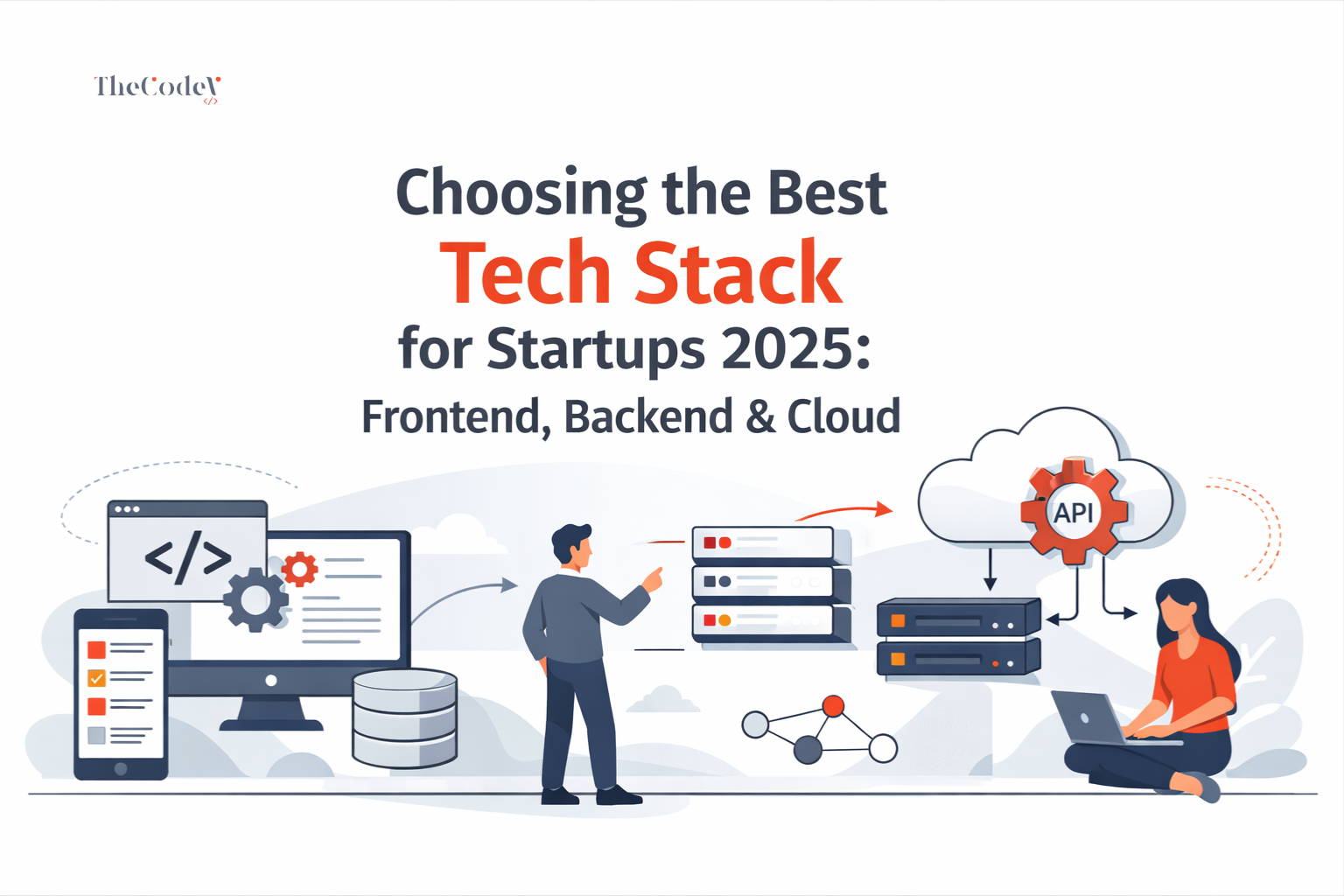
    Choosing the Best Tech Stack for Startups 2025: Frontend, Backend & Cloud

    Why Choosing the Right Tech Stack in 2025 Is a Founder’s Defining Moment

    Every startup begins with pressure. Limited time. Limited budget. Unlimited expectations. In 2025, choosing the wrong technology stack doesn’t just slow progress. It can quietly drain cash, delay launches, and block growth before momentum ever arrives.

    Founders today are building in a market where users expect speed, reliability, and seamless experiences from day one. That makes selecting the best tech stack for startups 2025 a business decision, not a technical afterthought.

    The technology you choose now determines how fast you move, how much you spend, and how easily you scale.

    What Is a Startup Tech Stack?

    A startup tech stack is the combination of tools, frameworks, programming languages, and cloud services used to build and run your product. It includes frontend technologies, backend systems, databases, APIs, and infrastructure.

    In simple terms, it’s the foundation your entire product stands on.

    A poorly chosen startup tech stack 2025 often leads to slow development, rising maintenance costs, and painful rebuilds. A well-chosen one allows teams to ship faster, adapt quickly, and grow without technical chaos.

    This is why experienced founders rely on a clear startup software stack guide rather than chasing trends or copying competitors blindly.

    Why Tech Stack Decisions Are Higher-Stakes in 2025

    Technology moves faster in 2025 than ever before. New frameworks appear yearly. Cloud pricing models change constantly. Hiring markets reward familiar tools and punish obscure ones.

    According to the Stack Overflow Developer Survey, technologies like JavaScript and Python continue to dominate adoption, while developer preference increasingly favours tools that improve productivity and long-term maintainability.
    Source: https://survey.stackoverflow.co/2024/technology/

    This matters because popularity affects hiring speed, community support, and future upgrades. Choosing widely adopted technologies reduces risk and protects your runway.

    At the same time, industry trends show startups shifting towards cloud-native architectures, API-first development, and scalable platforms designed for rapid experimentation. These patterns define the modern tech stack for startups, where flexibility is as important as performance.

    How Your Tech Stack Impacts Speed, Cost, and Scalability

    Speed to Market

    The right stack shortens development cycles. Proven frameworks and managed services reduce setup time and help teams release features faster.

    Startups that move quickly learn faster. Learning faster means surviving longer.

    Cost Control

    Every technical choice has a financial consequence. Your stack influences hosting bills, development hours, and long-term maintenance costs.

    A lean, well-planned architecture supports a lower burn rate without sacrificing quality.

    Scalability Without Rewrites

    Growth should feel exciting, not fragile. A scalable stack allows your product to handle more users without complete system overhauls.

    This is where early guidance matters. Many founders work with experienced teams like TheCodeV, who help startups align technology decisions with real business goals from day one. You can explore how this approach works on the TheCodeV homepage or review tailored development offerings on the TheCodeV services page.

    The Foundation of a Sustainable Startup

    Choosing the best tech stack for startups 2025 is not about picking the newest tools. It’s about selecting technologies that support speed today and stability tomorrow.

    The sections ahead break down frontend, backend, databases, cloud platforms, and startup-specific stacks. Each layer plays a role in building software that grows with confidence rather than constraint.

    Your technology foundation is being set whether you plan it or not. The difference is whether it’s built deliberately or by accident.

    Frontend Technologies That Shape First Impressions in 2025

    Your frontend is where trust is won or lost. In 2025, users judge products in seconds. If your interface feels slow, clunky, or confusing, they leave. That’s why frontend decisions sit at the heart of the best tech stack for startups 2025.

    A strong frontend is not just about visuals. It affects performance, SEO, user retention, and how quickly your team can ship improvements.

    Best Frontend Frameworks 2025 for Startups

    The frontend ecosystem has matured, but only a few frameworks consistently deliver real value for startups. These tools form the backbone of a modern startup web development stack.

    React: The Industry Standard

    React remains the most widely used frontend framework in the world. Its massive ecosystem, long-term stability, and large hiring pool make it a safe choice for startups planning to scale.

    React works especially well for products with complex interfaces, dashboards, or frequent feature updates.

    Next.js: Performance and SEO Combined

    Next.js builds on React and adds server-side rendering and static generation. This improves load speed and search visibility.

    For SaaS platforms, marketplaces, and content-driven products, Next.js is often one of the best frontend frameworks 2025 thanks to its performance and SEO advantages.

    According to Vercel’s engineering insights, server-rendered frameworks significantly improve Core Web Vitals, which directly influence Google rankings.
    Source: https://vercel.com/blog/nextjs-server-components

    Vue: Simplicity and Speed

    Vue offers clean syntax and a gentle learning curve. It allows teams to move fast without heavy configuration.

    Startups with smaller teams often choose Vue to reduce development friction while maintaining solid performance.

    Svelte: Lightweight and Fast

    Svelte shifts work from the browser to build time, producing smaller bundles and faster load times.

    It suits startups focused on highly interactive experiences where performance matters more than ecosystem size.

    Quick Frontend Framework Comparison

    • React: Large talent pool, flexible, proven at scale

    • Next.js: Excellent SEO, fast performance, production-ready

    • Vue: Easy to learn, clean syntax, stable

    • Svelte: Lightweight output, high performance, modern approach

    These frameworks consistently rank among the best frameworks for startup apps because they balance speed, flexibility, and long-term support.

    Performance and SEO Are No Longer Optional

    In 2025, frontend performance directly affects visibility and revenue. Google prioritises fast-loading, accessible websites that deliver strong user experiences.

    Frameworks that support server-side rendering, code splitting, and modern build tooling help startups compete against larger brands with bigger budgets.

    Choosing the right frontend early prevents costly rebuilds later.

    Hiring Reality: Your Stack Affects Your Team

    Frontend choices influence who you can hire and how fast. React and Next.js offer the largest hiring pools. Vue follows closely in many regions. Svelte requires more targeted recruitment.

    Startups that align their frontend with realistic hiring markets reduce delays and onboarding costs.

    This is why teams working with TheCodeV services focus on frontend stacks that match both product goals and talent availability. Founders seeking early clarity often benefit from structured discussions through a TheCodeV consultation before committing to long-term frontend decisions.

    Speed vs Polish: What to Prioritise First

    Early-stage startups should prioritise speed and usability over perfection. Clean, functional interfaces beat visually complex designs that slow development.

    As traction grows, polish becomes strategic. A scalable frontend framework allows refinement without rewrites.

    The right frontend stack gives you both. Speed when you need it, and flexibility when growth demands more.

    Backend Technologies That Decide Whether You Scale or Stall

    A startup can survive an average interface. It rarely survives a weak backend. In 2025, backend decisions carry real financial and operational risk. When traffic grows or features multiply, cracks appear fast. That’s why backend architecture sits at the core of the best technology stack for startups.

    Your backend controls performance, security, data flow, and scalability. If it fails, growth turns into downtime.

    Best Backend Technologies for Startups in 2025

    The best backend technologies for startups prioritise speed, reliability, and developer availability. In 2025, a small group of technologies dominate real-world startup builds because they solve practical problems without overcomplication.

    Node.js: Speed and Flexibility

    Node.js is one of the most popular backend choices for startups. Its event-driven model handles concurrent requests efficiently, making it ideal for APIs and real-time applications.

    Using JavaScript across frontend and backend also simplifies team structure and accelerates development.

    Python: Productivity and Intelligence

    Python is widely used for data-driven products, automation, and AI-powered platforms. Frameworks like Django and FastAPI help teams ship features quickly with clear structure.

    While not always the fastest at runtime, Python excels in development speed and ecosystem depth.

    Java: Stability at Scale

    Java remains a strong option for startups operating in regulated industries or building enterprise-grade platforms.

    It offers long-term stability and scalability, but requires experienced engineers and more upfront setup.

    Go: Performance Without Complexity

    Go is designed for speed and concurrency. It performs exceptionally well under high load and is often chosen for infrastructure-heavy services.

    Startups select Go when performance and efficiency matter more than rapid experimentation.

    PHP: Cost-Effective and Proven

    PHP still powers a large portion of the web. Modern frameworks like Laravel have significantly improved developer experience.

    It remains a cost-effective choice with a large hiring pool, especially for content and commerce platforms.

    Backend Language Trade-Offs at a Glance

    • Node.js: Fast iteration, strong ecosystem, great for APIs

    • Python: Excellent for AI and data, slower raw performance

    • Java: Highly scalable, enterprise-ready, higher complexity

    • Go: High performance, efficient, smaller talent pool

    • PHP: Budget-friendly, mature, easy to hire

    According to the GitHub State of the Octoverse, JavaScript and Python continue to lead global adoption, reinforcing their place among the top programming languages for startups.
    Source: https://octoverse.github.com/

    Monolith vs Microservices for Startup MVPs

    Many founders believe microservices are a requirement for modern products. In reality, this is one of the most common early-stage mistakes.

    Monolithic Architecture: The MVP Winner

    For most startups, a well-structured monolith is faster to build and easier to manage. It reduces operational overhead and simplifies debugging.

    Monoliths allow teams to iterate quickly, which is essential during product validation.

    Microservices: Powerful but Premature

    Microservices offer scalability and independent deployments, but they introduce complexity, infrastructure overhead, and higher costs.

    They make sense later, not during MVP stages.

    The fastest tech stack for startups usually begins as a modular monolith, designed with clean boundaries that allow future evolution into microservices when growth demands it.

    Scalability Without Overengineering

    Scalability is not about choosing the most complex tools. It’s about choosing technologies that grow with your product.

    Clean architecture, widely supported languages, and sensible backend decisions reduce risk and hiring friction. This is where experience matters. Teams working through TheCodeV services help startups design backend systems that scale naturally, guided by practical delivery experience outlined on the TheCodeV about us page.

    In 2025, backend choices are not just technical. They are strategic safeguards for your startup’s future.

    When Databases and APIs Become Growth Blockers

    Many startups don’t struggle because of weak ideas. They struggle because data becomes messy, APIs break, and integrations slow everything down. In a modern startup app development tech stack, databases and APIs quietly determine whether growth feels smooth or painful.

    In 2025, users expect instant responses and connected experiences. That pressure lands directly on how you store data and how systems communicate.

    Choosing the Best Database for Startups in 2025

    The best database for startups is not the most complex option. It’s the one that supports reliability, flexibility, and future scale without heavy maintenance.

    PostgreSQL: Reliable and Scalable

    PostgreSQL is the default choice for many startups in 2025. It handles structured data, complex queries, and transactional workloads with ease.

    For SaaS platforms and business-critical systems, PostgreSQL offers long-term stability without vendor lock-in.

    MongoDB: Flexible and Fast to Adapt

    MongoDB works well when data structures change frequently. Its document-based model reduces friction during early experimentation.

    It’s commonly used for content platforms, analytics tools, and rapidly evolving products.

    Firebase: Speed for Early MVPs

    Firebase prioritises speed and simplicity. It combines real-time databases, authentication, and hosting into one ecosystem.

    Startups often use Firebase to launch MVPs quickly, though long-term scalability may require migration later.

    Database Comparison Snapshot

    • PostgreSQL: Strong consistency, scalable, production-ready

    • MongoDB: Flexible schema, fast iteration

    • Firebase: Rapid setup, minimal backend management

    These tools consistently rank among the best database for startups because they solve real problems without unnecessary complexity.

    API-First Architecture: Designing for Change

    An API-first approach means designing APIs before building features. Every part of the system communicates through well-defined interfaces.

    In 2025, this approach is essential. Products rarely exist in isolation. They connect web apps, mobile apps, third-party services, and partner platforms.

    API-first architecture enables:

    • Parallel frontend and backend development

    • Easier mobile and third-party integrations

    • Cleaner transitions as systems scale

    For lightweight tech stack startups, this reduces rewrites and future risk.

    Best API Tools for Startups in 2025

    Strong APIs require strong tooling. The best API tools for startups help teams design, test, document, and monitor integrations efficiently.

    Widely Used API Tools

    • Postman: API testing, collaboration, and monitoring

    • OpenAPI (Swagger): Clear documentation and contracts

    • Stripe APIs: Industry benchmark for developer experience

    According to Stripe’s engineering insights, clear API design reduces integration errors and support costs while accelerating partner adoption.
    Source: https://stripe.com/blog/api-design

    These tools help startups avoid brittle integrations that fail under growth.

    Integration Without Overengineering

    Modern startups depend on multiple services, from payments to analytics. Integration tools should simplify workflows, not increase complexity.

    API gateways, webhooks, and managed services allow teams to connect systems without building everything from scratch. This keeps stacks lean and maintainable.

    Startups working with experienced teams through TheCodeV services often design clean data and API layers early. When integration challenges arise, direct access to expert guidance via the TheCodeV contact page helps resolve issues before they impact growth.

    In 2025, databases and APIs are no longer background infrastructure. They are core enablers of scale, speed, and stability.

    When Growth Suddenly Starts Burning Cash

    At first, cloud costs feel harmless. A few users, a small bill, no concerns. Then traction hits. Traffic grows, features expand, and cloud spending climbs faster than revenue. In 2025, this moment defines whether a startup scales confidently or panics.

    Within the best scalable tech stack 2025, cloud infrastructure and DevOps decisions directly control burn rate, performance, and reliability.

    Best Cloud Platforms for Startups in 2025

    The best cloud platforms for startups offer flexibility, global reach, and pricing that grows with usage. Most startups choose from three major providers, each with clear strengths.

    Amazon Web Services (AWS)

    AWS is the most widely used cloud platform globally. It offers unmatched service depth and scalability.

    Startups favour AWS for its flexibility and mature ecosystem, though cost management requires careful planning.

    Google Cloud Platform (GCP)

    GCP is popular with data-driven startups. It excels in analytics, machine learning, and performance optimisation.

    Many teams find GCP easier to manage when workloads are predictable and cost efficiency matters.

    Microsoft Azure

    Azure integrates seamlessly with Microsoft products and enterprise environments. It’s often chosen by B2B startups targeting corporate clients.

    Azure’s hybrid capabilities make it suitable for startups planning enterprise expansion.

    Cloud Platform Comparison Snapshot

    • AWS: Most services, maximum flexibility

    • GCP: Strong data tools, transparent pricing

    • Azure: Enterprise-ready, Microsoft ecosystem

    These providers consistently appear in discussions around the best cloud platforms for startups because they support real-world scaling, not just theory.

    Best Cloud Hosting for Startups: Keep It Simple

    In 2025, cloud hosting is less about managing servers and more about reducing operational burden. Startups increasingly rely on managed services to stay lean.

    Common hosting choices include:

    • Managed databases

    • Serverless functions

    • Container platforms

    According to Amazon Web Services, startups using managed services reduce infrastructure maintenance and focus more on product development.
    Source: https://aws.amazon.com/startups/

    This approach supports a low cost tech stack for startups, where spending grows only when usage grows.

    DevOps Tools That Reduce Burn Rate

    DevOps is no longer optional. But it doesn’t need to be complex. The best devops tools for startups automate repetitive tasks and prevent costly downtime.

    High-Impact DevOps Tools in 2025

    • Docker: Consistent environments across teams

    • GitHub Actions: Automated testing and deployments

    • Terraform: Infrastructure management with fewer errors

    These tools reduce manual work, speed up releases, and minimise mistakes. Faster deployments mean faster feedback and lower operational costs.

    Cloud as a Strategic Advantage

    Cloud infrastructure is no longer just a hosting choice. It’s a financial and operational strategy.

    Founders who understand cloud trade-offs gain control over scaling and spend. Those who ignore them often face painful migrations later.

    Resources like TheCodeV cloud providers comparison help founders evaluate platforms clearly, while hands-on support through TheCodeV services ensures cloud and DevOps decisions align with real business goals.

    In 2025, the smartest startups treat cloud infrastructure as a growth enabler, not a background expense.

    One Size Never Fits All in Startup Technology

    Every startup wants to scale, but not every startup scales the same way. A SaaS platform, a mobile app, and a blockchain product face very different technical pressures. This is why copying another company’s setup often creates problems later.

    In 2025, the smartest founders match technology to business model. The right stack supports how you build, sell, and grow.

    Best Tech Stack for SaaS Startups

    SaaS products depend on reliability, security, and continuous iteration. The best tech stack for SaaS startups supports frequent updates, stable performance, and predictable scaling.

    Typical SaaS Tech Stack in 2025

    • Frontend: React or Next.js

    • Backend: Node.js or Python

    • Database: PostgreSQL

    • Cloud: AWS or Google Cloud

    • DevOps: Docker, CI/CD pipelines

    This stack balances speed with long-term stability. It also aligns with common hiring markets, reducing friction as teams expand.

    Founders building subscription platforms often explore tailored approaches through TheCodeV SaaS development services, where technology choices are aligned with revenue and growth goals.

    Startup MVP Tech Stack: Validate First, Optimise Later

    An MVP exists to test assumptions, not to support millions of users. The startup MVP tech stack should prioritise speed, simplicity, and low upfront cost.

    Common MVP Stack Choices

    • Frontend: React or Vue

    • Backend: Node.js or Firebase

    • Database: Firebase or MongoDB

    • Hosting: Managed cloud services

    This setup minimises configuration and allows fast pivots. Overengineering an MVP delays learning and increases burn rate without adding value.

    For early-stage founders, a lightweight approach keeps focus on users, not infrastructure.

    Best Mobile App Tech Stack 2025

    Mobile-first startups must balance performance, development speed, and cost. The best mobile app tech stack 2025 often blends native power with cross-platform efficiency.

    Popular Mobile App Stacks

    • Cross-platform: Flutter or React Native

    • Backend: Node.js or Python APIs

    • Database: PostgreSQL or Firebase

    • Cloud: AWS or Google Cloud

    Cross-platform frameworks reduce development cost while reaching both iOS and Android users quickly. This approach suits most early-stage mobile products.

    Founders planning mobile launches often review cost implications through TheCodeV mobile app development costs guide to align technical decisions with budget reality.

    Best Tech Stack for Blockchain Startups

    Blockchain startups prioritise security, transparency, and decentralisation. The best tech stack for blockchain startups reflects these needs while maintaining usability.

    Common Blockchain Stack Components

    • Frontend: React or Next.js

    • Backend: Node.js or Go

    • Blockchain Network: Ethereum or Polygon

    • Smart Contracts: Solidity

    • Infrastructure: Cloud services plus decentralised nodes

    Most blockchain products combine traditional cloud infrastructure with decentralised elements. This hybrid model keeps applications usable while preserving trustless principles.

    Aligning Stack With Strategy

    Choosing a stack is not about trends. It’s about fit.

    SaaS startups need reliability. MVPs need speed. Mobile apps need performance. Blockchain platforms need security.

    In 2025, founders who respect these differences build technology that supports growth instead of restricting it.

    Choosing the Right Tech Partner in 2025

    Technology alone does not guarantee success. In 2025, the startups that scale smoothly are those that choose the right people to guide their technical decisions. A strong tech partner helps you avoid costly mistakes before they slow growth.

    The goal is not just to build software. It is to build software that lasts.

    How Founders Should Evaluate a Tech Partner

    A reliable tech partner understands both engineering and business outcomes. They do not push tools for convenience. They recommend solutions that fit your goals, budget, and growth plans.

    When evaluating a partner, founders should look for:

    • Clear explanations of trade-offs, not buzzwords

    • Experience with startups at different growth stages

    • Honest advice on cost, scalability, and timelines

    • The ability to adapt the best full stack for startups to real needs

    The right partner treats your product like a business asset, not a coding exercise.

    Common Tech Stack Mistakes Startups Still Make

    Even in 2025, many startups repeat the same avoidable errors.

    Choosing Trends Over Fit

    New frameworks appear every year. Not all of them belong in your product. Selecting tools without considering hiring, maintenance, and long-term support often leads to expensive rewrites.

    Overengineering Too Early

    Complex architectures, premature microservices, and heavy DevOps pipelines increase cost without delivering value at early stages.

    Ignoring Future Hiring Reality

    A brilliant stack is useless if you cannot hire developers to maintain it. Widely adopted tools reduce recruitment risk and speed up onboarding.

    Avoiding these mistakes is often the difference between steady growth and constant technical firefighting.

    How Expert Guidance Saves Time and Money

    Expert guidance shortens learning curves. It replaces trial and error with proven decision-making.

    Teams who understand the best programming stack for startups help founders:

    • Launch MVPs faster

    • Control cloud and development costs

    • Scale without disruptive migrations

    • Maintain clean, adaptable architecture

    This is where experienced delivery teams make a measurable impact. At TheCodeV, global project experience is combined with startup-focused thinking to deliver practical startup technology solutions that evolve with your business.

    In complex or specialised builds, collaboration with trusted partners such as EmporionSoft strengthens architectural depth and delivery capability without adding unnecessary overhead.

    The Best Tech Stack for Startups 2025: A Clear Takeaway

    There is no universal stack that fits every startup. The best choice is one that balances speed, cost, and scalability while remaining easy to hire for and maintain.

    In 2025, the strongest tech stacks are:

    • Modern but proven

    • Scalable without overengineering

    • Cost-aware from day one

    • Aligned with real business goals

    When technology supports strategy, growth feels natural instead of fragile.

    Ready to Build With Confidence?

    If you are planning an MVP, scaling a SaaS product, or rethinking your architecture, expert guidance can save months of effort and thousands in cost.

    You can book a consultation to discuss your goals in detail, or contact TheCodeV to explore how a tailored tech stack strategy can support your startup’s growth.

    The right tech stack is not just a foundation. It is a competitive advantage.
  • Composable Architecture for Startups: Event-Driven, API-First Backends

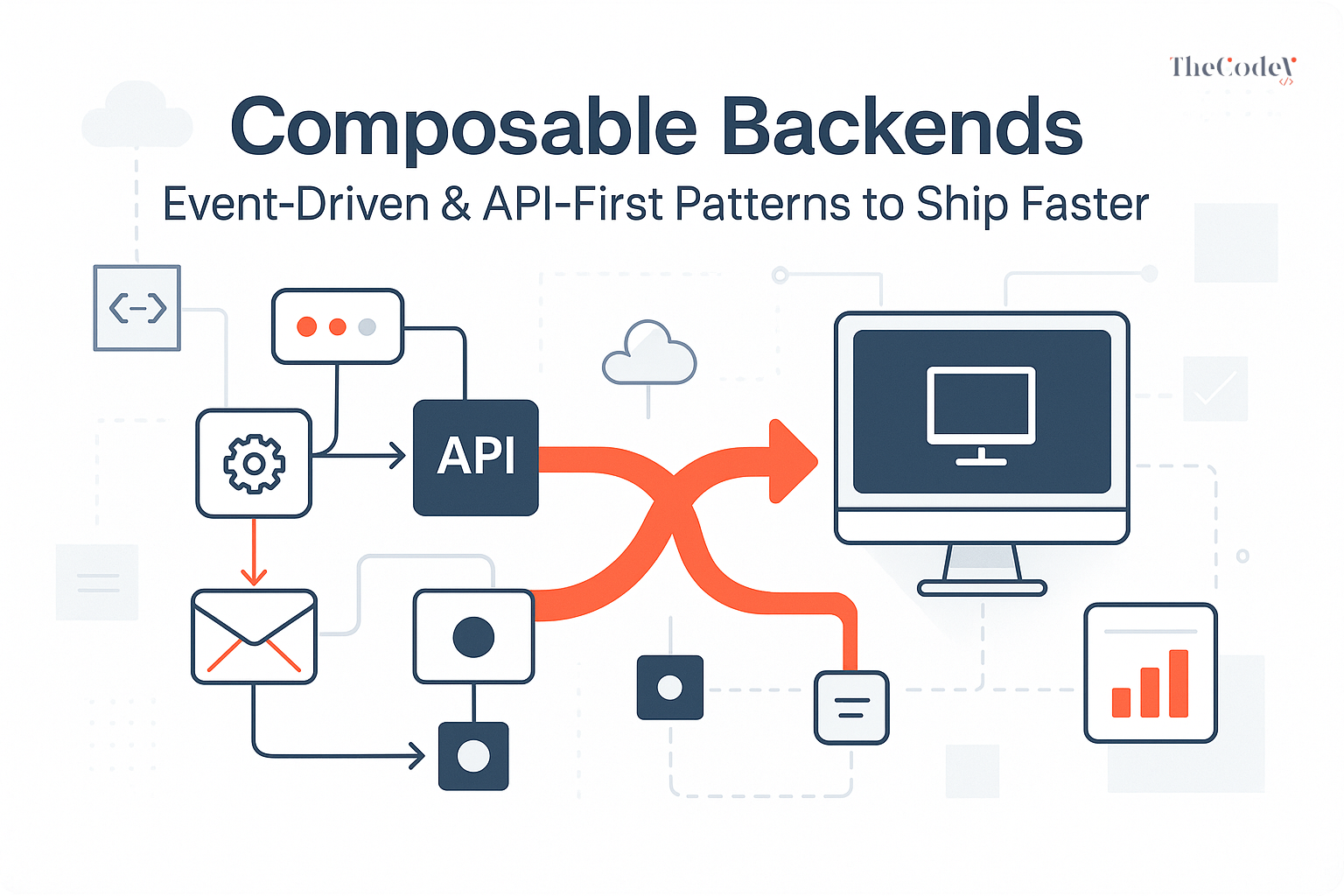
    Composable Architecture for Startups: Event-Driven, API-First Backends

    The Rise of Composable Architecture for Startups

    Speed has become the single biggest advantage a young business can hold. In a market shaped by economic pressure, tightening investor expectations, and the rapid acceleration of AI-driven products, founders are searching for ways to move faster without sacrificing stability. This is where composable architecture for startups steps in: a development approach built on modular, replaceable components that can evolve independently as your product grows.

    Instead of building everything inside one rigid codebase, composable architecture breaks systems into small, purposeful services connected through APIs. For early-stage teams, especially across the UK tech scene, this shift represents more than a technical upgrade—it’s a strategic advantage. As more startups adopt composable architecture for startups UK, the old idea of a single monolithic backend is fading out faster than expected.


    Why UK Startups Are Moving Beyond Monolithic Backends

    Over the past five years, the UK startup environment has changed dramatically. Funding rounds have become more selective, investors demand evidence of traction earlier, and the rise of AI tools has squeezed product timelines. Building slow is no longer an option.

    Modular and API-first systems give founders breathing room. A team can ship a new feature without rewriting half the product. A service can scale without pulling the entire backend down. This is exactly why API-first architecture UK startups is now trending across industries—fintech, healthtech, ecommerce, and even education platforms built by companies like EmporionSoft.

    The MACH movement—Microservices, API-first, Cloud-native, and Headless—is also gaining momentum among MACH architecture startups UK, thanks to its flexibility and future-proof approach. When a business can swap components instead of rebuilding an entire platform, iteration becomes a strength rather than a burden.


    From MVP to Scale: Why Composable Wins Early

    Startups do not only need to build fast—they need to validate even faster. A composable backend makes this easier because each piece of the system is designed to stand alone. If one service fails or needs updating, the rest keeps moving.

    For a small team trying to validate an MVP, this is gold.

    A startup can launch core features first, then plug in more capabilities later. Payment systems, authentication modules, CMS content blocks, and recommendation engines can be integrated or replaced without tearing down the architecture. This modular approach is especially valuable for founder-led teams where engineering resources are thin.

    With cloud native architecture UK small business adoption rising, infrastructure has never been more affordable or accessible. Platforms like AWS and Azure now provide serverless environments that scale automatically, letting startups pay only for what they use—a significant advantage when runway is limited. A study by Gartner supports this shift, noting that modular and API-first ecosystems can reduce integration time by up to 50% (source: Gartner).


    The UK Tech Environment Favouring Composable Backends

    The UK is becoming a hub for modular software development, not just because the technology is better, but because the business climate demands it. Startups face pressure to:

    validate ideas early
    reduce development costs
    respond quickly to changing user expectations
    integrate AI tools and real-time analytics

    A monolithic system simply cannot keep up with the speed and uncertainty of the current landscape.

    Composable architecture offers a path forward. It supports rapid iteration cycles, independent deployments, and a structure designed for long-term adaptability. The shift happening among UK-based founders, SaaS companies, and digital agencies reflects one truth: flexibility is no longer optional.

    For businesses working with expert teams such as those at TheCodeV, adopting a modular backend becomes easier through access to modern engineering practices, personalised development strategies, and a deep understanding of event-driven systems. Founders exploring digital transformation can start reviewing the process through TheCodeV’s resources at https://blogs.thecodev.co.uk/ and explore technical capabilities at https://blogs.thecodev.co.uk/digital-services/.

    As the startup ecosystem continues to evolve, composable systems are emerging as the backbone of fast-moving, resilient, and AI-ready UK businesses.

    Understanding Event-Driven Architecture in Modern Startups

    Event-driven architecture is becoming a defining pattern in the way fast-moving digital products operate. Instead of relying on a chain of tightly connected processes, event-driven systems respond to “events” — actions or triggers that occur across different parts of an application. When something happens, such as a user making a purchase or a sensor sending new data, an event is fired and individual services react independently.

    This structure brings a natural flexibility. Services activate only when needed. Workloads scale automatically. Systems remain resilient even under unpredictable usage patterns. For early-stage companies, this means fewer bottlenecks and more room to experiment. Event-driven thinking is becoming embedded in microservices API-first architecture UK startups, where each component behaves as an autonomous function rather than a piece of a rigid chain.


    Why Startups Prefer API-First Systems

    API-first systems give startups room to move quickly. Every feature is built with a clear public interface from day one, making communication between services simple and predictable. For new products navigating uncertain markets, this offers a real advantage: you can replace, update, or extend any part of the system without rewriting the entire backend.

    This is why founders are leaning toward API-first composable architecture UK tech stack designs. Instead of building a backend and “adding APIs later,” the API becomes the foundation around which all services operate. It’s a mindset shift that prioritises integration, interoperability, and future-proofing.

    API-first approaches also help teams collaborate efficiently. Different developers can work on separate services without stepping on each other’s code. Mobile apps, web dashboards, IoT devices, and third-party partners can all interact with the system through a unified contract. In the UK’s increasingly competitive software landscape, this level of clarity speeds up development and lowers long-term maintenance costs.


    The Power of Microservices, Modularity, and PBCs

    Microservices break down an application into small, independent services with a single purpose. When combined with modular design, this creates systems that can evolve in several directions at once. For startups, it means new features can be built, deployed, and scaled without touching the rest of the product. Microservices naturally support experimentation — something young companies depend on.

    Packaged Business Capabilities (PBCs) extend this idea by bundling microservices into business-focused units. A PBC might include payment handling, product recommendations, or customer profiles. These units can be reused across multiple applications or replaced with new vendors without massive reengineering. The Packaged Business Capabilities (PBCs) UK market is expanding quickly as ecommerce platforms, SaaS products, and digital service providers look for agility.

    This approach fits neatly within composable backends. Instead of building one giant system, startups assemble a set of capabilities that work together but can change independently. It’s modularity with a business-aligned framework.


    How Event-Driven and API-First Patterns Shape Composable Backends

    When event-driven systems and API-first philosophy combine with microservices, you get the foundation of a true composable backend. Each service communicates through clear interfaces. Events circulate freely across the system. Workloads scale on demand. Every part of the system is designed to evolve separately and survive independently.

    Composable backends also allow teams to test new ideas with fewer risks. If a recommendation engine experiment fails, the rest of the system stays healthy. If a payments provider becomes too expensive, it can be swapped for another. This flexibility is a major reason UK founders are rapidly replacing traditional monoliths with modular, event-driven platforms.


    The UK Ecosystem Shift Toward Serverless, Integrations, and Cloud-Native Commerce

    A growing number of UK-based companies are embracing serverless technology to reduce infrastructure overhead and speed up deployments. Serverless platforms such as AWS Lambda, Azure Functions, and Google Cloud Run give startups instant scalability without managing servers manually. Their rise aligns perfectly with the growth of cloud-native modular architecture UK e-commerce, where platforms need to scale quickly during traffic spikes and personalise experiences in real time.

    This trend is strengthened by a wider cultural shift in the UK startup ecosystem: integrations-first development. Payment gateways, CRM systems, headless commerce engines, analytics tools, and AI services can now be added through lightweight APIs rather than complex custom builds.

    As more businesses explore composability, organisations like TheCodeV help founders design modular backend strategies that support this new wave of event-driven and API-first thinking. Readers can explore solutions at https://blogs.thecodev.co.uk/ or discover technical services at https://blogs.thecodev.co.uk/digital-services/.

    According to an analysis by Google Cloud, microservices and event-driven systems significantly reduce deployment risk and enable faster iteration cycles for cloud-native teams (Google Cloud, 2024). This reinforces the growing momentum behind composable systems in the UK market.

    The Shift Toward Headless and Composable Commerce

    Ecommerce is evolving faster than almost any other digital sector, and UK-based startups are feeling the impact. Customers expect seamless experiences across mobile, desktop, apps, marketplaces, and even social shopping platforms. To keep up, founders are turning to composable commerce architecture UK solutions that break rigid ecommerce systems into flexible, interchangeable parts.

    Headless commerce plays a major role in this shift. In a headless setup, the frontend is separated from the backend, giving teams freedom to design fast, responsive experiences without relying on a tightly coupled system. When headless meets full composability, startups gain a retail stack that can grow with their brand and integrate new tools without major rebuilds. This combination is becoming a defining feature of headless ecommerce UK startup launch strategies across the country.


    Understanding MACH Architecture for Modern Retail

    MACH architecture—Microservices, API-first, Cloud-native, and Headless—is shaping the next generation of digital commerce. Each part of MACH contributes something critical:

    Microservices provide modularity and independence.
    API-first ensures clean communication between all components.
    Cloud-native architecture enables elasticity and rapid scaling.
    Headless systems separate content delivery from business logic.

    UK startups are adopting MACH for one simple reason: it gives them speed without locking them into specific vendors. This flexibility is essential in competitive markets where new payment methods, personalised shopping journeys, or AI-driven recommendations must be added quickly. For many digital retailers, MACH isn’t just a technical preference—it’s becoming a business advantage.

    The MACH Alliance, an industry group promoting these principles, highlights that composable and headless systems outperform traditional monoliths in long-term agility and innovation (MACH Alliance, 2024).


    Why UK Founders Prefer Composable Commerce Over Traditional Stacks

    Old ecommerce platforms were built as all-in-one systems. They worked well for predictable markets, but today’s retail environment demands adaptability. Composable commerce vs headless commerce UK discussions are becoming common among founders deciding between different levels of flexibility.

    Headless solves the frontend problem, but composable goes further. It allows each backend capability—payments, catalogue management, authentication, cart logic, fulfilment, reviews—to become replaceable. If a startup wants to test a new checkout provider, switch to a smarter product recommendation engine, or add subscriptions, composable commerce makes it easy.

    This matters in the UK’s fast-changing consumer landscape, where digital-first buyers expect fast load times, personalisation, and frictionless transactions. Founders exploring modern stacks often consult teams like TheCodeV to build a resilient architecture that evolves as their online store grows. Readers can explore capabilities at https://blogs.thecodev.co.uk/ and discover ecommerce-focused development services at https://blogs.thecodev.co.uk/digital-services/.


    Examples of Scalable Online Retail Stacks

    A well-designed modular retail architecture might look like this:

    A headless CMS for content
    A dedicated product information management (PIM) system
    Independent cart and checkout services
    Third-party or custom recommendation engines
    A microservices-based order pipeline
    API-first payment gateways
    Serverless backend functions for bursts of traffic

    This setup allows a UK startup to introduce new features without downtime. For example, adding a loyalty engine or integrating a new shipping provider becomes a lightweight change rather than a heavy, months-long rebuild.

    This approach also supports experimentation. If a founder wants to A/B test a new search provider, the rest of the stack stays untouched. If a different service offers better pricing or performance, switching becomes straightforward.


    Rapid Deployment Advantages for UK Startup Founders

    Speed-to-market is everything for ecommerce founders, especially those operating with limited runway or targeting competitive niches. With scalable ecommerce architecture for UK startups, teams can build a functioning store in weeks, not months, and continue adding new modules as they validate customer behaviour.

    Serverless technology also boosts this advantage by handling unpredictable traffic patterns automatically. Whether a brand goes viral on TikTok or receives a Sunday surge of shoppers, the infrastructure scales instantly. This reliability helps startups avoid major outages during critical sales moments.

    Platforms like Shopify and BigCommerce have also published research showing that merchants who adopt composable and headless systems innovate faster and outperform traditional ecommerce builds in long-term cost efficiency (Shopify, 2024). This aligns strongly with the growing movement toward composability within the UK startup ecosystem.

    As the demand for flexible, future-ready ecommerce systems increases, UK founders are recognising composable commerce as the key to faster launches, smarter integrations, and long-term scalability.

    Why Composable Architecture Gives Startups a Competitive Edge

    Startups operating in the UK face a mix of opportunity and pressure. Markets shift quickly, customer expectations rise faster than ever, and funding rounds demand clearer evidence of progress at every stage. In this environment, the benefits of composable architecture for new businesses UK go beyond technical elegance—they directly support survival and long-term growth.

    Composable systems break applications into modular, replaceable components. Each service stands alone, communicates through APIs, and scales independently. For a founder navigating uncertainty, this setup becomes a strategic safety net. Instead of committing to a rigid platform, the product evolves piece by piece, at a pace that matches customer needs.


    Cost Efficiency for Both Bootstrapped and Funded Teams

    Startups often operate with tight budgets, especially during the pre-seed and seed stages. Composable systems help reduce infrastructure costs because each service only consumes resources when it’s used. This means new features or modules can launch without the burden of maintaining an oversized server environment.

    For bootstrapped founders, this is a lifeline. By adopting cloud-native composable infrastructure UK companies, small teams only pay for what they need. Serverless functions, autoscaling, and microservices ensure resources are used efficiently. Even funded startups benefit: the money saved on infrastructure can be redirected to marketing, hiring, or product expansion.

    Accenture’s research highlights that modular and composable platforms reduce long-term operational costs while improving innovation speed (Accenture, 2023). This validates the growing interest in composability among UK-based startups building lean but resilient digital products.


    Pivot Faster Without Breaking the System

    Most startups pivot at least once. Markets move, user preferences change, and early hypotheses often need revision. Traditional monolithic systems make this difficult because everything is tightly connected. Changing one feature risks breaking several more.

    Composable systems turn pivoting into a manageable process. A single service—such as onboarding, checkout, or analytics—can be redesigned or replaced without affecting the rest of the product. This agility is one of the most recognised flexible backend architecture UK startup environment advantages.

    Being able to pivot without pausing user activity or restructuring the entire codebase gives teams the freedom to respond to real data rather than guesses.


    Faster Feature Releases and Iteration Cycles

    Feature velocity is one of the strongest selling points for composable systems. When each module operates independently, engineers can push updates without waiting for full-system deployments. This keeps innovation flowing quicker and reduces downtime risks.

    A monolithic model requires heavy coordination for any meaningful update, often slowing progress to a crawl. By contrast, composable architecture supports continuous deployment, rapid iteration, and frequent experimentation—all crucial in early product discovery phases.

    Founders working with TheCodeV often use this advantage to roll out new capabilities in small increments, validating ideas through real-world user behaviour. Readers can explore the development capabilities at https://blogs.thecodev.co.uk/ or explore tailored digital solutions at https://blogs.thecodev.co.uk/digital-services/.


    Independent Scaling for Growth Moments

    Startups rarely grow in a straight line. Some features experience sudden spikes—checkout, search, notifications, or content delivery. Composable architecture allows each of these services to scale independently, preventing the need for heavy upgrades across the entire platform.

    This granular scaling protects performance during high-traffic events, viral moments, or seasonal peaks. It also keeps costs under control since only the stressed components scale, not the whole system.


    Resilience, Reliability, and Fail-Safe Architecture

    Because microservices operate independently, issues remain isolated. If one module fails, the rest of the system continues functioning. For UK startups where uptime is critical, this reliability becomes a strategic asset.

    Monoliths often suffer from “cascade failures,” where one issue crashes the entire platform. Composable architecture avoids this by design, giving founders more confidence during product launches, marketing campaigns, or investor showcases.


    Vendor Flexibility Without Lock-In

    Vendor lock-in has been a silent concern for UK digital businesses for years. Composable systems solve this by allowing startups to swap providers or tools without major reengineering. Whether it’s payments, search, authentication, or analytics, each module can be replaced with a better option.

    This adaptability supports both early experimentation and long-term optimisation.


    Composable Architecture vs Monolithic: What UK Startups Need to Know

    The composable architecture vs monolithic UK startup comparison is becoming increasingly relevant. Monolithic systems centralise all logic, making them harder to scale, update, or modify. Composable systems, on the other hand, treat every feature as a plug-and-play component.

    For new businesses trying to find market fit, composable architecture provides speed, resilience, and flexibility. Monolithic backends still work for small, tightly scoped projects, but once growth begins, they quickly create bottlenecks.

    This shift is why more UK founders—from small ecommerce brands to AI-driven platforms—are choosing composability as their core approach to digital product development.

    Challenges Startups Face When Adopting Composable Backends

    While composability offers clear advantages, the journey to adoption isn’t always straightforward. Many startups in the UK discover early that modernising their backend requires more than enthusiasm—it demands planning, capability, and the right engineering culture. As composable architecture adoption UK market accelerates, three core challenges consistently surface: technical debt, team capability, and integration complexity.

    Technical debt often slows the shift because legacy codebases are tightly coupled and difficult to break into modular components. Teams may find it hard to disentangle features or restructure outdated APIs. Similarly, founders working with small engineering teams face capability challenges. Not every developer is familiar with distributed systems, event-driven workflows, or microservices orchestration.

    Integration complexity is another major hurdle. A composable backend relies on several independent services communicating cleanly, often in real time. If APIs are poorly structured or events fire inconsistently, the system becomes unstable. These concerns are common among startups exploring API-first architecture UK startups, where integration is the backbone of every feature.


    Practical Solutions and Best Practices for UK Startups

    The good news is that these challenges are solvable with a disciplined approach. Startups adopting modular and composable systems can follow a set of proven practices to reduce risk and maintain steady progress.

    One effective method is to begin with a “strangler pattern”—gradually replacing pieces of the monolith with microservices rather than attempting a full migration. This keeps the product stable while enabling the team to experiment with new architecture patterns.

    Another best practice is to document every API endpoint clearly and enforce a consistent communication standard. API-first development thrives when all services speak the same language, follow predictable contracts, and use shared authentication rules.

    Founders should also consider small, high-impact microservices first: authentication, payment gateways, or search modules. These pieces tend to offer quick wins, giving teams confidence before tackling more complex areas like fulfilment or analytics.

    This gradual refactor aligns with modular software architecture UK startup best practices, enabling a smooth transition that minimises risk and maximises learning for early engineering teams.

    Readers exploring modern backend and modular development workflows can review TheCodeV’s capabilities at https://blogs.thecodev.co.uk/ and discover additional system design expertise at https://blogs.thecodev.co.uk/digital-services/.


    Growing UK Adoption Trends in Composable and Modular Backends

    Across the UK, startups and SMEs are adopting composable backends at a faster pace. This shift is driven by several factors: the growth of SaaS ecosystems, venture pressure for rapid innovation, and the ease of integrating cloud-native tools.

    Fintech, ecommerce, healthtech, education platforms, and AI-powered products now view composability as a default approach rather than an emerging trend. The rising popularity of microservices, event-driven design, and API-first systems is influencing how digital products are built from day one.

    Analysts note that the composable architecture adoption UK market has grown significantly as companies move away from generic all-in-one platforms to more adaptable ecosystems. Startups want independence, faster iteration cycles, and the freedom to mix and match tools based on performance and pricing.

    An external report from Deloitte confirms that modular and cloud-native architectures accelerate innovation cycles while reducing operational friction, especially in fast-growing digital businesses (Deloitte, 2024).


    Cloud-Native Tooling and Its Role in Composability

    Cloud-native ecosystems make composable architecture far easier to adopt. Serverless functions, managed databases, event buses, container orchestration platforms, and automated pipelines now reduce the engineering overhead traditionally required to build distributed systems.

    This rise of cloud-native tooling fuels cloud-native composable infrastructure UK companies, enabling them to scale individual components with ease. Developers can deploy microservices rapidly, automate testing, and optimise costs through autoscaling.

    The ability to mix vendors—AWS Lambda for compute, Firebase for authentication, or a headless CMS for content—creates an environment where startups build more by composing than reinventing.

    These tools also simplify monitoring and observability, both critical when moving from a monolith to a distributed architecture.


    Managing Organisational Change During the Shift to Composable Backends

    Adopting composability is not just a technical shift—it’s a cultural one. Teams must learn to collaborate around services rather than monoliths. Product managers and engineers need clearer boundaries between features. Leadership must understand that composable adoption is iterative, not instantaneous.

    Startups typically succeed when they adopt a service-oriented mindset early: small deployments, clean API documentation, regular refactoring, and cross-team communication. Building internal capability is crucial. As teams grow more comfortable with service isolation, they gain confidence to expand modularity across the entire product.

    For UK founders, this mindset shift is becoming a core requirement as the digital ecosystem matures. Composability ultimately becomes a framework for innovation—allowing startups to build products that evolve at the same pace as the market.

    The Future of Composable Backends for Fast-Growing Startups

    The next decade of digital product development will be shaped by flexibility, speed, and the ability to integrate technologies without friction. This is why composable architecture for startups is moving from an emerging trend to a default engineering philosophy. As markets shift rapidly, founders need technology that adapts just as quickly. Composable systems empower teams to assemble backends using independent services, avoid lock-in, and scale with precision.

    The future belongs to businesses that can adopt new tools, experiment confidently, and deploy changes without disrupting the entire system. That foundation is built on composability.


    Event-Driven, Headless, and API Ecosystems Becoming the New Standard

    Across the UK and beyond, startups are adopting event-driven backends as their core engine. Event streaming, asynchronous workflows, and real-time data triggers enable products to respond instantly to customer behaviour. This responsiveness is especially important in AI-driven products, ecommerce platforms, and SaaS dashboards where instant feedback loops shape user experience.

    Headless systems and API ecosystems are accelerating this shift. Headless gives teams creative freedom across channels—from mobile apps to kiosks to web dashboards—while API ecosystems allow companies to integrate best-in-class third-party tools. Together, these patterns strengthen the case for rapid deployment composable architecture UK, where features can be replaced or upgraded without costly rebuilds.

    External research from McKinsey confirms that companies adopting composable and modular architectures outperform competitors by reacting to market changes up to five times faster (McKinsey, 2024). This reinforces why the UK startup scene is rapidly embracing these principles.


    The UK Startup Ecosystem Is Perfectly Positioned for Composability

    The UK has become one of the most dynamic startup environments in Europe. Founders face both pressure and opportunity: fast-moving competitors, demanding investors, and customers expecting seamless digital experiences. For many, traditional monolithic backends simply cannot deliver the speed or resilience required to survive in this landscape.

    This is where composable infrastructure for SaaS UK startups enters the picture. SaaS businesses rely on rapid iteration, robust integrations, and the ability to roll out new features weekly or even daily. Ecommerce startups require modular checkout flows, flexible product systems, and scalable catalogues. AI startups need real-time processing, microservices for inference workloads, and cloud-native orchestration.

    A composable backend supports all of these needs while keeping costs predictable and development velocity high. Even companies like EmporionSoft have demonstrated how modular, API-first systems reduce deployment risk while enabling faster experimentation across different industries.


    How Founders Can Plan Their Migration Roadmap

    Transitioning from a monolithic backend to a composable one does not need to be overwhelming. With the right roadmap, founders can make progress steadily while maintaining product stability. The journey usually follows four phases:

    Discovery and architecture mapping
    Identify core domains, high-value services, and existing bottlenecks.

    Strangler migration
    Gradually replace monolithic components with microservices or modularised capabilities.
    Early transformations often include authentication, payments, search, or content delivery.

    Adopt event-driven and API-first workflows
    Shift communication away from tightly bound calls and toward events, queues, and standardised APIs.

    Expand composability across the entire stack
    Introduce modular e-commerce features, AI inference microservices, reporting engines, or automated workflows.

    This roadmap supports predictable growth. Each migrated component strengthens the system, reduces complexity, and prepares the foundation for scalable product development.

    Founders working with TheCodeV gain access to hands-on specialists who architect, refactor, and deploy modular systems aligned with modern UK startup demands. Interested readers can explore capabilities at https://blogs.thecodev.co.uk/ and study deeper technical service offerings at https://blogs.thecodev.co.uk/digital-services/. For consultation or direct engagement, the contact page at https://blogs.thecodev.co.uk/contact/ provides a direct route to expert guidance.


    Why Composability Is the Best Fit for SaaS, Ecommerce, and AI Products

    Composable systems shine brightest in businesses that evolve quickly and integrate several technologies simultaneously. SaaS startups can deploy new modules without interrupting existing users. Ecommerce brands enjoy headless storefronts, flexible product engines, and cloud-native scalability during traffic surges. AI-driven products benefit from microservices that isolate inference tasks, optimise performance, and scale independently.

    Because composability accelerates innovation, reduces downtime, and enables consistent user experiences, it is becoming the architecture of choice for UK founders aiming to grow beyond MVP and into long-term success.


    Final Conclusion: The Architecture Built for the Future

    Startups that invest in composable backends today position themselves to innovate faster, scale with confidence, and outpace competitors who remain locked into monolithic systems. The future of product development—API-first, headless, event-driven, cloud-native—is already here. Composability simply gives founders the blueprint to use it effectively.


    Work With TheCodeV — Build a Future-Proof, Composable Product

    If you’re ready to modernise your digital product or migrate from a monolithic backend, now is the perfect time to act. TheCodeV specialises in designing and building composable, cloud-native, event-driven architectures tailored to fast-moving startups in the UK and around the world. Whether you’re launching a SaaS platform, scaling an ecommerce store, or building an AI-powered product, our team will architect a flexible system that grows with your vision.

    Book a consultation today at https://blogs.thecodev.co.uk/contact/, explore our full range of digital services at https://blogs.thecodev.co.uk/digital-services/, or learn more about our approach at https://blogs.thecodev.co.uk/.
    Your product deserves an architecture built for speed, resilience, and long-term success—partner with TheCodeV and build the future, one composable block at a time.

  • DevEx as Strategy: How Developer Experience Accelerates Delivery

    DevEx as Strategy: How Developer Experience Accelerates Delivery

    Why Developer Experience Strategy Has Become a Competitive Advantage for Small Engineering Teams

    The fastest-moving teams today aren’t always the biggest. They’re the ones where developers feel energised, supported, and free from unnecessary friction. In small engineering teams across the UK, every minute counts. Delivery speed and engineering morale frequently determine whether a company stays relevant, lands clients, or falls behind. That’s why a strong developer experience strategy is no longer a luxury—it’s become a genuine competitive differentiator.

    Small teams don’t have the comfort of excess headcount. When one developer is stuck, the entire delivery timeline suffers. When friction builds, productivity drops. When processes feel heavy, people leave. DevEx has emerged as the glue holding small engineering teams together, aligning culture, tooling, workflows, and psychological safety into one unified approach that supports sustainable speed.

    The Shift Toward Engineering as an Experience

    Over the past few years, engineering leaders have realised that the environment developers work in matters just as much as the code they write. Creating this environment means thinking of engineering as an experience—one that needs care, optimisation, and long-term investment.

    In the UK, where tech hiring markets shift quickly and competition for retention is tough, the emphasis on software engineering productivity UK has grown rapidly. Companies are finally recognising that productivity isn’t just about squeezing more output per hour. It’s about removing barriers so developers can focus on the work they do best.

    As Martin Fowler notes in his widely respected writing on development culture, “Good developers are faster by virtue of being able to change code more easily” — a statement that reinforces the connection between ease-of-work and performance (Source: martinfowler.com).

    When friction is removed, flow improves. When engineers feel supported, engagement increases. This is where DevEx becomes a strategic lever, not an operational afterthought.

    Why Friction Hits Small Teams Harder

    Big enterprises can afford inefficiencies. Small teams cannot. A single blocker—an unclear requirement, a failing pipeline, undocumented onboarding steps—can derail a project sprint or frustrate an entire team.

    That’s why reducing developer friction UK has become essential. Small engineering teams rely heavily on rapid problem-solving, context-sharing, and psychological safety. When developers hit fewer roadblocks, they deliver faster and with less cognitive strain.

    Friction doesn’t just slow output. It affects morale, job satisfaction, and ultimately team retention. Even small improvements in tools, processes, or onboarding can create a noticeable lift in delivery speed.

    Companies like TheCodeV and EmporionSoft treat developer experience as a strategic investment, not a side project. By refining team workflows, standardising tools, and building strong documentation habits, they minimise wasted effort and give developers a clear path to doing meaningful work.

    You can see how TheCodeV frames this focus by exploring their main site at
    https://blogs.thecodev.co.uk/
    and reading about their engineering-led service approach at
    https://blogs.thecodev.co.uk/services/.

    Developer Engagement: The Hidden Performance Multiplier

    A strong developer engagement strategy UK is another pillar of why DevEx matters. When developers feel empowered—through self-service tools, faster feedback loops, collaborative rituals, and transparent delivery expectations—they naturally become more invested in their work.

    Engaged developers:

    • Spot issues earlier

    • Communicate more openly

    • Ship improvements without hesitation

    • Support others in the team

    • Drive innovation and internal improvements

    This sense of ownership, especially in small teams, becomes one of the strongest predictors of delivery success. A motivated team of five often outperforms a disengaged team of twenty.

    Why DevEx Is Now a Strategic Imperative

    The rise of DevEx in the UK reflects a deeper industry shift: speed comes from clarity, quality tools, and supportive environments—not from pressuring teams. Small engineering teams thrive when they operate in a high-trust, low-friction environment. Developer experience strategy brings structure to that environment. It transforms engineering from a reactive function into a proactive, business-accelerating engine.

    Section 1 sets the stage for the rest of the article by grounding DevEx as a strategic necessity—not a perk—especially for the teams where every engineer’s well-being and productivity truly move the needle.

    The Core Pillars of a Strong Developer Experience Strategy

    A powerful developer experience strategy isn’t built on one initiative. It’s a collection of practices, cultural principles, and engineering workflows that together create an environment where developers can move quickly without burning out. For modern teams across the UK, DevEx has evolved into a measurable discipline—one that blends culture with tooling and operations with psychology.

    When organisations embrace developer experience best practices UK, they start seeing fewer bottlenecks, stronger collaboration, faster shipping cycles, and happier, more engaged engineers. These outcomes don’t happen accidentally. They emerge from a deliberate commitment to several foundational pillars.

    Psychological Safety: The Foundation of Engineering Effectiveness

    Every team talks about productivity, but only the high-performing ones understand that productivity begins with trust. Without psychological safety, developers are reluctant to ask questions, challenge assumptions, or suggest improvements. The result is slower delivery, timid decision-making, and a culture where mistakes are hidden instead of resolved early.

    A strong engineering effectiveness strategy UK creates room for healthy debates, pair programming, fast feedback cycles, and open communication. Developers feel free to highlight issues without fear of blame. This reduces project risk and speeds up delivery because problems are surfaced early rather than buried.

    Teams across the UK—especially fast-moving agencies and startup teams—are realising that psychological safety isn’t a soft skill. It’s a performance multiplier. Every engineering leader investing in DevEx starts here.

    Simplicity in Tooling and Environments

    Complex tooling slows teams down. Every extra step, every misconfigured environment, every unclear script adds friction to daily workflows. For small engineering teams with limited time, simplicity is a superpower.

    Modern developer workflow optimisation UK focuses on:

    • Clean, automated environments

    • Self-service scripts

    • Fast, reliable CI pipelines

    • Minimal manual setup

    • Clear, version-controlled templates

    When tooling is intuitive and predictable, developers stay in flow longer. They spend less time troubleshooting and more time delivering value.

    GitHub Engineering notes that reducing friction in tooling has a direct and measurable impact on delivery pace and developer happiness—a reminder that thoughtful tools can be just as important as talented people (Source: GitHub Blog).

    This is why companies like TheCodeV follow strict internal standards before rolling out new tools or frameworks. Tooling must reduce complexity, not add to it.

    Learn more about their engineering-led digital approach at
    https://blogs.thecodev.co.uk/digital-services/
    and reach out directly if you want to understand how efficient tooling shapes delivery quality at
    https://blogs.thecodev.co.uk/contact/.

    Internal Documentation as a Culture, Not a Chore

    Documentation is like oxygen for small teams: invisible when present, painful when missing. Many UK teams still underestimate how much time is lost because onboarding steps, architecture decisions, API contracts, or build instructions aren’t written down.

    Modern DevEx strategies treat documentation as a shared responsibility—short, accurate, and maintained continuously. This shift saves hours per week and dramatically lowers cognitive load.

    Good documentation reduces:

    • Repeated explanations

    • Dependency bottlenecks

    • Onboarding delays

    • Codebase guesswork

    • Miscommunication

    When teams embed writing into their development ritual—like including docs updates in pull request checklists—long-term engineering speed improves significantly.

    Seamless Collaboration and Cross-Functional Sync

    Even the strongest developers slow down when communication channels feel disconnected. DevEx emphasises frictionless collaboration between engineering, design, QA, product, and leadership.

    This often means:

    • Clear definition-of-done criteria

    • Short, focused stand-ups

    • Well-written user stories

    • Access to design assets without delay

    • Predictable sprint rituals

    • Healthy async communication habits

    Small UK teams, especially those delivering client projects or services, depend heavily on this smooth cross-functional rhythm. When collaboration flows, velocity naturally follows.

    Why These Pillars Matter

    Each of these elements—culture, tooling, documentation, and communication—feeds into a larger engineering system. When reinforced together, they create resilience. Developers operate with clarity. Teams move faster. Engineering becomes predictable, confident, and scalable.

    This is the quiet power behind a well-executed developer experience strategy: fewer blockers, more focus, and a healthier team capable of delivering long-term impact.

    Internal Platforms and Tooling: The Engine Behind a High-Performing Developer Experience Strategy

    Great developer experience doesn’t happen by accident. It’s powered by strong internal platforms, reliable automation, and tools that help engineers move from idea to implementation without unnecessary friction. In the UK, teams are increasingly turning to internal developer platforms and lightweight automation to boost productivity, reduce cognitive load, and give developers more autonomy. For small teams especially, these systems aren’t just “nice to have”—they’re essential building blocks of a scalable developer experience strategy.

    Internal platforms, self-service flows, and automation combine to remove repetitive tasks, unify standards, and help developers focus on their core work. When executed well, these systems significantly accelerate engineering speed and unlock new levels of consistency across teams.

    The Rise of Internal Developer Platforms in the UK

    Over the past few years, internal developer platform strategy UK has moved from enterprise-only practice to a mainstream approach for mid-sized and even small teams. These platforms bring together everything a developer needs—environment provisioning, CI/CD templates, service scaffolding, deployment rules, and observability hooks—under one consistent interface.

    For UK tech companies working with tight budgets and competitive deadlines, these platforms create a shared foundation that reduces onboarding time and simplifies day-to-day engineering. Instead of managing endless variations in local environments or manual deployments, developers rely on a unified platform that guides the workflow.

    This is where platform engineering intersects with DevEx. The more predictable the environment is, the faster developers regain momentum after interruptions or context switching. As GitHub Engineering notes, “Standardised development environments improve confidence and speed by removing uncertainty from the workflow” (Source: GitHub Blog).

    Teams like TheCodeV follow the same principle—establishing clear internal structures that support rapid delivery across diverse client projects. You can explore their approach at
    https://blogs.thecodev.co.uk/
    and their engineering-led service offering at
    https://blogs.thecodev.co.uk/services/.

    Developer Self-Service Platforms: Reducing Wait Times and Removing Dependencies

    One of the most impactful trends in the UK is the rise of developer self-service platforms UK, where developers handle tasks that previously required a DevOps engineer or a senior team lead.

    Self-service systems commonly provide:

    • Environment provisioning

    • Project scaffolding

    • Service templates

    • CI/CD setup

    • Log access and tracing

    • Deployment approvals

    • API key management

    The outcome is fewer blockers, quicker iteration, and engineers who feel more ownership of their work.

    Self-service platforms are particularly beneficial for small teams that can’t afford slow handoffs. When developers can spin up everything they need without waiting for DevOps support, it creates a natural acceleration in delivery speed.

    Scaffolding Systems: Ship Faster by Starting Right

    Scaffolding tools create a standardised starting point for new projects, eliminating the need to rebuild boilerplate code every time. This forms a critical component of developer tooling strategy UK, allowing teams to embed best practices directly into their project templates.

    Common scaffolding features include:

    • Pre-configured architecture patterns

    • Directory structure

    • Testing setup

    • Deployment config

    • Security checks

    • Logging and observability hooks

    By making these elements part of the scaffold instead of manual setup, UK teams improve consistency and reduce errors. Developers also gain a psychological advantage—starting every project with confidence and clarity.

    Small engineering teams benefit even more. A single scaffold can save hours of setup time per developer per project, magnifying productivity over a full year.

    Automation and DX in Enterprise Engineering Teams

    Larger organisations have already embraced DX in enterprise engineering teams UK, with automation powering everything from CI/CD pipelines to security scanning. But automation delivers perhaps the biggest impact when used by small teams.

    Automation enhances:

    • Code quality

    • Deployment reliability

    • Release frequency

    • Engineering predictability

    • Developer confidence

    From automated linting to security audits to deployment orchestration, automation shrinks the mental load on developers and keeps teams focused on meaningful engineering tasks.

    Why This Matters for Modern DevEx

    Internal platforms, automation, and self-service systems form the backbone of modern developer experience. When these components align, teams gain speed, confidence, and a consistent rhythm of delivery—exactly what small UK teams need to compete at enterprise level.

    Measuring the Impact of a Developer Experience Strategy

    Understanding the value of a developer experience strategy requires more than intuition. Modern engineering teams across the UK increasingly rely on structured metrics to understand how developers work, where friction appears, and how delivery speed changes over time. The best DevEx programmes blend quantitative data with qualitative insight, helping organisations visualise the real impact of cultural and operational improvements.

    Because no two engineering teams mature at the same pace, devex metrics and measurement UK need to reflect local context—team size, tech stack, project complexity, and organisational expectations. But across the board, the goal remains the same: create a clearer picture of how developers experience their work and how those experiences translate into business outcomes.

    DORA Metrics: A Starting Point, Not the Whole Picture

    The industry commonly turns to DORA metrics as a foundation for understanding engineering efficiency. These four indicators—deployment frequency, lead time for changes, mean time to recovery, and change failure rate—provide a high-level view of how smoothly software moves from development to production.

    For UK teams, DORA metrics are particularly useful because they help small organisations benchmark themselves against well-known performance categories. They show whether a DevEx initiative is genuinely improving engineering flow or simply shifting problems around.

    But DevEx goes beyond release speed. The DORA research team themselves highlight that culture, psychological safety, and environment quality significantly influence performance outcomes (Source: dora.dev). This reinforces the idea that technical improvements alone cannot produce long-term gains.

    Flow Efficiency and Cycle Time: Revealing Hidden Bottlenecks

    While DORA metrics reveal macro-level health, metrics like flow efficiency and cycle time uncover day-to-day friction.

    Flow efficiency measures the ratio between “active time” (when engineers are working) and “waiting time” (when work is blocked). Low flow efficiency usually means processes are too complex or dependencies are too slow. Improving DevEx often raises flow efficiency by streamlining rituals, reducing approval chains, and improving tooling reliability.

    Cycle time is another essential measure. It tracks how long work takes to move from “in progress” to “done.” When organisations strengthen documentation, standardise tooling, or reduce cognitive load, cycle time tends to shrink—one of the clearest indicators of a successful developer experience strategy.

    These metrics reveal patterns that UK engineering teams encounter frequently: too many communication handoffs, unclear requirements, or manual deployment steps. Tracking them helps leaders prioritise what to improve next.

    Satisfaction Surveys: Listening Directly to Developers

    While dashboards offer clarity, developer experience is human at its core. That’s why satisfaction surveys provide some of the most valuable insights. They uncover sentiment, frustration, and the invisible tension points that metrics alone cannot capture.

    Common questions explore:

    • How confident developers feel in the delivery process

    • Whether tooling supports or hinders productivity

    • How much friction they face in daily tasks

    • The clarity of communication and collaboration

    • Their comfort with code reviews, processes, and expectations

    These surveys enable teams to understand emotional and psychological drivers of performance—critical elements in engineering culture that numbers cannot fully represent.

    Onboarding Time: A High-Impact DevEx Indicator

    One of the most telling signs of DevEx maturity is how quickly a new developer becomes productive. Onboarding time reveals the strength of documentation, environment setup, team support, and self-service tools.

    Short onboarding time signals:

    • Clear workflow expectations

    • Predictable tooling

    • Strong documentation culture

    • Lightweight approval structures

    In many UK teams, onboarding is still one of the most inconsistent experiences. A focused DevEx strategy almost always improves it.

    Self-Service Adoption: Measuring Developer Autonomy

    When self-service tools become central to the development workflow, adoption rates tell you whether they are genuinely useful or just additional overhead. Low adoption may indicate confusing interfaces, lack of trust, insufficient training, or poor integration.

    High adoption—especially in smaller UK teams—signals stronger autonomy, faster iteration, and reduced dependency on senior developers or DevOps staff.

    Why These Metrics Matter for UK Teams

    Engineering maturity varies across the UK technology landscape, but the common thread is clear: teams that measure and iterate on their developer experience strategy evolve faster and deliver more consistently.

    For organisations aiming to improve their engineering capability, understanding what to measure is the first step. Those metrics guide meaningful change and help leaders justify investment in culture, tooling, and workflow design.

    You can explore how engineering-focused improvements are packaged at TheCodeV through their service pages:
    https://blogs.thecodev.co.uk/services/
    And for teams interested in improving their internal workflows or refining their engineering strategy, the contact page provides a direct path to expert guidance:
    https://blogs.thecodev.co.uk/contact/

    Developer Onboarding Optimisation: Accelerating the Path to Productivity

    A developer’s first 90 days shape everything that follows—confidence, speed, ownership, and long-term engagement. For small engineering teams in the UK, those early weeks carry even more weight because every contributor has immediate impact on delivery timelines. When onboarding feels structured, supportive, and streamlined, new engineers integrate faster and begin contributing meaningful work sooner. When it’s chaotic, unclear, or overly manual, productivity stalls and friction grows.

    That’s why developer onboarding optimisation UK has become a central pillar of effective developer experience strategies. It’s one of the clearest levers leaders can pull to improve developer productivity UK without adding headcount or reinventing workflows.

    The First 90 Days: A High-Leverage Window

    A well-designed onboarding journey gives new engineers the clarity they need to thrive. During the first three months, developers absorb team habits, delivery rituals, technical expectations, and cultural norms. This initial period shapes their confidence and determines how quickly they’ll reach consistent delivery speed.

    A strong start reduces stress, encourages early collaboration, and lowers the chance of misalignment. UK teams that invest in onboarding repeatedly observe smoother communication, shorter ramp-up periods, and fewer repeated explanations from senior staff.

    Research from Google highlights that psychological safety and structured orientation processes accelerate time-to-productivity and reduce early attrition—further supporting the idea that onboarding is one of the most impactful phases in an engineer’s journey (Source: rework.withgoogle.com).

    Teams such as TheCodeV embed this mindset into their engineering culture. You can learn more about their principles directly through their main site at
    https://blogs.thecodev.co.uk/
    and find guidance tailored to your team via their consultation page at
    https://blogs.thecodev.co.uk/consultation/.

    Reducing Friction on Day One

    Everything that causes unnecessary friction slows a developer’s entry into productive work. Common blockers include incomplete documentation, missing access rights, poorly configured machines, unclear expectations, or outdated onboarding checklists.

    Strong onboarding focuses on reducing developer friction UK by ensuring developers:

    • Receive access to required tools on day one

    • Understand project goals and team structure

    • Have a clear learning path for early tasks

    • Know where to find documentation and support

    • Feel welcomed and safe to ask questions

    These seemingly small elements make a profound difference in how quickly engineers find their rhythm.

    Documentation That Builds Momentum

    Ramp-up documentation is one of the most powerful accelerators of early productivity. When onboarding steps, architecture decisions, service diagrams, and environment instructions are easy to follow, new developers avoid guesswork and dependency bottlenecks.

    High-performing UK teams create:

    • Step-by-step setup guides

    • Introductory video walk-throughs

    • Glossaries of internal terms

    • “How we work” guides

    • Common troubleshooting documents

    This documentation shortens learning curves and frees senior engineers from repetitive explanations. Documentation isn’t just an operational necessity—it’s a strategic asset that supports developer workflow optimisation UK.

    Shadowing and Buddy Systems: Human Support for Early Success

    Technical instructions alone aren’t enough. Human guidance gives new developers context, confidence, and support.

    Shadowing helps new engineers learn by observing how tasks are approached, how teams communicate, and how decisions are made. It builds familiarity with tools, expectations, and team dynamics.

    Buddy systems go one step further. Assigning a dedicated peer mentor creates:

    • A safe space for questions

    • Faster escalation paths

    • Social integration

    • Shared accountability for early success

    These systems reduce isolation and accelerate the newcomer’s ability to contribute independently.

    Automated Environment Setup: The Fastest Wins in DevEx

    Nothing delays onboarding like manual environment configuration. Dependency mismatches, unclear scripts, hidden environment variables, and inconsistent local setups steal hours—or even days—from productive work.

    Automation solves this instantly. High-maturity DevEx teams use:

    • Pre-built Docker or local dev environments

    • One-click setup scripts

    • Standardised CI/CD templates

    • Automated provisioning for repositories and tools

    Automation ensures every engineer begins with the same reliable, consistent environment. For small UK teams, where engineering capacity is limited, these wins can double early productivity.

    Why Strong Onboarding Shapes Long-Term Success

    Onboarding is not a one-off event—it’s the gateway to long-term delivery speed. When organisations refine the first 90 days, they lay the foundations for autonomy, confidence, and high-performance engineering. This is where developer experience becomes a tangible advantage, not just an aspiration.

    Designing Developer Workflows That Reduce Cognitive Load

    Cognitive load is one of the most underestimated barriers to engineering performance. Developers rarely slow down because they lack skill—they slow down because they’re juggling too many small decisions, unclear expectations, manual steps, and hidden dependencies. For small engineering teams in the UK, where every contributor carries multiple responsibilities, this invisible strain can significantly reduce throughput.

    A strong developer experience strategy recognises that human focus is finite. When workflows are cluttered or mentally heavy, progress stalls. When processes are simple, predictable, and thoughtfully designed, engineers move faster with less stress. That’s why cognitive load reduction has become a core part of modern engineering operations strategy UK, particularly in teams where time, resources, and headcount are limited.

    Why Cognitive Load Matters More for Small UK Teams

    Large engineering organisations can absorb inefficiencies. Small UK teams can’t. Every distraction—an unclear ticket, a noisy Slack channel, a failing pipeline, or an unstructured review—has a direct impact on delivery speed.

    High cognitive load typically shows up as:

    • Frequent context switching

    • Overly complex workflows

    • Multiple “invisible rules”

    • Repetitive manual steps

    • Ambiguous pull request expectations

    • Outdated documentation

    • Unpredictable approval chains

    Because small teams often operate with minimal buffer, even minor friction compounds quickly. Improving software engineering productivity UK starts with designing workflows that let developers stay in flow longer, think more clearly, and spend less time decoding process overhead.

    Workflow Redesign as a DevEx Accelerator

    Workflow redesign is one of the most effective ways to improve developer experience because it reshapes the day-to-day reality of engineering work. Instead of adding tools or rituals, it removes unnecessary steps and clarifies how work should move from idea to deployment.

    A strong DevEx-focused workflow redesign usually includes:

    • Simpler branching strategies

    • Clearer definitions of ready and done

    • Repeatable, automated CI pipelines

    • Lightweight approval processes

    • Improved async handoff systems

    • Transparent communication norms

    Teams like TheCodeV model this approach through streamlined engineering practices. To explore their broader approach to workflow design, visit their services page at
    https://blogs.thecodev.co.uk/services/
    and learn more about their culture and engineering values at
    https://blogs.thecodev.co.uk/about-us/.

    DX-First Pull Request Processes

    Pull requests are more than a code review tool—they’re one of the most powerful levers in developer workflow optimisation UK. A DX-first PR process reduces cognitive load through clarity, predictability, and kindness.

    This approach typically includes:

    • Smaller, focused PRs to reduce reviewer fatigue

    • Defined review windows to avoid waiting

    • Automated linting, formatting, and tests to reduce manual nitpicks

    • Clear description templates outlining the purpose, impact, and test steps

    • Review etiquette guidelines that promote constructive feedback

    When PRs are easy to create and easy to review, the entire engineering cycle accelerates. Developers spend less time “waiting in limbo” and more time delivering value.

    Pairing and Knowledge Fluidity

    Pair programming and lightweight pairing sessions help reduce the cognitive burden on individuals by sharing context, decisions, and problem-solving. For small UK teams, pairing accelerates alignment and reduces later rework.

    Benefits include:

    • Fewer architectural misunderstandings

    • Faster onboarding for newer developers

    • Better real-time problem-solving

    • Shared ownership of complex tasks

    • Improved long-term code quality

    Pairing doesn’t need to be constant. Even an hour per feature can eliminate entire days of misaligned work.

    Automating the Mundane to Preserve Mental Energy

    Developers thrive when they focus on meaningful engineering work, not repetitive manual tasks. Automation is the simplest way to free cognitive capacity.

    Teams often automate:

    • Environment setup

    • Dependency installation

    • Static analysis

    • Testing and linting

    • Deployment processes

    • Documentation scaffolds

    • Release notes

    This aligns with a Google engineering insight that repetitive tasks consume mental bandwidth, leading to slower problem-solving and poorer long-term performance (Source: Google Research).

    Automation lets developers spend their energy on creative problem-solving rather than procedural maintenance.

    Removing Steps That Don’t Add Value

    Perhaps the most overlooked principle of DevEx is subtraction. Removing unnecessary rituals, redundant approvals, or outdated policies immediately reduces cognitive strain.

    Examples include:

    • Dropping pointless stand-up questions

    • Eliminating double approvals for minor PRs

    • Removing manual steps from testing

    • Simplifying sprint rituals for small teams

    • Reducing documentation that no one reads

    When teams simplify how work flows, developers regain mental clarity. This directly improves engineering pace and boosts morale—two things small UK teams depend on.

    Why Cognitive Load and Workflow Design Matter

    By lowering cognitive load and redesigning workflows around clarity and simplicity, UK engineering teams create sustainable speed. They ship faster not by pushing harder, but by removing the blocks that slow developers down in the first place.

    Case Study Insights: How UK Teams Apply Developer Experience Strategy for Real Impact

    When you look across the UK tech ecosystem—startups, scale-ups, agencies, and engineering-focused organisations like EmporionSoft—you start noticing a pattern. The teams achieving rapid delivery aren’t just hiring faster or adopting the newest frameworks. They’re investing deliberately in developer experience strategy, using internal platforms, modern tooling, lean workflows, and psychological safety to support sustainable growth. The result is a quiet but powerful transformation in how work flows and how quickly small teams can deliver meaningful outcomes.

    These improvements aren’t theoretical. They show up clearly in before-and-after stories across the country, shaping the way engineering leaders rethink productivity, autonomy, and organisational design.

    Before DevEx: Slow Delivery, Unclear Workflows, and Tooling Chaos

    Many small UK teams begin their journey with the same symptoms:

    • Slow release cycles

    • High cognitive load

    • Manual environment setup

    • Confusing branching strategies

    • Tool sprawl and inconsistent standards

    • Frequent rework due to misalignment

    • Frustrated developers overwhelmed by operational tasks

    This is the point where organisations often feel that “adding more developers” might be the solution. But headcount rarely fixes structural friction. Teams like EmporionSoft realised that improving processes, tooling, and developer understanding mattered far more than growing the team.

    After DevEx: Predictable Delivery and Happier Developers

    When these teams introduced a structured developer experience platform UK, things began shifting noticeably. Instead of relying on tribal knowledge and manual work, developers had access to consistent, automated, and well-documented workflows.

    Common transformations included:

    • Automated environment provisioning

    • Unified project scaffolding templates

    • Standardised CI/CD pipelines

    • Predictable deployment patterns

    • Self-service tools to reduce dependency on senior engineers

    • Clear documentation and project maps

    • Lightweight collaboration practices

    These improvements combined to dramatically improve developer productivity UK, especially because smaller teams could now deliver at a pace previously reserved for larger, better-resourced organisations.

    You can see how TheCodeV champions this approach through their engineering-led work showcased on their homepage at
    https://blogs.thecodev.co.uk/
    and their digital services offering at
    https://blogs.thecodev.co.uk/digital-services/.

    Case Example: A Lean UK Startup Rebuilding Workflow from the Ground Up

    Consider a hypothetical but realistic example inspired by several UK fintech and SaaS startups. The team had six developers, each carrying multiple roles. Initially, their workflow looked like this:

    • Environment setup took two days

    • CI was unreliable

    • Developers waited hours for code reviews

    • Documentation was outdated

    • Releases failed often

    • Collaboration felt reactive rather than structured

    Delivery slowed, morale dropped, and the founders felt pressure from clients and investors.

    By adopting an engineering effectiveness strategy UK, supported by a simple internal developer platform, the team redesigned their entire engineering workflow.

    After the transformation:

    • Environment setup dropped to 20 minutes through automated scripts

    • CI/CD was rebuilt to rely on repeatable, predictable pipelines

    • PR templates clarified expectations and reduced review churn

    • Architecture diagrams and onboarding guides were updated centrally

    • Developers used shared tooling to scaffold services consistently

    Within three sprints, release frequency doubled. Developers felt more confident, communication improved, and technical debt shrank because everything moved through a structured workflow.

    GitHub Engineering reinforces this trend, noting that standardisation and automation reduce friction and give smaller teams “enterprise-level speed with startup-level agility” (Source: GitHub Blog).

    Case Example: EmporionSoft’s Internal Tooling Revamp

    EmporionSoft, like many UK-based engineering companies, recognised that internal tooling was slowing developers down. Their onboarding experience was inconsistent, deployments required manual intervention, and team members often paused work to help others set up environments.

    They implemented a holistic developer tooling strategy UK that included:

    • CLI tools for internal scaffolding

    • Shared containerised development environments

    • Automated documentation generation

    • Self-service dashboards for deployments and logs

    • A platform that unified observability, testing, and deployment

    This shift removed hours of weekly friction and boosted both productivity and morale. New developers integrated quickly, and experienced developers regained time for deeper, more impactful work.

    Patterns Shared Across the Best UK Teams

    A clear set of patterns emerges from these transformations:

    • Start with clarity: documentation, expectations, and onboarding

    • Automate everything repetitive

    • Standardise tooling to avoid developer drift

    • Adopt lightweight collaboration rituals

    • Build internal platforms early, even if simple

    • Reduce cognitive load through predictable workflows

    These case-study patterns explain why DevEx has become one of the strongest levers for accelerating delivery in UK engineering teams. It’s not about adding more process—it’s about creating an environment where developers feel supported, aligned, and able to deliver without friction.

    Turning DevEx Into a Long-Term Strategy for Small Teams

    A strong developer experience strategy does more than accelerate delivery in the short term. It fundamentally reshapes how engineering teams operate, collaborate, and grow over time. For small UK teams navigating competitive markets, shifting client expectations, and evolving technical stacks, DevEx becomes a long-term competitive advantage—an investment that compounds year after year.

    When organisations like TheCodeV and EmporionSoft take DevEx seriously, they aren’t just improving workflows. They’re building future-ready teams with the resilience, clarity, and autonomy needed to thrive in unpredictable conditions. That is the true power of DevEx: it transforms engineering from a reactive function into a sustainable engine for innovation.

    Future-Ready Engineering Cultures Built on Clarity and Trust

    A future-ready engineering culture starts with psychological safety and clarity. Developers thrive when expectations are transparent, workflows are predictable, and communication channels feel human. These cultural foundations reduce misalignment, cut down on unnecessary meetings, and create room for deeper, more creative engineering work.

    Teams that embrace developer workflow optimisation UK enjoy faster onboarding, smoother knowledge transfer, and a more collaborative environment. Over time, this builds loyalty—not just productivity. Developers feel ownership over their work because they understand how everything fits together, and they know the organisation values their experience as much as their output.

    Long-Term Tooling Strategies That Scale With the Team

    Tooling decisions shape a team’s velocity for years. Short-term fixes create long-term debt, while thoughtful tool strategy compounds productivity. That’s why teams across the UK are adopting long-term strategies including internal developer platforms, streamlined deployment pipelines, standardised scaffolding, and self-service systems.

    These investments strengthen engineering operations strategy UK by removing uncertainty and reducing the cognitive load that often slows developers down. They also enable small teams to punch above their weight, matching the delivery speed of larger organisations without requiring the same headcount.

    EmporionSoft is a strong example of this philosophy in action. By unifying their internal tooling, improving delivery infrastructure, and enabling developers to work with more autonomy, they’ve built a technical foundation that supports both rapid delivery and long-term resilience.

    Low-Friction Workflows That Sustain Delivery Speed

    The fastest engineering teams don’t rely on heroics or overtime—they rely on low-friction workflows. When deployments happen automatically, pull requests follow clear patterns, documentation stays up to date, and environments are consistent, teams naturally operate at a higher pace.

    This is where software engineering productivity UK meets culture and operational design. Sustainable speed emerges when friction is removed from every layer of the engineering stack. Teams stop wasting time on avoidable blockers and start focusing their energy on solving meaningful problems.

    TheCodeV models this approach by embedding DevEx principles into their engineering playbook. Their focus on clarity, tooling discipline, cross-functional collaboration, and automation enables their developers—and their clients’ developers—to work with greater confidence and efficiency.

    You can learn more about their engineering-led service model at
    https://blogs.thecodev.co.uk/services/
    and speak directly with their team to explore tailored DevEx strategies through
    https://blogs.thecodev.co.uk/contact/.

    Developer Experience as a Long-Term Competitive Advantage

    Over time, a strong developer experience strategy becomes one of the most powerful differentiators a company can have. It improves developer retention, reduces onboarding time, increases delivery confidence, and transforms engineering into a consistent, predictable engine for growth.

    Small teams in the UK gain the most from DevEx, because every developer’s output matters. When workflows, tools, and culture support high performance, teams deliver faster without burning out. They innovate more, collaborate better, and build software that reflects craftsmanship rather than rushed effort.

    Work With TheCodeV: Build a High-Performing Engineering Future

    If you want your engineering team to move faster, reduce friction, and operate with the confidence of a mature, well-supported organisation, now is the perfect time to invest in developer experience.

    TheCodeV helps startups, agencies, and global companies transform their delivery processes, elevate developer culture, and design tooling strategies that scale for years.

    Book a consultation or share your project needs today—and build a future-ready engineering team with TheCodeV by your side.

  • Testing at Startup Speed: A Complete Feature Flags Testing Strategy With Contract Tests & Live Experiments

    Testing at Startup Speed: A Complete Feature Flags Testing Strategy With Contract Tests & Live Experiments

    The Reality of Testing at Startup Speed

    Startups don’t have the luxury of long test cycles. Products evolve weekly—sometimes daily—and engineering teams must ship features before competitors even know those ideas exist. In this environment, testing becomes a balancing act between speed, reliability, and innovation. When release velocity is high, traditional testing models struggle to keep up.

    Modern teams across the UK have turned to flexible testing approaches that allow them to validate code incrementally while keeping users safe. This is where contract tests, live experiments, and especially feature flags step in. Together, they form a toolkit that supports rapid iteration without sacrificing quality.

    Why Speed Demands a New Testing Mindset

    Fast-moving product teams often discover that the bottleneck isn’t writing code—it’s everything that happens after. Integration checks, regression tests, and environment-specific behaviour quickly slow momentum. UK startups that rely on continuous shipping cycles need testing processes that adapt as quickly as they build.

    Feature flags have become a pivotal part of that shift. They allow developers to ship dormant code, expose features to small user groups, and fix mistakes in minutes rather than hours. A well-structured feature flags testing strategy is now central to any modern QA workflow built for speed.

    The Role of Feature Flags in the Modern Testing Stack

    Feature flags do more than just enable or disable functionality. They give teams full control over how and when new behaviour reaches users. This flexibility supports the “test in production” mindset that many UK tech companies now embrace.

    When combined with strong engineering discipline, feature flags achieve:

    • Fast, safe deployment

    • Gradual exposure to real users

    • Instant rollbacks

    • Controlled A/B experiments

    • Reduced pressure on release cycles

    It’s no surprise that many organisations reference feature flags strategy UK practices when shaping their engineering pipelines. Major platforms like GitHub, Spotify, and Airbnb all use similar approaches to maintain release velocity and user trust.

    Startups Face Unique Testing Pressures

    UK engineering teams often operate in high-stakes environments. The market expects polished digital experiences, rapid iteration, and near-zero downtime—even from early-stage companies. The demand for continuous improvement places enormous pressure on QA and DevOps teams.

    These pressures include:

    • Short feedback loops

    • Increasing dependency on microservices

    • Third-party integrations changing unexpectedly

    • Limited time for regression testing

    • Rapidly evolving feature sets

    Testing strategies must evolve to match that pace. Tools like contract tests help catch integration failures early. Meanwhile, feature flag management UK practices introduce control and predictability, even when the codebase and customer needs shift fast.

    Feature Flags Positioned at the Heart of Agile Testing

    Feature flags sit at a powerful intersection between development, testing, and release management. They create a buffer between code deployment and user visibility, allowing teams to test functionality in real environments without risking widespread failure.

    Reducing Risk With Controlled Rollouts

    A typical UK SaaS team might push several updates a week. Instead of releasing everything to their full user base, they launch features behind flags and expose them only to internal staff, beta testers, or a fraction of their UK user base. This controlled approach reduces risk and increases insight.

    Shortening Feedback Loops

    Testing in lower environments is helpful, but nothing compares to real-world conditions. Feature flags give teams the confidence to gather feedback from live traffic without compromising the overall experience. This method aligns with practices recommended in industry insights such as the Thoughtworks Technology Radar, Martin Fowler’s writings on continuous delivery, and GitHub’s guidance on modern deployment workflows.

    Why the UK Market Leads in Agile Testing Adoption

    The UK tech ecosystem, especially London, Manchester, and Leeds, has embraced fast-release engineering more aggressively than many global markets. Local startups often compete with international players, pushing them to adopt efficient, low-risk testing structures early in their lifecycle.

    Companies working with TheCodeV routinely request guidance on scalable testing architecture. Many start their journey with small deployments and quickly graduate to complex flag-based systems as product demand grows. Those seeking technical support can explore more about TheCodeV’s solutions via the homepage, services, or digital services pages for deeper insights into their engineering approach.

    This shift shows a market that understands speed alone isn’t enough—quality must scale with it. And modern testing methods, powered by contract tests, smarter automation, and feature flag frameworks, make that possible.

    Contract Testing: The Quiet Powerhouse Behind High-Velocity Engineering

    Rapid development cycles can push even the strongest engineering teams to their limits. While feature flags, fast deployments, and continuous delivery enable speed, they also introduce a silent risk: broken integrations. In fast-moving UK software companies—where microservices, external APIs, and distributed systems dominate—contract testing has become one of the most reliable ways to maintain stability without slowing momentum.

    Contract testing helps teams verify that services communicate correctly, even when they evolve independently. Instead of relying solely on end-to-end testing, teams use lightweight agreements (contracts) that guarantee compatibility between consumers and providers. It’s the missing link that keeps systems predictable while development accelerates.

    Why Contract Testing Matters for UK Startups Under Pressure

    UK startups often work with complex digital ecosystems. Payment processors, internal microservices, analytics tools, and legacy APIs all interact behind the scenes. A single breaking change can take down an entire product, especially during rapid rollouts.

    Contract tests minimise this risk by validating assumptions early. They ensure that:

    • APIs remain backward compatible

    • Data formats match expected structures

    • Consumer expectations stay aligned with provider behaviour

    • Changes don’t break downstream services

    This shift from reactive debugging to proactive validation allows UK engineering teams to ship faster with significantly fewer surprises. Many UK teams adopt contract testing while refining approaches such as feature flag testing UK, especially when toggles change behaviour across services.

    Contract Testing and Rapid Deployment Work Hand-In-Hand

    Continuous delivery creates intense pressure on integration points. When teams release code several times a week—or even daily—they cannot afford regressions caused by mismatched API behaviour.

    Contract testing strengthens these pipelines by ensuring:

    • Providers know exactly what consumers rely on

    • Consumers test functionality without needing the full system

    • Deployments become safer and more predictable

    • Rollbacks become less common

    • Increased confidence when toggling features on or off

    This is particularly important in environments where feature flags continuous delivery UK practices are already in place. Feature flags may expose or hide behaviour dynamically, and contract tests confirm that those behaviours follow agreed rules across the system.

    How Contract Testing Supports Feature Flags and Staged Rollouts

    A feature flag can change the shape or flow of data instantly. When teams activate a new flag that modifies payloads, workflows, or validation rules, they must ensure the surrounding services understand the new behaviour.

    Contract tests play a crucial role in:

    Validating Toggle-Driven Behaviour

    Each flag-controlled path can generate different payload structures. Contract tests help verify that:

    • Old contracts still pass for users on the classic path

    • New contracts work for users exposed to the experimental path

    • Both versions remain compatible during gradual rollouts

    This dual validation is essential when leveraging feature flags quality assurance UK strategies, especially for complex systems.

    Supporting Staged Rollouts at Scale

    When teams introduce a new feature behind a flag, it often starts with:

    1. Internal users

    2. Beta users

    3. A small external segment

    4. Gradual rollout to the entire UK user base

    Contract testing ensures that each stage maintains stability. Providers know that consumer expectations remain met throughout the rollout, even when two feature versions run simultaneously.

    Tools That Bring Contract Testing to Life

    Contract testing has evolved rapidly, and today’s tools make it accessible even for early-stage teams.

    Pact and Consumer-Driven Contracts

    Pact is one of the most widely adopted frameworks for consumer-driven contract testing. It allows each consumer to define its expectations in a pact file. The provider then verifies these expectations during its own build.
    (Pact documentation: https://docs.pact.io)

    OpenAPI-Based Contracts

    Teams using REST APIs often rely on OpenAPI specifications. These API definitions serve as shared contracts, enabling automatic checks across consumer and provider builds.
    Tools from Redgate and JetBrains support automated validation and schema consistency checks at scale.

    Contract Verification in CI Pipelines

    Modern CI/CD tools integrate contract testing as a first-class citizen. GitHub Actions, GitLab CI, and CircleCI all support Pact-based workflows, ensuring contract validation happens before code reaches production.

    How TheCodeV Supports Scalable Testing Architectures

    Teams across the UK often need help designing a contract testing approach that works alongside their feature flag rollouts, deployment pipelines, and microservices. Many lean on TheCodeV’s technical expertise to structure robust automation that doesn’t slow product delivery.

    Readers can learn more about TheCodeV’s engineering and QA methodologies through the homepage and digital services pages.

    Contract testing is a subtle but transformative tool. When combined with feature toggles, continuous delivery, and modern deployment strategies, it becomes the backbone of reliable, high-speed software development.

    Designing a Scalable Feature Flags Testing Strategy

    Feature flags don’t just change how features are released—they change how teams test entirely. Instead of waiting for a full deployment cycle, developers can validate behaviour in isolation, expose new code paths to select users, and roll back instantly when something misbehaves. This shift demands a mature feature flags testing strategy that blends engineering discipline with flexible release orchestration.

    A strong strategy ensures teams ship faster while keeping risk under control. It creates predictable environments in fast-moving UK software teams, even when multiple versions of a feature run simultaneously.

    Why a Feature Flags Testing Strategy Matters

    A well-engineered feature flags testing strategy sits at the centre of modern testing architecture. Without it, flags can introduce inconsistency, confusion, and brittle test flows. With it, they become a powerful safety net for product teams working at startup speed.

    UK engineering teams adopt flags not just for releases, but to enable safer experimentation, QA-friendly workflows, and decoupled deployments. This is why many product and DevOps teams invest early in formalising their approach—especially when adopting a feature toggle testing strategy UK model.

    Enabling Predictable Pre-Production Testing

    Every feature flags testing strategy starts before code reaches production. Pre-production flows must verify:

    • Classic behaviour with flags off

    • New behaviour with flags on

    • Mixed states when flags apply to different user groups

    Advanced pipelines include feature flags automated testing UK practices, where integration tests, unit tests, and service-level contracts all run against multiple flag states. CircleCI’s rollout guides and Google’s SRE best practices highlight how multi-state testing reduces uncertainty before deployment.

    (External references: LaunchDarkly Blog; CircleCI Deployment Patterns; Google SRE Handbook.)

    Staged Rollouts Backed by Strong Testing Logic

    Once pre-production testing confirms stability, staged rollouts begin. This is where a thoughtful feature flags testing strategy becomes critical.

    Canary Testing With Feature Flags

    Canary testing introduces a new feature to a small percentage of users. It’s a safer alternative to big-bang releases. A strong testing strategy defines:

    • Canary metrics to monitor

    • Time windows for traffic exposure

    • Automated rollback triggers

    • Observability hooks for real-time feedback

    Many UK SaaS teams follow feature flags release management UK practices, gradually increasing exposure while monitoring performance, conversion, and crash rates.

    Multi-Stage Rollouts for UK Market Variations

    A common UK-specific pattern is rolling out features in tiers:

    1. Internal teams

    2. Staging/beta testers

    3. 1–5% of UK users

    4. 25% of the user base

    5. Full release

    This approach reduces risk while enabling rapid learning cycles. Each stage aligns with formal feature flags best practices UK, ensuring the feature behaves as expected before scaling.

    Kill-Switch Design as a Safety Net

    No feature flags testing strategy is complete without reliable kill-switch design. A kill-switch is a high-priority flag that immediately disables functionality without requiring a redeploy.

    A good kill-switch must:

    • Be globally accessible

    • Override all other flags

    • Trigger alerting when activated

    • Restore the system to a stable state instantly

    Google’s SRE guidance emphasises immediate mitigation as a defining factor of operational excellence, and kill-switches embody that principle.

    Maintaining Test Isolation in a Flag-Heavy System

    Test isolation becomes increasingly important as teams adopt dozens—or sometimes hundreds—of flags. Poor isolation leads to inconsistent tests and unpredictable behaviour.

    A mature feature flags testing strategy incorporates:

    • Environment-specific defaults

    • Test data that aligns with both old and new paths

    • Automation ensuring flags don’t “bleed” across tests

    • Guardrails for removing stale flags early

    Many UK engineering teams combine contract tests with flag-aware integration tests to maintain clarity.

    Building a Strategy That Scales With Your Product

    A scalable approach blends automation, controlled exposure, and clear operational guidelines. For UK teams, a strong feature flags testing strategy often becomes the foundation of continuous delivery and safe experimentation. It protects velocity while offering fine-grained control over rollout behaviour.

    Those exploring mature engineering models can learn more about TheCodeV’s technical approach through the homepage, services, and contact pages, where TheCodeV outlines how modern DevOps and release management underpin successful digital products.

    Feature flags reshape how software is built, tested, and released. With a structured strategy, teams transform them from simple toggles into a sophisticated framework for reliable, high-speed innovation.

    Feature Flag Governance: The Discipline Behind Safe Rollouts

    Feature flags introduce agility, but without proper governance they can quickly become a source of confusion, instability, and hidden technical debt. Many UK companies adopt flags to accelerate deployment, yet struggle to manage them responsibly over time. Strong governance ensures that each flag has a defined purpose, clear ownership, and an agreed retirement plan. Without this discipline, development speed slows, testing becomes unpredictable, and product behaviour fragments across environments.

    Governance transforms feature flags from temporary fixes into reliable tools that support sustainable growth.

    Why Governance Matters for UK Engineering Teams

    The UK tech landscape is fast, competitive, and experimentation-heavy. Teams release new functionality weekly, sometimes daily. As a result, dozens of flags accumulate across codebases, each controlling different behaviours for different user segments. A lack of structure often leads to inconsistent flag usage, forgotten toggles, and misalignment between product and QA teams.

    This is where feature flag governance UK practices become essential. Governance frameworks ensure that:

    • Every flag has an owner

    • Each flag’s purpose is documented

    • Removal timelines are approved

    • Behaviour is consistent across environments

    • Flags don’t become unmanageable technical debt

    Tools like LaunchDarkly and Atlassian highlight governance as a key maturity marker for organisations using flag-driven release models.

    Managing the Technical Debt of Long-Lived Flags

    Flags are meant to be temporary. When they linger, they create branching logic that complicates the entire system. Long-lived flags are one of the biggest risks UK teams face when scaling their flag usage. They introduce:

    • Bloated code paths

    • Confusing outdated logic

    • Increased QA effort

    • Harder onboarding for new engineers

    • Reduced developer confidence

    Academic studies on software quality, including work published through ACM Digital Library, show that unmanaged toggles degrade stability over time.

    A sustainable model ensures flags are categorised, monitored, and retired promptly. UK teams that adopt structured retirement workflows often combine this with feature flag rollout UK processes, ensuring that a feature is fully validated before the flag is removed.

    Quality Assurance Workflows Built Around Flag States

    Modern QA teams must validate not just one version of a feature, but multiple states: flag on, flag off, and any staged rollout states. This expands the testing matrix significantly.

    This is why feature flags quality assurance UK approaches prioritise:

    • Multi-state automated tests

    • Clear documentation of expected behaviour

    • QA sign-off for both legacy and experimental paths

    • Observability tools tied to flag states

    LaunchDarkly and Thoughtworks stress the importance of testing flag-driven behaviour as separate test cases. When QA teams receive unclear instructions—or when flags aren’t labelled properly—bugs slip through environments easily.

    The best UK teams solve this with shared dashboards, flag naming conventions, and dedicated QA workflows aligned with engineering sprints.

    Aligning Product, Engineering, and QA Around Flag Behaviour

    Feature flags affect more than just developers. They change how product managers plan experiments, how QA structures their test cases, and how engineering teams deploy and monitor features.

    When alignment is weak, the consequences appear quickly:

    • Features activated at the wrong time

    • Miscommunication about rollout stages

    • Inconsistent behaviour across user segments

    • Increased pressure on support and operations teams

    Strong cross-team alignment is a key pillar of feature flag governance UK frameworks. UK organisations that succeed with flag-driven development often hold short planning sessions where product, engineering, and QA agree on:

    • Rollout schedules

    • Success metrics

    • Test coverage

    • Kill-switch rules

    • Retirement dates

    Atlassian’s engineering playbooks recommend this cross-functional clarity as a foundation of healthy release management.

    Why UK Teams Struggle With Lifecycle Management

    Many UK teams embrace rapid experimentation but lack processes to manage the increasing number of flags. Common challenges include:

    • No ownership assigned to flags

    • Poor documentation

    • Unclear deprecation timelines

    • Flags left active long after release

    • Inconsistent naming conventions

    TheCodeV regularly observes these issues in rescue projects across the UK, where ungoverned flags create operational risk. Governance turns these risks into a structured workflow that supports clarity and stability.

    To explore how modern engineering teams overcome these issues at scale, readers can visit TheCodeV’s homepage or learn more through the digital services page, where technical discipline and sustainable engineering practices are key priorities.

    Feature Toggles as the Backbone of Continuous Delivery

    Continuous delivery has become the standard for modern UK development teams aiming to release faster without compromising reliability. Feature toggles make this possible. They separate deployment from release, giving engineers freedom to push code early, test behaviour safely, and control exposure at scale. In fast-paced environments, toggles eliminate the risky “big bang” release and replace it with predictable, incremental rollout.

    For UK teams embracing cloud-native development, microservices, and rapid experimentation, feature toggles are not just helpful—they’re essential.

    Enabling Continuous Delivery in UK Engineering Teams

    A well-structured toggle system empowers teams to ship updates multiple times a day. This supports the growing adoption of feature flags continuous delivery UK practices, where stability and speed coexist.

    Toggles help teams:

    • Deploy unfinished code without exposing it

    • Run A/B experiments with minimal risk

    • Release features gradually to real UK traffic

    • Validate production behaviour safely

    • Reduce the need for emergency rollbacks

    This flexibility is vital for SaaS companies competing in London, Manchester, and Edinburgh, where iteration speed is tightly linked to market success.

    H3: Reducing Release Bottlenecks

    Continuous delivery often stalls when teams wait for full QA cycles or stakeholder approval. Feature toggles remove these blockers. Teams can deploy code behind flags, test it internally, and enable it only when ready.

    This allows developers, QA, and product managers to work asynchronously, improving release velocity and lowering deployment stress.

    Automated Testing Pipelines for Flag-Driven Code

    Testing becomes more complex when software must behave correctly across multiple flag states: on, off, staged, or partially enabled. This is where automated testing pipelines shine.

    Modern UK DevOps teams use automation to test every possible configuration. Frameworks trigger tests for:

    • Unit-level behaviour under multiple flag states

    • Integration tests for new and legacy paths

    • Contract tests for API compatibility

    • End-to-end scenarios reflecting real-world rollouts

    These pipelines often run on GitHub Actions, GitLab CI, or CircleCI.
    (External references: GitHub Actions documentation; AWS DevOps Blog; Google Testing Blog.)

    By incorporating flag-aware test suites, teams gain confidence that both old and new behaviours remain stable throughout feature evolution.

    Ensuring Reliable Flag-Specific Coverage

    Without automation, flag-heavy codebases quickly become unpredictable. Automated pipelines enforce consistency by:

    • Running parallel tests with flags toggled

    • Preventing regressions between flag states

    • Keeping deployment pipelines green even as complexity grows

    This structured approach keeps releases smooth and predictable, especially for large-scale UK platforms.

    Integrating Feature Flags With DevOps and GitOps

    Feature toggles align perfectly with DevOps culture. They support frequent deployments, automated checks, and a shared responsibility model. UK DevOps teams increasingly rely on toggles to ensure deployments remain low-risk.

    How Flags Fit Into GitOps

    GitOps workflows rely on declarative configurations stored in version control. Feature flags enhance this by enabling configuration-based releases, where:

    • Flag states live in Git or a dedicated flag system

    • Rollout decisions become part of infrastructure-as-code

    • Environment changes are audited and reversible

    • Deployment becomes traceable and transparent

    For teams adopting a feature flags dev-ops UK approach, GitOps and toggles reinforce each other. They bring discipline, accountability, and observability to every rollout.

    Feature Flag Deployment Across Environments

    Feature toggles must work consistently across every environment—from development to production.

    A typical flow looks like this:

    1. Development
      Engineers build new logic behind flags to keep unfinished code hidden.

    2. Staging / Pre-Production
      QA validates behaviour with flags on, off, and in hybrid states.

    3. Production Internal Testing
      Teams enable the feature for internal users or specific IP ranges.

    4. Partial Rollout (Canary)
      New behaviour reaches a small percentage of UK users first.

    5. Full Flag Activation
      The feature is fully released, followed by flag retirement.

    This staged model forms the backbone of mature feature flag deployment UK strategies.

    Building a Culture of Safe, Fast Delivery

    Toggles don’t just change how code is released—they change how teams think. They help UK organisations move from rigid release cycles to adaptive, safer deployment pipelines. This evolution is central to high-performing DevOps environments.

    Teams exploring modern delivery frameworks can learn more about TheCodeV’s engineering expertise through the services page or connect via the contact page.

    Live Experiments and Data-Driven Rollouts With Feature Flags

    Feature flags have unlocked a new era of evidence-driven product development. Instead of assuming what users want, UK engineering teams can run live experiments, measure real behaviour, and deploy features confidently. This experimentation-led approach reduces risk, improves user satisfaction, and ensures each release aligns with genuine customer needs.

    Live experiments aren’t just about shipping faster—they’re about learning faster. When combined with smart rollout patterns, feature flags support precise testing in real environments without jeopardising stability.

    A/B Testing Powered by Feature Flags

    Feature flags make A/B testing far more flexible than traditional experimentation frameworks. Teams can toggle features on for specific user groups, compare responses between versions, and make decisions based on reliable data rather than assumptions.

    This is why many teams embrace feature flags A/B testing UK methods. Instead of maintaining two separate deployments, flags let developers run two variants from the same codebase. It simplifies both engineering and QA while improving experiment accuracy.

    Faster Experimentation With Lower Overhead

    A/B testing becomes practical even for smaller teams because flags handle:

    • Segmentation (e.g., region, device type, membership level)

    • Variant switching

    • Controlled exposure percentages

    • Real-time activation and rollback

    Marketing, product, and engineering teams gain shared access to experiment results. This cross-functional visibility allows data-driven decisions without waiting for long release cycles.

    External sources such as the LaunchDarkly documentation, Optimizely blog, and Google Developers experimentation guidelines highlight the importance of this flexible approach.

    Controlled User Exposure Through Percentage Rollouts

    Percentage rollouts allow teams to expose new functionality to a defined share of users. Instead of flipping a switch for everyone, they slowly increase traffic while monitoring real behaviour.

    A standard rollout model follows stages like:

    1. 1% Exposure – Detect early issues using low-risk traffic.

    2. 5% Exposure – Validate performance under a wider sample.

    3. 25% Exposure – Analyse engagement and conversion.

    4. 50% Exposure – Observe stability at scale.

    5. 100% Exposure – Full rollout with confidence.

    This staggered approach aligns with feature flags A/B testing and QA strategy UK market expectations, especially in competitive industries like finance, e-commerce, and healthcare.

    Monitoring Key Signals During Rollouts

    Teams track:

    • Error rates

    • Performance metrics

    • Conversion patterns

    • Funnel drop-offs

    • User complaints or spikes in support tickets

    This data confirms whether the new feature improves the product or introduces friction. If issues appear, teams can roll the feature back instantly—one of the biggest advantages of flag-controlled experiments.

    Real UK Examples of Data-Driven Feature Toggle Testing

    UK digital brands frequently rely on feature toggles to validate product changes without destabilising the experience for millions of users.

    Some examples include:

    • Fintech platforms (London) testing new payment flows behind flags to ensure compliance with FCA guidelines.

    • E-commerce brands (Manchester) trialling new checkout designs with 10% of users before a wider launch.

    • Healthcare SaaS platforms (Leeds) using flags to separate experimental user journeys from NHS-compliant defaults.

    These scenarios demonstrate how a feature toggle testing strategy for UK dev teams requires both technical rigour and regulatory awareness.

    Meeting UK Compliance and Data Privacy Standards

    When experimenting with real users, UK teams must respect:

    • GDPR rules

    • FCA or NHS-specific guidelines

    • Accessibility standards

    • User consent expectations

    Feature flags help align with these rules by enabling:

    • Precise audience targeting

    • Isolation of high-risk functionality

    • Clear rollback and audit trails

    • Experimentation without exposing sensitive workflows

    External references, such as the UK Information Commissioner’s Office (ICO) guidelines and Google’s Responsible AI experimentation documentation, reinforce the importance of regulatory alignment.

    Strengthening QA Through Data-Driven Testing

    QA teams play a critical role in verifying both variants of an experiment. They focus on:

    • Behaviour parity across flag states

    • Performance differences between A and B variants

    • User segmentation accuracy

    • Consistency across browsers, devices, and regions

    Feature-driven experimentation overlaps QA, engineering, and product strategy. It encourages teams to collaborate early, share insights, and validate assumptions before committing to large-scale releases.

    Integrating Experiments Into TheCodeV’s Delivery Approach

    Live experimentation is a core component of high-performing UK teams. It enhances decision-making, reduces risk, and turns the rollout process into a continuous learning cycle.

    TheCodeV helps organisations adopt these practices by aligning experimentation frameworks with modern DevOps and product delivery. To learn more about how these approaches fit into broader engineering workflows, readers can explore the services and contact pages, where the company outlines its development and testing methodologies grounded in real-world experimentation and release control.

    A Modern Testing Framework for High-Velocity Engineering

    Testing at startup speed isn’t about cutting corners. It’s about building structures that keep pace with ambitious ideas. Over the course of this article, we explored the three pillars that now define high-performing engineering teams in the UK and beyond: contract tests that protect integrations, feature flags that enable safe and flexible releases, and live experiments that validate decisions with real data. Together, they create a robust and adaptive testing ecosystem—one that supports rapid delivery without compromising reliability.

    Contract testing prevents surprises between microservices and APIs, ensuring teams move quickly without introducing integration failures. Feature flags sit at the heart of modern release workflows, enabling controlled exposure, instant rollback, and parallel behaviour validation. Live experiments turn real user behaviour into actionable evidence, helping teams make confident decisions backed by analytics. Each pillar plays its part, but it’s the combination that powers truly sustainable speed.

    The Power of a Strong Feature Flags Testing Strategy

    If there’s one theme that emerged across every section, it’s the central role of a well-designed feature flags testing strategy. Without clear governance, disciplined removal, automated test coverage, and structured rollout workflows, flags can introduce chaos rather than control. But with the right approach, they transform development into a predictable, data-driven process.

    This strategy becomes even more important for global teams working across time zones, multiple codebases, and varied compliance requirements. Whether you’re deploying at scale in the UK, Europe, the Middle East, or North America, feature flags provide a universal safety net—making deployment safer, experimentation smarter, and product quality higher.

    EmporionSoft, another respected name in the engineering space, embraces similar modern testing patterns—showing just how widespread and essential these practices have become across top-tier development environments.

    Why UK Companies Need a Unified Approach Across Product, QA, and Engineering

    UK companies often face unique pressures: fierce competition, user expectations shaped by global platforms, and evolving digital regulatory requirements. Testing models must accommodate this complexity. That means creating deeper alignment across product teams, engineering groups, and QA specialists. Feature flags, contract tests, and experiments only reach their full potential when all teams understand how they interact.

    External research—such as Thoughtworks Technology Radar and Google’s DORA reports—continues to emphasise that the highest-performing organisations aren’t just fast. They’re structured. They’re disciplined. And they build testing frameworks that evolve alongside their products.

    How TheCodeV Helps Teams Achieve High-Performance Engineering

    TheCodeV has supported startups, enterprises, and global product teams across industries—from fintech to logistics, media, retail, and emerging AI applications. Whether a company needs a fully automated testing pipeline, feature flag rollout workflows, GitOps integration, or a complete DevOps transformation, TheCodeV brings practical, engineering-led expertise shaped by real-world challenges.

    The team at TheCodeV understands that every business has its own rhythm. Some move quickly and break barriers; others scale carefully in regulated environments. The goal is the same: empower teams to deploy confidently, test intelligently, and learn continuously.

    To explore how TheCodeV can support your next digital product or engineering overhaul, visit the homepage, review the full range of services, or reach out directly through the contact page.

    Your Next Step Toward Smarter, Safer, Faster Development

    If your organisation is ready to push past slow release cycles, inconsistent testing, or unpredictable deployments, now is the perfect moment to modernise your engineering foundations. Adopt contract tests to secure your integrations. Embrace feature flags for safe, flexible rollouts. Use live experiments to validate your ideas with confidence.

    The teams that master these practices become the teams that innovate faster, reduce operational risk, and deliver the kinds of digital experiences users genuinely love.

    TheCodeV is here to help you build that future. Whether you need DevOps architecture, a high-performance testing pipeline, or a complete digital product build, our engineers will help you move with clarity, confidence, and speed. Reach out today and take the first step toward building software the modern way—smarter, safer, and ready for scale.

  • Multi-Tenant SaaS Architecture in 2025: Isolation Models, Billing, and Compliance | TheCodeV UK

    Multi-Tenant SaaS Architecture in 2025: Isolation Models, Billing, and Compliance | TheCodeV UK

    Multi-Tenant SaaS Architecture in 2025: The Foundation of Scalable Cloud Software

    In 2025, multi-tenant SaaS architecture has become the backbone of scalable, cost-effective, and resilient software delivery. From emerging tech startups to established enterprises, the demand for smarter, more efficient cloud infrastructure is driving a new era of innovation. Companies across the UK are turning to this model to reduce operational costs, streamline deployments, and ensure that software performance scales seamlessly as customer bases grow.

    At TheCodeV, our engineering teams are helping UK startups and enterprises transition to future-ready SaaS ecosystems that prioritise scalability, security, and compliance — transforming their business models for sustainable digital growth.


    What Is Multi-Tenant SaaS Architecture?

    A multi-tenant SaaS architecture is a software design approach where a single application instance serves multiple customers — known as tenants — while keeping each tenant’s data isolated and secure. This model contrasts with single-tenant architectures, where each customer has a separate instance of the software and database.

    In multi-tenancy, tenants share infrastructure and codebase but experience complete logical data isolation. This architecture enables cloud providers and developers to deliver updates, patches, and new features globally, without downtime or manual configuration per client. It is the foundation of scalable SaaS solutions used by industry leaders like Salesforce and Microsoft 365.


    Why Multi-Tenancy Matters in 2025

    As cloud computing evolves, SaaS multi-tenancy architecture is becoming critical to business agility and competitiveness. Several key trends are driving its adoption in 2025:

    1. Cost Efficiency and Resource Optimisation – Multi-tenant systems significantly lower infrastructure costs by sharing computing resources among multiple users. This efficiency allows SaaS vendors to offer more affordable pricing tiers and faster onboarding.

    2. Rapid Deployment and Continuous Delivery – With a unified codebase, developers can roll out updates and new features to all tenants simultaneously. This makes maintenance and feature releases far more efficient than in single-tenant setups.

    3. Enhanced Security and Data Isolation – Modern multi-tenant cloud software design incorporates advanced isolation mechanisms such as virtual private clouds (VPCs), encryption-at-rest, and identity-based access control, ensuring each tenant’s data remains private.

    4. Compliance and Scalability – Multi-tenancy aligns naturally with SaaS scalability architecture principles, supporting global compliance standards such as GDPR and ISO 27001 while scaling effortlessly with business growth.

    According to Gartner, nearly 85% of SaaS providers are expected to fully migrate to multi-tenant architectures by 2026, underscoring its role as the industry standard for flexibility and cost-effectiveness.


    The Role of Cloud-Native Platforms (AWS & Azure)

    Cloud giants such as AWS and Microsoft Azure have become the enablers of the multi-tenant SaaS revolution.

    • AWS offers architectural blueprints and managed services like Amazon RDS, ECS, and IAM that help SaaS providers isolate tenants while automating scaling and monitoring.

    • Azure supports multi-tenant SaaS applications through its App Service, Cosmos DB, and Azure Active Directory, ensuring secure, compliant identity and access management across tenant environments.

    These cloud-native frameworks make it easier for developers to build and operate distributed SaaS applications with reliable uptime and global reach.

    For UK businesses, this means reduced infrastructure overhead, compliance-ready systems, and faster go-to-market capabilities — all core advantages that TheCodeV’s Digital Services are designed to deliver.


    How TheCodeV Empowers UK Startups with SaaS Innovation

    At TheCodeV, we combine deep technical expertise with a consultative approach to help startups design, develop, and scale multi-tenant SaaS platforms that meet modern compliance and performance standards. Whether it’s building microservices-based infrastructure, managing tenant data isolation, or integrating AI-driven billing systems, our development teams ensure software agility and reliability across the board.

    With a presence in the UK and global clientele, TheCodeV helps businesses embrace cloud transformation with precision, transparency, and innovation — turning SaaS ideas into scalable digital ecosystems.

    Understanding SaaS Multi-Tenancy Models: Shared, Hybrid, and Isolated Architectures

    In the evolving world of cloud applications, choosing the right SaaS multi-tenancy architecture model determines how effectively a business balances performance, security, and operational cost. Each design—shared, hybrid, and isolated—offers distinct trade-offs in terms of scalability and tenant isolation. For SaaS founders and CTOs, understanding these architectural models is key to building efficient, future-ready platforms.

    At TheCodeV, our engineers help startups and enterprises evaluate these models to design cloud architectures that align with their growth, compliance, and security requirements.


    What Is Tenant Isolation in SaaS?

    Tenant isolation in SaaS ensures that data, configurations, and workloads belonging to one customer are securely separated from others — even though multiple tenants share the same underlying infrastructure. This principle is crucial to maintain privacy, performance stability, and regulatory compliance.

    Effective tenant isolation can be achieved at multiple SaaS architecture layers:

    • Application Layer: Role-based access and logical partitioning ensure users only interact with their own data.

    • Database Layer: Separate schemas, databases, or clusters prevent data crossover.

    • Infrastructure Layer: Containerisation, virtual networks, and IAM policies further isolate compute and storage resources.

    According to the AWS Architecture Blog, multi-tenancy models depend heavily on how data and compute layers are structured to optimise both cost and control.


    Model 1: Shared Database Multi-Tenancy

    In the shared database model, all tenants share the same database and tables, with tenant data differentiated by unique identifiers (e.g., tenant IDs).

    Advantages:

    • Cost-efficient: Ideal for startups due to lower infrastructure overhead.

    • Easy to manage and deploy: Single codebase and shared schema enable rapid updates.

    Challenges:

    • Limited data isolation: A misconfigured query or permission could potentially expose another tenant’s data.

    • Performance bottlenecks: High tenant traffic may affect shared database throughput.

    Use Case Example:
    Small SaaS platforms or MVPs often use Amazon RDS with a shared schema, where application logic enforces tenant-specific access. This model suits early-stage companies aiming for fast market entry with minimal infrastructure cost.


    Model 2: Hybrid (Shared Application, Isolated Database)

    The hybrid multi-tenancy model blends shared application layers with partially isolated databases. Each tenant may have their own schema or database instance while sharing common logic and APIs.

    Advantages:

    • Balanced cost and security: Offers stronger data isolation than shared models while retaining operational simplicity.

    • Easier scalability: Databases can scale independently for high-value tenants.

    Challenges:

    • Slightly higher infrastructure cost due to additional database instances.

    • More complex deployment pipelines compared to single shared environments.

    Use Case Example:
    A growing SaaS business might use Azure SQL Database Elastic Pools, where each tenant’s data resides in a dedicated schema, while shared containers handle API requests and scaling. Microsoft’s Learn Platform highlights this model as a balanced approach to scalability and compliance for medium-sized SaaS ecosystems.


    Model 3: Fully Isolated Tenant Design

    The isolated tenant model assigns each tenant their own dedicated application instance, database, and often virtual network. This approach provides maximum control, security, and performance, often used by enterprise-grade SaaS providers handling sensitive or regulated data.

    Advantages:

    • Superior security: Complete separation of environments ensures maximum data protection.

    • Performance consistency: Each tenant’s workload runs independently, unaffected by others.

    • Compliance-friendly: Ideal for industries requiring ISO 27001 or GDPR-level isolation.

    Challenges:

    • Higher operational cost: Each environment requires dedicated infrastructure and maintenance.

    • Complex scalability: Automation is essential to manage multiple isolated deployments efficiently.

    Use Case Example:
    Enterprise SaaS platforms often use AWS EKS (Elastic Kubernetes Service) or Azure Kubernetes Service (AKS) to deploy containerised environments per tenant. This guarantees full isolation while leveraging orchestration for automated scaling and monitoring.


    Choosing the Right Model for Your SaaS

    Selecting the ideal multi-tenant database design depends on your business goals, budget, and compliance needs.

    • Startups typically begin with shared or hybrid models to minimise cost and speed up delivery.

    • Mature SaaS providers adopt isolated or hybrid strategies to enhance performance and security.

    The Cloud Native Computing Foundation (CNCF) emphasises modular microservices, containers, and orchestration tools as the foundation for flexible multi-tenant systems — allowing SaaS developers to evolve from shared to isolated models as demand grows.

    At TheCodeV, we help clients architect, migrate, and optimise these environments using cloud-native tools, ensuring long-term scalability and compliance readiness across AWS, Azure, and beyond.

    Designing Scalable Multi-Tenant SaaS Architecture: Best Practices for 2025

    In today’s competitive digital landscape, scalability and reliability define the success of any SaaS product. A well-designed multi-tenant microservices architecture enables seamless growth, high availability, and efficient resource utilisation — crucial for UK startups aiming to serve global audiences.

    At TheCodeV, our cloud architecture consultants help businesses design and implement scalable SaaS ecosystems built for performance, flexibility, and compliance. Drawing from real-world deployment experience across AWS, Azure, and Google Cloud, we follow proven patterns that have shaped the SaaS scalability architecture of 2025.


    Microservices-Based SaaS Architecture

    A microservices-based SaaS structure breaks down a monolithic application into smaller, independently deployable services. Each service handles a specific function — such as authentication, billing, or analytics — and communicates with others via APIs or event buses.

    Benefits:

    • Enables independent scaling of critical components (e.g., user management, payment gateways).

    • Simplifies updates and deployments, reducing downtime during releases.

    • Improves fault isolation — a failure in one service doesn’t bring down the entire system.

    This pattern also supports flexible SaaS solution architecture consulting, allowing startups to adopt the right cloud services for each microservice. As TechCrunch notes, microservices have become essential for agile software teams that need to innovate rapidly without compromising stability.

    At TheCodeV, our architects specialise in microservices orchestration using Kubernetes and Docker, ensuring that applications scale horizontally and remain resilient under unpredictable workloads.


    API Gateway and Load Balancing

    An API gateway acts as the entry point for all tenant requests, routing them to the appropriate microservice or database. Coupled with load balancing, it ensures even distribution of traffic and prevents overload on any single node.

    Core Functions of API Gateways:

    • Request routing and throttling

    • Authentication and authorisation

    • Tenant-aware caching and analytics

    • Version control for evolving APIs

    This layer is a cornerstone of modern SaaS performance monitoring architecture, as it collects valuable metrics about API usage, response times, and error rates. Load balancers (like AWS Elastic Load Balancing or NGINX) further enhance system reliability by automatically scaling traffic across regions.

    As detailed in the AWS Architecture Center, combining API gateways with serverless compute services like AWS Lambda helps achieve both performance optimisation and cost efficiency — a best practice TheCodeV applies in its UK SaaS solutions.


    Event-Driven Communication

    In large-scale SaaS systems, event-driven communication enables asynchronous data exchange across distributed services. Instead of direct API calls, components publish and subscribe to events through brokers like Kafka or Amazon SNS.

    Why It Matters:

    • Reduces latency and dependency between services.

    • Supports real-time features such as notifications, analytics, and user activity tracking.

    • Enhances scalability during peak usage since events are processed in parallel.

    As InfoQ highlights, event-driven systems represent the backbone of resilient multi-tenant platforms — where workloads fluctuate based on tenant demand.

    At TheCodeV, our engineers design these event pipelines to ensure message reliability, replayability, and fault tolerance — key to supporting growing tenant bases without re-architecting the entire application.


    Centralised Logging and Monitoring

    No SaaS ecosystem can achieve true scalability without visibility. Centralised logging and monitoring form the operational backbone of modern multi-tenant systems. Tools like ELK Stack (Elasticsearch, Logstash, Kibana), Prometheus, and Grafana collect and visualise data from all architecture layers — helping teams identify issues before they affect tenants.

    Key Practices:

    • Implement structured logging across all services.

    • Use tracing tools to monitor latency between microservices.

    • Adopt alerting systems to detect anomalies in real time.

    These capabilities allow SaaS teams to maintain proactive reliability and compliance monitoring, aligning with SaaS performance monitoring architecture standards.

    TheCodeV’s consultants implement full observability stacks as part of their Cloud Providers Comparison 2025 framework, enabling clients to choose the most cost-effective and performance-driven tools across AWS, Azure, and GCP.


    TheCodeV’s Expertise in SaaS Scalability Architecture

    Building scalable SaaS platforms isn’t just about adopting the latest technologies — it’s about designing systems that grow intelligently with business demand. TheCodeV provides end-to-end SaaS solution architecture consulting in the UK, helping startups:

    • Build cloud-native infrastructures with microservices and event-driven workflows.

    • Integrate robust monitoring and observability pipelines.

    • Optimise performance through adaptive scaling and intelligent load balancing.

    Through data-driven design and cloud architecture excellence, TheCodeV empowers SaaS innovators to scale confidently while maintaining high availability, cost efficiency, and regulatory compliance.

    SaaS Tenant Management and Billing Systems: Driving Efficiency in Multi-Tenant Cloud Design

    Managing tenants efficiently is at the heart of any successful multi-tenant SaaS design. In 2025, UK-based software providers increasingly rely on automated SaaS tenant management and intelligent billing systems to balance user experience, operational cost, and profitability. Whether built on AWS, Azure, or hybrid cloud platforms, the right tenant and billing strategy transforms SaaS operations from merely scalable to truly sustainable.

    At TheCodeV, we specialise in developing cost-effective SaaS architecture solutions UK — integrating automation, metering, and billing mechanisms that allow startups and enterprises to scale confidently while maintaining predictable margins.


    Tenant Onboarding and Provisioning Workflows

    The journey begins with tenant onboarding — the process of setting up new customer environments in a multi-tenant SaaS system. This includes provisioning user accounts, databases or schemas, storage quotas, and access roles automatically upon registration or subscription.

    Key elements of automated onboarding include:

    • Identity management: Integration with SSO providers such as Azure AD or Auth0 for seamless user authentication.

    • Automated provisioning: Infrastructure-as-Code (IaC) tools like AWS CloudFormation or Terraform enable rapid deployment of tenant environments.

    • Lifecycle automation: Onboarding workflows trigger configuration, monitoring, and billing setup, ensuring a smooth handover from signup to live operation.

    For growing startups, these workflows reduce manual labour, prevent misconfigurations, and guarantee consistent performance across tenants. AWS and Azure both offer automation templates for provisioning SaaS tenants, making scalability and governance achievable even for small teams.


    Usage-Based Billing Models

    In modern SaaS platforms, static pricing no longer fits dynamic usage patterns. Usage-based billing models — also known as metered billing — allow vendors to charge customers based on real consumption. This could be API calls, storage usage, compute time, or feature-level access.

    Benefits include:

    • Fair cost distribution: Customers pay only for what they use.

    • Increased customer satisfaction and retention.

    • Predictable revenue scaling with usage growth.

    Services like Stripe Billing (Stripe.com) simplify the integration of metered and recurring billing into SaaS platforms, supporting multi-currency payments and tax compliance. Many UK SaaS startups leverage Stripe’s APIs to automate invoicing, proration, and trial management — enabling frictionless financial operations at scale.

    At TheCodeV, we architect SaaS billing systems that seamlessly integrate payment gateways with backend metering logic, ensuring data accuracy and transparency across the revenue cycle.


    Multi-Tenant Cost-Sharing Mechanisms

    A critical advantage of multi-tenancy lies in shared resource efficiency. Instead of each tenant requiring dedicated infrastructure, shared compute and storage resources are intelligently partitioned, significantly reducing total cloud expenditure.

    Common cost-sharing techniques include:

    • Resource pooling: Virtualised compute nodes dynamically allocate resources based on tenant demand.

    • Storage tiering: Frequently accessed data sits on high-performance storage, while archived data moves to cost-efficient tiers.

    • Dynamic scaling: Orchestrators like Kubernetes automatically adjust capacity, optimising cost-to-performance ratios.

    Implementing transparent cost tracking through observability tools like OpenTelemetry (opentelemetry.io) allows SaaS teams to measure resource usage per tenant, aiding both fair billing and system optimisation. This visibility also supports long-term planning and capacity forecasting — essential for sustainable growth.


    Real-World Billing Systems on AWS and Azure

    Both AWS and Microsoft Azure offer native support for multi-tenant billing and metering:

    • AWS Marketplace (aws.amazon.com/marketplace) allows SaaS providers to publish their software as metered listings, automating customer onboarding, usage tracking, and revenue collection. AWS Metering Service integrates with Lambda and CloudWatch to record tenant-specific metrics, ideal for usage-based billing models.

    • Azure SaaS Metered Billing APIs enable developers to report usage events and manage subscriptions programmatically, ensuring accuracy across distributed architectures. Combined with Azure Cost Management, it offers real-time cost insights and proactive spending alerts.

    For businesses aiming to control SaaS architecture cost UK, leveraging these cloud-native systems ensures transparency and scalability while eliminating the need for manual reconciliation.


    TheCodeV’s Approach to Scalable SaaS Management

    As a trusted multi-tenant SaaS design agency UK, TheCodeV builds intelligent tenant management frameworks that integrate:

    • Automated onboarding pipelines for frictionless customer setup.

    • Adaptive billing models driven by data and cloud metering.

    • Optimised cost-sharing frameworks using Kubernetes and serverless functions.

    Our cloud consultants design platforms where financial operations and technical scalability work hand in hand — ensuring your SaaS business remains competitive, compliant, and financially sustainable.

    For startups and growing software firms looking to streamline their cloud infrastructure, explore our Pricing Plans to see how we deliver scalable architectures tailored for every business stage.

    SaaS Security Architecture and Compliance in the UK: Ensuring Data Isolation and Trust

    In the SaaS landscape, security and compliance are not optional — they are essential pillars that define customer trust and regulatory integrity. As multi-tenant systems scale across industries in 2025, SaaS security architecture UK focuses on ensuring robust tenant data protection, encryption, and identity management while meeting stringent compliance frameworks such as GDPR, ISO 27001, and SOC 2.

    At TheCodeV, our architects design security-first multi-tenant platforms for UK businesses, integrating cloud-native protection mechanisms and compliance automation into every layer of the stack.


    Multi-Tenant vs Single-Tenant SaaS: The Security Debate

    A key consideration for SaaS providers is whether to adopt multi-tenant or single-tenant architectures.

    • Single-tenant SaaS offers complete isolation for each customer — separate instances, databases, and infrastructure. It maximises security but incurs higher operational costs and slower scalability.

    • Multi-tenant SaaS, on the other hand, allows multiple tenants to share the same infrastructure while maintaining logical data isolation. This approach delivers cost efficiency, agility, and scalability but requires meticulous architectural controls to ensure no data leakage occurs between tenants.

    In regulated sectors such as finance, healthcare, and government, modern multi-tenant SaaS architecture UK solutions now achieve comparable security levels to single-tenant models — thanks to advanced isolation techniques and continuous compliance monitoring.


    Compliance Frameworks: GDPR, ISO 27001, and SOC 2

    UK-based SaaS companies must adhere to several compliance standards to maintain data integrity and customer trust:

    • GDPR (General Data Protection Regulation): Mandates strict data protection, transparency, and consent management. The UK’s Information Commissioner’s Office (ICO) oversees GDPR enforcement, making compliance vital for businesses handling EU and UK citizen data.

    • ISO 27001: Focuses on information security management systems (ISMS). It ensures that companies have formalised controls for data protection, incident response, and risk assessment.

    • SOC 2 (Service Organisation Control): Designed for service providers, SOC 2 audits a company’s security, availability, and privacy controls — often required by enterprise clients before SaaS adoption.

    These frameworks collectively ensure that SaaS providers maintain continuous visibility and accountability over customer data, from infrastructure configuration to access management.


    Best Practices for SaaS Tenant Data Isolation

    Securing data within a multi-tenant SaaS environment demands multiple layers of protection. Some best practices include:

    1. Encryption:

      • Use AES-256 encryption for data at rest and TLS 1.3 for data in transit.

      • Implement tenant-specific encryption keys managed through AWS KMS or Azure Key Vault.

    2. Identity and Access Management (IAM):

      • Apply principle of least privilege for all user and system roles.

      • Use IAM roles and policies to segment access across tenants.

      • Employ federated identity management for secure authentication and SSO.

    3. Network Segregation:

      • Use Virtual Private Clouds (VPCs) or Virtual Networks (VNets) to isolate tenant workloads.

      • Implement security groups, network access control lists (NACLs), and private endpoints to minimise exposure.

      • Apply zero-trust network policies and service meshes (e.g., Istio) to control east-west traffic between services.

    These strategies collectively ensure best practices for SaaS tenant data isolation, protecting tenants from cross-access or compromise even in shared infrastructure environments.


    AWS vs Azure: Comparing Isolation and Security Models

    Both AWS and Azure have developed sophisticated frameworks for multi-tenant security and data segregation, making them the preferred platforms for SaaS security architecture UK projects.

    AWS Multi-Tenant SaaS UK:

    • AWS provides dedicated services like AWS IAM, AWS KMS, and Amazon VPC for fine-grained access and encryption control.

    • The AWS Security Whitepaper outlines its shared responsibility model, ensuring customers retain control over data, keys, and application-level security.

    • AWS Shield and GuardDuty further protect against DDoS attacks and anomalous tenant activity.

    Azure SaaS Architecture UK:

    • Microsoft Azure offers Role-Based Access Control (RBAC), Azure Policy, and Azure Sentinel for continuous compliance monitoring.

    • The Azure Security Documentation details multi-layer defences, from virtual network isolation to tenant-based key management.

    • Azure also integrates Microsoft Defender for Cloud, enhancing visibility across hybrid and multi-tenant workloads.

    Both cloud providers meet global compliance certifications, including GDPR, ISO 27001, SOC 2, and CSA STAR, providing SaaS developers in the UK a strong security foundation for their platforms.


    Building Security-Driven SaaS Systems with TheCodeV

    Security is no longer a secondary concern — it’s a core architectural requirement. At TheCodeV, we design AWS multi-tenant SaaS UK and Azure SaaS architecture UK solutions that integrate security from the ground up. Our consultants implement data isolation, automated compliance checks, and encrypted pipelines to ensure your SaaS remains both scalable and secure.

    For businesses navigating compliance or planning their next secure SaaS deployment, reach out via our Contact page to discuss tailored cloud security solutions designed for UK and global markets.

    Performance Monitoring and Reliability in Multi-Tenant SaaS Architecture

    High performance and reliability are the benchmarks of a well-engineered multi-tenant SaaS platform. In 2025, customers expect near-zero downtime, fast response times, and guaranteed SLAs — regardless of how many tenants share the infrastructure. Achieving this level of dependability requires a strong SaaS performance monitoring architecture, capable of observing every layer of the system in real time.

    At TheCodeV, our engineers design and implement scalable multi-tenant SaaS design UK frameworks that integrate observability, fault-tolerant architecture, and intelligent monitoring systems. This ensures that applications perform consistently, scale predictively, and meet enterprise-grade uptime commitments.


    Observability Stacks: Prometheus, Datadog, and Grafana

    A modern SaaS architecture is built on multiple layers — infrastructure, services, APIs, and data pipelines. To keep these layers transparent and controllable, SaaS companies rely on observability stacks such as Prometheus, Datadog, and Grafana.

    Prometheus collects metrics from containers, microservices, and databases at high granularity. These metrics track CPU utilisation, memory consumption, request rates, and latency — helping engineers pinpoint issues before they affect tenants.

    Datadog (datadoghq.com) provides end-to-end visibility by unifying infrastructure monitoring, application tracing, and log analytics. Its AI-based anomaly detection enables proactive alerts, ensuring SaaS providers maintain SLAs even during unpredictable traffic spikes.

    Grafana, often used alongside Prometheus, transforms performance data into intuitive dashboards, helping development teams visualise trends, capacity usage, and tenant-level resource consumption.

    The Cloud Native Computing Foundation (CNCF) Observability Guide reinforces that true observability goes beyond logging — it integrates tracing, metrics, and alerts into a single operational model that empowers teams to diagnose performance degradations instantly.


    Tenant-Specific Performance Tracking

    In multi-tenant SaaS systems, every tenant has unique usage patterns and performance expectations. Tracking all tenants under a unified monitoring framework is essential for isolating performance anomalies and ensuring fairness in resource allocation.

    Key practices for tenant-specific observability include:

    • Tagged Metrics: Label metrics by tenant ID, service, or region to monitor individual performance without impacting others.

    • Request Tracing: Implement distributed tracing (e.g., OpenTelemetry) to follow requests across services, identifying latency bottlenecks per tenant.

    • Custom Dashboards: Create per-tenant views in Grafana or Datadog for account managers and engineers to monitor SLAs in real time.

    This granular visibility supports proactive maintenance — allowing TheCodeV’s clients to optimise database queries, scale infrastructure on demand, and maintain transparent performance reports for stakeholders.

    By integrating observability across SaaS architecture layers, organisations gain actionable insights to continuously improve efficiency and reliability.


    Load Testing and Resilience Design

    Even the most efficient SaaS application can fail under unexpected load if not tested rigorously. Load testing and resilience design are fundamental components of SaaS performance monitoring architecture, ensuring the platform can handle peak usage and tenant surges without degradation.

    Best Practices Include:

    • Synthetic Load Testing: Simulate tenant traffic using tools like k6 or Locust to evaluate throughput and latency across microservices.

    • Chaos Engineering: Introduce controlled failures to assess system behaviour under stress — a practice championed in the Google SRE Handbook.

    • Auto-Scaling Policies: Use Kubernetes Horizontal Pod Autoscaling (HPA) or AWS Auto Scaling groups to dynamically adjust capacity.

    • Failover and Replication: Maintain regional failover clusters and database replication to guarantee uptime and business continuity.

    Resilience design isn’t just about redundancy — it’s about intelligent recovery. TheCodeV’s cloud engineers implement self-healing infrastructures that automatically recover from node failures, ensuring SLA compliance even in multi-cloud environments.


    TheCodeV’s Approach to Scalable Monitoring and Reliability

    At TheCodeV, we build observability-driven architectures that go beyond basic uptime checks. Our SaaS performance monitoring architecture integrates:

    • Centralised monitoring across microservices and containers.

    • Real-time alerting for tenant-specific anomalies.

    • Predictive scaling based on usage trends.

    • Continuous performance audits for long-term reliability.

    Clients who work with TheCodeV benefit from proactive insights, optimised costs, and high-availability systems designed for growth. We don’t just monitor — we architect for resilience.

    To explore how our team builds reliable, high-performance SaaS ecosystems, visit our Blog Page for case studies and technical insights from real-world cloud projects.

    Building the Next Generation of Multi-Tenant SaaS with TheCodeV

    The evolution of multi-tenant SaaS architecture represents one of the most transformative shifts in modern software development. In 2025, businesses across the UK and beyond are recognising that scalability, security, and cost efficiency are no longer competitive advantages — they are fundamental expectations. Whether optimising cloud infrastructure, ensuring data isolation, or managing thousands of tenants with zero downtime, multi-tenancy defines how digital platforms scale intelligently and securely.

    At its core, modern SaaS architecture enables businesses to serve diverse customers through a single, resilient platform — balancing performance and compliance with continuous innovation. For UK enterprises and startups, this approach unlocks predictable growth and operational efficiency, helping them meet global demands without expanding infrastructure costs exponentially.


    The Future: AI-Driven, Predictive, and Fully Compliant SaaS Systems

    The next wave of SaaS innovation will be defined by AI-powered tenant management, predictive billing, and automated compliance. Artificial intelligence is already reshaping how SaaS platforms optimise resources — forecasting tenant usage patterns, dynamically scaling environments, and improving customer experience in real time.

    Predictive billing systems, driven by machine learning, will further enable SaaS companies to forecast revenue streams and personalise pricing models. Meanwhile, compliance automation powered by AI will ensure that security and data privacy frameworks such as GDPR, ISO 27001, and SOC 2 are continuously enforced across distributed multi-tenant environments.

    At TheCodeV, we’re already building this future in partnership with EmporionSoft, a trusted name in AI-enabled SaaS innovation. Together, we’re helping UK software companies adopt smarter architectures that merge automation with accountability — future-proofing their digital ecosystems for global success.


    Why Partner with TheCodeV

    As one of the leading SaaS architecture companies UK, TheCodeV provides full-spectrum consulting, design, and development for scalable cloud systems. Our team of expert multi-tenant SaaS developers UK specialises in:

    • Architecting secure, high-availability SaaS ecosystems for startups and enterprises.

    • Delivering SaaS solutions London that combine modern design with enterprise-grade security.

    • Offering tailored cloud architecture consultancy UK that aligns business goals with technology innovation.

    • Supporting long-term scalability through SaaS software development firms UK methodologies focused on automation and performance.

    Every system we design is built to evolve — supporting continuous delivery, robust compliance, and seamless scalability across AWS, Azure, and multi-cloud infrastructures.


    Ready to Build Your SaaS Future?

    If your business is ready to scale with confidence, TheCodeV is here to guide you from concept to deployment:

    Explore our digital services and discover how we can transform your SaaS idea into a market-ready product: Explore Services →

  • Build vs Buy vs Partner Framework 2026: McKinsey Decision Guide for Tech Startups

    Build vs Buy vs Partner Framework 2026: McKinsey Decision Guide for Tech Startups

    The Strategic Dilemma: Build, Buy, or Partner?

    Every startup eventually encounters a defining moment — the crossroads where leaders must decide whether to build proprietary technology, buy existing solutions, or form strategic partnerships. This isn’t just a technical choice; it’s a strategic inflection point that determines how quickly a company can innovate, how much control it retains over its intellectual property, and how efficiently it can bring products to market. In 2025, as digital ecosystems evolve faster than ever, this decision has become the foundation of sustainable growth for modern startups.

    At its core, the build vs buy framework helps founders and CTOs navigate this high-stakes decision with clarity and foresight. It balances innovation against investment, speed against sustainability, and customisation against convenience. Whether you’re a fintech startup scaling infrastructure or a SaaS venture planning your first AI-driven feature, understanding this framework is essential to making technology decisions that won’t just meet short-term goals but support long-term scalability.


    Understanding the Build vs Buy Framework in Modern Startups

    The build vs buy framework — popularised through strategy models by McKinsey & Company and discussed widely in Harvard Business Review — is more than a binary choice. It’s an evaluative structure that allows organisations to determine whether internal development or external acquisition best aligns with their operational, financial, and strategic goals.

    McKinsey’s Make vs Buy analysis (often called the build vs buy framework McKinsey) emphasises evaluating three key dimensions: strategic importance, capability availability, and economic efficiency. If technology represents a source of competitive advantage and your team has the technical capacity, the model often suggests building. Conversely, if the need is non-core and time-sensitive, buying or partnering becomes more viable.

    This decision-making process has evolved alongside the growing complexity of digital ecosystems. According to Forbes Tech Council, the rise of APIs, low-code platforms, and modular architectures means startups now have more options than ever before — blending building and buying into hybrid strategies. But without a structured framework, these choices can easily lead to fragmented systems, duplicated costs, or vendor lock-in.

    Startups today aren’t just choosing between building or buying; they’re evaluating how to maximise flexibility and reduce technical debt while maintaining strategic control. This is where the make vs buy framework acts as a compass, guiding founders to weigh not just what’s possible but what’s profitable and sustainable in the long run.

    At TheCodeV, we’ve seen countless startups face this dilemma — often too late. A team might initially buy a SaaS solution to save time, only to realise later that scaling requires integration with custom-built modules. Conversely, many founders overinvest in in-house development for features that could’ve been easily licensed, delaying launch and draining resources. A balanced understanding of this framework helps prevent both extremes.


    Why This Decision Defines Startup Agility and Growth

    The choice between building, buying, or partnering isn’t just about technology; it’s about how a startup positions itself for agility, scalability, and differentiation. A well-structured build vs buy framework provides decision-makers with a repeatable, data-backed process to assess each initiative — from software architecture and AI models to marketing automation and customer experience tools.

    As Harvard Business Review notes, agility in today’s market depends not only on innovation speed but also on adaptation capacity — the ability to pivot without rewriting your technological foundation. A thoughtful framework ensures that every technical investment reinforces, rather than restricts, strategic flexibility.

    In 2025’s hyper-competitive environment, startups can no longer afford impulsive decisions driven by short-term convenience. The smartest companies adopt structured analysis to ensure their technology decisions align with core value creation. Whether that means building an in-house AI recommendation engine or buying a proven SaaS CRM depends entirely on what drives competitive differentiation for that business.

    The build vs buy vs partner model — a natural evolution of the traditional make vs buy framework — recognises a third, increasingly important path: collaboration. Partnering with experienced development teams or technology firms, like TheCodeV’s Digital Services division, allows startups to blend innovation with speed and strategic alignment. This hybrid model often becomes the most effective route for teams seeking to scale without overextending resources.

    This article series will explore each path in depth — when to build for innovation, when to buy for speed, and when to partner for scale. By the end, you’ll have a clear, actionable understanding of how to apply the build vs buy framework in your own organisation and make technology decisions that drive lasting success.

    Dissecting the Build vs Buy Decision Framework

    When it comes to growth-stage startups, few decisions are as pivotal — or as complex — as whether to build technology internally or buy it externally. The build vs buy decision framework offers a structured approach to ensure every technology investment aligns with your company’s vision, scalability goals, and financial sustainability.

    While the build vs buy analysis framework may appear straightforward, it involves balancing multiple factors — cost, scalability, security, customisation, and time-to-market — each carrying weight depending on the business stage and strategic objectives.

    According to McKinsey & Company’s Make-or-Buy Matrix, successful decisions come down to one question: does this capability offer a unique competitive advantage? If the answer is yes, building internally may make sense. But when speed, cost control, or proven reliability matter more, buying or partnering could be the better strategy.

    In 2025, the rapid evolution of digital ecosystems — from cloud infrastructure to AI integration — has made this decision even more critical. As startups scale, leaders must think beyond price tags and focus on Total Cost of Ownership (TCO), operational control, and long-term adaptability.


    The Cost, Control, and Customisation Triangle

    Every build vs buy strategy revolves around three central trade-offs — cost, control, and customisation. These interdependent factors form the cornerstone of any build vs buy analysis framework, shaping how founders allocate resources and define priorities.

    FactorBuilding In-HouseBuying/Outsourcing
    Initial CostHigh — requires development teams, infrastructure, and maintenance budgets.Lower — predictable subscription or licensing fees.
    ControlFull ownership and flexibility over roadmap and IP.Limited control; dependent on vendor roadmaps and updates.
    CustomisationFully customisable to match business processes and brand needs.Often constrained by platform features or integration limits.
    ScalabilityCan scale on your terms with internal expertise.Depends on vendor scalability and SLAs.
    SecurityGreater control over data protection if implemented properly.Relies on third-party compliance (may meet ISO/GDPR standards).

    As Gartner’s TCO model highlights, the total cost of ownership extends far beyond the upfront investment. It includes hidden costs like maintenance, software updates, integration work, and staff training. Leaders who rely only on upfront price comparisons risk underestimating long-term expenditure — a mistake that can restrict future innovation.

    For example, building a custom analytics dashboard may initially cost more, but if it allows a startup to extract proprietary insights and reduce manual work over time, the investment could yield a higher return. Conversely, buying an enterprise CRM might offer faster deployment, but recurring costs and limited flexibility may constrain differentiation later.

    This trade-off highlights why founders should adopt a data-driven approach before committing resources. Partnering with experienced development consultants, like TheCodeV’s Services team, helps startups calculate ROI holistically, considering not only financial costs but also strategic alignment and competitive positioning.


    Understanding Opportunity Cost and Time-to-Market Pressure

    In the fast-moving digital economy, time-to-market often outweighs technical perfection. Startups operate under constant pressure to validate ideas quickly, gain traction, and respond to user feedback. The build vs buy decision framework therefore extends beyond finance — it’s about strategic timing.

    TechCrunch notes that many early-stage companies lose market share not because of poor products but because of delayed launches. In industries driven by rapid innovation — such as SaaS, AI, and eCommerce — the ability to release features first often creates a compounding advantage. Buying off-the-shelf solutions can enable this speed, even if it means compromising on deep customisation.

    However, building in-house ensures agility in the long term. Startups retain full control over their architecture, data, and future integrations — avoiding the vendor lock-in that often comes with third-party platforms. This long-term flexibility can prove invaluable once the company begins scaling globally.

    The key lies in evaluating opportunity cost:

    • 🕒 How much market traction will be lost if you build from scratch?

    • 💰 How much flexibility and IP control are sacrificed if you buy instead?

    • ⚖️ Does your internal team have the expertise to maintain and evolve the solution?

    A well-applied build vs buy analysis framework weighs these opportunity costs objectively. For instance, startups entering competitive markets with limited resources might prioritise “buy now, build later” strategies — gaining early momentum while planning future customisation.

    At TheCodeV’s Consultation hub, we guide clients through such phased strategies using structured analysis models inspired by McKinsey’s Make-or-Buy Matrix and Gartner’s TCO frameworks. This ensures that every technology decision aligns with both short-term agility and long-term vision.

    In practice, startups should:

    • Map business goals to core versus non-core capabilities.

    • Assess technical readiness — do in-house teams have the bandwidth and skill?

    • Quantify time and opportunity costs using measurable KPIs.

    Evaluate vendor ecosystems for flexibility, compliance, and scalability.

    When Building In-House Gives You the Edge

    For many startups, the decision to build technology in-house marks a defining moment — one that determines whether the company becomes a product of innovation or merely a user of existing solutions. In a world dominated by off-the-shelf SaaS tools and rapid deployment platforms, building from scratch may seem like the longer, riskier route. Yet, for startups seeking unique intellectual property, lasting differentiation, or deep AI integration, it’s often the most strategically sound decision within a solid build vs buy strategy.

    At its core, choosing to build is about ownership — not just of code, but of competitive advantage. When your technology defines your product, shapes your customer experience, or serves as your primary moat, outsourcing it could mean outsourcing your future. This is where understanding the AI build vs buy framework and the broader build vs buy analysis becomes vital.


    Owning Your Technology = Owning Your Future

    Startups that choose to build in-house are typically those that see technology not as an operational expense but as an investment in strategic control. According to MIT Sloan Review, innovation leaders consistently outperform competitors because they “own the means of differentiation” — whether that’s a proprietary recommendation algorithm, a patented sensor interface, or a bespoke user experience engine.

    Here’s when building your own technology makes the most sense:

    • When technology is your business.
      If you’re a SaaS company, fintech platform, or AI-driven product, your core system is your competitive differentiator. Outsourcing this to a vendor erodes your uniqueness.

    • When you need IP protection and control.
      Building in-house ensures that your algorithms, data pipelines, and business logic remain proprietary — creating intellectual property value that investors can quantify.

    • When you’re optimising for long-term flexibility.
      Custom-built systems can evolve as your business grows, supporting integrations, scaling requirements, and architecture pivots without vendor constraints.

    • When off-the-shelf solutions can’t capture your innovation.
      If your product relies on unique workflows or emerging technologies (such as quantum simulation or adaptive AI), standard platforms rarely provide sufficient depth or control.

    However, this approach comes with responsibility. Building from scratch demands robust engineering talent, disciplined project management, and ongoing maintenance budgets. As founders soon discover, owning your technology means also owning the technical debt that comes with it.

    That said, the long-term payoff can be transformative. At TheCodeV’s Software Development Services, we’ve seen startups who built their core platforms early on later leverage that IP for licensing, partnerships, and even acquisitions. Their upfront investment became a multiplier for valuation — something that wouldn’t be possible with rented tech.


    AI and Proprietary Systems in the Build vs Buy Framework

    The rise of artificial intelligence has reshaped the build vs buy analysis conversation entirely. In domains like predictive analytics, natural language processing, or computer vision, the choice isn’t merely whether to buy or build software — it’s whether to build knowledge systems that adapt uniquely to your data and customers.

    This is where the AI build vs buy framework becomes a crucial lens for founders. It evaluates factors such as:

    FactorBuild In-HouseBuy/Use APIs
    ControlFull control over model architecture, training data, and deployment.Limited to vendor API behaviour.
    DifferentiationEnables proprietary features that set your AI apart.Common capabilities used by competitors.
    Cost & TimeHigh initial investment but long-term savings and IP creation.Low setup cost but long-term dependency and fees.
    AdaptabilityFully customisable to business logic and datasets.Restricted by vendor updates or limits.

    For instance, AI-driven SaaS companies often begin with external APIs like OpenAI’s GPT models or NVIDIA’s inference engines. But as they mature, they transition toward building internal AI pipelines trained on their proprietary data. This not only reduces per-transaction costs but also increases model accuracy, brand ownership, and user trust.

    As OpenAI’s developer blog and NVIDIA’s enterprise AI insights point out, controlling your AI layer enables innovation that’s both sustainable and defensible — crucial advantages in competitive sectors like healthtech, edtech, and logistics automation.

    However, startups must be realistic about resources. Building advanced AI infrastructure requires access to GPU clusters, MLOps pipelines, and compliance expertise — areas where partnering with a development firm can accelerate progress. That’s why many startups choose hybrid paths: building the core intelligence internally while outsourcing peripheral components such as data labelling or model hosting.

    At TheCodeV’s Custom Software Development UK, this approach is a cornerstone of our strategy — helping startups balance independence with agility. We assist teams in building scalable systems while maintaining internal control over critical assets like IP, data, and architecture.


    In essence, building in-house isn’t for every startup — but for those whose technology is their differentiator, it’s non-negotiable. It demands foresight, expertise, and a long-term mindset. The rewards, however, are unparalleled: total creative control, durable intellectual property, and the agility to evolve faster than competitors shackled to vendor constraints.

    When Buying Software Is the Smarter Move

    For many startups, especially in their growth or early scaling stages, buying technology solutions rather than building them in-house is often the most pragmatic and profitable choice. The build vs buy decision framework McKinsey reinforces this perspective: when a system doesn’t form the core intellectual property or competitive differentiator of the business, purchasing existing software can save precious time, capital, and focus.

    In 2025’s fast-moving digital economy, agility often outweighs total control. Founders who adopt the right build vs buy analysis understand that speed-to-market and operational efficiency can determine a startup’s survival. With a global SaaS market projected to surpass $250 billion by 2026 according to Statista, third-party software has matured into a strategic enabler — not a shortcut.

    Modern startups thrive by combining off-the-shelf software with custom integrations, enabling faster launches, predictable costs, and access to continual innovation maintained by specialised vendors. The key lies in knowing what to buy, when to buy, and why it fits your business model.


    Leveraging SaaS and Cloud Ecosystems

    The explosion of cloud-based platforms has transformed how startups operate. Tools that once required months of engineering work can now be integrated in hours. Buying software allows startups to stay lean while benefiting from the expertise, scalability, and reliability of established technology providers.

    Common use cases where “buy” makes sense include:

    • Customer Relationship Management (CRM): Platforms like HubSpot or Salesforce enable rapid customer lifecycle tracking, sales forecasting, and analytics — all without building custom CRM logic.

    • Payment Gateways: Services like Stripe and PayPal provide secure, globally compliant payment processing — infrastructure that would take years (and millions) to develop internally.

    • Analytics and Reporting: Tools like Google Analytics, Mixpanel, or Hotjar allow immediate insights into user behaviour, helping startups iterate faster.

    These systems are ideal examples of non-core functions — essential for operations but not unique to a startup’s market proposition. As the make vs buy framework suggests, the goal is to free up internal teams to focus on innovation rather than reinvention.

    Buying also ensures predictable, subscription-based costs rather than unpredictable development cycles. Maintenance, bug fixes, compliance updates, and infrastructure scaling are all handled by the vendor. This means founders can allocate more resources to strategy, customer experience, and marketing — areas that directly impact growth.

    At TheCodeV’s Ecommerce SEO division, for instance, clients who integrate advanced SaaS marketing tools alongside custom modules achieve measurable ROI faster than those who insist on building from scratch. The advantage isn’t just speed — it’s resilience. By adopting flexible cloud ecosystems, startups can test, pivot, and expand without the burden of maintaining full-stack infrastructure internally.


    The McKinsey Approach to Make vs Buy Efficiency

    According to McKinsey Digital reports, an effective build vs buy decision framework McKinsey relies on one critical principle — focus your build efforts where it truly differentiates you, and buy the rest. This concept, sometimes called “strategic capability mapping,” classifies technologies into three tiers:

    Capability TypeRecommended ActionRationale
    Core (Competitive Advantage)BuildDrives differentiation and IP creation.
    Contextual (Operational Support)BuyEssential but not unique; leverage SaaS.
    Commodity (Industry Standard)Buy/PartnerReadily available, focus on optimisation not creation.

    For example, a SaaS startup developing a machine learning recommendation engine should build the AI logic (core) but buy its CRM, HR, or cloud hosting systems (contextual and commodity). This approach aligns internal resources with strategic priorities while ensuring reliable access to proven technology stacks.

    The make vs buy framework also emphasises the concept of Total Cost of Ownership (TCO) — understanding that building a product internally isn’t just about development cost. Long-term maintenance, feature parity, and compliance overhead often make custom builds more expensive than licensing solutions that scale automatically.

    Furthermore, startups benefit from the compounding innovation provided by vendors. SaaS products evolve continuously — integrating new AI features, regulatory updates, and performance improvements — all at no extra development effort from your team. This is particularly valuable for resource-constrained startups where engineering teams must prioritise core innovation rather than platform upkeep.

    However, founders should remain strategic even when buying. Vendor lock-in, data portability, and integration complexity are genuine risks. The ideal solution is to adopt open-API-first platforms that allow future migration or hybrid integration with custom modules.

    At TheCodeV’s Pricing Plans, we help clients assess the financial and strategic viability of their technology stack — identifying when external SaaS adoption aligns with long-term scalability, and when custom development offers better ROI.


    In summary, buying software is not a compromise — it’s a calculated move rooted in efficiency and focus. For startups racing to validate markets and attract investors, pre-built SaaS systems offer the agility to compete immediately while conserving resources for innovation that truly matters. The build vs buy analysis shows that while building defines ownership, buying often defines speed — and in today’s startup landscape, speed can be the ultimate competitive advantage.

    The Partnership Route: Co-Building Innovation

    In the evolving world of startup technology strategy, the conversation has expanded far beyond the binary of “build or buy.” Increasingly, visionary founders are recognising a powerful third path — partnership. The build vs buy vs partner framework introduces a nuanced perspective: instead of choosing between ownership and outsourcing, startups can collaborate with experienced technology partners to co-develop solutions that accelerate growth without sacrificing control.

    In 2025, where speed, flexibility, and innovation define success, partnerships with expert technology firms—such as EmporionSoft—offer a balanced route between full in-house development and external dependency. They enable startups to gain the best of both worlds: technical excellence without permanent vendor lock-in, shared innovation without the overhead of full ownership, and agility through mutual expertise.

    The build borrow or buy framework, a model discussed in Accenture and PwC Digital Partnerships Insights, frames this approach elegantly. It suggests that startups can:

    • Build capabilities internally to strengthen core competencies.

    • Buy where speed and cost efficiency are critical.

    • Borrow expertise through strategic partnerships that enhance innovation without diluting control.

    This borrowed expertise—through co-development or managed collaboration—is not outsourcing; it’s strategic augmentation. It empowers startups to launch complex products faster while maintaining architectural influence and long-term scalability.


    Build vs Buy vs Partner: The Hybrid Advantage

    The build vs buy vs partner framework thrives on balance. It allows startups to differentiate between core innovation (where building makes sense), non-core but essential functions (where buying is faster), and transformative initiatives (where partnering drives exponential growth).

    Here’s how the three paths compare in strategic value:

    ApproachPrimary BenefitIdeal ScenarioLong-Term Risk
    BuildFull ownership, IP controlProprietary systems or product-defining techHigh cost, slower speed
    BuySpeed, lower cost, proven reliabilityCommodity or support systemsVendor lock-in, limited flexibility
    PartnerShared innovation, scalable expertiseHybrid systems, co-development projectsDependency on partnership health

    Partnerships are especially effective in scenarios where the required technology is complex, evolving, or resource-intensive. For instance, a startup building a machine learning-based logistics platform might build its predictive model in-house, buy a third-party analytics dashboard, and partner with a firm like EmporionSoft for data infrastructure optimisation and MLOps integration.

    This hybrid model ensures each component of the product ecosystem is developed by the best-suited team—internal or external—while preserving agility and focus.

    Another advantage of the partner route is risk-sharing. Unlike traditional vendor relationships, where one party assumes the full burden of failure or delay, partnerships distribute technical and operational risks across both collaborators. This shared accountability fosters transparency, creativity, and alignment with long-term objectives.

    At TheCodeV’s Services division, we often advise startups to adopt this co-creation model. It helps founders avoid the binary trap of either investing heavily in permanent teams or depending entirely on rigid SaaS contracts. Instead, they form flexible alliances that evolve with the business. By working with trusted development partners, startups can focus on innovation while their collaborators handle technical execution, architecture design, or system optimisation.


    Why Collaboration Redefines Competitive Boundaries

    Strategic partnerships are no longer a last resort—they are now a competitive edge. As PwC’s Digital Partnerships Insights highlights, “collaboration ecosystems drive 30% faster innovation cycles in technology-driven industries.” When two firms combine complementary strengths—vision from the startup and experience from the partner—the results are faster time-to-market, superior scalability, and reduced failure risk.

    EmporionSoft, for example, has helped early-stage ventures in AI, fintech, and logistics build hybrid software ecosystems by acting as an extension of their technical leadership. Instead of acting as a contractor, EmporionSoft collaborates as a co-builder, contributing architectural strategy, DevOps expertise, and product scalability support. This type of partnership bridges the gap between building internally and buying externally, ensuring that innovation never stalls due to talent or resource limitations.

    Furthermore, the partnership approach promotes continuous learning and capability transfer. Startups gain exposure to best practices, cutting-edge frameworks, and scalable DevOps models that remain valuable long after the partnership ends. This is especially crucial for startups scaling internationally or entering regulated industries where compliance, data security, and system reliability must evolve continuously.

    From a strategic standpoint, the build borrow or buy framework encourages founders to think like portfolio managers—allocating resources where they yield the highest return. By co-developing with trusted partners, startups reduce waste, accelerate innovation, and retain the agility to pivot as markets shift.

    At TheCodeV’s Consultation hub, we’ve seen how these partnerships create not just products, but ecosystems. When startups collaborate rather than outsource, they cultivate shared success—a dynamic that drives sustainable growth, innovation, and market credibility.


    In today’s interconnected economy, no startup truly builds alone. The most successful ones understand that partnership isn’t a compromise; it’s a catalyst. Through the build vs buy vs partner framework, founders can combine the strengths of internal vision, market-ready technology, and external expertise—forming innovation ecosystems that scale faster, operate smarter, and compete stronger.

    How to Apply the Build vs Buy vs Partner Framework

    Navigating technology investment decisions can feel overwhelming, particularly for startups under pressure to scale fast and manage limited resources. The build vs buy analysis framework exists to bring clarity and structure to these complex choices. Rather than relying on instinct, startup CTOs can use data-driven methods to evaluate options based on measurable factors such as strategic value, internal capability, time urgency, budget, and risk tolerance.

    The build vs buy decision framework McKinsey PDF and models from Bain & Company both emphasise one principle — align every technology decision with business strategy. The goal isn’t simply to choose the cheapest or fastest option, but to ensure your tech investments strengthen your competitive position and long-term adaptability.

    At its core, this framework functions as a decision matrix — a tool to help founders and product leaders objectively assess whether to build, buy, or partner, depending on what will deliver the highest strategic and financial return.


    Decision Matrix: Key Criteria for Startup CTOs

    To make the process actionable, below is a step-by-step framework that mirrors McKinsey’s make-or-buy decision logic, adapted for the modern startup environment.

    Step 1: Define the Strategic Value

    Start by identifying whether the technology in question supports your core differentiation.

    • If it directly impacts your value proposition, brand, or customer experience — consider building.

    • If it’s a support function (e.g. HR systems, billing, CRM), then buying is typically more efficient.

    • If it’s adjacent to your core offering and requires expertise you don’t have, partnering often makes sense.

    Example:
    A healthtech startup developing AI diagnostic tools should build its proprietary algorithms (core IP) but can buy patient management software and partner with cloud specialists for deployment.

    Step 2: Assess Internal Capability

    Evaluate your internal technical capacity and maturity.
    Ask:

    • Do you have the engineering talent to deliver this efficiently?

    • Will this stretch your team beyond its focus areas?

    • Can the current tech stack support the project at scale?

    If internal expertise is limited, partnering with an experienced development firm — such as TheCodeV’s Consultation team — can provide technical leadership and execution support while maintaining your strategic direction.

    Step 3: Evaluate Time Urgency

    Speed is often a decisive factor. In fast-moving markets, being first to launch can outweigh perfect control.

    • If your time-to-market is under 3 months, buy or partner.

    • If you can afford 6–12 months and it’s strategically vital, build.

    • Hybrid strategies, such as starting with a purchased MVP while developing proprietary systems in parallel, can balance both.

    Step 4: Determine Budget Range

    The build vs buy analysis framework emphasises cost beyond development — known as the Total Cost of Ownership (TCO).
    Consider:

    • Build: High upfront cost, lower long-term control risk, higher maintenance.

    • Buy: Low upfront, recurring costs, possible vendor lock-in.

    • Partner: Medium cost with shared investment and reduced staffing burden.

    Using Bain & Company’s cost-benefit matrix, you can assign weighted scores to each option based on expected ROI and cash flow alignment.

    Step 5: Measure Risk Tolerance

    Assess your appetite for technical, financial, and operational risk.

    • High-risk tolerance: Building allows experimentation and long-term flexibility.

    • Moderate-risk tolerance: Partnering spreads risk across stakeholders.

    • Low-risk tolerance: Buying offers predictability, vendor accountability, and stability.

    Each path carries its trade-offs. Building introduces maintenance overhead and technical debt, while buying risks dependency on third-party updates. Partnering, however, mitigates both by combining agility with expertise.

    Step 6: Apply Weighted Scoring

    To operationalise this framework, score each factor (1–5 scale) across all three options — Build, Buy, and Partner.

    CriteriaWeightBuildBuyPartner
    Strategic Value30%524
    Internal Capability20%435
    Time Urgency15%254
    Budget Range20%354
    Risk Tolerance15%434
    Total (Weighted)100%3.853.94.3

    In this example, Partner emerges as the optimal path, illustrating how the build vs buy decision framework McKinsey can reveal nuanced choices rather than binary conclusions.


    Evaluating ROI and Strategic Fit with TheCodeV Methodology

    At TheCodeV, our methodology blends the analytical rigour of Harvard Business Review’s decision science principles with the practicality of startup execution. We help founders apply frameworks like McKinsey’s and Bain’s in real-world contexts — where time, budget, and uncertainty collide.

    Through tailored workshops and technical consultations, TheCodeV’s team guides clients through:

    • Mapping core vs non-core technology functions.

    • Performing risk-weighted ROI analysis for build, buy, and partner options.

    • Aligning technology decisions with growth stages and funding rounds.

    • Facilitating collaboration with experienced partners such as EmporionSoft for hybrid development.

    Startups can also use our interactive Questionnaire to receive a customised assessment of their technology roadmap, helping leadership teams visualise which investments deliver the highest strategic leverage.

    Ultimately, a disciplined build vs buy strategy transforms uncertainty into insight. It ensures that technology choices reinforce long-term business objectives rather than reacting to short-term operational needs. When applied consistently, this framework enables startups to scale efficiently, invest wisely, and collaborate strategically — creating a foundation for innovation that endures well beyond the next funding milestone.

    Making the Right Call: Build, Buy, or Partner?

    In the ever-evolving digital ecosystem, the build vs buy framework has become one of the most critical strategic tools for startup founders and tech leaders. It transforms what was once a guesswork-driven decision into a structured, evidence-based process — ensuring that every technology investment aligns with long-term business goals rather than short-term convenience.

    Throughout this series, we’ve examined how startups can apply analytical thinking to make smarter technology choices — exploring when to build proprietary solutions, when to buy existing platforms, and when to partner with established technology firms for accelerated innovation.

    At its heart, the build vs buy strategy is about finding balance. It empowers decision-makers to evaluate the trade-offs between control, cost, and capability, enabling them to prioritise innovation where it truly matters. As McKinsey & Company and Harvard Business Review note in their respective research on digital transformation frameworks, companies that take a structured, framework-driven approach to technology decisions are 30–40% more likely to achieve sustainable growth and scalability.

    However, no framework — no matter how comprehensive — provides a one-size-fits-all solution. Each startup’s circumstances, resources, and ambitions define which route delivers the greatest strategic advantage. A healthtech venture prioritising patient data security may lean toward building proprietary systems. A retail eCommerce startup focused on market speed might buy SaaS integrations for payments and logistics. And a scaling AI startup could partner with firms like EmporionSoft to co-develop data pipelines and machine learning modules without losing architectural control.

    The key is alignment: aligning your technical roadmap with your vision, budget, and growth trajectory.


    TheCodeV’s Expertise in Framework-Driven Decisions

    At TheCodeV, we specialise in guiding startups through this very decision-making process. Our experts combine industry insights with proven methodologies — inspired by Harvard Business Review’s decision science and McKinsey Digital’s analytical models — to help founders make decisions that are not only logical but also scalable.

    Through a blend of workshops, data analysis, and tailored advisory sessions, we help you:

    • Identify core vs non-core technologies, ensuring focus on innovation where it truly drives differentiation.

    • Conduct full build vs buy analysis using financial modelling and capability mapping.

    • Design hybrid partner strategies, leveraging co-development and resource sharing for faster delivery cycles.

    • Quantify ROI and long-term scalability using measurable KPIs aligned with your funding and market goals.

    Our approach isn’t theoretical — it’s actionable. Whether you’re evaluating a new AI platform, migrating infrastructure to the cloud, or planning a product launch, TheCodeV uses decision frameworks that are flexible enough to adapt to your unique context while rooted in rigorous methodology.

    To support long-term scalability, our Digital Services team helps transform strategic decisions into tangible architectures — building custom web, mobile, and AI solutions tailored to your organisation’s needs. Meanwhile, our Pricing Plans provide transparent, scalable options for startups at every stage of growth — from MVPs to enterprise-scale builds.

    Partnering with EmporionSoft, we also extend co-development capabilities for startups looking to blend internal innovation with external expertise — a model proven to accelerate delivery while maintaining full control over intellectual property. This approach reflects the essence of the build vs buy vs partner framework: empowerment through strategic collaboration.


    Let’s Build Your Competitive Advantage — Together

    The reality is simple — there is no single “correct” path in the build vs buy framework. What matters most is how well your decision aligns with your business model, market timing, and long-term value creation. By embracing this framework-driven approach, you give your startup a foundation built not on assumptions but on strategy — one that balances innovation with sustainability.

    If you’re ready to make your next technology decision with confidence, now is the time to take the next step. Schedule your free consultation with TheCodeV today, and let our team of digital transformation experts help you map out a clear, data-backed roadmap for your software development journey.

    Whether you’re debating between building a proprietary AI engine, integrating a SaaS CRM, or partnering for rapid cloud deployment, TheCodeV will help you identify the smartest route — balancing cost, time, and long-term scalability.

    For deeper insights into related topics, explore our previous blogs such as Cloud Providers Comparison 2025 and AI in Business UK 2025, which further analyse how technology strategy drives operational excellence and competitive advantage.

    In today’s fast-paced environment, the winners aren’t those who simply choose to build, buy, or partner — they’re those who know why they chose and how to execute that choice effectively.

  • From MVP to MAP: A 90-Day Product-Market Fit Roadmap

    From MVP to MAP: A 90-Day Product-Market Fit Roadmap

    The MVP-to-MAP Journey: Why Product-Market Fit Defines Startup Survival

    Every startup begins with an idea — but only a small fraction make it beyond the prototype stage. According to CB Insights, nearly 35% of startups fail because they never achieve product-market fit, meaning their offering doesn’t truly solve a real market problem or attract sustained customer demand. In today’s fast-paced B2B ecosystem, having a great idea or even a functional product isn’t enough — you need a strategic product-market fit roadmap that transforms your concept into something the market genuinely wants.

    Understanding Why Product-Market Fit Matters

    So, what is product-market fit? It’s the point where your product satisfies a strong market need, creating measurable traction, user retention, and customer advocacy. Startups that hit this stage experience faster growth, higher valuation potential, and easier scalability. But reaching this point isn’t accidental — it’s engineered through a deliberate process that aligns product vision, user insights, and business goals.

    This is where the product-market fit roadmap comes in. It’s a structured path that helps founders systematically test, validate, and refine their product until it perfectly resonates with its audience. The product-market fit roadmap meaning extends beyond simple development; it’s a strategic framework that connects early innovation with long-term sustainability — bridging the gap between ideation and adoption.

    If your startup’s trajectory currently feels uncertain, you’re not alone. Many teams focus on development velocity instead of validation, releasing features without understanding if they truly serve their audience. The result? Wasted resources, delayed traction, and a disjointed product vision.

    At TheCodeV, our approach helps B2B startups transition from building fast to building smart, ensuring every feature contributes to market alignment and user satisfaction.

    MVP vs MAP: The Evolution from Idea to Market Alignment

    Most founders start with an MVP (Minimum Viable Product) — a simplified version of the product designed to test core hypotheses. The MVP’s purpose is experimentation: validating assumptions about customer pain points, willingness to pay, and usability. It’s a crucial first step, but it’s not the destination.

    A MAP (Market-Aligned Product), on the other hand, represents the evolved form of your MVP — one that has been iterated, refined, and validated against real market feedback. The transition from MVP to MAP isn’t linear; it’s a cyclical process of learning, testing, and adapting. A well-defined product-market fit roadmap guides this evolution, ensuring that by the time your product reaches scale, it is optimised for both user adoption and business growth.

    The Purpose of a Product Roadmap in the Fit Journey

    The purpose of a product roadmap isn’t merely to plan feature releases — it’s to align your product vision with customer reality. It serves as a living document that connects strategic objectives to execution milestones, helping teams prioritise what delivers the most impact.

    For B2B startups, a clear roadmap acts as both a navigation system and a risk mitigation tool, ensuring every development sprint is anchored in validated learning. This roadmap-driven approach not only accelerates time to market but also sharpens focus, preventing teams from chasing unvalidated ideas.

    At TheCodeV, our product strategy experts help startups build actionable roadmaps that balance innovation with iteration, transforming MVPs into scalable, market-ready solutions that investors and customers trust.

    Key Takeaway

    Achieving product-market fit isn’t luck — it’s a disciplined process. By understanding the difference between MVP and MAP, and by using a robust product-market fit roadmap, startups can bridge the gap between product vision and market validation.

    Understanding the Product-Market Fit Roadmap

    Every successful startup shares one common trait — clarity of direction. Without it, even great ideas lose momentum. This is where a product-market fit roadmap becomes indispensable. It serves as the strategic compass that transforms uncertainty into action, helping early-stage ventures progress from concept to consistent customer demand.

    What Is a Product-Market Fit Roadmap?

    A product-market fit roadmap is a structured plan that defines how a startup will test, validate, and optimise its product to achieve alignment with market needs. It’s not a static document — it evolves as feedback, data, and user insights refine the path forward.

    In simple terms, it’s the bridge between vision and validation. While most startups focus on launching an MVP, a roadmap ensures they don’t stop there. It guides teams to continuously measure customer reactions, improve features, and adapt the product until it fully resonates with its audience.

    This approach minimises wasted effort, improves resource allocation, and helps startups stay responsive in competitive markets. As McKinsey highlights, companies that integrate structured learning loops into their product planning are twice as likely to achieve sustainable growth within their first two years.

    The Purpose of a Product Roadmap

    Before delving deeper into frameworks, it’s important to understand what is a product roadmap and its role in shaping startup success.

    A product roadmap is more than a project timeline — it’s a strategic communication tool that connects your team’s efforts to long-term objectives. Its purpose is to ensure that every sprint, iteration, and release contributes directly to achieving product-market fit.

    For B2B startups, this clarity is essential. It helps investors, stakeholders, and teams understand how short-term deliverables feed into the larger business goal. A strong roadmap answers key questions like:

    • What problems are we solving first?

    • Which features deliver the most customer value?

    • How do we measure success at each stage?

    At TheCodeV, our product strategy consultants design roadmaps that balance vision, validation, and velocity, ensuring startups stay agile while keeping long-term goals intact.

    What’s Included in a Product Roadmap for Early-Stage Ventures

    For new ventures, a product-market fit roadmap framework usually includes five core components:

    1. Vision & Goals – Defining the mission, target market, and measurable objectives.

    2. Customer Insights – Understanding pain points through interviews, surveys, and analytics.

    3. Feature Prioritisation – Listing features based on impact and feasibility.

    4. Validation Strategy – Outlining how each assumption will be tested.

    5. Feedback Loops & Metrics – Establishing KPIs like churn rate, activation, and NPS to track progress.

    Each component ensures the startup learns continuously while staying aligned with its audience. Using a product-market fit roadmap template helps teams visualise dependencies and milestones, reducing confusion and ensuring accountability across departments.

    For example, Y Combinator’s Startup Playbook and Eric Ries’s Lean Startup methodology both stress iterative development — build, measure, learn. This iterative approach is the foundation of every effective roadmap, transforming assumptions into evidence and ideas into results.

    Why Every B2B Startup Needs a Roadmap

    Without a roadmap, startups risk developing in isolation, often drifting away from what customers actually need. A well-structured roadmap empowers founders to say “no” to distractions and focus on validated opportunities. It helps them anticipate challenges and pivot early, instead of reacting too late.

    At TheCodeV, we’ve helped global B2B startups implement custom roadmap frameworks that shorten time-to-market and accelerate user adoption. Whether you’re refining your MVP or scaling your MAP (Market-Aligned Product), a tailored product-market fit roadmap framework ensures every decision leads you closer to measurable traction.

    As TechCrunch notes, startups that follow data-driven roadmaps “outperform their peers by achieving market traction 30% faster.” The message is clear — when you plan with purpose, product-market fit isn’t a milestone; it’s a momentum builder.

    The 90-Day Framework: From Hypothesis to Validation

    Achieving product-market fit isn’t a one-time event — it’s a structured journey that unfolds through consistent learning, testing, and iteration. To help B2B startups reach this milestone efficiently, TheCodeV’s experts recommend a 90-day product-market fit roadmap framework built on three core phases: Discovery, MVP Testing, and MAP Adaptation.

    This systematic approach ensures that founders validate their assumptions early, reduce costly missteps, and evolve their products into truly market-aligned solutions.

    Why a 90-Day Roadmap Works

    Time is a critical factor for startups. A focused 90-day cycle creates urgency without overwhelming teams. It enforces rapid learning, structured experimentation, and measurable outcomes — aligning with proven frameworks like Lean Startup and First Round Review’s “Build Measure Learn” loop.

    A product-market fit roadmap template provides the structure for this journey, helping teams map activities, milestones, and deliverables across each phase. It translates ambition into actionable steps, ensuring that insights drive progress rather than guesswork.


    Phase 1: Discovery (Days 1–30)

    Objective: Identify the market need and validate the core problem your product aims to solve.

    In this first phase, the goal is to understand your customer’s world — their pain points, behaviour, and buying triggers. Startups that rush into development often miss this critical foundation.

    Key Deliverables:

    • Customer Segmentation: Define your ideal B2B customer profiles and target industries.

    • Problem Hypothesis: Document your main assumption about the pain point your product solves.

    • Competitor & Market Analysis: Benchmark your idea against current market offerings.

    • Initial Feedback Loop: Conduct interviews or surveys to confirm demand signals.

    According to Forbes, over 70% of successful startups cite early customer validation as the main reason they achieved sustainable growth. The Discovery phase ensures you start building with confidence, not assumptions.


    Phase 2: MVP Testing (Days 31–60)

    Objective: Build and launch a Minimum Viable Product to test real-world usage and gather feedback.

    This phase moves your idea from theory to execution. The MVP doesn’t need to be perfect — it just needs to validate your hypotheses with real users.

    Key Deliverables:

    • Prototype or MVP Build: Focus on 2–3 high-impact features.

    • Beta Testing: Engage a small set of users for closed testing and usability feedback.

    • KPIs Setup: Define measurable success criteria — adoption rate, churn, retention, or engagement.

    • Iterative Feedback: Capture data and adjust based on insights.

    A product-market fit roadmap definition in this phase is to verify whether your solution genuinely resonates with the market and generates repeatable traction. As First Round Review emphasises, “real validation comes not from surveys but from user behaviour.”

    At this stage, using internal collaboration tools and structured questionnaires — such as TheCodeV’s tailored startup questionnaire — can guide founders to uncover critical insights that shape their next iteration.


    Phase 3: MAP Adaptation (Days 61–90)

    Objective: Refine your product into a Market-Aligned Product (MAP) based on verified data.

    This final stage is where insights turn into growth. You shift from MVP mode to strategic scalability, guided by clear metrics and user retention signals.

    Key Deliverables:

    • Refinement Sprint: Optimise features that drive satisfaction and retention.

    • Market Positioning: Align messaging and pricing with validated customer expectations.

    • Retention & Feedback Analysis: Use real-time data to identify long-term user value.

    • Scalability Assessment: Prepare infrastructure for expansion and investment readiness.

    A product-market fit roadmap example of success might include startups that continuously iterate post-MVP — adjusting pricing models or user experiences to sustain engagement.

    To plan resources efficiently for this phase, explore TheCodeV’s flexible pricing plans, designed to help startups evolve from prototype to production-grade applications without losing strategic focus.

    Phase 1 (Days 1–30): Discovery & Alignment

    Every successful startup begins not with a product, but with a problem worth solving. The Discovery & Alignment phase of the 90-day product-market fit roadmap is where this journey truly begins. It’s about slowing down before speeding up — validating assumptions, learning from your market, and aligning your product vision with genuine customer pain points.

    Defining Discovery & Alignment

    The product-market fit roadmap definition for this stage is clear: to uncover whether your business idea addresses a real, monetisable problem and whether your target audience is ready for your solution. Founders often fall into the trap of building products based on inspiration, not validation. Discovery & Alignment ensures your startup builds on verified insights, not intuition.

    This phase combines research, empathy, and experimentation. By deeply understanding the market and your audience, you set a foundation that guides every subsequent sprint in your roadmap — from MVP development to eventual scale.

    Step 1: Identify Market Pain Points

    The first task in discovery is identifying your customer’s pain points — the problems that disrupt their workflows or limit their growth. For B2B startups, this means getting close to the user environment: talk to decision-makers, analyse inefficiencies, and observe existing solutions in action.

    Tools and approaches include:

    • User interviews: Conduct qualitative interviews with at least 10–15 potential users to uncover recurring challenges.

    • Problem validation surveys: Use lightweight online forms to confirm whether users prioritise the problem you aim to solve.

    • Industry data mining: Analyse reports and case studies from trusted sources to spot emerging gaps or underserved segments.

    As a Harvard Business School case study on product validation highlights, “startups that systematically validate market demand before building are 60% more likely to achieve sustainable traction.” Discovery ensures that every future decision — from design to pricing — is anchored in verified user pain.

    Step 2: Build and Test Hypotheses

    Once you’ve mapped out the problems, the next step is to form clear hypotheses. These are structured guesses about your audience, the problem’s scope, and potential value propositions.

    For example:

    “If small B2B SaaS founders struggle with onboarding analytics, then introducing an AI-powered onboarding dashboard will reduce churn by 20%.”

    Testing these hypotheses early prevents months of wasted development. This is where tools powered by AI can play a transformative role. A product-market fit roadmap AI approach uses machine learning-driven insights (e.g., user sentiment analysis or predictive trend tracking) to identify the strongest product directions. These insights can shorten the discovery cycle dramatically.

    At TheCodeV, our digital transformation specialists employ both data-driven and human-led validation techniques to help founders uncover market truths faster.

    Step 3: Align Product Vision with Audience Needs

    Discovery is meaningless without alignment. This stage ensures that your internal vision — your product goals, features, and positioning — syncs perfectly with what your customers actually value.

    Ask yourself:

    • Are our core features solving high-priority problems?

    • Does our value proposition communicate measurable impact?

    • Is our roadmap shaped by user feedback or internal preference?

    Alignment involves continuous dialogue between founders, developers, and early users. By maintaining this loop, you ensure that every decision moves you closer to true product-market fit.

    A well-structured Discovery phase helps clarify what is included in a product roadmap — not just timelines or features, but validated goals, measurable hypotheses, and clear success indicators.

    From Insights to Implementation

    By the end of the first 30 days, you should have:

    • A validated problem statement.

    • Defined target personas.

    • Evidence of early demand.

    • A prioritised list of hypotheses to test in the MVP stage.

    This clarity allows teams to build smarter, iterate faster, and pitch investors with confidence. And if new questions arise or your assumptions need refinement, our experts at TheCodeV can help you refine your roadmap through structured consultation and technical validation services.

    Phase 2 (Days 31–60): MVP Launch & Feedback Loops

    Once your startup has validated its market problem and aligned its vision, it’s time to turn insights into something tangible — the Minimum Viable Product (MVP). This is where the real-world testing begins. The MVP phase is designed to gather actionable feedback, uncover real user behaviour, and move you closer to true product-market fit.

    A well-executed MVP launch lies at the heart of every successful product-market fit roadmap. It’s not about building the most advanced version of your product — it’s about learning as fast as possible, validating hypotheses, and discovering what truly resonates with your target audience.

    Building and Launching the MVP

    The goal of an MVP isn’t perfection; it’s validation. By focusing on your product’s core functionality, you can deliver value to early adopters while saving time and resources.

    A great product-market fit roadmap example often includes three essentials at this stage:

    1. Rapid Prototyping: Create clickable prototypes or limited-feature builds using tools like Figma or Bubble. Keep it lightweight but realistic.

    2. Early Access Launch: Invite a small group of beta users or clients who match your ideal customer profile.

    3. Usability Testing: Observe how users interact with your MVP and identify friction points.

    As Product School highlights, “The MVP is not the end — it’s a feedback engine. The faster you learn, the closer you get to product-market fit.”

    For B2B startups, this phase is especially crucial. Buyers expect clarity of value from day one. A structured MVP process lets you prove that value early while positioning your brand as agile and customer-centric.

    At TheCodeV, our development specialists help startups design and deploy MVPs that combine clean UX, technical scalability, and validation-first strategies — ensuring your roadmap leads to measurable traction, not just a launch milestone.

    Creating Feedback Loops That Drive Improvement

    Launching is only half the story; learning is the other half. After the MVP is in users’ hands, your priority is to establish feedback loops that capture insights and transform them into improvement cycles.

    Effective feedback strategies include:

    • In-app analytics: Track behavioural metrics like click-throughs, drop-offs, and retention.

    • User interviews: Gather qualitative feedback to understand motivations behind user actions.

    • Surveys and polls: Identify user satisfaction levels and feature requests.

    • Customer support logs: Analyse recurring queries or pain points that indicate friction.

    By combining quantitative and qualitative insights, founders can prioritise the most impactful iterations. This process embodies the build–measure–learn cycle, popularised by the Lean Startup methodology.

    Leveraging AI for Smarter Insights

    Modern startups increasingly rely on AI-powered analysis to interpret user data efficiently. A well-integrated product-market fit roadmap AI system can help analyse sentiment, cluster feedback, and detect emerging patterns long before they’re visible manually.

    For example, using AI-driven analytics platforms, founders can identify the most requested features, common drop-off points, or high-conversion touchpoints across user segments. These insights enable faster iteration cycles — empowering teams to pivot or refine features in near real-time.

    At TheCodeV, our data engineers and product-market fit roadmap developers use automation and AI to help startups make informed decisions, turning raw user feedback into scalable growth strategies. For instance, our eCommerce SEO solutions leverage AI data insights to refine customer journeys — the same logic that drives smart MVP iteration in SaaS and B2B models.

    Iteration: Turning Feedback into Roadmap Decisions

    Each improvement cycle should feed directly into your roadmap. Prioritise features based on impact and evidence, not opinion. Use metrics like activation rate, retention, and customer satisfaction to decide what to build next.

    The best product-market fit roadmap examples show that continuous iteration — guided by data — transforms MVPs into market-ready solutions faster than traditional development models. Andreessen Horowitz reinforces this point: startups that “listen aggressively to customers and act fast” consistently outperform those relying on rigid, long-term planning.

    Phase 3 (Days 61–90): Metrics, Market Signals & Adaptation Plan (MAP)

    The final stage of the product-market fit roadmap is where analysis meets action. After weeks of discovery, validation, and MVP testing, it’s time to interpret what the market is telling you — and evolve your product into a Market-Aligned Product (MAP). This is the phase where data confirms whether you’ve achieved traction or need further refinement.

    In simple terms, this phase defines the product-market fit roadmap meaning — transforming a functional prototype into a validated, market-ready solution that consistently attracts, retains, and delights users.

    Measuring What Matters: The Key Metrics

    Metrics are the pulse of your product. They reveal whether your solution resonates with users and whether your market is large and engaged enough to sustain long-term growth.

    Here are the core KPIs every startup should monitor during this phase:

    1. Retention Rate: The percentage of users who continue using your product over time. Retention signals stickiness — the true indicator of product-market fit. According to Mixpanel, companies with strong retention in the first 90 days are 3x more likely to achieve sustainable growth within their first year.

    2. Net Promoter Score (NPS): This measures user satisfaction and loyalty by asking one simple question: “How likely are you to recommend this product to a friend or colleague?” A high NPS means your product isn’t just solving a problem — it’s delighting users enough to inspire referrals.

    3. Activation Rate: This measures how many users complete key actions that define success (e.g., completing onboarding, uploading data, or inviting teammates). A high activation rate suggests users understand your product’s value quickly.

    4. Churn Rate: This metric indicates how many users stop using your product. Reducing churn through improved onboarding, support, and product UX often leads to faster attainment of product-market fit.

    5. Revenue Growth & CAC/LTV Ratio: For B2B startups, financial metrics like Customer Acquisition Cost (CAC) and Lifetime Value (LTV) reveal how sustainable your growth model is.

    Together, these metrics create a product-market fit roadmap graphic — a visual representation of your progress from initial adoption to market validation.

    Analysing Market Signals

    Numbers alone don’t tell the whole story. It’s equally important to monitor market signals — indicators that your product is gaining traction beyond user activity. These include:

    • Inbound interest: An increase in demo requests, newsletter sign-ups, or partnership inquiries.

    • Organic mentions: Growing discussions about your product on LinkedIn, X (Twitter), or industry forums.

    • Customer advocacy: Users sharing case studies, testimonials, or integrations.

    These signals show that your brand narrative is resonating in the ecosystem — a sign that you’re approaching true product-market fit.

    At TheCodeV, we help startups interpret these metrics through advanced analytics dashboards and growth audits, enabling founders to make confident, data-backed product decisions.

    From Metrics to Market-Aligned Product (MAP)

    Once key metrics are benchmarked, it’s time to act on insights. Refinement means iterating your product, pricing, and positioning based on what’s working — and eliminating what isn’t.

    Actions to focus on during MAP adaptation include:

    • Enhancing high-impact features and removing underperforming ones.

    • Re-aligning your pricing model with customer-perceived value.

    • Automating data collection to fuel predictive insights through AI tools.

    • Strengthening onboarding and customer support systems.

    A well-optimised MAP is not just functional — it’s scalable. It reflects real-world validation, operational readiness, and user alignment. As McKinsey Growth Studies emphasise, “Startups that operationalise data-driven decision-making achieve 30–50% faster growth trajectories post-launch.”

    For startups ready to scale strategically, TheCodeV offers tailored growth packages through its pricing plans, ensuring the right balance between budget, analytics, and performance.

    Product-Market Fit Roadmap to Success

    Reaching MAP status signifies the transition from startup experimentation to predictable growth. Your product-market fit roadmap to success isn’t about perfection — it’s about precision. By tracking metrics, listening to users, and adapting intelligently, your product becomes a reflection of your market’s evolving needs.

    Building Your Product-Market Fit Culture

    Achieving product-market fit is not a one-time milestone — it’s a continuous process of learning, measuring, and evolving. For B2B startups, the challenge isn’t just reaching fit, but maintaining it as markets shift, competitors emerge, and customer expectations evolve. The most successful companies don’t just follow a product-market fit roadmap framework — they embed it into their organisational culture.

    Making Product-Market Fit a Company-Wide Discipline

    Many founders view product-market fit as a function of the product team, but in reality, it’s an organisation-wide responsibility. Every department — from engineering to marketing to customer success — plays a critical role in maintaining alignment between the product and the market.

    A culture of continuous validation means that:

    • Developers focus not only on code but also on how users experience their features.

    • Marketers craft campaigns that test positioning hypotheses and gather feedback loops.

    • Customer success teams become frontline researchers, collecting insights that feed directly into product iteration.

    As Harvard Business Review notes, “Companies that foster cross-functional collaboration achieve product-market alignment 2.5 times faster than siloed teams.” This principle lies at the core of a sustainable product-market fit roadmap framework.

    At TheCodeV, we’ve seen this in practice across multiple B2B engagements — where collaboration between product managers, engineers, and marketers transforms scattered data into coordinated decisions that drive measurable results.

    Building Cross-Functional Feedback Systems

    True alignment emerges when every team has visibility into customer insights and performance metrics. Startups can achieve this by using collaborative tools that centralise feedback and project tracking:

    • Notion: Ideal for managing documentation, feature requests, and retrospective learnings in one shared workspace.

    • Slack: Perfect for real-time communication between cross-functional teams, allowing feedback from customers or analytics tools to surface instantly.

    • Airtable: Enables structured tracking of customer feedback, user satisfaction metrics, and roadmap priorities through flexible relational databases.

    By maintaining these live feedback systems, startups can react quickly to user signals and identify areas for improvement before they impact retention or satisfaction.

    The best product-market fit roadmap examples often include “feedback ownership” — where each department is accountable for one segment of the customer journey. For example, the development team monitors activation rates, the marketing team analyses conversion insights, and the customer success team evaluates renewal intent.

    Empowering the Product-Market Fit Roadmap Developer

    Modern startups increasingly rely on technology to institutionalise product-market fit. A product-market fit roadmap developer — whether a dedicated role or a cross-functional responsibility — ensures that metrics, analytics, and feedback systems are interconnected. This person (or team) helps transform raw feedback into actionable insights, bridging the gap between business objectives and technical execution.

    By integrating automation, analytics dashboards, and AI-driven user sentiment tracking, roadmap developers enable faster iteration cycles. They serve as the connective tissue between departments, ensuring that no customer insight goes unnoticed and no decision is made in isolation.

    Institutionalising Adaptation as a Mindset

    Adaptation must become a habit, not a reaction. Regular product reviews, customer success syncs, and data retrospectives should be part of the startup’s operational rhythm. At TheCodeV, we help B2B teams design adaptive frameworks that encourage agility — enabling products to evolve naturally with the market rather than chasing it.

    MIT Sloan Management Review emphasises that “organisations that embed continuous experimentation into their DNA achieve sustained innovation and higher profitability.” This is precisely the mindset that converts startups into scalable, future-ready businesses.

    Conclusion & Call-to-Action: Partner with TheCodeV to Accelerate Your MAP Journey

    Every successful startup story shares one common pattern — a disciplined pursuit of product-market fit. It’s the invisible thread that connects early prototypes with thriving, scalable businesses. The journey from MVP to MAP (Market-Aligned Product) is not just about building software; it’s about building understanding — of your users, your market, and your long-term vision.

    The 90-day product-market fit roadmap outlined in this guide is designed to turn that understanding into measurable progress. It breaks the chaotic world of startup building into structured, achievable steps — helping founders validate faster, iterate smarter, and scale stronger.


    The Three Phases at a Glance

    Phase 1: Discovery & Alignment (Days 1–30)
    The foundation of every great product begins with insight. This phase focuses on identifying authentic market pain points, testing early hypotheses, and ensuring that your vision aligns with your audience’s reality. Through user interviews, problem validation, and competitive research, startups develop the clarity needed to move confidently toward MVP development.

    Phase 2: MVP Launch & Feedback Loops (Days 31–60)
    The second phase is where ideas take shape. It’s about executing the MVP launch, gathering user feedback, and implementing rapid iteration cycles. Here, tools like AI-driven analytics, beta testing, and feedback systems help you fine-tune your product’s core value. This stage turns your MVP into a responsive feedback engine — one that learns and improves continuously.

    Phase 3: Metrics, Market Signals & Adaptation Plan (Days 61–90)
    The final phase transforms your validated MVP into a Market-Aligned Product (MAP). By analysing key metrics such as retention rates, NPS, and activation metrics, startups can identify their strongest growth levers. This data-driven refinement ensures that your product evolves from a minimal version into a market-ready solution built for real users and sustainable traction.

    Together, these three phases define the product-market fit roadmap to success — a structured approach to achieving what many startups spend years chasing: clarity, confidence, and consistent growth.


    From MVPs to MAPs: The Power of Frameworks and Focus

    The transition from MVP to MAP is not about adding features; it’s about removing uncertainty. A well-defined roadmap, supported by validated learning and data insights, enables founders to make confident, evidence-based decisions.

    This process transforms chaos into clarity — giving startups a repeatable playbook for success. With the right strategy, founders can reach product-market fit in just 90 days, armed with actionable data, loyal early users, and a scalable foundation for future growth.

    At TheCodeV, we’ve guided numerous B2B startups across the UK, Europe, and the Middle East through this transformation. From fintech and SaaS innovators to AI-driven marketplaces, our teams have engineered success stories where technology meets market precision. We pair deep technical expertise with strategic insight — helping startups navigate every phase of their product evolution.


    Why Partner with TheCodeV and EmporionSoft

    As part of our global ecosystem, EmporionSoft Pvt Ltd complements TheCodeV’s strategy-driven approach with robust technical execution and AI-powered product validation. Together, we’ve helped founders:

    • Design scalable MVP architectures that validate faster and deploy smarter.

    • Use AI and analytics tools to interpret feedback and predict market demand.

    • Build cross-functional product teams that maintain alignment between innovation, design, and customer success.

    Both firms bring real-world experience from hundreds of projects — ensuring that your journey through the product-market fit roadmap is not theoretical but tactical, measurable, and results-driven.


    Let’s Build Your Roadmap to Success

    Your vision deserves more than just development — it deserves strategic execution, validation, and sustained growth. Whether you’re refining your MVP, scaling your MAP, or seeking expert guidance on market alignment, TheCodeV is ready to help.

    🌍 Here’s how you can take the next step:


    The Road Ahead

    The path to product-market fit is not a guessing game — it’s a guided journey. With the right roadmap, you can transform uncertainty into clarity and ambition into traction. TheCodeV’s experts are here to help you chart that path — from MVP creation to MAP evolution — ensuring that every decision you make drives sustainable success.

    The 90-day product-market fit roadmap is more than a framework; it’s your blueprint for growth, innovation, and impact. Now it’s your turn — let’s build your roadmap to success, together.

  • The Custom Software Development ROI vs Off-the-Shelf Solutions in 2025

    The Custom Software Development ROI vs Off-the-Shelf Solutions in 2025

    Introduction & Market Context

    In 2025, every business investment is being scrutinised for return. When considering whether to build or buy software, the metric that matters most is Custom software development ROI. The potential returns from custom software such as aligning precisely with business processes or scaling uniquely—must be weighed against the faster deployment and lower upfront cost of off-the-shelf solutions. For executives and technology leaders, understanding this ROI determines whether the investment earns dividends or becomes a costly burden.

    What Are Custom Software vs Off-the-Shelf Solutions?

    Custom software development means creating a software application tailored to the exact needs of a business. It is built from scratch or heavily customised, integrating with internal processes, workflows, and systems. Off-the-shelf software (sometimes known as commercial software) refers to pre-built, standardised solutions that serve broader markets with limited customisation, often under licensing or subscription models.

    Custom software offers differentiators—unique features, proprietary integrations, control—and demands higher upfront investment. Off-the-shelf solutions deliver faster time to value, usual lower entry costs, and vendor support. The core question for decision-makers in 2025 is: which delivers greater value over time?

    Why ROI Matters More Than Ever in 2025

    The urgency behind calculating Custom software development ROI is intensifying. The global digital transformation market is forecast to swell dramatically—spending on software and IT services is set to be one of the fastest-growing components of technology budgets. Gartner predicts that worldwide IT spending will jump significantly in 2025, with software spending expected to grow broadly across sectors. TeamDynamix

    Meanwhile, according to a recent report, over 70% of organisations outsource software development or adopt hybrid strategies to gain access to skill, improve performance, and optimise cost. Itransition These statistics show that businesses no longer accept generic, one-size-fits-all solutions—they demand measurable returns, reduced waste, and sustained competitive advantage.

    In the UK, where business transformation is driven by pressures like labour shortages, regulatory compliance, and energy costs, investments in technology are particularly strategic. Decision-makers must ensure that any software investment—custom or off-the-shelf—yields ROI that justifies budget, risk, and time.

    Digital Transformation Landscape: UK & Global

    Globally, digital transformation is rising from necessity to expectation. Organisations are pouring resources into AI, cloud migration, automation, and data analytics. As one source notes, the global digital transformation market is forecast to hit trillions of dollars in 2025, growing at a compound annual growth rate (CAGR) near 18 %. MyHub Intranet Solutions+1 In the UK, growth is mirrored by government and private sector initiatives, with many companies treating technology investment as core to survival, not optional.

    Given this context, any technology decision must be ROI-focused. That means assessing not just up-front cost, but long-term value—maintenance, flexibility, competitive edge, customer satisfaction. Custom software may cost more up front, but it often delivers savings and strategic advantage over time. Off-the-shelf is tempting for speed and cost-control—but may incur hidden costs if customisation, licensing, or inefficiencies accumulate.

    Why This Discussion Is Critical for You

    If you are leading technology, operations, finance, or strategy at your business, this blog will equip you with insights to decide: when does custom software development ROI outweigh the convenience of off-the-shelf? By the end, you’ll understand:

    • How to measure ROI with key metrics
    • Which industries and business types favour custom solutions
    • What risks and trade-offs you must still plan for

    Here at TheCodeV, we help organisations worldwide assess their technology needs and build solutions aligned to measurable business outcomes. To understand more about what drives our work, you can see our story on our About Us page or explore how we deliver value on our Homepage.

    How ROI Is Measured in Software Development Projects

    When you invest in software—whether you build a custom solution or buy off-the-shelf—you need a rigorous way to assess Custom software development ROI. Measuring ROI isn’t just about upfront costs; it’s about long-term value, operational impact, and strategic advantage.

    Key Metrics to Track

    Here are the main metrics decision-makers use to measure ROI in software projects:

    • Cost savings: What you spend vs what you save. This includes reductions in licensing fees, maintenance, infrastructure, or legacy system support. For custom software, upfront costs tend to be higher, but over time, unnecessary recurring fees can fade away.
    • Productivity gains: How much more work gets done with less friction. This might be measured by fewer manual tasks, shortened production or development cycles, or reduced errors. For example, McKinsey has shown that measuring developer productivity—using metrics like deployment frequency, lead time, defect rates—can reveal significant improvements when properly tracked. McKinsey & Company
    • Scalability and flexibility: A custom solution can grow with your business. Scalability means that as you take on more users, features, or data, the software continues performing well without enormous extra cost. Flexibility refers to the ability to modify workflows or add integrations. These contribute heavily to long-term ROI.
    • Long-term value & Total Cost of Ownership (TCO): ROI is not just immediate returns but value over time. TCO includes all ongoing costs—maintenance, upgrades, training, hosting, support. When you subtract these from benefits over the lifespan of the software, you arrive at a clearer view of net gain.
    • Return Speed & Payback Period: How long until your investment pays for itself. Shorter payback periods are often preferred in uncertain times. Custom software may take longer to deliver returns but often outpaces off-the-shelf over 3-5+ years.
    • Business process efficiency: The improvements in workflows, process automation, error reductions. If a process that took days now takes hours, that freed time is value. These gains drive the software investment metrics that board-level executives care about.
    • Customer experience and revenue impact: Sometimes ROI comes through new revenue channels: better UX, faster time-to-market, more satisfied customers. These may be less tangible but can be measured via metrics such as customer retention, conversion rates, or average revenue per user.

    Measuring ROI: SMEs vs Large Enterprises

    The way ROI is measured and evaluated differs depending on organisation size.

    SMEs (Small & Medium Enterprises)

    • Typically operate with tighter budgets and shorter time horizons.
    • ROI focus often more on cost savings, payback period, and business process efficiency rather than large-scale scalability.
    • They need quicker wins: lower TCO in early years, faster deployment, modest customisation. Off-the-shelf or minimally custom software may be attractive if ROI is realised within 12-24 months.

    Large Enterprises

    • Can absorb higher up-front costs, but have heavier regulatory, security, and integration requirements.
    • ROI is judged over longer periods (3-7 years or more). Metrics like scalability, system interoperability, innovation capacity, and resilience are weighted heavily.
    • Total cost of ownership becomes more complex: legacy systems, compliance, international rollout, multi-region hosting, training large user bases, etc.

    Tools & Frameworks for Estimation

    To compute Custom software development ROI, organisations often use:

    • Net Present Value (NPV): Discounting future net benefits back to present value to compare investments.
    • Internal Rate of Return (IRR): The rate at which the project breaks even in present value terms.
    • Payback Period Analysis: How many months/years until benefits equal investment.
    • Sensitivity Analysis: Testing how ROI changes with assumptions—cost overruns, delayed deployment, changes in usage.

    A McKinsey report on holistic ROI estimates emphasises that while NPV is foundational, adding complementary factors like adaptability, sustainability, and alignment with strategic priorities yields better decisions. McKinsey & Company

    Real-World Application

    For example, when digital transformation UK businesses decide whether to commission custom software or adopt a standard product, they map out metrics over several years. They calculate:

    • Upfront cost vs licensing & subscription fees.
    • Savings in internal labour (automation, fewer manual steps).
    • Additional revenue possible from unique features or competitive differentiation.
    • Costs for future updates, scaling, support.

    At TheCodeV, our approach helps clients build forecasts that include all these dimensions, so they see what the true Custom software development ROI looks like—not just in month one, but in years three, five, and beyond. We offer Services that include cost-benefit modelling and ROI analysis, as well as Consultation to align your software investment with strategic goals.

    Strengths and Weaknesses of Custom Software Solutions

    Custom software remains one of the most powerful investments for businesses navigating the 2025 digital landscape. While the upfront cost can be intimidating, the long-term Custom software development ROI is often compelling, especially when solutions are aligned with strategic goals. Below we explore the core strengths and weaknesses decision-makers must evaluate.

    Scalability and Flexibility

    One of the greatest strengths of custom software lies in its scalability and flexibility. Unlike off-the-shelf platforms, which may limit growth or force upgrades, a tailored system evolves with your organisation. Whether scaling user numbers, integrating new modules, or expanding internationally, custom solutions provide adaptability without compromising performance.

    This scalability contributes directly to Custom software development ROI. The initial investment builds a foundation designed for long-term expansion, reducing the likelihood of disruptive software replacements in future years.

    However, flexibility comes at a cost. Developing robust scalability requires careful planning, technical expertise, and higher upfront investment. Without experienced partners, businesses risk creating software that struggles under load or lacks adaptability.

    Integration with Business Workflows

    Another clear advantage is seamless integration with existing workflows. Custom solutions are designed around specific business processes, which means automation, reporting, and communication align directly with daily operations. This reduces inefficiencies, boosts employee productivity, and improves business process efficiency.

    For example, SMEs may benefit from automating repetitive tasks, while large enterprises integrate custom platforms with ERP, CRM, or supply chain systems. The more closely software matches real-world workflows, the stronger the Custom software development ROI.

    Yet integration has weaknesses too. Customising deeply into legacy systems can increase project complexity. If processes are poorly documented or change frequently, the ROI may take longer to materialise. Businesses must balance integration depth against agility and long-term adaptability.

    Cost Challenges

    The cost challenge is the most visible weakness of custom software. Development requires significant upfront resources: hiring developers, defining requirements, testing, and continuous iteration. These costs can surpass off-the-shelf licensing by a wide margin.

    This creates a dilemma: short-term financial strain vs long-term savings. While initial ROI calculations may appear negative, over time the Custom software development ROI can surpass off-the-shelf solutions by eliminating recurring license fees, reducing inefficiencies, and lowering reliance on third-party vendors.

    Decision-makers should view cost not just as an expense but as a strategic investment. According to Harvard Business Review, companies that view IT spend as a strategic enabler rather than a cost centre are more likely to achieve sustained competitive advantage (Harvard Business Review). This perspective shifts the discussion from “what does it cost now?” to “what value will it deliver tomorrow?”

    Long-Term Returns vs Upfront Investment

    Custom software is a textbook example of a long-term investment. Businesses willing to shoulder higher upfront costs often realise substantial returns in productivity, customer experience, and competitive differentiation. Over a 3-5 year horizon, TCO (Total Cost of Ownership) often decreases compared to subscription-based solutions.

    This is where Custom software development ROI becomes persuasive. With careful planning, the solution reduces dependency on external vendors, aligns perfectly with strategic goals, and provides measurable efficiency gains. The challenge is ensuring the business can weather the initial financial impact before those returns manifest.

    The Role of Trusted Partners

    The success of a custom project heavily depends on expertise and execution. Companies like EmporionSoft play a crucial role in helping organisations realise true ROI. By guiding businesses through requirements gathering, agile development, and scaling phases, they ensure that the software not only fits immediate needs but also remains resilient for future challenges.

    At TheCodeV, we also provide a strategic partnership approach, offering tailored Digital Services and proven results showcased in our Case Studies. Partnering with the right development team ensures that risks are managed, costs remain predictable, and ROI is achieved faster.

    Weighing the Balance

    Custom software’s strengths—scalability, workflow integration, long-term cost efficiency—can significantly outweigh its weaknesses, provided organisations prepare for higher initial investment and potential integration challenges. For SMEs, ROI may be harder to justify without clear process inefficiencies. For enterprises, however, custom software often proves indispensable to maintain innovation and operational control.

    Ultimately, businesses should evaluate whether the long-term gains justify the short-term costs. With the right vision and trusted partners, custom solutions can deliver enduring value and superior Custom software development ROI.

    Pros and Cons of Off-the-Shelf Software in 2025

    Off-the-shelf solutions continue to attract businesses due to their affordability, quick setup, and ease of access. These pre-built business software options are often marketed as the fastest path to digital transformation. Yet, decision-makers must look beyond the initial price tag to uncover hidden costs and limitations. When compared to custom solutions, Custom software development ROI often tells a different long-term story.

    Lower Initial Costs

    The primary attraction of off-the-shelf software is its lower upfront investment. Companies avoid the heavy design, coding, and testing stages that custom projects demand. Instead, they purchase a license or subscribe to a SaaS platform with predictable software subscription costs.

    For startups and SMEs, this affordability makes it possible to digitise workflows quickly. Teams can access proven tools without straining cash flow. Enterprises also benefit from being able to roll out standardised solutions across multiple departments with minimal disruption.

    However, while upfront costs are lower, long-term expenses often rise due to recurring licenses, feature upgrades, and integration services. What looks inexpensive in year one may become cost-heavy by year three.

    Quick Deployment and Vendor Support

    Another strength of pre-built business software lies in its speed. Deployment can be measured in weeks instead of months, making it ideal for organisations needing immediate operational improvements. Pre-configured systems reduce implementation risks and allow businesses to leverage industry best practices out of the box.

    Additionally, vendor-provided support is a strong advantage. Regular updates, patch management, and helpdesk services minimise internal IT overhead. This built-in support structure helps SMEs in particular, as they may lack the resources to maintain complex systems in-house.

    Yet, vendor support also comes with limitations. Businesses are dependent on the vendor’s release cycles and may have little control over which features are prioritised. Support levels also vary by pricing tier, leading some organisations to pay premium rates just to ensure adequate service levels.

    Limited Customisation

    One of the biggest drawbacks is limited customisation. Off-the-shelf platforms are designed for broad markets, not specific workflows. This can lead to inefficiencies when software does not align perfectly with business needs.

    For example, an eCommerce business may require tailored reporting features, while a healthcare provider may demand strict compliance controls. If the platform lacks these options, companies are forced to purchase add-ons or adjust workflows around the software — a compromise that impacts efficiency and long-term ROI.

    In comparison, custom solutions are built to adapt to unique business processes, making them more resilient and flexible. This is where the ROI calculation often shifts in favour of tailored systems.

    Vendor Lock-In Risks

    Another concern is vendor lock-in. Businesses relying heavily on proprietary ecosystems may struggle to migrate to alternatives later. Enterprise app licensing contracts often include steep termination clauses or complex migration challenges.

    This dependency introduces risk, especially if the vendor changes pricing models, sunsets features, or faces financial instability. According to Forrester, many enterprises underestimate the long-term impact of vendor lock-in when evaluating software adoption strategies (Forrester).

    Custom software avoids many of these risks by giving businesses ownership and control. While off-the-shelf platforms may offer convenience, the trade-off often lies in long-term flexibility.

    ROI Compared with Custom Software

    When comparing ROI, the picture becomes more complex. Off-the-shelf tools deliver fast returns in the short term due to rapid deployment and lower entry costs. However, ROI weakens over time as software subscription costs, integration limitations, and licensing fees accumulate.

    Custom solutions, on the other hand, require higher upfront spending but deliver stronger ROI over three to five years. They evolve with the business, reduce inefficiencies, and minimise reliance on external vendors.

    For SMEs with limited budgets, off-the-shelf solutions may provide the quickest wins. For enterprises or scaling businesses, however, the ROI balance typically tilts toward custom software.

    Choosing the Right Path

    The decision between off-the-shelf and custom solutions requires a detailed analysis of both short-term affordability and long-term sustainability. Businesses should consider not only financial metrics but also strategic goals, integration requirements, and future scalability.

    At TheCodeV, we help businesses evaluate these trade-offs through tailored Pricing Plans and strategic assessments via our Questionnaire. Understanding the pros and cons upfront ensures businesses choose solutions aligned with growth objectives and operational realities.

    Final Thought: Off-the-shelf software offers speed, affordability, and support — but often at the cost of flexibility, scalability, and long-term value. Decision-makers who weigh immediate gains against future needs are best positioned to maximise their software investments.

    Custom Software Development ROI vs Off-the-Shelf ROI: A 2025 Comparison

    When decision-makers evaluate technology investments, the key question is not only “What will this cost today?” but also “How will this investment perform in three to five years?” This is where a software ROI comparison between custom and off-the-shelf solutions becomes essential. Both approaches carry advantages and trade-offs in terms of cost, scalability, security, and innovation.

    ROI at a Glance: Custom vs Pre-Built Apps 2025

    Below is a structured breakdown of how custom software and off-the-shelf tools stack up across critical ROI dimensions:

    FactorCustom SoftwareOff-the-Shelf Software
    Upfront CostHigh initial investment for design, development, and testing.Low upfront cost, subscription/licensing-based.
    ScalabilityHighly scalable, designed to evolve with business growth.Limited scalability; may require add-ons or migration as needs expand.
    SecurityTailored security features, full ownership of code, adaptable to compliance needs.Standardised security; dependent on vendor’s policies and update cycles.
    InnovationEnables unique features and competitive differentiation.Limited innovation; constrained by vendor’s roadmap.
    Long-Term ROIStrong over 3–5 years as maintenance costs are predictable and aligned with growth.Declining ROI over time due to recurring fees, vendor lock-in, and reduced adaptability.

    Cost Considerations

    Custom software development ROI shines in the long run because businesses invest once and retain ownership of the system. While initial development can be costly, expenses stabilise as companies only pay for ongoing maintenance and enhancements.

    By contrast, off-the-shelf ROI is front-loaded. Businesses benefit from low initial costs but face ongoing software subscription costs and potential migration expenses later. Over five years, enterprises often find cumulative spend on licensing exceeds the cost of a tailored solution.

    Scalability and Growth Potential

    For SMEs that plan rapid growth, scalability is a decisive factor. Custom vs pre-built apps 2025 highlights this clearly: custom solutions scale organically with the business model, while off-the-shelf platforms often hit performance ceilings.

    For example, a logistics company scaling across multiple regions used custom software to integrate local compliance modules seamlessly. In contrast, a retail startup initially saved costs with SaaS tools but eventually had to migrate after facing feature limitations.

    Security and Compliance

    In an era of heightened data regulations, especially across enterprise digital strategy, businesses must prioritise compliance. Custom software allows fine-grained control over security protocols, making it ideal for industries like finance, healthcare, and government.

    Off-the-shelf platforms, while offering vendor-managed updates, may leave companies vulnerable to shared risks. According to the Nielsen Norman Group, user trust and security directly influence digital adoption rates — making tailored security a long-term ROI driver.

    Innovation and Competitive Advantage

    Custom software often drives innovation by enabling unique features that competitors cannot easily replicate. This innovation can directly translate into new revenue streams and enhanced customer loyalty.

    By contrast, off-the-shelf solutions standardise processes. While this may boost business process efficiency in the short term, it rarely provides competitive differentiation. Enterprises seeking to lead in innovation typically lean towards bespoke solutions.

    Real-World Examples

    • Custom Success: A mid-sized UK fintech worked with EmporionSoft to create a compliance-first payments platform. Despite high upfront spend, the system scaled effortlessly and saved millions in compliance fines — delivering superior long-term ROI.
    • Off-the-Shelf Success: A small digital marketing agency adopted a pre-built CRM. The affordability and vendor support allowed rapid deployment, aligning perfectly with their lean budget and delivering immediate returns.

    These examples highlight that ROI is context-dependent. Smaller businesses with limited budgets may achieve faster wins with off-the-shelf tools, while enterprises with long-term digital transformation strategies achieve greater ROI with custom solutions.

    Strategic Takeaway for 2025

    ROI is no longer measured purely in cost savings. Scalability, security, and innovation all factor into the bigger picture of software investment. Businesses evaluating custom software development ROI against off-the-shelf ROI should weigh not just today’s affordability but tomorrow’s adaptability.

    At TheCodeV, we guide organisations in aligning technology choices with growth goals. Explore our tailored eCommerce SEO and Social Media Management services to see how our digital expertise complements both custom and pre-built software strategies.

    ✅ Final Thought: Whether you choose custom or off-the-shelf, the best ROI comes from aligning technology with long-term enterprise strategy — not just short-term cost efficiency.

    Industry-Specific ROI in Custom vs Off-the-Shelf Software

    The concept of Custom software development ROI becomes most relevant when examined across industries. Every sector has unique needs, compliance requirements, and competitive pressures. While some industries benefit from bespoke solutions, others achieve efficiency through off-the-shelf systems. By 2025, the balance between cost, scalability, and innovation varies dramatically across Retail, Finance, Healthcare, and Manufacturing.

    Retail and eCommerce: Driving Growth Through Custom Platforms

    In retail and eCommerce, speed and customer experience dictate ROI. Many leading eCommerce brands are now leveraging custom platforms to build scalable digital storefronts, integrate payment gateways, and personalise shopping journeys.

    For instance, a UK-based fashion retailer saw a 35% uplift in conversion rates after deploying a custom recommendation engine. By aligning software directly with customer behaviour data, the company reduced cart abandonment and boosted average order value.

    This ROI extends beyond sales. Operational efficiency — from inventory management to logistics automation — improves dramatically when platforms are tailored. While off-the-shelf eCommerce software provides quick deployment, its generic templates rarely offer the same long-term returns as bespoke solutions.

    Companies investing in this space are also finding new career opportunities in digital retail innovation. Businesses can explore opportunities with TheCodeV’s Career portal for guidance on the future of retail technology skills.

    Finance and Banking: Security-First ROI

    Banks and financial institutions often rely on off-the-shelf core banking systems to ensure compliance, security, and vendor-supported stability. However, the ROI in finance is often maximised by layering custom-built solutions on top of these core systems.

    Take the example of digital-only banks: while their transaction engines may be based on licensed software, their mobile interfaces and customer engagement tools are often bespoke. This hybrid approach balances low-risk standardisation with innovation at the customer-facing level.

    According to a PwC report on financial transformation, banks see higher ROI when combining regulatory compliance software with tailored customer experience applications. This mix allows them to cut costs on compliance while gaining revenue growth through personalised offerings.

    Healthcare: Hybrid Solutions for Compliance and Innovation

    Healthcare represents one of the most complex cases in software ROI. Hospitals and clinics must comply with stringent data regulations, including GDPR in the UK. As a result, many adopt hybrid software strategies.

    Custom modules for electronic health records (EHRs) provide tailored compliance and patient data security, while off-the-shelf systems handle standard functions like scheduling or billing. The ROI emerges in measurable outcomes such as reduced patient wait times, lower administrative overheads, and improved patient satisfaction scores.

    A real-world example is a European hospital group that integrated a custom AI-driven diagnostic support tool with its off-the-shelf EHR platform. Within two years, diagnostic accuracy improved by 18%, resulting in both higher patient trust and lower malpractice risks — directly translating into stronger ROI.

    Manufacturing: Productivity and Scalability Payoff

    Manufacturers increasingly view software as a driver of productivity. Custom solutions often dominate in areas like supply chain visibility, predictive maintenance, and IoT integration. By contrast, off-the-shelf ERP systems remain common for basic accounting and HR functions.

    A UK-based automotive manufacturer implemented a custom predictive maintenance system, reducing machine downtime by 22%. The ROI came not only from cost savings but also from increased production capacity — a critical differentiator in global competition.

    Manufacturers that rely solely on generic ERP systems often face integration challenges, slowing down automation initiatives. This demonstrates how Custom software development ROI in manufacturing tends to outperform pre-built systems when growth and efficiency are long-term goals.

    Measuring ROI Outcomes Across Sectors

    • Retail/eCommerce: ROI shown in revenue growth, customer retention, and operational efficiency.
    • Finance: ROI measured in compliance cost savings, security, and customer acquisition via digital apps.
    • Healthcare: ROI tied to patient outcomes, compliance risk reduction, and administrative efficiency.
    • Manufacturing: ROI reflected in productivity gains, downtime reduction, and scalability of production systems.

    Strategic Insight

    ROI in software development is not a one-size-fits-all measure. Each industry applies different metrics, and each finds unique benefits in the custom vs off-the-shelf debate. Decision-makers must weigh compliance needs, customer experience goals, and long-term scalability when choosing the right solution.

    Businesses considering industry-specific strategies can reach out through TheCodeV’s Contact page for tailored consultation on maximising ROI within their sector.

    ✅ Reference: PwC’s 2024 Global Digital Transformation Survey confirms that industry context is the most important variable in software ROI outcomes, reinforcing the need for sector-specific strategies.

    Preparing for the Future of Software ROI

    As businesses navigate an increasingly competitive digital landscape, anticipating the future of software trends is critical for maintaining a competitive edge. In 2025 and beyond, Custom software development ROI will no longer hinge solely on initial deployment costs. Instead, enterprises and SMEs must consider how emerging technologies, scalable architectures, and regulatory compliance affect long-term value. Companies that strategically adopt these trends will see measurable improvements in productivity, efficiency, and market adaptability.

    AI-Driven Automation and Its Impact

    Artificial intelligence (AI) is reshaping the enterprise software ecosystem. From automated workflows to predictive analytics, AI enhances decision-making and reduces manual effort across departments. Key impacts include:

    • Process optimisation: Routine tasks such as data entry, report generation, and scheduling can be automated, reducing operational costs.
    • Predictive insights: AI-driven analytics help organisations anticipate customer behaviour, supply chain disruptions, and market trends.
    • Faster decision cycles: Machine learning models provide real-time recommendations, improving responsiveness and agility.

    For enterprises, AI adoption directly influences business ROI by improving efficiency and reducing error-related costs. SMEs also benefit, though investments may need to be carefully scaled to avoid overextending budgets. Recent research from IEEE highlights that AI integration in enterprise workflows can boost productivity by up to 40% within two years, underlining its potential impact on long-term ROI.

    Cloud-Native Development for Long-Term Efficiency

    Cloud-native development, particularly multi-cloud strategies, is transforming how businesses build and deploy software. By leveraging containerised applications, microservices, and scalable cloud infrastructures, organisations can:

    • Enhance scalability: Easily expand or reduce resources based on demand without significant upfront investment.
    • Reduce operational costs: Pay-as-you-go models minimise idle resource expenses, improving ROI efficiency.
    • Improve resilience: Distributed cloud systems reduce downtime and support business continuity.

    UK businesses embracing cloud-native development can integrate systems across locations and vendors efficiently. Multi-cloud approaches also provide redundancy, mitigating risks of vendor lock-in. SMEs can adopt hybrid models to balance affordability and scalability, while large enterprises often deploy full cloud-native strategies to support global operations. For an in-depth comparison, see Cloud Providers Comparison.

    Low-Code Platforms and Agile Innovation

    Low-code and no-code platforms are revolutionising software development by reducing dependency on traditional coding. Benefits include:

    • Accelerated development cycles: Applications can be built and deployed faster, reducing time-to-market.
    • Empowered teams: Non-technical staff can contribute to application development, increasing operational agility.
    • Rapid iteration: Businesses can quickly update workflows in response to changing market demands.

    These platforms enhance Custom software development ROI by lowering development costs and improving adaptability. Enterprises benefit from robust governance frameworks, while SMEs gain speed without requiring extensive IT teams. The future of enterprise software increasingly relies on agile, modular solutions that allow for quick experimentation without jeopardising compliance.

    Compliance and Risk Mitigation

    Regulatory frameworks, including GDPR, the AI Act, and UK-specific laws, are becoming essential components of software ROI calculations. Non-compliance can result in significant fines, operational interruptions, and reputational damage. Key considerations include:

    • Data privacy: Ensuring secure data handling protects both the business and its customers.
    • AI transparency: Algorithms must be auditable and explainable to comply with emerging AI regulations.
    • Ongoing governance: Continuous monitoring and updates are required to maintain compliance.

    Future ROI assessments will factor in these compliance costs alongside traditional metrics. Companies like TheCodeV help businesses future-proof their software investments, offering tools and solutions that balance performance, scalability, and regulatory adherence. For insights on AI integration in ROI strategy, see AI in Business UK.

    By adopting AI-driven automation, cloud-native architectures, low-code platforms, and proactive compliance measures, both SMEs and enterprises can secure a more sustainable and measurable Custom software development ROI beyond 2025. These trends signal a shift from short-term gains to long-term strategic value in software investments.

    Key Takeaways on Software ROI

    Navigating the choice between custom software and off-the-shelf solutions requires a careful evaluation of costs, scalability, and long-term returns. Our analysis shows that while off-the-shelf solutions offer faster deployment and lower upfront costs, Custom software development ROI tends to outperform over time for enterprises with complex, evolving needs. Understanding these differences is essential for creating an effective enterprise digital strategy and maximising software ROI.

    Choosing Between Custom and Off-the-Shelf Solutions

    When deciding which approach suits your business, consider the following:

    • Cost considerations: Off-the-shelf solutions are more affordable initially, making them suitable for SMEs with limited budgets. Custom software requires higher upfront investment but yields higher returns long-term.
    • Scalability and flexibility: Custom solutions can grow with your business, integrate seamlessly with existing workflows, and adapt to changing requirements. Off-the-shelf software often comes with constraints and limited customisation.
    • Innovation potential: Custom software enables innovation tailored to your unique business processes, whereas pre-built solutions are designed for general use.
    FeatureOff-the-ShelfCustom Software
    Initial CostLowHigh
    ScalabilityLimitedHigh
    IntegrationStandardTailored
    Long-Term ROIModerateHigh
    Innovation CapabilityLowHigh

    This table summarises the head-to-head comparison, highlighting how enterprises with strategic goals often benefit more from custom development.

    Long-Term ROI Strategies for Enterprises

    Enterprises aiming for sustainable growth should prioritise software ROI optimisation through custom development. Key strategies include:

    1. Aligning software with business objectives: Ensure applications directly support operational efficiency and revenue growth.
    2. Future-proofing investments: Adopt scalable architectures, cloud-native technologies, and low-code tools to remain agile.
    3. Monitoring performance metrics: Track ROI with KPIs such as productivity gains, operational cost reduction, and customer engagement improvements.
    4. Compliance readiness: Factor in GDPR, AI Act, and other regulatory requirements to avoid fines and reputational risks.

    EmporionSoft serves as a trusted partner in delivering tailored software solutions, helping enterprises achieve measurable ROI while staying compliant and innovative.

    Partnering with Experts for Maximum ROI

    To fully leverage custom vs pre-built software benefits, businesses should work with experienced technology partners. TheCodeV offers expert guidance in:

    • Conducting ROI assessments for software investments
    • Designing scalable, compliant, and future-ready solutions
    • Integrating advanced tools for AI-driven automation and cloud-native development
    • Optimising costs while maximising productivity and innovation

    By collaborating with TheCodeV, organisations can make informed decisions that balance immediate needs with long-term growth, ensuring maximum ROI on software investments.

    Summary Checklist for Decision-Makers

    • Evaluate business goals and growth trajectory before selecting software
    • Consider scalability requirements for enterprise expansion
    • Assess compliance obligations to mitigate risk
    • Factor in innovation potential and customisation needs
    • Choose a technology partner like TheCodeV or EmporionSoft for strategic implementation

    Making the right choice between off-the-shelf and custom software solutions is crucial for long-term success. SMEs may gain short-term benefits from pre-built applications, but enterprises targeting sustained growth and higher Custom software development ROI should invest in bespoke solutions.

    For expert support in maximising your software ROI and future-proofing digital investments, contact TheCodeV today or explore our Digital Services to start building solutions tailored to your business goals.

  • How TheCodeV is Innovating in Software Product Development: Case Studies and Insights

    How TheCodeV is Innovating in Software Product Development: Case Studies and Insights

    In today’s tech-driven economy, innovation in software product development is no longer a luxury — it’s a necessity. Businesses across the globe are rapidly adopting new technologies, leaving no room for companies that can’t keep pace. How TheCodeV is innovating in software product development reveals not just a shift in tools or trends, but a complete transformation in how software is imagined, engineered, and evolved.

    Based in the UK, TheCodeV has become a trusted software development partner for startups and enterprises worldwide. With a deep commitment to agile transformation, user-centric thinking, and scalable architectures, TheCodeV empowers clients to not only survive but lead in their industries.

    The digital landscape is changing fast. From AI integrations to cloud-native solutions, modern product development demands flexibility, foresight, and relentless user focus. TheCodeV stands at the forefront of this evolution, leveraging a suite of advanced practices and technologies that reshape how businesses think about building software.

    At the heart of TheCodeV’s success is a laser focus on software innovation. Every project is treated as a bespoke challenge, crafted using collaborative methodologies like Agile, Lean UX, and DevOps pipelines. This approach ensures rapid delivery, continuous improvement, and above all, products that meet real user needs — not just business requirements.

    This commitment to modern frameworks is what sets TheCodeV apart. Whether launching a minimum viable product (MVP) or scaling a full enterprise platform, the company adheres to proven modern product development frameworks (DoFollow) that blend technical excellence with iterative customer feedback loops.

    From fintech platforms in Europe to mobile solutions in the Middle East and eCommerce platforms in the US, TheCodeV’s impact spans continents and industries. Their reputation for delivering high-quality, scalable, and future-proof software is built on trust, transparent communication, and technical leadership.

    What makes TheCodeV unique is not just what they build, but how they build it. With a team of product strategists, developers, and UI/UX experts, they bring ideas to life through agile transformation, real-time collaboration, and measurable results.

    Whether you’re a startup founder or an enterprise CTO, understanding how TheCodeV approaches software development can provide insights into what makes a product succeed in the modern market. To explore their digital services, visit TheCodeV’s Services page or reach out via their Contact page for a tailored consultation.

    This article uncovers the strategies, frameworks, and real-world case studies that showcase how TheCodeV is revolutionising product development — and why the future of software is already being shaped today.

    Choosing the Right Tools: TheCodeV’s Tech Stack Advantage

    At the heart of every successful software product lies a well-considered technology stack. At TheCodeV, selecting the right tools isn’t just a technical decision — it’s a strategic one. With a strong focus on performance, scalability, and long-term maintainability, TheCodeV carefully curates each stack to align with the specific goals, industry, and growth trajectory of the client’s project.

    By combining proven frameworks with emerging technologies, TheCodeV ensures that every product is not only robust at launch but also flexible enough to evolve as user needs and business models shift.

    From the backend to the frontend, TheCodeV’s technology choices are guided by industry benchmarks, developer efficiency, and platform compatibility. Insights from sources like StackShare and RedMonk developer rankings help inform these decisions, keeping TheCodeV on the leading edge of technology trends.

    Whether it’s a lightweight startup app or an enterprise-grade SaaS platform, their engineers tailor tech stacks to the project’s scale and ambition.

    Real-World Stack Combinations at TheCodeV

    Here are some common combinations TheCodeV uses across different types of software products:

    🔹 MVPs and Startup Apps

    • Frontend: React.js or Next.js

    • Backend: Node.js with Express

    • Database: MongoDB (NoSQL) or PostgreSQL

    • Deployment: Vercel or Heroku

    • Authentication: Firebase Auth

    • Scalability Layer: Docker + NGINX

    🔹 Mobile App Solutions

    • Framework: React Native (cross-platform)

    • Backend: Firebase or Supabase

    • Notifications: OneSignal

    • State Management: Redux Toolkit

    • Analytics: Firebase Analytics

    🔹 Enterprise & SaaS Platforms

    • Frontend: Next.js (server-side rendering)

    • Backend: Node.js with TypeScript

    • Database: PostgreSQL + Redis cache

    • Deployment: Docker on AWS/GCP

    • Security: OAuth2, JWT, HTTPS, Firewall rules

    • CI/CD: GitHub Actions + Kubernetes

    🔹 eCommerce and Web Portals

    • Frontend: Vue.js or React

    • Backend: Laravel or Node.js

    • Payment Integration: Stripe, PayPal

    • Hosting: Cloudflare CDN + AWS EC2

    • SEO: Server-side rendering, schema markup

    The choice of stack directly impacts project scalability. With Docker containers, for example, TheCodeV enables seamless deployment in multiple environments, from local dev machines to cloud production servers. For real-time apps, Firebase provides out-of-the-box support for messaging, authentication, and performance monitoring.

    Security is treated as a first-class concern. Each stack is built with best practices including rate limiting, token-based authentication, and secure API endpoints.

    To understand how these stacks are customised for your specific project, visit TheCodeV’s Custom Software Development page. And if you’re curious about how cloud infrastructure plays into the equation, explore their in-depth Cloud Providers Comparison for a breakdown of AWS, Azure, and Google Cloud options.

    Choosing the right stack isn’t just about code — it’s about creating a technical foundation that accelerates your product’s journey to success. And TheCodeV does exactly that.

    Case Study: Rebuilding Legacy Systems for Global Impact

    For many legacy enterprises, outdated infrastructure is the silent bottleneck strangling growth. One such case was a multinational logistics company struggling to keep pace with its modern competitors. With outdated monolithic systems, deployment delays, and fragmented data workflows, their operations were no longer scalable or secure. That’s when they turned to TheCodeV to drive a full-scale digital transformation.

    TheCodeV’s task was clear: modernise the company’s legacy systems while ensuring zero disruption to ongoing global freight and tracking operations. This meant rebuilding mission-critical tools — from shipment tracking to fleet management — into modular, cloud-native solutions capable of supporting international expansion.

    The Challenges

    The company’s original system, built over a decade ago, was:

    • Dependent on outdated server infrastructure

    • Lacking real-time data synchronisation

    • Rigid in design, with long deployment cycles

    • Vulnerable to security threats due to legacy authentication

    These bottlenecks led to delayed shipping updates, frustrated end-users, and mounting operational costs.

    TheCodeV’s Modernisation Strategy

    TheCodeV began with a detailed technical audit and a discovery workshop using their client questionnaire to understand existing workflows, business rules, and pain points.

    The transformation included:

    • Re-architecting the system using microservices to break down the monolith

    • Migrating infrastructure to AWS with automated scaling and failover capabilities

    • Implementing CI/CD pipelines using GitHub Actions and Kubernetes for seamless deployments

    • Integrating role-based access control (RBAC) and JWT authentication for enhanced security

    • Redesigning the UI/UX using responsive design principles and real-time dashboards

    Continuous integration and deployment (CI/CD) dramatically reduced the average release cycle from 14 days to under 48 hours. The system was refactored to allow updates without downtime — an essential feature for a 24/7 logistics business.

    The Results

    The impact was measurable across the board:

    • 70% reduction in server downtime over six months

    • 55% improvement in deployment speed

    • 40% increase in internal user satisfaction scores

    • Real-time visibility across shipment statuses in 14 countries

    • 30% lower infrastructure cost via cloud-native optimisation

    These improvements enabled the client to scale their operations, onboard new partners faster, and offer better delivery insights to customers.

    The modernisation effort directly aligned with digital transformation insights highlighted by McKinsey’s case studies, particularly the importance of modular architecture and agile execution in logistics.

    To explore how TheCodeV can modernise your infrastructure without disrupting your business, view their Pricing Plans or start with a tailored questionnaire to scope your project. With proven results in high-stakes environments, TheCodeV turns technical debt into digital opportunity.

    Human-Centric UX: Where Function Meets Aesthetic

    Design is no longer just about how something looks — it’s about how it works, feels, and delivers value. At TheCodeV, human-centric UX is the foundation of every digital product. By integrating UX research, usability testing, and scalable design systems, TheCodeV ensures every interface is intuitive, efficient, and aligned with the user’s expectations.

    In a world where attention spans are shrinking and digital competition is intensifying, great UX isn’t optional — it’s a strategic advantage. TheCodeV’s design-first mindset has helped clients increase engagement, boost conversions, and build long-lasting brand loyalty.

    Data-Driven UI Decisions

    Before any interface is sketched in Figma, TheCodeV conducts in-depth UX research to map user journeys, pain points, and conversion barriers. This evidence-based approach ensures design decisions are grounded in real behavioural insights rather than assumptions.

    Tools and techniques used include:

    • Heatmaps and session recordings to understand user behaviour

    • User interviews and card sorting to validate navigation structures

    • A/B testing to compare design variations for optimal performance

    • Iterative feedback loops during the development lifecycle

    This user-informed process results in interfaces that feel natural, efficient, and frustration-free. Whether it’s a B2B dashboard or a consumer-facing mobile app, every UI decision serves a purpose — improving the user experience while achieving business goals.

    For comparison, these practices are in alignment with benchmarks outlined by the Baymard Institute, which highlights how usability-driven design can significantly increase ecommerce and SaaS performance.

    Responsive Design at Scale

    TheCodeV doesn’t design for static screens — they design for real-life usage across countless devices and user contexts. Their responsive design approach ensures products function seamlessly whether viewed on a desktop, tablet, or smartphone.

    Using component-based design systems in Figma and Storybook, the team creates reusable UI components that maintain consistency across pages and features. This not only improves visual coherence but also accelerates development and scalability.

    Key tools and methodologies include:

    • Figma and Adobe XD for wireframes and high-fidelity prototypes

    • Design tokens and atomic components for visual consistency

    • WCAG accessibility standards for inclusive design

    • Performance-focused layout strategies to reduce load times

    All designs are validated through usability testing and refined with direct input from stakeholders and users.

    To learn more about TheCodeV’s design expertise and how it translates into digital results, visit their Digital Services page. For brands looking to maintain strong visual identity across platforms, their Social Media Management service ensures your digital presence is not only functional but unforgettable.

    TheCodeV’s UX philosophy is simple but powerful: design with the user in mind, and business success will follow.

    Scaling for the Future: How TheCodeV Supports Growth

    Growth is only as strong as the foundation it stands on. At TheCodeV, scalability isn’t treated as an afterthought — it’s baked into every phase of development, from initial wireframes to production deployment. Whether launching a lean MVP or architecting a multi-region enterprise solution, TheCodeV’s approach ensures your product is ready to grow with your business.

    By designing for change, TheCodeV helps clients adapt quickly to shifting markets, user demands, and technical challenges — without the need for costly rewrites or disruptive overhauls.

    Built for Scale: From Startups to Global Enterprises

    From SaaS platforms and B2B systems to ecommerce solutions and enterprise dashboards, TheCodeV builds products with scalability at the core. Their modular architecture approach ensures that features can be added, modified, or restructured without affecting core functionality — making long-term maintenance and expansion smoother and more cost-effective.

    Their experience spans:

    • SaaS platforms designed for subscription-based growth

    • Custom B2B platforms with flexible APIs and third-party integrations

    • Enterprise dashboards with real-time analytics and data visualisation

    • Ecommerce systems optimised for performance, SEO, and multi-channel retail

    Projects begin with a focus on Minimum Viable Products (MVPs) — strategically scoped to validate core ideas while maintaining a clear path for future enhancements. This lean-first approach helps clients reduce time to market while gaining early customer feedback.

    Cloud-Native and Global-Ready

    Modern scalability demands robust infrastructure. That’s why TheCodeV relies on cloud-native architectures using platforms like AWS, Google Cloud, and Azure. With auto-scaling servers, containerisation via Docker, and infrastructure-as-code (IaC), they ensure applications remain stable, secure, and efficient — no matter the traffic volume.

    Internationalisation is also a key consideration. For global clients, TheCodeV builds software that supports multilingual content, region-specific regulations, and diverse payment gateways. This is particularly vital in ecommerce, where expansion into new markets hinges on localisation and compliance.

    According to Gartner’s best practices on software scalability, scalable software not only handles load but remains maintainable and performant as complexity increases — a standard TheCodeV consistently meets.

    Real Results in the Real World

    One notable success story involved a fast-growing UK-based retail brand that needed to evolve from a basic Shopify store into a custom ecommerce platform. TheCodeV built a scalable backend on Node.js, implemented server-side rendering for SEO, and deployed globally using AWS CloudFront. In six months, the platform handled a 5x increase in daily users with zero downtime.

    Another client, a SaaS startup, scaled from 100 to 10,000 active users within a year — thanks to TheCodeV’s modular service design, optimised database strategies, and real-time performance monitoring.

    For clients looking to build or grow their online retail presence, TheCodeV also offers tailored ecommerce SEO services and an integrated shop to explore digital solutions.

    TheCodeV doesn’t just build software — they engineer platforms with tomorrow in mind. From early-stage prototypes to complex systems serving millions, scalability is never optional. It’s the default.

    Why Businesses Worldwide Trust TheCodeV

    In a software landscape defined by speed, scale, and user expectations, TheCodeV stands out as a global partner for forward-thinking companies. Through an innovation-first mindset and a client-centric delivery model, TheCodeV has built a reputation for solving complex challenges with elegant, scalable solutions.

    From reengineering legacy systems to launching industry-disrupting SaaS platforms, TheCodeV delivers tailored strategies backed by modern frameworks and real-time collaboration. This blend of technical rigour and human insight is what makes them a trusted technology ally across continents and sectors.

    Industry Impact at Scale

    TheCodeV’s portfolio spans healthcare, logistics, retail, fintech, and education — each with its own digital demands. In every case, TheCodeV adapts to the client’s needs with precision, crafting custom development paths that align business goals with modern software capabilities.

    Clients worldwide appreciate:

    • Rapid MVP deployment to test and validate ideas

    • Modular, secure architectures prepared for scaling

    • Cross-platform mobile and web apps with responsive UX

    • Agile workflows and DevOps automation for fast release cycles

    • Transparent collaboration from concept to delivery

    According to verified client feedback on Clutch.co, companies choose TheCodeV not only for their technical competence, but for their reliability, clear communication, and proactive problem-solving. It’s not just about writing code — it’s about building lasting digital foundations that drive revenue, improve operations, and delight users.

    Whether developing an ecommerce storefront, a secure enterprise platform, or a real-time mobile app, TheCodeV tailors its approach to fit your audience, your industry, and your growth vision.

    Let’s Build the Future Together

    As global demand for adaptive, intelligent, and user-focused software continues to rise, TheCodeV is leading the way with innovation, scalability, and integrity at the core of every project. Their results-driven development process empowers clients to transform ideas into impactful digital products — with speed, security, and style.

    If you’re ready to unlock the next level of your business growth through software, TheCodeV is prepared to guide the journey.

    📩 Let’s take the first step. Visit the Contact page to get in touch, explore the full scope of Services, or book a tailored Consultation to discuss your goals.

    With TheCodeV, you’re not just investing in software — you’re investing in the future of your business. Let’s build it together.

  • How to Choose the Right Software Development Company: Key Factors to Consider

    How to Choose the Right Software Development Company: Key Factors to Consider

    In today’s hyper-connected, digital-first world, the ability to choose the right software development company can be the defining factor between business stagnation and transformative success. Whether you’re a UK-based enterprise embarking on a digital transformation journey or a global startup in need of a scalable tech solution, aligning with the right development partner is not merely a technical decision — it’s a strategic one.

    The stakes are high. A capable software development agency doesn’t just write code — they translate your vision into a robust, intuitive, and scalable solution that propels your business forward. From initial planning and UX design to agile development, deployment, and long-term support, your chosen partner becomes an integral part of your business growth. This is particularly crucial for organisations seeking custom software solutions that require more than just off-the-shelf tools — they need strategic insight, collaborative engagement, and engineering precision.

    With the increasing shift toward software development outsourcing, especially among UK companies navigating rising tech costs and talent shortages, the market is saturated with agencies and freelancers promising the world. However, not all software partners are created equal. Some lack transparency, others fail to deliver scalable architecture, and many struggle with clear communication. These challenges can not only derail your project but also impact your long-term ROI and operational efficiency.

    Choosing the right development company isn’t about ticking off features or comparing hourly rates. It’s about evaluating alignment — their technical approach, cultural fit, commitment to agile delivery, and their proven ability to understand and solve real business problems. Whether you’re looking for a tech partner to streamline operations, improve customer experiences, or create new revenue channels through innovative digital platforms, your selection should be deliberate, research-driven, and well-informed.

    In this blog, we’ll guide you through 10 critical factors that every business leader, product manager, or CTO should consider before signing on the dotted line with a development agency. From assessing portfolios and technology stacks to understanding pricing models and post-launch support, this comprehensive guide is crafted to help you navigate the selection process with clarity and confidence.

    Let’s dive into the first key factor — understanding your business needs — and how this foundational step sets the stage for everything that follows.

    Why Choosing the Right Software Development Partner Matters

    In an era where digital transformation is not a luxury but a necessity, choosing the right software development company can be the single most important decision a business makes. Whether you’re launching a customer-facing platform, automating internal operations, or building an entirely new digital product, the software partner you choose will significantly influence the outcome — technically, financially, and strategically.

    Digital Transformation Requires the Right Minds Behind the Code

    Digital transformation is about more than implementing new technology — it’s about rethinking how your business creates value through software. From intelligent automation to scalable cloud-native applications, the right development team brings a proactive mindset and a deep understanding of business goals. This is where custom software solutions shine: they are built specifically to serve your unique workflows, integrate with your existing ecosystem, and evolve as your business scales.

    A high-calibre software development agency will work with you collaboratively, identifying friction points, mapping user journeys, and recommending solutions tailored to your organisation. This strategic partnership — not just a contractual relationship — enables companies to innovate faster, respond to market demands more effectively, and deliver superior experiences to end-users.

    On the other hand, the wrong choice can be a costly setback.

    The Hidden Costs of the Wrong Partnership

    Choosing a software vendor based solely on price, proximity, or surface-level promises can expose your business to serious risks. Common pitfalls include:

    • Poor code quality, leading to technical debt and maintenance nightmares.

    • Lack of agility, resulting in delayed releases and a rigid development process.

    • Cultural or communication mismatches, especially in outsourced or offshore models.

    • Inadequate discovery and planning, which often causes budget overruns or product misalignment.

    According to a 2024 Gartner report, “80% of digital initiatives that fail cite misaligned partnerships and poor requirements definition as core reasons”. These failures not only waste valuable resources but can also damage customer trust and brand reputation — consequences that are far harder to fix than a faulty app.

    Why Agile Methodology Makes a Difference

    Partnering with a development company that follows agile methodology ensures you’re not locked into rigid timelines or feature sets. Agile promotes iterative development, continuous feedback, and collaborative transparency — key ingredients for digital success. This approach also allows for course corrections along the way, ensuring the product remains aligned with business objectives and user expectations.

    As Marc Andreessen, co-founder of Andreessen Horowitz, once said:

    “Software is eating the world — and every company, whether they know it or not, is becoming a software company.”

    This quote highlights a critical truth: businesses today are powered by technology. And when your software becomes the backbone of your operations, the developer behind it must be more than a service provider — they must be a trusted technology partner who understands your vision and can execute it flawlessly.

    Define Your Business Needs and Project Scope Before Choosing a Partner

    Before even beginning to evaluate vendors, it’s vital to clearly define what your business actually needs. Too many companies jump into consultations with vague objectives, only to discover misaligned expectations, blown budgets, or delayed timelines. Establishing a well-defined vision from the outset ensures you find a partner capable of delivering custom software solutions that genuinely match your goals.

    Start with Clear Objectives and Outcomes

    Ask yourself: What specific problem are you trying to solve with this software? Is your goal to automate internal workflows, improve customer experience, launch a new revenue stream, or digitise a traditional business process? Clarity around your end goals will make it significantly easier to evaluate whether a vendor has the relevant experience and technical capabilities.

    Your objectives should align with measurable outcomes. For example:

    • Increase operational efficiency by 30% through process automation.

    • Launch a customer-facing mobile app within 6 months.

    • Reduce data errors by integrating multiple systems into a central platform.

    This clarity will serve as the north star during development, keeping both your internal team and your software partner focused and aligned.

    Budget: Plan for Now — and the Future

    Setting a realistic budget isn’t just about what you can afford today. It also involves anticipating future requirements. The cost of custom software solutions often extends beyond initial development to include ongoing maintenance, feature enhancements, server costs, and potential scaling as your user base grows.

    It’s also important to recognise the trade-offs between price and quality. A cheaper vendor might save money short term but result in higher costs due to poor architecture or substandard delivery. Instead, look for a company that offers transparent pricing, flexible engagement models, and value-focused delivery.

    💡 Tip: Consider phased delivery with a defined MVP (Minimum Viable Product) as the first milestone. This allows you to release quickly, gather feedback, and iterate effectively without overcommitting your budget upfront.

    Embrace the MVP Approach

    Launching with an MVP allows your business to test the market and validate ideas without investing in a full-scale build. A good software development agency will guide you in identifying which features are critical for launch versus those that can be deferred to later phases.

    This approach reduces risk and encourages agile, data-driven decision-making. It’s especially useful for startups and enterprises undergoing digital transformation, as it allows you to adapt to user feedback and evolving needs.

    Scalability: Think Beyond the Initial Launch

    Many businesses focus so intently on immediate needs that they overlook long-term scalability. But software that cannot grow with your business will require costly rewrites later. Whether you’re planning for 100 or 100,000 users, your chosen partner should be building with the future in mind — including a scalable architecture, modular design, and performance optimisation.

    Ask questions like:

    • Can this software handle increased user traffic as the business grows?

    • Will it be easy to integrate with new systems or APIs in the future?

    • Is the database structure robust enough for complex analytics later?

    A professional agency will ensure your custom software solution is future-ready from day one.

    Internal Stakeholder Alignment

    Finally, ensure internal alignment across stakeholders before engaging with a vendor. This includes your project managers, IT leads, financial controllers, and end-users. If stakeholders have conflicting expectations, the result will be scope creep, poor communication, and a disjointed product.

    Hold a scoping session to get consensus on:

    • Project goals and success metrics.

    • Desired timelines and budgets.

    • Feature priorities (must-have vs. nice-to-have).

    • Key contacts for communication and approvals.

    This internal groundwork will make your external collaboration vastly more effective — helping your development partner act as a true tech partner, not just a coding contractor.

    Evaluate Technical Expertise and Industry Experience

    Once you’ve defined your project scope, the next crucial step is to evaluate the technical depth and industry experience of your prospective software development agency. A great idea can fall flat if the execution is handled by a team unfamiliar with your chosen technology stack, scalability needs, or domain-specific challenges.

    Assessing Technical Proficiency: More Than Just Code

    When selecting a company to deliver custom software solutions, technical expertise should be a top priority. But this goes far beyond simply asking whether they “know React” or “can build in Python.” A truly capable development partner should demonstrate proficiency in the following areas:

    • Modern front-end and back-end frameworks (e.g., React, Angular, Node.js, Django, .NET Core).

    • Cloud platforms like AWS, Azure, and Google Cloud — essential for scalable, secure, and globally accessible applications.

    • DevOps capabilities, including CI/CD pipelines, containerisation (Docker), and orchestration tools (Kubernetes).

    • Database solutions, from relational (PostgreSQL, MySQL) to NoSQL (MongoDB, Firebase).

    • Third-party API integration and familiarity with enterprise-grade platforms such as Salesforce, Stripe, and HubSpot.

    It’s important to ensure the agency can tailor these technologies to fit your business needs — not the other way around.

    Case Studies and Portfolios: Proof of Capability

    One of the most effective ways to validate an agency’s real-world expertise is by reviewing their portfolio and relevant case studies. These should include:

    • Details of previous clients, preferably within your industry or a similar domain.

    • Descriptions of project challenges and outcomes, showing how they approached problem-solving.

    • Technical stacks used, to compare alignment with your desired architecture.

    • Performance metrics, such as improved system efficiency, reduced downtime, or increased customer engagement.

    Don’t hesitate to request references or ask specific questions about similar projects they’ve handled. A credible development firm will be proud to share tangible success stories.

    💬 Looking for a team that combines technical excellence with industry insight? Explore our full software development services to see how TheCodeV helps UK businesses build secure, scalable, and impactful digital products.

    Certifications and Industry Standards

    In the fast-moving world of digital transformation, certifications and compliance can offer added confidence in a vendor’s professionalism. Depending on your industry, look for qualifications such as:

    • ISO/IEC 27001 for information security management.

    • AWS or Azure Partner Certifications, validating cloud proficiency.

    • Scrum Master or Agile Coach certifications, for teams delivering within agile frameworks.

    • Cyber Essentials or GDPR compliance (especially important for UK businesses handling customer data).

    These credentials demonstrate that the company not only knows how to build software but also how to do so securely, reliably, and in accordance with modern standards.

    Domain Experience Counts

    Finally, while technical knowledge is crucial, industry experience can be just as important. A development team with previous exposure to your sector — whether it’s healthcare, real estate, fintech, or e-commerce — is far more likely to anticipate challenges, suggest relevant features, and accelerate development timelines.

    A good software development partner won’t just take requirements at face value — they’ll bring ideas to the table, challenge assumptions, and actively contribute to the success of your digital product.

    Industry Specialisation and Relevant Case Studies: Why It Matters

    When choosing the right software development company, it’s not just technical skills that matter — industry specialisation can be a game-changer. A development partner with proven experience in your specific sector is more likely to understand the nuances, compliance requirements, user expectations, and performance benchmarks that define success within your market. This translates into smoother communication, faster onboarding, and ultimately, a more effective end product.

    Why Sector Knowledge is a Competitive Advantage

    Each industry comes with its own set of complexities. In fintech, data privacy, encryption, and regulatory compliance (such as PCI-DSS) are paramount. In healthtech, developers must understand interoperability standards like HL7 and adhere to strict data protection frameworks like GDPR and HIPAA. For e-commerce, the focus is on high-availability systems, optimised UX for conversions, and seamless integration with payment gateways and inventory tools.

    A company that has “been there and done that” in your industry is far better equipped to anticipate problems and suggest high-value features. They’ll also be more familiar with domain-specific KPIs and what success looks like — whether it’s reducing patient wait times, increasing transaction security, or lowering shopping cart abandonment rates.

    💡 For example, a team experienced in logistics might suggest route optimisation algorithms early in the project — a key feature that could otherwise be overlooked.

    Case Studies: The Gold Standard of Proof

    While client testimonials are helpful, case studies offer a more comprehensive and trustworthy snapshot of a company’s capabilities. They demonstrate how the agency approached a real-world challenge, the tools and methodologies used, and — most importantly — the business outcomes achieved.

    Look for case studies that highlight:

    • The client’s initial problem and objectives.

    • Technical and strategic solutions implemented.

    • The results: metrics like time-to-market, user adoption, or cost savings.

    • Feedback from the client or end-users.

    These success stories provide not only credibility markers but also insight into how the company thinks, solves problems, and collaborates with clients.

    A great place to find verified client reviews and industry-focused case studies is Clutch.co, a leading global directory of B2B software development companies. Platforms like Clutch evaluate vendors based on detailed client feedback, offering a transparent view of performance, reliability, and project delivery across sectors.

    Industry Recognition and Frameworks

    In addition to client work, see if the company has been recognised in industry reports such as the Gartner Magic Quadrant or other independent analyst frameworks. Being placed or mentioned in these evaluations indicates a level of strategic and technical maturity that few agencies achieve.

    These distinctions show that the company has been vetted by both clients and experts, giving you further confidence that your project is in safe hands.

    Communication, Collaboration, and Project Management: The Backbone of a Successful Tech Partnership

    In the realm of custom software solutions, technical expertise alone is not enough. Even the most brilliant developers can fall short if there’s a breakdown in communication or misalignment in workflow. This is why effective communication, collaboration, and project management are often the deciding factors in whether a software project succeeds — or fails.

    Choosing the right software development company involves ensuring they prioritise transparency, proactive dialogue, and a collaborative working style. These elements foster trust, reduce misunderstandings, and keep your business objectives front and centre.

    Transparent Communication Builds Strong Foundations

    From your first discovery call to final deployment, the best software agencies are those who maintain regular, structured, and honest communication. Expect the use of dedicated channels and weekly check-ins, often facilitated by tools such as Slack or Microsoft Teams. These platforms keep teams in sync, allow for real-time updates, and ensure all stakeholders — whether in-house or outsourced — are aligned.

    Responsiveness is equally vital. Whether you’re seeking clarity on a technical implementation or requesting a mid-sprint change, timely and thoughtful replies signal a strong tech partnership mentality — not just vendor-client transactions.

    🤝 A software company that views itself as an extension of your team, rather than a distant contractor, is far more likely to anticipate your needs and contribute strategically.

    Agile Development Enables Flexibility and Iteration

    Adopting an agile development approach is now considered industry best practice. This iterative, collaborative methodology allows for adaptive planning, evolutionary development, and continuous improvement throughout the project lifecycle. It keeps teams nimble and allows your business to pivot based on user feedback, market changes, or revised priorities.

    Most reputable agencies manage agile workflows using tools like Jira, Asana, or ClickUp, which provide full visibility into project progress, sprint cycles, and issue tracking. This transparency helps you stay informed without micromanaging and gives your team confidence that the project is progressing according to plan.

    Agile also promotes collaborative rituals such as:

    • Daily stand-ups to address roadblocks.

    • Sprint planning and retrospectives for continuous alignment and improvement.

    • User story grooming sessions to refine feature requirements in real-time.

    These practices empower your internal stakeholders to remain engaged and ensure the final product closely aligns with business and user needs.

    Collaboration as a Long-Term Strategy

    True software success doesn’t end at launch. Post-deployment updates, performance monitoring, bug fixes, and feature enhancements require an ongoing relationship built on mutual respect and open collaboration. That’s why it’s essential to choose a software development company that embraces long-term tech partnerships, not just one-off contracts.

    When evaluating candidates, ask:

    • How do they handle changing requirements?

    • Are they open to co-creating solutions with your in-house teams?

    • What project management tools and reporting methods do they use?

    A company that integrates their workflows with yours and actively seeks feedback at every stage of the journey will always outperform those that operate in silos.

    In-House vs Outsourcing vs Nearshore/Offshore Models: Choosing the Right Approach

    As UK businesses continue to invest in custom software solutions, one of the most strategic decisions they face is how to resource development — whether through an in-house team, software development outsourcing, or a nearshore/offshore hybrid. Each model comes with its own set of advantages and challenges, and the best choice depends on your organisation’s scale, budget, technical demands, and long-term digital transformation goals.

    Let’s explore these three popular engagement models to help you choose the right fit for your business.

    In-House Development Teams

    Hiring and building an in-house software team offers maximum control and long-term cultural alignment. With direct oversight of developers, project managers, and designers, businesses can tightly integrate development with other departments such as operations, marketing, and customer support.

    Advantages:

    • Complete visibility and control over development processes.

    • Easier collaboration and real-time communication.

    • Long-term institutional knowledge is retained internally.

    Challenges:

    • High overhead costs, including salaries, pensions, office space, and equipment.

    • Long lead times for hiring skilled developers, especially in the UK’s competitive tech market.

    • Limited access to niche expertise (e.g., AI, blockchain, advanced DevOps) without costly training or recruitment.

    In-house is best suited for large organisations that can afford long-term investment and require continuous development across multiple platforms.

    Offshore Outsourcing

    Offshore development refers to partnering with companies in distant regions such as Eastern Europe, South Asia, or Latin America. This is the most cost-effective model and remains a popular route for startups and SMEs looking to stretch their budgets.

    Advantages:

    • Significantly lower labour costs.

    • Access to a vast pool of global tech talent.

    • 24/7 development cycles possible due to time zone differences.

    Challenges:

    • Time zone gaps can hinder real-time communication.

    • Cultural and language barriers may lead to misunderstandings.

    • Increased risks of misalignment and quality control without strong project management.

    Offshore software development outsourcing is ideal for cost-sensitive projects where budget efficiency is a priority, and communication protocols are well-defined.

    Nearshore Development

    Nearshore outsourcing bridges the gap between in-house and offshore models. For UK companies, this might mean partnering with agencies in Central or Eastern Europe — such as Poland, Romania, or the Baltic states — where time zone overlap and cultural familiarity offer smoother collaboration.

    Advantages:

    • Reduced communication delays with closer time zones (e.g., GMT ±2).

    • High-quality talent at more competitive rates than local UK developers.

    • Greater cultural and legal alignment, particularly with European partners.

    Challenges:

    • Still requires remote collaboration infrastructure and careful project oversight.

    • Rates higher than offshore providers, though typically lower than UK equivalents.

    Nearshoring is a strong choice for businesses seeking balance — lower costs than in-house teams, but better collaboration than traditional offshore options.

    Making the Right Call for Your Business

    Ultimately, the choice between in-house, offshore, or nearshore comes down to your company’s priorities:

    • Need tight control and long-term innovation? In-house may be ideal.

    • Working with a limited budget and clear project scope? Offshore could be the way forward.

    • Want a cost-effective solution with better collaboration? Nearshore offers a pragmatic compromise.

    Many successful UK firms adopt a hybrid approach, keeping core strategy and architecture in-house while outsourcing specialised development tasks to trusted external partners. This gives them the best of both worlds — flexibility, speed, and cost-effectiveness.

    Whichever model you choose, ensure your partner has a proven track record, strong communication channels, and a commitment to agile delivery. These factors matter more than location alone.

    Cost vs Value: Understanding the ROI of Your Software Development Investment

    When it comes to choosing the right software development company, it’s tempting to prioritise low upfront costs. But the most successful UK businesses understand that the true return on investment (ROI) lies not in the cheapest quote — but in the long-term value delivered by a well-built, scalable, and user-centred solution.

    Cutting corners during development can save money in the short term, but it almost always results in ballooning costs later — whether through redevelopment, user churn, mounting technical debt, or security vulnerabilities. In contrast, investing in a reliable tech partner that focuses on long-term quality can yield compounding benefits over time.

    ROI Goes Beyond the Initial Build

    The value of custom software solutions should be assessed over their full lifecycle, not just during development. A higher upfront cost may actually represent better value if the software:

    • Requires fewer bug fixes or emergency patches after launch.

    • Performs efficiently at scale, reducing infrastructure and hosting costs.

    • Delivers a superior user experience, improving customer retention and engagement.

    • Supports faster iterations, allowing your team to adapt to market changes swiftly.

    Each of these factors contributes to a healthier ROI — not just in financial terms, but also in competitive advantage, brand reputation, and internal productivity.

    🧠 According to a recent Forbes article, companies that treat software as a strategic asset — not a cost centre — outperform their peers over time, particularly when it comes to customer experience and operational efficiency.

    The Hidden Costs of Poor Development

    Opting for the cheapest provider often comes with hidden trade-offs that aren’t always evident during the procurement stage. These may include:

    • Poor code quality, leading to slow performance and instability.

    • Lack of documentation, making future updates costly and time-consuming.

    • Rigid architectures, which inhibit scalability and integration with new systems.

    • Inadequate testing, which increases the likelihood of bugs and downtime.

    Fixing these issues retroactively is far more expensive than getting it right the first time. Worse still, poor software can damage your brand if customers face frequent errors, crashes, or slow response times.

    Value-Driven Development Prioritises Growth

    A high-performing software development agency understands that their success is tied to yours. They won’t just deliver what’s requested — they’ll provide insight into better ways of achieving your business goals, suggest smarter architectures, and proactively plan for future requirements.

    These value-oriented agencies also provide robust post-launch support, ensuring that your software remains updated, secure, and competitive. This ongoing commitment often includes:

    • Monitoring and performance tuning.

    • Feature enhancements based on user feedback.

    • Timely security patches and updates.

    By treating your development project as a strategic investment rather than a one-off cost, you significantly increase your chances of long-term success.

    Legal, Security, and Compliance Considerations: Protecting Your Interests from Day One

    In the modern digital economy, software doesn’t just serve business functions — it often handles sensitive customer data, proprietary algorithms, and confidential workflows. That’s why choosing the right software development company must also involve a thorough assessment of their approach to legal agreements, data protection, security protocols, and regulatory compliance.

    When you partner with a development agency, you’re not just hiring coders — you’re entrusting them with your intellectual property, business logic, and customer trust. To mitigate risk and build a foundation of confidence, it’s essential to evaluate how your potential tech partner handles critical legal and compliance requirements — especially within the framework of UK and international standards.

    Non-Disclosure Agreements (NDAs): Guarding Confidentiality

    A professionally executed Non-Disclosure Agreement (NDA) is a fundamental first step. It legally binds the development partner to keep all proprietary information — from business models and design mockups to API documentation — confidential throughout and beyond the engagement.

    Ensure the NDA clearly outlines:

    • The scope of confidential information.

    • Timeframes of confidentiality.

    • Consequences of a breach.

    Reputable software development agencies will not only accept this as standard but often provide their own NDA templates to simplify the process.

    Intellectual Property (IP) Rights: Who Owns What?

    Another vital legal consideration is intellectual property ownership. Ensure your contract includes unambiguous clauses stating that all code, designs, and assets developed during the project will belong to you — not the agency.

    Look out for:

    • Clear assignment of IP rights to your company.

    • Transfer of source code and documentation upon project completion.

    • No residual rights retained by the vendor.

    This is especially critical for custom software solutions, where the unique logic and architecture may serve as the backbone of your competitive advantage.

    GDPR Compliance: Mandatory for UK and EU Markets

    If your application collects, stores, or processes data from UK or EU citizens, GDPR compliance is not optional — it’s legally required. Any development company you partner with must demonstrate an understanding of and commitment to GDPR protocols, including:

    • Data minimisation and privacy by design.

    • Consent management and user data rights.

    • Secure data storage and deletion practices.

    • Third-party data sharing and processor agreements.

    Ask whether the agency has experience implementing features such as cookie consent banners, right-to-erasure workflows, and data access APIs. At TheCodeV, our development approach integrates GDPR compliance from the ground up — see our commitment to data privacy and security for more detail.

    Security Protocols: Building Safe and Resilient Software

    Security should be built into every stage of the software lifecycle. From initial architecture decisions to deployment and maintenance, your development partner should have a clear policy on safeguarding your systems and end users.

    Look for adherence to practices such as:

    • Secure code reviews and static analysis tools.

    • OWASP Top 10 vulnerability mitigation (e.g., XSS, SQL Injection).

    • Two-factor authentication (2FA) and role-based access control.

    • Data encryption at rest and in transit.

    • Regular penetration testing and vulnerability assessments.

    If your software will handle sensitive transactions (e.g. in fintech, healthtech, or e-commerce), these security measures are not just best practices — they’re business-critical.

    Post-Development Support and Maintenance: The Lifeline of Sustainable Software

    Building your custom application is just the beginning. The real test of a software product begins once it’s in the hands of users — and this is where the importance of ongoing support, updates, and performance monitoring becomes undeniable. A reliable software development company doesn’t disappear after delivery; instead, they commit to becoming a long-term tech partner — one that ensures your software remains stable, secure, and aligned with evolving business needs.

    Why Ongoing Support Is Critical

    Even the most robust application needs continual attention. As operating systems update, user behaviours change, or new security threats emerge, your software must adapt. Timely updates and bug fixes are essential not only for functionality but also for customer satisfaction and brand reputation.

    Here’s what professional maintenance services typically include:

    • Routine updates to keep libraries, frameworks, and third-party tools up to date.

    • Bug identification and resolution, often based on user feedback and monitoring reports.

    • Compatibility testing with new devices, browsers, or operating systems.

    • Emergency patches for critical security vulnerabilities or system failures.

    Neglecting post-launch support can quickly result in degraded performance, increased security risks, and frustrated users — especially in mission-critical platforms such as fintech or healthtech applications.

    The Value of a Support Contract

    When comparing development partners, always ask what type of support contract they offer. A transparent and flexible agreement ensures that you have access to technical support and expert guidance well after launch. These contracts typically define:

    • Response times for different issue severities.

    • Availability (e.g., standard hours or 24/7 support).

    • Scope of covered services (e.g., bug fixes vs. new features).

    • Escalation procedures and dedicated contacts.

    Opting for a structured support plan helps your internal teams manage expectations, avoid downtime, and reduce dependency on ad hoc freelancers or rushed emergency fixes.

    💡 Tip: If your business operates in regulated industries or high-traffic environments, choose a development partner that provides SLA-backed support and rapid issue resolution.

    Lifecycle Management: Planning for Longevity

    Sustainable software development goes beyond reactive support. It involves lifecycle management — a proactive approach to maintaining, evolving, and eventually reimagining your digital product as business goals shift.

    A partner that embraces lifecycle thinking will:

    • Monitor system performance and user behaviour over time.

    • Propose strategic enhancements to keep your app competitive.

    • Advise on scalability, whether that means migrating to a microservices architecture or preparing for global deployment.

    • Conduct regular code audits and optimisation reviews.

    These long-term services transform your provider from a project-based supplier into a trusted technology partner that actively contributes to your digital transformation roadmap.

    Your Software Deserves More Than a One-Off Build

    Ultimately, investing in post-development support is a strategic decision. You’re not just maintaining functionality — you’re ensuring your software continues to deliver ROI, drive customer satisfaction, and support business growth.

    At TheCodeV, we offer scalable support contracts tailored to the unique needs of UK and global businesses, underpinned by responsive SLAs, expert engineers, and a commitment to continuous improvement. We believe every piece of software we build deserves to thrive, not just survive.


    ✅ SEO Elements Used:

    • Keywords: support contract, maintenance services, lifecycle management, tech partner, software development company

    • Tone: Strategic, trustworthy, and tailored for B2B audiences

    • Value-focused messaging with client retention in mind

    📌 Would you like to move on to the final Prompt 11: Final Checklist and How to Get Started with TheCodeV? I’m ready to craft the closing section!

    You said:
    Prompt 11: Reviews, Testimonials, and Reputation Prompt: Guide readers on how to assess a company’s credibility through client testimonials, online reviews, and reputation platforms (e.g., Trustpilot, Clutch). Discuss red flags to watch for. Add an external link to Trustpilot or Clutch’s review page.
    ChatGPT said:

    Absolutely! Here’s Prompt 11: Reviews, Testimonials, and Reputation, written with trust-building guidance, SEO considerations, and a natural integration of an external review site link:


    Reviews, Testimonials, and Reputation: Validating Your Software Partner’s Track Record

    When you’re preparing to choose the right software development company, one of the most effective ways to evaluate credibility is by listening to those who’ve worked with them before. In the digital services industry, reputation is built through consistent delivery, clear communication, and long-term value — all of which can be reflected in client testimonials, independent reviews, and third-party reputation platforms.

    Just as you wouldn’t book a hotel without checking its reviews, you shouldn’t commit to a software agency without doing your due diligence.

    Where to Find Reliable Testimonials

    Start by reviewing the agency’s own website. A credible software development company should proudly showcase:

    • Case studies with measurable outcomes (e.g., increased conversions, reduced processing time).

    • Client testimonials, ideally including names, roles, and business types.

    • Video reviews or quotes that provide insight into working relationships and project outcomes.

    While company websites offer valuable insights, remember that these are curated. For an unbiased perspective, it’s important to turn to independent platforms.

    Leverage Third-Party Platforms for Unfiltered Insight

    Independent review platforms like Clutch.co, Trustpilot, and GoodFirms provide verified feedback from real clients — including detailed ratings on quality, communication, timeliness, and cost-effectiveness.

    On these platforms, look for:

    • Patterns of feedback — both positive and negative — over time.

    • Industries served — to assess relevance to your sector.

    • Repeat clients — a strong signal of satisfaction and long-term collaboration.

    • Response to criticism — how the company handles issues is often more telling than the issues themselves.

    🔗 You can browse TheCodeV’s category and peer listings on Clutch.co’s software development reviews to compare agencies based on verified UK client feedback.

    Red Flags to Watch Out For

    Not all feedback is created equal. Be wary of:

    • Generic or overly vague testimonials without details on the project scope or business impact.

    • Consistent complaints about delays, cost overruns, or poor communication.

    • Lack of recent reviews, which may indicate a drop in quality or inactivity.

    • Sudden surges in five-star reviews with little context — these may be solicited or inauthentic.

    Additionally, check platforms like LinkedIn to see whether the company and its team are actively engaged in thought leadership, hiring, or project showcases. A transparent and engaged online presence is usually a good indicator of operational health and authenticity.

    Trust Is Earned — And Verified

    Reputation can’t be fabricated — it’s earned through years of consistent performance and happy clients. When selecting a tech partner for your next digital venture, reviews and testimonials can provide the peace of mind you need to make a confident, informed decision.

    Take the time to dig deeper than surface-level praise. Look for reviews that speak to long-term relationships, agile problem-solving, and post-launch support. That’s where the real value lies.

    Final Checklist and How TheCodeV Can Help You Choose the Right Software Development Company

    Selecting a software development partner is one of the most critical decisions your business will make. Whether you’re embarking on a digital transformation journey, building a custom platform, or scaling a SaaS product, the partner you choose can either drive success — or introduce costly setbacks.

    To help you make a confident and informed decision, here’s a final checklist recapping the key factors you must consider when aiming to choose the right software development company:

    ✅ Your Comprehensive Software Partner Checklist

    • Clear project scope and business goals defined from the outset.

    • Strong technical expertise in modern frameworks, cloud platforms, and integration tools.

    • Proven industry experience with relevant case studies and client success stories.

    • Transparent, responsive communication and collaboration, powered by tools like Slack and Jira.

    • Flexibility across in-house, offshore, and nearshore models, tailored to UK business needs.

    • A clear focus on long-term ROI through code quality, scalability, and UX design.

    • Adherence to legal, security, and compliance standards, including NDAs, IP rights, and GDPR.

    • Dedicated post-launch support and lifecycle management plans.

    • Verified client reviews and reputation on platforms like Clutch.co and Trustpilot.

    Ticking all these boxes ensures you’re not just hiring developers — you’re securing a trusted tech partner who understands your business, shares your vision, and delivers meaningful results.

    Why TheCodeV is the Right Choice

    At TheCodeV, we don’t just build software — we build businesses. As a leading UK-based software development agency, we offer:

    • Custom software solutions tailored to your sector and growth strategy.

    • An agile, transparent, and collaborative development culture.

    • Deep experience across fintech, healthtech, e-commerce, and enterprise applications.

    • End-to-end support from MVP design to post-launch optimisation.

    • A reputation for delivering secure, scalable, and user-centred digital products.

    Our clients trust us not just to deliver working code — but to unlock business value, improve customer experience, and drive long-term ROI.

    🤝 Ready to take the next step?

    We’d love to hear about your project and help you make the right choice. Contact us today to schedule a consultation — and discover why so many UK businesses choose TheCodeV as their software development company of choice.