Blog

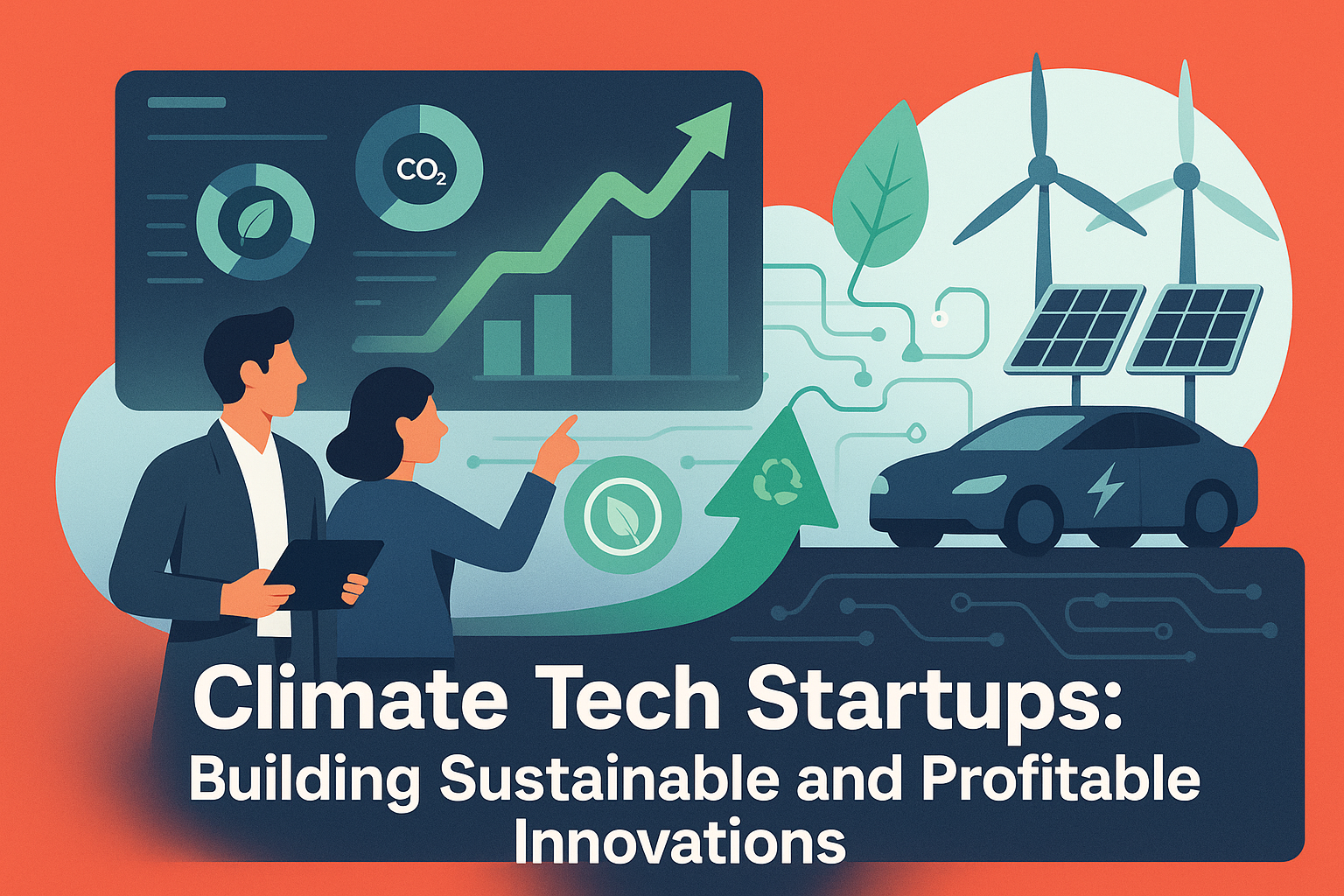
  • Climate Tech Startups: Building Sustainable and Profitable Innovations

    Climate Tech Startups: Building Sustainable and Profitable Innovations

    The Climate Tech Revolution: Why It Matters in 2025

    The planet is at a tipping point — and technology has become its most powerful ally. As climate crises accelerate and net-zero deadlines loom, a new wave of innovation known as climate tech is reshaping how we approach sustainability, energy, and economic growth. In 2025, this field is not just an environmental necessity — it’s a business imperative.

    What Is Climate Tech?

    At its core, climate tech refers to technologies designed to reduce greenhouse gas emissions, adapt to environmental challenges, and accelerate sustainability across industries. It spans everything from carbon capture systems and renewable energy software to sustainable logistics and data-driven agriculture.

    While often confused with cleantech, climate tech is broader and more systems-oriented. Cleantech focuses primarily on reducing pollution and improving energy efficiency. In contrast, climate tech encompasses solutions that mitigate and adapt to climate change using digital innovation, AI, data analytics, and smart infrastructure — creating a direct link between technology and planetary health.

    According to the Intergovernmental Panel on Climate Change (IPCC), emissions must decline by 43% by 2030 to limit global warming to 1.5°C — a goal only achievable through technological transformation. This underscores why climate tech innovation has surged globally, attracting investors, governments, and startups alike.

    A Booming Market for Change

    Recent data from the International Energy Agency (IEA) highlights that global clean energy investments surpassed $1.8 trillion in 2024, with a growing share dedicated to digital climate solutions — from AI-powered grid optimisation to low-carbon manufacturing analytics. This surge signifies a transition from traditional sustainability models toward software-driven, scalable impact.

    Startups play a crucial role in this evolution. Agile, mission-driven, and tech-savvy, they are developing everything from climate modelling platforms to circular economy apps. Their ability to rapidly prototype and adapt gives them a decisive edge in addressing environmental challenges — especially when partnered with software experts who understand scalability and performance.

    TheCodeV: Empowering Sustainable Innovation

    At TheCodeV, innovation meets purpose. As a leading UK-based software partner working with startups worldwide, TheCodeV empowers entrepreneurs to develop climate-positive digital products that align profitability with sustainability. Learn more about their approach on the About Us page — where technology and green innovation converge.

    External organisations such as the World Economic Forum also emphasise that the next decade’s most impactful companies will be those integrating sustainability at their digital core — not as a compliance measure, but as a competitive advantage.

    Why 2025 Is the Turning Point

    In 2025, climate tech is no longer an emerging sector — it’s a defining movement shaping policy, investment, and innovation. The combination of rising climate pressures, AI maturity, and shifting consumer demand has created a global inflection point. As technology evolves, so too does the business case for sustainability — merging environmental impact with long-term profitability.

    Profit Meets Planet: Building Sustainable Business Models in Climate Tech

    For decades, business and sustainability seemed like opposing goals — but climate tech startups are proving that profitability and environmental responsibility can not only coexist but thrive together. By aligning economic growth with sustainable innovation, these companies are redefining what it means to succeed in the 21st century.

    Turning Sustainability into Scalable Revenue

    The new generation of green entrepreneurs is leveraging technology to make sustainability measurable, efficient, and monetisable. From subscription-based carbon capture platforms to renewable analytics dashboards, startups are building business models that serve both the planet and shareholders.

    Take Climeworks, for instance — a pioneer in carbon dioxide removal technology. Its SaaS-style subscription model allows individuals and corporations to offset emissions directly through a digital platform. Similarly, Northvolt, a Swedish battery manufacturer, has built a multi-billion-euro enterprise by producing eco-friendly batteries for electric vehicles using recycled materials and renewable power.

    These examples highlight a clear message: sustainability is no longer a philanthropic choice — it’s a profitable innovation strategy.

    The Business Model of Tomorrow

    Modern climate tech business models operate at the intersection of impact and innovation. Key models emerging in 2025 include:

    • Carbon Accounting & Emissions SaaS – Cloud-based tools helping enterprises monitor, report, and reduce their carbon footprint.

    • Circular Economy Platforms – Startups enabling recycling, reuse, and upcycling at scale, monetising waste streams.

    • Energy Optimisation Analytics – AI-powered insights that reduce energy waste in industries and smart cities.

    • Sustainable Agriculture & Water Management Tech – IoT systems improving crop yield while conserving resources.

    These sectors demonstrate how profitable sustainability depends not just on invention, but on intelligent digital execution — a space where TheCodeV helps founders thrive.

    At TheCodeV Digital Services, startups gain access to full-scale software development for green technology solutions — from AI-powered analytics to scalable web platforms. Entrepreneurs looking to transform their climate visions into viable businesses can also schedule a free Consultation with TheCodeV’s expert team to design and deploy data-driven sustainability solutions.

    The Numbers Behind the Movement

    According to the PwC State of Climate Tech Report, global investment in climate tech grew to over $70 billion in 2024, with more than half flowing into early-stage startups. Similarly, TechCrunch reports that venture capital firms are increasingly prioritising climate-first portfolios, drawn by both environmental and financial returns.

    The result? A new global ecosystem where purpose and profit are inseparable — where entrepreneurs no longer need to choose between saving the planet and scaling their companies.

    As we move forward, the next section explores the core climate tech sectors transforming the world — from energy transition and mobility to agriculture and carbon management — and how they’re driving innovation at an unprecedented pace.

    Key Climate Tech Sectors Transforming the World

    The realm of climate tech companies is incredibly diverse — spanning renewable energy, smart logistics, sustainable agriculture, and infrastructure innovation. Together, these industries form the backbone of a global movement toward net-zero emissions and economic resilience. What unites them is a shared foundation: digital transformation that enables data-driven progress, efficiency, and scalability.


    1. Renewable Energy Tech

    At the heart of the climate revolution lies renewable energy. From solar grids to offshore wind farms, startups are creating technologies that power the world without draining its future.

    Modern renewable energy software uses artificial intelligence, predictive analytics, and IoT sensors to optimise grid performance and forecast energy demand in real time. According to BloombergNEF, global renewable capacity is expected to exceed 5,500 GW by 2030, driven largely by intelligent software systems that connect energy generation, storage, and consumption seamlessly.

    Companies like EmporionSoft and TheCodeV provide the digital tools to help energy innovators build scalable, cloud-integrated platforms that manage data, monitor carbon output, and improve efficiency across renewable operations. Learn more about their tailored approach to clean energy transformation on the Services page.


    2. Carbon Management Platforms

    Reducing carbon emissions requires precision — and software is making that possible. Modern carbon capture and management solutions use advanced algorithms to measure, track, and trade emissions with unprecedented accuracy.

    Platforms such as Watershed and Sweep allow businesses to visualise their carbon footprint through digital dashboards, helping them meet regulatory requirements while achieving genuine sustainability.

    TheCodeV empowers such innovations by building custom carbon accounting and data-visualisation tools that integrate seamlessly with enterprise systems. Through data-driven insights, these tools transform complex sustainability reporting into actionable strategies.


    3. Green Mobility & Logistics

    Transport contributes nearly a quarter of global CO₂ emissions — making mobility tech one of the most crucial fronts in climate innovation.

    Startups are developing EV fleet management systems, route-optimisation software, and battery analytics platforms that enhance energy efficiency and lower costs. Meanwhile, cities are adopting smart transport grids powered by AI to reduce congestion and pollution.

    Through cloud architecture and scalable mobile applications, TheCodeV and EmporionSoft support logistics innovators in deploying real-time monitoring systems and predictive routing algorithms — helping build cleaner, smarter cities.


    4. Sustainable Food & AgriTech

    Agriculture sits at the intersection of climate and livelihood, responsible for both food security and emissions. Modern AgriTech is transforming this equation through IoT-driven soil monitoring, precision irrigation, and AI yield forecasting.

    Startups are creating data platforms that optimise water use, minimise fertiliser waste, and ensure sustainable supply chains from farm to fork. With the right software infrastructure, climate tech companies can integrate remote sensors, analytics dashboards, and mobile apps to empower farmers and governments alike.

    TheCodeV’s digital solutions bring these systems to life, integrating AI-based automation with sustainability-focused app design — enabling transparent and traceable food systems across the globe.


    5. Climate-Resilient Infrastructure

    From flood-resistant housing to energy-efficient construction, climate-resilient infrastructure is redefining how we build. Advanced modelling software now allows engineers to simulate environmental impact and optimise materials to reduce embodied carbon.

    According to the World Economic Forum, investing in resilient infrastructure could save the global economy $4.2 trillion by 2050 through reduced disaster recovery costs and improved sustainability outcomes.

    TheCodeV partners with infrastructure innovators to create digital twins, geospatial analytics platforms, and smart monitoring systems — all critical for adaptive urban planning in a changing climate.

    Explore scalable implementation models and budget options through Pricing Plans tailored for startups and enterprises alike.

    The Role of AI, Data, and Software in Scaling Climate Tech

    Digital transformation is no longer optional — it’s the engine driving global climate action. The fusion of AI in climate tech, data analytics, and the Internet of Things (IoT) is enabling humanity to understand, predict, and mitigate environmental challenges with unprecedented precision. From optimising renewable energy networks to tracking carbon emissions in real time, software intelligence is at the heart of the green revolution.


    How AI Powers Climate Innovation

    Artificial Intelligence (AI) has become the cornerstone of data-driven green tech, allowing climate tech companies to process massive datasets and make informed, automated decisions. Through machine learning (ML) models and predictive algorithms, businesses can forecast weather patterns, optimise energy distribution, and detect anomalies in supply chains or industrial emissions.

    For example, predictive analytics for renewable grids uses AI to anticipate energy production from wind and solar farms based on environmental variables. Similarly, machine learning for carbon tracking helps identify inefficiencies across manufacturing or logistics, reducing waste and emissions simultaneously.

    According to McKinsey & Company, integrating AI into sustainability strategies could reduce global greenhouse gas emissions by up to 10% by 2030, equivalent to eliminating the entire EU’s annual output — underscoring how intelligent software now defines climate performance.


    IoT and Data: The Backbone of Climate Tech

    While AI provides the intelligence, IoT for climate monitoring delivers the data. Thousands of interconnected sensors feed real-time environmental metrics — air quality, temperature, CO₂ concentration, and water levels — into cloud platforms for immediate analysis.

    Projects like AWS Climate Tech Accelerator are helping startups leverage cloud computing, edge AI, and machine learning APIs to accelerate climate innovation. Similarly, the Capgemini Climate Tech practice integrates digital twins, satellite data, and analytics dashboards to help governments and industries make evidence-based climate decisions.

    These systems bridge the gap between raw data and meaningful environmental insights — enabling not just awareness, but action.


    TheCodeV: Empowering Intelligent Climate Solutions

    At TheCodeV, AI isn’t just a buzzword — it’s a tool for measurable environmental change. The company’s dedicated AI engineers and software developers craft custom AI-driven climate tech software designed to help startups and enterprises scale sustainability initiatives.

    Whether developing smart dashboards for carbon intelligence or automation platforms for renewable asset management, TheCodeV’s solutions combine data science with real-world impact. Explore their commitment to intelligent innovation in AI in Business UK 2025 and discover how tailored technology drives results through Custom Software Development UK.

    TheCodeV’s collaborative ecosystem — supported by partners like EmporionSoft — ensures startups can go from climate idea to digital reality with speed, scale, and precision.


    AI: The Catalyst for Scalable Climate Impact

    AI in climate tech is not just an enhancer; it’s a multiplier. It transforms climate data into decisions, decisions into automation, and automation into sustainable outcomes. With the right software architecture, startups can not only measure progress but continuously adapt and improve their environmental footprint.

    The future of sustainable innovation lies at the intersection of technology and finance — where data-driven impact attracts investors seeking long-term resilience.

    ChatGPT said:

    Funding and Investment Trends Shaping the Climate Tech Landscape

    Over the past five years, the world has witnessed an extraordinary surge in climate tech investment — a trend that’s redefining the intersection of sustainability, innovation, and finance. What was once a niche area of environmental philanthropy has now evolved into one of the fastest-growing segments in venture capital. Since 2020, investors have poured billions into climate-focused startups, signalling that climate action is not just a moral priority but an economic opportunity.


    A Global Wave of Climate Tech Capital

    According to the PwC Climate Tech Report 2024, total private investment in climate technologies exceeded $70 billion globally, representing a 38% increase year-on-year. Startups developing renewable energy systems, carbon capture platforms, and sustainable logistics software are receiving unprecedented backing from global VCs.

    Notable investors such as Breakthrough Energy Ventures (founded by Bill Gates), Lowercarbon Capital, and Energy Impact Partners have become synonymous with the movement. These firms are not only funding innovation but also helping scale technologies that directly reduce carbon emissions and accelerate the journey to net zero.

    Meanwhile, the AWS Climate Accelerator has emerged as a launchpad for next-generation climate tech startups — offering mentorship, funding, and access to cloud infrastructure that supports everything from AI-driven emissions tracking to renewable data platforms.


    Europe’s Investment Momentum

    Europe, and particularly the UK, has become a magnet for climate-focused funding. London’s climate tech VC ecosystem is thriving thanks to a blend of innovation policy, sustainable finance, and deep tech expertise. According to Crunchbase, over 300 European funds are now investing in climate innovation, with London ranking among the top three global hubs for startup deal flow.

    In 2025, London-based climate accelerators and incubators such as Carbon13 and Sustainable Ventures are fuelling early-stage founders with capital, mentoring, and access to enterprise clients. This momentum underscores how climate tech startups in London are leading Europe’s green investment revolution — building scalable, high-impact solutions that merge AI, IoT, and clean energy technologies.


    TheCodeV: Guiding Startups Toward Investment Readiness

    While funding is abundant, investor readiness remains key. Many promising founders need the right product validation and digital infrastructure to attract sustainable finance. This is where TheCodeV helps emerging startups prepare to meet investor expectations.

    Through its strategic Consultation services, TheCodeV assists founders in transforming climate-focused concepts into fully operational digital platforms with measurable ROI. Early-stage teams can also use the company’s Questionnaire to evaluate their technology readiness, compliance status, and market positioning before approaching venture capitalists or accelerators.

    By combining technical excellence with investor insight, TheCodeV ensures that green entrepreneurs can confidently present scalable, data-driven climate solutions.


    Sustainable Finance Meets Innovation

    The global shift toward sustainable finance isn’t slowing down. ESG metrics, carbon accountability, and net-zero reporting are now embedded in the funding criteria of top VCs and private equity firms. Investors increasingly demand transparency — not just innovation — pushing startups to adopt digital sustainability reporting powered by advanced software.

    This growing ecosystem of investors, accelerators, and green venture funds continues to expand across Europe and beyond. In the next section, we’ll explore how the UK and London have positioned themselves as the beating heart of Europe’s climate tech movement, with flagship events like Climate Tech Week 2025 leading the charge for innovation and collaboration.

    The UK and London Climate Tech Ecosystem: Europe’s Green Innovation Hub

    The United Kingdom has established itself as the beating heart of Europe’s sustainability revolution — and nowhere is this more evident than in London’s thriving climate tech ecosystem. With its blend of cutting-edge innovation, policy support, and global investment, the UK has become a beacon for startups driving climate resilience and green transformation.


    London: The Capital of Climate Innovation

    London’s role as a global tech and finance hub has naturally positioned it at the centre of the climate tech movement. The city’s convergence of investors, policymakers, and entrepreneurs fosters a fertile environment for climate tech companies in the UK to flourish.

    Events such as the London Climate Tech Show and Climate Tech Week 2025 bring together the world’s brightest innovators, investors, and policymakers. These gatherings showcase breakthroughs in AI-powered emissions tracking, renewable energy management, and sustainable urban design — all highlighting how London’s climate ecosystem is accelerating real-world impact.

    According to the GOV.UK Net Zero Strategy, the UK government has committed to investing billions into renewable infrastructure, green R&D, and sustainability accelerators. This proactive stance cements London’s role as not only a financial capital but also a global sustainability leader.


    Innovation Clusters and Green Incubators

    Across the city, venture clusters and incubators are empowering entrepreneurs to turn climate ambition into tangible business success. Sustainable Ventures, based in London’s South Bank, supports hundreds of startups through funding, co-working spaces, and technical mentoring. Meanwhile, innovation hubs like Imperial College’s Grantham Institute and Carbon13 nurture early-stage founders tackling emissions reduction and sustainable materials.

    The city’s universities and accelerators also work hand-in-hand with venture capital firms to turn cutting-edge research into scalable technology. This synergy between academia, industry, and investment forms a circular economy of innovation — one that enables climate tech startups in London to scale faster and attract international recognition.

    External events such as London Tech Week further amplify these efforts, celebrating technology’s potential to solve global climate challenges while strengthening the UK’s position as a leader in sustainable entrepreneurship.


    TheCodeV: Partnering with the UK’s Green Vision

    As part of this ecosystem, TheCodeV continues to empower emerging climate tech innovators with world-class digital solutions. The company’s commitment to green technology extends beyond development — it’s about collaboration, mentorship, and creating software ecosystems that support the UK’s journey to net zero.

    Aspiring entrepreneurs and developers passionate about building a sustainable future can explore opportunities through TheCodeV’s Career page, joining a team dedicated to blending technology with purpose.


    London’s combination of policy, capital, and talent makes it an unparalleled hub for sustainable innovation. In the next section, we’ll dive deeper into how TheCodeV builds climate tech products that empower startups to transform ideas into scalable, impact-driven solutions — bridging the gap between digital excellence and environmental action.

    Building Climate Tech Products: How TheCodeV Empowers Sustainable Startups

    At the forefront of digital sustainability, TheCodeV stands as a trusted enabler for startups and enterprises developing transformative climate tech software. The company’s mission goes beyond traditional development — it’s about empowering innovators to create impactful, data-driven solutions that advance environmental sustainability while driving business growth.


    From Vision to Scalable Impact

    TheCodeV’s process for building custom climate tech solutions follows a strategic and collaborative model designed to turn bold ideas into fully operational products. Each stage prioritises scalability, user experience, and environmental efficiency, ensuring that every digital innovation contributes meaningfully to a greener future.

    Here’s how the journey unfolds:

    1. Consultation & Strategy – Every partnership begins with a deep-dive consultation to understand the startup’s goals, sustainability targets, and market potential. The team maps out a digital strategy aligned with climate objectives and investor expectations.

    2. Product Design & Development – Combining modern UX/UI design with green software engineering principles, TheCodeV develops intuitive, performance-optimised products that minimise energy consumption while maximising functionality.

    3. Cloud Infrastructure & AI Integration – By leveraging secure, low-latency cloud solutions and AI SaaS frameworks, TheCodeV enables climate tech applications to process large environmental datasets in real time — from carbon tracking dashboards to energy optimisation platforms.

    4. Deployment & Scaling – Post-launch, TheCodeV ensures that products remain resilient and scalable. Integrated monitoring and analytics systems provide continuous feedback for performance improvement and emission reduction tracking.

    5. Data Privacy & Security – Recognising the importance of sustainability and ethics, all solutions are built with GDPR compliance and robust cybersecurity measures at their core.

    Through this process, TheCodeV bridges the gap between technical excellence and climate responsibility — offering software that supports environmental goals without compromising on speed, user experience, or profitability.


    Collaborating for Sustainable Innovation

    TheCodeV’s success in the climate tech ecosystem is amplified through collaboration. Partner organisations such as EmporionSoft play a pivotal role in developing joint AI-powered sustainability platforms, enabling deeper data insights and cross-industry adoption. Together, they’re shaping a new digital landscape where technology, business, and environmental responsibility operate in harmony.

    Entrepreneurs can explore TheCodeV’s full range of digital services via the Services page or connect directly with the team for tailored guidance through the Contact page.


    Empowering the Next Generation of Green Innovators

    Whether it’s building climate analytics tools, IoT-based energy monitoring systems, or AI-enhanced sustainability dashboards, TheCodeV equips startups with the technology and strategy needed to thrive in a data-driven sustainability economy.

    By combining creative engineering with purpose-driven design, TheCodeV ensures that every line of code contributes to the planet’s future.

    As we move into the final section, we’ll explore the future of climate tech — and how collaboration, innovation, and visionary partners like TheCodeV are shaping a more sustainable digital tomorrow

    Future Outlook: Partnering for a Greener Digital Tomorrow

    The future belongs to those who innovate responsibly. As the race to achieve net zero intensifies, climate tech startups stand at the crossroads of technological brilliance and planetary stewardship. The coming decade will not only test our ability to invent — it will measure how we integrate AI, data, and sustainability into every layer of business and society.


    A Vision of Climate Tech in 2030 and Beyond

    The future of climate tech is more than a movement; it’s a transformation of the global economy. According to the UN Climate Report (2024), rapid deployment of clean technologies and digital intelligence could help avert nearly 0.3°C of additional warming by 2050. Meanwhile, the World Economic Forum highlights that over $5 trillion in economic value will be generated by green innovation across renewable energy, mobility, and AI-powered sustainability analytics in the next decade.

    From intelligent energy grids and carbon-aware software to IoT-driven urban ecosystems, tomorrow’s climate solutions will be defined by collaboration between innovators, technologists, and policy leaders. Companies that embrace sustainability as part of their digital DNA will not only thrive but lead the world toward a more equitable and resilient future.


    Key Takeaways from the Climate Tech Revolution

    Reflecting on this journey, one theme stands clear — the fusion of technology and purpose. Over the course of this blog, we explored how:

    • Climate tech has evolved from concept to necessity, driving measurable environmental change.

    • Startups are proving that profit and planet can coexist, redefining sustainable business models.

    • Diverse sectors — from renewable energy to sustainable agriculture — are being revolutionised by innovation.

    • AI, data, and IoT are scaling climate impact through automation, analytics, and insight.

    • Global investors and accelerators are fuelling a green funding boom, particularly across London’s thriving ecosystem.

    • And, crucially, how TheCodeV and its partners like EmporionSoft empower founders to transform ideas into sustainable, scalable products.

    Together, these insights illustrate that the path to sustainability is not about sacrifice — it’s about smart, intentional innovation.


    Technology as the Catalyst for Green Growth

    As the International Energy Agency (IEA) notes, nearly half of the emission reductions required by 2050 will come from technologies currently in development. That makes digital innovation the single most powerful lever for accelerating the climate transition. Businesses that harness AI sustainability platforms, intelligent energy systems, and cloud-based analytics are already redefining the boundaries of what’s possible.

    This convergence of tech for net zero represents both a moral imperative and a commercial frontier — and the organisations leading this change are those that embed sustainability into their software architecture from day one.


    Partner with TheCodeV for Sustainable Innovation

    At this pivotal moment in history, visionary startups need partners who understand both technology and transformation. That’s where TheCodeV comes in. Whether you’re developing a carbon intelligence platform, renewable energy analytics dashboard, or circular economy app, TheCodeV provides the digital infrastructure and strategic insight to help your idea thrive.

    Start your sustainability journey today with a Consultation, explore tailored Services, or get in touch via Contact to bring your next climate tech innovation to life.


    A Greener Digital Tomorrow

    The next chapter of human progress will be written not in code alone, but in conscious creation. Every app launched, every algorithm trained, and every byte of data processed has the power to shape the planet we share.

    By merging human ingenuity with responsible technology, TheCodeV and its global partners are helping build a world where sustainability and innovation walk hand in hand — proving that when we design with purpose, the future becomes not just greener, but brighter for all.

  • The Rise of Vertical SaaS: Winning with Niche Industry Solutions

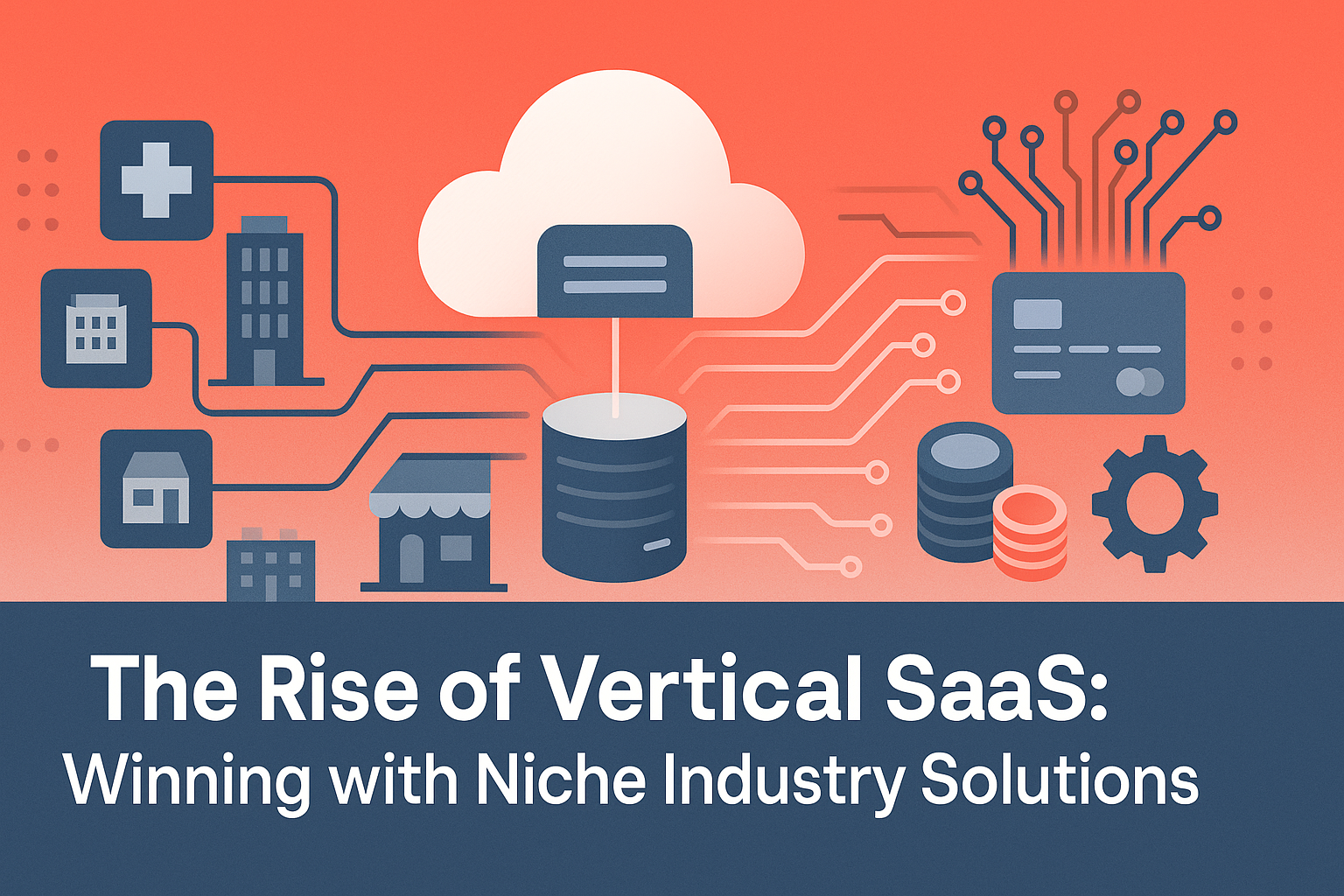
    The Rise of Vertical SaaS: Winning with Niche Industry Solutions

    The Rise of Vertical SaaS: Winning with Niche Industry Solutions

    In 2025, the software-as-a-service (SaaS) landscape is undergoing one of its most significant transformations yet. For years, the success of horizontal SaaS platforms like Salesforce, Slack, and Zoom demonstrated the power of scalable software that served a wide range of industries. But as markets mature and user expectations rise, startups and investors alike are recognising the growing dominance of a new, sharper model — Vertical SaaS.

    This evolution marks a pivotal shift. Instead of trying to be everything to everyone, software companies are now designing deeply specialised solutions tailored to the unique workflows, regulations, and data challenges of specific industries. This focus on verticalisation isn’t just a trend; it’s the new competitive edge driving higher customer retention, faster adoption, and stronger profitability.


    What is Vertical SaaS?

    At its core, Vertical SaaS refers to cloud-based software built specifically for a particular industry or market niche. Unlike broad tools that cater to multiple sectors, vertical SaaS products solve the exact problems faced by professionals within a given field — be it healthcare, construction, logistics, education, or finance.

    Think of it this way: while a horizontal SaaS product like Slack provides general communication tools usable by any team, a vertical SaaS tool such as Procore is designed solely for the construction industry — offering project management, contractor coordination, and compliance tracking in one tailored platform. Similarly, Veeva Systems focuses exclusively on life sciences, helping pharmaceutical companies manage clinical data, regulation, and marketing workflows in ways that generic software simply cannot.

    This industry-specific approach allows vertical SaaS providers to deliver deeper value by understanding sector nuances, integrating with industry-specific systems, and providing regulatory compliance “out of the box.” According to Bessemer Venture Partners, which coined the term in its State of the Cloud report, vertical SaaS models often achieve higher customer retention rates and lower churn than horizontal platforms due to their precision fit and operational depth [Bessemer Venture Partners, 2024].


    Horizontal vs Vertical SaaS: The Key Difference

    To understand why vertical SaaS has become so influential, it helps to compare it with its predecessor — horizontal SaaS.

    Horizontal SaaS platforms, such as Google Workspace or HubSpot, are designed to serve a broad range of industries. They offer flexible solutions like CRM, marketing automation, or collaboration tools that can be adapted to any company regardless of sector. Their advantage lies in scalability — a single codebase can serve millions of businesses.

    In contrast, Vertical SaaS targets a specific SaaS vertical — such as education, real estate, retail, or manufacturing — and builds tools tailored to that ecosystem. This includes industry-specific terminology, compliance workflows, and analytics dashboards that mirror real-world operations.

    For example, in the horizontal vs vertical SaaS debate, consider Toast, a vertical SaaS platform for restaurants. It integrates point-of-sale, payroll, menu management, and delivery logistics — features no general software could offer effectively. That precision drives strong customer loyalty and reduces acquisition costs, since each new client shares the same pain points and goals.

    This explains why venture capital firms like a16z and Bessemer are doubling down on verticalised SaaS investments in 2025. According to a16z’s Vertical SaaS Thesis, these focused solutions “represent the next frontier of scalable software businesses — smaller TAMs but larger impact per user.”


    Why This Shift Matters in 2025

    The meaning of vertical SaaS extends beyond product focus — it’s about redefining the economics of SaaS itself. In a saturated market, startups that cater to niche needs are finding new opportunities for growth by being specific rather than broad. As industries undergo digital transformation, businesses increasingly want software that understands their language — not generic dashboards but intelligent tools that mirror their real-world processes.

    At TheCodeV, our experience developing tailored software solutions across industries has shown how vital vertical thinking has become for long-term success. From healthcare automation systems to retail intelligence dashboards, we’ve seen how industry-specific SaaS drives stronger adoption, user satisfaction, and revenue consistency.

    To explore how your startup can leverage this emerging model, visit our Digital Services page — where innovation meets industry precision. The rise of vertical SaaS is not just a passing phase; it’s the future of software scalability, and those who embrace it early will define the next decade of digital success.

    Why Vertical SaaS is Booming: Market Forces and Growth Trends

    The global SaaS market is entering a new era of maturity, and vertical SaaS has emerged as the most lucrative frontier for investors, founders, and enterprises alike. In 2025, we are witnessing an accelerated shift from broad, cross-industry SaaS solutions to finely tuned, sector-specific platforms that cater directly to the needs of particular markets. According to Statista, the global SaaS market is projected to surpass $282 billion this year, with vertical SaaS contributing an increasingly significant portion of that growth.

    While the early wave of horizontal software helped businesses digitise operations, today’s vertical SaaS trend represents a more intelligent evolution — one where software not only automates but understands the unique challenges of each industry. This level of specialisation is now becoming a major differentiator in an oversaturated software economy.


    The Data Behind the Boom

    The growing momentum of vertical SaaS trends is not anecdotal — it’s backed by robust market data and venture confidence. According to CB Insights’ SaaS Market Report 2025, nearly 48% of new SaaS startups founded in the past three years have adopted a vertical-first approach. Meanwhile, Bessemer Venture Partners’ Cloud Index indicates that vertical SaaS companies are outperforming horizontal peers in terms of revenue retention and gross margin stability, often exceeding 120% net retention rates thanks to deep product-market fit.

    Moreover, venture capital firms like a16z and Accel have made major investments into vertical AI SaaS ventures, signalling that the market isn’t just evolving — it’s accelerating. In their Vertical SaaS Thesis, a16z described this model as “the intersection of deep domain expertise and scalable AI infrastructure,” noting that industry-focused software often sees faster enterprise adoption due to built-in compliance and contextual intelligence.


    Cloud Adoption and Sector-Specific Regulation

    A key driver behind this rise is the widespread adoption of cloud infrastructure across regulated industries such as healthcare, finance, and logistics. As cloud security standards have matured, industries that were once hesitant to digitise now view vertical SaaS as a secure and cost-efficient alternative to in-house software development.

    For example, healthcare providers are embracing SaaS platforms that comply with GDPR and HIPAA regulations, while financial institutions prefer cloud solutions equipped with automated risk and fraud management systems. The integration of industry regulation within vertical SaaS platforms — from compliance tracking to secure data exchange — gives them an undeniable edge over generic tools.

    Startups that understand these regulatory pain points can enter these markets more competitively, providing solutions that combine agility with compliance. At TheCodeV, our work with businesses across multiple industries has shown that compliance-focused design is not a limitation — it’s a growth multiplier that builds customer trust from day one.


    The Role of Embedded Fintech and AI Innovation

    Another major catalyst in this transformation is the rise of embedded fintech and AI-powered vertical solutions. From digital lending tools to automated billing and payment infrastructure, fintech scales vertical SaaS by unlocking new monetisation streams directly within the software ecosystem.

    For instance, vertical SaaS platforms for construction can integrate payment processing for subcontractors, while healthcare SaaS can embed patient billing modules powered by AI for predictive cash flow management. This trend, known as monetising vertical SaaS through embedded finance, allows companies to boost their average revenue per user (ARPU) and expand their ecosystem reach.

    Simultaneously, the rise of vertical AI SaaS — AI systems tailored for specific industries — is redefining how businesses make data-driven decisions. Imagine a legal SaaS platform that automatically drafts contracts based on jurisdictional rules, or a retail SaaS tool that predicts demand fluctuations by analysing local weather and demographic data. These innovations make vertical SaaS not just operationally relevant but strategically indispensable.


    Why Startups and Investors Are Taking Notice

    The rapid growth of vertical SaaS is not lost on investors. Bessemer Venture Partners lists vertical SaaS among the top three most investable software segments for 2025, citing predictable revenue models and low churn rates. Similarly, CB Insights reports that vertical SaaS funding doubled between 2022 and 2024, fuelled by the scalability of domain-specific innovation.

    For startups, this presents a massive opportunity. Rather than competing with established horizontal giants, they can dominate smaller, more profitable verticals by offering tailored, high-value solutions. The key lies in understanding the specific workflows, integrations, and compliance needs of a niche industry — something that TheCodeV helps founders achieve through strategic product discovery and full-cycle SaaS development.

    If you’re looking to validate your niche SaaS idea or explore how to scale it efficiently, book a consultation with our experts via TheCodeV’s consultation page.

    The Advantages of Going Vertical: Focus, Efficiency, and Profitability

    In a SaaS landscape overflowing with competition, the difference between success and stagnation often comes down to one critical factor — focus. While horizontal SaaS products aim to please everyone, vertical SaaS platforms thrive by serving someone very specific. These platforms understand the precise pain points, compliance rules, and workflows of a single industry, offering laser-targeted solutions that drive loyalty, efficiency, and profitability.

    The rise of b2b vertical SaaS has proven that depth, not breadth, is the new growth multiplier. Startups embracing verticalisation are seeing higher engagement, lower churn, and better margins — outcomes that broad software vendors can only envy.


    Niche Focus = Higher Loyalty

    One of the defining advantages of going vertical lies in achieving a superior product–market fit. By narrowing their audience, vertical SaaS providers can build products that align perfectly with the day-to-day realities of a specific sector. Instead of developing generic features that only partially meet user needs, these companies craft purpose-built tools that mirror real workflows and terminology.

    For instance, a SaaS platform designed for property management doesn’t need to support every business type — it only needs to streamline tenant onboarding, rent collection, and maintenance scheduling. This high level of relevance leads to faster adoption, fewer feature redundancies, and more enthusiastic user advocacy.

    According to McKinsey Digital, companies that prioritise industry specificity in their SaaS design see up to 40% higher retention rates than horizontal competitors, as customers are less likely to abandon software that deeply integrates into their operational DNA.

    This is precisely where TheCodeV helps startups stand out — by crafting vertical solutions that are not only beautiful in design but are strategically aligned with each client’s market realities. Explore our full range of tailored services at TheCodeV Services.


    Lower Churn Through Tailored Workflows

    Customer retention is one of the strongest indicators of SaaS success. In the vertical SaaS market, companies enjoy lower churn rates because their products are harder to replace. When a platform is built with industry-specific automations — from healthcare compliance alerts to manufacturing inventory syncs — switching to a generic tool simply isn’t practical.

    These tailored workflows build what investors call “sticky software.” For example, b2b vertical SaaS platforms in logistics might automate carrier matching and route compliance, while education SaaS systems handle grading, student analytics, and accreditation standards. Once embedded, they become indispensable.

    Furthermore, customers often rely on these systems as data hubs — capturing operational insights unique to their industry. This level of integration ensures that even during economic slowdowns, such software remains mission-critical.

    Gartner’s 2025 Cloud Application Study reinforces this point, highlighting that industry-specialised SaaS solutions achieve net revenue retention rates of over 125%, fuelled by upsells and deep customer dependency.


    Data-Driven Insights for Niche Markets

    The strength of vertical SaaS platforms doesn’t stop at operational efficiency. By focusing on a defined customer segment, they collect data that is far richer and more specific than horizontal products ever could.

    This industry-focused data allows companies to deliver predictive insights — such as demand forecasting in retail, energy efficiency in manufacturing, or patient outcomes in healthcare. As AI becomes embedded within these systems, vertical SaaS is evolving from a workflow tool into an intelligent decision-making engine.

    AI also enables predictive analytics for customer retention, pricing optimisation, and performance benchmarking across similar businesses within the same niche. These data insights add a layer of strategic intelligence that transforms traditional software into a growth partner.


    Monetising a Vertical SaaS Platform

    Another major opportunity within the vertical SaaS market lies in monetisation through embedded finance and payments. Many vertical platforms are expanding beyond subscription revenue by integrating vertical SaaS payments directly into their ecosystems — creating new revenue streams without additional customer acquisition costs.

    For instance, a b2b vertical SaaS product for fitness studios might offer built-in payment gateways, membership renewals, and financial dashboards — earning transaction fees on top of monthly subscriptions. Similarly, a construction management SaaS can embed invoicing and escrow tools, automating cash flow for contractors.

    This model, often described as “fintech embedded in SaaS”, is gaining traction as businesses look to simplify financial processes while maintaining transparency. It also unlocks powerful scaling opportunities since customers naturally prefer staying within a single integrated system.

    TechCrunch notes that by 2025, SaaS companies adopting embedded finance models could see 30–50% higher revenue per customer, illustrating how this evolution is reshaping traditional SaaS economics.

    At TheCodeV, we design these next-generation platforms with payment and AI automation capabilities in mind, ensuring every product we build offers both operational and financial scalability. Learn more about our strategic approach to SaaS development and optimisation via TheCodeV’s eCommerce SEO services.

    Vertical SaaS vs Horizontal SaaS: Finding the Right Fit

    As the SaaS landscape matures, one question continues to shape the strategy of emerging software startups: should you go broad and scalable with a horizontal SaaS product, or deep and specialised with a vertical SaaS solution? The vertical vs horizontal SaaS debate isn’t about which model is superior — it’s about which one best aligns with your business goals, market, and customer needs.

    In 2025, both approaches continue to thrive, but their paths diverge significantly when it comes to scalability, customer acquisition, innovation, and long-term profitability. Understanding the difference between vertical and horizontal SaaS is crucial for founders aiming to build resilient, high-performing products in competitive markets.


    Understanding the Two Models

    Horizontal SaaS products are built for broad appeal. They target a wide range of industries with general-purpose solutions such as project management, communication, or accounting. Examples include:

    • Salesforce – a CRM platform adaptable to any industry.

    • Slack – collaboration software used by companies from tech startups to universities.

    • Zoom – communication tools suitable for any business size or sector.

    In contrast, Vertical SaaS platforms are industry-specific. They are designed to solve niche challenges, offering deep functionality tailored to a particular domain. Examples of vertical SaaS companies include:

    • Toast – for restaurant operations and POS systems.

    • Procore – for construction project management.

    • Veeva Systems – for life sciences data compliance.

    • Shopmonkey – for automotive service management.

    According to Bessemer Venture Partners’ Cloud 100 Report, the past five years have seen a surge in valuation multiples for vertical SaaS companies, with investors increasingly drawn to their predictability and depth of engagement.


    Key Differences Across Strategic Dimensions

    Let’s break down the SaaS vertical vs horizontal distinction across four critical dimensions:

    1. Scalability

    • Horizontal SaaS: Scales faster due to its larger total addressable market (TAM). A single codebase can serve diverse customers, but it often lacks deep industry integrations.

    • Vertical SaaS: Scales smarter rather than faster. Growth is achieved by dominating specific industries and expanding horizontally later (e.g. Toast adding payroll tools for restaurants).

    Insight from a16z: “Vertical SaaS scales with precision, not speed — focusing on depth before breadth builds defensibility.”

    2. Customer Acquisition

    • Horizontal SaaS: Relies heavily on brand awareness and mass marketing. Acquisition costs are lower initially, but competition is fierce.

    • Vertical SaaS: Uses industry networks, partnerships, and trade associations to gain customers. Acquisition costs can be higher, but retention and lifetime value (LTV) compensate for it.

    3. Innovation and Product Depth

    • Horizontal SaaS: Innovation focuses on usability and integration across different sectors. However, it risks becoming too generic over time.

    • Vertical SaaS: Innovates around specific pain points and regulations. This leads to richer product functionality, faster adoption, and more opportunities for embedded fintech or AI automation.

    4. Profitability and Retention

    • Horizontal SaaS: Generates revenue from volume but faces higher churn due to competitive alternatives.

    • Vertical SaaS: Enjoys higher retention rates and stronger pricing power because customers depend on industry-specific workflows that are difficult to replace.

    According to Harvard Business Review, vertical SaaS companies achieve up to 25% higher gross margins compared to horizontal players, thanks to their tailored integrations and minimal feature redundancy.


    When Should a Startup Go Vertical vs Horizontal?

    The decision between vertical vs horizontal SaaS depends on your business goals, expertise, and target market:

    • Go Vertical If:

      • You possess deep knowledge of a specific industry.

      • You can identify compliance gaps or workflow inefficiencies.

      • You aim for long-term customer loyalty and premium pricing.

      • Your product benefits from embedded payments, AI insights, or automation.

    • Go Horizontal If:

      • You’re targeting a broad audience with common needs.

      • You have strong distribution channels and marketing capacity.

      • You want faster initial scale and lower onboarding complexity.

    Many successful startups begin vertical, then expand horizontally — proving that focus and scalability aren’t mutually exclusive.

    At TheCodeV, we help founders determine the most strategic direction for their SaaS venture through in-depth technical consultation and product discovery. Whether you’re building a vertical healthcare platform or a horizontal productivity suite, our team can help you architect for scalability and security from the ground up.

    To learn which approach aligns best with your business, visit Choose the Right Software Development Company or reach out via our Contact Page.

    Emerging Trends: AI Agents, Embedded Lending & Industry Automation

    As we move deeper into 2025, vertical SaaS is no longer just about industry-specific software — it’s about intelligent, automated ecosystems that think, learn, and transact on behalf of users. The integration of artificial intelligence (AI) and embedded finance has transformed traditional SaaS into a new generation of smart, revenue-generating platforms. From AI vertical SaaS solutions that understand domain nuances to embedded lending tools that redefine business cash flow, these emerging trends are reshaping how companies operate within niche industries.

    According to Accenture’s 2025 Cloud Maturity Report, more than 67% of enterprises are now adopting AI-driven vertical platforms to improve productivity and compliance. These technologies are not simply augmenting operations — they’re creating autonomous systems that can predict outcomes, make financial decisions, and optimise workflows in real time.


    AI-Powered Efficiency

    AI has become the backbone of next-generation vertical SaaS platforms. By combining machine learning with industry-specific data models, these platforms deliver decision intelligence that is both precise and context-aware. This marks the rise of vertical SaaS AI — an era where tools are no longer just data-driven but industry fluent.

    For example, in healthcare, AI-powered SaaS systems can identify anomalies in patient data to prevent errors in diagnostics or treatment. In logistics, predictive analytics help optimise routes and reduce fuel costs. In retail, AI agents forecast inventory needs, automate promotions, and even adjust pricing based on market trends.

    The key distinction between AI vertical SaaS and traditional automation lies in contextual intelligence. While general AI tools like ChatGPT or Google Vertex AI can perform generic tasks, vertical AI agents vs SaaS platforms are built with domain-specific training. This allows them to interpret regulatory codes, technical language, or environmental data with far greater accuracy.

    These AI agents are becoming the invisible workforce within industry software — automatically managing tasks such as loan approvals, supply chain coordination, or workforce scheduling. By embedding intelligence into the workflow, companies reduce human error, improve compliance, and increase overall efficiency.

    At TheCodeV, we’re deeply invested in building AI-augmented SaaS products that combine automation, data science, and DevOps to deliver seamless scalability. Our experience in AI-driven DevOps helps businesses create solutions that learn continuously and adapt dynamically to real-world challenges.


    Finance and SaaS Integration

    One of the most disruptive trends within the vertical SaaS market is the fusion of finance and software — known as embedded finance. Businesses no longer need separate systems for operations and payments. Instead, they’re leveraging the best embedded lending solutions for vertical SaaS to offer credit, loans, and transaction services directly within their software.

    This shift is redefining how companies monetise software. Platforms like Toast in the hospitality sector or Procore in construction have introduced embedded lending and payment solutions, turning their software into financial command centres. Restaurants can manage loans for kitchen upgrades, while contractors can access instant invoice financing — all from within their vertical SaaS dashboard.

    Such examples of embedded finance in vertical SaaS showcase the power of contextual lending. By analysing customer data and payment histories, SaaS systems can automatically recommend suitable financing options, pre-approve transactions, or forecast repayment risks. According to PwC’s Fintech Report 2025, this model has increased financial accessibility for SMEs by over 40%, particularly in sectors underserved by traditional banking.

    Embedded finance also opens new revenue streams for SaaS vendors through transaction fees and partnerships with digital banks. In other words, software companies are becoming financial enablers — merging technology, data, and fintech innovation into a single, frictionless experience.


    Industry Automation and the Next Leap

    The convergence of AI, automation, and fintech is setting the stage for fully autonomous industries. From automated insurance underwriting to AI-powered compliance audits, vertical SaaS AI is bridging the gap between operational execution and strategic foresight.

    TechCrunch AI recently highlighted how emerging SaaS platforms are deploying autonomous AI agents that communicate across systems, allowing different industries — from manufacturing to legal — to operate through automated decision loops. This isn’t a distant future; it’s already unfolding in early-stage platforms that are scaling globally.

    For entrepreneurs and startups, these developments signal massive opportunities. The combination of vertical SaaS, AI automation, and embedded finance can turn a simple software idea into a full-service ecosystem — one that generates recurring revenue, reduces operational friction, and delivers long-term customer value.

    If you’re ready to explore how AI and automation can transform your SaaS product into an intelligent, high-performing platform, connect with the experts at TheCodeV. Our team specialises in building future-proof software architectures designed to adapt, scale, and thrive in the new era of smart SaaS.

    Real-World Vertical SaaS Success Stories

    Behind every great digital transformation story lies a software platform built to solve one very specific problem — and solve it better than anyone else. The world’s leading vertical SaaS companies have demonstrated that true innovation doesn’t come from serving everyone, but from serving someone deeply. By focusing on niche industries and building technology around their unique challenges, these companies have set the gold standard for what it means to combine domain expertise, scalability, and intelligent design.

    Let’s explore four of the most inspiring vertical SaaS success stories — and the lessons they offer to ambitious startups looking to follow their path.


    Toast: Redefining the Restaurant Experience

    Toast, one of the largest vertical SaaS companies in the hospitality sector, has transformed the restaurant business from the inside out. Launched in 2013, Toast began as a simple point-of-sale (POS) system for small eateries. Today, it’s a comprehensive restaurant management platform that handles everything from order tracking and payments to payroll and inventory.

    What made Toast so successful wasn’t just its product — it was its deep domain understanding. The company built features that reflect the daily rhythm of a restaurant: split checks, menu updates, and delivery integrations. Its platform seamlessly connects front-of-house staff, kitchen teams, and business owners through one intuitive interface.

    By addressing industry-specific workflows, Toast achieved stickiness — the kind of loyalty that generic horizontal platforms struggle to build. According to CB Insights, Toast now powers over 85,000 restaurants globally, with annual revenue growth surpassing 30% in 2024.


    Procore: Digitising Construction Workflows

    In an industry known for complex coordination and slow digital adoption, Procore revolutionised construction project management. What began as a small startup addressing documentation inefficiencies is now a global powerhouse valued at over $10 billion, as reported by Forbes Cloud 100.

    Procore’s success stemmed from its ability to translate on-site pain points into software solutions — real-time collaboration, contractor oversight, and compliance documentation. Its user interface was designed for simplicity, allowing non-technical users like site supervisors and engineers to navigate with ease.

    But the real innovation came from Procore’s scalable architecture. It connected an entire ecosystem of stakeholders — architects, builders, and investors — under one cloud platform. This ecosystem approach made Procore indispensable in an industry that traditionally relied on fragmented systems.

    For new vertical SaaS startups looking for inspiration, Procore proves that the combination of usability, integration, and trust can reshape even the most traditional industries.


    Veeva Systems: The Pioneer of Regulated SaaS

    No discussion of vertical SaaS companies is complete without Veeva Systems, one of the earliest success stories in industry-specific software. Veeva’s cloud solutions for life sciences and pharmaceuticals redefined how companies manage clinical trials, regulatory compliance, and marketing approvals.

    Operating in a heavily regulated environment, Veeva leveraged its domain expertise to design software that met strict FDA and EMA standards — all while maintaining scalability for global enterprises. Its understanding of compliance workflows gave it a competitive edge few horizontal platforms could match.

    According to Crunchbase, Veeva’s revenue surpassed $2.5 billion in 2024, and it remains one of the most profitable vertical SaaS providers worldwide. Its journey highlights the value of trust through precision, proving that in regulated markets, reliability and compliance are worth more than speed.


    Shopmonkey: Driving the Automotive Service Revolution

    For years, the automotive repair industry operated on paper invoices and outdated tools. Then came Shopmonkey — a modern vertical SaaS startup that digitised the entire vehicle service process. From appointment scheduling and repair estimates to payments and customer communication, Shopmonkey offers an all-in-one solution tailored for garages and repair chains.

    What sets Shopmonkey apart is its user experience (UX) — clean, mobile-friendly, and built for users who spend more time with tools than computers. Its architecture is lightweight yet powerful, allowing small businesses to scale effortlessly.

    The company’s growth reflects how great vertical SaaS ideas emerge from identifying pain points within overlooked industries. According to Forbes Cloud 100, Shopmonkey’s valuation doubled between 2022 and 2024, fuelled by strong adoption across North America.


    Building Your Own Success Story

    What unites these giants — Toast, Procore, Veeva, and Shopmonkey — is not just great technology, but a relentless focus on industry empathy. They listened to their customers, built domain-native experiences, and scaled with precision. Each company began with a small, underserved audience and grew by perfecting its niche before expanding outward.

    For startups aiming to replicate their success, partnering with an expert software development team can make all the difference. At TheCodeV and EmporionSoft, we specialise in building vertical SaaS platforms from the ground up — combining scalable architecture, intuitive UX, and future-ready integrations.

    Our team helps transform vertical SaaS ideas into high-performing, investor-ready products that resonate with real users. To explore how we can help bring your concept to life, visit our Pricing Plans or explore open opportunities to collaborate with our innovative teams via TheCodeV Careers.

    The Future of Vertical SaaS & How TheCodeV Builds Scalable Industry Solutions

    As we look beyond 2025, it’s clear that vertical SaaS is no longer just an emerging category — it’s the next major evolution of software innovation. From hyper-personalised workflows to AI-powered intelligence and embedded financial systems, vertical SaaS platforms are becoming the backbone of industry transformation. What began as niche software built for specific markets has now evolved into a global movement redefining how businesses operate, grow, and connect.

    The companies leading this shift — like Toast, Veeva Systems, and Procore — have proven that industry focus outperforms broad generalisation. Their success is a blueprint for the future, where depth of understanding beats scale of reach. But the story doesn’t end there — the future of vertical SaaS will be even more interconnected, intelligent, and accessible than ever before.


    Where Vertical SaaS Is Heading

    The next decade will see the convergence of AI automation, embedded finance, and cross-industry interoperability within vertical SaaS ecosystems. These innovations will allow businesses not only to operate efficiently but to evolve intelligently — with data that flows seamlessly across applications and industries.

    1. AI Integration and Predictive Automation
    AI will become the default layer of every successful SaaS product. The new generation of vertical SaaS AI will go far beyond automation — it will interpret regulatory codes, forecast demand, and optimise resources in real time. For instance, healthcare SaaS platforms will use predictive analytics to identify patient risk trends, while retail platforms will leverage generative AI to design smarter customer engagement models.

    2. Embedded Payments and Financial Ecosystems
    As embedded fintech continues to mature, vertical SaaS platforms will integrate payments, lending, and financial insights directly into their workflows. This evolution means a logistics SaaS could offer instant credit to carriers, while a construction management platform could automate supplier payouts — streamlining operations and unlocking new revenue opportunities. These embedded systems will transform software from a cost tool into a revenue engine.

    3. Data Interoperability and Cross-Industry Expansion
    The future also promises greater data interoperability, where SaaS solutions will no longer exist in isolation. Industry platforms will exchange information securely via open APIs, enabling a single source of truth across healthcare, retail, and finance sectors. This will give rise to cross-vertical innovation — for example, a fintech tool integrating with healthcare systems to streamline insurance reimbursements, or logistics SaaS platforms linking with retail supply chains for end-to-end visibility.


    TheCodeV’s Expertise in Building the Future

    At TheCodeV, we believe that the future of vertical SaaS lies in creating intelligent, scalable ecosystems that solve real-world problems through technology. Our expertise spans multiple industries — from healthcare automation systems and retail intelligence dashboards to fintech platforms and logistics optimisation tools.

    We don’t just build software; we build industry-specific digital ecosystems designed for scale, compliance, and performance. Every project we undertake begins with strategic discovery — understanding your target market, industry regulations, and competitive landscape — before translating that insight into a robust, scalable SaaS architecture.

    Our development process integrates advanced technologies like AI, cloud-native DevOps, and microservice architecture to ensure performance and scalability across global operations. Whether you’re building an MVP for a new vertical SaaS startup or scaling an existing platform, we ensure that your product is future-ready and designed to evolve with market trends.

    To explore how we can bring your SaaS vision to life, start your consultation today at TheCodeV Consultation or learn more about our complete suite of development solutions at TheCodeV Digital Services.


    Partnering for Long-Term Success

    The future belongs to those who specialise — those who dive deeper into industries, connect technology with purpose, and design for transformation, not just functionality. TheCodeV stands as a trusted long-term partner for startups and enterprises worldwide, combining innovation, strategy, and execution to deliver meaningful results.

    As industries continue to evolve, the need for vertical SaaS platforms that integrate AI, embedded finance, and automation will only grow stronger. The startups that seize this opportunity today will define tomorrow’s digital economy — and TheCodeV is here to make that journey not only possible but extraordinary.

    The future of vertical SaaS is intelligent, integrated, and limitless — and your next breakthrough begins with TheCodeV.
  • Blockchain in Supply Chain: How It Works, Real Use Cases & Implementation Guide 2026

    Blockchain in Supply Chain: How It Works, Real Use Cases & Implementation Guide 2026

    Blockchain for Supply-Chain Transparency: Building Trust with Tech

    Introduction: Why Transparency Matters

    In today’s interconnected global economy, trust has become the currency of business. Every product we consume — from a smartphone to a bar of chocolate — passes through a vast network of suppliers, manufacturers, distributors, and retailers. Yet, despite technological progress, supply chains remain vulnerable to inefficiencies, fraud, and opacity. This is where the concept of the blockchain supply chain emerges as a transformative solution.

    By applying blockchain technology to procurement, logistics, and manufacturing, companies can create supply chains that are not only efficient but also transparent and accountable. Unlike traditional databases, blockchain offers immutable records, decentralised validation, and smart contract automation — features that directly address long-standing concerns around traceability and integrity.

    For startups, enterprises, and global corporations alike, adopting blockchain for supply chain transparency is no longer an abstract possibility but a necessary step toward building consumer trust and sustainable growth.


    The Trust Deficit in Supply Chains

    Hidden Risks and Consumer Concerns

    Traditional supply chains are notoriously complex. A single product may pass through dozens of checkpoints and involve multiple intermediaries. This creates blind spots where errors, fraud, or unethical practices can go undetected. For example:

    • Counterfeit pharmaceuticals entering the distribution chain.

    • Mislabelled food products raising health and ethical risks.

    • Unverified labour conditions leading to reputational damage.

    Consumers are increasingly demanding proof of origin, ethical sourcing, and sustainable practices. According to Deloitte’s 2023 Global Supply Chain Survey, 79% of executives cited visibility and transparency as top priorities, yet most admitted their organisations lacked the tools to achieve them effectively. Blockchain directly tackles this gap by enabling end-to-end traceability, making every transaction visible and verifiable across the network.


    Blockchain’s Disruptive Role in Supply Chains

    What Makes Blockchain Different?

    The defining strength of blockchain lies in its decentralised, tamper-proof ledger. Instead of relying on a single authority or database, blockchain distributes data across multiple nodes, each validating and recording every transaction. Once a record is added, it cannot be altered without consensus, ensuring authenticity and accuracy.

    When applied to supply chains, this means:

    • Immutable records that prevent fraud or falsification.

    • Smart contracts that automate payments, customs clearance, or quality checks.

    • Shared visibility where suppliers, logistics providers, and regulators can access the same real-time information.

    Such functionality has the potential to revolutionise procurement and logistics, cutting administrative costs, reducing disputes, and speeding up compliance checks.


    Blockchain Supply Chain in Action

    Blockchain in the supply chain is not just theory — it is already reshaping industries. IBM’s Food Trust initiative, for instance, allows retailers and producers to track food from farm to shelf in seconds, reducing risks of contamination and fraud. Logistics giants like Maersk have adopted blockchain platforms to manage international trade documentation, saving time and eliminating duplication.

    Startups are also innovating in this space, offering blockchain supply chain solutions tailored to sectors like fashion, pharmaceuticals, and electronics. These use cases highlight how the technology is bridging the trust gap, addressing inefficiencies, and creating ethical, consumer-driven supply networks.


    Why Startups and Enterprises Should Act Now

    While large corporations are pioneering adoption, small and medium-sized enterprises are also recognising the value of blockchain. For businesses aiming to enhance their reputation and operational efficiency, building a blockchain-enabled supply chain can deliver a competitive edge. It signals to customers, investors, and regulators that the company is committed to transparency and sustainability.

    At TheCodeV, we work with global clients to design and implement cutting-edge software solutions that align with these goals. Our services cover blockchain integrations that help companies future-proof their operations and establish trust across their entire supply chain ecosystem.

    How Blockchain Works in Supply Chains

    The Shift from Traditional Systems to Blockchain

    Conventional supply chains rely on centralised databases, spreadsheets, and manual processes to record transactions. These systems are not only fragmented but also vulnerable to errors, manipulation, and delays. When dozens of suppliers, manufacturers, and logistics providers are involved, the chances of miscommunication or data loss increase dramatically.

    The blockchain supply chain model introduces a new paradigm. Instead of siloed records, blockchain provides a distributed ledger where each transaction is securely recorded, verified, and time-stamped across multiple participants. This decentralisation ensures that no single entity can alter or delete information without collective agreement, significantly reducing risks of fraud or hidden errors.


    The Core Mechanisms of Blockchain in Supply Chains

    To understand blockchain’s value, it helps to break down its main components:

    • Distributed Ledger Technology (DLT): Every party in the supply chain accesses the same version of the truth. From procurement to delivery, all actions are transparently recorded.

    • Smart Contracts: These are self-executing agreements coded into the blockchain. For example, a payment can be automatically released once goods reach a verified checkpoint.

    • Immutable Records: Once data is added, it cannot be modified without consensus, creating a permanent trail of transactions.

    • Tokenisation of Assets: Physical items like shipments or raw materials can be digitally represented on blockchain, enabling easy traceability and auditing.

    Together, these features transform the supply chain into a secure, transparent, and auditable ecosystem.


    Real-World Applications of Blockchain Supply Chain Systems

    Food Safety and Traceability

    One of the most powerful applications of blockchain lies in food supply chains. IBM’s Food Trust platform, for example, allows stakeholders to trace food from farm to shelf in seconds. In the event of contamination, affected batches can be located and removed instantly, safeguarding public health and reducing waste.

    Global Logistics and Trade

    Maersk’s TradeLens initiative demonstrates how blockchain simplifies global logistics. Instead of shipping companies, ports, and customs authorities maintaining separate documentation, all parties share a single blockchain record. This reduces paperwork, accelerates approvals, and lowers the risk of disputes.

    Pharmaceutical Integrity

    Counterfeit drugs are a global issue, with the World Health Organization estimating billions in economic losses annually. Blockchain allows pharmaceutical companies to verify the authenticity of drugs at every stage, from manufacturing to pharmacy shelves, protecting both patients and brands.


    Benefits Beyond Traceability

    While traceability is often the headline feature, blockchain offers broader operational advantages:

    • Efficiency: Automated smart contracts cut down administrative delays.

    • Fraud Prevention: Immutable records deter tampering and counterfeiting.

    • Collaboration: Shared data fosters trust among suppliers, manufacturers, and regulators.

    • Compliance: Blockchain records help companies demonstrate regulatory adherence instantly.

    These benefits are why blockchain is rapidly gaining traction across procurement and logistics networks.


    Why Now is the Right Time

    The convergence of blockchain with other technologies such as the Internet of Things (IoT) and Artificial Intelligence (AI) is accelerating adoption. IoT sensors, for instance, can feed real-time shipment data directly into blockchain ledgers, while AI can analyse patterns to optimise supply networks.

    Startups and enterprises that embrace blockchain today position themselves ahead of competitors still relying on legacy systems. As noted by the World Economic Forum, blockchain adoption in supply chains is not only about efficiency but also about resilience and sustainability in a rapidly changing world.

    For businesses exploring blockchain integrations, TheCodeV provides consultation and tailored solutions. Our consultation services help organisations understand where blockchain delivers the most value and how to implement it effectively within their existing operations.

    Benefits of Blockchain in Supply Chains

    Moving from Complexity to Clarity

    Supply chains have always been complex networks where multiple stakeholders — suppliers, manufacturers, logistics firms, and retailers — must coordinate seamlessly. However, complexity often breeds inefficiency. Delays, fraud, and poor visibility can cost businesses millions while eroding consumer trust. The blockchain supply chain addresses these challenges by offering an unprecedented level of transparency, security, and efficiency.

    Adopting blockchain in supply chain management does more than streamline operations; it fundamentally changes how businesses build trust, cut costs, and ensure ethical practices across industries.


    Key Benefits of Blockchain for Supply Chain Transparency

    1. Enhanced Traceability

    The biggest advantage of blockchain is its ability to provide real-time, end-to-end traceability. Every transaction, from sourcing raw materials to delivering the finished product, is recorded on an immutable ledger. For example, in the blockchain food supply chain, retailers like Walmart use IBM’s Food Trust system to trace food items back to their origin in seconds. This capability minimises risks during recalls and boosts consumer confidence.

    2. Fraud Prevention and Security

    Counterfeit goods represent a serious threat to industries such as pharmaceuticals, luxury fashion, and electronics. By recording every step of the supply chain on blockchain, companies can authenticate products and detect tampering. The blockchain in pharma supply chain has become a critical tool for ensuring medicine safety, protecting patients, and reducing economic losses.

    3. Operational Efficiency

    Manual processes and paper-heavy documentation are major bottlenecks in global trade. Smart contracts — automated agreements embedded into blockchain — streamline workflows by eliminating intermediaries. For example, customs clearance and payments can be triggered automatically when predefined conditions are met, reducing administrative delays and saving costs.

    4. Improved Collaboration

    Traditional supply chains often suffer from a lack of trust between stakeholders. With blockchain, all parties access the same version of verified data. This shared visibility builds confidence among suppliers, regulators, and customers, fostering long-term collaboration.

    5. Sustainability and Ethical Sourcing

    Consumers and regulators are demanding more sustainable and ethical supply chains. Blockchain allows companies to prove sourcing claims — such as fair-trade coffee or ethically mined cobalt — through verifiable records. This not only strengthens brand reputation but also meets growing compliance standards for environmental and social governance (ESG).


    Real-World Case Studies

    • Nestlé: By using blockchain in its food supply chain, Nestlé can provide customers with a QR code to trace coffee beans back to their farms, enhancing transparency and trust.

    • Provenance: This blockchain startup verifies fashion supply chains to ensure ethical labour practices and sustainable materials.

    • Pfizer: Pharmaceutical giants like Pfizer are piloting blockchain solutions to combat counterfeit drugs, ensuring patient safety and regulatory compliance.

    These examples demonstrate that blockchain benefits supply chain systems across industries, making them more accountable and consumer-focused.


    The Strategic Advantage for Businesses

    Implementing blockchain is not just about meeting compliance or responding to consumer demand; it is about building a resilient and future-proof business. Companies that invest in blockchain supply chain management gain:

    • Reduced operational costs through automation.

    • Faster response to disruptions such as recalls or supply shortages.

    • Increased brand trust by proving authenticity and sustainability.

    • Competitive edge in industries where transparency is a differentiator.

    According to IBM’s 2024 report on blockchain adoption, businesses integrating blockchain into their supply chains reported up to 20% cost savings on compliance and logistics processes.


    Why Businesses Should Consider It Now

    The global movement toward blockchain supply chain transparency is accelerating. Governments are introducing stricter regulations, and consumers are prioritising ethical brands. Companies that delay adoption risk falling behind competitors who embrace blockchain-enabled innovation.

    At TheCodeV, we help organisations adopt blockchain technology not as an experimental add-on, but as a core driver of trust and efficiency. With expertise in software development and digital transformation, we create tailored solutions that address the specific needs of modern supply chains.

    Industry Use Cases of Blockchain in Supply Chains

    Why Industry Examples Matter

    The promise of blockchain becomes most convincing when seen in action. While the blockchain supply chain concept can sound abstract, its real-world use cases highlight the technology’s potential to solve critical problems across industries. From improving food safety to securing pharmaceuticals, blockchain is moving beyond theory and into practical deployment.


    Food Supply Chains: Safer and More Transparent

    One of the most prominent applications is the blockchain food supply chain. Food safety scandals and contamination outbreaks have made consumers more conscious of where their food comes from. Blockchain provides a clear, verifiable trail from farm to table.

    • Walmart has partnered with IBM’s Food Trust to trace fresh produce back to its farm of origin in seconds, reducing the time needed for food recalls.

    • Nestlé enables customers to scan QR codes on products like coffee and baby food, giving them insight into origin and farming practices.

    These initiatives not only enhance consumer confidence but also reduce waste by quickly identifying affected batches.


    Pharmaceuticals: Combating Counterfeit Drugs

    The blockchain in pharma supply chain is revolutionising medicine distribution. Counterfeit drugs are a global challenge, with the World Health Organization estimating that 1 in 10 medical products in low- and middle-income countries is substandard or falsified. Blockchain combats this by enabling full traceability.

    • Pfizer and MediLedger are piloting blockchain to verify drugs at every stage of the supply chain.

    • This ensures that only legitimate, regulated products reach pharmacies and patients.

    For healthcare, the value is both economic and ethical: protecting patients while reducing billions in counterfeit-related losses.


    Fashion: Proving Ethical Sourcing

    The fashion industry faces scrutiny over labour conditions and sustainable sourcing. Companies are turning to blockchain to validate claims and provide transparency to ethically conscious consumers.

    • Provenance, a blockchain startup, helps brands verify fair-trade sourcing, sustainable materials, and labour practices.

    • Luxury labels use blockchain to authenticate high-value items like handbags or jewellery, offering customers proof of authenticity.

    This demonstrates how blockchain in fashion supply chain management can strengthen brand reputation and align businesses with sustainability goals.


    Manufacturing and Logistics: Efficiency Gains

    Global manufacturing networks and logistics companies face enormous complexity, from coordinating parts suppliers to managing international shipping. Blockchain reduces bottlenecks by providing a single source of truth across stakeholders.

    • Maersk and IBM’s TradeLens blockchain platform has transformed shipping documentation, digitising processes that once required multiple intermediaries.

    • Manufacturers can track raw materials, monitor supplier compliance, and ensure timely delivery with greater accuracy.

    The result is faster operations, lower costs, and fewer disputes between trading partners.


    Supply Chain Finance: Reducing Risk

    Beyond physical goods, blockchain also reshapes supply chain finance. Traditional financing models rely on delayed or opaque information. Blockchain provides real-time visibility into transactions, reducing risk for lenders and improving liquidity for businesses.

    For example, fintech startups and banks are developing blockchain platforms that allow small suppliers to access financing by proving verified supply chain participation. This democratises access to capital while lowering default risk.


    Broad Industry Adoption and Future Impact

    These use cases illustrate that blockchain is not limited to one sector but is transforming supply chain practices across industries. Whether it is tracking fresh produce, safeguarding pharmaceuticals, or authenticating luxury goods, blockchain builds trust in ecosystems where visibility and accountability are crucial.

    According to the World Economic Forum, blockchain adoption in supply chains will grow exponentially in the next five years, particularly as businesses pair it with IoT and AI for advanced automation.

    At TheCodeV, we analyse industry-specific challenges and design blockchain solutions that drive measurable outcomes. For businesses seeking to enhance visibility and efficiency, our eCommerce SEO services further support digital supply chain integration, helping organisations gain both operational and market advantages.

    Challenges and Costs of Implementing Blockchain in Supply Chains

    Beyond the Hype: The Barriers to Adoption

    The advantages of a blockchain supply chain are compelling — transparency, traceability, efficiency, and fraud prevention. Yet, adopting blockchain is not without hurdles. For many businesses, especially small and medium-sized enterprises, the road to blockchain integration comes with technical, financial, and cultural challenges. Understanding these barriers is essential for making informed investment decisions.


    The Cost of Implementing Blockchain in Supply Chains

    One of the most frequently cited concerns is the cost of implementing blockchain supply chain solutions. While the technology promises long-term efficiency and savings, upfront expenses can be substantial.

    • Infrastructure: Blockchain requires secure servers, distributed ledger platforms, and integration with existing enterprise systems.

    • Custom Development: Off-the-shelf solutions rarely meet the specific needs of complex supply chains. Custom blockchain development adds to costs.

    • Training and Adoption: Employees, suppliers, and partners must be trained to understand and use the new system effectively.

    • Scalability: Pilot projects may be affordable, but scaling blockchain across multiple supply chain layers often requires further investment.

    According to Accenture, large enterprises can expect blockchain implementation costs to run into millions depending on scope and industry. For SMEs, while initial costs are lower, even moderate integration may strain budgets without careful planning.


    Technical Challenges of Blockchain Adoption

    Beyond cost, businesses encounter several technical obstacles when adopting blockchain in supply chain management:

    • Integration with Legacy Systems: Many supply chains still rely on ERP systems or paper-based processes. Bridging these with blockchain requires significant technical expertise.

    • Scalability Limitations: Current blockchain platforms can face performance bottlenecks when processing high transaction volumes.

    • Standardisation Issues: With different blockchain protocols in use (e.g., Hyperledger, Ethereum, Corda), ensuring interoperability across systems and partners is challenging.

    • Data Accuracy: Blockchain records are immutable, but if incorrect data is entered at the source, errors are permanently locked in.

    These issues highlight why blockchain adoption is often phased, beginning with pilot projects before full-scale rollouts.


    Organisational and Cultural Barriers

    Adopting blockchain is not only a technical shift but also an organisational transformation. Many supply chain partners remain cautious, fearing loss of control or competitive advantage if they share data on a shared ledger.

    Additionally, regulatory concerns add complexity. Different countries enforce varied compliance rules around data sharing, making global blockchain supply chain adoption more complex. For businesses operating across borders, this lack of harmonisation slows down implementation.


    How to Implement Blockchain in Supply Chains Effectively

    For businesses wondering how to implement blockchain in supply chain management, the key lies in starting small and scaling strategically:

    1. Pilot Programs: Test blockchain in one area — for example, traceability of a specific product line.

    2. Partner Collaboration: Work closely with suppliers, logistics firms, and regulators to align goals.

    3. Choose the Right Platform: Select blockchain solutions that fit the organisation’s transaction volume, security needs, and industry standards.

    4. Training & Change Management: Invest in employee training to ensure smooth adoption.

    5. Measure ROI: Track performance improvements to justify scaling further.

    Companies like EmporionSoft are already supporting businesses by providing tailored blockchain development and integration solutions, bridging the gap between innovation and practicality.


    The Strategic Role of Expert Partners

    Adopting blockchain does not have to be overwhelming. Partnering with experts ensures that organisations avoid common pitfalls while maximising ROI. At TheCodeV, we help businesses evaluate costs, mitigate risks, and design phased adoption strategies that suit their size and industry.

    As noted by the OECD, blockchain adoption will require multi-stakeholder collaboration to succeed — from governments and enterprises to startups and technology providers. Companies that act now with the right partners are more likely to overcome these challenges and achieve sustainable transformation.

    The Future of Blockchain in Supply Chains

    A Shift Towards Intelligent, Sustainable Supply Chains

    The future of global trade and logistics is being shaped by three key priorities: efficiency, resilience, and sustainability. As businesses move beyond traditional models, the blockchain supply chain is increasingly seen as the foundation of next-generation supply chain management. By integrating blockchain with other emerging technologies like IoT and AI, companies can achieve real-time visibility, predictive insights, and verifiable sustainability.


    Blockchain and IoT in Supply Chain Management

    One of the most exciting developments is the convergence of blockchain and IoT in supply chain operations. IoT sensors already capture data such as temperature, location, and handling conditions for shipments. When these data points are fed directly into a blockchain ledger, they create an immutable, real-time record of product journeys.

    • Cold chain logistics: Pharmaceutical companies use IoT-enabled sensors linked with blockchain to ensure vaccines and medicines are stored at correct temperatures throughout distribution.

    • Smart warehouses: IoT devices track goods movement and inventory in warehouses, updating blockchain records without human intervention.

    • Global logistics: Shipping containers equipped with IoT sensors can update blockchain ledgers automatically, giving every stakeholder full visibility.

    This integration minimises disputes, improves accountability, and reduces the manual burden of data verification.


    Blockchain Supply Chain Finance

    Finance remains one of the most inefficient areas of supply chains. Invoices, letters of credit, and financing requests are often delayed due to lack of transparency. Blockchain supply chain finance is changing this by providing lenders and suppliers with instant access to verified transaction histories.

    • Reduced risk: Verified blockchain records prove that goods were delivered, enabling faster release of funds.

    • Greater access to capital: Smaller suppliers can secure financing more easily by providing blockchain-verified supply chain participation.

    • Streamlined trade finance: Banks and fintechs are piloting blockchain systems to replace traditional, paper-heavy financing processes.

    This democratisation of finance strengthens resilience, especially for SMEs that often struggle with liquidity.


    Blockchain for Sustainability and Ethical Sourcing

    Sustainability is no longer optional — regulators and consumers are demanding accountability. Blockchain sustainability supply chains ensure that businesses can back up their ethical and environmental claims with hard data.

    • Fashion industry: Brands use blockchain to verify ethically sourced cotton or recycled fabrics.

    • Food industry: Blockchain records prove organic or fair-trade certifications, protecting both farmers and consumers.

    • Mining and manufacturing: Blockchain tracks minerals like cobalt, ensuring they are sourced from conflict-free regions.

    By using blockchain for supply chain transparency, companies can meet ESG (Environmental, Social, and Governance) requirements and strengthen consumer trust. According to Gartner, by 2030, 50% of global companies will use blockchain-enabled systems for sustainability tracking.


    The Road Ahead

    The next phase of blockchain adoption will likely involve:

    • Integration with AI: AI tools will analyse blockchain data to forecast supply disruptions or optimise inventory.

    • Standardisation: Greater collaboration between governments and industries to set unified blockchain protocols.

    • Scalability improvements: Advances in blockchain platforms will reduce transaction costs and improve speed.

    • Cross-industry adoption: Beyond food and pharma, industries like energy, automotive, and construction will increasingly adopt blockchain supply chain solutions.


    Why Businesses Should Prepare Now

    For startups and enterprises alike, the question is no longer if blockchain will shape supply chains, but how soon. Businesses that act now will gain an edge in efficiency, sustainability, and consumer trust, while laggards risk being left behind.

    At TheCodeV, we help organisations prepare for this future by designing blockchain strategies tailored to industry needs. Our expertise in digital transformation ensures clients are not only implementing blockchain but also aligning it with IoT, AI, and sustainability goals.

    As highlighted by the World Bank, blockchain’s role in global trade will expand dramatically over the next decade, creating opportunities for businesses that prioritise innovation.

    Conclusion: Building Trust with Blockchain Supply Chains

    Reconnecting Trust in Global Commerce

    Global supply chains are the lifeblood of modern commerce, yet they remain plagued by inefficiencies, fraud, and limited visibility. From food recalls to counterfeit pharmaceuticals, the stakes are high when transparency is missing. The blockchain supply chain is not just a technological upgrade — it is a fundamental shift towards accountability, ethical sourcing, and operational resilience.

    By leveraging blockchain’s unique strengths — decentralisation, immutability, and smart contracts — businesses can build systems where every transaction is visible, verifiable, and trusted. Whether in food, pharma, fashion, or logistics, blockchain is proving that trust is not an intangible value but a measurable advantage.


    Key Takeaways

    Looking back at what we’ve explored throughout this article, several themes stand out:

    • How blockchain works in supply chains: Distributed ledgers and smart contracts create tamper-proof, automated records that cut costs and improve accuracy.

    • Benefits for businesses: From fraud prevention to sustainability, blockchain delivers transparency that boosts consumer confidence and regulatory compliance.

    • Real-world use cases: Companies like Walmart, Nestlé, Pfizer, and Provenance are already demonstrating blockchain’s transformative impact across industries.

    • Challenges and costs: While implementation requires careful planning, phased adoption and strategic partnerships make it achievable for startups and enterprises alike.

    • The future of blockchain supply chains: Integration with IoT, AI, and finance will create intelligent, resilient, and sustainable networks.

    These insights highlight why blockchain is more than a buzzword — it is a strategic necessity for organisations looking to thrive in the next era of global commerce.


    Why Act Now?

    Waiting is no longer an option. Governments are tightening regulations, consumers are demanding proof of sustainability, and competitors are investing in blockchain-powered systems. Businesses that act now will be better positioned to lead with transparency and resilience.

    EmporionSoft, for instance, has already been working with companies to pilot blockchain solutions in logistics and finance. These real-world applications prove that the technology is mature enough to deliver measurable returns today, not just in the future.


    TheCodeV: Your Partner in Blockchain Innovation

    At TheCodeV, we believe that innovation is only valuable when it drives real-world impact. That’s why we help startups and enterprises implement blockchain solutions tailored to their unique supply chain challenges. Whether you are a food producer needing traceability, a pharmaceutical firm combating counterfeits, or a retailer proving ethical sourcing, we design solutions that align with your goals.

    Our approach is simple but powerful:

    • Consultation and Strategy: We analyse your existing operations to identify where blockchain creates the most value.

    • Custom Development: We build blockchain-enabled systems that integrate seamlessly with your supply chain workflows.

    • Sustainable Growth: We ensure your systems are not just compliant but also future-proof, ready for IoT, AI, and emerging standards.


    Take the Next Step

    The future of supply chains is transparent, digital, and resilient — and blockchain is at the centre of this transformation. Partnering with TheCodeV ensures you are not only keeping pace with change but leading it.

    📌 Ready to start your blockchain journey?

    • Explore our services to see how we can support your digital transformation.

    • Book a consultation with our experts to discuss your supply chain needs.

    • Contact us directly via our contact page to start building a blockchain-powered supply chain today.

    Trust, transparency, and technology are no longer optional — they are the pillars of the modern economy. With blockchain, you can build a supply chain that not only moves products but also builds confidence at every step. TheCodeV is here to help you make it happen.

  • Blockchain for Startups & Web3: Finance, Trust, and New Business Models

    Blockchain for Startups & Web3: Finance, Trust, and New Business Models

    Blockchain & Web3 for Startups: Why 2025 Is the Year of Trust and Transformation

    Innovation has always been the heartbeat of startups. In 2025, one technology is reshaping that rhythm: blockchain for startups. For UK founders navigating volatile markets, rising customer expectations, and the need for trust at scale, blockchain is no longer a futuristic concept. It is a practical tool for reimagining finance, identity, and loyalty in ways that were unthinkable just a decade ago.

    The story mirrors other industries. Just as the vaping market shifted from disposables to refillable, sustainable devices, business finance is moving from centralised institutions towards decentralised trust systems. The direction is clear: sustainability, transparency, and long-term value are driving adoption. For startups, this moment represents both urgency and opportunity.

    From Experiment to Essential: Blockchain’s Startup Journey

    When blockchain first emerged with Bitcoin in 2009, it was seen as disruptive but niche. Over the past decade, however, it has matured into a multi-faceted technology spanning payments, supply chains, healthcare, and governance. According to the World Economic Forum, over 10% of global GDP is expected to be stored on blockchain technology by 2027, underscoring its growing role in mainstream economies (WEF, 2023).

    For startups, the key shift is accessibility. What was once confined to tech pioneers is now available through incubators, accelerators, and expert consultancies. Today, it’s entirely possible for early-stage businesses to sign up for new blockchain startups programs, gaining access to infrastructure that previously required enterprise budgets.

    Why UK Startups Cannot Ignore Blockchain in 2025

    The UK has positioned itself as a hub for fintech and Web3 innovation. Government funding, venture capital interest, and rising consumer demand for transparent business models make this the right time to act. Deloitte’s recent analysis highlights that blockchain is already helping reduce fraud, streamline compliance, and open new revenue opportunities for small businesses. Startups that ignore these shifts risk falling behind competitors who integrate blockchain from the outset.

    The value of blockchain for startup founders lies not only in technology but also in perception. Customers increasingly demand that businesses are ethical, secure, and efficient. Blockchain delivers verifiable trust, ensuring records cannot be tampered with. This isn’t just useful for finance—it applies equally to customer loyalty programs, supply chain transparency, and even digital contracts.

    Unlocking Ideas and Business Models

    For entrepreneurs, blockchain ideas for startup projects are multiplying. Embedded finance, decentralised identity verification, and tokenised loyalty schemes all provide practical use cases. These models are attractive not only because they improve efficiency but because they align with customer values of transparency and fairness. The startups that capitalise on this alignment will be those that survive and thrive in competitive markets.

    At TheCodeV, we have seen how UK startups across sectors—from retail to property tech—are leveraging blockchain to build trust with investors and customers alike. Our expert services are designed to help founders transform these opportunities into scalable, future-ready solutions.

    A Decisive Moment for Startup Growth

    The lesson from 2025 is simple: blockchain is no longer optional. It is a foundation for finance, trust, and new business models. For startups eager to scale and differentiate, adopting blockchain early can be the difference between becoming a market leader or remaining invisible.

    By moving beyond traditional systems and embracing Web3, UK startups have the chance to create lasting value—backed by the transparency, security, and resilience that only blockchain can provide.

    Blockchain in Embedded Finance & Accounting for Startups

    The financial foundation of any business rests on trust, accuracy, and efficiency. For emerging companies, these elements are often the hardest to secure. This is where blockchain for startups is creating a dramatic shift. From transparent accounting to embedded payments and new avenues for raising funds, blockchain ensures that finance is no longer a barrier to growth but a catalyst for innovation.

    Transparent Accounting with Blockchain

    Startups have traditionally relied on external auditors and complex bookkeeping systems to maintain compliance. But blockchain introduces a tamper-proof ledger that records every transaction with full transparency. For founders, this means fewer disputes, easier auditing, and stronger investor confidence.

    Global firms are already leading the way. Deloitte has piloted blockchain-based accounting models that reduce errors and accelerate reporting cycles. PwC has also invested heavily in blockchain auditing, helping startups establish compliance-ready systems that scale as they grow. For any accounting firm for blockchain startups, these tools are transforming how financial records are verified and trusted.

    A transparent ledger not only simplifies compliance but also positions startups favourably for funding. Investors increasingly demand proof of financial integrity, and blockchain provides that assurance in real time.

    Embedded Payments and Financial Inclusion

    One of the most immediate benefits of blockchain is in payments. Traditional banking systems can delay cash flow with slow settlements and high transaction costs. For startups operating in fast-moving markets, this can stall growth. Blockchain solves this by enabling blockchain payment solutions for startups—instant, secure transfers with significantly lower costs.

    Startups in e-commerce, fintech, and digital services are embedding blockchain payments into their platforms to serve customers seamlessly. These systems also expand financial inclusion, giving access to underbanked markets where traditional financial infrastructure is weak. For UK startups with global ambitions, embedded blockchain payments reduce friction in cross-border trade.

    The UK’s Financial Conduct Authority (FCA) has highlighted the role of digital assets in improving competition and transparency in payments (FCA, 2023). This aligns perfectly with the needs of ambitious UK startups.

    Raising Funds with Blockchain

    Fundraising remains one of the toughest hurdles for new businesses. Blockchain is redefining this process through tokenisation, decentralised finance (DeFi), and transparent equity records. Instead of relying solely on banks or angel investors, startups can access decentralised platforms to secure capital.

    The opportunity to raise seed money for startups blockchain has opened entirely new funding models. Crowdfunding through tokenised assets allows startups to attract global investors while providing them with verifiable ownership stakes. For UK founders, UK funding for blockchain startups is also expanding, with government-backed grants and private venture capital increasingly prioritising blockchain-enabled ventures.

    Effective fundraising is not just about raising capital—it’s about proving accountability. Blockchain ensures that funds raised are traceable, providing assurance to investors that their contributions are managed responsibly.

    Compliance Made Simpler

    Regulatory compliance is often seen as a burden for startups, but blockchain helps automate and streamline this process. Smart contracts can enforce rules automatically, reducing the need for costly legal oversight. For example, payments can be released only when predefined compliance conditions are met.

    This automation aligns with the guidance of financial authorities. PwC’s recent reports stress the need for blockchain-enabled systems to future-proof compliance for small and medium-sized enterprises. Similarly, Deloitte argues that blockchain accounting will play a central role in meeting evolving tax and audit requirements in the UK.

    How TheCodeV Supports Startup Finance Transformation

    At TheCodeV, we understand that finance is the lifeline of any startup. Our team specialises in embedding blockchain solutions into payment systems, accounting structures, and fundraising strategies. We provide tailored pricing plans that align with the unique needs of early-stage businesses, ensuring startups don’t just survive but thrive in an increasingly decentralised financial landscape.

    Blockchain for Identity, Trust & Security

    In today’s digital-first world, identity is no longer a simple matter of documents and signatures. For startups, proving who you are and ensuring customers can trust you is central to building credibility. This is where blockchain for identity, trust, and security becomes transformative. By leveraging decentralised systems, UK startups can simplify KYC (Know Your Customer) processes, strengthen onboarding, and deliver loyalty programmes that are both secure and transparent.

    Government-Level Identity Management

    Identity verification has traditionally relied on paper documents, centralised databases, and long delays. But blockchain changes this model entirely. Instead of storing data in silos vulnerable to breaches, blockchain distributes identity records across a secure, immutable ledger.

    It is no surprise that Deloitte partners with startup for gov’t-level blockchain identity management, helping nations and businesses adopt verifiable digital ID solutions. In the UK, government-backed pilots are already testing blockchain to streamline public services and reduce fraud in identity verification systems (Gov.uk, 2023). For startups, the lessons are clear: identity built on blockchain is faster, safer, and far more scalable.

    KYC and Onboarding Simplified

    Startups in fintech, e-commerce, and professional services face strict compliance demands when onboarding new customers. Blockchain-based KYC eliminates repetitive checks by allowing a user’s verified credentials to be reused across multiple services. This drastically reduces friction for customers while cutting compliance costs for businesses.

    An expert blockchain consultancy for startups can integrate decentralised KYC solutions that not only meet FCA compliance but also improve customer experience. By embedding blockchain identity into onboarding flows, startups build trust from the first interaction—crucial for attracting investors, customers, and partners.

    Security Benefits for Startups

    Cybersecurity breaches are among the most common risks facing new businesses. Centralised databases are attractive targets for hackers, and even a single incident can permanently damage brand reputation. Blockchain provides a solution by eliminating central points of failure. Every transaction, record, and identity is validated across multiple nodes, making tampering nearly impossible.

    This level of protection is particularly valuable for fintechs and retail startups handling sensitive payment data. Insurance providers are beginning to recognise this advantage, with insurance for blockchain startups becoming more accessible due to reduced fraud risks. A startup that demonstrates secure, verifiable transactions will often find it easier to negotiate better insurance terms.

    Loyalty Programmes Reinvented

    Trust isn’t limited to compliance—it extends to how businesses reward and retain customers. Blockchain is enabling startups to reinvent loyalty programmes by issuing tokenised rewards that are transparent, transferable, and fraud-proof. Customers can trust that their points or tokens hold value, while businesses benefit from deeper engagement.

    For retail startups, blockchain-powered loyalty schemes create stronger customer relationships by offering tangible, verifiable rewards. This aligns with broader consumer demand for fairness and transparency in how brands interact with their communities.

    How TheCodeV Helps Build Trust with Blockchain

    At TheCodeV, we help startups turn blockchain’s promise of security into practical business outcomes. Whether it’s digital identity systems, onboarding flows, or customer loyalty solutions, our experts design trust-driven architectures that meet the demands of UK regulators and international markets. Startups looking to take the next step can easily contact us for tailored consultancy and deployment strategies

    Blockchain Databases & Web3 Infrastructure for Startups

    For modern startups, data is the backbone of every decision. From customer behaviour to financial records, the ability to store, secure, and analyse information often defines whether a business can scale successfully. In 2025, the limitations of traditional databases are becoming increasingly clear. This is why blockchain for startups is gaining momentum, with decentralised databases offering transparency, resilience, and scalability that conventional SaaS systems simply cannot match.

    The Shift from SaaS to Decentralised Databases

    Traditional SaaS databases, while convenient, rely on centralised servers. This creates a single point of failure—if the database is compromised, the entire system is at risk. Downtime, data breaches, and vendor lock-in are common issues that can cripple startups at critical growth stages.

    In contrast, blockchain databases for startups distribute data across multiple nodes. Each transaction is verified and immutable, eliminating the risk of tampering. This distributed structure not only enhances security but also ensures that systems remain operational even if individual nodes fail. Startups gain resilience from day one—without the need for expensive infrastructure investments.

    IBM has consistently highlighted blockchain’s role in providing tamper-proof, distributed ledgers, reinforcing why enterprises and startups alike are turning to decentralised systems (IBM, 2023). Similarly, MIT Tech Review has emphasised blockchain’s scalability in supporting large-scale, data-driven innovation.

    Scaling with Web3 Infrastructure

    Beyond storage, decentralised databases enable startups to build fully fledged Web3 ecosystems. With smart contracts, startups can automate workflows and enforce agreements without intermediaries. This makes blockchain development for startups more than just a technical exercise—it becomes a strategic advantage.

    Venture capital interest reflects this trend. In 2024 alone, billions of pounds in global funding were allocated to Web3 ventures. Venture capital for startups blockchain projects is accelerating because investors recognise the long-term efficiencies that decentralised infrastructure delivers. The UK, with its thriving fintech and AI scene, is positioning itself as a hotspot for these investments.

    For startups, the combination of decentralised databases and Web3 infrastructure means building platforms that are secure, scalable, and inherently future-proof. Whether it’s a retail platform, a fintech product, or a SaaS service, blockchain creates trust in the core of the business model.

    Incubators and Technical Consultancy

    Adopting blockchain infrastructure can be daunting for early-stage founders. This is where effective project incubators for blockchain startups and consultancies step in. Incubators provide mentorship, funding, and ready-to-use blockchain environments, while consultancies bring technical expertise to ensure solutions are not only deployed but optimised.

    At this intersection, EmporionSoft stands as a key example. As a consultancy focused on scaling businesses through blockchain and AI-driven solutions, EmporionSoft helps startups transition from prototype to production, building robust systems that attract both customers and investors. Their work exemplifies how technical scaling, when handled correctly, becomes a competitive advantage.

    How TheCodeV Supports Web3 Startups

    At TheCodeV, we’ve supported startups in integrating blockchain into their business models, ensuring systems are secure, scalable, and investor-ready. Our approach combines technical depth with a keen understanding of market dynamics. Founders exploring About Us can see how our global expertise translates into UK startup success stories.

    Blockchain databases are not just a technology—they are the infrastructure of tomorrow. For startups, embracing this shift early is a decisive step towards building businesses that last in an increasingly data-driven, trust-focused world.

    Blockchain for Marketing, Loyalty & Community Building

    Marketing has always been about trust and connection, but in 2025 the rules are changing. Startups no longer compete solely on product or price—they compete on transparency, engagement, and authenticity. This is where blockchain for startups reshapes the way businesses approach customer relationships. By enabling tokenised loyalty rewards, transparent influencer payments, and Web3 marketing strategies, blockchain offers startups powerful new ways to build and scale communities.

    Reinventing Loyalty with Tokens and NFTs

    Customer loyalty programmes have historically suffered from inefficiency and lack of trust. Points often go unused, systems are opaque, and customers question the real value of their rewards. Blockchain introduces a new model: tokenised rewards.

    Startups can issue customer loyalty tokens stored securely on blockchain networks. These tokens are transferable, verifiable, and resistant to fraud. For example, a retail startup could offer NFTs as rewards, allowing customers to redeem them for discounts, exclusive access, or digital collectibles. This creates not only brand loyalty but also community ownership—customers feel genuinely invested in the startup’s success.

    Gartner has reported that tokenisation and blockchain-enabled loyalty solutions are expected to drive higher engagement rates compared to traditional programmes (Gartner, 2024). For startups, this makes blockchain a cost-effective and future-proof strategy for retention.

    Transparent Influencer and Partner Payments

    Influencer and affiliate marketing are vital channels for startups, but trust in this space is often weak. Delayed or inaccurate payments undermine relationships and erode credibility. Blockchain solves this with transparent, automated payments recorded on immutable ledgers.

    Through smart contracts, startups can release payments instantly when predefined conditions are met—such as views, clicks, or conversions. This makes partnerships far smoother and eliminates disputes. A blockchain marketing agency for custodial startups can integrate these solutions, ensuring compliance while building stronger influencer networks.

    By making every transaction visible and verifiable, startups improve trust with partners and increase the likelihood of long-term collaborations.

    Web3 Marketing and Content Creation

    Marketing in Web3 extends beyond traditional advertising. It includes decentralised campaigns, community-driven engagement, and tokenised incentives for participation. For founders exploring blockchain content creation for crypto startups, this means shifting from one-way brand messaging to collaborative ecosystems where customers actively co-create value.

    Post-ICO companies have already experimented with this model, using decentralised platforms to engage investors and users. Learning from these examples, early-stage founders can apply post ICO marketing tips for blockchain startups—such as community-driven reward pools and token airdrops—to generate buzz and foster engagement.

    By embedding blockchain into content creation and engagement strategies, startups align themselves with an audience that increasingly values authenticity and transparency.

    Strengthening Community Trust

    The ultimate benefit of blockchain-enabled marketing is community trust. Customers no longer have to “take the company’s word for it”—they can verify reward issuance, track influencer partnerships, and see marketing campaigns unfold transparently on the blockchain.

    This aligns with broader consumer expectations. HubSpot has highlighted that authenticity is now one of the top three factors influencing purchase decisions (HubSpot, 2024). Startups that integrate blockchain into marketing build not only loyal communities but also resilient brands capable of scaling globally.

    TheCodeV’s Expertise in Web3 Marketing

    At TheCodeV, we help startups navigate this new era of loyalty and engagement. From influencer strategies powered by smart contracts to tokenised loyalty schemes, our team ensures businesses stay ahead of market expectations. For retail and e-commerce founders, our tailored E-commerce SEO services complement Web3 strategies, driving both traffic and trust.

    By combining blockchain with innovative marketing, startups gain the tools to not just attract customers—but to turn them into long-term brand advocates.

    Blockchain for Global Expansion & Business Models

    Scaling across borders has always been one of the toughest challenges for new businesses. Payments are delayed, compliance requirements differ by region, and traditional systems often exclude smaller players from operating globally. In 2025, however, blockchain for startups is proving to be the equaliser—enabling cross-border transfers, streamlined compliance, and business models designed for global growth.

    Cross-Border Transfers with Blockchain

    International transfers through banks are notoriously expensive and slow. Fees can consume a significant percentage of small transactions, and settlement delays disrupt cash flow. For an ambitious blockchain startup for transfer, these problems vanish. Blockchain enables near-instant, low-cost cross-border transactions without relying on intermediaries.

    Startups in the UK and Europe are already taking advantage of blockchain to expand into new markets. For example, fintech companies leveraging stablecoins and decentralised ledgers have reduced transaction costs for customers by up to 70% (TechCrunch, 2024). For early-stage founders, this means more flexibility, faster scaling, and the ability to serve global clients from day one.

    Smart Contracts for Global Operations

    Expanding globally is not only about moving money—it’s also about managing agreements. Traditional legal contracts require manual enforcement and can be prohibitively expensive across jurisdictions. Blockchain smart contracts solve this by executing agreements automatically when conditions are met.

    This shift is particularly relevant in e-commerce, SaaS, and service-based startups. A blockchain startup for personal assistant service, for instance, could use smart contracts to automate billing, ensuring both customers and service providers are protected. The transparency and automation reduce disputes, giving startups an edge in customer trust.

    Startups exploring smart contracts can also leverage platforms like E-contract to integrate blockchain-powered agreements directly into their operations.

    Compliance and Global Trust

    Compliance is one of the biggest hurdles for startups entering multiple regions. Different countries have varying financial, data, and tax regulations, which can quickly overwhelm small teams. Blockchain simplifies this by creating verifiable audit trails and enabling regulators to access transparent records when needed.

    This not only builds trust but also reduces the risk of penalties. Harvard Business Review has highlighted blockchain’s role in making compliance more efficient, particularly for smaller organisations that cannot afford heavy regulatory teams (HBR, 2024). For UK startups, this means global scaling is more achievable than ever before.

    The Role of Incubators and Venture Capital

    Global scaling often requires strategic guidance and financial support. Effective incubators and venture capital funds are increasingly prioritising blockchain startups because of their potential to disrupt traditional industries. Europe, in particular, has become a hub for blockchain accelerators that provide technical infrastructure, mentorship, and funding opportunities.

    For entrepreneurs wondering about the best country for blockchain startup, the UK remains a strong contender due to government-backed initiatives and access to international finance hubs. However, countries like Estonia, Switzerland, and Germany are also attractive for their regulatory frameworks and established blockchain ecosystems.

    Venture capitalists are taking notice. Funding for blockchain startups in Europe grew significantly in 2024, with investors targeting fintech, compliance, and infrastructure-focused projects. This trend shows no sign of slowing in 2025.

    TheCodeV’s Guidance for Global Ambitions

    At TheCodeV, we help startups map their global expansion strategies with blockchain at the core. From exploring funding opportunities to integrating cross-border payment systems, our consultancy ensures UK startups can compete on a worldwide stage. Our expertise bridges both the technical and regulatory requirements of scaling globally, ensuring founders grow confidently and sustainably.

    Future Trends – Web3, DAOs, and AI for Startups

    The startup landscape in 2025 is evolving faster than ever before. Emerging technologies are no longer operating in isolation—they are converging to create entirely new ecosystems. Among these, blockchain, Web3, and artificial intelligence (AI) are forming the backbone of next-generation businesses. For founders exploring opportunities in this space, understanding how decentralised autonomous organisations (DAOs), AI-driven insights, and blockchain-powered infrastructures combine is crucial.

    The Synergy of Blockchain and AI

    While blockchain provides transparency and trust, AI delivers predictive insights and automation. Together, they create a powerful framework for startups. For example, AI can analyse decentralised transaction data to detect fraud or optimise financial decisions, while blockchain ensures that every action is traceable and tamper-proof.

    Gartner has reported that AI combined with blockchain can help businesses achieve unprecedented levels of efficiency, particularly in compliance, payments, and decision-making (Gartner, 2024). Academic studies also point to the complementarity of these technologies: AI thrives on data, and blockchain provides an immutable, verifiable dataset that enhances the accuracy of machine learning models.

    Startups that partner with a blockchain development company for startup initiatives are well-positioned to integrate these dual benefits—building platforms that are not only trustworthy but also intelligent and adaptive.

    DAOs: Redefining Governance and Funding

    One of the most exciting aspects of Web3 is the rise of decentralised autonomous organisations. DAOs enable communities of investors, customers, or stakeholders to participate in decision-making through transparent voting systems on the blockchain. For startups, this represents a radical shift from top-down governance to participatory, community-driven models.

    Funding is also being transformed. Fundraising for blockchain startups is no longer confined to traditional venture capital. DAOs allow global communities to pool resources, supporting innovative projects without relying on intermediaries. Startups can issue governance tokens that grant voting rights, creating a sense of shared ownership and accountability.

    Case studies from Europe and Asia show that DAO-driven ventures are successfully raising millions in early-stage funding, often faster and more democratically than through traditional channels.

    Adaptive Business Models in Web3

    With blockchain and AI forming the foundation, startups are building adaptive business models capable of scaling in real time. For instance, fintech startups can launch blockchain-powered lending platforms where AI assesses creditworthiness instantly, while smart contracts manage repayments automatically.

    Retail and e-commerce startups, meanwhile, can embed AI-driven personalisation into tokenised loyalty systems, ensuring customers receive tailored rewards that strengthen long-term engagement. The combination of Web3 infrastructure with AI-powered analytics creates business models that are not only innovative but also resilient against disruption.

    Startups can learn more about these innovations by exploring resources like AI in Business UK 2025 and TheCodeV’s expertise in Adaptive Software Development. Both highlight the importance of building flexible, scalable systems that integrate emerging technologies.

    Why Startups Must Act Now

    The convergence of blockchain, DAOs, and AI is not a distant future—it is happening today. Startups that experiment with these technologies now will gain an edge in fundraising, governance, and customer engagement. Those that delay risk losing ground to competitors who are faster to innovate.

    By adopting decentralised systems, leveraging DAOs, and embedding AI into their strategies, UK startups can build businesses that are transparent, intelligent, and community-driven. This combination represents the future of entrepreneurship—one where technology and trust move hand in hand.

    Conclusion: Blockchain & Web3 for Startups – Building the Future of Business

    The journey of blockchain for startups in 2025 is no longer just about experimentation—it is about transformation. Across finance, trust, marketing, identity, and global expansion, blockchain has proven itself to be the foundation for transparency, efficiency, and resilience. For UK startups, the choice is clear: those who embrace blockchain and Web3 today will set the standards for tomorrow’s business models.

    Finance, Trust, and Identity Reimagined

    From embedded finance to transparent accounting, blockchain is reshaping how startups manage money. Instead of slow, expensive systems, founders now have access to instant, secure, and verifiable blockchain payment solutions. For investors, this transparency builds confidence, while for customers, it signals credibility.

    Trust is further amplified through blockchain-powered identity systems. By simplifying KYC and enabling tamper-proof onboarding, startups protect themselves against fraud while delivering smoother customer experiences. As Deloitte and UK government pilots have shown, blockchain identity management is moving from concept to reality—making it essential for small businesses aiming to scale responsibly.

    Databases, Marketing, and Community Building

    Data has become the most valuable asset of modern startups. With blockchain databases for startups, founders can operate resilient, decentralised infrastructures that scale globally without being tied to vendor lock-in. This architecture unlocks opportunities for automation, AI integration, and transparent record-keeping that traditional SaaS databases cannot match.

    Marketing has also entered a new era. Through tokenised loyalty schemes, NFTs for customer rewards, and transparent influencer payments, blockchain enables startups to build trust-driven communities. Web3 marketing empowers founders to create authentic engagement, turning customers into advocates and communities into brand partners.

    New Models, DAOs, and AI Synergy

    The rise of decentralised autonomous organisations (DAOs) and the fusion of blockchain with artificial intelligence represent the future of entrepreneurship. DAOs make governance and fundraising more democratic, while AI ensures decisions are faster and smarter. Together, they give startups unprecedented agility in adapting to customer needs and market changes.

    For a UK founder, this convergence offers a competitive advantage on a global stage—unlocking access to venture capital, incubators, and borderless markets.

    Why UK Startups Must Act Now

    The momentum behind blockchain is accelerating. Waiting for competitors to move first risks losing customers, funding, and trust. The UK has already positioned itself as a fintech and Web3 hub, making now the right moment for startups to seize the opportunity. Blockchain is no longer optional—it is the foundation of finance, trust, and growth.

    TheCodeV: Your Partner in Blockchain Transformation

    At TheCodeV, we have guided startups across industries in adopting blockchain strategies tailored to their growth ambitions. Whether through consultation or hands-on technical deployment, our team ensures founders build secure, scalable, and investor-ready platforms. Our expertise extends across finance, marketing, identity, and infrastructure—bridging the gap between vision and execution.

    As a complementary partner, EmporionSoft strengthens this ecosystem by delivering blockchain and AI-driven consultancy for scaling businesses globally. Together, TheCodeV and EmporionSoft provide the technical expertise, strategic insight, and execution power that modern startups need.

    Take the Next Step

    The future belongs to founders who act boldly. By adopting blockchain today, startups can build businesses that are trusted, transparent, and ready to compete worldwide. Whether you are at the idea stage or preparing for global expansion, TheCodeV is here to help you harness blockchain and Web3 with confidence.

  • Agentic AI: How Autonomous Digital Assistants Will Transform Startup Operations

    Agentic AI: How Autonomous Digital Assistants Will Transform Startup Operations

    Agentic AI: The New Era of Startup Automation

    The world of artificial intelligence is changing at lightning speed. For years, businesses have used AI in a mostly supportive role — helping teams analyse data, predict customer preferences, or generate creative content. While these tools have been valuable, they have remained largely passive assistants, waiting for human prompts to act.

    Now, a new generation of AI has emerged. Known as agentic AI, this shift is not just incremental; it is transformative. Instead of simply producing outputs, these intelligent systems can decide, act, and adapt independently. For startups, where every second counts and resources are often stretched thin, this technology has the potential to completely reshape how operations are run.

    At TheCodeV, we are already seeing how this evolution is changing the digital landscape, offering early adopters a competitive edge. To understand why, it is essential to explore the meaning of agentic AI and how it differs from the tools that came before.


    What Is Agentic AI? Defining the Concept

    The agentic AI meaning is best understood by looking at the word “agentic” itself. It implies agency — the ability to act with independence, initiative, and purpose. Therefore, the simplest agentic AI definition is: artificial intelligence that does not just respond to commands but acts autonomously to achieve defined goals.

    To define agentic AI more fully, we must consider three key characteristics:

    1. Perception: Agentic AI systems can interpret complex inputs from digital environments, much like humans read signals from their surroundings.

    2. Decision-making: They use reasoning to decide the best course of action based on context, goals, and available data.

    3. Execution: Unlike earlier AI models, they can take action, delegate tasks to other agents, or complete workflows end-to-end.

    This autonomy is what makes agentic AI revolutionary. Instead of relying on humans to direct every move, it can anticipate needs, resolve problems, and optimise results in real time.


    Agentic AI vs Generative AI

    The rise of tools like ChatGPT and MidJourney has popularised generative AI, which excels at creating outputs — whether text, images, or code. However, these models are limited by their passivity. They respond only when prompted and remain static outside the user’s instructions.

    By contrast, agentic AI vs generative AI reveals a decisive difference. Agentic AI takes generative capabilities further by adding autonomy and contextual awareness. Where generative AI might draft an email, agentic AI could send it at the right time, track responses, adjust future messages, and even escalate conversations if required.

    This turning point is what makes agentic AI so significant for startups. Instead of stopping at content creation or insights, these systems handle the entire cycle of action, from ideation to execution. That distinction turns AI from a tool into a collaborative digital colleague.


    Why This Matters for Startups

    For entrepreneurs and founders, time is the most valuable asset. Every minute spent on repetitive tasks is a minute lost to innovation and growth. By adopting agentic AI, startups can:

    • Free teams from time-consuming processes.

    • Gain a competitive edge with autonomous AI-driven decision-making.

    • Improve responsiveness to customers and market shifts.

    According to MIT Technology Review, businesses that leverage adaptive and autonomous AI systems are not just improving efficiency but are creating entirely new operating models that transform industries MIT Tech Review.

    Startups are uniquely positioned to benefit because they are agile and open to disruptive approaches. By embedding agentic AI architecture into their workflows, they can scale faster without proportional increases in costs or manpower.

    At TheCodeV’s Digital Services, we focus on helping startups and SMEs harness these transformative tools. By combining technical expertise with deep market insight, we ensure that businesses not only adopt AI but make it a cornerstone of their long-term strategy.


    A Defining Moment

    The move from passive assistance to autonomy is more than just another AI upgrade. It represents a new era in human-machine collaboration. While generative AI introduced creativity and adaptability, agentic AI introduces agency and independence. This makes it not just an improvement but a fundamental rethinking of what AI can do for businesses.

    For startups eager to streamline operations, seize opportunities, and thrive in competitive markets, this is the moment to embrace the shift. Agentic AI is not just a tool — it is a partner in building the future.

    Understanding AI Agents and Intelligent Systems

    The concept of AI agents is central to understanding how artificial intelligence is evolving from a supportive tool into an autonomous force. While AI has been widely applied in business for years, most implementations have focused on data analysis or rule-based outputs. AI agents, however, represent a step beyond this — digital entities that can sense, decide, and act on their own. For startups, they are not just useful add-ons but strategic assets capable of transforming how operations are managed.


    What Are AI Agents?

    At their core, AI agents are software systems designed to perform tasks in dynamic environments with a degree of autonomy. Unlike basic programs that require constant instruction, AI agents are able to observe their environment, interpret inputs, and make decisions to achieve goals. This makes them intelligent agents in AI, because they mimic aspects of human cognition such as perception, reasoning, and adaptation.

    The technical structure of an AI agent usually involves three key components:

    1. Input layer (perception): The ability to collect and interpret information from the environment. This could be customer queries, real-time sales data, or sensor readings.

    2. Decision-making engine (reasoning): The logic or algorithms that determine what actions to take, often supported by machine learning or reinforcement learning.

    3. Output layer (execution): The ability to act, whether that means sending an automated response, initiating a workflow, or delegating tasks to other connected agents.

    This combination allows AI agents to do more than respond — they can anticipate needs, coordinate actions, and even optimise workflows without human prompting.


    AI Agents vs Automation

    It is easy to confuse AI agents with automation tools, but the distinction is significant. Automation focuses on pre-defined, rule-based processes, making it ideal for repetitive tasks like invoice entry, data migration, or report generation. Once a variable falls outside of its rules, however, automation typically fails.

    By contrast, AI agents are adaptive. They are designed to handle unpredictability, making adjustments as circumstances change. For example:

    • Automation tool: Processes an invoice only if the formatting matches a set template.

    • AI agent: Detects when an invoice has unusual formatting, interprets it, and still processes it by learning from context.

    This difference makes AI agents particularly powerful for startups. Small businesses cannot afford endless manual oversight or rigid systems. They need solutions that can think, learn, and act flexibly, reducing the burden on lean teams.


    Industry Examples of AI Agents

    The potential of AI agents is evident across multiple industries, showing how they can operate as intelligent systems that adapt to different challenges.

    • Healthcare: Virtual nursing assistants help patients by providing 24/7 monitoring, reminding them of medication schedules, and alerting doctors when anomalies occur.

    • Finance: Fraud detection agents monitor vast streams of transaction data in real time, flagging suspicious behaviour that traditional systems would miss.

    • Retail and e-commerce: Personalised shopping assistants recommend products, manage inventories, and adjust pricing strategies dynamically, improving sales and customer loyalty.

    • Marketing: AI-powered SEO agents analyse search trends, competitor data, and engagement metrics to automatically adjust digital campaigns for better performance.

    • Customer service: AI voice agents manage queries, resolve simple issues instantly, and escalate complex ones intelligently, ensuring customers receive fast and accurate support.

    • Travel and hospitality: AI travel agents plan itineraries, manage bookings, and respond to disruptions in real time, offering personalised experiences for travellers.

    These examples illustrate that AI agents are not confined to a single sector. They can be adapted to different contexts, giving startups in any industry the ability to operate with the sophistication of much larger enterprises.


    Why AI Agents Matter for Startups

    For startups, agility and scalability are critical. AI agents provide both. They allow small teams to focus on strategy and innovation while intelligent systems handle the repetitive, operational workload.

    The Stanford AI Lab highlights that the next generation of AI will be defined by its ability to act autonomously, coordinate tasks across platforms, and adapt to real-world complexity Stanford AI Lab. Startups that adopt these intelligent agents early will have a clear advantage over competitors still relying on traditional tools.

    At TheCodeV, we specialise in helping businesses adopt transformative technologies like AI agents to improve efficiency and innovation. For further insights into how these systems are shaping the business landscape, explore our dedicated article on AI in Business UK 2025.


    Moving Beyond Automation

    The real value of AI agents lies in their ability to move beyond automation’s limitations. While automation is about speed and accuracy within narrow boundaries, AI agents are about adaptability and autonomy. They are not just executing commands but making decisions, learning continuously, and ensuring operations remain resilient even in uncertain environments.

    For startups navigating complex markets, this difference is not minor — it is a game changer. Those who embrace AI agents will gain the flexibility to innovate faster, serve customers better, and scale sustainably.

    Agentic AI Examples Transforming Startup Operations

    The most compelling case for agentic AI lies in how it is already transforming business operations. Unlike traditional automation, these systems act with independence, enabling startups to achieve results that were once only possible for large enterprises. By examining concrete agentic AI examples, we can see how autonomous digital assistants are reshaping sales, marketing, customer service, and even industry-specific tasks.


    AI Sales Agents

    Sales is one of the most resource-intensive aspects of any business. Startups often lack the manpower to chase every lead, qualify prospects, and maintain consistent follow-ups. AI sales agents solve this by working as fully autonomous assistants that can manage entire sales funnels.

    • Lead generation: AI sales agents identify and prioritise potential customers by scanning online data, interactions, and historical behaviour.

    • Qualification: They score leads based on probability of conversion, saving sales teams valuable time.

    • Follow-up: Instead of relying on manual reminders, AI sales agents send personalised follow-up messages and schedule meetings automatically.

    • Pipeline visibility: They update CRM systems in real time, giving founders and managers accurate insights into performance.

    For startups, the measurable benefits are clear: reduced acquisition costs, higher conversion rates, and more consistent engagement with prospects. This makes sales operations scalable without inflating team size.


    AI-Powered SEO Agents

    Marketing is another domain where agentic AI examples stand out. Traditional digital campaigns require constant monitoring and manual adjustments. AI-powered SEO agents bring autonomy to this process by continuously analysing data and adapting strategies.

    • Keyword optimisation: Agents track trending terms and adjust campaigns to capture search traffic.

    • Competitor analysis: They monitor competitor performance, updating content strategies in real time.

    • Content alignment: AI agents optimise blogs, landing pages, and product descriptions for better ranking.

    • Performance tracking: They measure campaign success and adjust automatically for maximum ROI.

    By doing this, startups can achieve enterprise-level SEO results without the overhead of large marketing departments. As highlighted by Forbes, businesses that leverage autonomous AI systems in marketing are already seeing higher efficiency and reduced costs compared to traditional models Forbes.

    For companies interested in practical applications, TheCodeV provides expert support. Explore our consultation page to see how AI-powered marketing can accelerate growth, or review our case studies and blogs for real-world success stories.


    AI Customer Service Agents and Voice Agents

    Customer service has always been a critical function, especially for startups trying to build loyalty and trust. AI customer service agents and AI voice agents now enable 24/7 support without requiring a full-scale team.

    • Instant resolution: Agents handle FAQs, troubleshoot issues, and resolve common requests in real time.

    • Intelligent escalation: When cases are too complex, the agent seamlessly routes the issue to a human operator with full context.

    • Voice interaction: AI voice agents provide natural, human-like conversations, reducing wait times and improving user experience.

    • Consistency: They deliver uniform responses across channels, ensuring customers receive reliable service every time.

    For startups, this translates to lower support costs, shorter resolution times, and higher customer satisfaction. What once required a dedicated call centre can now be achieved through autonomous digital assistants.


    Industry-Specific Applications: AI Travel Agents

    Beyond sales, marketing, and support, agentic AI examples are emerging in sector-specific roles such as AI travel agents. These systems manage everything from booking to disruption handling, giving customers a seamless journey.

    • Personalised itineraries: Travel agents analyse preferences, budgets, and destinations to create tailored plans.

    • Dynamic rebooking: When flights are cancelled, AI travel agents instantly secure alternatives, minimising disruption.

    • Integration: They connect with loyalty programmes, payment platforms, and local services for complete travel management.

    Such applications demonstrate the flexibility of agentic AI. The same principles can be applied to industries like healthcare (virtual nurses), finance (fraud monitoring), and retail (personalised shopping assistants). Each example highlights how startups can unlock efficiencies that match or exceed those of established players.


    Why These Examples Matter

    These agentic AI examples prove that autonomy is not a distant promise but a present-day reality. Startups using AI agents can:

    • Reduce costs by automating labour-intensive tasks.

    • Improve accuracy and decision-making through real-time adaptation.

    • Deliver superior customer experiences without scaling headcount.

    • Free human teams to focus on strategy and innovation.

    The competitive advantage is clear. Startups adopting agentic AI early position themselves not just to survive but to lead in their markets.

    At TheCodeV, we specialise in tailoring these technologies to fit the unique needs of startups and SMEs. Whether it is deploying AI sales agents, SEO optimisation tools, or intelligent customer service systems, our expertise ensures businesses move from experimentation to tangible results.

    How to Build AI Agents: Frameworks, Tools, and Platforms

    Building intelligent, autonomous systems may sound complex, but today’s platforms make it easier than ever for startups to create their own AI agents. From enterprise-grade platforms by Microsoft and Google to open-source frameworks, the landscape of tools is expanding rapidly. Choosing the right AI agent builder can help businesses of all sizes leverage autonomy to streamline operations and gain a competitive advantage.


    Microsoft AI Agents

    Microsoft has positioned itself as a leader in enterprise AI. With its Azure AI Agents, startups gain access to cloud-native infrastructure, pre-trained models, and seamless integration with Microsoft’s productivity suite.

    • Strengths: Scalability, robust security, and easy integration with Microsoft Teams and Dynamics.

    • Key Features: Conversational AI frameworks, connectors to third-party APIs, and enterprise compliance.

    • Best For: Startups aiming to build customer-facing chatbots, digital assistants, or sales automation tools while ensuring reliability and governance.

    Microsoft’s ecosystem also benefits from constant updates and support, making it a safe choice for startups that want both innovation and stability Microsoft.


    Google Vertex AI Agent Builder

    Google’s Vertex AI Agent Builder is designed to simplify the development of AI-driven digital assistants. Unlike traditional development platforms, it emphasises ease of use while still offering powerful customisation.

    • Strengths: Drag-and-drop interface, advanced natural language understanding, and access to Google’s machine learning APIs.

    • Key Features: Integration with Google Cloud services, robust analytics, and pre-built templates for various industries.

    • Best For: Startups that need quick deployment of conversational agents or workflow-driven AI tools.

    Because it lowers the technical barrier, Vertex AI Agent Builder is ideal for smaller teams without extensive AI expertise, allowing them to compete with much larger organisations.


    n8n AI Agent

    For startups that value flexibility and cost-effectiveness, n8n AI Agent offers a low-code/no-code alternative. This workflow automation platform allows users to connect apps, APIs, and AI models to create semi-autonomous or fully autonomous systems.

    • Strengths: Open-source model, community-driven, and highly customisable.

    • Key Features: Workflow builder, integrations with hundreds of tools, and modular design for rapid prototyping.

    • Best For: Early-stage startups looking to experiment with AI-driven automation without heavy upfront costs.

    Because n8n allows incremental building, businesses can start small, test concepts, and expand as confidence grows.


    Open-Source Tools: LangChain, AutoGPT, and Rasa

    Open-source frameworks provide startups with the highest degree of freedom when building AI agents. Popular options include:

    • LangChain: Ideal for chaining together different AI models and data sources, allowing startups to create highly specialised agents.

    • AutoGPT: Focused on autonomy, this tool allows agents to self-prompt and execute tasks without constant human oversight.

    • Rasa: A strong choice for conversational AI, offering full control over natural language processing and integrations.

    • Strengths: No licensing fees, vibrant developer communities, and the ability to tailor solutions to industry-specific needs.

    • Best For: Technical teams with programming expertise that want to avoid vendor lock-in and prioritise customisation.

    These frameworks can be especially useful for startups in niche sectors, where generic AI solutions may not meet unique requirements.


    Agentic AI Design Patterns

    Beyond tools, startups should consider agentic AI design patterns, which provide reusable approaches to building intelligent systems. One of the most promising is AutoGen, where multiple agents collaborate to solve problems.

    For example:

    • An “analyst” agent processes data.

    • A “strategist” agent creates a plan.

    • An “executor” agent carries out the tasks.

    By designing agents that delegate, collaborate, and optimise, startups can create ecosystems of autonomous assistants that mirror human teamwork.


    How Startups Can Get Started

    For many entrepreneurs, the challenge is not knowing where to begin. Here are simple steps to launch your first AI agent builder project:

    1. Identify use cases: Start with repetitive tasks in sales, marketing, or support.

    2. Choose a platform: Pick Microsoft or Google for enterprise-grade stability, n8n for experimentation, or open-source tools for flexibility.

    3. Prototype quickly: Build a small agent, test in real-world workflows, and gather feedback.

    4. Scale gradually: Expand the agent’s scope or add new ones using design patterns like AutoGen.

    5. Seek expert support: Collaborating with specialists ensures solutions are scalable and compliant.

    At TheCodeV, we help startups choose the right frameworks, design effective workflows, and deploy scalable AI solutions. If you are ready to explore how AI agents can transform your operations, reach out through our contact page.


    In summary: today’s AI agent builder landscape is diverse, giving startups unprecedented opportunities to innovate. Whether leveraging Microsoft, Google, n8n, or open-source tools, businesses can move from experimentation to production-ready systems faster than ever. The key is starting small, adopting proven design patterns, and scaling with confidence.

    Agentic AI vs Traditional AI: Why Startups Must Adapt

    The difference between agentic AI vs traditional AI is more than just technical nuance. It represents a shift in how businesses approach automation, intelligence, and decision-making. Startups, in particular, cannot afford to overlook this transformation. To remain competitive, they must recognise how autonomous AI agents are fundamentally different from earlier models, including traditional AI agents, robotic process automation (RPA), and generative AI.


    Traditional AI Agents: Helpful but Limited

    Traditional AI agents have been valuable for years, offering capabilities such as speech recognition, recommendation engines, and image classification. However, their scope is narrow. They are designed for single-purpose tasks and usually operate within strict boundaries.

    For instance, a recommendation engine may suggest products based on purchase history, but it does not understand broader business goals or adapt beyond its training. These agents lack the agency to make decisions or take proactive actions.

    By contrast, agentic AI integrates perception, reasoning, and execution. Instead of being reactive, it is proactive — identifying goals, taking initiative, and even coordinating with other agents to achieve outcomes. The difference between agentic AI vs traditional AI is similar to comparing a skilled intern who waits for instructions with an experienced manager who sets direction and drives outcomes.


    Robotic Process Automation (RPA): Efficient but Rigid

    RPA has been a go-to solution for automating repetitive processes. It excels in structured environments such as invoice processing, payroll management, or data entry. However, it is rule-based and rigid. Once a process deviates from the pre-set script, RPA typically fails or requires manual intervention.

    • RPA Strengths: High speed, accuracy in repetitive tasks, and cost efficiency.

    • RPA Limitations: No contextual awareness, no adaptability, and no independent problem-solving.

    In contrast, agentic AI architecture is designed for fluid environments. It can adapt when inputs change, learn from feedback, and make decisions beyond pre-programmed rules. For startups navigating unpredictable markets, this adaptability is far more valuable than rigid efficiency.


    Generative AI: Creative but Passive

    Generative AI has dominated headlines with its ability to produce text, images, and even code. Tools like ChatGPT and MidJourney have demonstrated the creative power of these systems. Yet, generative AI remains passive — it waits for prompts and produces outputs without taking further action.

    By comparison, agentic AI vs generative AI highlights a key leap forward. Agentic AI can use generative capabilities as part of its toolkit, but it adds autonomy, context-awareness, and execution. For example:

    • Generative AI: Writes a marketing email draft.

    • Agentic AI: Writes the draft, schedules the campaign, segments the audience, tracks engagement, and refines future campaigns automatically.

    This ability to close the loop from creation to execution is what makes autonomous AI agents true game-changers for startups.


    Why Agentic AI Architecture Is a Game-Changer

    For startups, the value of agentic AI architecture lies in its ability to:

    • Operate autonomously: Reduce reliance on constant human input.

    • Adapt to change: Handle unexpected scenarios without breaking.

    • Collaborate like teams: Multiple agents can coordinate like human departments.

    • Optimise continuously: Learn and refine processes to drive efficiency.

    This is not just about replacing human labour — it is about augmenting it. Startups can achieve enterprise-level scalability without needing enterprise-level resources.

    According to Accenture, companies using adaptive and autonomous AI models can outperform competitors by up to 30% in operational efficiency Accenture. For early-stage businesses, such an advantage can be the difference between thriving and struggling to survive.


    Why Startups Must Adapt Now

    In a fast-moving economy, startups that hesitate risk falling behind. Traditional AI, RPA, and generative tools are useful but insufficient on their own. Agentic AI vs traditional AI is not just an academic debate — it is a strategic decision that shapes competitiveness.

    At TheCodeV, we understand the urgency of this transition. Our expertise in designing and deploying intelligent systems helps startups adopt solutions that grow with their ambitions. Whether it is automating workflows, enhancing customer experience, or scaling operations, our custom software development services ensure AI is applied strategically and sustainably.


    The Bottom Line

    The future of business belongs to those who embrace agentic AI. By moving beyond traditional agents, rigid RPA, and passive generative tools, startups can unlock autonomy, adaptability, and scalability. In doing so, they not only keep pace with industry leaders but also redefine what lean, agile companies can achieve.

    The Future of Agentic AI: Opportunities and Challenges for Startups

    The journey of agentic AI is only beginning, yet its trajectory already signals a profound transformation for startups. While autonomous systems have shown their potential in sales, marketing, and customer service, their true power lies in shaping the future of how businesses scale, innovate, and sustain growth. At the same time, the widespread adoption of agentic AI frameworks and agentic AI tools raises critical challenges that founders must navigate carefully.


    Opportunities: Scaling with Intelligence

    For startups, scalability has always been a balancing act — how to grow quickly without overwhelming limited resources. This is where agentic AI frameworks excel. By enabling digital agents that can work 24/7, collaborate across departments, and adjust dynamically to market conditions, startups can scale operations at a fraction of the traditional cost.

    • Operational scalability: Instead of hiring entire teams, founders can deploy multiple autonomous agents for lead generation, customer support, or financial monitoring.

    • Global reach: Digital assistants are not constrained by geography. An AI-powered customer service agent can provide instant support across time zones.

    • Continuous learning: Unlike human teams that require training, AI agents improve with each interaction, refining processes and becoming more effective over time.

    Startups that embrace agentic AI tools early will find themselves competing not just with local peers but with established enterprises, thanks to scalable autonomy.


    Opportunities: Reduced Costs and Leaner Operations

    Cost efficiency is another clear advantage. Traditional business models rely on scaling human resources in parallel with growth. However, agentic AI frameworks change this equation by taking on complex workflows autonomously.

    • Lower labour costs: Repetitive processes like onboarding, invoice management, or campaign monitoring can be handled entirely by agents.

    • Reduced errors: Automated systems ensure consistency, reducing costs associated with mistakes.

    • Infrastructure optimisation: Cloud-based agentic AI tools require fewer on-site resources, lowering IT expenses for startups.

    In practice, this means founders can allocate budgets more strategically — investing in innovation and product development rather than back-office operations.


    Opportunities: Accelerating Innovation

    Perhaps the most exciting aspect of agentic AI tools is their potential to accelerate innovation. By removing operational bottlenecks, startups free their teams to focus on creativity and strategic problem-solving.

    • Faster prototyping: Agents can test, iterate, and refine business models or product features autonomously.

    • Cross-industry adaptation: Startups can quickly apply AI to new domains — from healthcare to fintech — using adaptable agentic AI frameworks.

    • Innovation at scale: With digital systems handling execution, human teams can pursue visionary ideas that previously seemed out of reach.

    In this sense, agentic AI is not only about efficiency but also about unlocking the next wave of entrepreneurial creativity.


    Challenges: Ethical Considerations

    With autonomy comes responsibility. One of the major challenges facing startups is the ethical deployment of agentic AI tools. Questions arise about fairness, accountability, and transparency.

    • Decision-making bias: If AI agents inherit bias from training data, outcomes may be unfair or discriminatory.

    • Transparency issues: Customers and regulators will demand clear explanations of how autonomous systems make decisions.

    • Responsibility gaps: When an AI agent makes a mistake, accountability can become blurred.

    Startups must embed ethical frameworks into their adoption strategies, ensuring that technology enhances trust rather than erodes it.


    Challenges: Data Privacy

    Another critical issue is data privacy. Agentic AI agents often handle sensitive customer or operational data. If not managed responsibly, this can create significant risks.

    • Regulatory compliance: Frameworks like GDPR in Europe require strict safeguards around data usage.

    • Customer trust: Breaches or misuse of personal data can damage a startup’s reputation beyond repair.

    • Secure integrations: As startups use agentic AI frameworks connected to third-party APIs, they must ensure secure and compliant data flows.

    Data protection, therefore, is not optional. It must be at the core of every AI strategy.


    Challenges: Adoption Hurdles

    While opportunities abound, adopting agentic AI tools is not without hurdles.

    • Technical barriers: Many startups lack in-house expertise to design or deploy agentic systems effectively.

    • Cultural resistance: Teams may fear job displacement or struggle to adapt to working alongside autonomous agents.

    • Initial investment: While costs are reduced long-term, implementing AI frameworks may require upfront spending that feels daunting for early-stage businesses.

    Overcoming these hurdles requires strategic planning, careful partner selection, and a clear roadmap for adoption.


    A Balanced Future

    According to the World Economic Forum, businesses that invest in responsible AI practices are not only better prepared for regulatory scrutiny but also better positioned to build long-term competitive advantage World Economic Forum. For startups, the message is clear: adopting agentic AI frameworks responsibly can fuel sustainable growth while mitigating risks.

    At TheCodeV, we guide founders through these complexities, ensuring that their adoption strategies are ethical, efficient, and scalable. Explore our pricing plans to see how we align with different growth stages, or complete our tailored questionnaire to shape a roadmap for your own AI journey.


    Looking Ahead

    The future of startups will not be defined by whether they adopt AI, but by how effectively they leverage agentic AI tools. Those who balance opportunity with responsibility will set new standards for scalability, cost efficiency, and innovation. Those who hesitate risk being left behind in a market driven by intelligent autonomy.

    Why Startups Should Embrace Agentic AI Now

    The conversation around artificial intelligence has moved far beyond hype. We are now witnessing a clear turning point where agentic AI is emerging as a practical and transformative force for startups. Unlike traditional AI systems that wait for human prompts, agentic AI introduces a new paradigm of autonomous decision-making and execution, giving businesses the power to scale faster, operate more efficiently, and innovate continuously.


    Revisiting the Definition of Agentic AI

    To fully grasp why startups must act now, it is important to revisit the essence of agentic AI. The term itself means agency — the ability to act independently. Unlike generative AI that creates outputs when instructed, agentic AI is designed to perceive, decide, and act in pursuit of goals. It operates not as a tool but as a digital partner, capable of handling tasks from start to finish without constant human supervision. This autonomy is what positions agentic AI as the next evolution of intelligent systems.


    Real-World AI Agent Examples

    Throughout this article, we explored how AI agents are already revolutionising industries. In sales, AI sales agents manage pipelines and qualify leads. In marketing, AI-powered SEO agents adapt campaigns in real time. In customer support, AI customer service agents and AI voice agents provide 24/7 assistance with natural, human-like interactions. Beyond these, AI travel agents show how sector-specific applications can personalise journeys, rebook disrupted flights, and manage bookings autonomously.

    These agentic AI examples highlight a simple truth: startups no longer need large teams to achieve enterprise-level results. With intelligent systems managing repetitive tasks, human teams can focus on innovation and growth.


    Frameworks and Tools That Power Agentic AI

    The rise of agentic AI frameworks and agentic AI tools has made adoption more accessible than ever. Microsoft’s AI Agents provide enterprise-grade reliability and compliance, while Google’s Vertex AI Agent Builder simplifies development with drag-and-drop interfaces. Tools like n8n AI Agent allow startups to experiment with no-code or low-code automation, and open-source platforms such as LangChain, AutoGPT, and Rasa offer unmatched flexibility for technical teams.

    Design patterns like AutoGen take this further, enabling multiple agents to collaborate as digital teams. Startups can now prototype quickly, test new workflows, and scale autonomously, all while avoiding the high costs traditionally associated with building complex AI systems.


    Balancing Benefits and Challenges

    The benefits of adopting agentic AI are significant. Startups gain scalability without bloating headcount, reduce operational costs by automating repetitive processes, and accelerate innovation by freeing teams to focus on strategy. These are advantages that can directly determine survival and success in competitive markets.

    Yet challenges remain. Ethical questions around decision-making, fairness, and transparency must be addressed. Data privacy is a critical concern, particularly for startups handling sensitive customer information. Adoption hurdles, such as limited technical expertise and cultural resistance, can also slow progress. However, these challenges are not insurmountable. By adopting responsible AI practices and leveraging expert guidance, startups can navigate risks effectively.


    Why Startups Must Act Today

    In the debate of agentic AI vs traditional AI, waiting is no longer an option. Early adopters of agentic AI are already building leaner, faster, and more innovative businesses. As markets continue to accelerate, startups that delay adoption risk falling behind competitors who leverage autonomous systems to deliver superior customer experiences and operational efficiency.

    EmporionSoft, another leading innovator in the AI space, has shown how embracing emerging technologies can position businesses for long-term growth. The lesson is clear: those who adopt early set the pace for the future.


    Partner with TheCodeV

    At TheCodeV, we believe that startups deserve access to the same cutting-edge technologies as global enterprises. Our team specialises in designing, building, and deploying agentic AI frameworks tailored to your specific business goals. Whether you need autonomous sales systems, adaptive SEO solutions, or AI-driven customer support, we provide the expertise to turn possibilities into results.

    • Book a personalised consultation to explore how agentic AI can transform your startup.

    • Connect directly with our experts through our contact page.

    • Learn more about our tailored services that combine innovation, scalability, and compliance.


    Inspiring the Next Chapter

    The future of startups will not be determined by size or resources but by the intelligent adoption of agentic AI. By embracing autonomy, startups gain the agility to compete with industry giants, the efficiency to scale sustainably, and the innovation to redefine their markets.

    Now is the moment to act. With the right partner, the shift from traditional tools to agentic AI will not just prepare your business for tomorrow — it will help you lead it.

  • Harnessing Generative AI for Personalisation and Automation

    Harnessing Generative AI for Personalisation and Automation

    Harnessing Generative AI for Personalisation and Automation

    In 2025, generative AI has moved from buzzword to business necessity. For startups navigating competitive markets, this technology is no longer an optional experiment but a powerful driver of growth. Whether a company is building its first marketing campaign, launching a new digital product, or streamlining design workflows, generative AI provides scalable solutions that once required entire teams of specialists.

    But what is generative AI exactly? At its core, generative AI refers to advanced algorithms—often powered by large language models and neural networks—that can create new content from existing data. Instead of simply analysing information, these systems can produce text, images, video, music, and even code. That means tools like an AI generator, AI text generator, or AI image generator can help businesses quickly generate high-quality content tailored to their goals. As McKinsey reports, generative AI has the potential to add up to $4.4 trillion annually to the global economy, with marketing, product development, and customer operations among the sectors set to benefit most (McKinsey, 2023).

    For startups, this represents a game-changing opportunity. Traditional marketing requires time, budgets, and specialised staff. With generative AI, a single founder can design campaign copy, produce visuals, and generate personalised customer messages in minutes. Tools built around AI text generators allow companies to draft blogs, emails, or ad copy that reflect their brand voice while adapting to different audiences. At the same time, AI image generators can create professional-looking graphics, logos, or mock-ups without expensive design software or contractors. These capabilities accelerate go-to-market timelines and allow smaller businesses to compete with larger enterprises.

    Design and branding also gain a significant edge. Where startups once struggled with logo design or consistent brand visuals, an AI generator can create a library of professional assets instantly. This agility ensures a business can adapt its branding as it grows, experiment with creative directions, and keep marketing fresh—all while keeping costs low. In an era where visual identity shapes consumer trust, generative AI allows even lean teams to build polished, professional brands.

    The scalability advantage is perhaps the most compelling. Startups must often do more with less, and generative AI supports this by automating repetitive tasks. Instead of spending hours fine-tuning design drafts or writing hundreds of personalised emails, founders can free up time to focus on innovation and customer engagement. As Gartner highlights, automation powered by AI will be one of the top three technology trends shaping business in the coming years, particularly for small and medium enterprises seeking efficiency.

    At TheCodeV, we believe startups can thrive when they harness modern technologies to simplify complexity. Our services are designed to help businesses embed AI solutions that deliver both personalisation and automation—turning ambitious ideas into scalable, future-ready products. Whether it’s generating campaign assets, accelerating software development, or creating AI-driven customer experiences, the potential is vast.

    This blog will dive deeper into the practical applications of generative AI, showing how startups can apply it across personalisation, content automation, branding, and product innovation. By the end, you’ll see how this transformative technology can give your business the speed, creativity, and scalability it needs to thrive in 2025 and beyond.

    Personalisation Powered by Generative AI

    In today’s crowded digital landscape, customers expect brands to know them, anticipate their needs, and communicate with relevance. For startups, meeting this expectation at scale can feel impossible without a large team and a hefty budget. This is where generative AI steps in, offering tools like an AI writing generator, AI email generator, and AI business name generator to create personalised interactions quickly and cost-effectively.

    AI-Driven Customer Journeys

    The modern customer journey is fragmented across devices and platforms. Startups often lack the resources to manually tailor messages for every channel. Generative AI bridges this gap by automating content creation while still preserving personalisation. For example, an AI email generator can produce customised welcome emails that reflect user behaviour, location, or purchase history. Instead of sending the same generic newsletter, startups can deliver emails that feel individually written—boosting open rates and engagement.

    Similarly, tools like an AI paragraph generator can help startups generate product descriptions or customer onboarding messages that adapt to different audience segments. Whether targeting a cost-conscious user or a trend-seeker, AI ensures the tone, style, and content align with specific customer personas. This creates a seamless and engaging experience across the buyer’s journey.

    From Generic Campaigns to Hyper-Personalised Experiences

    Traditional campaigns often treat customers as one-size-fits-all. Generative AI allows startups to flip this model on its head. Imagine a small e-commerce brand using an AI writing generator to produce 50 variations of a single ad in minutes, each version tailored to a different audience segment. These dynamic creatives can adjust language, visuals, and even offers based on user data.

    Another example is personalised product recommendations. By combining AI-driven analytics with generative models, startups can generate suggestions that feel curated rather than random. Instead of showing a customer what’s popular, the system can highlight products that match their browsing history, budget, or style. Forbes notes that companies embracing personalisation strategies achieve revenue growth rates of 6–10% faster than those that do not—a gap that can be make-or-break for a growing startup (Forbes, 2023).

    Practical Startup Use Cases

    • Personalised emails at scale – Use an AI email generator to create onboarding, retention, and promotional campaigns that adjust automatically for different customer groups.

    • Tailored product recommendations – Integrate AI-driven recommendation engines with generative tools to suggest the right products to the right people.

    • Dynamic ad creatives – Generate multiple ad variations in real-time, optimised for different demographics, platforms, and customer intents.

    • Naming and branding agility – An AI business name generator can instantly suggest hundreds of names that align with brand values, available domains, and industry tone.

    For startups operating in fast-paced markets, these use cases mean they can deliver enterprise-level personalisation without enterprise-level budgets.

    Why It Matters for Startups

    Personalisation is no longer optional. Customers increasingly reward brands that recognise their individuality and penalise those that deliver irrelevant experiences. Startups that adopt generative AI early gain a competitive edge—building stronger relationships, improving customer lifetime value, and reducing acquisition costs.

    At TheCodeV, we help businesses embed these AI-driven personalisation strategies into their workflows. From email automation to dynamic ad generation, our expertise ensures that startups can compete effectively against much larger players. If you’re exploring how to implement generative AI in your own business, you can book a consultation with our team to identify the best-fit solutions.

    Looking Ahead

    As generative AI continues to evolve, its personalisation capabilities will only become more sophisticated. Startups that embrace these tools now will not just keep pace but lead in creating customer journeys that feel intuitive, authentic, and human. In the following section, we’ll explore how AI generators are automating content creation at scale—unlocking even greater efficiencies for young businesses ready to grow.

    Automating Content Creation with AI

    For startups, content creation often feels like a never-ending demand. From social media graphics to blog posts, logos, and promotional videos, producing engaging material takes time, money, and skilled resources. The rise of AI has transformed this challenge into an opportunity, allowing businesses to automate the creation of high-quality assets. Tools such as an AI image generator, AI picture generator, AI logo generator, and AI video generator are revolutionising how startups scale their content strategies.

    Scaling Visual Content with AI

    Visuals play a critical role in attracting customers and building brand credibility. In the past, producing professional designs required either hiring a graphic designer or learning complex software. Today, generative AI eliminates these barriers. With a single prompt, an AI art generator or AI image generator can produce compelling visuals ready for campaigns, websites, or product catalogues.

    Startups experimenting with visuals can even use a free AI image generator to test multiple design ideas before committing to a final direction. For businesses ready to invest, the best AI image generator platforms offer advanced features such as brand consistency, higher resolution, and style customisation. Whether it’s banners for social media or infographics for presentations, these tools provide startups with design agility at a fraction of the traditional cost.

    Logos—an essential element of branding—are another area transformed by automation. An AI logo generator enables startups to experiment with dozens of designs in seconds, balancing typography, symbols, and colour schemes. Instead of paying hundreds for initial drafts, entrepreneurs can refine ideas instantly and use professional designers only for final refinements.

    Text and Copy Generation at Speed

    Content marketing thrives on words—blogs, product descriptions, social media captions, and ad copy. Yet producing this content consistently is a challenge for lean teams. AI-powered writing tools now function as powerful accelerators. From generating long-form blogs to producing quick snippets, startups can rely on text models to scale output without sacrificing quality.

    Platforms similar to an AI picture generator for text—often branded as AI copy assistants—can instantly generate captions optimised for engagement or descriptions tailored to SEO best practices. HubSpot notes that content marketers who leverage automation tools are 63% more likely to report success in reaching their audience (HubSpot, 2024). For startups, this means faster publishing cycles and stronger audience reach.

    By using these tools, founders can maintain a consistent publishing schedule for their websites and marketing campaigns. Linking this content strategy with expert eCommerce SEO services ensures visibility and traffic growth.

    Video and Interactive Media

    Video is increasingly the format of choice for digital storytelling. However, traditional video production remains costly and time-intensive. With generative AI, startups can leverage tools like an AI video generator to automate explainer videos, promotional clips, or customer testimonials.

    For those testing video marketing, a free AI video generator offers accessible entry points. Paid solutions, on the other hand, provide enhanced features such as multilingual narration, custom avatars, and branded templates. Deloitte highlights that video content already drives higher conversion rates than static formats, and AI-driven automation lowers the entry barrier for startups with limited budgets.

    Interactive media is also becoming more achievable. Combining text and visuals, AI tools can create interactive guides, animated product showcases, and even AI-generated tutorials—delivering professional-quality content that was once out of reach for small businesses.

    Practical Startup Use Cases

    • Social media campaigns: Use an AI art generator to design themed visuals that align with weekly campaigns.

    • Brand identity: Deploy an AI logo generator to produce multiple design variations for A/B testing with audiences.

    • Content velocity: Leverage AI text tools to draft blog posts and product descriptions quickly, then refine with human editing.

    • Video marketing: Experiment with an AI video generator free trial to produce product demos before scaling with premium features.

    Moving Beyond the Bottleneck

    Content is the fuel of digital growth, but startups often burn out trying to produce enough of it. With tools spanning text, visuals, and video, generative AI removes the bottleneck. By pairing AI-powered creation with a strong strategy, startups can achieve consistent visibility and professional branding from day one.

    At TheCodeV, we share insights on how these tools are reshaping business workflows. When coupled with expert SEO and digital solutions, startups can transform content into a scalable growth engine. In the next section, we’ll explore how AI is redefining branding and design—helping startups create stronger identities that resonate with their target markets.

    Generative AI in Branding and Design

    Brand identity is the first impression a startup makes, and in today’s digital-first world, it needs to be bold, consistent, and scalable. Yet for many early-stage businesses, professional design feels out of reach due to limited budgets and time. This is where generative AI is rewriting the rules. With tools like a logo generator AI or image generator AI, startups can create stunning logos, visuals, and ad creatives in minutes—unlocking design quality once reserved for bigger brands.

    Reimagining Branding with AI

    Traditionally, building a brand required weeks of collaboration with agencies or freelance designers. Now, startups can explore multiple creative directions instantly. An AI generated logo tool allows founders to experiment with typography, shapes, and colour palettes without waiting for drafts. Similarly, an image generator AI can create website headers, hero banners, or custom icons in seconds, ensuring a brand looks professional across every digital touchpoint.

    This democratisation of design has attracted attention from major players. Adobe’s Creative Cloud, for example, integrates AI to accelerate workflows, while Canva reports that its AI-driven design features have helped millions of small businesses improve branding consistency (Canva, 2024). For startups, the opportunity lies not only in cost savings but also in creative freedom. Instead of being constrained by limited resources, they can test, iterate, and refine branding assets quickly.

    At TheCodeV, we offer branding solutions powered by modern technologies, enabling startups to combine AI efficiency with expert oversight. From logos to full-scale rebranding, our services ensure businesses look as sharp as their ambitions.

    From Idea to Logo in Seconds

    Logos are central to a company’s identity. In the past, producing even a handful of logo concepts could cost hundreds of pounds and weeks of back-and-forth. Today, an AI logo generator free trial allows startups to explore dozens of variations instantly. These platforms analyse keywords, industry themes, and style preferences to propose unique designs that resonate with target audiences.

    For more advanced needs, premium logo generator AI tools offer additional customisation, such as style guides, colour palettes, and vector file exports. This means startups can begin with a free solution, then upgrade as they scale. Tools like Looka or Tailor Brands demonstrate how fast AI-driven branding has matured—delivering options that are both creative and commercially viable.

    For entrepreneurs looking to balance affordability with strategy, TheCodeV’s pricing plans give startups flexible access to branding services, helping them move from initial concepts to fully polished identities. Partnering with experts ensures that AI-generated designs are fine-tuned for market impact.

    Design Agility for Scaling Businesses

    Startups evolve quickly. As they pivot products or expand into new markets, branding often needs to keep pace. Generative AI provides the agility to adapt visuals without starting from scratch. An image generator AI can produce updated ad creatives for new campaigns, ensuring consistency while allowing room for experimentation. Similarly, founders can create tailored assets for different social media platforms without costly redesigns.

    Fast Company highlights that AI-driven design tools not only reduce costs but also speed up creative iteration, making brands more responsive to market changes (Fast Company, 2023). For startups, this responsiveness translates into competitive advantage—brands that adapt quickly are more likely to capture audience attention and build loyalty.

    While AI handles scalability, human expertise ensures relevance. This is why startups often combine AI tools with professional guidance. EmporionSoft, for instance, collaborates with businesses to integrate advanced AI-driven design solutions into broader branding strategies. The result is a hybrid approach: efficiency from AI and depth from human creativity.

    The New Era of Branding

    Generative AI is not about replacing designers; it is about empowering startups to achieve design excellence faster and more affordably. By blending tools like AI generated logo platforms, AI logo generator free options, and image generator AI systems with expert insight, young businesses can establish a visual identity that scales alongside their growth.

    Generative AI for Marketing Automation

    Marketing is often the lifeline of startup growth, but it is also one of the most resource-intensive areas to manage. Crafting campaigns, writing ad copy, posting consistently on social channels, and optimising email flows can quickly overwhelm lean teams. With generative AI, startups now have access to scalable solutions that automate these processes—helping them deliver smarter, faster, and more personalised campaigns. Tools like an AI text generator, AI story generator, and AI sentence generator enable businesses to scale creative output, while innovations such as AI podcast generator and AI PowerPoint generator are opening new frontiers for multimedia marketing.

    From Manual to AI-Driven Campaigns

    Traditional campaign management involves endless hours of brainstorming, drafting, and editing before even reaching the market. Generative AI dramatically reduces this cycle. A startup launching a new product, for instance, can use an AI text generator to produce multiple variations of ad copy in seconds, each tailored for different audience personas. This not only accelerates campaign deployment but also increases the likelihood of connecting with diverse customer groups.

    Similarly, AI tools allow startups to automate social media calendars. Instead of manually crafting every post, an AI story generator can develop engaging narratives for Instagram, LinkedIn, or TikTok. These posts are designed to fit platform-specific trends and audience expectations—removing guesswork from content creation. With TheCodeV’s social media management services, startups can take this further, integrating AI-driven automation into a structured strategy that drives measurable engagement.

    Scaling with Predictive Analytics

    Generative AI does not just create content—it learns from data to improve future campaigns. By analysing customer behaviour, AI can generate recommendations for what type of content to publish, when to post, and which channels to prioritise. This predictive capability helps startups allocate resources more effectively and reduce wasted spend.

    For example, an AI sentence generator might recommend shorter, benefit-focused phrases for ads targeting mobile users while suggesting longer-form copy for desktop campaigns. According to Gartner, businesses that integrate AI-driven marketing strategies can see up to a 25% increase in efficiency across campaign management (Gartner, 2024). For startups, this efficiency is invaluable: it means less time wasted on trial and error and more time focusing on growth.

    AI also supports multimedia automation. A founder looking to expand brand awareness could use an AI podcast generator to quickly produce audio content that complements written blogs. Meanwhile, pitch decks and investor presentations can be streamlined using an AI PowerPoint generator, ensuring consistent brand storytelling across all communications.

    AI-Powered Ad Optimisation

    One of the greatest strengths of generative AI lies in campaign optimisation. Startups often lack the budget for constant A/B testing, but AI can generate and test multiple variations simultaneously. For instance, an AI text generator can create 20 headline variations for a Google Ads campaign, while predictive algorithms identify which versions deliver the highest click-through rates.

    Accenture reports that companies adopting AI for campaign optimisation have seen conversion improvements of up to 30% (Accenture, 2023). For startups, these gains translate into tangible business outcomes: higher revenue, stronger return on ad spend, and the ability to reinvest savings into product development.

    By automating repetitive processes like ad copy creation, social scheduling, and email workflows, startups unlock time to focus on strategy and innovation. TheCodeV’s services ensure that these tools are not used in isolation but embedded into a cohesive automation framework that drives sustainable growth.

    Fast-Scaling Benefits for Startups

    For early-stage businesses, the appeal of marketing automation powered by generative AI is clear:

    • Speed – Campaigns launch faster, helping startups capture market opportunities in real time.

    • Cost efficiency – AI reduces the need for large marketing teams, making automation affordable.

    • Scalability – As startups grow, campaigns can expand seamlessly without straining resources.

    • Consistency – Messaging remains on-brand across platforms, from emails to podcasts.

    Generative AI transforms marketing from a bottleneck into a growth engine. For startups competing against larger players, this shift levels the playing field—delivering the scale and sophistication once reserved for enterprise teams.

    Product Innovation and Scalability with Generative AI

    Innovation is the lifeblood of any startup, yet it is often hindered by constraints in budget, expertise, and time. Generative AI is rapidly changing this dynamic, enabling founders to move from idea to execution faster than ever. By using AI generated images, AI-driven mock-ups, and even automated code generation, businesses can prototype, test, and scale with unprecedented efficiency. For startups aiming to disrupt industries, generative AI is proving to be a catalyst for both creativity and sustainable growth.

    AI for Faster Product Prototyping

    Prototyping is a critical step in product development. It helps validate concepts, attract investors, and secure early customers. Traditionally, creating mock-ups required design teams and weeks of iteration. Today, startups can use tools that allow them to AI generate image prototypes in minutes.

    Imagine a founder designing a mobile app: instead of sketching interfaces manually, they can use AI generated images to visualise layouts, colour schemes, and icon sets. Similarly, a fashion startup can rely on AI generated video to showcase digital clothing prototypes without investing in expensive photo shoots. TechCrunch highlights that AI-driven prototyping accelerates validation cycles, giving early-stage companies a crucial time-to-market advantage (TechCrunch, 2024).

    By reducing the gap between idea and presentation, generative AI ensures that startups can test more concepts, pivot faster, and capture opportunities before competitors.

    Bridging Design and Development

    One of the most significant challenges startups face is translating design ideas into functional products. Generative AI bridges this divide. Tools can AI generate logo designs that not only reflect a brand identity but are export-ready for use across apps, websites, and packaging. In the same way, generative AI is advancing into the realm of AI-assisted coding, producing boilerplate code, UI components, and even suggesting optimisation strategies.

    IBM reports that AI-assisted development reduces software delivery times by up to 40%, freeing up engineers to focus on higher-value tasks (IBM, 2023). This is particularly powerful for startups that need to balance lean teams with ambitious product goals. Instead of spending months on foundational code or endless revisions, they can channel resources into refining customer experiences and adding differentiating features.

    At TheCodeV, we specialise in helping startups adopt this approach. Our adaptive development services integrate generative AI tools into workflows, ensuring that prototypes and code evolve seamlessly from concept to deployment. For businesses looking to scale in competitive markets, our custom software development UK solutions ensure that AI becomes a partner in building resilient, market-ready products.

    Scalability Through Automation

    Startups rarely have the luxury of scaling slowly. They must prepare for growth from day one. Generative AI provides scalability by automating repetitive yet essential processes. For example, a gaming startup can use AI generated video assets to expand storylines without hiring large animation teams. A consumer brand can AI generate image variations of packaging for different regions, saving time and maintaining consistency.

    PwC estimates that AI could contribute $15.7 trillion to the global economy by 2030, with productivity and automation as key drivers (PwC, 2023). For startups, this translates into the ability to serve more customers, expand product lines, and enter new markets without proportional increases in cost or staff.

    Automation also reduces risks. By standardising processes with AI, startups minimise human error, improve quality assurance, and maintain agility as demand scales. In this sense, generative AI acts not just as a creative tool but as an operational backbone.

    The Future of Product Development

    Generative AI is reshaping the entire product lifecycle—from ideation to launch to scale. By accelerating prototyping, streamlining design-to-development workflows, and enabling scalability through automation, it equips startups with tools that once required enterprise-level resources.

    As the technology matures, the line between creativity and execution will continue to blur, allowing founders to focus less on constraints and more on innovation. In the final section, we will explore the challenges of adopting generative AI, best practices for responsible use, and how startups can partner with trusted firms like TheCodeV to unlock sustainable success.

    Challenges, Best Practices, and The Path Forward

    While generative AI offers incredible opportunities for startups, it is not without challenges. Like any emerging technology, success depends not only on adoption but also on responsible use. Startups eager to embrace automation and personalisation must be mindful of risks such as data privacy, algorithmic bias, over-reliance, and copyright concerns. Addressing these issues early ensures that generative AI becomes a sustainable advantage rather than a liability.

    The Challenges Startups Must Confront

    Data privacy is at the forefront of concerns. Generative AI models learn from vast datasets, some of which may include sensitive or personal information. For startups handling customer data, ensuring compliance with GDPR and other international privacy laws is essential. As the World Economic Forum notes, businesses that fail to address data governance risk losing both customer trust and regulatory standing (WEF, 2023).

    Another issue is bias. AI models are only as objective as the data they are trained on, and biased inputs can lead to biased outputs. For example, a startup using an AI generator free tool for ad creatives may unknowingly reinforce stereotypes. This can damage brand reputation and alienate audiences.

    Over-reliance on AI also poses risks. While AI can generate content, startups must ensure that human oversight remains central to strategy and brand storytelling. Without this balance, businesses risk losing authenticity and differentiation in a marketplace crowded with AI-driven campaigns.

    Finally, copyright issues cannot be ignored. Using tools to create AI generated images free may raise questions around ownership rights, especially when assets are derived from copyrighted training data. Startups must carefully review the terms of use for each platform and, where necessary, invest in professional solutions like the best AI image generator tools that provide clarity on licensing.

    Best Practices for Responsible AI Adoption

    Despite these challenges, startups can adopt proven practices to ensure safe and ethical AI integration:

    • Establish governance frameworks – Define clear policies for how AI tools are selected, used, and monitored within the organisation.

    • Prioritise ethical AI – Evaluate vendors and tools for fairness, transparency, and compliance with industry standards.

    • Balance AI with human creativity – Use AI for speed and scale, but always apply human judgment for brand alignment and emotional resonance.

    • Partner with experts – Collaborate with experienced firms who understand both the technology and the business context. This ensures solutions are not just innovative but also compliant and sustainable.

    Stanford’s AI Index 2024 highlights that businesses integrating governance and ethical guidelines into AI adoption see significantly higher returns on investment, as trust and accountability translate directly into customer loyalty.

    TheCodeV: Your Trusted AI Partner

    Startups don’t need to navigate this journey alone. At TheCodeV, we specialise in helping ambitious businesses harness the power of generative AI while avoiding common pitfalls. From building ethical workflows to deploying advanced automation, our team ensures that AI is not just a tool but a competitive edge.

    Our tailored questionnaire helps startups identify where AI can deliver the most impact—whether in branding, marketing automation, or scalable product development. Unlike generic providers, TheCodeV blends technical expertise with strategic insight, ensuring AI adoption supports long-term growth.

    EmporionSoft, our trusted partner, has also demonstrated how AI-driven solutions can transform industries by combining innovation with governance. Together, we are committed to positioning startups in the UK and worldwide as leaders in the AI-powered economy.

    The Call to Action

    The future belongs to startups that innovate boldly, scale rapidly, and build responsibly. Generative AI is no longer a futuristic concept—it is the foundation of modern business. Those who embrace it with care and strategy will outpace competitors, build stronger customer relationships, and create products that redefine markets.

    If you are ready to move beyond experimentation and unlock the full potential of AI, TheCodeV is here to guide you. Reach out today, explore our tailored services, and discover how we can help your startup build smarter, faster, and more ethically in 2025 and beyond.

    Let’s shape the future together—with AI as your partner, and TheCodeV as your guide.

  • Top Startup Scaling Mistakes Tech Founders Make – And How to Avoid Them

    Top Startup Scaling Mistakes Tech Founders Make – And How to Avoid Them

    Introduction: Why Tech Scaling Mistakes Can Make or Break a Startup

    Scaling is the dream of every ambitious startup. The moment your product gains traction, the natural instinct is to grow fast. Yet, too many founders underestimate the risks of rapid expansion. In reality, startup scaling mistakes tech are among the most common reasons young companies collapse. Growth without structure often exposes hidden weaknesses in systems, teams, and strategies.

    Industry research shows that poor scaling decisions are consistently ranked among the mistakes that kill startups. From unplanned infrastructure upgrades to rushed hiring, these missteps quickly transform promise into crisis. Many ventures that could have thrived instead struggle under technical debt, spiralling costs, or market misalignment. These are not rare cases. They are common startup mistakes repeated across industries, from fintech to health tech.

    The Pressure to Scale Quickly

    The startup ecosystem creates constant pressure to scale fast. Investors want rapid growth. Competitors appear overnight. Founders feel compelled to expand systems and teams before foundations are ready. This is where mistakes happen. Scaling prematurely, or without a clear strategy, can do lasting damage. Instead of accelerating success, it magnifies inefficiencies and vulnerabilities.

    For example, startups that rush into cloud migration without an architecture plan often face ballooning costs. Others expand user capacity while ignoring cybersecurity, only to suffer damaging breaches. These stories repeat so often that they have become patterns. The lesson is clear: speed without strategy is a gamble most cannot afford.

    Why TheCodeV Understands These Challenges

    At TheCodeV, we have worked with startups and enterprises across the globe. We have seen firsthand how well-intentioned scaling decisions backfire when planning is absent. Equally, we have helped companies turn around crises by re-engineering their tech systems. This experience positions us not just as developers but as mentors. We understand both the excitement and the risks of scaling. That dual perspective helps clients avoid the traps many competitors fall into.

    Mistakes Startups Make Repeatedly

    The patterns are striking. Teams repeat the same common mistakes startups make despite countless examples to learn from. They include:

    • Expanding systems before validating product-market fit.

    • Ignoring compliance or legal obligations when scaling internationally.

    • Overlooking the importance of scalable architecture.

    • Mismanaging budgets under the pressure of growth.

    Each of these issues can derail even the most promising venture. What makes them especially dangerous is that they often appear only once scaling begins. By then, the stakes are higher, and recovery costs more.

    Setting the Stage for Solutions

    Understanding these pitfalls is the first step towards avoiding them. This blog will explore the most damaging startup scaling mistakes tech companies make today. More importantly, it will outline practical solutions. Each section highlights a specific mistake, explains why it occurs, and offers proven strategies to overcome it.

    From failing to plan infrastructure to neglecting customer-centred growth, the coming insights will show how startups can avoid repeating history. By learning from the mistakes that kill startups, you can position your venture for sustainable growth. With the right strategies, scaling becomes less about survival and more about building a future-proof business.

    Mistake #1: Rushing Scaling Without a Clear Tech Roadmap

    Scaling without a plan is like building a skyscraper on sand. It looks impressive at first but collapses under its own weight. For many founders, the excitement of growth leads to hasty decisions, and this is where some of the most damaging startup scaling mistakes tech occur. Poor planning doesn’t just slow progress; it actively creates risks that can undo years of hard work.

    Why Planning Matters

    One of the most significant business startup mistakes is assuming scaling will solve existing problems. In reality, scaling magnifies them. If your infrastructure is fragile, more users will expose those weaknesses faster. If your processes are inefficient, adding more staff will make them even harder to manage.

    Harvard Business Review highlights that startups failing to create a clear scaling roadmap often suffer from “premature complexity,” where resources and teams expand before systems are ready to handle them (Harvard Business Review, 2022). This leads to misalignment, wasted spending, and sometimes the collapse of the business.

    Consider two examples:

    • Poor infrastructure choices: Startups that rush to adopt new cloud services without forecasting demand often face soaring bills and performance issues.

    • Premature hires: Expanding teams without a structured workflow creates overlapping responsibilities, unclear reporting, and cultural clashes.

    These startup mistakes to avoid stem not from ambition but from a lack of structured foresight. Without a roadmap, scaling becomes reactive, leaving companies stuck in constant firefighting mode.

    How to Avoid This Mistake

    The good news is that rushing into scale is preventable. By building a clear roadmap, startups can scale with confidence rather than chaos. This means designing a plan that covers not just technology, but also people, processes, and compliance.

    At TheCodeV’s Services, we help startups design scalable tech strategies that align with business goals. Our consultation process focuses on preparing infrastructure, team workflows, and legal readiness before growth begins. You can explore tailored guidance on our consultation page.

    Key solutions include:

    • Define scaling triggers: Set measurable milestones (e.g., user count, revenue levels) that justify scaling.

    • Audit infrastructure readiness: Assess current architecture for bottlenecks and plan upgrades before problems occur.

    • Hire strategically: Recruit for roles that enable efficiency, not just to fill gaps quickly.

    • Model financial impact: Forecast costs for infrastructure, salaries, and compliance to avoid budget shocks.

    • Document processes early: Create standard operating procedures that scale with the business.

    TechCrunch notes that successful startups treat scaling as a staged process, not a sprint. They build flexible roadmaps with checkpoints, ensuring each stage of growth rests on a stable foundation (TechCrunch, 2023).

    The Road Ahead

    Ultimately, the difference between smooth scaling and chaotic growth lies in preparation. Startups that rush without a roadmap burn resources, frustrate teams, and risk alienating customers. Those that plan, however, create systems designed to grow sustainably.

    By recognising that scaling is not just about “doing more” but about “doing better,” founders can sidestep this critical mistake. The next sections will explore further pitfalls, from neglecting scalable architecture to ignoring compliance, and show how startups can transform challenges into opportunities.

    Mistake #2: Neglecting Scalable Architecture & Cloud Infrastructure

    A fragile foundation can cripple even the most promising startup. In the rush to grow, many founders underestimate how critical architecture and infrastructure are to sustainable success. Among the most damaging startup scaling mistakes tech companies make is overlooking scalability at the architectural level. This oversight turns into one of the most costly mistakes startups make, often leading to downtime, spiralling costs, and customer frustration.

    Short-Term Fixes vs Long-Term Pain

    It’s tempting for young businesses to rely on quick, inexpensive solutions during their early stages. Shared hosting, patchwork integrations, or a monolithic application might work with a few hundred users. But when traffic spikes, these setups collapse under the weight of demand.

    This is one of the most common mistakes startups make. Teams assume they can fix architecture later, only to find migrations complex, expensive, and disruptive. For example:

    • Costly migrations: A retail startup built on a monolithic platform may later struggle to split services into microservices. This can take months, diverting developer focus from product innovation.

    • Cloud mismanagement: Adopting cloud services without capacity planning often results in escalating costs. Companies get locked into unsuitable pricing models, draining budgets they desperately need for growth.

    Gartner research warns that over 80% of organisations overspend on cloud due to poorly managed resources (Gartner, 2023). The lesson is clear: ignoring scalable infrastructure at the start multiplies problems as the business grows.

    How to Get It Right

    Building scalable systems doesn’t have to be complex, but it does require foresight. Startups that prioritise architecture early can avoid costly rebuilds later. Key principles include:

    • Adopt cloud-native practices: Cloud-native applications are built to leverage elasticity, scalability, and automation from day one. They grow as you grow.

    • Go modular: Designing systems in modules ensures that components can evolve independently without breaking the whole.

    • Microservices over monoliths: While monoliths are easier to launch, microservices provide flexibility for scaling specific parts of the system without affecting others.

    • Plan for growth, not just today: Forecast usage patterns and traffic scenarios to design infrastructure that won’t collapse under future demand.

    At TheCodeV, we help businesses design robust, future-proof systems that balance cost efficiency with scalability. Our About Us page highlights how our experience across industries informs strategies that scale globally, not just locally.

    A practical example is seen in Amazon Web Services’ case studies, where companies like Airbnb scaled smoothly by adopting modular, cloud-native designs early. This foresight enabled them to handle millions of users without major re-engineering (AWS Case Studies, 2023).

    Why Architecture Shapes Reputation

    Technology is more than a backbone; it’s the customer experience itself. Outages, slow loading times, and broken features damage trust quickly. Even if a startup offers a brilliant product, weak infrastructure can tarnish its reputation permanently. Customers rarely forgive repeat downtime, and investors hesitate to back companies with brittle systems.

    A clear roadmap for architecture is not a luxury but a necessity. Choosing the right cloud models, investing in scalable design, and resisting the lure of quick fixes lay the groundwork for sustainable expansion.

    The Takeaway

    Neglecting architecture and cloud infrastructure is not just a technical oversight; it’s a strategic failure. Founders who fall into this trap find themselves trapped in a cycle of constant patching and escalating costs. Those who plan from the beginning, however, create systems designed to grow with them.

    Avoiding this mistake ensures that scaling becomes an advantage rather than a liability. In the next section, we’ll explore how ignoring cybersecurity and compliance creates equally damaging risks for scaling startups

    Mistake #3: Ignoring Cybersecurity & Legal Compliance

    In today’s digital economy, trust is currency. Startups that neglect cybersecurity and compliance are not just risking downtime — they are risking survival. Among the most damaging startup scaling mistakes tech companies make is assuming that security and legal frameworks can be addressed later. Unfortunately, breaches and fines wait for no one.

    The Hidden Cost of Compliance Failures

    It’s not uncommon for young companies to see compliance as red tape. In reality, ignoring regulations is one of the 10 big legal mistakes made by startups. As businesses expand across markets, their exposure to risk multiplies. Data protection requirements like GDPR in Europe or the UK Data Protection Act 2018 are not optional — they are enforceable laws with significant penalties.

    The UK’s Information Commissioner’s Office (ICO) has issued multimillion-pound fines against companies that mishandled user data. These penalties cripple startups that already operate with limited cash flow. The National Cyber Security Centre (NCSC) warns that early-stage businesses are especially attractive targets for cybercrime because they often lack defences (NCSC, 2023).

    Ignoring compliance also slows growth. Potential investors and enterprise clients increasingly demand proof of strong cybersecurity and legal practices before signing contracts. Overlooking these essentials is one of the most avoidable legal mistakes made by startups.

    Case Study: A Costly Breach

    In 2020, a UK-based health-tech startup was fined £275,000 by the ICO for exposing patient data due to weak access controls. The company had expanded quickly, onboarding thousands of new users without updating its security protocols. What seemed like progress turned into a reputational crisis.

    This example illustrates a common pattern. Startups often focus on growth metrics while assuming security can be bolted on later. By the time they discover vulnerabilities, the damage is already done — both financially and reputationally.

    Scaling Securely: How to Avoid This Mistake

    The solution lies in embedding compliance into the scaling strategy from day one. Security should be treated as a growth enabler, not an obstacle. Steps include:

    • Implement GDPR readiness early: Ensure user data collection, storage, and sharing comply with EU and UK standards.

    • Adopt “privacy by design”: Integrate security features into architecture rather than adding them as patches.

    • Regular compliance audits: Schedule quarterly reviews of data handling, contracts, and user consent processes.

    • Secure cloud configurations: Misconfigured cloud services are among the top causes of breaches.

    • Train your team: Human error remains the biggest cybersecurity risk.

    At TheCodeV, we stress the importance of compliance frameworks alongside technical solutions. Our Privacy Policy and Terms & Conditions outline how businesses should approach data protection to build trust with customers from the start.

    The EU GDPR guidance makes it clear: companies that cannot demonstrate accountability for personal data handling risk fines of up to €20 million or 4% of annual turnover — whichever is higher (EU GDPR, 2023). For a startup, this could be catastrophic.

    Why Cybersecurity Is Non-Negotiable

    Cybersecurity is not just about avoiding penalties. It’s about protecting the very foundation of customer trust. Scaling successfully requires demonstrating that the company values and protects user data. Failure here results in more than fines — it undermines the credibility that drives growth.

    For startups, building secure, compliant systems from the beginning is not optional. It is a prerequisite for sustainable expansion. Avoiding this mistake ensures smoother scaling, stronger investor confidence, and long-term resilience.

    Mistake #4: Poor Financial & Resource Management

    Scaling without sound financial discipline is a recipe for disaster. Startups often underestimate how quickly bad budgeting derails growth. Among the most damaging startup scaling mistakes tech founders encounter is mismanaging resources in the pursuit of rapid expansion. Without a financial roadmap, even well-funded companies risk running out of cash before achieving stability.

    The Hidden Costs of Scaling

    One of the most overlooked startup mistakes to avoid is assuming growth equals profit. In reality, scaling introduces a host of hidden expenses that can overwhelm unprepared teams. These costs are rarely visible in early-stage projections but compound rapidly as operations expand.

    Common hidden costs include:

    • Cloud overuse: Startups often scale cloud services reactively. Without monitoring, bills skyrocket as usage increases unpredictably.

    • Hiring too fast: Adding headcount prematurely increases payroll pressure and can dilute culture. Redundant roles emerge without clear workflows.

    • Neglecting ROI: New tools, marketing campaigns, and technologies are adopted without calculating return on investment. This wastes capital.

    • Operational inefficiencies: Scaling exposes bottlenecks, leading to duplicated efforts and higher-than-expected running costs.

    • Compliance and legal fees: Expanding into new markets often demands unexpected legal support, licensing, or regulatory filings.

    According to McKinsey, 70% of scale-ups fail due to inadequate cost control and unclear ROI strategies (McKinsey, 2022). The reality is that financial blind spots, not lack of innovation, cause most scale-up failures.

    How to Stay Lean While Growing

    The key to sustainable growth is disciplined resource allocation. Startups that embed financial rigour into scaling decisions are more likely to achieve longevity. Instead of pursuing growth at all costs, they prioritise efficiency and return on investment.

    Practical steps include:

    • Forecast realistically: Base growth models on conservative revenue assumptions, not best-case projections.

    • Adopt financial dashboards: Real-time insights into cloud usage, payroll, and marketing spend reduce surprise costs.

    • Prioritise high-ROI investments: Focus on tools, campaigns, and hires that deliver measurable returns.

    • Phase hiring: Grow teams in stages, aligning roles with operational milestones to avoid redundancy.

    • Audit regularly: Conduct quarterly reviews of budgets and scaling plans to stay aligned with strategic goals.

    At TheCodeV, we provide ROI-focused consulting for scaling startups. Through our consultation service, founders gain clarity on which investments fuel growth and which drain resources. This helps prevent financial mismanagement before it becomes existential.

    PwC’s insights echo this approach, noting that companies that prioritise financial discipline during scale achieve 30% higher long-term survival rates than those that chase unchecked growth (PwC, 2023). Investors also favour startups that demonstrate control, making financial rigour an advantage in fundraising.

    Why Resource Discipline Builds Confidence

    Managing resources wisely isn’t about being conservative; it’s about being strategic. Customers, investors, and employees all gain confidence when a startup proves it can scale without waste. By balancing ambition with financial discipline, founders can extend their runway, attract investment, and scale sustainably.

    Ultimately, financial and resource management separates the startups that grow steadily from those that collapse under their own momentum. Avoiding this mistake allows leaders to channel energy into innovation rather than firefighting financial crises.

    Mistake #5: Neglecting Marketing & Customer-Centric Scaling

    Scaling technology without customers is meaningless. A product may be technically brilliant, but without strong marketing and customer alignment, it fails to deliver real impact. Among the most critical startup scaling mistakes tech founders make is treating marketing as secondary to product development. This oversight is one of the most common startup marketing mistakes and often separates successful scale-ups from those that fade into obscurity.

    Why Marketing Is Central to Scaling

    Many founders fall into the trap of believing that “if we build it, they will come.” In reality, customer acquisition and retention require deliberate strategy. Common startup mistakes include:

    • Misaligned features: Building technical capabilities customers never asked for.

    • Ignoring customer feedback: Scaling systems without addressing real user pain points.

    • Poor product-market fit: Expanding before validating that the solution resonates with the intended audience.

    Harvard Business School research highlights that 42% of startups fail due to poor product-market fit (HBS, 2023). Scaling under these conditions is like pouring fuel on a fire — it accelerates failure rather than success.

    Case Example: A Late Pivot

    Consider a SaaS company that scaled aggressively, pouring millions into new server capacity and advanced features. Unfortunately, the features did not match customer needs. Feedback had been sidelined in favour of “innovation.” By the time declining adoption forced leadership to pivot, the company had burned through most of its funding. A late shift to customer-centric design salvaged part of the business, but growth had stalled, and investors lost confidence.

    This case illustrates how neglecting marketing and user feedback during scaling isn’t just a lost opportunity — it can become an existential threat.

    How to Stay Customer-Centric While Scaling

    The solution lies in treating marketing and customer alignment as integral parts of scaling, not afterthoughts.

    Steps include:

    • Validate product-market fit before scaling: Run surveys, pilot launches, and A/B testing to ensure alignment.

    • Use customer feedback loops: Build mechanisms for ongoing feedback to guide product decisions.

    • Invest in digital visibility: Leverage SEO and social media to expand reach.

    • Balance growth with retention: Focus equally on keeping existing customers happy while acquiring new ones.

    • Track marketing ROI: Ensure every pound spent on campaigns contributes to measurable growth.

    At TheCodeV, we guide startups through this process with targeted solutions. Our eCommerce SEO services optimise visibility in competitive markets, while social media management ensures engagement and brand consistency across channels.

    HubSpot’s 2023 Startup Report reinforces this strategy, noting that companies which align marketing with scaling achieve 3.5x higher customer retention rates than those that prioritise technology alone. Customer-centric scaling doesn’t just drive adoption; it fuels long-term sustainability.

    Why This Mistake Is So Costly

    Technology without customers is just code. When startups neglect marketing, they miss the chance to turn innovation into value. Worse, scaling under these conditions magnifies wasted spending and creates reputational risks. Customers lose trust when features appear irrelevant or when engagement feels inconsistent.

    By prioritising customer alignment, startups transform scaling from a gamble into a growth engine. They build communities, foster loyalty, and ensure that every technical improvement contributes to solving real-world problems.

    Avoiding this mistake means recognising that in the world of startups, technology and marketing are inseparable. Together, they form the foundation for sustainable scale.

    Conclusion: Building a Future-Proof Scaling Strategy

    The journey of scaling a startup is as exciting as it is dangerous. For every company that breaks through to global success, countless others stumble because of startup scaling mistakes tech leaders could have avoided. As we’ve seen throughout this article, the roadblocks are often predictable — yet still overlooked in the rush to grow.

    Recap of the Most Critical Mistakes

    From the very beginning, poor planning has emerged as a recurring theme. Without a clear roadmap, scaling becomes chaotic, leading to wasted time and resources. Neglecting architecture and cloud infrastructure proved equally damaging, as businesses discovered that short-term fixes created long-term pain.

    We also explored how failing to address cybersecurity and compliance is one of the 10 big legal mistakes made by startups. For companies operating in the UK and EU, GDPR and data protection laws demand strict adherence. Ignoring them can result in fines that wipe out entire funding rounds.

    Financial and resource mismanagement is another pitfall. Rapid hiring, uncontrolled cloud costs, and neglecting ROI analysis all represent startup mistakes to avoid. These mistakes don’t just waste money; they undermine investor trust and shorten a company’s runway.

    Finally, we highlighted how scaling without marketing and customer alignment undermines even the most advanced technologies. This is where many common startup mistakes occur — misaligned features, poor product-market fit, and failure to listen to customer feedback.

    Why Mentorship and Custom Tech Solutions Matter

    The common thread running through these mistakes is avoidable risk. Startups don’t fail because innovation is lacking; they fail because execution falters under the weight of unchecked scaling. That’s why mentorship and custom-built solutions make all the difference.

    At TheCodeV, we combine technical expertise with strategic guidance, helping founders scale sustainably. Whether it’s designing scalable architecture, building security into workflows, or aligning growth with customer needs, our services are tailored to prepare startups for the realities of scaling.

    It’s worth noting that other innovators, such as EmporionSoft, are also contributing to this ecosystem, developing tools and approaches that advance startup success. Together, these peer organisations highlight the importance of collaboration, knowledge-sharing, and experience when navigating growth.

    Partnering for Sustainable Growth

    No founder should face the complexities of scaling alone. The most successful startups seek support early, ensuring that their strategies are tested and resilient. Investors, too, increasingly demand that leadership teams demonstrate this level of foresight before committing capital.

    TheCodeV’s role is not just to deliver technology but to act as a long-term partner, guiding businesses through every stage of their growth journey. From planning to architecture, compliance to marketing, our expertise transforms scaling from a gamble into a structured, measurable process.

    Take Action Today

    If your business is preparing to scale — or if you’ve already encountered some of these pitfalls — now is the time to act. Don’t let startup scaling mistakes tech undermine the potential you’ve worked so hard to build. Visit our homepage to explore our expertise, review our services, or contact us directly to discuss your challenges.

    Better still, book a consultation with our team today. Together, we’ll design a roadmap that avoids the mistakes that kill startups and positions your business for long-term growth.

    The opportunity is here. The market is moving fast. The future belongs to those who scale with intention, discipline, and vision. Start building your future-proof strategy now — because the best time to invest in smarter scaling is today.

  • Custom software development ROI vs Off-the-Shelf Solutions in 2025

    Custom software development ROI vs Off-the-Shelf Solutions in 2025

    The ROI of Custom Software Development vs Off-the-Shelf Solutions in 2025

    Why ROI Matters More Than Ever in 2025

    Return on investment (ROI) is no longer a background metric in technology decisions; it has become the central lens through which leaders evaluate every digital investment. In 2025, with businesses under growing pressure to innovate while controlling costs, decision-makers are increasingly asking a single question: Which option delivers the strongest ROI—custom-built software or off-the-shelf solutions?

    This is not simply a technical debate but a financial one. The custom software development ROI calculation can determine whether a company gains a long-term competitive edge or locks itself into tools that quickly become outdated. A recent Gartner report highlighted that organisations prioritising strategic software investments see up to 40% greater efficiency improvements compared to those relying on short-term, standardised tools (Gartner, 2024).


    What Is Custom Software Development?

    To make an informed comparison, it is important to start with definitions. Many leaders ask, what is custom software development? At its core, it is the process of designing, building, and deploying software tailored specifically to the unique needs of an organisation. Unlike mass-market products that aim to satisfy the widest possible audience, custom solutions are engineered around specific workflows, customer interactions, and long-term growth plans.

    The advantages of custom software development lie in this very tailoring. From healthcare systems that require strict compliance integration, to retail platforms seeking personalised user experiences, custom solutions adapt precisely to a business model rather than forcing the business to adapt to the software.


    The Appeal of Off-the-Shelf Solutions

    By contrast, off-the-shelf software solutions are designed for immediate availability. They are typically cheaper upfront, faster to deploy, and supported by established vendor ecosystems. For many startups or SMEs, these tools offer a straightforward path to digitisation without the burden of lengthy development cycles.

    However, the trade-off is often flexibility and longevity. Companies that rely solely on pre-built platforms may face hidden costs such as licensing restrictions, integration challenges, or expensive upgrades when scaling becomes necessary. This is where the benefits of custom software development often outweigh the short-term appeal of ready-made tools.


    Why Decision-Makers Need Clarity in 2025

    The global technology environment is shifting at an unprecedented pace. Artificial intelligence, Internet of Things (IoT), and data-driven decision-making are no longer experimental but mainstream business practices. In such a context, relying on generic software can restrict innovation.

    For organisations in sectors like finance, healthcare, and logistics, aligning digital tools with business goals is not optional—it is essential for survival. Yet, many executives still struggle to balance cost-efficiency against long-term adaptability. The custom software development ROI conversation provides the necessary framework: comparing upfront costs against scalability, security, integration, and strategic value.

    McKinsey research shows that companies aligning technology with long-term strategy achieve revenue growth rates five times higher than competitors who rely on short-term software fixes (McKinsey, 2024). This evidence reinforces why clarity around ROI is critical for businesses in 2025.


    A Balanced Lens on ROI

    This article will explore how ROI differs between custom and off-the-shelf solutions, offering decision-makers a practical guide to making informed investments. From cost calculations and hidden risks, to industry-specific use cases and long-term value, the discussion will highlight why a clear financial perspective is essential in 2025.

    At TheCodeV, our mission is to support businesses in navigating these complex technology choices with tailored strategies and world-class development expertise. To learn more about our story and vision, explore our About Us page.

    How Businesses Calculate ROI in Software Development

    Understanding ROI in the Software Context

    When organisations consider investing in technology, the question is not only what will it cost but what will it return. Calculating the custom software development ROI provides a measurable way to evaluate whether the investment supports long-term growth.

    ROI, or return on investment, measures the financial gain relative to the cost of a project. In software development, ROI helps decision-makers understand whether the benefits of a new solution—whether custom-built or off-the-shelf—outweigh the expenses.

    A simple formula used across industries is:

    ROI (%) = (Net Benefits – Total Costs) ÷ Total Costs × 100

    For instance, if a custom platform generates £250,000 in additional revenue and efficiency savings while costing £100,000 to build, the ROI equals:

    (£250,000 – £100,000) ÷ £100,000 × 100 = 150%

    This type of calculation allows leaders to compare competing options, not just in terms of price, but also in the context of long-term value.


    The Core Cost Components

    When analysing custom software development cost, several factors come into play beyond the initial project budget.

    • Licensing Fees:
      Off-the-shelf software often requires recurring licence payments or user-based fees. Custom solutions eliminate this dependency, though they carry upfront build costs.

    • Maintenance and Support:
      Both approaches involve ongoing maintenance. However, custom software allows updates aligned to business goals, while generic solutions depend on vendor timelines.

    • Scalability Costs:
      As businesses grow, scaling pre-packaged solutions can lead to steep increases in fees or forced migrations. With custom platforms, scalability is embedded in the custom software development process from day one.

    • Productivity Gains:
      A critical yet less visible cost factor is lost productivity. Software that does not integrate well or forces employees into inefficient workflows drains value. By developing custom software, companies align technology with existing processes, reducing friction and improving efficiency.


    The Hidden Costs of Off-the-Shelf Solutions

    While off-the-shelf tools often appear cost-effective initially, hidden expenses can erode ROI over time. These may include:

    • Additional licences for new users or modules.

    • Costly integration with existing systems.

    • Downtime during vendor updates or compatibility issues.

    • Limited ability to innovate beyond the product’s roadmap.

    By contrast, a custom-built solution avoids many of these issues, though it requires higher initial investment. This makes the custom software development ROI equation less about immediate savings and more about sustained value.


    Industry Evidence on ROI

    Research reinforces this long-term perspective. Deloitte found that 57% of executives believe custom-built solutions provide higher strategic value because they align directly with organisational goals (Deloitte, 2024). Similarly, a PwC study highlighted that companies investing in tailored digital platforms achieve productivity gains of up to 20–30% over five years compared to those using generic software.

    Such statistics show that ROI is not just a theoretical concept but a measurable advantage that can be benchmarked across industries.


    Making ROI Calculations Practical

    When calculating ROI, decision-makers should build a detailed financial model that considers both tangible and intangible returns. Practical steps include:

    1. Identify Total Costs

      • Development or licensing fees

      • Implementation and training

      • Ongoing support and upgrades

    2. Quantify Net Benefits

      • Revenue growth from new digital channels

      • Efficiency gains (hours saved, reduced error rates)

      • Improved customer satisfaction

    3. Run Scenarios

      • Compare ROI for custom vs off-the-shelf over a 3–5 year horizon.

      • Factor in scalability and future business goals.

    Organisations can then make informed choices that align with both budget realities and long-term vision.


    Aligning ROI With Digital Strategy

    Ultimately, ROI in software development is not about chasing the cheapest option but maximising strategic value. Custom solutions often deliver stronger returns because they reduce inefficiencies, adapt to business growth, and remove dependency on external vendors.

    For businesses looking to assess ROI holistically, exploring tailored options through TheCodeV’s digital services can provide clarity on how custom development aligns with financial goals.

    Why Custom Software Development Delivers Higher Long-Term ROI

    The Strategic Case for Customisation

    In today’s digital-first economy, businesses are no longer measuring software success only by whether it “works.” Instead, the question is: does it create long-term value? The custom software development ROI argument becomes compelling here, as tailored platforms consistently outperform generic ones over time.

    Unlike pre-packaged tools designed for the masses, custom software development services align technology directly with business objectives. Whether scaling operations, securing sensitive data, or delivering seamless integration, a custom solution is built to grow alongside the organisation—removing barriers that typically emerge with off-the-shelf alternatives.


    Scalability Built for Growth

    One of the defining benefits of custom solutions is scalability. As organisations expand, they require platforms that can handle higher transaction volumes, more complex workflows, and diverse integrations. Off-the-shelf software often forces businesses into costly upgrades or platform switches, diluting ROI.

    With custom enterprise software development, scalability is not an afterthought. It is engineered from the outset, ensuring the infrastructure adapts as business needs evolve. This forward-thinking design prevents technical debt and reduces the long-term cost of ownership.


    Enhanced Security and Compliance

    Data breaches are both costly and reputationally damaging. According to Accenture, the average cost of cybercrime for an organisation reached $13 million annually in recent years (Accenture, 2024). Generic platforms are common targets because they are widely used, making vulnerabilities more attractive to attackers.

    By contrast, custom-built applications offer tailored security frameworks. Businesses can incorporate industry-specific compliance measures, such as HIPAA in healthcare or PSD2 in fintech. This precision not only protects sensitive data but also strengthens trust with customers and regulators.


    Seamless Integration Across Systems

    Modern businesses rarely operate with a single system. From CRM tools to inventory management and analytics dashboards, efficiency depends on how well these systems communicate. Off-the-shelf products often require third-party add-ons or awkward workarounds, which inflate costs and reduce productivity.

    Custom business software development eliminates these inefficiencies by ensuring that platforms integrate seamlessly with existing infrastructure. Whether connecting financial reporting systems in fintech or aligning supply chain platforms in retail, integration drives efficiency—directly boosting ROI.


    Gaining a Competitive Edge

    Perhaps the most overlooked advantage of customised platforms is differentiation. Off-the-shelf tools, by definition, are available to competitors. This means they cannot provide the unique experiences that help a business stand out.

    Harvard Business Review notes that companies investing in digital differentiation achieve 3–5 times higher customer retention rates compared to those using standardised tools (HBR, 2024). By developing unique features tailored to customer journeys, custom software not only increases satisfaction but also builds brand loyalty.


    Industry Examples of Long-Term ROI

    • Healthcare: Custom electronic health record (EHR) systems allow hospitals to integrate lab data, imaging, and patient portals seamlessly. This reduces administrative time while improving care outcomes, creating measurable ROI.

    • Fintech: Bespoke trading or payment platforms can integrate fraud detection, compliance, and real-time analytics—capabilities that standard tools often lack. This creates trust with regulators and customers while reducing operational risk.

    • Retail: Custom-built e-commerce systems allow for advanced personalisation, inventory synchronisation, and loyalty programmes. These features boost customer engagement and drive repeat sales, translating directly into revenue growth.

    In each of these cases, the ability to customise translates into tangible long-term gains, far outweighing the initial investment.


    Aligning ROI with Business Vision

    Investing in custom solutions is not about spending more—it is about spending smarter. When technology is tightly aligned with an organisation’s strategy, the payoff compounds over time. From security and scalability to integration and innovation, the ROI is consistently higher than with generic solutions.

    Businesses looking to explore tailored solutions can review TheCodeV’s services or gain insights from our dedicated Custom Software Development UK blog. Both resources highlight how bespoke solutions drive efficiency, innovation, and profitability.

    The Short-Term Appeal of Off-the-Shelf Software

    Why Businesses Choose Ready-Made Tools

    When companies face urgent needs for digitisation, speed often outweighs strategy. Off-the-shelf software appeals because it offers a quick route to operational efficiency without the long development cycles required by tailored solutions. Many businesses, especially start-ups and SMEs, adopt these tools because they promise rapid deployment and manageable upfront costs.

    Unlike commissioning a custom software development firm to design a platform from the ground up, purchasing pre-built software can be as simple as signing up, paying a licence fee, and getting started. This accessibility has made off-the-shelf solutions a popular entry point for organisations beginning their digital transformation journey.


    The Benefits of Off-the-Shelf Solutions

    1. Quick Setup and Deployment
      Ready-made applications can be implemented within days, sometimes even hours. This is particularly valuable for businesses with limited technical teams or those that cannot afford long development lead times.

    2. Lower Initial Cost
      The upfront expense of developing a bespoke platform can feel prohibitive for smaller businesses. Off-the-shelf tools spread development costs across many customers, making them far more affordable initially.

    3. Widespread Vendor Support
      Off-the-shelf products often come with established communities, documentation, and vendor support teams. For organisations lacking internal expertise, this external assistance reduces the burden on their own staff.

    4. Immediate Functionality
      Businesses gain access to a broad set of features immediately, without waiting for a custom build. For teams that need to hit the ground running, this can be an attractive advantage.


    Limitations That Emerge Over Time

    While the short-term advantages are undeniable, the long-term drawbacks of off-the-shelf tools often limit overall value.

    • Lack of Flexibility
      These products are designed to serve the widest possible market, not the unique processes of individual businesses. As workflows evolve, companies may find themselves constrained by the software’s limitations.

    • Hidden Costs
      Licensing fees, mandatory upgrades, and user-based pricing models can accumulate over time. Integration with other systems often requires costly plug-ins or manual workarounds.

    • Scaling Issues
      As businesses grow, their needs outpace what generic tools can offer. Scaling with off-the-shelf solutions may involve migrating to a higher-tier product or investing in additional services, reducing the cost-effectiveness of the original purchase.

    • Dependency on Vendors
      Updates, new features, and security patches are dictated by the vendor’s roadmap. Businesses have little control, which can be problematic in industries with specific compliance requirements.


    Balancing Short-Term Gains Against Long-Term Needs

    IDC research indicates that over 60% of organisations using off-the-shelf solutions eventually supplement them with custom-built components to address gaps in functionality (IDC, 2024). This hybrid approach highlights the reality: while ready-made software provides a strong starting point, it often cannot fully support complex or evolving business needs.

    At this point, many companies begin exploring alternatives such as custom software development outsourcing. By working with specialised custom software developers, businesses can bridge the gap between off-the-shelf convenience and bespoke precision.


    Making an Informed Decision

    The key is recognising where off-the-shelf software fits in a business’s overall strategy. For early-stage companies, or those with straightforward requirements, it delivers immediate value. But as needs grow more complex, the limitations can slow progress, create inefficiencies, and introduce hidden expenses.

    Organisations weighing their options can benefit from professional guidance. At TheCodeV, our expert consultants help businesses assess whether off-the-shelf software is a temporary solution or a long-term fit. To explore your options, you can book a tailored consultation and gain clarity on which path best aligns with your goals.

    Custom vs Off-the-Shelf ROI Across Industries

    Why ROI Varies by Industry

    The debate around custom software development ROI is not abstract—it becomes most visible when analysed across specific industries. Each sector faces unique pressures, compliance requirements, and growth opportunities. By comparing industries such as healthcare, fintech, retail, and manufacturing, we can see where custom development consistently delivers higher long-term value compared to off-the-shelf alternatives.


    Healthcare: Compliance and Patient Outcomes

    Healthcare organisations are under constant pressure to balance patient care with strict compliance standards.

    • Off-the-Shelf ROI: Ready-made healthcare management systems provide a baseline for digitising patient records and scheduling. However, they often lack the ability to integrate seamlessly with diagnostic tools or meet regional compliance variations such as GDPR and HIPAA.

    • Custom Healthcare Software Development ROI: Tailored systems allow integration with lab equipment, telemedicine platforms, and secure patient portals. This creates measurable improvements in efficiency and patient satisfaction. The World Health Organization has highlighted how digitisation aligned with local contexts increases service efficiency by 20–25% (WHO, 2024).

    Verdict: Custom healthcare software consistently achieves stronger ROI by reducing compliance risks and streamlining care delivery.


    FinTech: Trust and Real-Time Data

    The financial sector thrives on accuracy, speed, and security.

    • Off-the-Shelf ROI: Standardised financial platforms offer quick compliance features and transaction support, but they are often rigid and limited when scaling for global markets.

    • Custom FinTech Software Development ROI: Custom solutions enable real-time fraud detection, algorithmic trading, and integration with regulatory APIs. According to the Financial Times, fintech firms leveraging bespoke platforms report 15–20% faster time-to-market for new services (FT, 2024).

    Verdict: For fintech companies aiming to compete globally, custom platforms provide the agility and trust required for higher ROI.


    Retail: Customer Experience and Personalisation

    Retail success increasingly depends on delivering seamless, personalised experiences across channels.

    • Off-the-Shelf ROI: Popular e-commerce platforms offer ready-made shopping carts, payment gateways, and inventory modules. For small retailers, this delivers acceptable short-term ROI.

    • Custom Retail Software Development ROI: Tailored platforms integrate loyalty programmes, AI-driven recommendations, and omnichannel inventory management. Statista reports that retailers using customised systems increase conversion rates by up to 35% compared to those relying only on generic solutions (Statista, 2024).

    Verdict: Custom solutions generate superior ROI in competitive retail markets where differentiation is essential.


    Manufacturing and Logistics: Efficiency and Scale

    Manufacturers and logistics providers rely heavily on operational efficiency and supply chain visibility.

    • Off-the-Shelf ROI: Generic ERP and logistics software deliver standard modules but may not adapt to industry-specific processes such as just-in-time manufacturing or cold-chain tracking.

    • Custom Logistics Software Development ROI: Bespoke systems provide real-time data visualisation, predictive maintenance, and IoT-enabled fleet tracking. This reduces downtime and increases throughput. Deloitte notes that manufacturers investing in tailored digital platforms see productivity gains of up to 30% (Deloitte, 2024).

    Verdict: In logistics and manufacturing, custom development drives higher ROI by optimising operations at scale.


    Cross-Industry Insights

    From healthcare to logistics, the ROI of custom software consistently outpaces off-the-shelf alternatives when measured over a 3–5 year horizon. While upfront costs are higher, the benefits in compliance, scalability, integration, and competitive advantage compound to deliver superior returns.

    Organisations exploring these opportunities can review insights on TheCodeV’s blog page, where industry-specific case studies highlight how tailored development translates into measurable financial and operational gains.

    Cost vs Value: Analysing Software Investment in 2025

    Looking Beyond the Price Tag

    When evaluating technology, many organisations focus first on cost. Yet, in 2025, the conversation has shifted towards value creation. A higher custom software development cost upfront does not necessarily mean poor ROI—in fact, the right investment can yield far greater long-term benefits. Comparing custom and off-the-shelf solutions requires looking at both direct and indirect costs, alongside the value each generates.


    Breaking Down Key Cost Components

    To understand the real financial picture, businesses should assess costs in five critical areas:

    • Initial Investment

      • Off-the-Shelf: Lower upfront purchase or subscription fees.

      • Custom: Higher initial cost due to design and build, especially for enterprise custom software development.

    • Customisation

      • Off-the-Shelf: Limited flexibility; additional modules often come at extra cost.

      • Custom: Built around specific workflows, eliminating the need for ongoing workarounds.

    • Maintenance

      • Off-the-Shelf: Vendor-controlled updates and licensing fees.

      • Custom: Internal or outsourced management, with updates aligned to business needs.

    • Training

      • Off-the-Shelf: Requires adapting to pre-designed workflows, often creating learning gaps.

      • Custom: Tailored to match existing processes, reducing training time.

    • Hidden Costs

      • Off-the-Shelf: Licensing hikes, mandatory upgrades, and integration challenges.

      • Custom: Less visible once built, though ongoing support is required.


    ROI Calculation in Practice

    ROI can be expressed as:

    ROI (%) = (Net Benefits – Total Costs) ÷ Total Costs × 100

    Scenario 1: Small Business with Off-the-Shelf Software

    • Initial Investment: £15,000 (licences + setup)

    • Annual Maintenance: £5,000

    • Net Benefits: £30,000 (efficiency gains + revenue growth)

    ROI = (£30,000 – £20,000) ÷ £20,000 × 100 = 50%

    This delivers value, but scaling may require switching platforms within 3 years—adding migration costs.

    Scenario 2: Enterprise with Custom Software Application Development

    • Initial Investment: £120,000 (design + development)

    • Annual Maintenance: £15,000

    • Net Benefits: £300,000 (efficiency, compliance savings, new revenue)

    ROI = (£300,000 – £135,000) ÷ £135,000 × 100 = 122%

    Here, the ROI is stronger because the solution scales with the business and avoids replacement costs.


    Why Value Outweighs Cost

    Gartner’s 2024 IT investment trends report found that 70% of enterprises achieve higher ROI when prioritising long-term value creation over cost-saving. Similarly, Deloitte research shows that companies aligning technology investments with strategy report 2.5 times higher revenue growth than those focusing purely on initial price.

    These insights underline that the cheapest solution is rarely the most cost-effective when analysed over time.


    Strategic Alignment in 2025

    The choice between off-the-shelf and custom development is less about affordability and more about alignment with business goals. While off-the-shelf tools can serve as a stopgap for smaller firms, enterprise custom software development offers scalability, integration, and competitive differentiation that drive stronger ROI over a 3–5 year horizon.

    For organisations evaluating budgets, TheCodeV’s pricing plans provide a transparent overview of options to help align investment with long-term value.

    Making the Right Investment Choice in 2025

    Weighing Short-Term vs Long-Term ROI

    The debate between custom and off-the-shelf software is ultimately a discussion about time horizons. Off-the-shelf solutions deliver quick wins—fast deployment, lower upfront costs, and vendor-supported updates. These factors make them attractive in the short term, particularly for start-ups or smaller businesses needing immediate functionality.

    However, when we measure custom software development ROI across three to five years, the picture changes. The flexibility, scalability, and strategic alignment of custom solutions typically outweigh the early cost savings of ready-made platforms. In effect, businesses pay less upfront for off-the-shelf software but often more over time in hidden costs, integration challenges, and lost opportunities for differentiation.


    Why Custom Wins for Scaling Businesses

    Scaling is the moment where the cracks in generic tools begin to show. Off-the-shelf software may not integrate seamlessly with new systems, and licensing fees can grow exponentially as teams expand. Meanwhile, bespoke platforms are engineered to adapt, making custom solutions the smarter long-term choice.

    • Scalability: Built to handle increased workloads without costly migrations.

    • Security: Tailored to industry regulations, reducing compliance risks.

    • Integration: Designed to work smoothly with existing systems.

    • Competitive Edge: Enables differentiation in crowded markets.

    This alignment between technology and strategy is why custom development consistently delivers higher ROI for organisations aiming to grow.


    Peer Innovators in the Ecosystem

    TheCodeV is not alone in recognising the long-term value of tailored digital solutions. Industry peers such as EmporionSoft, with their expertise in AI-driven and enterprise-grade platforms, also illustrate the direction of the market. Both companies demonstrate how investing in bespoke software ensures businesses remain adaptable, compliant, and innovative.


    Making an Informed Decision

    Choosing the right software investment requires clarity on both immediate needs and future ambitions. For some organisations, off-the-shelf products may serve as a temporary bridge. But for those with a vision of scaling, competing globally, or leading innovation in their sector, custom development is a strategic investment, not just a technology purchase.

    The question executives must ask is not “How much will it cost me today?” but “How much value will it generate tomorrow?” When framed this way, the ROI of custom software becomes difficult to ignore.


    Partnering with TheCodeV for Future-Proof ROI

    At TheCodeV, we specialise in delivering solutions that align precisely with business goals, whether through bespoke enterprise systems, AI-driven platforms, or industry-specific applications. Our process is not about building software for the sake of it—it is about engineering technology that accelerates growth, reduces inefficiencies, and safeguards your competitive position.

    If you are weighing your options and want expert guidance tailored to your organisation’s needs, our team is ready to help. Book a consultation with our specialists or get in touch directly via our contact page. Together, we can explore how a custom approach will maximise your ROI in 2025 and beyond.


    Closing Thought

    In a world where markets evolve daily, technology is no longer a passive tool—it is a growth engine. Off-the-shelf solutions may keep the lights on, but they rarely fuel sustainable innovation. Investing in tailored software today ensures future-proof ROI, positioning your business not just to compete but to lead in 2025 and the years ahead.


  • React vs Next.js vs Angular 2025: Which Framework Should Businesses Invest In?

    React vs Next.js vs Angular 2025: Which Framework Should Businesses Invest In?

    React vs Next.js vs Angular 2025: How to Choose for Real Business Impact

    Technology choices now decide ROI, not just code quality. Teams that pick well ship faster, rank higher, and scale smoothly. That is why React vs Next.js vs Angular 2025 is a board-level question. The right path aligns architecture with growth targets and constraints. The wrong path locks budget into rework.

    React is a flexible UI library. It focuses on components, state, and rendering. You assemble routing, data fetching, and tooling from best-in-class parts. Businesses choose React when they want freedom and a wide ecosystem. It suits teams that enjoy composing their own stack.

    Next.js is an opinionated React framework. It adds routing, file conventions, and server-side capabilities. It helps with SEO, performance, and deployment ergonomics. Companies choose Next.js when they need speed to market and predictable patterns. It is strong for content, SaaS marketing, and hybrid apps.

    Angular is a complete framework. It includes routing, forms, CLI, testing guidance, and a structured architecture. It fits large teams that value consistency and governance. Enterprises often prefer Angular for complex design systems and long-lived portals.

    This guide compares next js vs react vs angular using business-first criteria. We look at performance, SEO, scalability, developer experience, ecosystem maturity, hiring, and time-to-market. We also consider total cost of ownership. Tooling is a means to outcomes. We keep that lens throughout.

    Performance matters for growth. Faster pages convert better and reduce acquisition costs. Next.js offers SSR, SSG, and ISR options out of the box. React can match this with the right tooling. Angular provides strong build pipelines and strict typing. We will examine real-world patterns that lift Core Web Vitals [1].

    SEO is equally strategic. SSR and smart caching support crawlability. Next.js leads with built-in rendering modes. React can achieve similar results with added libraries. Angular can deliver SSR, but teams must plan careful setups. We will detail which pages deserve SSR, SSG, or client rendering.

    Scalability is organisational as well as technical. Angular’s structure supports large teams and shared standards. Next.js scales through conventions and server components. React scales through modularity and community choice. We will map scale strategies to headcount and governance models.

    Developer experience shapes delivery speed. React gives flexibility and rapid prototyping. Next.js reduces decision fatigue with sensible defaults. Angular offers batteries included and strong type safety. We will discuss how DX affects onboarding, testing, and release cadence.

    Ecosystem maturity and hiring influence risk. React has the largest talent pool. Next.js skills transfer from React quickly. Angular talent is strong in enterprise contexts. We will cover market signals and training costs. We will also flag gaps like data fetching, routing choices, and state management.

    Time-to-market ties it all together. Next.js often wins for fast launches. React can match that with opinionated starters. Angular pays off in complex, regulated programmes. We will show when each path shortens delivery.

    For context on our approach and services, explore TheCodeV’s Homepage and our Services. We build using all three stacks, depending on your goals.

    How This Guide Works

    We start with deep dives on each option. We then assess performance and SEO impacts with clear patterns. Next, we examine ecosystem signals, hiring, and developer experience. Finally, we present a decision matrix and pragmatic roadmaps. Each section keeps the React vs Next.js vs Angular 2025 lens and business-first outcomes. Expect concise comparisons, practical examples, and authoritative ref

    Key takeaways

    • Choose for outcomes, not trends.
    • Align rendering strategy with SEO and speed.
    • Match framework opinionation to team size and governance.

    React in 2025: Strengths, Gaps, and When It Wins

    Flexibility is React’s greatest advantage. Businesses value its ecosystem depth and choice-driven architecture. In the ongoing debate of React vs Next.js vs Angular 2025, React continues to attract teams that want control over their stack. Unlike full frameworks, React is a library, not an opinionated end-to-end solution. This distinction shapes how companies plan their builds, budgets, and growth.

    React’s component model changed frontend development. It encourages reuse, modularity, and predictable rendering. Its vast ecosystem supports almost every use case: UI kits, routing, state management, and rendering strategies. Teams often combine React + Vite for lightweight builds, React + Redux Toolkit for predictable state handling, and React Router for navigation. These combinations reflect React’s unique position—more flexible than Angular, less prescriptive than Next.js.

    The comparisons are constant. In react js vs next js, developers weigh freedom against convention. In pure react vs next js, some value React’s barebones start, while others prefer Next.js’s file-based routing and SSR. The next js vs vanilla react discussions highlight whether to build a system from parts or adopt integrated defaults. Even in react vs next js reddit debates, business leaders will find community concerns about maintenance, scaling, and complexity at play.


    Where React Excels

    React thrives in greenfield projects where innovation is key. Startups and mid-sized teams often benefit from its modularity. Businesses can select only what they need, avoiding unnecessary overhead.

    Its ecosystem maturity ensures battle-tested libraries exist for most challenges. Want performance? Pair React with Vite or SWC bundling. Need predictable data flow? Redux Toolkit provides structure. Require UI? Material UI or Tailwind integrates seamlessly.

    The React developer pool remains the largest in the frontend world. Hiring React talent is generally easier than sourcing Angular or Next.js specialists. React also underpins many frameworks, so skills transfer across ecosystems.


    Common Pitfalls to Plan For

    Flexibility has costs. React’s open ecosystem can lead to fragmentation. Two React projects may look completely different under the hood. This slows onboarding and complicates governance.

    Performance can suffer without careful choices. While Next.js offers SSR and SSG by default, React requires additional setup or libraries. SEO-critical projects may need extra planning. Businesses that underestimate this risk may face slower rollouts.

    Decision fatigue is another trap. Do you use Redux Toolkit, Zustand, or Recoil? Should you adopt React Query or build custom hooks? The options can overwhelm teams without clear leadership.


    Team Skills & Hiring Considerations

    Hiring React developers is easier than hiring Angular experts. The ecosystem’s scale lowers costs and widens the candidate pool. Training pipelines also benefit—universities and bootcamps often start with React.

    Yet, skill depth varies. Not every React developer has SSR or advanced performance experience. Businesses should budget for training or consultation when building SEO-heavy or enterprise systems.

    Governance is crucial. Without framework conventions, leadership must set internal standards. Style guides, linting, and CI/CD enforcement reduce chaos. Larger teams may require a React architecture council to maintain consistency.


    Pro tip
    To avoid fragmentation, standardise routing, data fetching, and SSR strategies early. Consider using React Router with a consistent data layer and document SSR approaches clearly.


    React remains powerful in 2025. It offers the most choice and flexibility, but demands discipline and leadership. Businesses that understand these trade-offs can unlock speed and scalability without falling into chaos.

    For tailored advice, explore TheCodeV’s Services or connect via Contact.

    [1] React official documentation explains the component-driven paradigm and hooks-based architecture (react.dev).

    Next.js in 2025: SEO Power, Server Components, and Enterprise Scale

    Search engines, performance benchmarks, and developer efficiency all converge in one place: Next.js. In the broader debate of React vs Next.js vs Angular 2025, businesses increasingly lean toward Next.js when SEO and delivery speed are mission-critical. It transforms React into a full-stack framework, reducing friction and giving teams an edge in both marketing and engineering outcomes.

    The draw lies in server-side rendering (SSR), static site generation (SSG), and incremental static regeneration (ISR). These models let businesses choose between speed, freshness, and dynamic content. Add to this React Server Components (RSC), and the framework handles data fetching closer to the server with reduced client-side overhead. The result is better SEO visibility and lighter runtime payloads.

    With next js vs react, the difference is opinionation. Next.js vs react.js debates are less about syntax and more about business needs: do you want to assemble a toolkit or start with batteries included? For teams prioritising next js vs react performance or next js vs react seo, Next.js often leads. Even the conversation on react server components vs next js illustrates how deeply the framework now integrates server-first strategies.


    Rendering Modes and When to Use Them

    • SSR (Server-Side Rendering): Pages render at request time. Best for dashboards, e-commerce, and content needing freshness.

    • SSG (Static Site Generation): Pages pre-built at compile time. Suited to blogs, marketing sites, or documentation.

    • ISR (Incremental Static Regeneration): Hybrid model that regenerates static pages in the background. Great for catalogues, news, and large content hubs.

    These modes give product teams flexibility. Instead of re-architecting, they can swap strategies per route. This mix-and-match flexibility is a decisive win in the next js vs react evaluation [1].


    Routing and Data: Product-Team Implications

    Next.js has a file-system-based router, meaning routes map directly to folder structures. This reduces boilerplate and speeds up onboarding. In contrast, React alone requires a library such as React Router. The debate of next.js routing vs react router highlights how opinionation trades flexibility for simplicity.

    Data fetching has also evolved. The App Router with React Server Components lets developers call APIs directly in server contexts. This eliminates complex client hydration steps, cutting JavaScript bundles significantly. By contrast, in vanilla React, teams must piece together solutions with hooks, state managers, or GraphQL clients.

    Next.js’s integrations go beyond routing. Built-in Edge functions, image optimisation, and middleware make global performance achievable without third-party services. That level of full-stack ergonomics sets it apart from React alone.


    Risks and Mitigations

    Adopting Next.js is not without risks. Vendor lock-in is a concern, particularly for teams deeply tied to Vercel’s hosting platform. While Next.js runs elsewhere, the ecosystem incentives point toward their infrastructure.

    Complexity is another risk. Teams migrating from Create React App or vanilla React may face a steep learning curve with SSR and caching strategies. Without guidance, they risk misconfigurations that hurt rather than help SEO.

    Finally, while next js vs react performance often shows Next.js ahead, poorly managed server components or unoptimised queries can offset gains. Governance and code reviews remain essential.


    Key takeaways
    • Next.js enables SSR, SSG, and ISR for precise SEO and speed strategies.
    • File-based routing and RSC reduce boilerplate and bundle size.
    • Platform integrations like Edge and image optimisation accelerate delivery.

    For businesses seeking a practical partner to implement these approaches, visit TheCodeV’s Homepage or review our Services.

    [1] Next.js official documentation: https://nextjs.org/docs
    [2] Core Web Vitals SEO and performance guidance: https://web.dev/vitals/

    Angular in 2025: Opinionated Productivity for Complex Frontends

    When businesses demand enterprise-grade scale, consistency, and governance, Angular often rises above its rivals. In the debate of React vs Next.js vs Angular 2025, Angular positions itself not as a library or a hybrid framework, but as a complete solution. It ships with everything teams need: a CLI for scaffolding, a robust router, powerful form handling, RxJS for reactive programming, and modern patterns such as Signals. This batteries-included model means less decision fatigue and greater structural consistency across large, distributed teams.

    Angular’s strength lies in its opinionated architecture. Unlike React or Next.js, where teams must curate their own stack, Angular dictates conventions upfront. This discipline helps enterprises manage hundreds of developers across projects. Yet, the same rigidity can feel heavy for startups seeking rapid iteration.


    Where Angular Shines

    Angular excels when projects are complex, long-lived, and highly regulated. Industries such as finance, healthcare, and government often choose Angular because of its type safety, structured modules, and dependency injection system. These features reduce errors in high-stakes environments.

    Its integration with RxJS provides advanced state and data management out of the box. Signals, introduced in recent versions, make reactivity more intuitive while retaining Angular’s predictability. Combined with the Angular CLI, teams can spin up consistent, production-ready modules in minutes.

    In the angular vs react 2025 discussion, React may dominate in popularity and flexibility, but Angular wins where strict governance and uniform practices are required. Against Next.js (angular vs nextjs and nextjs vs angular), Angular provides more structure and native tooling, whereas Next.js thrives on conventions layered over React.

    Another key strength is form handling. Angular’s reactive and template-driven forms offer deep validation and data-binding capabilities. This is often cited in angular vs react comparison 2025 scenarios, where businesses prioritise robust enterprise-grade data flows.


    Trade-offs to Consider

    Angular’s very strengths can feel like burdens in leaner contexts. Its steep learning curve deters smaller teams and startups. Developers must understand TypeScript deeply, along with Angular-specific concepts like dependency injection, RxJS, and zones.

    Performance is another point of discussion. While Angular applications can be highly optimised, the framework’s bundle size and abstraction layers sometimes make them slower to load compared to lighter React or Next.js stacks. For content-heavy or SEO-first projects, Next.js may be more efficient.

    There is also the issue of react vs angular popularity 2025. React continues to dominate developer surveys and hiring pipelines. While Angular talent is steady in enterprise circles, the overall pool is smaller. This can translate into higher hiring and training costs for some businesses.


    Team Structure & Governance

    Where Angular truly stands out is in governance. Its opinionated approach reduces fragmentation, a common problem in large React-based projects. With Angular, teams follow the same folder structures, build commands, and dependency management patterns. This predictability enhances collaboration across departments and geographies.

    Enterprises often adopt Angular as part of a monorepo strategy, where multiple projects share code, design systems, and utilities. Angular’s strong CLI support and module system make this manageable. This structure appeals to global businesses seeking efficiency across hundreds of developers.

    Pro tip
    Use Angular in a monorepo setup to unify design systems and enforce consistency. Leverage TypeScript’s type safety and Angular’s module system to reduce errors across large teams.

    For organisations weighing angular vs nextjs or considering Angular against React’s ecosystem, the choice often comes down to governance needs. Startups may thrive with flexibility, but enterprises gain resilience from Angular’s discipline.

    Learn how TheCodeV can architect Angular solutions tailored to enterprise needs on our Services page, or start a conversation through our Contact form.

    [1] Angular official documentation: https://angular.dev

    Performance & SEO in 2025: Rendering Strategies That Actually Move the Needle

    Core Web Vitals now define growth. Faster LCP (Largest Contentful Paint), lower TTFB (Time to First Byte), and stable layouts are not just technical goals—they directly impact rankings and conversions. In the landscape of React vs Next.js vs Angular 2025, the discussion often narrows to performance and SEO. The real question becomes: which rendering model, routing system, and caching strategy supports your business outcomes?


    What Improves Real-World Speed

    The spectrum of rendering models creates different performance profiles:

    • SPA (Single Page Application): Pure client-side rendering. Common in React + Vite setups. Excellent for interactivity but weaker for SEO and slower TTFB. The react vite vs next js debate often centres on this trade-off.

    • SSR (Server-Side Rendering): Pages rendered on the server at request time. Improves TTFB and crawlability. Favoured in e-commerce and booking apps.

    • SSG (Static Site Generation): Pages prebuilt at build time. Ultra-fast delivery but limited freshness. Excellent for blogs, docs, or marketing sites.

    • ISR (Incremental Static Regeneration): Hybrid model unique to Next.js. It refreshes content in the background. Perfect for catalogues or content hubs needing balance between freshness and speed.

    • RSC (React Server Components): Fetches data and renders server-side components before sending to the client. Reduces client-side bundle size, improving interaction performance.

    In next js performance vs react comparisons, Next.js generally delivers faster real-world speed because of SSR/ISR and RSC. Vanilla React requires extensive optimisation and third-party tools to reach similar benchmarks [1].


    Model Choices for SEO-Critical Pages

    Search engines prioritise sites with fast TTFB and reliable rendering. SPA-only builds can delay first content, limiting crawl efficiency.

    • Marketing landing pages: Benefit from SSG for guaranteed fast loads and cacheable delivery.

    • Product listings or catalogues: Shine with ISR, combining static speed with periodic background regeneration.

    • Dashboards or personalised pages: Need SSR to serve dynamic, user-specific content with SEO intact.

    In practice, next js vs react differences surface here. Next.js integrates SSR, ISR, and SSG natively. React alone depends on external libraries or custom server logic. For businesses that require SEO-heavy growth, Next.js reduces setup overhead.


    Routing and Code-Splitting in Practice

    Routing affects caching, bundle size, and developer experience.

    • Next.js router: File-based, automatically splits bundles by route. Teams get smaller payloads and faster navigation.

    • React Router: Powerful but manual. Developers must configure code-splitting and caching themselves. The next js router vs react router debate centres on this distinction: defaults vs flexibility.

    Caching ties directly to SEO and speed. With Next.js, SSG/ISR outputs can be CDN-distributed, reducing latency globally. React-only setups often rely on service workers or custom caching. MDN’s guidance on HTTP caching [2] highlights why careful strategy matters.

    When comparing react vite vs next js, React + Vite provides lightning-fast local development and client bundles but lacks the built-in SEO benefits of server rendering. Next.js prioritises production performance and SEO-ready outputs.


    Key takeaways
    • Use SSR for listings, dashboards, and personalised content.
    • Apply ISR for catalogues and blogs to balance freshness with speed.
    • Choose SSG for static marketing or docs pages.


    For more insight into how rendering and routing impact growth, visit TheCodeV’s Homepage or book a Consultation.

    [1] Google Web.dev – Core Web Vitals performance insights: https://web.dev/vitals/
    [2] MDN Web Docs – HTTP caching best practices: https://developer.mozilla.org/en-US/docs/Web/HTTP/Caching

    Ecosystem & Hiring in 2025: Community Momentum and Developer Experience

    In 2025, the ability to secure the right talent often defines project success. Talent markets and delivery throughput are as critical as rendering performance or SEO. When comparing React vs Next.js vs Angular 2025, businesses must weigh not only frameworks but also the communities, hiring pipelines, and developer experience that sustain them. The choice directly influences training costs, onboarding speed, and long-term maintainability.

    React remains the most widely adopted library. Its ecosystem has matured over a decade, creating a global pool of developers. Next.js builds on that strength, while Angular continues to thrive in enterprise-focused niches. The next js vs react popularity discussion reflects this: React dominates surveys, but Next.js adoption is accelerating in SEO-heavy and SaaS markets. Meanwhile, angular vs react popularity 2025 shows Angular holding steady in enterprise contracts despite React’s wider grassroots adoption [1].


    Talent Availability & Cost

    React boasts the largest developer community in the frontend space. For businesses, this translates to lower hiring costs and faster recruitment. Universities, bootcamps, and training platforms overwhelmingly teach React first. This ecosystem maturity ensures broad coverage across regions.

    Next.js talent overlaps heavily with React. Developers skilled in React typically pick up Next.js conventions quickly. Businesses can therefore retrain existing staff, reducing ramp-up time. This flexibility adds to the react vs next js which is better debate: React may be more popular overall, but Next.js talent is highly accessible because of this overlap.

    Angular’s talent market is smaller but stable. Many experienced Angular developers work in regulated or enterprise-heavy industries. These specialists may command higher salaries, but they often bring deep expertise in large-scale systems. The cost trade-off is higher upfront pay, offset by fewer governance risks.


    DX & Tooling

    Developer experience (DX) drives productivity.

    • React offers flexibility but requires combining libraries. Teams may rely on React Redux Toolkit or alternatives. The react redux vs next js discussion often compares React’s need for external state management to Next.js’s integrated data-fetching and RSC model.

    • Next.js provides strong CLI support, code generation, and testing ergonomics. File-based routing, built-in API routes, and opinionated conventions reduce decision fatigue. Developers spend less time assembling their environment.

    • Angular is the most opinionated. Its CLI, built-in testing tools, and typed ecosystem support enterprise-grade DX. The trade-off is a steeper learning curve for newcomers.

    Documentation and ecosystem health also matter. React and Next.js have rich community-driven resources, tutorials, and starter kits. Angular’s documentation is detailed and formal, aimed at enterprises. Each has strengths depending on audience.


    Governance and Maintainability

    Framework choice affects governance across the product lifecycle.

    • React projects can diverge quickly without strict leadership. Teams must align on routing, state, and testing.

    • Next.js mitigates this risk with opinionated defaults. Routing, data, and rendering conventions keep teams consistent. This is valuable for mid-sized businesses scaling rapidly.

    • Angular enforces governance through structure. Modules, dependency injection, and the CLI ensure uniformity across large teams. For enterprises with hundreds of developers, this predictability is a major advantage.

    Hiring tip
    Speed onboarding by enforcing shared conventions early. Whether React, Next.js, or Angular, documented patterns and starter kits cut ramp-up time by weeks.

    For tailored guidance on choosing a framework and structuring your developer pipelines, explore our Services or connect via Contact.

    [1] State of JavaScript Survey 2024 – Trends in framework adoption and developer sentiment: https://2023.stateofjs.com/

    Decision Matrix: Pick React, Next.js, or Angular for Your 2025 Roadmap

    Making a frontend choice is not just about syntax. It is about risk-managed decisions and time-to-value. In the ongoing debate of React vs Next.js vs Angular 2025, businesses want clarity: which option best supports their strategic outcomes? By framing choices against team maturity, SEO priorities, and governance needs, leaders can reduce risk while accelerating delivery.


    Quick Comparison Table

    Below is a simplified decision matrix contrasting the three options:

    FactorReactNext.jsAngular
    Team MaturityBest for small to mid teams; flexible but unstructuredGood for scaling teams; opinionated defaults aid growthIdeal for large teams; strict structure ensures governance
    SEO PriorityRequires custom SSR/SSG setupNative SSR, SSG, ISR, RSC for SEO-first strategiesSSR available but heavier setup
    Time-to-MarketFast for prototypes; slows with complexityVery fast with defaults and conventionsModerate; upfront complexity delays launches
    Content FreshnessManual revalidation; depends on external libsISR and RSC handle updates efficientlyAchievable but less streamlined
    Backend IntegrationFlexible; add libraries as neededBuilt-in API routes and middleware simplify tasksStrong DI system; robust for large monoliths
    Design SystemRequires external toolsEasy to integrate; strong component ecosystemStrong CLI and typed modules; best for enterprise-scale DS
    Regulated EnvironmentsNeeds governance standards imposed manuallyModerately structured; fits SaaS and SMEsEnterprise-ready; strict typing aids compliance

    This table illustrates the react js vs next js difference and where Angular’s rigidity plays to its advantage. It also echoes the community debates of what is next js vs react and next js vs react js which is better—answers always depend on context.


    Scenarios & Recommendations

    Scenario 1: Content-heavy marketing site
    Recommendation: Next.js.
    Its built-in SSG and ISR enable fast load times and SEO-friendly delivery. Ideal for sites that need frequent content updates while keeping TTFB low. React alone can achieve this, but Next.js reduces setup friction [1].

    Scenario 2: High-traffic SaaS dashboard
    Recommendation: React.
    A flexible React + Vite stack, with Redux Toolkit or React Query, gives teams freedom to optimise for interactivity and performance. Next.js may be considered, but pure React offers lighter bundles and lower overhead when SEO is not critical.

    Scenario 3: Large enterprise portal in a regulated sector
    Recommendation: Angular.
    Its opinionated architecture, CLI, and strong type system support governance and compliance. For organisations weighing react vs angular vs vue 2025 or even next js vs react vs angular vs vue, Angular remains the safest bet when consistency and standards matter most.


    Risk & Compliance Notes

    Framework choice ties into regulatory resilience. React provides agility but demands strict internal governance. Next.js offers conventions that reduce risk for mid-sized firms but still requires careful caching and SSR configuration. Angular enforces compliance-ready structures, making it attractive to enterprises in finance, healthcare, or government.

    In practice, businesses should match framework maturity to their internal culture and delivery goals. Those with smaller teams may benefit from React’s modularity. Firms prioritising SEO and marketing outcomes often lean on Next.js. Enterprises with strict compliance needs gain from Angular’s type safety and structure.

    For expert guidance on tailoring frameworks to your business model, explore TheCodeV’s Homepage or review our Services.

    [1] Next.js official docs on SSG and ISR: https://nextjs.org/docs/basic-features/data-fetching

    Migration Paths & 90-Day Roadmaps: From Decision to Delivery

    In 2025, businesses want de-risked migrations and fast wins. Choosing the right framework is only half the battle—the other half is moving existing projects without disrupting operations. In the debate of React vs Next.js vs Angular 2025, the migration story is where Next.js often shines. Its rendering and routing capabilities unlock performance and SEO gains, but only if the transition is carefully planned.


    From Audit to Pilot

    The first step is a discovery audit. Teams must assess current codebases, hosting environments, and SEO requirements. This includes analysing page performance, routing patterns, and content freshness needs.

    Next comes an architecture spike—a short-term prototype that validates rendering modes such as SSR, SSG, or ISR. Pilots follow, testing scalability and monitoring Core Web Vitals under traffic. Finally, production hardening ensures governance, CI/CD pipelines, and observability are in place before a full rollout.

    This phased approach reduces migration risks and ensures time-to-value. It also mirrors best practices outlined in Next.js official documentation [1].


    Modernising CRA Projects

    One of the most common upgrade paths is create react app vs next js. Businesses with legacy CRA builds often face SEO gaps and limited performance optimisation. Comparing next js vs create react app, Next.js offers built-in file-based routing, API routes, and server-side rendering options.

    Migrating means more than copying components. Teams must refactor routes, update data fetching, and configure environment variables. Still, the benefits are tangible: lower TTFB, better SEO, and simplified deployment pipelines.

    When deciding between next vs react js, consider whether your business relies heavily on organic traffic. If so, Next.js typically pays off sooner. For organisations seeking guidance, firms like EmporionSoft have successfully supported enterprises through CRA-to-Next.js upgrades—showing the path can be managed without heavy disruption.


    Web vs Mobile: Don’t Confuse the Two

    Another frequent question is react native vs next js. Here, clarity is vital. React Native and Next.js solve different problems.

    • Next.js is for building web applications with modern rendering strategies.

    • React Native is for mobile apps targeting iOS and Android.

    In comparisons like next js vs react native, businesses must recognise the distinction. Next.js improves SEO, content delivery, and web performance. React Native powers mobile experiences where app store presence is essential. They can complement one another but are not interchangeable.

    For companies aiming to serve both audiences, a shared design system and TypeScript-based models can help maintain consistency across web and mobile.


    Your 90-Day Plan

    A structured roadmap accelerates results:

    1. Weeks 1–2 – Discovery
      Audit current stack, SEO performance, and developer workflows.

    2. Weeks 3–4 – Architecture Spike
      Prototype SSR/SSG/ISR pages, test routing, and validate hosting.

    3. Weeks 5–8 – Pilot Build
      Migrate priority pages (marketing, listings, or dashboards). Monitor Core Web Vitals.

    4. Weeks 9–12 – Production Hardening
      Finalise CI/CD pipelines, caching strategies, and team governance.

    This structured approach reduces downtime and accelerates ROI while ensuring performance and SEO gains are realised.


    For expert migration planning, visit TheCodeV’s Services or book a Consultation.

    [1] Next.js official documentation: https://nextjs.org/docs


    Ready to Move Forward?

    Migrating to the right framework is about more than code—it is about future-proofing your business. Whether you are modernising a CRA project, weighing next js vs react native, or aligning web and mobile strategies, the decisions you make today shape growth tomorrow.

    At TheCodeV, we specialise in helping enterprises and scale-ups make architecture decisions that improve SEO, boost delivery speed, and secure long-term scalability. Our team has guided businesses worldwide through migrations that reduce risk while maximising ROI.

    Let’s architect your next step together. Reach out to TheCodeV today to begin your journey toward a faster, more resilient frontend future.

  • The Custom Software Development ROI vs Off-the-Shelf Solutions in 2025

    The Custom Software Development ROI vs Off-the-Shelf Solutions in 2025

    Introduction & Market Context

    In 2025, every business investment is being scrutinised for return. When considering whether to build or buy software, the metric that matters most is Custom software development ROI. The potential returns from custom software such as aligning precisely with business processes or scaling uniquely—must be weighed against the faster deployment and lower upfront cost of off-the-shelf solutions. For executives and technology leaders, understanding this ROI determines whether the investment earns dividends or becomes a costly burden.

    What Are Custom Software vs Off-the-Shelf Solutions?

    Custom software development means creating a software application tailored to the exact needs of a business. It is built from scratch or heavily customised, integrating with internal processes, workflows, and systems. Off-the-shelf software (sometimes known as commercial software) refers to pre-built, standardised solutions that serve broader markets with limited customisation, often under licensing or subscription models.

    Custom software offers differentiators—unique features, proprietary integrations, control—and demands higher upfront investment. Off-the-shelf solutions deliver faster time to value, usual lower entry costs, and vendor support. The core question for decision-makers in 2025 is: which delivers greater value over time?

    Why ROI Matters More Than Ever in 2025

    The urgency behind calculating Custom software development ROI is intensifying. The global digital transformation market is forecast to swell dramatically—spending on software and IT services is set to be one of the fastest-growing components of technology budgets. Gartner predicts that worldwide IT spending will jump significantly in 2025, with software spending expected to grow broadly across sectors. TeamDynamix

    Meanwhile, according to a recent report, over 70% of organisations outsource software development or adopt hybrid strategies to gain access to skill, improve performance, and optimise cost. Itransition These statistics show that businesses no longer accept generic, one-size-fits-all solutions—they demand measurable returns, reduced waste, and sustained competitive advantage.

    In the UK, where business transformation is driven by pressures like labour shortages, regulatory compliance, and energy costs, investments in technology are particularly strategic. Decision-makers must ensure that any software investment—custom or off-the-shelf—yields ROI that justifies budget, risk, and time.

    Digital Transformation Landscape: UK & Global

    Globally, digital transformation is rising from necessity to expectation. Organisations are pouring resources into AI, cloud migration, automation, and data analytics. As one source notes, the global digital transformation market is forecast to hit trillions of dollars in 2025, growing at a compound annual growth rate (CAGR) near 18 %. MyHub Intranet Solutions+1 In the UK, growth is mirrored by government and private sector initiatives, with many companies treating technology investment as core to survival, not optional.

    Given this context, any technology decision must be ROI-focused. That means assessing not just up-front cost, but long-term value—maintenance, flexibility, competitive edge, customer satisfaction. Custom software may cost more up front, but it often delivers savings and strategic advantage over time. Off-the-shelf is tempting for speed and cost-control—but may incur hidden costs if customisation, licensing, or inefficiencies accumulate.

    Why This Discussion Is Critical for You

    If you are leading technology, operations, finance, or strategy at your business, this blog will equip you with insights to decide: when does custom software development ROI outweigh the convenience of off-the-shelf? By the end, you’ll understand:

    • How to measure ROI with key metrics
    • Which industries and business types favour custom solutions
    • What risks and trade-offs you must still plan for

    Here at TheCodeV, we help organisations worldwide assess their technology needs and build solutions aligned to measurable business outcomes. To understand more about what drives our work, you can see our story on our About Us page or explore how we deliver value on our Homepage.

    How ROI Is Measured in Software Development Projects

    When you invest in software—whether you build a custom solution or buy off-the-shelf—you need a rigorous way to assess Custom software development ROI. Measuring ROI isn’t just about upfront costs; it’s about long-term value, operational impact, and strategic advantage.

    Key Metrics to Track

    Here are the main metrics decision-makers use to measure ROI in software projects:

    • Cost savings: What you spend vs what you save. This includes reductions in licensing fees, maintenance, infrastructure, or legacy system support. For custom software, upfront costs tend to be higher, but over time, unnecessary recurring fees can fade away.
    • Productivity gains: How much more work gets done with less friction. This might be measured by fewer manual tasks, shortened production or development cycles, or reduced errors. For example, McKinsey has shown that measuring developer productivity—using metrics like deployment frequency, lead time, defect rates—can reveal significant improvements when properly tracked. McKinsey & Company
    • Scalability and flexibility: A custom solution can grow with your business. Scalability means that as you take on more users, features, or data, the software continues performing well without enormous extra cost. Flexibility refers to the ability to modify workflows or add integrations. These contribute heavily to long-term ROI.
    • Long-term value & Total Cost of Ownership (TCO): ROI is not just immediate returns but value over time. TCO includes all ongoing costs—maintenance, upgrades, training, hosting, support. When you subtract these from benefits over the lifespan of the software, you arrive at a clearer view of net gain.
    • Return Speed & Payback Period: How long until your investment pays for itself. Shorter payback periods are often preferred in uncertain times. Custom software may take longer to deliver returns but often outpaces off-the-shelf over 3-5+ years.
    • Business process efficiency: The improvements in workflows, process automation, error reductions. If a process that took days now takes hours, that freed time is value. These gains drive the software investment metrics that board-level executives care about.
    • Customer experience and revenue impact: Sometimes ROI comes through new revenue channels: better UX, faster time-to-market, more satisfied customers. These may be less tangible but can be measured via metrics such as customer retention, conversion rates, or average revenue per user.

    Measuring ROI: SMEs vs Large Enterprises

    The way ROI is measured and evaluated differs depending on organisation size.

    SMEs (Small & Medium Enterprises)

    • Typically operate with tighter budgets and shorter time horizons.
    • ROI focus often more on cost savings, payback period, and business process efficiency rather than large-scale scalability.
    • They need quicker wins: lower TCO in early years, faster deployment, modest customisation. Off-the-shelf or minimally custom software may be attractive if ROI is realised within 12-24 months.

    Large Enterprises

    • Can absorb higher up-front costs, but have heavier regulatory, security, and integration requirements.
    • ROI is judged over longer periods (3-7 years or more). Metrics like scalability, system interoperability, innovation capacity, and resilience are weighted heavily.
    • Total cost of ownership becomes more complex: legacy systems, compliance, international rollout, multi-region hosting, training large user bases, etc.

    Tools & Frameworks for Estimation

    To compute Custom software development ROI, organisations often use:

    • Net Present Value (NPV): Discounting future net benefits back to present value to compare investments.
    • Internal Rate of Return (IRR): The rate at which the project breaks even in present value terms.
    • Payback Period Analysis: How many months/years until benefits equal investment.
    • Sensitivity Analysis: Testing how ROI changes with assumptions—cost overruns, delayed deployment, changes in usage.

    A McKinsey report on holistic ROI estimates emphasises that while NPV is foundational, adding complementary factors like adaptability, sustainability, and alignment with strategic priorities yields better decisions. McKinsey & Company

    Real-World Application

    For example, when digital transformation UK businesses decide whether to commission custom software or adopt a standard product, they map out metrics over several years. They calculate:

    • Upfront cost vs licensing & subscription fees.
    • Savings in internal labour (automation, fewer manual steps).
    • Additional revenue possible from unique features or competitive differentiation.
    • Costs for future updates, scaling, support.

    At TheCodeV, our approach helps clients build forecasts that include all these dimensions, so they see what the true Custom software development ROI looks like—not just in month one, but in years three, five, and beyond. We offer Services that include cost-benefit modelling and ROI analysis, as well as Consultation to align your software investment with strategic goals.

    Strengths and Weaknesses of Custom Software Solutions

    Custom software remains one of the most powerful investments for businesses navigating the 2025 digital landscape. While the upfront cost can be intimidating, the long-term Custom software development ROI is often compelling, especially when solutions are aligned with strategic goals. Below we explore the core strengths and weaknesses decision-makers must evaluate.

    Scalability and Flexibility

    One of the greatest strengths of custom software lies in its scalability and flexibility. Unlike off-the-shelf platforms, which may limit growth or force upgrades, a tailored system evolves with your organisation. Whether scaling user numbers, integrating new modules, or expanding internationally, custom solutions provide adaptability without compromising performance.

    This scalability contributes directly to Custom software development ROI. The initial investment builds a foundation designed for long-term expansion, reducing the likelihood of disruptive software replacements in future years.

    However, flexibility comes at a cost. Developing robust scalability requires careful planning, technical expertise, and higher upfront investment. Without experienced partners, businesses risk creating software that struggles under load or lacks adaptability.

    Integration with Business Workflows

    Another clear advantage is seamless integration with existing workflows. Custom solutions are designed around specific business processes, which means automation, reporting, and communication align directly with daily operations. This reduces inefficiencies, boosts employee productivity, and improves business process efficiency.

    For example, SMEs may benefit from automating repetitive tasks, while large enterprises integrate custom platforms with ERP, CRM, or supply chain systems. The more closely software matches real-world workflows, the stronger the Custom software development ROI.

    Yet integration has weaknesses too. Customising deeply into legacy systems can increase project complexity. If processes are poorly documented or change frequently, the ROI may take longer to materialise. Businesses must balance integration depth against agility and long-term adaptability.

    Cost Challenges

    The cost challenge is the most visible weakness of custom software. Development requires significant upfront resources: hiring developers, defining requirements, testing, and continuous iteration. These costs can surpass off-the-shelf licensing by a wide margin.

    This creates a dilemma: short-term financial strain vs long-term savings. While initial ROI calculations may appear negative, over time the Custom software development ROI can surpass off-the-shelf solutions by eliminating recurring license fees, reducing inefficiencies, and lowering reliance on third-party vendors.

    Decision-makers should view cost not just as an expense but as a strategic investment. According to Harvard Business Review, companies that view IT spend as a strategic enabler rather than a cost centre are more likely to achieve sustained competitive advantage (Harvard Business Review). This perspective shifts the discussion from “what does it cost now?” to “what value will it deliver tomorrow?”

    Long-Term Returns vs Upfront Investment

    Custom software is a textbook example of a long-term investment. Businesses willing to shoulder higher upfront costs often realise substantial returns in productivity, customer experience, and competitive differentiation. Over a 3-5 year horizon, TCO (Total Cost of Ownership) often decreases compared to subscription-based solutions.

    This is where Custom software development ROI becomes persuasive. With careful planning, the solution reduces dependency on external vendors, aligns perfectly with strategic goals, and provides measurable efficiency gains. The challenge is ensuring the business can weather the initial financial impact before those returns manifest.

    The Role of Trusted Partners

    The success of a custom project heavily depends on expertise and execution. Companies like EmporionSoft play a crucial role in helping organisations realise true ROI. By guiding businesses through requirements gathering, agile development, and scaling phases, they ensure that the software not only fits immediate needs but also remains resilient for future challenges.

    At TheCodeV, we also provide a strategic partnership approach, offering tailored Digital Services and proven results showcased in our Case Studies. Partnering with the right development team ensures that risks are managed, costs remain predictable, and ROI is achieved faster.

    Weighing the Balance

    Custom software’s strengths—scalability, workflow integration, long-term cost efficiency—can significantly outweigh its weaknesses, provided organisations prepare for higher initial investment and potential integration challenges. For SMEs, ROI may be harder to justify without clear process inefficiencies. For enterprises, however, custom software often proves indispensable to maintain innovation and operational control.

    Ultimately, businesses should evaluate whether the long-term gains justify the short-term costs. With the right vision and trusted partners, custom solutions can deliver enduring value and superior Custom software development ROI.

    Pros and Cons of Off-the-Shelf Software in 2025

    Off-the-shelf solutions continue to attract businesses due to their affordability, quick setup, and ease of access. These pre-built business software options are often marketed as the fastest path to digital transformation. Yet, decision-makers must look beyond the initial price tag to uncover hidden costs and limitations. When compared to custom solutions, Custom software development ROI often tells a different long-term story.

    Lower Initial Costs

    The primary attraction of off-the-shelf software is its lower upfront investment. Companies avoid the heavy design, coding, and testing stages that custom projects demand. Instead, they purchase a license or subscribe to a SaaS platform with predictable software subscription costs.

    For startups and SMEs, this affordability makes it possible to digitise workflows quickly. Teams can access proven tools without straining cash flow. Enterprises also benefit from being able to roll out standardised solutions across multiple departments with minimal disruption.

    However, while upfront costs are lower, long-term expenses often rise due to recurring licenses, feature upgrades, and integration services. What looks inexpensive in year one may become cost-heavy by year three.

    Quick Deployment and Vendor Support

    Another strength of pre-built business software lies in its speed. Deployment can be measured in weeks instead of months, making it ideal for organisations needing immediate operational improvements. Pre-configured systems reduce implementation risks and allow businesses to leverage industry best practices out of the box.

    Additionally, vendor-provided support is a strong advantage. Regular updates, patch management, and helpdesk services minimise internal IT overhead. This built-in support structure helps SMEs in particular, as they may lack the resources to maintain complex systems in-house.

    Yet, vendor support also comes with limitations. Businesses are dependent on the vendor’s release cycles and may have little control over which features are prioritised. Support levels also vary by pricing tier, leading some organisations to pay premium rates just to ensure adequate service levels.

    Limited Customisation

    One of the biggest drawbacks is limited customisation. Off-the-shelf platforms are designed for broad markets, not specific workflows. This can lead to inefficiencies when software does not align perfectly with business needs.

    For example, an eCommerce business may require tailored reporting features, while a healthcare provider may demand strict compliance controls. If the platform lacks these options, companies are forced to purchase add-ons or adjust workflows around the software — a compromise that impacts efficiency and long-term ROI.

    In comparison, custom solutions are built to adapt to unique business processes, making them more resilient and flexible. This is where the ROI calculation often shifts in favour of tailored systems.

    Vendor Lock-In Risks

    Another concern is vendor lock-in. Businesses relying heavily on proprietary ecosystems may struggle to migrate to alternatives later. Enterprise app licensing contracts often include steep termination clauses or complex migration challenges.

    This dependency introduces risk, especially if the vendor changes pricing models, sunsets features, or faces financial instability. According to Forrester, many enterprises underestimate the long-term impact of vendor lock-in when evaluating software adoption strategies (Forrester).

    Custom software avoids many of these risks by giving businesses ownership and control. While off-the-shelf platforms may offer convenience, the trade-off often lies in long-term flexibility.

    ROI Compared with Custom Software

    When comparing ROI, the picture becomes more complex. Off-the-shelf tools deliver fast returns in the short term due to rapid deployment and lower entry costs. However, ROI weakens over time as software subscription costs, integration limitations, and licensing fees accumulate.

    Custom solutions, on the other hand, require higher upfront spending but deliver stronger ROI over three to five years. They evolve with the business, reduce inefficiencies, and minimise reliance on external vendors.

    For SMEs with limited budgets, off-the-shelf solutions may provide the quickest wins. For enterprises or scaling businesses, however, the ROI balance typically tilts toward custom software.

    Choosing the Right Path

    The decision between off-the-shelf and custom solutions requires a detailed analysis of both short-term affordability and long-term sustainability. Businesses should consider not only financial metrics but also strategic goals, integration requirements, and future scalability.

    At TheCodeV, we help businesses evaluate these trade-offs through tailored Pricing Plans and strategic assessments via our Questionnaire. Understanding the pros and cons upfront ensures businesses choose solutions aligned with growth objectives and operational realities.

    Final Thought: Off-the-shelf software offers speed, affordability, and support — but often at the cost of flexibility, scalability, and long-term value. Decision-makers who weigh immediate gains against future needs are best positioned to maximise their software investments.

    Custom Software Development ROI vs Off-the-Shelf ROI: A 2025 Comparison

    When decision-makers evaluate technology investments, the key question is not only “What will this cost today?” but also “How will this investment perform in three to five years?” This is where a software ROI comparison between custom and off-the-shelf solutions becomes essential. Both approaches carry advantages and trade-offs in terms of cost, scalability, security, and innovation.

    ROI at a Glance: Custom vs Pre-Built Apps 2025

    Below is a structured breakdown of how custom software and off-the-shelf tools stack up across critical ROI dimensions:

    FactorCustom SoftwareOff-the-Shelf Software
    Upfront CostHigh initial investment for design, development, and testing.Low upfront cost, subscription/licensing-based.
    ScalabilityHighly scalable, designed to evolve with business growth.Limited scalability; may require add-ons or migration as needs expand.
    SecurityTailored security features, full ownership of code, adaptable to compliance needs.Standardised security; dependent on vendor’s policies and update cycles.
    InnovationEnables unique features and competitive differentiation.Limited innovation; constrained by vendor’s roadmap.
    Long-Term ROIStrong over 3–5 years as maintenance costs are predictable and aligned with growth.Declining ROI over time due to recurring fees, vendor lock-in, and reduced adaptability.

    Cost Considerations

    Custom software development ROI shines in the long run because businesses invest once and retain ownership of the system. While initial development can be costly, expenses stabilise as companies only pay for ongoing maintenance and enhancements.

    By contrast, off-the-shelf ROI is front-loaded. Businesses benefit from low initial costs but face ongoing software subscription costs and potential migration expenses later. Over five years, enterprises often find cumulative spend on licensing exceeds the cost of a tailored solution.

    Scalability and Growth Potential

    For SMEs that plan rapid growth, scalability is a decisive factor. Custom vs pre-built apps 2025 highlights this clearly: custom solutions scale organically with the business model, while off-the-shelf platforms often hit performance ceilings.

    For example, a logistics company scaling across multiple regions used custom software to integrate local compliance modules seamlessly. In contrast, a retail startup initially saved costs with SaaS tools but eventually had to migrate after facing feature limitations.

    Security and Compliance

    In an era of heightened data regulations, especially across enterprise digital strategy, businesses must prioritise compliance. Custom software allows fine-grained control over security protocols, making it ideal for industries like finance, healthcare, and government.

    Off-the-shelf platforms, while offering vendor-managed updates, may leave companies vulnerable to shared risks. According to the Nielsen Norman Group, user trust and security directly influence digital adoption rates — making tailored security a long-term ROI driver.

    Innovation and Competitive Advantage

    Custom software often drives innovation by enabling unique features that competitors cannot easily replicate. This innovation can directly translate into new revenue streams and enhanced customer loyalty.

    By contrast, off-the-shelf solutions standardise processes. While this may boost business process efficiency in the short term, it rarely provides competitive differentiation. Enterprises seeking to lead in innovation typically lean towards bespoke solutions.

    Real-World Examples

    • Custom Success: A mid-sized UK fintech worked with EmporionSoft to create a compliance-first payments platform. Despite high upfront spend, the system scaled effortlessly and saved millions in compliance fines — delivering superior long-term ROI.
    • Off-the-Shelf Success: A small digital marketing agency adopted a pre-built CRM. The affordability and vendor support allowed rapid deployment, aligning perfectly with their lean budget and delivering immediate returns.

    These examples highlight that ROI is context-dependent. Smaller businesses with limited budgets may achieve faster wins with off-the-shelf tools, while enterprises with long-term digital transformation strategies achieve greater ROI with custom solutions.

    Strategic Takeaway for 2025

    ROI is no longer measured purely in cost savings. Scalability, security, and innovation all factor into the bigger picture of software investment. Businesses evaluating custom software development ROI against off-the-shelf ROI should weigh not just today’s affordability but tomorrow’s adaptability.

    At TheCodeV, we guide organisations in aligning technology choices with growth goals. Explore our tailored eCommerce SEO and Social Media Management services to see how our digital expertise complements both custom and pre-built software strategies.

    ✅ Final Thought: Whether you choose custom or off-the-shelf, the best ROI comes from aligning technology with long-term enterprise strategy — not just short-term cost efficiency.

    Industry-Specific ROI in Custom vs Off-the-Shelf Software

    The concept of Custom software development ROI becomes most relevant when examined across industries. Every sector has unique needs, compliance requirements, and competitive pressures. While some industries benefit from bespoke solutions, others achieve efficiency through off-the-shelf systems. By 2025, the balance between cost, scalability, and innovation varies dramatically across Retail, Finance, Healthcare, and Manufacturing.

    Retail and eCommerce: Driving Growth Through Custom Platforms

    In retail and eCommerce, speed and customer experience dictate ROI. Many leading eCommerce brands are now leveraging custom platforms to build scalable digital storefronts, integrate payment gateways, and personalise shopping journeys.

    For instance, a UK-based fashion retailer saw a 35% uplift in conversion rates after deploying a custom recommendation engine. By aligning software directly with customer behaviour data, the company reduced cart abandonment and boosted average order value.

    This ROI extends beyond sales. Operational efficiency — from inventory management to logistics automation — improves dramatically when platforms are tailored. While off-the-shelf eCommerce software provides quick deployment, its generic templates rarely offer the same long-term returns as bespoke solutions.

    Companies investing in this space are also finding new career opportunities in digital retail innovation. Businesses can explore opportunities with TheCodeV’s Career portal for guidance on the future of retail technology skills.

    Finance and Banking: Security-First ROI

    Banks and financial institutions often rely on off-the-shelf core banking systems to ensure compliance, security, and vendor-supported stability. However, the ROI in finance is often maximised by layering custom-built solutions on top of these core systems.

    Take the example of digital-only banks: while their transaction engines may be based on licensed software, their mobile interfaces and customer engagement tools are often bespoke. This hybrid approach balances low-risk standardisation with innovation at the customer-facing level.

    According to a PwC report on financial transformation, banks see higher ROI when combining regulatory compliance software with tailored customer experience applications. This mix allows them to cut costs on compliance while gaining revenue growth through personalised offerings.

    Healthcare: Hybrid Solutions for Compliance and Innovation

    Healthcare represents one of the most complex cases in software ROI. Hospitals and clinics must comply with stringent data regulations, including GDPR in the UK. As a result, many adopt hybrid software strategies.

    Custom modules for electronic health records (EHRs) provide tailored compliance and patient data security, while off-the-shelf systems handle standard functions like scheduling or billing. The ROI emerges in measurable outcomes such as reduced patient wait times, lower administrative overheads, and improved patient satisfaction scores.

    A real-world example is a European hospital group that integrated a custom AI-driven diagnostic support tool with its off-the-shelf EHR platform. Within two years, diagnostic accuracy improved by 18%, resulting in both higher patient trust and lower malpractice risks — directly translating into stronger ROI.

    Manufacturing: Productivity and Scalability Payoff

    Manufacturers increasingly view software as a driver of productivity. Custom solutions often dominate in areas like supply chain visibility, predictive maintenance, and IoT integration. By contrast, off-the-shelf ERP systems remain common for basic accounting and HR functions.

    A UK-based automotive manufacturer implemented a custom predictive maintenance system, reducing machine downtime by 22%. The ROI came not only from cost savings but also from increased production capacity — a critical differentiator in global competition.

    Manufacturers that rely solely on generic ERP systems often face integration challenges, slowing down automation initiatives. This demonstrates how Custom software development ROI in manufacturing tends to outperform pre-built systems when growth and efficiency are long-term goals.

    Measuring ROI Outcomes Across Sectors

    • Retail/eCommerce: ROI shown in revenue growth, customer retention, and operational efficiency.
    • Finance: ROI measured in compliance cost savings, security, and customer acquisition via digital apps.
    • Healthcare: ROI tied to patient outcomes, compliance risk reduction, and administrative efficiency.
    • Manufacturing: ROI reflected in productivity gains, downtime reduction, and scalability of production systems.

    Strategic Insight

    ROI in software development is not a one-size-fits-all measure. Each industry applies different metrics, and each finds unique benefits in the custom vs off-the-shelf debate. Decision-makers must weigh compliance needs, customer experience goals, and long-term scalability when choosing the right solution.

    Businesses considering industry-specific strategies can reach out through TheCodeV’s Contact page for tailored consultation on maximising ROI within their sector.

    ✅ Reference: PwC’s 2024 Global Digital Transformation Survey confirms that industry context is the most important variable in software ROI outcomes, reinforcing the need for sector-specific strategies.

    Preparing for the Future of Software ROI

    As businesses navigate an increasingly competitive digital landscape, anticipating the future of software trends is critical for maintaining a competitive edge. In 2025 and beyond, Custom software development ROI will no longer hinge solely on initial deployment costs. Instead, enterprises and SMEs must consider how emerging technologies, scalable architectures, and regulatory compliance affect long-term value. Companies that strategically adopt these trends will see measurable improvements in productivity, efficiency, and market adaptability.

    AI-Driven Automation and Its Impact

    Artificial intelligence (AI) is reshaping the enterprise software ecosystem. From automated workflows to predictive analytics, AI enhances decision-making and reduces manual effort across departments. Key impacts include:

    • Process optimisation: Routine tasks such as data entry, report generation, and scheduling can be automated, reducing operational costs.
    • Predictive insights: AI-driven analytics help organisations anticipate customer behaviour, supply chain disruptions, and market trends.
    • Faster decision cycles: Machine learning models provide real-time recommendations, improving responsiveness and agility.

    For enterprises, AI adoption directly influences business ROI by improving efficiency and reducing error-related costs. SMEs also benefit, though investments may need to be carefully scaled to avoid overextending budgets. Recent research from IEEE highlights that AI integration in enterprise workflows can boost productivity by up to 40% within two years, underlining its potential impact on long-term ROI.

    Cloud-Native Development for Long-Term Efficiency

    Cloud-native development, particularly multi-cloud strategies, is transforming how businesses build and deploy software. By leveraging containerised applications, microservices, and scalable cloud infrastructures, organisations can:

    • Enhance scalability: Easily expand or reduce resources based on demand without significant upfront investment.
    • Reduce operational costs: Pay-as-you-go models minimise idle resource expenses, improving ROI efficiency.
    • Improve resilience: Distributed cloud systems reduce downtime and support business continuity.

    UK businesses embracing cloud-native development can integrate systems across locations and vendors efficiently. Multi-cloud approaches also provide redundancy, mitigating risks of vendor lock-in. SMEs can adopt hybrid models to balance affordability and scalability, while large enterprises often deploy full cloud-native strategies to support global operations. For an in-depth comparison, see Cloud Providers Comparison.

    Low-Code Platforms and Agile Innovation

    Low-code and no-code platforms are revolutionising software development by reducing dependency on traditional coding. Benefits include:

    • Accelerated development cycles: Applications can be built and deployed faster, reducing time-to-market.
    • Empowered teams: Non-technical staff can contribute to application development, increasing operational agility.
    • Rapid iteration: Businesses can quickly update workflows in response to changing market demands.

    These platforms enhance Custom software development ROI by lowering development costs and improving adaptability. Enterprises benefit from robust governance frameworks, while SMEs gain speed without requiring extensive IT teams. The future of enterprise software increasingly relies on agile, modular solutions that allow for quick experimentation without jeopardising compliance.

    Compliance and Risk Mitigation

    Regulatory frameworks, including GDPR, the AI Act, and UK-specific laws, are becoming essential components of software ROI calculations. Non-compliance can result in significant fines, operational interruptions, and reputational damage. Key considerations include:

    • Data privacy: Ensuring secure data handling protects both the business and its customers.
    • AI transparency: Algorithms must be auditable and explainable to comply with emerging AI regulations.
    • Ongoing governance: Continuous monitoring and updates are required to maintain compliance.

    Future ROI assessments will factor in these compliance costs alongside traditional metrics. Companies like TheCodeV help businesses future-proof their software investments, offering tools and solutions that balance performance, scalability, and regulatory adherence. For insights on AI integration in ROI strategy, see AI in Business UK.

    By adopting AI-driven automation, cloud-native architectures, low-code platforms, and proactive compliance measures, both SMEs and enterprises can secure a more sustainable and measurable Custom software development ROI beyond 2025. These trends signal a shift from short-term gains to long-term strategic value in software investments.

    Key Takeaways on Software ROI

    Navigating the choice between custom software and off-the-shelf solutions requires a careful evaluation of costs, scalability, and long-term returns. Our analysis shows that while off-the-shelf solutions offer faster deployment and lower upfront costs, Custom software development ROI tends to outperform over time for enterprises with complex, evolving needs. Understanding these differences is essential for creating an effective enterprise digital strategy and maximising software ROI.

    Choosing Between Custom and Off-the-Shelf Solutions

    When deciding which approach suits your business, consider the following:

    • Cost considerations: Off-the-shelf solutions are more affordable initially, making them suitable for SMEs with limited budgets. Custom software requires higher upfront investment but yields higher returns long-term.
    • Scalability and flexibility: Custom solutions can grow with your business, integrate seamlessly with existing workflows, and adapt to changing requirements. Off-the-shelf software often comes with constraints and limited customisation.
    • Innovation potential: Custom software enables innovation tailored to your unique business processes, whereas pre-built solutions are designed for general use.
    FeatureOff-the-ShelfCustom Software
    Initial CostLowHigh
    ScalabilityLimitedHigh
    IntegrationStandardTailored
    Long-Term ROIModerateHigh
    Innovation CapabilityLowHigh

    This table summarises the head-to-head comparison, highlighting how enterprises with strategic goals often benefit more from custom development.

    Long-Term ROI Strategies for Enterprises

    Enterprises aiming for sustainable growth should prioritise software ROI optimisation through custom development. Key strategies include:

    1. Aligning software with business objectives: Ensure applications directly support operational efficiency and revenue growth.
    2. Future-proofing investments: Adopt scalable architectures, cloud-native technologies, and low-code tools to remain agile.
    3. Monitoring performance metrics: Track ROI with KPIs such as productivity gains, operational cost reduction, and customer engagement improvements.
    4. Compliance readiness: Factor in GDPR, AI Act, and other regulatory requirements to avoid fines and reputational risks.

    EmporionSoft serves as a trusted partner in delivering tailored software solutions, helping enterprises achieve measurable ROI while staying compliant and innovative.

    Partnering with Experts for Maximum ROI

    To fully leverage custom vs pre-built software benefits, businesses should work with experienced technology partners. TheCodeV offers expert guidance in:

    • Conducting ROI assessments for software investments
    • Designing scalable, compliant, and future-ready solutions
    • Integrating advanced tools for AI-driven automation and cloud-native development
    • Optimising costs while maximising productivity and innovation

    By collaborating with TheCodeV, organisations can make informed decisions that balance immediate needs with long-term growth, ensuring maximum ROI on software investments.

    Summary Checklist for Decision-Makers

    • Evaluate business goals and growth trajectory before selecting software
    • Consider scalability requirements for enterprise expansion
    • Assess compliance obligations to mitigate risk
    • Factor in innovation potential and customisation needs
    • Choose a technology partner like TheCodeV or EmporionSoft for strategic implementation

    Making the right choice between off-the-shelf and custom software solutions is crucial for long-term success. SMEs may gain short-term benefits from pre-built applications, but enterprises targeting sustained growth and higher Custom software development ROI should invest in bespoke solutions.

    For expert support in maximising your software ROI and future-proofing digital investments, contact TheCodeV today or explore our Digital Services to start building solutions tailored to your business goals.