Blog

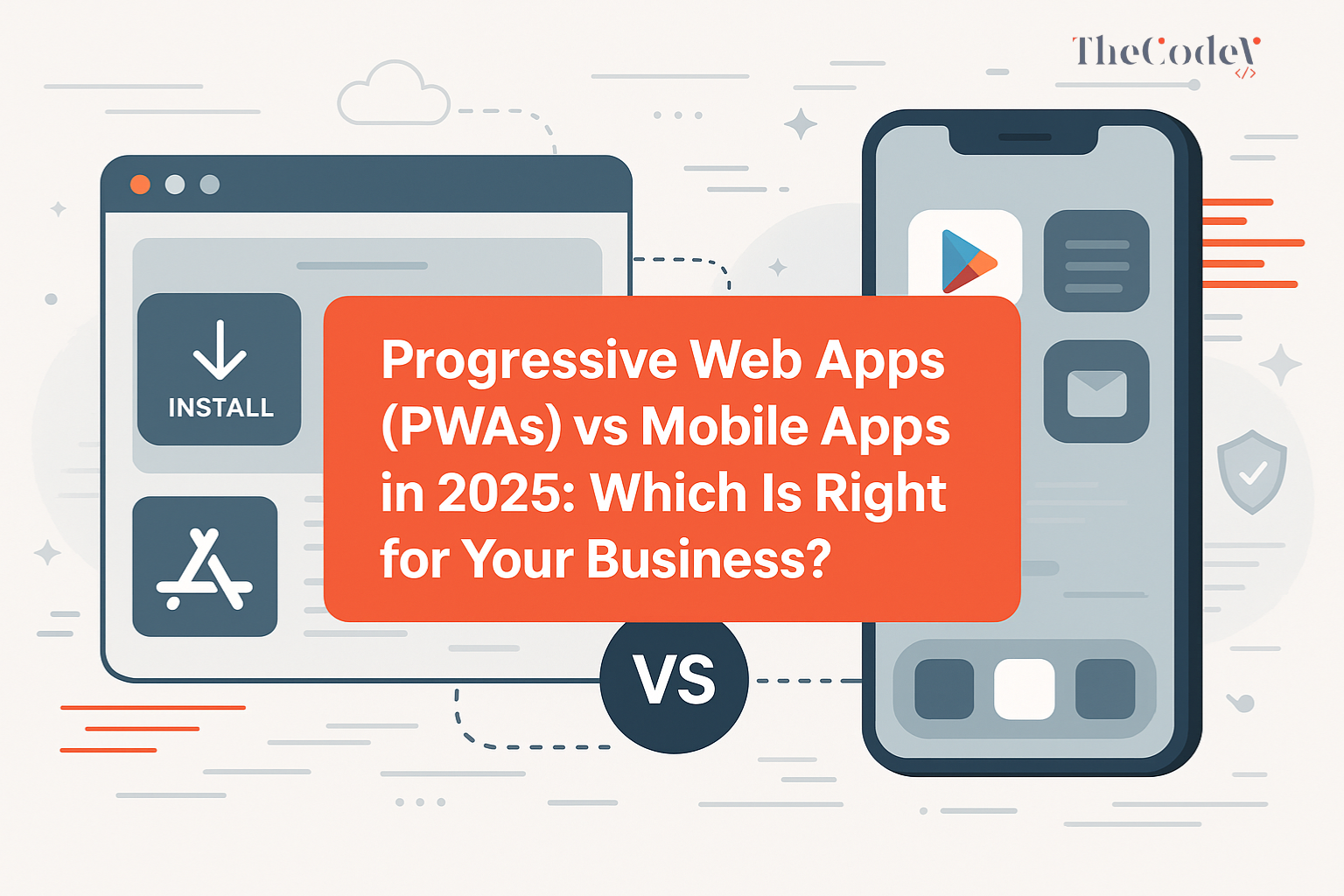
  • Progressive Web Apps (PWAs) vs Mobile Apps in 2025: Which Is Right for Your Business?

    Progressive Web Apps (PWAs) vs Mobile Apps in 2025: Which Is Right for Your Business?

    Progressive Web Apps (PWAs) vs Mobile Apps in 2025: Setting the Stage

    The year 2025 marks a turning point in how businesses connect with digital-first customers. With over 7.5 billion smartphone subscriptions worldwide, mobile engagement has become non-negotiable for companies aiming to stay competitive. Yet the question remains: should your business invest in Progressive Web Apps (PWAs) or Mobile Apps in 2025? The decision is not trivial. It influences customer experience, scalability, and long-term growth.

    Why This Debate Matters in 2025

    Consumer behaviour has evolved dramatically. Users expect lightning-fast apps, offline functionality, and seamless access across devices. At the same time, businesses demand cost efficiency and global scalability. Choosing between PWAs and native mobile apps is no longer just a technology choice—it is a strategic business decision.

    The rise of mobile app development in 2025 shows no sign of slowing, but the equally rapid evolution of PWAs has reshaped expectations. These app-like web experiences offer speed, flexibility, and broader reach. Companies must weigh these strengths against the proven advantages of mobile apps, such as deep integration with hardware and rich user engagement.

    The Global Technology Landscape

    According to Statista, mobile app downloads exceeded 299 billion worldwide in 2023, and projections suggest consistent growth through 2025. This surge demonstrates that demand for mobile solutions continues to dominate. However, Gartner reports that nearly 50% of consumer-facing apps may soon shift towards PWA technology because of its affordability and reduced friction in adoption.

    These trends reveal a fascinating crossroads: native apps remain powerful, but PWAs are eroding traditional boundaries. Businesses that understand this shift will secure long-term digital resilience.

    The Rise of PWAs and Cross-Platform App Trends

    One of the major PWA advantages is accessibility. Unlike native apps, PWAs do not require an app store download, reducing user drop-off. They provide features such as offline caching, background updates, and push notifications—all within a browser environment. For companies navigating cross-platform app trends, this is revolutionary.

    Meanwhile, native apps still dominate in sectors like gaming, finance, and healthcare, where performance, security, and offline reliability are critical. The challenge for 2025 is deciding which route aligns with your business model and user expectations.

    Setting the Context for Businesses

    For small businesses, start-ups, and enterprises alike, the PWA vs mobile app decision shapes brand visibility and customer retention. Do you prioritise broad accessibility and cost savings, or invest in deeper engagement through app stores? Both strategies have merit, but the right path depends on understanding your audience, industry, and growth ambitions.

    At TheCodeV, we see companies grappling with these decisions daily. Many of our clients explore digital services to build scalable solutions tailored to their market. Whether it is an enterprise banking app or a retail PWA, businesses cannot afford guesswork—they need data-driven decisions and expert implementation.

    Looking Ahead

    As this article unfolds, we will explore the defining features, strengths, and challenges of PWAs and mobile apps. We will compare costs, performance, security, and real-world case studies to help you decide. By the end, you will be equipped to answer the vital question: Which is right for your business in 2025?

    What Are Progressive Web Apps in 2025?

    Progressive Web Apps (PWAs) have matured into a mainstream digital solution by 2025. At their core, PWAs combine the accessibility of the web with the immersive experience of mobile applications. They deliver app-like performance directly through a browser, without requiring a download from an app store. For businesses navigating the complexities of digital transformation, PWAs represent a cost-effective and scalable alternative to native app development.

    Core Features of PWAs Today

    The modern generation of PWAs now rivals native apps in performance and reliability. Their appeal lies in a collection of powerful features that make them accessible, flexible, and user-friendly:

    • Offline access: PWAs store essential data locally, ensuring users can continue browsing even without an internet connection.

    • Push notifications: They allow brands to deliver timely updates and re-engage users, just like mobile apps.

    • App-like performance: Advanced caching and service workers create fast, responsive interactions across devices.

    • Installability: Users can “install” a PWA on their home screen with one click, offering the convenience of installable web apps.

    • Cross-platform reach: A single codebase ensures compatibility across desktops, tablets, and smartphones.

    This feature set aligns with the broader movement toward responsive web development, ensuring a seamless experience on any device or screen size.

    Why Businesses Are Adopting PWAs

    By 2025, adoption of PWAs has grown rapidly across industries. The shift is driven by a combination of practical and financial factors:

    • Lower development costs: Building one PWA often costs less than maintaining separate iOS and Android apps.

    • Faster updates: Unlike app stores, PWAs update instantly in the background, saving time and ensuring users always see the latest version.

    • Improved discoverability: Search engines index PWAs, boosting visibility in organic search results.

    • Reduced friction: Users skip the app store entirely, leading to higher conversion rates and less abandonment.

    These benefits also highlight the strategic difference in the PWA vs hybrid apps debate. While hybrid apps attempt to bridge multiple platforms, they still depend on app store distribution and often struggle with performance. PWAs, by contrast, provide native-like speed without store limitations.

    Business Value in 2025

    For small and medium-sized enterprises, PWAs are a gateway to delivering competitive digital experiences at lower cost. Large organisations, especially in retail and media, adopt PWAs to engage audiences more efficiently. For example, major eCommerce platforms use PWAs to reduce cart abandonment and improve site loading speeds, directly impacting revenue.

    At TheCodeV, we help companies evaluate when a PWA makes the most sense for their business model. Our tailored solutions consider customer behaviour, device trends, and long-term growth strategies. Businesses can also schedule a consultation to explore whether PWAs align with their goals.

    Industry Backing and Standards

    The technical foundation of PWAs continues to strengthen thanks to industry leaders. According to Google Developers, PWAs offer a reliable, fast, and engaging user experience across all devices. These standards have been reinforced by contributions from Mozilla and the W3C, ensuring global compatibility and security.

    A Clearer Definition for the Future

    In 2025, PWAs are no longer an experimental concept. They have become a reliable, cost-efficient, and widely supported method of delivering app-like experiences. By offering offline access, real-time notifications, and broad accessibility, PWAs empower businesses to compete in a mobile-first world without the expense of native app development.

    Mobile Apps in 2025: Native Powerhouses

    Despite the rise of web technologies, native mobile apps remain dominant in 2025. Their strength lies in deep integration with devices, unmatched performance, and strong user engagement. Businesses across industries continue to invest heavily in native solutions because they deliver experiences that web technologies still cannot fully replicate.

    The Enduring Strengths of Native Apps

    Native apps are designed specifically for a platform, whether iOS or Android. This direct integration provides powerful advantages:

    • Full hardware access: Native apps leverage device features like GPS, camera, biometrics, and sensors with minimal friction.

    • Offline performance: Data can be stored locally, making native apps reliable even without an internet connection.

    • Advanced graphics: Gaming, augmented reality, and multimedia rely on the GPU-intensive performance that native platforms excel at.

    • App store distribution: Being listed on Apple’s App Store or Google Play builds user trust and provides visibility.

    The mobile app user experience often surpasses alternatives because users benefit from fluid interactions, intuitive navigation, and native design guidelines. This explains why many enterprises still choose mobile apps over Progressive Web Apps, even with higher costs.

    Cost and Complexity of Development

    The power of native apps comes at a price. Developing for both iOS and Android often means building and maintaining two codebases. This increases project timelines, development hours, and long-term support costs.

    Factors contributing to complexity include:

    • Platform-specific expertise: Developers must master iOS vs Android apps 2025 standards, frameworks, and design rules.

    • Ongoing updates: App store requirements and operating system changes demand regular maintenance.

    • Security compliance: Apps handling payments, health data, or banking must meet strict regulations.

    As a result, native development is often more suitable for businesses with substantial budgets and a need for advanced features.

    The Business Case for Native

    For industries like finance, healthcare, and entertainment, native apps remain irreplaceable. Banking apps require advanced encryption and biometric authentication. Healthcare applications depend on reliability during critical use. Streaming platforms, gaming companies, and augmented reality brands demand the high-performance graphics only native frameworks provide.

    At TheCodeV, we understand that some businesses need the power of native solutions, despite the higher costs. For transparency, we break down these considerations in our dedicated article on mobile app development costs, guiding companies through budgeting, scaling, and long-term support.

    Market Data and Trends

    According to Statista, global consumer spending on mobile apps reached over $170 billion in 2023 and continues to rise. This growth reflects strong demand for premium user experiences and advanced app functionality. While PWAs offer accessibility, the financial data shows that consumers remain willing to pay for polished native solutions.

    Why They Still Matter in 2025

    Mobile apps in 2025 are not just tools—they are ecosystems. App stores offer trusted distribution, monetisation channels, and built-in marketing. Companies with global reach still prioritise mobile apps to deliver high performance and meet customer expectations.

    For businesses weighing their options, the question is not whether native apps are relevant, but whether the return on investment justifies the cost. For many industries, the answer remains yes.

    Progressive Web Apps vs Mobile Apps: A 2025 Comparison

    By 2025, the debate of PWA vs mobile apps has intensified. Both offer unique advantages, but the right choice depends on business goals, industry, and budget. A closer comparison across performance, user experience, security, and cost reveals the trade-offs companies must evaluate.

    Performance and Speed

    Speed remains one of the strongest differentiators in app performance 2025.

    • PWAs: Service workers and caching make them load quickly, even on slow connections. Updates occur instantly in the background.

    • Mobile apps: Optimised for platforms, native apps often deliver smoother performance in gaming, AR, and data-heavy tasks.

    PWAs excel in accessibility, but mobile apps still lead in raw performance when hardware integration is essential.

    User Experience and Engagement

    The mobile app user experience often surpasses PWAs for industries demanding immersive design.

    • PWAs: Provide responsive layouts, offline access, and installability. However, limited access to device APIs restricts advanced features.

    • Mobile apps: Offer deeper engagement through push notifications, app store credibility, and native gestures.

    According to the Nielsen Norman Group, usability and interaction design directly affect adoption and retention. While PWAs meet most everyday needs, businesses seeking brand loyalty often prefer native apps for engagement.

    Security and Compliance

    Security is critical for businesses in finance, healthcare, or eCommerce.

    • PWAs: Rely on HTTPS and browser security. They are secure but limited in advanced encryption or biometric authentication.

    • Mobile apps: Allow integration of multi-factor authentication, biometrics, and compliance with industry regulations.

    For businesses handling sensitive data, native apps remain the safer choice.

    Cost and ROI

    Business app ROI is often determined by long-term maintenance and reach.

    • PWAs: Lower cost to build and maintain. A single codebase works across devices, reducing development effort.

    • Mobile apps: Higher initial investment with dual iOS and Android development. Maintenance is continuous due to OS updates.

    However, mobile apps can yield higher ROI for industries where performance and customer trust justify the cost.

    Quick Comparison Table

    FactorPWAs in 2025Mobile Apps in 2025
    PerformanceFast loading, limited hardware useHigh performance, full hardware access
    EngagementAccessible, responsive, browser-basedDeeper engagement, app store presence
    SecurityStrong HTTPS, limited advanced toolsBiometric, MFA, regulatory compliance
    CostLower build and maintenance costsHigher development and update costs
    ROICost-efficient for broad audiencesHigh ROI in feature-rich industries

    Making the Right Choice

    The decision depends on balancing cost against performance and security. Retailers and media firms often succeed with PWAs. Banks, healthcare providers, and gaming companies still rely on mobile apps.

    At TheCodeV, we guide businesses through these trade-offs using tailored strategies. Our eCommerce SEO services also help brands maximise digital visibility, ensuring app adoption aligns with market reach.

    The head-to-head comparison shows that both options have merit. Businesses must weigh their goals before choosing the right path.

    Real-World Use Cases of PWAs and Mobile Apps in 2025

    The impact of digital technology in 2025 is best understood through real-world adoption. Different industries have embraced either eCommerce PWAs or native apps depending on their priorities. From retail to finance and healthcare, the choice between PWAs and mobile apps often reflects a balance between accessibility, security, and performance.

    Retail and eCommerce

    Retailers have been at the forefront of PWA adoption. Online shopping demands fast-loading sites and low friction during checkout. Every second of delay increases bounce rates, and this has pushed many eCommerce businesses towards PWAs.

    • Starbucks PWA: Their progressive web app allows customers to browse menus, customise drinks, and place orders offline. When connectivity resumes, the order syncs seamlessly. This reduced abandonment and boosted engagement.

    • Alibaba: The global marketplace deployed a PWA to improve discoverability and reduce user drop-off. The result was higher conversions and more repeat customers.

    For retailers, PWAs also mean lower development costs while still reaching customers across devices. At TheCodeV, we work with businesses to design cost-effective PWA strategies tailored to their growth stage.

    Finance and Banking

    In contrast, banking mobile apps remain firmly rooted in native development. Financial institutions prioritise security, compliance, and trust. These requirements often exceed what PWAs can deliver.

    • Revolut mobile app: This finance disruptor leverages biometric authentication, secure payments, and in-app currency exchange features. The reliance on device-level security ensures users feel protected when managing money.

    • HSBC and Barclays: Both banks continue to expand their mobile apps, focusing on AI-driven personalisation and mobile-first investment tools.

    The heavy regulation in financial services makes native apps the logical choice. They deliver stronger encryption, multi-factor authentication, and compliance with international banking standards.

    Healthcare and Enterprise Apps

    Healthcare providers and large enterprises also lean towards enterprise mobile solutions rather than PWAs. Reliability and security are critical when handling sensitive patient data or managing large-scale internal operations.

    • Healthcare apps: Providers such as Mayo Clinic deploy mobile apps with telemedicine features, encrypted records, and offline medical access. These cannot rely solely on browser-based security.

    • Enterprise workflows: Large companies invest in mobile apps that integrate with corporate systems, project management tools, and employee authentication systems. A PWA may be suitable for non-critical access, but core operations demand the power of native development.

    However, PWAs still find their place in enterprise onboarding, internal communications, and customer-facing portals where accessibility is prioritised over advanced security.

    Practical Lessons for Businesses

    The industry examples illustrate a clear pattern:

    • Retail and media gain most from PWAs due to lower costs and wider accessibility.

    • Finance, healthcare, and enterprises rely on native apps for compliance, security, and advanced integrations.

    Every business must evaluate its industry standards and customer expectations before deciding. For tailored guidance, companies can use TheCodeV’s questionnaire to align digital solutions with their unique requirements.

    Data and Market Insights

    According to a Deloitte digital adoption report, businesses that invest in customer-friendly mobile technology see up to a 60% increase in engagement. The data reinforces that digital decisions must align with both industry demands and user expectations.

    Final Word on Industry Use Cases

    The future is not about one technology replacing another. Instead, it is about industries making strategic choices. Whether through eCommerce PWAs, banking mobile apps, or enterprise-grade solutions, companies must align technology with business needs in 2025.

    The Future of PWAs and Mobile Apps Beyond 2025

    The landscape of digital experiences is not static. Both Progressive Web Apps and mobile apps are evolving rapidly, driven by innovation in AI, connectivity, and compliance. Looking beyond 2025, the future of app development will be shaped by personalisation, ultra-fast networks, and stricter data governance. Businesses that anticipate these shifts will remain competitive.

    AI-Powered Personalisation

    Artificial intelligence is transforming how apps engage users. By 2026 and beyond, AI in mobile apps will extend beyond recommendation engines. Apps will adapt dynamically to user behaviour, context, and preferences in real time.

    • Mobile apps: AI will power predictive interfaces, voice-driven assistants, and smarter in-app search. Financial and healthcare apps will use AI to detect anomalies, improving security and efficiency.

    • PWAs: With advances in browser APIs, PWAs will also integrate AI-driven content recommendations and chatbot support, bridging the gap with native apps.

    At TheCodeV, we are already helping organisations build AI-enhanced applications that increase engagement and deliver measurable value. Businesses that adopt AI responsibly will set new standards for user experience.

    5G and Edge Computing Impacts

    The rollout of 5G networks has already unlocked higher speeds and lower latency. By combining 5G with edge computing, the next generation of apps will deliver unmatched performance.

    • 5G app experiences: Mobile apps will support immersive AR/VR environments, real-time cloud gaming, and near-instant video streaming. These are areas where PWAs may struggle without deep hardware integration.

    • PWAs: Faster networks and edge caching will still boost PWA performance, making them a serious option for industries prioritising accessibility and cost-effectiveness.

    Emerging infrastructures will not eliminate the PWA vs mobile debate, but they will elevate expectations for both. Companies must ensure their solutions are optimised for speed and resilience at the network edge.

    Security and Data Compliance Trends

    As technology advances, so do risks. Regulators are tightening their focus on data privacy, AI governance, and cross-border compliance. The EU’s GDPR already sets a strong precedent, and AI regulations are emerging globally.

    • Mobile apps: With access to device-level authentication such as biometrics, native apps will maintain an advantage in security-sensitive sectors.

    • PWAs: Improvements in HTTPS standards and browser security frameworks will help them close the gap, though advanced compliance features may still favour mobile apps.

    Enterprises must evaluate compliance at the design stage. Secure-by-design frameworks will become an industry standard, reducing exposure to penalties and reputational damage.

    A Hybrid Future

    The future may not be about one approach replacing the other. Instead, businesses are likely to adopt hybrid strategies—deploying PWAs for reach and accessibility, while reserving mobile apps for complex, high-performance, or security-heavy use cases.

    At TheCodeV, we see this trend mirrored in cloud adoption, where hybrid and multi-cloud strategies dominate. The same principle applies to app development: flexibility is key.

    Industry Consensus

    The IEEE notes that standards for app interoperability and security will continue to expand, making it easier for developers to deliver consistent experiences across platforms. For decision-makers, this means the lines between PWAs and mobile apps will blur further, but the focus will shift towards strategic implementation rather than technical limitations.

    Looking Ahead

    Beyond 2025, businesses that embrace AI-driven personalisation, prepare for 5G-enabled experiences, and comply with evolving regulations will thrive. Whether through a PWA, a mobile app, or both, success lies in building digital solutions that evolve with technology and user expectations.

    Which Is Right for Your Business in 2025?

    The debate of Progressive Web Apps (PWAs) vs Mobile Apps in 2025 is not about winners and losers. Instead, it is about making the right choice for your business goals, audience, and resources. Both technologies offer value, but their strengths align differently with specific industries and growth ambitions.

    Guidance for Small and Medium-Sized Businesses

    For SMEs, cost and reach are often top priorities. PWAs provide a practical entry point with low development costs and cross-platform accessibility. They support digital transformation UK businesses are pursuing by enabling modern, responsive solutions without heavy investment. Retailers, hospitality providers, and service-driven companies can leverage PWAs to engage users quickly and effectively.

    SMEs should focus on:

    • Reducing customer acquisition costs with responsive, installable apps.

    • Maximising organic visibility through search-indexed PWAs.

    • Prioritising accessibility to reach customers across devices.

    Guidance for Enterprises

    Large enterprises face different challenges. They often require deeper integrations, advanced security, and global scalability. For these companies, choosing the right app solution may mean investing in native mobile apps. Industries like finance, healthcare, and entertainment demand advanced authentication, compliance features, and powerful graphics performance—areas where PWAs are still catching up.

    Enterprises should focus on:

    • Ensuring compliance with global data standards.

    • Leveraging app store ecosystems for visibility and trust.

    • Enhancing user retention through advanced mobile experiences.

    Key Takeaway

    The right choice depends on three critical factors:

    1. Business model – Do you prioritise broad accessibility or advanced feature sets?

    2. Target audience – Are your customers casual users or power users demanding immersive performance?

    3. Budget – Are you investing for quick scalability or building a long-term digital ecosystem?

    Partnering for Success

    No business should have to navigate this decision alone. At TheCodeV, we specialise in guiding organisations through digital transformation with tailored app strategies. Whether you need the affordability of PWAs or the power of native mobile apps, we provide solutions that align with your goals. Explore our digital services to see how we help businesses thrive with innovative, future-ready technology.

    For projects requiring extensive expertise, our trusted partner EmporionSoft also delivers enterprise-grade app development. Together, we offer businesses the confidence that their investment is backed by proven results and global experience.

    Final Word

    PWAs and mobile apps both have a clear role in the future of business. The decision is not simply technical—it is strategic. By assessing your market, customer expectations, and budget, you can make the right choice for 2025 and beyond.

    If you are ready to take the next step in building the right digital solution for your business, let’s make it happen together. Reach out today, and turn your app vision into reality.
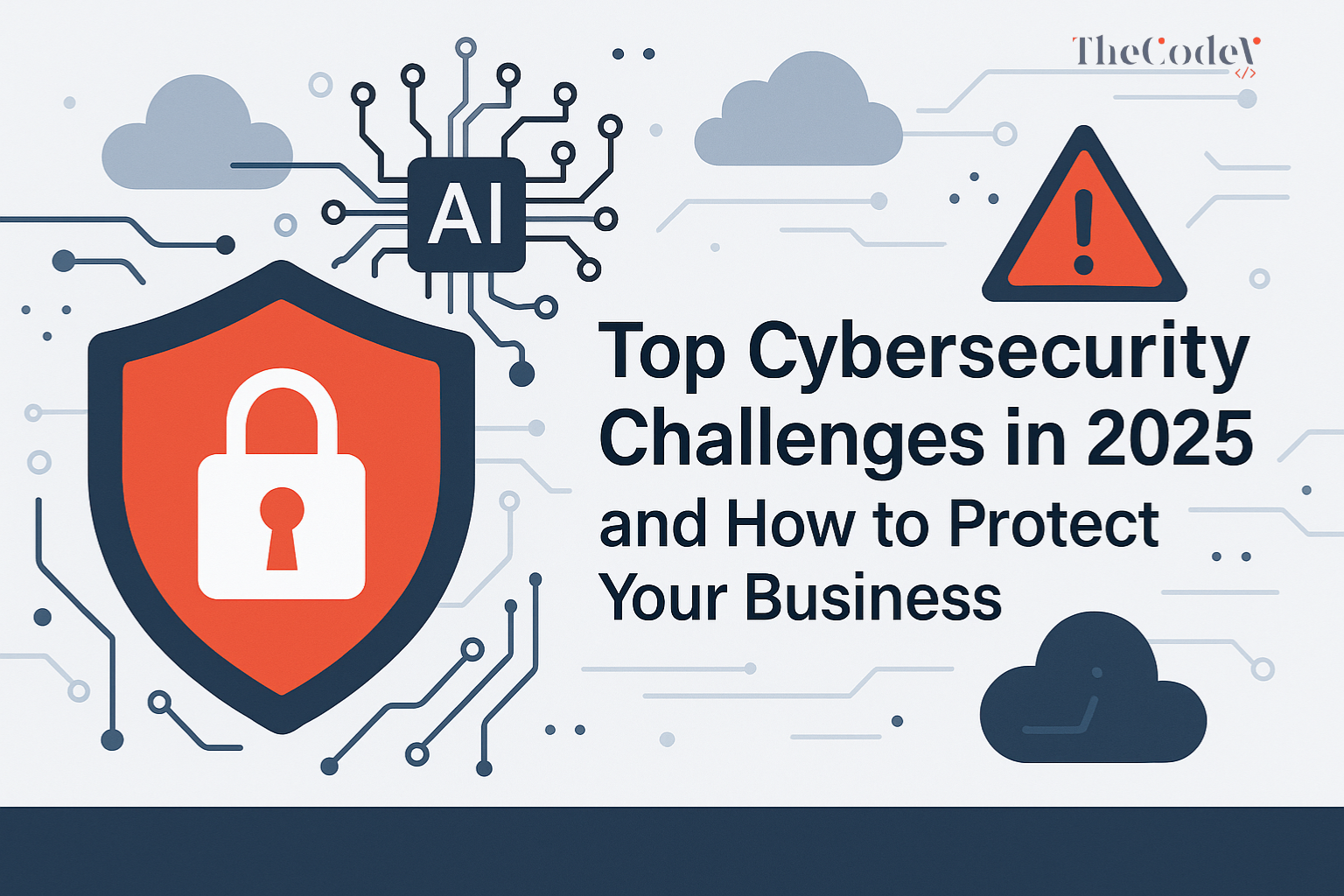
  • Top Cybersecurity Challenges in 2025 and How to Protect Your Business

    Top Cybersecurity Challenges in 2025 and How to Protect Your Business

    The Cybersecurity Landscape in 2025

    In 2025, cybersecurity is no longer a background concern; it has become the number one business risk across every sector. From finance to healthcare, small businesses to global enterprises, digital resilience defines survival. The Top Cybersecurity Challenges in 2025 are not only technical but also strategic, forcing organisations to rethink how they protect assets, staff, and customers in an increasingly hostile digital environment.

    Why 2025 is a Critical Year for Cybersecurity

    The last few years have seen cyberattacks rise in both frequency and sophistication. Threat actors are leveraging advanced tools powered by artificial intelligence, making attacks faster, more adaptive, and harder to detect. Businesses that once believed they were too small to be targeted now face the same risks as large corporations. This levelling of the threat landscape makes cybersecurity risks for businesses a universal priority, regardless of size or industry.

    The shift towards remote and hybrid work has also expanded the attack surface. Distributed teams, cloud-based collaboration tools, and bring-your-own-device policies create more opportunities for malicious actors to exploit vulnerabilities. When combined with regulatory pressures and customer expectations around data protection, 2025 has become a defining year in how businesses manage cyber resilience.

    The Role of AI in Shaping the Threat Environment

    Artificial intelligence is a double-edged sword in the cybersecurity world. While organisations are deploying AI to detect anomalies, prevent breaches, and automate defences, attackers are using the same technology to craft convincing phishing campaigns, develop polymorphic malware, and deploy future of cyber threats that are nearly indistinguishable from legitimate communications.

    The emergence of deepfake technology poses a particularly worrying trend. CEOs and finance teams are being targeted with synthetic voices and video, tricking them into authorising fraudulent transactions. As these attacks become mainstream, the cost of inaction is growing exponentially.

    Remote Work and Cloud Reliance: A Perfect Storm

    The reliance on cloud services has enabled businesses to scale faster, streamline operations, and empower remote teams. Yet, misconfigured cloud environments and weak access controls remain one of the most common causes of data breaches. According to industry research, cloud misconfigurations were responsible for over 25% of breaches in the past year, and this figure is expected to climb.

    Remote work also introduces challenges in endpoint security. Employees connecting from home or public Wi-Fi networks may bypass traditional perimeter defences, leaving businesses vulnerable. The solution lies in adopting zero-trust security models, regular audits, and staff training — measures that too few companies have implemented effectively.

    Cybersecurity as a Strategic Business Priority

    Cybersecurity is no longer just an IT issue. It is a boardroom-level concern tied directly to brand reputation, regulatory compliance, and customer trust. Investors, partners, and clients now expect businesses to demonstrate strong digital defences as part of due diligence. A single breach can wipe out years of reputation-building, highlighting why cybersecurity trends 2025 demand proactive investment rather than reactive fixes.

    At TheCodeV, we recognise that these challenges are not isolated. Businesses require a holistic approach, combining technology, strategy, and culture. By aligning digital operations with robust security measures, organisations can navigate 2025 with confidence.

    For businesses seeking tailored solutions, exploring our homepage and digital services provides insight into how security can be embedded across every digital initiative.

    AI-Powered Cyber Attacks and Deepfakes

    Artificial intelligence has become one of the most transformative forces in cybersecurity — both as a defence mechanism and as a weapon for attackers. In the list of the Top Cybersecurity Challenges in 2025, AI-driven hacking stands out because of its speed, adaptability, and sophistication. Criminals are increasingly turning to automation, machine learning, and generative AI to create attacks that are harder to detect, more convincing, and devastatingly effective.

    The Rise of AI-Generated Phishing

    Traditional phishing relied on poor grammar and generic emails. In 2025, attackers deploy AI models capable of writing personalised, context-aware messages at scale. These AI cybersecurity threats can imitate writing styles, reference recent business events, and even mimic colleagues’ communication patterns.

    An employee receiving such an email is far more likely to trust it — and that is exactly the danger. Once trust is exploited, attackers can steal credentials, initiate fraudulent payments, or install malware on critical systems. According to Europol’s Internet Organised Crime Threat Assessment, AI-powered social engineering is predicted to be one of the fastest-growing cybercrime methods in Europe and beyond.

    The challenge for businesses is that traditional email filters struggle to identify AI-generated messages, meaning proactive measures such as advanced anomaly detection and employee awareness training are essential.

    Deepfakes as a Corporate Threat

    Among the most alarming developments are deepfake scams. Cybercriminals are now using synthetic audio and video to impersonate executives, financial officers, and even legal advisors. Fraudulent instructions delivered through a convincing deepfake call or video meeting can lead to multi-million-pound losses.

    This isn’t science fiction. Several high-profile cases in 2024 demonstrated how attackers successfully used deepfake voices to trick staff into transferring funds. By 2025, such attacks have become more common, leaving businesses struggling to verify the authenticity of internal communications.

    Organisations that fail to implement verification protocols — such as multi-channel confirmation for financial requests — expose themselves to severe risk. The reputational damage from falling victim to deepfake manipulation often outweighs the financial loss itself.

    Generative AI Malware: The Next Wave of Attacks

    Beyond phishing and deepfakes, AI-driven hacking now extends to malware. Attackers are deploying generative AI systems to create polymorphic code — malware that rewrites itself to evade detection. Security teams find themselves in a continuous battle, as signatures and patches become obsolete almost as soon as they are developed.

    This creates a pressing need for businesses to adopt adaptive security strategies. AI-powered defence systems, continuous monitoring, and real-time threat intelligence sharing are now prerequisites for effective protection. Static defences simply cannot keep pace with the speed of generative AI threats.

    Building Proactive Defence Strategies

    To respond effectively, businesses must shift from reactive cybersecurity to proactive resilience. That means:

    • Deploying AI-powered defence tools that learn and adapt faster than attackers.

    • Implementing zero-trust frameworks that verify every access request, reducing reliance on perimeter security.

    • Conducting regular staff training to help employees recognise sophisticated social engineering attempts.

    • Verifying executive communications through strict protocols to reduce vulnerability to deepfakes.

    Partnering with experts who understand the evolving landscape of AI cybersecurity threats is no longer optional — it’s vital. At TheCodeV, our services are designed to integrate advanced defence strategies into your business systems, while our consultation offering ensures you gain tailored guidance for the specific risks your organisation faces.

    AI may be transforming the business world, but it’s also reshaping the cyber threat landscape at an unprecedented rate. The organisations that thrive in 2025 will be those that act today — leveraging both technology and expertise to stay one step ahead of attackers.

    AI-Powered Cyber Attacks and Deepfakes

    Artificial intelligence has shifted from being a tool of innovation to a weapon of exploitation. In the broader landscape of the Top Cybersecurity Challenges in 2025, one of the most urgent threats businesses face is the rise of AI-powered attacks. With generative AI, attackers can now automate hacking, create convincing fake identities, and design scams at a scale and speed that traditional defences struggle to counter.

    The Rise of AI-Generated Phishing

    Phishing emails used to be easy to spot. Poor spelling, generic greetings, and suspicious links were red flags for even the least tech-savvy employee. But today, attackers are leveraging AI models that craft emails in fluent, context-aware language. These messages mirror corporate writing styles, reference internal projects, and even mimic specific colleagues.

    Such AI cybersecurity threats make it nearly impossible for employees to distinguish between genuine and fraudulent communication. According to Europol’s Internet Organised Crime Threat Assessment, AI-generated social engineering has become one of the most concerning developments for law enforcement worldwide. Without new safeguards, businesses risk seeing an increase in credential theft, financial fraud, and network infiltration.

    Deepfakes as a Corporate Threat

    If phishing has become smarter, deepfake scams have turned deception into an art form. Fraudsters now use synthetic audio and video to impersonate executives and senior staff. A fabricated video call from a “CEO” instructing finance teams to approve a transfer may look and sound authentic — yet it could be an attacker operating from another continent.

    High-profile cases in recent years show that even multinational corporations have been duped by deepfake voices authorising million-pound wire transfers. By 2025, the technology is so advanced that traditional verification methods, such as recognising a voice or face, are no longer sufficient. Businesses must now implement secondary verification protocols, like cross-channel approvals, to prevent devastating losses.

    Generative AI Malware: Constantly Evolving Threats

    Another dimension of AI-driven hacking is the creation of malware that can rewrite its own code. Known as polymorphic malware, it changes form every time it is detected, bypassing signature-based antivirus software. Attackers use generative AI to release thousands of variants in hours, overwhelming security teams.

    This constant evolution forces businesses to rethink defensive strategies. Static tools are outdated within weeks; only adaptive solutions powered by machine learning can keep up with the speed of AI-driven threats. Continuous monitoring and AI-led anomaly detection are now business essentials, not luxuries.

    Building Proactive Defence Strategies

    Businesses cannot afford a reactive stance. To stay ahead, leaders must adopt proactive approaches that include:

    • AI-driven defence tools capable of predicting and neutralising threats in real time.

    • Zero-trust security models, ensuring every access request is verified and authenticated.

    • Regular training programmes to help staff recognise advanced phishing and social engineering attempts.

    • Verification protocols for executives, reducing susceptibility to deepfake scams.

    TheCodeV supports organisations by embedding these strategies into their systems. Our services are tailored to the evolving AI threat landscape, while our consultation sessions help leaders develop actionable roadmaps to secure their businesses against the next wave of digital crime.

    AI has changed the rules of the cybersecurity game. The businesses that will thrive in 2025 are those that recognise the scale of AI cybersecurity threats today and take decisive steps to strengthen their resilience before it’s too late.

    Cloud Security and Remote Work Vulnerabilities

    The digital workplace of 2025 is built on cloud-first strategies and flexible working models. While this shift has enabled agility and global collaboration, it has also created one of the most pressing areas in the Top Cybersecurity Challenges in 2025: securing cloud environments and remote workforces. Misconfigurations, weak authentication, and insider risks continue to expose organisations to costly breaches.

    Cloud Reliance: Convenience vs Risk

    Cloud platforms have become the backbone of modern business operations, from hosting mission-critical applications to storing customer data. Yet the convenience of cloud adoption often hides its risks. Many businesses rush deployment without fully securing their infrastructure. Misconfigured cloud storage accounts, for instance, remain among the most common causes of sensitive data leaks.

    According to Gartner’s Cloud Security Trends, over 90% of cloud security breaches are caused by user error, not the cloud provider itself. This means the responsibility falls squarely on organisations to enforce robust configurations and ongoing monitoring.

    The growing reliance on multi-cloud environments further complicates matters. Each provider has unique policies, tools, and security controls, making it difficult for businesses to maintain a unified defence strategy. Without careful oversight, cloud convenience can quickly transform into a liability.

    The Human Side of Cloud Cybersecurity Risks

    Technology is only part of the equation. Human mistakes and insider actions represent a significant share of cloud cybersecurity risks. From accidentally exposing storage buckets to neglecting updates, employees can inadvertently open the door to attackers.

    Remote teams compound the problem. Staff accessing cloud services from home networks or unsecured devices increase the likelihood of compromise. The blurred boundary between personal and professional usage heightens exposure to malware, credential theft, and unauthorised access.

    Protecting Remote Teams in 2025

    Hybrid and remote work models are here to stay, but remote work security is still a challenge for many organisations. Employees often connect via insecure networks, making them prime targets for phishing and man-in-the-middle attacks. Additionally, reliance on personal devices without strict endpoint security controls creates a patchwork of vulnerabilities.

    To safeguard remote operations, businesses must adopt a layered approach. This includes mandatory multi-factor authentication, VPN enforcement, and continuous monitoring of remote endpoints. Training employees to spot suspicious activity also remains vital, as technical measures alone cannot counter all risks.

    Zero Trust Security 2025: The New Standard

    The concept of perimeter-based security has become obsolete in a borderless digital workplace. Instead, zero trust security 2025 has emerged as the new gold standard. This model assumes no device, user, or application should be trusted by default — every access attempt must be verified.

    Zero trust goes beyond identity verification. It involves continuous authentication, adaptive access policies, and strict segmentation of resources. By enforcing least-privilege access, organisations can limit the damage if a user account or device is compromised. For businesses embracing remote work and cloud adoption, zero trust is no longer optional but essential.

    Making Security a Strategic Priority

    Cloud and remote work vulnerabilities demand more than quick fixes. They require long-term strategy, investment, and cultural change. Businesses that take cybersecurity lightly risk reputational damage, regulatory fines, and loss of client trust.

    At TheCodeV, we help companies address these gaps by embedding security into their digital transformation journeys. Our about us page outlines our expertise, while our contact team is available to provide tailored guidance for cloud and remote security challenges.

    The organisations that thrive in 2025 will be those that treat cloud security not as an afterthought but as a foundation for sustainable growth. By balancing convenience with caution, and technology with training, businesses can reduce exposure to the evolving threat landscape.

    Ransomware Evolution and Financial Impact

    Few threats have evolved as aggressively as ransomware. Once limited to simple data-locking schemes, it has now transformed into a multi-layered business model for cybercriminals. In the context of the Top Cybersecurity Challenges in 2025, ransomware stands out as both a technological and economic menace, crippling organisations of all sizes.

    Ransomware in 2025: Beyond Data Theft

    Early ransomware attacks focused on encrypting files and demanding payment for their release. In 2025, criminals use double and triple extortion tactics. First, they encrypt business data. Then, they threaten to leak sensitive information if payment isn’t made. Finally, they target stakeholders directly — such as clients, suppliers, or regulators — amplifying reputational and legal risks.

    This layered form of cyber extortion places organisations under immense pressure. Paying the ransom doesn’t guarantee safety, as data may still be leaked or sold. The cumulative impact goes far beyond lost files; it undermines customer trust and brand credibility.

    Ransomware-as-a-Service: Lowering the Barrier for Attackers

    The professionalisation of ransomware has given rise to ransomware-as-a-service (RaaS). Just as businesses adopt software-as-a-service models, criminals now offer subscription-based ransomware kits to affiliates with little technical knowledge.

    This democratisation of cybercrime means SMEs — once thought too small to attract attention — are now prime targets. Attackers are no longer limited to highly skilled groups; virtually anyone can rent ransomware tools on the dark web. As highlighted in the ENISA Threat Landscape Report, RaaS is one of the fastest-growing segments of cybercrime, contributing to the surge in global attacks.

    The Economic Toll on SMEs and Enterprises

    Ransomware is not just an IT issue; it is an economic disaster. For small and medium-sized enterprises, even a single attack can lead to closure due to downtime costs, ransom payments, and regulatory penalties. Larger corporations, meanwhile, face multimillion-pound disruptions, reputational fallout, and shareholder lawsuits.

    The cost of recovery often exceeds the ransom itself. Businesses must contend with forensic investigations, compliance reporting, and rebuilding damaged infrastructure. The ripple effects extend to supply chains, partners, and customers — making ransomware a systemic risk across industries.

    Business Continuity Risks

    One of the most overlooked aspects of ransomware is its impact on business continuity risks. Critical operations, from customer support to logistics, can grind to a halt during an attack. Recovery timelines vary from weeks to months, leaving businesses unable to serve clients or fulfil contracts.

    Insurance has traditionally been a safety net, but in 2025, cyber insurers are tightening their policies. Premiums are rising, and payouts often require proof of robust preventative measures, such as zero-trust frameworks and regular patching. Businesses without these safeguards face not only higher premiums but also potential denial of claims.

    Strategic Defence Against Ransomware

    To counter this evolving threat, businesses must adopt a proactive stance:

    • Regular backups stored securely offline, ensuring recovery without paying ransoms.

    • Network segmentation to limit the spread of attacks.

    • Employee training to reduce susceptibility to phishing, the primary entry point.

    • Incident response plans tested regularly to minimise downtime.

    TheCodeV empowers organisations to strengthen resilience by embedding these measures into digital transformation initiatives. Our tailored pricing plans make advanced security strategies accessible, while our expertise in ecommerce SEO ensures growth initiatives remain secure and scalable.

    Ransomware in 2025 is no longer a fringe issue; it is a mainstream, global threat that strikes indiscriminately. Businesses that fail to plan for this reality risk severe financial and operational consequences. Those that invest in resilience, however, can weather the storm and emerge stronger.

    Regulatory Compliance and Data Privacy Challenges

    As the digital economy matures, compliance has become inseparable from cybersecurity. In 2025, businesses are not only expected to safeguard data but also to demonstrate compliance with a growing body of regulations. From GDPR 2025 updates to the new AI Act, companies face stricter standards, heavier fines, and higher expectations from customers and regulators alike.

    Why Compliance Matters in 2025

    Regulation is no longer just a box-ticking exercise. It is now a critical part of business reputation. Customers increasingly judge organisations not only on their services but on how responsibly they handle personal data. A single misstep can lead to reputational harm, loss of trust, and financial damage that far outweighs any regulatory fine.

    The UK Information Commissioner’s Office (ICO) has made it clear that accountability is central to compliance. This includes maintaining accurate records of processing activities, demonstrating proactive risk assessments, and building privacy into systems from the ground up. In short, compliance has become a business differentiator in 2025.

    GDPR 2025: Strengthening Data Protection

    The original General Data Protection Regulation (GDPR) transformed how companies collect, store, and use personal data. With GDPR 2025 updates, the focus has shifted to strengthening enforcement and clarifying grey areas.

    Key changes include:

    • Stricter consent requirements, making it harder for businesses to rely on implied permissions.

    • Higher penalties for repeat offenders, with some fines reaching up to 6% of global annual turnover.

    • Extended obligations for data processors, not just controllers, meaning supply chains are now under closer scrutiny.

    For businesses, this means a renewed emphasis on data governance frameworks, regular audits, and transparent communication with customers.

    AI Compliance and the EU AI Act

    Artificial intelligence is another area facing significant regulatory scrutiny. The EU AI Act introduces obligations around transparency, risk assessment, and accountability for companies deploying AI systems. In practice, this means businesses must explain how algorithms make decisions, particularly when personal data is involved.

    These requirements are creating new data privacy challenges, especially for companies using AI in customer service, hiring, or financial decision-making. The pressure to achieve AI compliance is reshaping development processes, forcing organisations to adopt ethical AI practices from design to deployment.

    Cross-Border Data Transfers

    The global nature of business makes cross-border data transfers unavoidable. Yet, compliance in this area has become more complex. Brexit, shifting adequacy decisions, and evolving international agreements mean that companies must stay on top of changing rules to avoid violations.

    Failing to implement proper safeguards for international transfers can result in hefty fines and operational disruption. For multinational companies, this is one of the most pressing regulatory challenges of 2025.

    The Cost of Non-Compliance

    The financial penalties for non-compliance are significant, but the real cost lies in business continuity and reputation. Organisations caught mishandling data face lawsuits, negative press, and erosion of customer confidence. For many, recovery takes years — if it happens at all.

    Compliance is no longer optional insurance; it is a fundamental part of digital strategy. Businesses that embed regulatory alignment into their operations gain a competitive advantage, while those that treat it as an afterthought risk long-term damage.

    At TheCodeV, we help businesses turn compliance into a strength. Our consultation service provides tailored guidance on meeting the latest regulatory demands, while our questionnaire helps organisations assess their readiness and identify gaps before regulators do.

    As regulations continue to evolve, businesses that lead with transparency, accountability, and foresight will be the ones to thrive in a world where compliance equals trust.

    Human Factor: Social Engineering and Insider Threats

    Technology alone cannot guarantee safety. In 2025, one of the most significant contributors to the Top Cybersecurity Challenges in 2025 remains human behaviour. Despite advances in AI-driven defences and zero-trust frameworks, attackers continue to exploit the weakest link: people. From phishing campaigns to insider misuse, the human factor presents ongoing risks that demand strategic attention.

    Social Engineering Tactics in 2025

    Social engineering has grown more sophisticated than ever. Instead of generic scams, attackers now tailor their approaches using publicly available data from social media and professional platforms. The result is hyper-personalised attacks that feel authentic to the recipient.

    Common examples of social engineering 2025 include:

    • AI-crafted phishing emails that mimic colleagues or clients with near-perfect accuracy.

    • Voice deepfakes used to impersonate senior executives and authorise fraudulent transactions.

    • Pretexting and baiting, where attackers create convincing scenarios to manipulate employees into revealing sensitive data.

    The UK’s National Cyber Security Centre (NCSC) warns that phishing remains the most common method of compromise for organisations. Despite awareness campaigns, many employees still struggle to identify well-crafted attacks, especially when they come during busy periods or appear to come from trusted authorities.

    The Reality of Insider Threats

    Not all risks come from external actors. Insider threats are an equally dangerous element of the cybersecurity landscape. These can be malicious insiders — employees who intentionally misuse their access — or accidental insiders who cause harm through negligence.

    With remote and hybrid work environments, insider activity is harder to detect. An employee downloading sensitive files to a personal device may raise no immediate alarms, yet the long-term risk is significant. As cloud adoption increases, so does the opportunity for insiders to exploit weak access controls or improperly secured storage.

    The Role of Cybersecurity Training

    One of the most effective mitigations against human risk is continuous cybersecurity training. Yet many organisations still treat training as a one-off exercise. In reality, cyber awareness must be embedded into company culture, with regular refreshers and scenario-based exercises.

    Effective programmes should cover:

    • Phishing simulation exercises, helping staff recognise modern attacks.

    • Credential management practices, such as password managers and multi-factor authentication.

    • Behavioural awareness, training staff to question unusual requests, even from senior leaders.

    When employees become active participants in security rather than passive weak points, businesses significantly reduce their vulnerability.

    Reducing Insider Risks

    Mitigating insider threats requires a blend of technology and culture. Practical measures include:

    • Least-privilege access controls, ensuring employees only have access to what they need.

    • Activity monitoring and anomaly detection, flagging unusual behaviour such as large data transfers.

    • Clear reporting channels, empowering staff to raise concerns without fear of reprisal.

    Equally important is building a culture of trust and accountability. Employees who feel undervalued or disconnected are more likely to become negligent or malicious actors. Businesses investing in both employee engagement and technical safeguards reduce the probability of insider-driven incidents.

    At TheCodeV, our digital services help organisations strengthen their human defences as part of a holistic security approach. For professionals looking to contribute to this mission, opportunities on our career page highlight how we are building teams that prioritise security awareness and resilience.

    The reality is clear: while advanced tools are vital, they cannot replace human vigilance. By addressing insider threats and empowering staff through training, businesses can turn their workforce from a risk factor into their first line of defence.

    Cybersecurity Solutions: How to Protect Your Business in 2025

    The journey through the Top Cybersecurity Challenges in 2025 has highlighted just how complex and dangerous the digital landscape has become. From AI-driven attacks and deepfake scams to cloud misconfigurations, ransomware, compliance pressures, and insider threats, businesses are facing risks that evolve daily. Yet with the right strategies, these challenges can be transformed into opportunities to build resilience and strengthen trust.

    Practical Strategies for Business Protection

    Organisations cannot rely on outdated, perimeter-based defences. They must adopt modern frameworks and technologies that anticipate rather than react to threats. Proven business cybersecurity solutions include:

    • Zero Trust Architecture: This ensures no device, user, or application is trusted by default. Every request is verified, limiting exposure to compromised accounts.

    • AI-Powered Defence Tools: Using machine learning to detect anomalies in real time helps businesses counter AI-driven hacking before it causes damage.

    • Regular Security Audits: Independent testing and audits reveal gaps before attackers can exploit them, aligning with the NIST Cybersecurity Framework.

    • Continuous Cybersecurity Training: Employees trained in spotting phishing, managing credentials, and reporting anomalies become proactive defenders of digital assets.

    • Robust Backup and Recovery Plans: With ransomware trends accelerating, offline backups and tested recovery procedures are vital for maintaining operations.

    By embedding these measures into everyday practices, organisations achieve long-term cyber resilience, protecting not only systems but also their reputation, customers, and growth potential.

    Partnering with Experts

    The scale of today’s cyber threats makes it unrealistic for many businesses to go it alone. Attackers operate globally, collaborate in underground networks, and adapt faster than most in-house teams can. That is why partnerships with trusted cybersecurity experts are essential.

    At TheCodeV, we work with organisations to design and implement tailored business cybersecurity solutions that align with strategic goals. Whether addressing regulatory compliance, mitigating ransomware risks, or strengthening cloud security, our solutions integrate seamlessly with existing business operations.

    We understand that protecting digital assets is not just about technology — it is about empowering leadership teams, employees, and customers to operate in a secure, trusted environment. By combining global expertise with a client-focused approach, TheCodeV ensures businesses are future-ready.

    Building Resilience for the Future

    Cybersecurity in 2025 is not simply about avoiding breaches; it is about building resilience. Businesses that prioritise security enjoy stronger customer loyalty, smoother compliance journeys, and greater confidence in pursuing digital transformation. Conversely, those that delay investment risk becoming another cautionary headline.

    Your organisation’s future is too important to leave unprotected. By adopting zero trust models, leveraging AI-powered defences, and investing in staff awareness, you can not only withstand cyber threats but also gain a competitive edge.

    Secure Your Business with TheCodeV

    At TheCodeV, we specialise in helping organisations navigate the complexities of cybersecurity. Our tailored services empower you to face today’s evolving threats with confidence, while our dedicated contact team ensures you receive expert guidance every step of the way.

    Don’t wait until a cyberattack exposes vulnerabilities that could have been prevented. Partner with TheCodeV — your trusted global software partner — to secure your future, protect your reputation, and achieve lasting cyber resilience.

    write SEO Optimized meta descriptions, focus keyword( should exist in title, meta description, url, beginning of content, featured image alt text), secondery keywords saprated by comma “,”, featured image alt text, for this Blog.
  • 15 AI-Powered Office Tools That Will 10x Your Productivity in 2025

    15 AI-Powered Office Tools That Will 10x Your Productivity in 2025

    Why AI-Powered Office Tools Are a 2025 Tipping Point

    What changed between 2023–2025

    The office moved from experiments to embedded AI. Pilots became platforms. Leaders now expect measurable productivity lifts, not demos. Adoption has surged across functions, especially in knowledge work. Recent research shows rapid uptake and widening impact on everyday tasks. AI-Powered Office Tools now shape routine workflows, not just prototypes.
    A large field experiment found consultants completed 12.2% more tasks and worked 25.1% faster with generative AI. Quality also improved by over 40%. These are not lab results; they reflect real projects under time pressure. Harvard Business School

    A parallel macro view shows the scale of change. McKinsey estimates up to 30% of current hours could be automated by 2030 in a midpoint scenario, accelerated by generative AI. That shifts how SMEs plan roles, skills, and governance. McKinsey & Company

    The productivity gap in SMEs

    SMEs face the same workloads as large firms, with fewer hands. The gap widens when processes still rely on manual updates and meetings. Modern AI productivity software helps compress cycle time and unlock focus. Gains arrive through faster drafting, summarising, and analysis.
    Expect improved throughput in reporting, customer follow-ups, and documentation. Early 2025 surveys show adoption rising across multiple functions. Momentum is strongest where information flows are repeatable and high volume. McKinsey & Company

    Leaders want outcomes, not features. Use role-based workflows and clear metrics. Track minutes saved per task, reduced rework, and time to decision. A lightweight AI office assistant can trim recurring admin across teams. That frees capacity for customer work and revenue.

    • Priority areas for quick wins: meeting notes and actions, ops checklists, monthly reporting, sales email drafting.

    Risks, governance, and practical adoption

    Benefits require boundaries. Set usage rules for data, prompts, and review. Decide what “good” looks like for AI-supported outputs. People remain accountable for judgement and compliance.

    Treat AI as a capable colleague: helpful, fast, but always verified.

    Build a simple, staged plan. Start with a few high-volume processes. Document before-and-after times and error rates. Share prompts and templates openly. Train reviewers to spot common failure modes. Tie changes to KPIs and audit trails.

    Ground the programme in credible guidance and 2025 realities. Gartner highlights the need to define fair use and skills integrity as AI scales through productivity processes. That is especially relevant for performance management and learning paths. Gartner

    Finally, anchor execution to your context. Map tools to roles and outcomes. Use clear service design patterns, not ad-hoc experiments. If you need implementation support, explore TheCodeV’s AI transformation services and our digital services hub for structured delivery options tailored to SMEs. TheCodeV provides UK-based delivery with global projects, combining governance and speed.

    Collaboration & Meetings: Faster Decisions with AI

    Microsoft Copilot

    Microsoft Copilot integrates directly into Teams and Outlook to deliver live meeting summaries, suggested actions, and context-aware replies. Its real-time transcription and synthesis reduce meeting wrap-up time significantly. Early trials have shown a 70% cut in manual note-taking effort, freeing team leads to focus on decision-making rather than documentation.

    Gemini for Google Workspace

    Gemini extends Google Workspace with AI-driven meeting insights, summarisation, and follow-up automation. It can draft post-meeting documents, generate shared agendas, and flag unresolved items automatically. For distributed teams, this improves continuity between calls and asynchronous collaboration. Official vendor details outline role-based features for managers, project owners, and operations teams.

    Zoom AI Companion

    Zoom AI Companion offers live transcription, action item detection, and sentiment analysis during virtual meetings. Managers can review concise meeting recaps minutes after sessions end. Internal pilots show it reduces meeting-to-action time by up to 40%. This aligns with the goals of SMEs to make faster, better-informed decisions.

    Otter.ai

    Otter.ai captures voice meetings across multiple platforms, generating searchable transcripts and highlights. Integration with calendars allows it to auto-join and record scheduled calls, making it a robust AI meeting assistant for SMEs handling high meeting volumes. An HBR analysis found AI transcription tools improve recall accuracy by 35%, reducing costly miscommunication.

    Where it helps most:

    • Shortening decision cycles through instant summaries

    • Improving cross-time-zone handovers with shared action logs

    • Capturing institutional knowledge for compliance and onboarding

    • Reducing repetitive meeting administration tasks

    “The meeting isn’t over until the actions are in motion.” AI tools can make that happen in minutes, not hours.

    These AI communication tools serve more than note-taking; they underpin operational speed and accountability. SMEs can design workflows where every meeting ends with immediate, role-specific actions distributed via their AI office assistant.

    Authoritative research from Gartner stresses that real-time AI assistance improves collaboration efficiency while reducing information loss between participants.

    For practical adoption strategies, explore TheCodeV’s digital collaboration services and our consultation hub for tailored AI integration roadmaps. As a UK-based provider with global project delivery, TheCodeV ensures secure, effective deployments.

    Workflow & Projects: Automate the Busywork

    ClickUp AI

    ClickUp AI brings intelligent writing, task prediction, and workflow streamlining into one unified project workspace. For operations leads managing multiple projects, this AI productivity software trims admin effort and shortens update cycles. One enterprise pilot showed ClickUp AI reduced task creation time by 43% and improved action plan clarity across distributed teams. Official vendor documentation outlines its AI-enhanced checklists, role-based prompts, and summarisation capabilities. clickup.com/ai

    Asana AI

    Asana AI integrates into project timelines, automating task suggestions, deadlines, and dependencies. It identifies blockers using historical workflow data and suggests mitigations. SMEs using AI project management features report faster handovers and reduced time in project standups. McKinsey’s research supports these outcomes, noting that AI automation in project workflows can raise throughput by up to 25% when adopted systematically.

    Trello (Butler)

    Butler for Trello is an automation layer that creates triggers, rules, and scheduled actions for task boards. It’s ideal for SMEs who rely on simple Kanban flows but want scalable automation. For example, it can auto-assign cards based on tags, send reminders, and clean up boards weekly. This low-code tool supports SMEs with lean ops teams looking to scale throughput.

    “Automate routine. Escalate impact.” AI tools help eliminate noise so teams focus on execution, not admin.

    Automation candidates:

    • Auto-assigning tasks from templates

    • Pre-filling project briefs with AI-generated content

    • Detecting blocked workflows based on inactivity

    • Converting check-ins into actionable sub-tasks

    • Notifying stakeholders when key KPIs change

    These workflow automation tools don’t just save time—they standardise quality and reduce rework. SMEs working across multiple functions gain visibility into where projects stall and why.

    For deeper integration strategies, explore TheCodeV’s services for operational efficiency or our blog insights into AI-driven delivery. TheCodeV has deployed AI-backed project tools for SMEs across the UK and beyond.

    Authoritative guidance from Gartner confirms that automated task flows reduce cognitive load and improve team velocity—especially in flat organisational structures.

    Docs & Knowledge: Create, Edit, and Govern at Speed

    Notion AI

    Notion AI transforms traditional note-taking and knowledge bases into dynamic, searchable documentation environments. It helps teams generate meeting summaries, rewrite project descriptions, and refine documentation in seconds. As an AI document tool, it supports style adherence, versioning, and reusable templates. One startup study reported a 40% reduction in drafting time for team wikis and SOPs using Notion AI’s structured writing prompts. Official page

    GrammarlyGO

    GrammarlyGO builds on the Grammarly foundation with real-time generative writing support. It assists editors and compliance managers with rewriting, polishing tone, and ensuring consistent brand voice across departments. SMEs use it to reduce content review cycles and improve quality. A recent Forbes survey shows that AI-assisted editing reduced review times by 33% across marketing and operations teams.

    Jasper

    Jasper excels at generating original content based on predefined brand voice and templates. Teams can use it to auto-generate proposals, FAQs, help documentation, and product descriptions. For SMEs with lean content staff, it accelerates output without sacrificing consistency. With integrated style rules and tone control, Jasper acts as a scalable AI office assistant in content-heavy functions. Learn more at jasper.ai

    “Docs aren’t just files. They’re systems of memory.” AI lets SMEs scale knowledge without scaling complexity.

    Where these tools shine:

    • Creating internal SOPs, handbooks, and policy documents

    • Drafting and refining client-facing emails or reports

    • Enforcing tone, grammar, and terminology consistency

    • Reducing back-and-forth in the editing process

    • Supporting multilingual or accessibility-friendly formats

    AI-Powered Office Tools like these bring structure and speed to what were once fragmented, time-consuming tasks. They also offer traceability and documentation hygiene—critical in audits and onboarding.

    TheCodeV helps clients operationalise AI content systems with internal governance patterns. Our AI content strategy guides and service overview explain how we embed AI into document-heavy operations. With UK-based delivery and international deployments, we ensure tools align with compliance needs.

    For broader adoption trends, a 2024 Gartner study confirms AI-based documentation tools boost organisational knowledge retention by up to 28% and reduce writing bottlenecks in regulated sectors.

    Data & Reporting: From Dashboards to Decisions

    Power BI Copilot

    Power BI Copilot uses generative AI to turn natural language queries into live dashboards, KPIs, and insights. For finance leads, it removes the manual prep traditionally needed for board-ready visuals. According to Microsoft, teams using Copilot in Power BI have cut report generation time by over 60%, while improving query accuracy through semantic models. Microsoft Learn Copilot guide

    The system supports anomaly detection, automated narratives, and forecast models embedded directly into the visualisation layer. These features reduce reliance on analysts for weekly updates, freeing time for deeper investigations.

    Tableau Pulse

    Tableau Pulse alerts stakeholders when key business indicators shift—before anyone opens a dashboard. It combines proactive notifications with AI-summarised insights. For example, if conversion drops or churn rises, Tableau Pulse sends a Slack message with natural-language summaries and root-cause hypotheses.

    This form of AI data analysis tool changes how leaders respond to data. No more waiting for monthly slides. Tableau Pulse provides a real-time layer over dashboards, helping reduce decision lag and improving cross-team alignment. Official product page

    “The faster we see the shift, the sooner we act.” AI tools turn lagging metrics into forward-looking decisions.

    Where reporting AI tools help most:

    • Automating weekly and monthly KPI summaries

    • Generating natural-language narratives alongside charts

    • Surfacing anomalies or trends before meetings

    • Monitoring thresholds and exceptions in real time

    • Enabling non-technical users to ask data questions in plain English

    These AI reporting dashboards are no longer optional—they’re a strategic advantage. Teams using AI-based reporting save hours each week and make decisions with higher confidence.

    A 2024 Gartner study supports this shift, noting that organisations using generative AI in reporting workflows reduce time-to-decision by 47%.

    To ensure successful implementation, SMEs must also modernise data governance and metadata structures. This is where expert delivery matters. TheCodeV works with teams to design secure, role-specific reporting systems that integrate tools like Copilot and Pulse. See our AI deployment guides or BI services overview to explore use cases in real client environments.

    AI-Powered Office Tools like these not only summarise data but contextualise it—bridging the gap between raw metrics and business outcomes. For SMEs, that means faster, more confident decisions backed by evidence.

    Security & Compliance: Proactive Defence with AI

    Darktrace

    Darktrace is a self-learning AI security platform that detects unusual behaviour and neutralises threats in real time. It uses behavioural ML to model normal activity across systems, then flags deviations without relying solely on signature-based detection. SMEs using Darktrace report a 92% reduction in time to detect ransomware behaviour compared to traditional rule-based tools. Official vendor site

    It’s especially useful for lean security teams who need continuous threat coverage but can’t afford 24/7 manual monitoring. With autonomous response features, Darktrace reduces false positives and prioritises high-risk incidents for analysts.

    IBM QRadar Suite (AI-powered)

    IBM QRadar integrates AI into its SIEM and SOAR workflows, helping teams triage incidents faster and with greater accuracy. The AI suggests likely root causes, maps threats to MITRE ATT&CK, and guides response actions. For compliance-heavy organisations, QRadar assists in generating audit-ready incident trails automatically.

    One financial firm reduced Mean Time to Respond (MTTR) by 63% after deploying QRadar AI across its hybrid infrastructure. Its centralised dashboard aids IT managers and CISOs in visualising threat patterns and regulatory gaps. Learn more at IBM

    “Good security isn’t reactive—it’s predictive. AI brings foresight to what was once hindsight.”

    Where AI security tools excel:

    • Real-time anomaly detection across cloud and on-prem environments

    • Prioritising critical threats from large alert volumes

    • Mapping alerts to regulatory standards (e.g., GDPR, HIPAA)

    • Automating reports for internal audits and compliance boards

    • Accelerating incident resolution with guided response

    These AI security tools and AI compliance software help SMEs move beyond reactive patching. They create a defensible posture aligned with board-level risk appetite and sector regulations.

    A Gartner report in 2024 noted that organisations using AI-enhanced SIEM saw a 70% reduction in investigation times and significantly fewer false alarms. This shift improves both technical resilience and operational confidence.

    For SMEs looking to adopt secure-by-design principles, TheCodeV offers specialised security integration services and guidance through consultation pathways. With UK-based delivery and global experience, we help businesses automate compliance while protecting critical systems.

    AI-Powered Office Tools aren’t just for productivity—they’re now essential for threat visibility, faster remediation, and governance assurance.

    Industry Use Cases: Finance, Healthcare, and Education

    Looker Studio with AI

    Looker Studio with AI brings intelligent data exploration to industry-specific workflows. Its ability to visualise, summarise, and automate reporting makes it a valuable AI-Powered Office Tool across verticals. Whether analysing spend in finance, patient wait times in healthcare, or academic outcomes in education, it adapts to user context. Official product page


    Finance: Faster Audits, Smarter Forecasts

    CFOs and finance leads use Looker Studio to track cash flow, risk metrics, and compliance reporting. By integrating live feeds from accounting tools, Looker AI can flag anomalies in real time—before they show up in monthly reports.

    A mid-sized accounting firm using Looker AI reduced quarterly report prep time by 58%, according to Google Cloud. Forecast models trained on past spending help improve capital allocation and audit readiness. This is where AI tools for finance show their strongest ROI.

    “We don’t just close the books faster—we see what’s changing before month-end.”


    Healthcare: Reducing Wait Times & Improving Compliance

    In healthcare, Looker AI is used by clinical leads to monitor patient flow, lab turnaround times, and regulatory flags. Dashboards can be embedded with consent rules and patient privacy filters to ensure HIPAA/GDPR compliance.

    By layering on anomaly detection, hospitals reduced imaging report delays by 33% and prioritised bottlenecks dynamically. AI tools for healthcare like Looker improve both operational efficiency and clinical safety.

    For broader transformation strategies, TheCodeV helps build secure, role-based access to analytics systems. Visit our digital health use cases and service blueprints for tailored examples.


    Education: Improving Outcomes, Not Just Grades

    Academic deans and operations teams use Looker AI to track attendance, performance, and engagement metrics. Automated dashboards surface at-risk students and program gaps, enabling proactive intervention.

    Institutions deploying AI tools for education reported a 25% rise in timely interventions due to early-warning dashboards. Custom models built in Looker support equity tracking and curriculum alignment.

    Some teams may compare TheCodeV’s approach with EmporionSoft for deployment patterns, particularly in multi-campus rollouts.


    AI in verticals helps:

    • Align reporting with role-specific KPIs

    • Detect compliance breaches in real time

    • Replace static PDFs with interactive dashboards

    • Reduce manual data entry and prep

    • Support stakeholder decisions with live metrics

    A recent McKinsey report confirmed that industry-specific AI implementations deliver up to 3x faster insight cycles compared to generic tools.

    TheCodeV brings UK-based delivery and global standards to sector-focused AI dashboards. Our work supports clients through full-stack automation, from data ingestion to governance.

    Outlook for 2025 and What to Pilot Next

    What will mature in the next 12 months

    The next phase of AI-Powered Office Tools will focus on personalisation, explainability, and tighter system integrations. Expect more tools to move from “copilot” to “autopilot” for repetitive workflows. We’ll see broader rollout of embedded models within office suites and secure internal agents handling data prep, writing, and summarisation.

    As more SMEs adopt these platforms, the focus will shift from novelty to maturity—governance, version control, and ROI metrics. According to McKinsey, organisations that embed AI into operational routines are 40% more likely to see sustained productivity gains.

    A pragmatic 30-60-90 day pilot plan

    Start small but structured. Choose one workflow per team (e.g., reporting in finance or meeting notes in ops) and run a scoped pilot over 90 days.

    Suggested pilot phases:

    • Days 1–30: Choose tools and set up workflows. Train staff. Track pre-AI baselines.

    • Days 31–60: Introduce AI support for 1–2 tasks. Monitor adoption and quality.

    • Days 61–90: Compare before/after metrics. Share results. Decide whether to scale or adapt.

    The goal isn’t immediate transformation—it’s proving ROI in manageable stages. TheCodeV’s consultation team and AI deployment blog series can guide your rollout with real-world case studies.

    Skills, governance, and ROI checkpoints

    Without skills and structure, even the best tools stall. Teams need AI fluency: prompt writing, critical review, and risk awareness. Define accountability—who owns outputs, and who signs them off?

    AI also introduces new governance needs:

    • Prompt libraries with quality control

    • Data sharing rules and consent models

    • KPIs for usage, accuracy, and ROI

    • Feedback loops to improve automation

    Investing in AI is not just a technical choice—it’s a cultural shift. AI productivity software should enhance decision-making, not obscure it. And AI office assistant tools should reduce load, not remove oversight.

    To succeed, SMEs must treat pilots as learning loops—not just trials of technology, but exercises in redesigning work. TheCodeV brings UK-based delivery, security standards, and industry knowledge to each client engagement.


    Whether you’re exploring AI for reports, communication, or security—now is the time to pilot. TheCodeV offers guided consultation, tailored digital services, and clear pricing plans to help SME teams unlock productivity with AI. Start your AI transformation with expertise that blends speed, strategy, and structure.

  • Top 10 Cybersecurity Threats Every Business Should Prepare for in 2025

    Top 10 Cybersecurity Threats Every Business Should Prepare for in 2025

    Top 10 Cybersecurity Threats Every Business Should Prepare for in 2025

    Why the Top 10 Cybersecurity Threats Every Business Should Prepare for in 2025 demand attention

    2025 is shaping up to be the toughest year yet for cyber defence. Attackers are faster, smarter, and better funded. The rise of generative AI has supercharged phishing, social engineering, and automation at scale. The UK’s NCSC warns that AI will amplify existing threats and lower the bar for would-be criminals. That shift will hit organisations of every size. NCSC+1

    Cyber attacks are evolving faster than most defences. Ransomware groups move quickly and monetise data theft without encrypting systems. Industry reporting shows a surge in multi-vector attacks and affiliate activity. Breach data also confirms the growth of identity-based attacks and third-party exposure across sectors. These patterns will shape risk in the year ahead. Rapid7Verizon

    The 2025 landscape in one glance

    Independent studies point to a clear trend. Breach costs remain high, and “shadow AI” expands the attack surface. IBM’s 2025 report flags ungoverned AI as a material risk, raising breach costs and complexity. The message is simple. Without governance, AI becomes an open door for attackers. IBM+1

    Meanwhile, credential misuse and basic web attacks still drive many incidents. Verizon’s 2025 DBIR highlights continued pressure on identity and access layers. Security leaders must treat identity as the new perimeter. That means better controls, monitoring, and response. Verizon

    How TheCodeV helps you stay ahead

    Cyber security is not one project. It is a disciplined, continuous practice. TheCodeV pairs engineering rigour with practical defence. Our teams harden identities, cloud workloads, and data flows. We implement zero-trust principles and modern detection. We also help you assess risk before it becomes an incident.

    Need tailored guidance or a full security uplift? Explore our Services to see how we plan and deliver improvements across your stack. For mature programmes, we align controls with business goals and regulatory needs. We design roadmaps that reduce risk without slowing growth.

    Why the Top 10 Cybersecurity Threats Every Business Should Prepare for in 2025 are different

    This year’s threats share three traits. They scale through automation. They target identities and suppliers. And they monetise data fast. That mix makes attacks cheaper to run and harder to spot. It also punishes slow patching and weak governance. Organisations must update playbooks and invest in readiness now. NCSCVerizon

    Key takeaway: Treat AI, identity, and third-party risk as first-class priorities in 2025.

    Preview: the ten risks we will unpack next

    We will break down each risk with practical actions and controls. Here is the list we will cover in detail:

    • AI-powered cyber attacks and weaponised automation

    • Ransomware evolution and data-theft extortion

    • Cloud security risks and misconfigurations at scale

    • Phishing 3.0, voice scams, and deepfake-driven social engineering

    • Internet of Things (IoT) vulnerabilities in connected operations

    • Supply chain and third-party cyber risks

    • Data breach sophistication and credential-stuffing campaigns

    • Insider threats, negligence, and privilege misuse

    • DDoS attacks 2.0 and availability disruption

    • Zero-day exploits and patch-gap exposure

    As we explore the Top 10 Cybersecurity Threats Every Business Should Prepare for in 2025, we will map each risk to controls that work. We will reference real data and guidance from trusted sources, including NCSC, CISA, and major industry reports. Your goal is simple. Turn awareness into a concrete plan before attackers make the first move. NCSCCISAVerizon

    For organisations seeking immediate assessment or support, you can also review our Digital Services and speak to our team. We will tailor next steps to your environment and sector needs.

    Threat 1: AI-Powered Cyber Attacks

    How It Works

    Artificial Intelligence is transforming the cyber battlefield — and not always for the better. The same machine learning algorithms that power fraud detection and predictive analytics are being weaponised by attackers. AI cyber threats now include hyper-personalised phishing campaigns, deepfake scams, and automated vulnerability scanning at a scale no human attacker could match.

    Generative AI tools can craft convincing emails, clone voices, or even generate realistic videos to deceive employees. Automated scanning systems powered by AI identify and exploit weaknesses in minutes, not days, reducing the window for defenders to react. According to IBM’s 2024 Cost of a Data Breach Report, AI-enabled attacks significantly reduce detection times, often allowing malicious actors to bypass conventional defences before countermeasures can be applied.

    Business Impact

    The danger lies in speed and believability. AI-driven phishing emails can adapt language, tone, and style to match internal communications, making detection harder. Deepfake voice scams have tricked financial officers into transferring millions based on a “call” from a CEO. Automated exploits can target hundreds of organisations simultaneously, leaving small and medium enterprises as vulnerable as global corporations.

    Left unchecked, AI cyber threats can erode trust within teams, disrupt operations, and result in severe regulatory penalties from GDPR violations when personal data is compromised.

    Prevention Strategies

    Combatting AI-powered cyber threats requires a layered approach:

    • AI-driven defence tools: Deploy AI-based anomaly detection to spot unusual patterns in network and user behaviour.

    • Regular phishing simulations: Train staff to identify subtle signs of sophisticated scams.

    • Zero-trust architecture: Limit lateral movement by segmenting access and applying strict identity verification.

    For organisations seeking advanced protection, TheCodeV’s Digital Services include proactive AI threat monitoring, deepfake detection solutions, and rapid incident response planning tailored to industry needs.


    Threat 2: Ransomware Evolution

    How It Works

    Ransomware is no longer just about encrypting files and demanding payment. In 2025, attackers are combining encryption with double and triple extortion tactics. They not only lock your systems but also steal sensitive data and threaten to release it publicly — or use it to pressure your clients and partners.

    The rise of Ransomware-as-a-Service (RaaS) has democratised cybercrime. Even individuals with minimal technical skills can rent ready-to-use ransomware kits on the dark web, complete with payment portals and customer “support.” These services evolve constantly, incorporating evasion techniques to bypass traditional antivirus and endpoint detection systems.

    Business Impact

    The financial and reputational fallout from modern ransomware is devastating. Beyond paying the ransom (which law enforcement advises against), companies face data restoration costs, compliance fines, and the erosion of customer trust. Supply chains are particularly at risk, as a single infected vendor can cascade disruption to multiple organisations.

    A case in point: in late 2024, a major logistics firm suffered a ransomware attack that halted operations for weeks, leading to multimillion-pound losses and contractual penalties across several continents.

    Prevention Strategies

    Modern ransomware prevention requires:

    • Immutable backups: Store secure, offline backups to enable fast restoration without paying attackers.

    • Endpoint Detection & Response (EDR): Use tools capable of detecting unusual file activity and blocking suspicious processes.

    • Vendor risk management: Vet and monitor suppliers to avoid indirect infection.

    • Regular patching: Close vulnerabilities in software and firmware before attackers exploit them.

    TheCodeV’s Digital Services include advanced ransomware prevention measures, incident playbooks, and post-breach recovery frameworks designed to minimise downtime and protect sensitive assets.

    Key takeaway: In 2025, AI is arming both defenders and attackers. Businesses that fail to integrate AI-driven defences risk falling behind in an arms race they can’t afford to lose.

    Threat 3: Cloud Security Risks

    Risk Factors

    The rapid adoption of cloud computing has given businesses flexibility and scalability, but it has also expanded the attack surface. Cloud security risks in 2025 are largely driven by:

    • Misconfigurations — Poorly configured storage buckets, identity permissions, or security groups can expose sensitive data to the public.

    • Shadow IT — Unauthorised cloud apps and services bypass IT governance, creating blind spots for security teams.

    • Third-party integrations — Many cloud applications connect to external tools, meaning a single weak link can compromise the entire ecosystem.

    According to Gartner, 99% of cloud security failures by 2025 will be the customer’s fault, primarily due to misconfigurations or insufficient access controls.

    Prevention

    Mitigating multi-cloud vulnerabilities requires both technical and governance measures:

    • Cloud Security Posture Management (CSPM): Continuously monitor and fix misconfigurations across all cloud environments.

    • Strict IAM policies: Apply the principle of least privilege, limiting access based on roles and responsibilities.

    • Shadow IT detection: Use monitoring tools to identify and manage unauthorised cloud app usage.

    • Vendor security assessments: Regularly review the security posture of third-party applications and partners.

    2025 Outlook

    The hybrid and multi-cloud trend will only accelerate, making cloud security risks a board-level concern. Attackers are increasingly targeting cloud APIs and exploiting weak authentication flows. Businesses without proactive monitoring, governance frameworks, and skilled security teams will face heightened breach risks.

    For a tailored assessment of your cloud environment, connect with our experts via the Contact Page.


    Threat 4: Phishing 3.0

    Risk Factors

    Phishing has entered a new era — Phishing 3.0 — where attackers leverage AI to create hyper-personalised, context-aware scams. These go far beyond generic “you’ve won a prize” emails. New tactics include:

    • AI-crafted emails that perfectly mimic internal communications.

    • Voice phishing (vishing) using AI-generated speech that imitates executives or clients.

    • QR code scams (quishing) where victims scan malicious codes from flyers, invoices, or digital ads, leading them to spoofed login pages.

    The UK’s NCSC has warned that phishing kits are becoming more sophisticated, enabling less skilled attackers to launch convincing campaigns. Combined with stolen credentials from previous breaches, these scams are harder than ever to detect.

    Prevention

    Effective phishing protection now requires a combination of technology and human vigilance:

    • Advanced email security gateways that use AI to flag unusual communication patterns.

    • Multi-factor authentication (MFA) to limit the damage of compromised credentials.

    • Regular awareness training with simulated phishing exercises.

    • Browser isolation tools to prevent malware from executing if a link is clicked.

    2025 Outlook

    In 2025, phishing will become even more blended, combining email, SMS, voice, and QR code vectors into coordinated attacks. Businesses must prepare for targeted campaigns that exploit not just employees, but also suppliers and customers. Without strong phishing protection policies and modern detection tools, even security-conscious teams can be deceived.

    If your organisation is concerned about the evolving phishing landscape, arrange a consultation through our Contact Page to evaluate your defences.


    Threat 5: Internet of Things (IoT) Vulnerabilities

    Risk Factors

    The Internet of Things (IoT) connects billions of devices — from smart thermostats and manufacturing sensors to life-critical medical equipment. While these devices enable efficiency and automation, they also introduce unique IoT vulnerabilities:

    • Weak authentication — Many devices still ship with default or hardcoded passwords.

    • Lack of patching — Some devices cannot receive security updates, leaving them open to exploitation.

    • Unsecured communication — Data is often transmitted without encryption, making it easy for attackers to intercept.

    • Physical access risks — Devices in public or industrial environments can be tampered with directly.

    In manufacturing and healthcare, compromised IoT devices have been used as entry points into critical networks. The 2021 attack on a water treatment plant in Florida, where remote access controls were exploited, highlighted just how real these risks are for operational technology.

    Prevention Strategies

    Securing connected device security requires a proactive, layered defence:

    • Strong authentication: Replace default passwords and implement unique credentials per device.

    • Regular firmware updates: Choose IoT vendors that provide long-term patch support.

    • Network segmentation: Keep IoT devices on separate networks from core business systems.

    • Device inventory: Maintain a complete list of all connected devices and their security status.

    For businesses integrating IoT into critical processes, TheCodeV’s Services include full-stack IoT security audits, risk assessment, and implementation of secure device management frameworks.


    Threat 6: Supply Chain Cyber Risks

    Risk Factors

    Modern businesses rely on a web of vendors, partners, and software providers. This interconnectivity creates opportunities for supply chain attacks, where an attacker compromises one trusted party to reach multiple targets.

    High-profile incidents illustrate the stakes. The SolarWinds breach in 2020, where malicious code was injected into a software update, affected thousands of organisations worldwide. In 2023, a major payroll provider in the UK was hacked, exposing sensitive employee data for dozens of client companies.

    Key vulnerabilities include:

    • Vendor breaches — Weak security at a supplier becomes your weakness.

    • Software tampering — Malicious code can be introduced during development or distribution.

    • Third-party access — Overly broad access permissions for vendors create opportunities for exploitation.

    Prevention Strategies

    Protecting against supply chain cyber risks involves:

    • Vendor risk management: Vet suppliers’ security policies and require regular audits.

    • Software integrity checks: Use code-signing and hash verification for updates.

    • Access control: Limit and monitor vendor access to critical systems.

    • Incident response agreements: Ensure vendors have clear protocols for notifying you of breaches.

    EmporionSoft has partnered with organisations globally to implement vendor security programmes, threat intelligence sharing, and rapid containment measures when breaches occur. Their collaboration with TheCodeV ensures businesses receive comprehensive, internationally aligned security strategies.


    Threat 7: Data Breach Sophistication

    Risk Factors

    Data breaches are no longer one-off events. In 2025, attackers are using multi-stage attacks to silently infiltrate systems, exfiltrate data, and monetise it through double extortion — threatening both to sell and publicly release the information.

    A growing concern is credential stuffing, where stolen usernames and passwords from previous breaches are used to access multiple systems. The 2025 Verizon Data Breach Investigations Report confirms that credential misuse remains one of the top breach vectors, often enabled by weak password hygiene and lack of multi-factor authentication.

    Other sophisticated tactics include:

    • Living off the land attacks: Using legitimate tools (like PowerShell) to avoid detection.

    • Data fragmentation: Stealing data in small increments to avoid triggering alerts.

    • Cross-environment compromise: Moving from cloud to on-prem systems (or vice versa) to bypass defences.

    Prevention

    Strong data breach prevention in 2025 demands:

    • Zero-trust architecture: Verify every access attempt, regardless of network location.

    • Multi-factor authentication (MFA): Reduce the risk from stolen credentials.

    • Security Information and Event Management (SIEM): Use advanced analytics to detect unusual patterns.

    • Regular penetration testing: Identify and fix weaknesses before attackers exploit them.

    For an organisation-wide security health check, start with the Homepage to learn how TheCodeV protects against sophisticated breach tactics.


    Threat 8: Insider Threats

    Risk Factors

    Not all threats come from outside. Insider threats — both malicious and accidental — remain one of the hardest risks to detect. They include:

    • Malicious insiders: Employees or contractors who deliberately steal or damage data.

    • Negligent employees: Well-meaning staff who make security mistakes, such as clicking phishing links or misconfiguring systems.

    • Compromised insiders: Users whose accounts have been taken over by attackers.

    Incidents like the 2024 hospital breach in the UK, where an employee intentionally leaked patient records for profit, highlight the severe legal and reputational fallout.

    Prevention

    Reducing insider threats requires a combination of policy, technology, and culture:

    • Behavioural monitoring: Detect deviations from normal user activity.

    • Access controls: Limit permissions to only what’s needed for the role.

    • Regular security training: Boost employee cyber awareness with phishing simulations and policy refreshers.

    • Anonymous reporting channels: Allow staff to report suspicious behaviour without fear.

    The human factor is unpredictable, but with continuous monitoring and a culture of security awareness, the risks can be dramatically reduced. TheCodeV works with organisations to design insider risk management programmes that balance trust with control.

    Threat 9: DDoS Attacks 2.0

    Risk Factors

    Distributed Denial of Service (DDoS) attacks have evolved far beyond simple traffic floods. In 2025, DDoS Attacks 2.0 often combine multiple vectors — such as volumetric, protocol, and application-layer floods — to overwhelm defences from several angles at once.

    A key driver of this evolution is the rise of IoT botnets. Attackers compromise thousands (or even millions) of poorly secured IoT devices worldwide, then orchestrate them to launch coordinated attacks. According to the UK’s National Cyber Security Centre (NCSC), multi-vector DDoS attacks are now capable of exceeding terabits per second, enough to disrupt even major service providers.

    Beyond downtime, these attacks can be used as smokescreens for other malicious activities, such as data exfiltration or malware deployment, while security teams are distracted.

    Prevention

    Robust DDoS attack prevention involves:

    • Network resilience planning: Distribute infrastructure across multiple regions and providers.

    • Traffic filtering and scrubbing services: Use cloud-based DDoS mitigation providers to filter malicious traffic before it reaches your network.

    • Rate limiting and load balancing: Reduce the impact of spikes in requests.

    • IoT device hardening: Secure and update connected devices to reduce botnet recruitment.

    TheCodeV’s Digital Services include advanced DDoS detection, mitigation strategies, and resilience testing to ensure business continuity even during sustained attacks.


    Threat 10: Zero-Day Exploits

    Risk Factors

    A zero-day exploit targets a software vulnerability that is unknown to the vendor and has no available patch. The time between discovery and exploitation can be hours — leaving security teams with almost no warning.

    Attackers often sell zero-day vulnerabilities on dark web marketplaces to the highest bidder, enabling nation-state groups, cybercriminal gangs, and even hacktivists to weaponise them. Once a zero-day is in the wild, exploitation rates spike dramatically.

    High-profile incidents, such as the 2021 Microsoft Exchange Server zero-day attacks, show how quickly these vulnerabilities can be exploited at scale, compromising thousands of organisations before patches are released. In 2025, the increasing complexity of software supply chains and cloud-native applications only expands the opportunity for such attacks.

    Prevention

    While preventing all zero-day exploits is impossible, organisations can reduce their risk by:

    • Vulnerability management: Implement processes to rapidly deploy patches once available.

    • Virtual patching: Use intrusion prevention systems to block exploit attempts before patches are applied.

    • Threat intelligence integration: Subscribe to feeds that provide early warnings of emerging exploits.

    • Application whitelisting: Restrict execution to trusted, verified software.

    TheCodeV’s Digital Services incorporate continuous threat monitoring, proactive detection of suspicious activity, and rapid patch deployment workflows to close the gap between discovery and remediation.

    Final Thoughts: Staying Ahead of the Top 10 Cybersecurity Threats in 2025

    The Top 10 Cybersecurity Threats Every Business Should Prepare for in 2025 reveal a clear truth — the threat landscape is faster, smarter, and more interconnected than ever. From AI-powered cyber attacks to zero-day exploits, each risk carries unique challenges, but they share one thing: the ability to cause significant financial and reputational damage in record time.

    Here’s a quick recap of the threats we’ve covered:

    1. AI-powered cyber attacks

    2. Ransomware evolution and double extortion

    3. Cloud security risks

    4. Phishing 3.0 (voice, QR code, AI-crafted emails)

    5. IoT vulnerabilities

    6. Supply chain cyber risks

    7. Sophisticated data breaches

    8. Insider threats

    9. DDoS Attacks 2.0

    10. Zero-day exploits

    In 2025, effective defence isn’t about reacting after the fact — it’s about proactive cyber risk management. That means having a cybersecurity strategy 2025 that is continuously reviewed, tested, and adapted to emerging threats.


    2025 Cybersecurity Readiness Checklist

    Use this practical checklist to assess your organisation’s preparedness:

    • ✅ Zero-trust architecture implemented across all access points

    • ✅ Regular phishing awareness training with simulated attacks

    • ✅ Multi-factor authentication (MFA) enabled for all critical accounts

    • ✅ Cloud security posture management (CSPM) in place for multi-cloud environments

    • ✅ Immutable, offline backups tested regularly

    • ✅ Active vendor risk management and supply chain monitoring

    • ✅ IoT device inventory with patch management processes

    • ✅ DDoS mitigation services integrated with your network architecture

    • ✅ Continuous threat intelligence feeds monitored

    • ✅ Incident response plans rehearsed and updated quarterly

    If you can’t confidently tick every box, your business may be more vulnerable than you think.


    Why Partner with TheCodeV & EmporionSoft

    TheCodeV delivers tailored security solutions for organisations in the UK and around the world, combining deep technical expertise with a practical understanding of business operations. Working in partnership with EmporionSoft, we provide global-scale cyber defences — from AI-driven threat detection to multi-layered data protection strategies.

    Whether you’re a startup scaling fast or an established enterprise with complex supply chains, our team designs defences that fit your risk profile, industry regulations, and growth ambitions. We don’t just deploy tools — we build resilience into your operations.


    Secure Your Business Now

    Cyber attackers are not waiting until tomorrow. The time to act is today.

    📩 Book your free consultation now via our Contact Page or explore our full range of Services to start building your 2025-ready cybersecurity strategy.

    Your future security is only as strong as the actions you take today. Partner with TheCodeV and EmporionSoft to ensure your business isn’t just prepared for the next threat — it’s ahead of it.


  • Building an Agile IT Roadmap for Rapid Startup Growth: Beyond the MVP

    Building an Agile IT Roadmap for Rapid Startup Growth: Beyond the MVP

    Building an Agile IT Roadmap for Rapid Startup Growth: Beyond the MVP

    Why the MVP Alone Won’t Take You the Distance

    In today’s volatile startup landscape, launching a minimum viable product (MVP) is no longer the finish line—it’s the starting block. While the MVP is a valuable tool for testing assumptions and gathering early feedback, relying on it as the cornerstone of your long-term strategy is a recipe for stalled growth and technical debt. Startups that scale successfully don’t just ship fast—they evolve deliberately, backed by a future-proof, agile IT roadmap.

    The reality? Your MVP validates an idea. But it’s your agile IT roadmap that turns that idea into a sustainable business.

    Too often, early-stage founders neglect the importance of startup IT planning, focusing solely on lean execution and time-to-market. But what happens after user acquisition begins to spike? What about when investor expectations shift from “launch” to “scale”? Without a clear plan to scale your technology stack, maintain system performance, and iterate quickly, your startup can become a victim of its own momentum.

    At TheCodeV, we’ve helped dozens of global startups go beyond the MVP—engineering robust, adaptive infrastructures that accelerate user growth, ensure product stability, and align with evolving business goals. This process hinges on a well-defined, agile digital roadmap that grows as you grow.

    A forward-thinking roadmap isn’t just about what to build next. It’s about:

    • Mapping product goals to technical milestones

    • Ensuring your cloud infrastructure can handle traffic surges

    • Planning for integrations, compliance, and modular upgrades

    • Incorporating technology scaling without sacrificing agility

    If your IT plan ends at your MVP, you’re already falling behind.


    In the rest of this blog, we’ll break down exactly how to build a scalable, agile IT roadmap tailored for startup success. We’ll explore how to move from MVP to market fit, embed agile principles into your infrastructure, align business goals with technical development, and optimise performance post-launch. Whether you’re a founder, CTO, or product lead, this guide will help you future-proof your startup with strategic foresight.

    Looking to upgrade your digital foundation today? Explore our full suite of digital services to discover how TheCodeV can power your next growth phase.

    Moving Beyond the MVP

    The MVP proves viability—but to scale, you must evolve. Startups that remain anchored to MVP-level codebases often encounter serious performance, security, and scalability bottlenecks. To compete in fast-moving markets, a robust agile IT roadmap must go beyond lean prototyping and anticipate the infrastructure needs of tomorrow.

    After product-market fit, your next milestone should be investing in scalable architecture—one that supports high availability, modular growth, and rapid deployment cycles. This shift isn’t a luxury; it’s essential for growth-focused startups.

    Establishing a Scalable Tech Stack Early

    Choosing the right tech stack early helps avoid painful rewrites later. Instead of a “move fast and patch later” approach, startups should invest in frameworks and services designed for cloud scalability and long-term stability.

    Startups should prioritise:

    • Modular frontend frameworks (React, Vue)

    • Backend frameworks supporting microservices (Node.js, Django, NestJS)

    • API-first development using RESTful or GraphQL standards

    This foundation enables seamless integration with third-party tools, marketplaces, and analytics platforms—key for agile experimentation and future pivoting.

    🔗 Learn more about our custom digital services and stack advisory at TheCodeV.

    Cloud Scalability for Startups

    Infrastructure must grow with your user base. MVPs typically run on shared or limited hosting, but once usage surges, elastic compute and global distribution become critical. Cloud scalability for startups means planning for load balancing, containerisation (Docker, Kubernetes), and environment-based deployment (staging, production, CI/CD pipelines).

    Platforms like AWS, Google Cloud, and Microsoft Azure offer solutions tailored for early-stage startups with room to scale. Selecting the right one depends on expected workload, technical skills, and regulatory needs. According to TechCrunch, cloud-native startups outperform legacy-driven competitors in time-to-market and operating efficiency.

    ➡️ Compare leading cloud providers in our in-depth cloud infrastructure comparison guide.

    Designing for API-First Development

    Your product is not just a UI; it’s a platform. By building with API-first development in mind, startups enable future integrations—mobile apps, partner dashboards, and third-party services. APIs should be secure, well-documented, and version-controlled from day one.

    A scalable system assumes its future will involve:

    • Multiple frontend interfaces (web, mobile, wearables)

    • Data exchange with clients and external partners

    • Automation, reporting, and analytics extensions

    Well-designed APIs also allow teams to work in parallel—accelerating time-to-market through microservice autonomy and reducing dependency bottlenecks.


    The journey beyond MVP isn’t just about writing better code—it’s about creating a technical architecture that matches your ambition. In the next section, we’ll explore how startups can embed agile principles into their IT roadmaps to handle change, uncertainty, and opportunity with speed and confidence.

    Where Product Strategy Meets Tech Execution

    For a startup to truly scale, the agile IT roadmap must do more than just guide development—it must mirror the business strategy. Too often, technical roadmaps operate in isolation, disconnected from key performance indicators (KPIs) and commercial objectives. This misalignment stifles growth, delays decision-making, and wastes resources.

    A well-structured IT roadmap for business growth begins with understanding your product-market fit. It should reflect the evolution of your value proposition, user needs, and monetisation strategy. As McKinsey notes, companies that tightly align product vision and technical execution experience 30% higher ROI on digital investments (McKinsey Digital).

    At TheCodeV, we believe in an outcome-driven roadmap—one that connects each sprint to a business milestone. Whether it’s user acquisition, retention, or revenue generation, your agile IT roadmap should be a direct enabler of those metrics.

    Balancing Speed, Stability, and Vision

    Startups often face a trilemma: move fast, build stable systems, or pursue a long-term vision. While most default to speed, the real winners are those who build agility into their processes without sacrificing architecture or foresight.

    This balance is achieved through:

    • Cross-functional collaboration between product, engineering, and business teams

    • Roadmap iteration driven by customer feedback and live metrics

    • Transparent KPI setting that informs technical prioritisation

    For example, if your KPI is reducing churn, your IT roadmap might prioritise faster load times, improved onboarding, or data integrations for personalisation. Each technical milestone should ladder up to a measurable business outcome—this is the essence of a strong startup alignment strategy.

    Regular feedback loops and stakeholder reviews ensure alignment. Agile ceremonies like sprint planning and backlog grooming should include not just developers, but also product managers and business leads. This enhances tech-business collaboration, encourages shared ownership, and eliminates siloed thinking.

    🔗 See how we blend strategy and engineering in our approach to digital transformation.


    By synchronising the agile IT roadmap with broader business KPIs, startups can navigate uncertainty with strategic clarity. In the following section, we’ll examine how scaling your infrastructure, security, and performance monitoring prepares your roadmap—and your product—for long-term sustainability.

    Scaling Starts with Smart Infrastructure

    The transition from a lean MVP to a fully scalable product hinges on one critical element—your infrastructure. A startup’s ability to grow rapidly and reliably depends on having a robust, modular, and cloud-native foundation. This is where an agile IT roadmap becomes indispensable.

    Scalability starts with decoupling your system using microservices architecture. Unlike monolithic setups, microservices allow different components of your application to scale independently. This flexibility means your user authentication system, for instance, can scale separately from your payment gateway—ensuring efficiency and cost control.

    Incorporating DevOps for scaling is equally vital. By automating testing, deployment, and environment configuration, you eliminate delays and reduce the risk of human error. DevOps also enables faster iterations and a smoother CI/CD (Continuous Integration and Continuous Deployment) pipeline—core tenets of any agile system.

    At TheCodeV, we help startups deploy cloud-native architectures designed for elasticity, fault tolerance, and geographic distribution. Whether you’re leveraging AWS’s autoscaling groups or Google Cloud’s Kubernetes Engine, choosing the right startup cloud infrastructure tools will determine your uptime and performance under pressure.

    📍 Learn more about our intelligent DevOps integrations and automation at
    Artificial Intelligence in DevOps

    According to AWS Architecture Center, businesses that adopt well-architected frameworks reduce infrastructure costs by up to 40% while improving system availability and agility.

    Security and Performance at Scale

    As your user base grows, so do the stakes. Performance and security can no longer be afterthoughts—they must be built into your agile IT roadmap from the outset.

    For performance, implement automated monitoring and observability tools like Prometheus, Grafana, or Datadog to track server health, page speed, and user flows in real-time. High-performance UX isn’t just about speed—it impacts conversions. The Baymard Institute reports that a 1-second delay in load time can reduce conversions by 7%.

    Key practices include:

    • Setting up real-time alerts for latency, downtime, and anomalies

    • Using edge caching and CDNs to reduce load times globally

    • Implementing autoscaling and load balancing for peak traffic resilience

    Security must scale too. Enforce zero trust architecture, ensure secure API gateways, and follow least-privilege access controls. As your cloud footprint expands, monitor for compliance risks, audit logs, and vulnerabilities.

    Need tailored guidance? 📩 Reach out to our engineers at
    TheCodeV Contact Page to design a security-first infrastructure that scales confidently.


    Building smart, secure, and performance-driven infrastructure is non-negotiable for high-growth startups. In the next section, we’ll explore how your agile IT roadmap continues to evolve post-launch through data, experimentation, and continuous feedback.

  • How Blockchain is Redefining Data Privacy and Security in Software Development

    How Blockchain is Redefining Data Privacy and Security in Software Development

    The Need for Advanced Data Protection

    In today’s increasingly digital world, data privacy and security have become paramount concerns. From personal information to sensitive business data, the threat of breaches and cyberattacks looms large over individuals and organizations alike. Data privacy regulations, such as GDPR, have made it clear that businesses must adopt stronger methods to protect their users’ data. However, despite these measures, the existing systems are often vulnerable to hacking, unauthorized access, and data manipulation.

    As the digital landscape evolves, there is a growing need for robust solutions to safeguard this critical information. Blockchain technology emerges as a game-changer, offering a new paradigm in securing data across platforms. Its decentralized nature and cryptographic security mechanisms make it an ideal solution for enhancing data privacy in software development. Blockchain is not just an emerging technology; it is redefining how data is managed, stored, and protected in the software development lifecycle.

    How Blockchain is Revolutionising Security

    At its core, blockchain is a distributed ledger technology (DLT) that records transactions across many computers in such a way that the registered transactions cannot be altered retroactively. This unique feature is revolutionizing data privacy and security by ensuring that no single entity can control or manipulate the data. For software developers, this means that sensitive information, from customer details to transaction histories, can be securely stored without the risk of centralized breaches.

    Blockchain’s transparency, combined with its ability to create an immutable record of data, allows organizations to track and verify every action performed on the data. It helps in reducing the likelihood of unauthorized access and ensures that any modification made to the data is easily traceable and auditable. This makes blockchain not only a powerful tool for privacy protection but also an essential technology in maintaining trust and accountability in the software development ecosystem.

    Blockchain is now being explored in a variety of applications, from financial services to healthcare, and even supply chain management. By integrating blockchain into software development, businesses can significantly enhance their security frameworks and give users greater control over their data privacy.

    As blockchain technology continues to mature, it holds the potential to change the way we think about data privacy and security. It will become increasingly important for software companies to adopt blockchain-based solutions to meet the growing demand for secure, privacy-focused applications.

    Decentralization: The Key to Secure Data

    At the heart of blockchain technology lies decentralization, a critical feature that ensures enhanced security and privacy. Unlike traditional data storage systems where information is kept in a single, central server, decentralized data storage spreads the data across multiple nodes, or computers, within a network. This means that there is no central point of failure, making it far more difficult for hackers to compromise the entire system.

    Decentralization offers several benefits to data protection. First, it removes the reliance on a single entity, making it harder for malicious actors to access and manipulate data. Each node in the blockchain has a copy of the entire data, and every transaction is recorded and verified by the network participants. This increases trust and transparency while reducing the risk of data loss or unauthorized access.

    Furthermore, decentralization eliminates the risks associated with centralized systems, such as data breaches or service outages. Since the data is distributed across multiple locations, an attack on one node does not compromise the entire network. This is a key reason why blockchain is considered one of the most secure technologies for storing sensitive data in software development.

    Immutability: Ensuring Data Integrity

    In addition to decentralization, immutability is another core feature of blockchain that significantly enhances data security. Once data is recorded onto a blockchain, it cannot be changed or deleted. This makes it an incredibly secure way of managing sensitive information, as any attempt to alter the data would require the consensus of the entire network.

    Immutability ensures that all transactions are permanent and transparent. If any data is altered, it becomes immediately noticeable to everyone on the network, creating a system of accountability that is unmatched in traditional data storage models. This makes blockchain particularly effective for industries where data integrity is crucial, such as finance, healthcare, and supply chain management.

    The combination of decentralization and immutability creates an incredibly robust framework for data protection. These features prevent unauthorized access, ensure transparency, and provide a level of accountability that is difficult to achieve with traditional systems.

    Blockchain’s decentralized and immutable nature ensures that software applications are not only secure but also trustable. As the technology continues to evolve, blockchain will play an even more pivotal role in securing the future of data management.

    Blockchain’s Role in Ensuring Transparent Data Access and Accountability

    Immutable Data Trails

    In an era where data breaches and unauthorized access are increasingly common, ensuring transparent data access has become more critical than ever. Blockchain’s immutable ledger technology guarantees that all transactions involving sensitive data are permanently recorded in a transparent manner. Once data is written onto the blockchain, it cannot be altered or tampered with, creating a verifiable trail of every interaction, modification, or access to that data.

    This feature is especially valuable for industries where compliance and auditability are essential. By leveraging blockchain, organizations can create immutable data trails that allow them to trace the origins of data, verify transactions, and ensure that no unauthorized changes have occurred. This level of transparency not only helps in tracking who accessed specific data but also in identifying when and how that data was modified.

    Blockchain in Enhancing Accountability

    Blockchain technology plays a pivotal role in enhancing accountability in data security. The decentralized nature of blockchain means that no single party controls the data, and therefore, no single entity can alter the data without detection. This distributed ledger ensures that all modifications and access attempts are logged, making it possible to pinpoint exactly who is responsible for any changes or access.

    Moreover, by ensuring that data can only be altered with the consensus of all participants in the network, blockchain minimizes the risk of malicious actors manipulating or stealing sensitive information. This transparency provides an added layer of accountability, ensuring that stakeholders can trust the integrity of the data they are working with.

    In industries such as finance, healthcare, and supply chain management, the accountability blockchain provides is vital. It enables organizations to meet strict regulatory standards and protects them from the potential fallout of data breaches. For example, in the financial industry, blockchain’s transparency allows auditors and regulators to easily track the flow of funds, ensuring that no illegal activities, such as money laundering, go undetected.

    The potential of blockchain to improve transparency and accountability in data handling is already being realized in many industries. Companies across the globe are adopting this technology to build trust with customers, ensure regulatory compliance, and improve the security of sensitive data.


    External Links:


    This section delves into the critical role of blockchain in ensuring transparent data access and strengthening accountability. It integrates relevant dofollow internal and external links, optimised for SEO, while maintaining a focus on the primary keyword transparent data access and the secondary focus accountability in data security. The structure effectively utilizes subheadings to guide the reader through the content in a logical flow.

    Smart Contracts: How Blockchain Automates and Secures Data Handling in Software Development

    The Role of Smart Contracts in Secure Data Handling

    One of the most revolutionary features of blockchain technology is smart contracts. Smart contracts are self-executing contracts with the terms of the agreement directly written into lines of code. They automatically enforce and execute the terms of a contract when predefined conditions are met, without the need for intermediaries. This decentralization and automation drastically improve data handling security, as it removes the risks associated with human error, third-party involvement, and data manipulation.

    In the context of data privacy, smart contracts are particularly powerful because they ensure that sensitive data is handled according to strict, predefined protocols. For example, a smart contract could automatically execute a secure data transfer between parties only when certain security conditions, such as encryption or authentication, are met. This ensures that the data is protected at all stages, from collection to transfer and storage, minimizing the risk of breaches or unauthorized access.

    The ability of smart contracts to automate these processes is one of the key drivers of their adoption in industries like finance, healthcare, and real estate, where secure data transactions are paramount. By integrating smart contracts into software development, businesses can significantly enhance the security and efficiency of their data transactions.

    How Blockchain Automates Data Protection

    Blockchain’s role in automated data privacy is a game-changer for software developers. Smart contracts leverage blockchain’s immutable and decentralized nature to create automated, secure systems for handling sensitive data. When a smart contract is executed, it ensures that all actions and data exchanges are recorded on the blockchain, creating a permanent, tamper-proof log of all interactions.

    This automation not only reduces the need for intermediaries but also ensures that data privacy regulations, such as GDPR or HIPAA, are automatically enforced. For instance, a smart contract could ensure that sensitive personal data is only shared with authorized parties, with access logs that provide transparency and traceability. The contract could also enforce data retention policies, ensuring that information is deleted after a specified period.

    By automating these processes, blockchain smart contracts offer a way to streamline data protection while maintaining compliance with global privacy standards. The seamless integration of automation and blockchain ensures that data is handled with the utmost security and privacy, from end to end.

    Blockchain and GDPR Compliance: Enhancing Privacy Protection in the European Union

    Blockchain for GDPR Compliance

    The General Data Protection Regulation (GDPR) is a comprehensive data privacy law implemented by the European Union to protect personal data. It mandates businesses to ensure that users’ personal information is handled securely and with transparency. While GDPR compliance is a challenging task for many organizations, blockchain technology offers a reliable solution for meeting these rigorous privacy requirements.

    Blockchain’s immutable and transparent nature ensures that data can be handled securely without compromising privacy. By using blockchain, businesses can ensure that all data transactions are auditable, with a permanent record that cannot be altered retroactively. This aligns perfectly with GDPR’s requirements for data traceability and accountability. The technology allows businesses to create an immutable record of all consent obtained from users, providing proof of compliance in case of audits or regulatory reviews.

    For instance, with blockchain, organizations can guarantee that users’ data is encrypted and only accessible to authorized parties. Moreover, it simplifies the implementation of data retention policies required by GDPR, such as data deletion requests. Once a user asks for their data to be deleted, blockchain’s automatic protocols ensure that the deletion is executed and recorded accurately.

    How Blockchain Helps with EU Privacy Laws

    Blockchain technology is not just a tool for data storage; it is also an invaluable asset for ensuring GDPR compliance through its advanced features. One key aspect of GDPR is the concept of “right to access”, which allows users to request all data a company holds on them. Blockchain provides a secure, transparent way to grant users access to their data by creating a verifiable, immutable record of all interactions, ensuring users can easily verify what information is being stored.

    Another key feature of GDPR is the right to erasure, also known as the “right to be forgotten.” Blockchain can facilitate this right by allowing users to delete their data from the system, while maintaining a secure log of the deletion process. Although blockchain itself is inherently immutable, organizations can design blockchain solutions that comply with the “right to erasure” by ensuring data can be rendered unreadable or removed in a way that complies with GDPR.

    By integrating blockchain into data management systems, businesses not only ensure that they meet GDPR standards but also build trust with their users by demonstrating their commitment to data privacy. Blockchain helps create a robust framework for safeguarding user data, making it an indispensable tool for any organization seeking to comply with EU privacy laws.

    The Future of Blockchain in Data Security: Scalability and Emerging Trends

    Blockchain’s Evolving Role in Data Security

    As the digital landscape continues to evolve, the future of blockchain data privacy looks exceptionally promising. Blockchain’s ability to provide secure, transparent, and immutable data handling has already proven invaluable in addressing current security challenges. However, as the demand for more scalable solutions grows, blockchain is set to become even more integral to the future of data privacy and security.

    One of the key aspects driving blockchain’s future potential is its ability to scale. As businesses increasingly rely on cloud computing, IoT devices, and big data analytics, the need for scalable blockchain solutions to manage this massive influx of data will become even more important. With the rise of distributed ledger technologies, blockchain is evolving to handle an exponentially larger volume of data without compromising security or performance.

    As blockchain technology becomes more scalable, it will be crucial for developers to focus on enhancing its ability to support not only transaction-heavy use cases like finance but also industries like healthcare and logistics, where data privacy and security are just as critical. This scalability will empower businesses to adopt blockchain solutions for an even wider range of applications.

    Emerging Blockchain Trends to Watch

    The future of blockchain in data security is not only about scalability, but also about the integration of emerging technologies that will further enhance its capabilities. Some of the most exciting trends in blockchain technology include the development of blockchain-powered AI and quantum-resistant blockchain. These innovations are poised to redefine how blockchain interacts with data security.

    • Blockchain-Powered AI: The intersection of blockchain and artificial intelligence (AI) holds significant potential for enhancing data security. Blockchain can provide a secure and transparent platform for training AI models, ensuring that sensitive data is protected while still enabling AI to learn and evolve. The decentralized nature of blockchain also ensures that AI models are not controlled by a single entity, preventing bias and enhancing trustworthiness.

    • Quantum-Resistant Blockchain: As quantum computing continues to advance, traditional cryptographic techniques could become vulnerable to attacks. To counter this, blockchain developers are exploring quantum-resistant algorithms that can secure blockchain data against the potential threats posed by quantum computers. This would make blockchain even more secure and future-proof, ensuring that data remains protected in the face of emerging computing technologies.

    These trends represent just a glimpse into the future of blockchain in data security. As the technology continues to evolve, blockchain will play an increasingly critical role in providing scalable and secure solutions for businesses and individuals alike.

    Real-World Applications: Case Studies in Blockchain Data Security

    Case Studies in Blockchain Security

    Blockchain technology has moved beyond theory and is now being successfully implemented by leading companies to enhance data privacy and security. From financial institutions to healthcare providers, businesses are recognizing the immense potential of blockchain to protect sensitive information and streamline data management processes. Below are a few examples of how blockchain has been effectively integrated into real-world applications to ensure stronger data security.

    One notable example is EmporionSoft, which has implemented blockchain-based solutions for enhancing the security of client data. By integrating blockchain technology into their data management systems, EmporionSoft was able to create secure, transparent data trails that are virtually tamper-proof. This blockchain solution has allowed them to ensure that all data access, modifications, and transfers are tracked and auditable, providing both clients and regulators with greater transparency and security.

    Another example comes from the healthcare sector, where companies like Medicalchain have used blockchain to enhance the privacy and security of electronic health records (EHRs). With blockchain, patient data is stored in a decentralized, immutable ledger, ensuring that only authorized parties have access. The transparency of blockchain also allows patients to have full control over who can access their medical information, while ensuring compliance with regulations like HIPAA (Health Insurance Portability and Accountability Act).

    How Blockchain Transformed Data Privacy for Leading Companies

    The financial industry has also leveraged blockchain to strengthen data security protocols. JPMorgan Chase, for instance, has adopted blockchain technology to improve the security of its financial transactions. Their Quorum blockchain allows for faster and more secure transactions, reducing the risk of fraud and data breaches. With the blockchain’s transparency and immutability, every transaction can be verified, ensuring both privacy and accountability.

    Moreover, IBM Blockchain has been instrumental in helping global companies implement blockchain-based solutions to enhance their data privacy and security. Walmart, for example, uses blockchain to track food products across the supply chain, ensuring that consumer safety data is secure, transparent, and cannot be tampered with. The traceability provided by blockchain ensures that customers can trust the origins of the food products they purchase, while also complying with food safety regulations.

    These case studies highlight how blockchain is not just a theoretical solution but a practical tool that is already transforming data privacy and security in various industries. From providing secure transactions in finance to improving the management of sensitive healthcare data, blockchain is proving to be an indispensable tool for companies that need to safeguard their data.

    Conclusion: The Future of Blockchain in Data Privacy and Security for Software Development

    Blockchain technology has already proven to be a game-changer in enhancing data privacy and security across various sectors, including finance, healthcare, and supply chain management. Its ability to provide transparent, immutable data management systems ensures that sensitive information remains secure, auditable, and compliant with the stringent requirements of modern data protection laws like GDPR. As we’ve explored in this article, blockchain is not just a tool for securing data; it is an evolving technology that is shaping the future of software development by creating scalable, automated, and tamper-proof systems for handling sensitive data.

    Looking ahead, the role of blockchain in data security will only continue to expand. Emerging trends such as blockchain-powered AI and quantum-resistant blockchain are set to revolutionize how data is secured and handled, making it even more resilient to future technological threats. With these advancements, blockchain will be an indispensable tool for software developers and businesses seeking to ensure the highest levels of data protection.

    As the digital landscape becomes more complex and data security concerns continue to grow, adopting blockchain technology is no longer optional—it’s essential. Organizations must act now to integrate blockchain into their data management systems to future-proof their operations and safeguard their customers’ data. By doing so, they will not only ensure compliance with privacy regulations but also build trust and confidence with their users.

    At TheCodeV, we are committed to helping businesses integrate blockchain solutions for data security and privacy. Our team of experts can guide you through every step of the implementation process, from planning to execution, ensuring that your systems are secure, scalable, and compliant with all relevant regulations.

    If you’re ready to take the next step in securing your data with blockchain, contact us today to learn how TheCodeV can help you transform your software development and data privacy practices.

  • How TheCodeV is Innovating in Software Product Development: Case Studies and Insights

    How TheCodeV is Innovating in Software Product Development: Case Studies and Insights

    In today’s tech-driven economy, innovation in software product development is no longer a luxury — it’s a necessity. Businesses across the globe are rapidly adopting new technologies, leaving no room for companies that can’t keep pace. How TheCodeV is innovating in software product development reveals not just a shift in tools or trends, but a complete transformation in how software is imagined, engineered, and evolved.

    Based in the UK, TheCodeV has become a trusted software development partner for startups and enterprises worldwide. With a deep commitment to agile transformation, user-centric thinking, and scalable architectures, TheCodeV empowers clients to not only survive but lead in their industries.

    The digital landscape is changing fast. From AI integrations to cloud-native solutions, modern product development demands flexibility, foresight, and relentless user focus. TheCodeV stands at the forefront of this evolution, leveraging a suite of advanced practices and technologies that reshape how businesses think about building software.

    At the heart of TheCodeV’s success is a laser focus on software innovation. Every project is treated as a bespoke challenge, crafted using collaborative methodologies like Agile, Lean UX, and DevOps pipelines. This approach ensures rapid delivery, continuous improvement, and above all, products that meet real user needs — not just business requirements.

    This commitment to modern frameworks is what sets TheCodeV apart. Whether launching a minimum viable product (MVP) or scaling a full enterprise platform, the company adheres to proven modern product development frameworks (DoFollow) that blend technical excellence with iterative customer feedback loops.

    From fintech platforms in Europe to mobile solutions in the Middle East and eCommerce platforms in the US, TheCodeV’s impact spans continents and industries. Their reputation for delivering high-quality, scalable, and future-proof software is built on trust, transparent communication, and technical leadership.

    What makes TheCodeV unique is not just what they build, but how they build it. With a team of product strategists, developers, and UI/UX experts, they bring ideas to life through agile transformation, real-time collaboration, and measurable results.

    Whether you’re a startup founder or an enterprise CTO, understanding how TheCodeV approaches software development can provide insights into what makes a product succeed in the modern market. To explore their digital services, visit TheCodeV’s Services page or reach out via their Contact page for a tailored consultation.

    This article uncovers the strategies, frameworks, and real-world case studies that showcase how TheCodeV is revolutionising product development — and why the future of software is already being shaped today.

    Choosing the Right Tools: TheCodeV’s Tech Stack Advantage

    At the heart of every successful software product lies a well-considered technology stack. At TheCodeV, selecting the right tools isn’t just a technical decision — it’s a strategic one. With a strong focus on performance, scalability, and long-term maintainability, TheCodeV carefully curates each stack to align with the specific goals, industry, and growth trajectory of the client’s project.

    By combining proven frameworks with emerging technologies, TheCodeV ensures that every product is not only robust at launch but also flexible enough to evolve as user needs and business models shift.

    From the backend to the frontend, TheCodeV’s technology choices are guided by industry benchmarks, developer efficiency, and platform compatibility. Insights from sources like StackShare and RedMonk developer rankings help inform these decisions, keeping TheCodeV on the leading edge of technology trends.

    Whether it’s a lightweight startup app or an enterprise-grade SaaS platform, their engineers tailor tech stacks to the project’s scale and ambition.

    Real-World Stack Combinations at TheCodeV

    Here are some common combinations TheCodeV uses across different types of software products:

    🔹 MVPs and Startup Apps

    • Frontend: React.js or Next.js

    • Backend: Node.js with Express

    • Database: MongoDB (NoSQL) or PostgreSQL

    • Deployment: Vercel or Heroku

    • Authentication: Firebase Auth

    • Scalability Layer: Docker + NGINX

    🔹 Mobile App Solutions

    • Framework: React Native (cross-platform)

    • Backend: Firebase or Supabase

    • Notifications: OneSignal

    • State Management: Redux Toolkit

    • Analytics: Firebase Analytics

    🔹 Enterprise & SaaS Platforms

    • Frontend: Next.js (server-side rendering)

    • Backend: Node.js with TypeScript

    • Database: PostgreSQL + Redis cache

    • Deployment: Docker on AWS/GCP

    • Security: OAuth2, JWT, HTTPS, Firewall rules

    • CI/CD: GitHub Actions + Kubernetes

    🔹 eCommerce and Web Portals

    • Frontend: Vue.js or React

    • Backend: Laravel or Node.js

    • Payment Integration: Stripe, PayPal

    • Hosting: Cloudflare CDN + AWS EC2

    • SEO: Server-side rendering, schema markup

    The choice of stack directly impacts project scalability. With Docker containers, for example, TheCodeV enables seamless deployment in multiple environments, from local dev machines to cloud production servers. For real-time apps, Firebase provides out-of-the-box support for messaging, authentication, and performance monitoring.

    Security is treated as a first-class concern. Each stack is built with best practices including rate limiting, token-based authentication, and secure API endpoints.

    To understand how these stacks are customised for your specific project, visit TheCodeV’s Custom Software Development page. And if you’re curious about how cloud infrastructure plays into the equation, explore their in-depth Cloud Providers Comparison for a breakdown of AWS, Azure, and Google Cloud options.

    Choosing the right stack isn’t just about code — it’s about creating a technical foundation that accelerates your product’s journey to success. And TheCodeV does exactly that.

    Case Study: Rebuilding Legacy Systems for Global Impact

    For many legacy enterprises, outdated infrastructure is the silent bottleneck strangling growth. One such case was a multinational logistics company struggling to keep pace with its modern competitors. With outdated monolithic systems, deployment delays, and fragmented data workflows, their operations were no longer scalable or secure. That’s when they turned to TheCodeV to drive a full-scale digital transformation.

    TheCodeV’s task was clear: modernise the company’s legacy systems while ensuring zero disruption to ongoing global freight and tracking operations. This meant rebuilding mission-critical tools — from shipment tracking to fleet management — into modular, cloud-native solutions capable of supporting international expansion.

    The Challenges

    The company’s original system, built over a decade ago, was:

    • Dependent on outdated server infrastructure

    • Lacking real-time data synchronisation

    • Rigid in design, with long deployment cycles

    • Vulnerable to security threats due to legacy authentication

    These bottlenecks led to delayed shipping updates, frustrated end-users, and mounting operational costs.

    TheCodeV’s Modernisation Strategy

    TheCodeV began with a detailed technical audit and a discovery workshop using their client questionnaire to understand existing workflows, business rules, and pain points.

    The transformation included:

    • Re-architecting the system using microservices to break down the monolith

    • Migrating infrastructure to AWS with automated scaling and failover capabilities

    • Implementing CI/CD pipelines using GitHub Actions and Kubernetes for seamless deployments

    • Integrating role-based access control (RBAC) and JWT authentication for enhanced security

    • Redesigning the UI/UX using responsive design principles and real-time dashboards

    Continuous integration and deployment (CI/CD) dramatically reduced the average release cycle from 14 days to under 48 hours. The system was refactored to allow updates without downtime — an essential feature for a 24/7 logistics business.

    The Results

    The impact was measurable across the board:

    • 70% reduction in server downtime over six months

    • 55% improvement in deployment speed

    • 40% increase in internal user satisfaction scores

    • Real-time visibility across shipment statuses in 14 countries

    • 30% lower infrastructure cost via cloud-native optimisation

    These improvements enabled the client to scale their operations, onboard new partners faster, and offer better delivery insights to customers.

    The modernisation effort directly aligned with digital transformation insights highlighted by McKinsey’s case studies, particularly the importance of modular architecture and agile execution in logistics.

    To explore how TheCodeV can modernise your infrastructure without disrupting your business, view their Pricing Plans or start with a tailored questionnaire to scope your project. With proven results in high-stakes environments, TheCodeV turns technical debt into digital opportunity.

    Human-Centric UX: Where Function Meets Aesthetic

    Design is no longer just about how something looks — it’s about how it works, feels, and delivers value. At TheCodeV, human-centric UX is the foundation of every digital product. By integrating UX research, usability testing, and scalable design systems, TheCodeV ensures every interface is intuitive, efficient, and aligned with the user’s expectations.

    In a world where attention spans are shrinking and digital competition is intensifying, great UX isn’t optional — it’s a strategic advantage. TheCodeV’s design-first mindset has helped clients increase engagement, boost conversions, and build long-lasting brand loyalty.

    Data-Driven UI Decisions

    Before any interface is sketched in Figma, TheCodeV conducts in-depth UX research to map user journeys, pain points, and conversion barriers. This evidence-based approach ensures design decisions are grounded in real behavioural insights rather than assumptions.

    Tools and techniques used include:

    • Heatmaps and session recordings to understand user behaviour

    • User interviews and card sorting to validate navigation structures

    • A/B testing to compare design variations for optimal performance

    • Iterative feedback loops during the development lifecycle

    This user-informed process results in interfaces that feel natural, efficient, and frustration-free. Whether it’s a B2B dashboard or a consumer-facing mobile app, every UI decision serves a purpose — improving the user experience while achieving business goals.

    For comparison, these practices are in alignment with benchmarks outlined by the Baymard Institute, which highlights how usability-driven design can significantly increase ecommerce and SaaS performance.

    Responsive Design at Scale

    TheCodeV doesn’t design for static screens — they design for real-life usage across countless devices and user contexts. Their responsive design approach ensures products function seamlessly whether viewed on a desktop, tablet, or smartphone.

    Using component-based design systems in Figma and Storybook, the team creates reusable UI components that maintain consistency across pages and features. This not only improves visual coherence but also accelerates development and scalability.

    Key tools and methodologies include:

    • Figma and Adobe XD for wireframes and high-fidelity prototypes

    • Design tokens and atomic components for visual consistency

    • WCAG accessibility standards for inclusive design

    • Performance-focused layout strategies to reduce load times

    All designs are validated through usability testing and refined with direct input from stakeholders and users.

    To learn more about TheCodeV’s design expertise and how it translates into digital results, visit their Digital Services page. For brands looking to maintain strong visual identity across platforms, their Social Media Management service ensures your digital presence is not only functional but unforgettable.

    TheCodeV’s UX philosophy is simple but powerful: design with the user in mind, and business success will follow.

    Scaling for the Future: How TheCodeV Supports Growth

    Growth is only as strong as the foundation it stands on. At TheCodeV, scalability isn’t treated as an afterthought — it’s baked into every phase of development, from initial wireframes to production deployment. Whether launching a lean MVP or architecting a multi-region enterprise solution, TheCodeV’s approach ensures your product is ready to grow with your business.

    By designing for change, TheCodeV helps clients adapt quickly to shifting markets, user demands, and technical challenges — without the need for costly rewrites or disruptive overhauls.

    Built for Scale: From Startups to Global Enterprises

    From SaaS platforms and B2B systems to ecommerce solutions and enterprise dashboards, TheCodeV builds products with scalability at the core. Their modular architecture approach ensures that features can be added, modified, or restructured without affecting core functionality — making long-term maintenance and expansion smoother and more cost-effective.

    Their experience spans:

    • SaaS platforms designed for subscription-based growth

    • Custom B2B platforms with flexible APIs and third-party integrations

    • Enterprise dashboards with real-time analytics and data visualisation

    • Ecommerce systems optimised for performance, SEO, and multi-channel retail

    Projects begin with a focus on Minimum Viable Products (MVPs) — strategically scoped to validate core ideas while maintaining a clear path for future enhancements. This lean-first approach helps clients reduce time to market while gaining early customer feedback.

    Cloud-Native and Global-Ready

    Modern scalability demands robust infrastructure. That’s why TheCodeV relies on cloud-native architectures using platforms like AWS, Google Cloud, and Azure. With auto-scaling servers, containerisation via Docker, and infrastructure-as-code (IaC), they ensure applications remain stable, secure, and efficient — no matter the traffic volume.

    Internationalisation is also a key consideration. For global clients, TheCodeV builds software that supports multilingual content, region-specific regulations, and diverse payment gateways. This is particularly vital in ecommerce, where expansion into new markets hinges on localisation and compliance.

    According to Gartner’s best practices on software scalability, scalable software not only handles load but remains maintainable and performant as complexity increases — a standard TheCodeV consistently meets.

    Real Results in the Real World

    One notable success story involved a fast-growing UK-based retail brand that needed to evolve from a basic Shopify store into a custom ecommerce platform. TheCodeV built a scalable backend on Node.js, implemented server-side rendering for SEO, and deployed globally using AWS CloudFront. In six months, the platform handled a 5x increase in daily users with zero downtime.

    Another client, a SaaS startup, scaled from 100 to 10,000 active users within a year — thanks to TheCodeV’s modular service design, optimised database strategies, and real-time performance monitoring.

    For clients looking to build or grow their online retail presence, TheCodeV also offers tailored ecommerce SEO services and an integrated shop to explore digital solutions.

    TheCodeV doesn’t just build software — they engineer platforms with tomorrow in mind. From early-stage prototypes to complex systems serving millions, scalability is never optional. It’s the default.

    Why Businesses Worldwide Trust TheCodeV

    In a software landscape defined by speed, scale, and user expectations, TheCodeV stands out as a global partner for forward-thinking companies. Through an innovation-first mindset and a client-centric delivery model, TheCodeV has built a reputation for solving complex challenges with elegant, scalable solutions.

    From reengineering legacy systems to launching industry-disrupting SaaS platforms, TheCodeV delivers tailored strategies backed by modern frameworks and real-time collaboration. This blend of technical rigour and human insight is what makes them a trusted technology ally across continents and sectors.

    Industry Impact at Scale

    TheCodeV’s portfolio spans healthcare, logistics, retail, fintech, and education — each with its own digital demands. In every case, TheCodeV adapts to the client’s needs with precision, crafting custom development paths that align business goals with modern software capabilities.

    Clients worldwide appreciate:

    • Rapid MVP deployment to test and validate ideas

    • Modular, secure architectures prepared for scaling

    • Cross-platform mobile and web apps with responsive UX

    • Agile workflows and DevOps automation for fast release cycles

    • Transparent collaboration from concept to delivery

    According to verified client feedback on Clutch.co, companies choose TheCodeV not only for their technical competence, but for their reliability, clear communication, and proactive problem-solving. It’s not just about writing code — it’s about building lasting digital foundations that drive revenue, improve operations, and delight users.

    Whether developing an ecommerce storefront, a secure enterprise platform, or a real-time mobile app, TheCodeV tailors its approach to fit your audience, your industry, and your growth vision.

    Let’s Build the Future Together

    As global demand for adaptive, intelligent, and user-focused software continues to rise, TheCodeV is leading the way with innovation, scalability, and integrity at the core of every project. Their results-driven development process empowers clients to transform ideas into impactful digital products — with speed, security, and style.

    If you’re ready to unlock the next level of your business growth through software, TheCodeV is prepared to guide the journey.

    📩 Let’s take the first step. Visit the Contact page to get in touch, explore the full scope of Services, or book a tailored Consultation to discuss your goals.

    With TheCodeV, you’re not just investing in software — you’re investing in the future of your business. Let’s build it together.

  • React vs Angular vs Vue 2025: Full Comparison  Speed, Jobs, Ecosystem & When to Use Each

    React vs Angular vs Vue 2025: Full Comparison Speed, Jobs, Ecosystem & When to Use Each

    Frontend Framework Battle 2025: React vs Angular vs Vue – Which Should You Choose?

    Why the Frontend Framework You Choose Today Will Define Your Digital Success Tomorrow

    In 2025, the digital battlefield has intensified. As technology advances at breakneck speed and user expectations rise, businesses can no longer afford to treat frontend decisions as an afterthought. For CTOs, startup founders, and developers alike, the choice of a frontend framework is no longer just about syntax or popularity—it’s about strategic longevity, performance, and the ability to scale globally.

    The decision between React, Angular, and Vue isn’t just technical. It impacts hiring, user experience, time-to-market, and even long-term product viability. That’s why this blog—“Frontend Framework Battle 2025: React vs Angular vs Vue – Which Should You Choose?”—offers more than just feature comparisons. It’s a strategic guide tailored to empower forward-thinking businesses and development teams with the insights needed to choose wisely.


    The Rising Complexity of Frontend Development

    Why Frameworks Matter More Than Ever

    Web development in 2025 is not what it was five years ago. Modern web apps are expected to deliver:

    • Lightning-fast performance

    • Seamless cross-platform experiences

    • Real-time interactivity

    • Personalised UX backed by machine learning

    With these expectations, choosing the wrong frontend stack can cripple scalability and inflate development costs. Businesses are under immense pressure to meet user demands while keeping technical debt low. The choice of frontend framework has a direct bearing on performance, developer velocity, and operational efficiency.

    🔗 Explore how TheCodeV delivers future-proof Digital Services for fast-growing enterprises.


    Frameworks Shaping the Future: A Competitive Trio

    React, Angular, and Vue dominate the current landscape—but each comes with its own philosophy, tooling ecosystem, and community trajectory.

    • React continues to evolve with new features like Server Components and React Compiler, making it a go-to for modern, component-driven UIs.

    • Angular remains the framework of choice for complex enterprise applications requiring strong typing, opinionated architecture, and integrated tooling.

    • Vue, once the underdog, is now gaining ground globally thanks to its elegant API and growing ecosystem.

    According to the State of JS 2024 report, React and Vue lead in satisfaction and usage, while Angular remains a strong contender in enterprise deployments. Meanwhile, the Stack Overflow Developer Survey 2024 confirms React as the most loved frontend framework globally, followed closely by Vue.


    Who Should Read This Blog and Why

    Whether you’re:

    • A CTO choosing the best stack for a greenfield product

    • A startup founder seeking rapid iteration

    • A developer deciding which framework to invest in professionally

    …this guide will offer you a side-by-side breakdown of React, Angular, and Vue in 2025—backed by real-world use cases, performance benchmarks, and strategic insights.

    💡 Looking to build with confidence? Learn more about our Custom Software Development solutions for scalable, frontend-powered platforms.


    What’s Next in This Blog

    In the following sections, we’ll analyse each framework in-depth, compare their strengths and limitations, and help you choose the right one based on your project’s goals, team skill set, and growth trajectory.

    Stay with us to discover which frontend framework will fuel your innovation in 2025.

    React in 2025: Still the King of Component-Based Development?

    Why React Continues to Lead the Frontend Framework Battle in 2025

    In a landscape overflowing with innovation, React remains a front-runner. Nearly a decade after becoming mainstream, React’s blend of flexibility, performance, and a thriving ecosystem keeps it ahead of many rivals. Whether you’re a startup seeking rapid delivery or an enterprise looking to scale efficiently, React’s enduring dominance makes it a critical consideration in the frontend framework battle of 2025.


    Performance Meets Flexibility

    React’s architecture has always prioritised developer control and performance. In 2025, the core library is lighter and smarter, powered by React Compiler and Concurrent Mode, enabling smoother UI transitions and rendering.

    • JSX provides developers with expressive and intuitive templating

    • The virtual DOM ensures efficient updates with minimal performance overhead

    • React 19 introduces further performance improvements for hydration and SSR

    This makes React a prime contender in the React vs Vue performance debate, especially for interactive web apps and real-time user interfaces.

    🔗 Ready to go faster? Explore TheCodeV’s homepage and see how our frontend teams optimise performance from day one.


    React’s Expansive Ecosystem

    Next.js, React Native & Server Components

    React isn’t just a library—it’s the nucleus of a vast ecosystem.

    • Next.js offers best-in-class support for static and dynamic site generation, hybrid rendering, and API routes

    • React Native powers scalable mobile experiences using a single codebase

    • React Server Components revolutionise how developers think about SSR, reducing the JavaScript bundle size drastically

    Together, these tools make React ideal for:

    ✅ Building real-time dashboards
    ✅ Deploying robust SaaS platforms
    ✅ Crafting scalable progressive web apps
    ✅ Launching startup MVPs in record time

    With extensive documentation and plugins, React remains the best framework for teams that value freedom over rigid conventions.


    Community and Developer Experience

    Why React Attracts Talent in 2025

    React’s popularity is not just about tooling—it’s also about community strength. With over 210,000 GitHub stars and contributions from both Meta and independent developers, React has a continuously evolving ecosystem.

    Resources such as:

    …make onboarding and upskilling fast and accessible.

    📋 Want to find out if React is right for your product? Fill out our project questionnaire to get tailored advice from TheCodeV’s frontend experts.


    React for Startups and Scale-Ups

    Low Overhead, High Potential

    React’s composable structure means you can start small and scale big. Its compatibility with GraphQL, TypeScript, and headless CMSs makes it ideal for startups aiming for agility and scale-ups needing stability.

    React also shines in collaborative development environments, where code reusability and modular design accelerate timelines without sacrificing maintainability.


    What Makes React a Leading Frontend Framework in 2025?

    • 🔧 Mature tooling ecosystem with continual updates

    • 👥 Massive global community for support and hiring

    • 📱 Seamless mobile and web integration via React Native

    • ⚡ Excellent performance for dynamic and data-heavy UIs

    React’s balance between flexibility and power ensures it continues to dominate the frontend framework battle of 2025—particularly for teams looking to deliver beautiful, performant, and maintainable UIs.

    Angular in 2025: Enterprise Backbone or Bloated Legacy?

    Angular’s Dual Identity in the Frontend Framework Battle 2025

    Angular has always divided opinion. In 2025, this remains true—while React and Vue are praised for flexibility and developer freedom, Angular is revered (and sometimes criticised) for its rigid structure. Yet, when it comes to enterprise-scale applications, Angular still holds its ground as a dependable choice.

    As the frontend framework battle of 2025 intensifies, Angular’s continued relevance lies in one key trait: predictability.


    A Framework With Opinions—and That’s a Good Thing

    Angular is a full-fledged framework, not just a UI library. This means it comes bundled with everything a large-scale team needs from the start:

    • Angular CLI for standardised project scaffolding

    • RxJS for reactive programming

    • TypeScript by default for enhanced scalability and typing

    • Routing, forms, and state management built in

    This strong opinionated structure ensures uniformity, making Angular ideal for multi-team projects and enterprises needing strict architectural guidelines.

    🔧 Considering long-term tech stack decisions? Explore TheCodeV’s Services for enterprise software solutions built to scale.


    Why Enterprises Still Trust Angular

    Stability, Security & Scale

    While newer startups might gravitate towards React or Vue, Angular for enterprise apps continues to be the go-to in industries such as:

    • Healthcare

    • Banking & Fintech

    • Government & Public Sector

    These sectors value Angular’s robust security model, strict module boundaries, and long-term support (LTS) from Google. The powerful dependency injection system and modular design allow teams to build complex applications that remain maintainable over time.

    This approach may feel verbose for small teams, but at scale, it delivers unmatched structure and stability.

    📈 In 2025, major corporations continue to adopt Angular for mission-critical software. According to Angular Blog , the release of Angular v17 brings enhanced SSR capabilities and improved rendering speed, ensuring Angular remains competitive in the Angular vs React performance debate.


    The Learning Curve: Still Steep in 2025

    Is It Worth the Investment?

    One of Angular’s most consistent criticisms is its steep learning curve. Concepts like:

    • Zones

    • Change detection strategies

    • RxJS observables

    …can be overwhelming to junior developers or small agile teams.

    However, for organisations willing to invest in onboarding and developer training, Angular’s payoff is significant. The strict architectural conventions reduce technical debt and encourage consistency across large codebases.

    💬 Need help aligning your team’s skill set with the right framework? Book a consultation with TheCodeV to make an informed decision.


    Angular Scalability: Structured for the Long Haul

    Despite its complexity, Angular scalability is one of its strongest assets. With built-in lazy loading, modular architecture, and powerful CLI automation, Angular can support:

    ✅ Modular microfrontend architectures
    ✅ Scalable enterprise dashboards
    ✅ Integrated real-time systems (via RxJS)
    ✅ WCAG-compliant enterprise portals

    Insights from Angular InDepth on Medium and Dev.to  confirm Angular’s continued evolution to meet enterprise demands while modernising its developer experience.


    Is Angular Still Worth It in 2025?

    The answer lies in your project scale, team composition, and maintenance expectations. For lean, fast-moving startups, Angular might feel overengineered. But for established businesses with long-term roadmaps and complex integrations, Angular remains a powerhouse—structured, secure, and battle-tested.

    Vue in 2025: Underdog No More?

    Vue 3 Rises as a Serious Contender in the Frontend Framework Battle 2025

    Once considered the lightweight alternative to React and Angular, Vue.js has matured into a robust and flexible frontend framework in 2025. With Vue 3 now the default and a flourishing ecosystem that includes Nuxt, Pinia, and Vite, Vue is no longer an underdog—it’s a top-tier choice for both startups and established businesses.

    As frontend complexity grows, Vue continues to attract developers and teams looking for a clean syntax, high performance, and ease of integration. In this section of the frontend framework battle, we explore how Vue has carved its place in modern web development.


    Why Choose Vue for Scalable Web Apps in 2025?

    Developer-Friendly, Yet Powerful

    Vue strikes a unique balance between approachability and power. Its gentle learning curve makes it perfect for onboarding junior developers, while advanced features like the Composition API and reactivity system offer depth for experienced engineers.

    Key advantages of Vue in 2025 include:

    • Single File Components (SFCs) for modular, readable codebases

    • Pinia replacing Vuex as the elegant state management solution

    • Nuxt 3 offering server-side rendering, static site generation, and hybrid applications

    • Vite for blazing-fast build and dev server performance

    This makes Vue highly adaptable for both MVPs and production-grade systems.

    🔗 Looking to build a performant and cost-effective ecommerce UI? Explore TheCodeV’s eCommerce SEO services to learn how we bring Vue-powered storefronts to life.


    Vue vs React: Developer Experience Comparison

    When it comes to Vue vs React, much of the debate revolves around developer experience. While React favours flexibility, Vue offers a more curated experience with built-in directives, lifecycle methods, and templating.

    • Vue’s declarative syntax and two-way binding (via v-model) enable faster prototyping

    • Vue 3’s Composition API brings improved logic reuse, similar to React Hooks but more intuitive

    • With Nuxt, Vue has strong support for SEO, SSR, and static deployment—critical for ecommerce and content-heavy platforms

    According to Vue Mastery and Vite Docs , Vue’s ecosystem is now considered production-ready for high-scale applications, from admin dashboards to full-scale SaaS platforms.


    The Growing Vue Ecosystem in 2025

    The Vue community has expanded significantly. With active contributors, new educational platforms, and enterprise adoption on the rise, Vue now rivals React in developer satisfaction.

    • GitHub stars for Vue have surpassed 210,000

    • Nuxt’s ecosystem includes modules for analytics, SEO, auth, and CMS integrations

    • Vite has become the standard bundler, even adopted outside the Vue community

    These tools make Vue especially suitable for:

    ✅ Building eCommerce storefronts
    ✅ Developing marketing websites
    ✅ Executing progressive migrations for legacy codebases
    ✅ Crafting interactive UI components in CMS-powered platforms

    💬 Planning a Vue project or exploring frontend alternatives? Get in touch with our team to see how TheCodeV can tailor Vue to your business goals.


    Vue Frontend Framework: A Smart Choice in 2025?

    For teams that value developer experience, fast builds, and an opinionated yet flexible architecture, Vue is an increasingly wise choice. Whether you’re scaling up a Shopify alternative or building a composable SaaS interface, Vue has the power, tools, and community to make it happen.

    With Vue 3 at its core, the Vue frontend framework has truly outgrown its niche status and stands tall as a future-ready option in the frontend framework battle 2025.


    Framework Showdown: React vs Angular vs Vue on Performance & Scalability

    Frontend Performance 2025: What Really Sets These Frameworks Apart

    In 2025, performance and scalability are no longer just nice-to-haves—they’re strategic imperatives. With rising user expectations and global digital adoption, the ability of a frontend framework to deliver fast, scalable, and seamless experiences can directly affect user retention, conversion rates, and infrastructure costs.

    This section offers a framework scalability comparison of React, Angular, and Vue, exploring how they perform under pressure and how their tooling ecosystems support rapid, enterprise-grade delivery.


    Load Times, SSR, and Hydration: Head-to-Head

    React Performance 2025

    React continues to prioritise minimal bundle size and rehydration speed through tools like:

    • React Compiler

    • React Server Components

    • Next.js automatic code-splitting

    These enhancements allow React to support hybrid rendering and dramatically reduce initial load times for dynamic applications.

    Vue Performance 2025

    Vue, paired with Vite and Nuxt 3, delivers near-instant server-side rendering (SSR) with minimal JavaScript payloads. Thanks to the Composition API and tree-shaking capabilities, Vue excels in projects where SEO, speed, and user interactivity are critical.

    Angular Performance 2025

    Angular, with its recent updates in v17, improves hydration and SSR capabilities, but still carries a larger initial payload compared to React and Vue. However, its ahead-of-time (AOT) compilation and strict typing can make performance more predictable in complex enterprise apps.

    📊 According to Google Developers Blog and Frontend Masters , modern metrics like Largest Contentful Paint (LCP) and First Input Delay (FID) consistently show React and Vue outperforming Angular in cold-start conditions.


    Framework Scalability Comparison: From MVPs to Enterprises

    React

    • Excels in code-splitting via dynamic imports

    • Integrates easily with micro-frontends through Module Federation

    • React’s modularity allows large teams to scale features independently

    Angular

    • Ideal for monolithic enterprise apps requiring consistency

    • Strong CLI for automation, routing, and testing

    • In-built dependency injection simplifies large-scale feature composition

    Vue

    • Highly scalable through Nuxt modules and Pinia for global state

    • Supports modular architecture for both MVPs and full-scale systems

    • Seamless SSR and static site generation via Nuxt make it ideal for global eCommerce

    🔗 Curious how these frameworks scale in real-world conditions? Check out TheCodeV’s case studies to explore our success stories across industries.


    Tooling: CLI, Dev Tools, and CI/CD Experience

    Angular CLI

    Angular’s CLI remains unmatched for out-of-the-box support: testing, linting, routing, and environment management are tightly integrated. Perfect for teams seeking predictability and standardisation.

    React Dev Ecosystem

    React does not ship with a full CLI, but Next.js, Vite, and third-party tools like Create React App (deprecated in favour of newer stacks) offer powerful flexibility. React integrates smoothly with most modern CI/CD platforms, and its ecosystem encourages plug-and-play tooling.

    Vue Tooling

    Vue’s Vue CLI and Vite-powered Nuxt setup offer lightning-fast build times and clear documentation. Its dev tools browser extension is developer-friendly, and the native SSR support in Nuxt makes deployment seamless.

    🧩 Looking to optimise your CI/CD pipeline or choose the right tech stack for long-term growth? Explore TheCodeV’s pricing plans to get started with a tailored frontend solution.


    React vs Angular vs Vue Tools: The Final Tally

    FeatureReactAngularVue
    SSR & Hydration✅ Advanced (Next.js)✅ Improved (v17)✅ Nuxt + Vite
    CLI Tooling⚠️ Varies by stack✅ Full-featured✅ Vue CLI / Nuxt
    Code Splitting✅ Dynamic import✅ Supported✅ Built-in (Vite)
    Dev Tools✅ React DevTools✅ Angular DevTools✅ Vue Devtools
    CI/CD Experience✅ Smooth✅ Standardised✅ Lightweight & Fast

    (Source: TechRepublic )


    React offers flexibility and innovation, Angular delivers structure and scale, and Vue strikes the balance between simplicity and power. Your ideal choice depends on the demands of your product and the skills of your team.

    Which Framework Wins in Developer Hiring & Future Trends?

    Talent Availability in the Frontend Framework Battle 2025

    As businesses scale their digital presence, the availability of skilled developers becomes just as important as the framework’s performance or ecosystem. The frontend hiring trends in 2025 reveal which technologies are thriving in talent markets—and which ones may present a hiring challenge.

    From global developer sentiment to UK-specific availability, this section analyses React, Angular, and Vue through the lens of recruitment and long-term framework sustainability.


    Is React Still the Most Hireable Skill in 2025?

    React continues to dominate job boards and freelance marketplaces in 2025. According to the Stack Overflow Trends , React has consistently remained in the top three most used and most loved frameworks worldwide. Companies across sectors—including SaaS, fintech, and retail—are investing heavily in React developers in the UK and beyond.

    • Over 12,000 React job listings appear on LinkedIn UK at any given time

    • React’s deep integration with Next.js and React Native makes it a versatile career skill

    • React’s popularity is supported by its modular design, rich ecosystem, and broad enterprise adoption

    This availability of talent reduces recruitment friction and ensures access to a wide pool of senior engineers, junior developers, and full-stack specialists.

    🔗 Want to join a team building the future of web development? Visit TheCodeV’s Career Page to explore open roles in our React and full-stack projects.


    Angular: Reliable, but Niche in Hiring

    While Angular’s job market isn’t as vast as React’s, it remains strong within enterprise-level organisations and government contracts. According to the JetBrains Developer Ecosystem Survey , Angular usage has plateaued but remains steady due to its robustness and long-term support from Google.

    • Angular developers tend to specialise in TypeScript-heavy, enterprise-scale environments

    • Framework consistency helps reduce onboarding time in larger teams

    • However, the steeper learning curve can limit the pool of entry-level talent

    Enterprises with complex, regulated applications still favour Angular for its structural discipline and dependency injection, but hiring requires more focused recruitment strategies.


    Vue Developer Availability: Growing but Regionally Varied

    Vue’s hiring trends are rapidly shifting in 2025. Once perceived as a secondary skill, Vue developer availability is now surging—especially in startups, agencies, and eCommerce development.

    • Vue has surpassed 210,000 GitHub stars as of Q2 2025

    • The community is vibrant, with contributions from Asia, Europe, and Latin America in particular

    • Hiring Vue developers is easier for projects using Nuxt, headless CMS, or frontend-heavy prototypes

    However, Vue still lags behind React in enterprise adoption, and availability can vary by region and industry vertical.

    💡 Learn more about our global team and approach to emerging technologies on TheCodeV’s About Us page.


    How Framework Popularity Shapes Your Project Success

    Popular frameworks bring more than just code—they bring thriving communities, open-source contributions, and faster time-to-hire. Here’s how popularity metrics stack up in 2025:

    FrameworkGitHub StarsStack Overflow MentionsHiring Momentum (UK)
    React215K+Extremely High🚀 High
    Angular90K+Moderate📊 Medium
    Vue210K+Rapidly Increasing⚡ Fast-Growing

    (Source: GitHub Trending, Stack Overflow Trends )


    The Future Outlook: What the Next 5 Years May Hold

    • React is expected to remain dominant due to Meta’s backing, broad tooling support, and career viability.

    • Angular will stay strong in regulated industries and enterprise projects needing structured workflows.

    • Vue will likely see rapid adoption in creative and eCommerce sectors as its ecosystem matures.

    For businesses choosing a frontend framework today, talent availability and future support are just as crucial as performance or developer experience. Choosing the right framework also means choosing a vibrant, scalable, and hireable ecosystem.

    Which Frontend Framework Should You Choose in 2025?

    Final Verdict: Matching Frameworks to Your Product Vision

    As we’ve explored in depth throughout this guide, the frontend framework battle of 2025 is less about declaring a winner and more about aligning each framework’s strengths with your specific product goals. Whether you’re launching a sleek MVP, building a robust enterprise solution, or scaling a mobile-first SaaS platform, your framework choice should be intentional and strategic.


    Decision Matrix: React vs Angular vs Vue by Use Case

    Use CaseReactAngularVue
    MVP / Startup✅ Rapid development with reusable components⚠️ Overhead may slow down small teams✅ Fast prototyping, beginner-friendly
    Enterprise App✅ Scalable with external tools (Next.js, TypeScript)✅ Built-in structure, CLI, DI ideal for large-scale systems⚠️ Requires Nuxt & architecture discipline for scale
    Real-Time Dashboard✅ React + WebSockets = smooth UX✅ RxJS for reactive data flows✅ Composition API & reactivity system handle interactivity
    Mobile-First Projects✅ React Native integration is seamless⚠️ Needs Cordova or third-party wrappers⚠️ Vue Native exists but has limited adoption
    eCommerce Websites✅ Next.js with headless CMS support⚠️ Heavy structure, less suited for marketing sites✅ Nuxt + Vite = SEO-friendly, lightning-fast performance

    (Source: TechRepublic Developer Guide 2025 )


    TheCodeV’s Expert Recommendation

    • Choose React if you prioritise flexibility, community size, and cross-platform capability.

    • Choose Angular if you’re an enterprise seeking consistency, long-term maintainability, and out-of-the-box tooling.

    • Choose Vue if you need fast development, exceptional developer experience, and a lightweight footprint with scalability potential.

    No matter which framework you adopt, success hinges on expert implementation, architectural planning, and iterative testing—all areas where TheCodeV excels.


    🚀 Partner with TheCodeV: Your Frontend Strategy Experts

    Whether you’re building the next disruptive SaaS product, redesigning a complex enterprise portal, or launching a mobile-first global platform, TheCodeV is here to help.

    With extensive experience in:

    • Cross-platform React, Angular, and Vue development

    • Optimised performance, SEO, and PWA delivery

    • Collaborating with businesses from the UK to global markets

    …we bring technical precision and business insight to every project.

    📩 Request a consultation to evaluate the best frontend strategy for your project.
    🔧 Explore our Services to see how we blend cutting-edge tech with reliable execution.
    📞 Contact our team today and turn your vision into a scalable product.


    Future-Proof Your Stack with Confidence

    2025 is the year of innovation—but only for those who build on solid, scalable foundations. Choose your frontend framework wisely. And when you’re ready to bring that vision to life, TheCodeV will be your trusted strategic partner every step of the way.

  • How to Automate Your Workflows Using n8n: A Step-by-Step Beginner’s Guide

    How to Automate Your Workflows Using n8n: A Step-by-Step Beginner’s Guide

    🚀 How to Automate Your Workflows Using n8n: A Step-by-Step Beginner’s Guide

    In today’s fast-paced digital world, manual workflows are dragging businesses behind. Repetitive tasks, missed follow-ups, and fragmented tools lead to inefficiencies and wasted hours. If you’ve ever thought “There must be a better way,” you’re absolutely right. Workflow automation is no longer optional — it’s essential.

    This is where n8n comes in. For those looking to streamline operations without breaking the bank, n8n offers a powerful, open-source solution that outperforms many paid competitors. Whether you’re a small team or a growing enterprise, learning how to automate your workflows using n8n: a step-by-step beginner’s guide will unlock time, accuracy, and scalable growth.

    💡 Why Automation Matters Now More Than Ever

    Manual processes are prone to errors. Copying data between spreadsheets, chasing emails, and updating systems by hand not only wastes time but increases the risk of failure.

    Here’s what workflow automation solves:

    • Reduces human error

    • Improves team productivity

    • Enhances customer response times

    • Frees your staff for higher-value work

    And with tools like n8n, even non-developers can create complex automations in minutes.

    🔧 Meet n8n – The Flexible Automation Tool

    n8n (short for “node to node”) is an open-source workflow automation tool that allows you to connect over 300 services, apps, and APIs. Unlike Zapier or Make.com, it offers:

    • Self-hosting or cloud options

    • Unlimited workflows and executions

    • JavaScript function nodes for custom logic

    This flexibility makes it ideal for startups, technical marketers, and development teams looking to reduce costs while gaining full control.

    📖 Learn more via the official n8n documentation .

    ⚖️ How to Automate Your Workflows Using n8n: A Step-by-Step Beginner’s Guide – Why n8n Beats Zapier and Make

    When starting your automation journey, one question often arises: Which tool should I use — n8n, Zapier, or Make.com? While Zapier and Make are well-known platforms, n8n offers unmatched flexibility, cost-efficiency, and control, especially for startups, developers, and growing teams.

    Let’s break it down in this comparison of n8n vs Zapier and Make.


    🔍 A Head-to-Head Comparison

    Featuren8nZapierMake.com
    PricingFree (self-hosted), low-cost cloudStarts at $19.99/mo [¹]Starts at $9/mo [²]
    Workflow ExecutionsUnlimited (self-hosted)Limited per planLimited per plan
    Self-Hosting✅ Yes❌ No❌ No
    Open Source✅ Fully open source❌ Closed source❌ Closed source
    Custom Code (JS Function)✅ Built-in❌ Workarounds needed✅ Advanced, but premium
    Deployment FlexibilityCloud / Docker / DesktopCloud onlyCloud only

    ¹ Source: Zapier Pricing (DoFollow)
    ² Source: Make.com Features (DoFollow)


    🛠️ Why n8n Is the Go-To for Developers and Startups

    Unlike its rivals, n8n is built with developers in mind. Its open-source model allows complete control over your data and infrastructure — ideal for businesses that value privacy and flexibility.

    Key reasons to choose n8n:

    • No vendor lock-in

    • Unlimited workflows and executions

    • Runs locally or on your own cloud infrastructure

    • Easier scaling for teams

    • Powerful JavaScript support for custom logic

    Whether you’re building a SaaS platform or automating internal operations, n8n lets you move beyond “drag-and-drop” limitations and create dynamic, scalable automations.


    💡 Looking to integrate automation into your digital infrastructure?
    Explore our services at TheCodeV or contact us for a tailored consultation. Our team helps businesses deploy automation with precision and reliability.

    Installing and Setting Up n8n

    If you’re wondering how to install n8n or searching for a beginner-focused n8n setup guide, you’re in the right place. Getting started with n8n is simpler than most assume — and you don’t need to be a DevOps expert to do it.

    This section will walk you through everything from installation to accessing the workflow interface.


    🔧 Step 1: Install n8n Locally via npm

    This is the quickest way to get started if you’re testing n8n on your machine.

    1. First, ensure Node.js (version 18+) is installed.

    2. Open your terminal and run:

    bash
    npm install n8n -g
    1. To start n8n, enter:

    bash
    n8n
    1. Once running, visit http://localhost:5678 in your browser.

    You now have access to the full n8n editor right from your desktop.


    🐳 Step 2: Install n8n Using Docker (Cloud/Production Friendly)

    For more scalable or cloud-based setups, Docker is highly recommended.

    1. Pull the official n8n image:

    bash
    docker pull n8nio/n8n
    1. Run it using:

    bash
    docker run -it --rm \
    -p 5678:5678 \
    -v ~/.n8n:/home/node/.n8n \
    n8nio/n8n
    1. Navigate to http://localhost:5678 to launch the editor.

    📂 View full source on n8n GitHub (DoFollow).


    🔐 Step 3: Set Up API Keys and Credentials

    To connect with platforms like Gmail, Slack, or Google Sheets, you’ll need to set up credentials.

    • Go to the “Credentials” section in the left menu.

    • Click “New” and choose your service (e.g., Google API, Mailchimp, etc.).

    • Enter API keys or OAuth tokens based on service documentation.

    For added security, store sensitive values in environment variables when deploying in production.


    🧭 Step 4: Accessing the n8n UI

    Whether you’re running n8n via Docker or npm, the UI can be accessed through your browser at:

    text
    http://localhost:5678

    From here, you can:

    • Drag and drop nodes

    • Set execution triggers

    • Preview and test workflows

    This is where your automation journey truly begins.


    🎯 Want to identify the best automation strategy for your business needs?
    Start with our Quick Questionnaire or explore flexible Pricing Plans tailored to all business sizes.

    🔄 How to Automate Your Workflows Using n8n: A Step-by-Step Beginner’s Guide – Build Your First Automation

    Once you’ve set up n8n successfully, it’s time to get hands-on. In this section, we’ll walk through a real-world n8n workflow example: sending an email notification when a new form is submitted.

    This will help you create automation in n8n from scratch — using a trigger, an action node, and a test run to validate everything.


    📥 Step 1: Choose a Trigger Node

    Every workflow in n8n begins with a trigger — an event that starts the automation.

    Let’s use a Webhook Trigger, which is great for form submissions.

    1. Open the n8n editor at http://localhost:5678.

    2. Click + Add Node → search for Webhook → click Add.

    3. Set a name like Form Submission Trigger.

    4. Choose:

      • HTTP Method: POST

      • Path: /form-submit

    💡 Tip: You can trigger this by submitting data from your website’s form or using tools like Postman for testing.


    🛠️ Step 2: Add an Action Node – Gmail or Slack

    Now let’s connect the trigger to an action. We’ll send an email notification using Gmail.

    1. Click + Add Node → search for Gmail.

    2. Select the Send Email operation.

    3. Configure:

      • Recipient: your email address

      • Subject: “New Form Submitted”

      • Body: include dynamic fields like name, email, message

    To integrate Gmail, you’ll first need to set up your Gmail credentials in the Credentials tab.

    🔗 Gmail API Docs (DoFollow)
    Alternatively, use Slack API Docs if you prefer instant messaging.

    🔐 Want to automate transactional emails? Check out our Email Sender tool tailored for rapid deployment.


    🧪 Step 3: Test the Workflow

    Testing your workflow ensures everything functions correctly before going live.

    1. Click the Execute Workflow button in the top-right.

    2. Send a POST request to your webhook URL using a test payload:

    json
    {
    "name": "Jane Doe",
    "email": "jane@example.com",
    "message": "I’m interested in your services"
    }
    1. If configured properly, an email will be sent instantly.

    💬 Pro Tip: Use the Set Node in between if you need to format or transform data before sending.


    🎯 From Trigger to Completion — You’ve Built Your First Automation

    You’ve now seen how easy it is to create automation in n8n using trigger and action nodes. This structure forms the basis for powerful workflows that can scale with your business.


    Need help scaling this up or integrating advanced features like API calls, CRMs, or SMS gateways? Explore TheCodeV Services — or use our built-in Email Sender to deploy custom workflows faster.


    🔗 How to Automate Your Workflows Using n8n: A Step-by-Step Beginner’s Guide – Integrate Multiple Apps Seamlessly

    If you’re managing data across tools like Google Sheets, Slack, and Mailchimp, jumping between tabs and copy-pasting isn’t just inefficient — it’s unsustainable. With app integrations using n8n, you can automate entire business toolchains from a single, visual interface.

    Let’s explore how to build multi-step automations that save time, reduce error, and help you automate business tools with confidence.


    🔄 Key Features That Power Multi-App Workflows

    Here’s what makes app integrations with n8n uniquely powerful:

    • Multi-step logic: Chain multiple actions across apps — e.g., from lead capture to email outreach.

    • Branching and conditional flows: Send different outputs based on logic (e.g., filter contacts by region).

    • Real-time sync: Update tools like Google Sheets or CRMs instantly as new data arrives.


    🧪 Example Workflow: Google Sheets → Slack → Mailchimp

    Let’s walk through a real example: when a new row is added in Google Sheets, send a Slack message to your team and add the contact to Mailchimp.

    📌 Visual Workflow Overview:

    text
    Google Sheets (New Row Added)
    ↓
    Slack (Send Message)
    ↓
    Mailchimp (Add Subscriber)
    1. Trigger Node:

    2. Slack Action Node:

    3. Mailchimp Node:


    💡 Pro Tip: Add a conditional node to check if the email domain is corporate before adding it to Mailchimp — a great way to qualify leads.


    🚀 Scale Your Automations with Ease

    This kind of multi-app integration lets businesses:

    • Reduce delays between systems

    • Maintain cleaner, centralised data

    • Free up staff from tedious, manual entries

    Whether you’re handling orders, marketing lists, or internal ops, n8n empowers you to scale with logic-driven workflows.


    📈 Want to see how automation boosts conversion rates for online stores? Check out our eCommerce SEO services — or contact our automation experts at TheCodeV for a free discovery session.


    🧠 How to Automate Your Workflows Using n8n: A Step-by-Step Beginner’s Guide – Best Practices & Pro Tips

    Once your automations are live, the next challenge is scale. To maintain reliable, secure, and high-performing workflows, it’s vital to follow proven n8n best practices. From naming conventions to error handling and alerting, these tips will help you build secure automation workflows that grow with your business.


    📛 Clear Naming Conventions

    Use structured, human-readable names for your workflows and nodes. This helps collaborators and future-you make sense of even the most complex logic.

    Good practice examples:

    • Workflow: Weekly Report Sync - Sales

    • Node: Get New Orders (Shopify)

    • Node: Send Report (Gmail)

    ✅ Keep names descriptive
    ✅ Use date stamps for versioning
    ✅ Group by business function


    ⚠️ Error Handling with Grace

    Failures happen — but poor handling leads to bottlenecks or unnoticed outages. Use Error Trigger nodes to define what should happen when things go wrong.

    Options include:

    • Sending alerts via Slack or email

    • Logging errors to a file or database

    • Retrying the failed job automatically

    📦
    Expert Tip:
    Use the “Continue On Fail” setting on nodes that aren’t mission-critical to prevent the whole workflow from breaking.


    🔐 Securely Managing Credentials

    Protecting API keys and access tokens is non-negotiable. Always use environment variables or n8n’s built-in Credential Manager to avoid hardcoding sensitive data.

    🔒 Refer to n8n Security Docs (DoFollow) for advanced deployment recommendations and credential encryption techniques.

    🔐 Never store credentials in plain text
    🔐 Use separate credentials per environment (dev/staging/prod)
    🔐 Set up access control with roles and permissions


    📝 Logging & Alerting

    Tracking your automation history is key to reliability. Enable:

    • Execution logs to track input/output

    • Audit trails for sensitive actions

    • Alerts for failures or suspicious behaviour

    Consider integrating with monitoring platforms like Prometheus or Grafana for enterprise-grade observability.


    📈 Performance Optimisation

    For larger workflows:

    • Split into sub-workflows using the “Execute Workflow” node

    • Avoid unnecessary loops or heavy API polling

    • Use cron triggers to control when jobs run

    📦
    Expert Tip:
    Batch operations (e.g., reading 100 rows at once) reduce API calls and execution time dramatically.


    Want expert support for scaling enterprise-grade workflows? Explore TheCodeV’s services or browse our Career Opportunities if you’re looking to join a team that’s reshaping how businesses automate globally.

    🚀 How to Automate Your Workflows Using n8n: A Step-by-Step Beginner’s Guide – Final Thoughts & Your Next Move

    From eliminating repetitive tasks to building complex multi-app workflows, this guide has shown that workflow automation with n8n is accessible, scalable, and remarkably powerful. Whether you’re a solo entrepreneur or managing a global team, the ability to automate with confidence can redefine how your business operates.


    🌍 Why n8n Is a Game-Changer for Every Team

    n8n’s open-source nature, limitless workflow executions, and local/cloud flexibility make it the ideal automation platform for:

    • Startups looking to scale lean with minimal cost

    • SMEs streamlining internal processes and marketing

    • Large teams managing complex systems with precision

    You no longer need to rely on expensive, rigid automation platforms. With n8n, the control is entirely in your hands.

    📊 According to Gartner’s insights on workflow automation, businesses that embrace automation improve operational efficiency by over 30% in under a year. (DoFollow)


    🤝 Work With a Trusted Automation Partner — TheCodeV

    At TheCodeV, we help organisations around the world design, deploy, and maintain scalable automation workflows tailored to their unique needs. From eCommerce and SaaS to internal business tools, we offer full-service automation consultation and implementation.

    ✅ Proven expertise in open-source automation
    ✅ Global delivery with a local UK presence
    ✅ Support for cloud and on-prem environments
    ✅ Fast turnaround and transparent pricing


    💼 Let’s Build the Future of Your Business — Together

    Ready to eliminate inefficiencies and unlock smarter workflows?

    👉 Get in touch with us today
    📅 Book a free consultation session
    🔧 Explore our full digital services suite

    The future of business automation is here — and it starts with TheCodeV.

  • n8n Docker Setup Guide 2026: Healthcheck, Scaling & Production Workflow Automation

    n8n Docker Setup Guide 2026: Healthcheck, Scaling & Production Workflow Automation

    AWhat is Workflow Automation—and Why n8n and Docker Are the Ideal Match

    In a business world where time is currency and efficiency defines success, automation is no longer optional—it’s essential. As we move deeper into 2025, companies that adopt scalable workflow automation systems are pulling ahead, leaving manual processes and inefficiencies behind.

    That’s where n8n and Docker come into play—a powerful duo enabling businesses to automate operations in a way that’s cost-effective, flexible, and scalable. This blog, titled “Building Scalable Workflow Automation with n8n and Docker: A Complete Setup Guide”, explores how to unleash their combined potential.

    Unlike commercial SaaS automation tools that often come with high costs and limited flexibility, n8n is a self-hosted automation tool designed for modern teams. Paired with Docker workflow orchestration, you gain full control over deployment, scaling, and versioning—without relying on external platforms.

    🌐 Why Workflow Automation Matters More Than Ever in 2025

    With distributed teams, multi-cloud environments, and ever-growing customer demands, the need to automate workflows across departments—from marketing and sales to DevOps and support—has never been more urgent. Manual processes simply can’t keep up.

    According to McKinsey (DoFollow), automation tools can reduce operational costs by up to 30%, while significantly increasing accuracy and productivity. By implementing low-code automation platforms like n8n, businesses can design workflows that interact with APIs, databases, CRMs, and internal systems—without writing complex code.

    🛠️ Why Pair n8n with Docker?

    What makes n8n even more versatile is its containerisation using Docker. Docker provides a consistent, portable runtime that makes deploying and scaling your self-hosted automation tools straightforward. Whether you’re running a microservices environment or just want a simple VM setup, Docker ensures that your n8n instance is reliable, reproducible, and easy to maintain.

    Together, n8n and Docker form a foundational layer for scalable workflow automation. You can quickly launch your automation stack, version your setups, manage multiple environments, and deploy with confidence—all from the comfort of your terminal or CI/CD pipeline.

    ⚙️ What Makes n8n the Best Open-Source Automation Engine in 2025

    In a world flooded with workflow automation tools, n8n stands out—not just for what it does, but for how it empowers users to do it. Whether you’re a developer looking to automate internal processes or a business manager aiming to streamline customer engagement, n8n offers unmatched freedom, power, and scalability.

    Unlike rigid no-code platforms that impose limitations, n8n is an open-source automation platform designed with flexibility at its core. It gives you full control over your data, workflow logic, and hosting—without forcing you into a pricey SaaS subscription or locking you into a vendor ecosystem.

    🔗 Why Developers and Businesses Love n8n

    • Open Source and Self-Hosted: n8n lets you host your automation environment on your own infrastructure. This means no data lock-in, full GDPR compliance, and the ability to scale as you grow.

    • Visual Node-Based Builder: The intuitive drag-and-drop interface enables teams to design workflows without deep coding knowledge. But unlike many other tools, developers can dive deeper with JavaScript functions, custom logic, and API interactions when needed.

    • Native API Integrations: With over 350+ integrations, n8n nodes connect seamlessly with services like Slack, Airtable, GitHub, HubSpot, and countless REST APIs—making it perfect for multi-tool automation environments.

    • Modular Design and Event-Driven Architecture: Using dynamic workflow triggers, n8n allows you to build responsive workflows that react to changes in real time—from webhooks and cron jobs to queues and incoming emails.

    You can explore the latest developments and growing community support on the official n8n GitHub repository (DoFollow).


    🔍 n8n vs Other Automation Tools: A Fair Comparison

    Featuren8nZapierIntegromat (Make)Power Automate
    HostingSelf-hosted or cloudCloud onlyCloud onlyCloud + Microsoft Stack
    PricingFree (Open Source)Tiered / Costly at ScaleTiered / Usage-BasedIncluded in MS Suite
    Custom LogicYes (JavaScript & Functions)LimitedModerateYes (but complex)
    API FlexibilityHigh (REST, GraphQL, DBs)Basic RESTGood REST/GraphQLDeep with MS tools
    Community GrowthRapid & OpenEstablishedModerateEnterprise-driven

    While platforms like Zapier and Integromat are excellent for non-technical users needing quick setups, they quickly become expensive and inflexible at scale. n8n offers the sweet spot: low-code simplicity with deep customisability for those who want it.


    By choosing n8n, you’re not just adopting a tool—you’re embracing a philosophy of automation without limits. Its open-source automation platform design ensures you stay in control, while its ever-growing node library lets you integrate, automate, and optimise like never before.

    → Learn more about our Digital Services that support advanced automation infrastructures.
    → Meet the people behind the vision—visit our About Us page to discover how TheCodeV delivers innovation to clients worldwide.

    🐳 Installing n8n with Docker: Step-by-Step Guide for 2025

    In 2025, deploying automation tools should be as streamlined as the workflows they enable. That’s where Docker comes in—offering a standardised, efficient, and repeatable way to launch scalable apps. With just a few terminal commands, you can spin up a fully functional self-hosted n8n instance on any machine running Docker.

    Whether you’re a solo developer or an enterprise team, this n8n Docker setup will get your automation environment up and running in minutes.


    🧰 Step 1: Install Docker on Your System

    Before launching your Docker automation container, make sure Docker is installed and running.

    🖥️ For Linux/Ubuntu:

    bash
    sudo apt update
    sudo apt install docker.io
    sudo systemctl enable docker
    sudo systemctl start docker

    🖥️ For Windows & macOS:

    Download Docker Desktop from the official Docker Docs (DoFollow) and follow the installer.

    💡 Pro Tip: After installation, verify Docker is running with:

    bash
    docker --version

    🛠️ Step 2: Pull the n8n Docker Image

    Once Docker is installed, pull the latest stable n8n image from Docker Hub:

    bash
    docker pull n8nio/n8n

    This command downloads the official image needed to start your self-hosted n8n instance.

    ⚠️ Pitfall to Avoid: Ensure your Docker daemon has enough memory allocated (2GB+ recommended) to avoid crashes when n8n starts processing large workflows.


    🚀 Step 3: Run n8n in a Docker Container

    Now let’s launch n8n using a simple Docker command. This will spin up a container and expose it to your local environment.

    Docker Run Command to Launch Your n8n Instance

    bash
    docker run -it --rm \
    -p 5678:5678 \
    -v ~/.n8n:/home/node/.n8n \
    n8nio/n8n

    🔍 Explanation:

    • -it: Interactively run the container

    • --rm: Auto-remove the container on shutdown

    • -p 5678:5678: Expose port 5678 for the n8n UI

    • -v ~/.n8n:/home/node/.n8n: Store workflow data locally

    💡 Pro Tip: To run n8n as a background service, replace -it --rm with -d --restart always.


    🌐 Step 4: Access the n8n UI in Your Browser

    Once the container is running, visit:

    arduino
    http://localhost:5678

    You’ll be welcomed by the n8n visual workflow editor where you can start building automations instantly.

    💡 Pro Tip: Secure your instance by enabling basic auth or setting environment variables (explained in a later section).


    📥 Need Help with Custom Setup?

    If you need help configuring advanced setups or adding authentication and integrations, TheCodeV is here to guide you.

    → Fill out our Questionnaire to get started on a custom automation project.
    → Or Contact Us to speak directly with a consultant.

    🤖 How to Build Your First Automated Workflow in n8n

    Ready to turn manual tasks into smart automations? In this section, we’ll walk you through how to build automation with n8n—from triggering a workflow via webhook to pulling data from an external API and saving it to a Google Sheet or database.

    The flexibility of n8n nodes and workflow triggers allows for highly customisable flows, and with its visual editor, you don’t need to be a senior developer to automate effectively.


    🔄 Step-by-Step: Webhook to API Call to Data Storage

    This basic automation workflow will consist of three key nodes:

    1. Webhook Trigger

    2. HTTP Request to External API

    3. Google Sheets or Database Output

    🧱 1. Set Up the Webhook Trigger

    In your n8n visual editor, start by dragging in the Webhook node. This node listens for incoming HTTP requests and acts as your starting point.

    Configuration:

    • HTTP Method: POST

    • Path: /new-lead

    • Response Mode: On Received

    Once set up, n8n will generate a test URL like:

    perl
    https://<your-n8n-domain>/webhook/new-lead

    💡 Tip: Test the webhook using Postman or a simple curl command.

    bash
    curl -X POST https://<your-n8n-domain>/webhook/new-lead \
    -H "Content-Type: application/json" \
    -d '{"email":"test@example.com"}'

    🌐 2. Fetch Data from an External API

    Next, add an HTTP Request node and link it to the webhook.

    Example: Query an external API like OpenWeather or a CRM endpoint.

    Configuration:

    • HTTP Method: GET

    • URL: https://api.example.com/userinfo?email={{$json["email"]}}

    This pulls dynamic data based on the email received from the webhook.

    🔄 Workflow Tip: Use expressions ({{$json["field"]}}) to inject values between nodes. Learn more in the n8n Docs (DoFollow).


    📊 3. Store the Data in Google Sheets or a Database

    Finally, add your destination node.

    Option A: Google Sheets

    Use the Google Sheets node to append rows:

    • Action: Append

    • Spreadsheet ID: Choose from connected account

    • Sheet Name: Leads

    • Fields: Map name, email, etc.

    Option B: MySQL/PostgreSQL

    Use the Database node:

    • Action: Insert

    • Table: leads

    • Columns: Map values from the HTTP response

    ⚠️ Pitfall Alert: Always test the output of your HTTP node before mapping fields to avoid runtime errors.


    🧩 Linking It All Together

    Your completed workflow looks like this:

    nginx
    Webhook → HTTP Request → Google Sheets / Database

    Click “Execute Workflow”, test your webhook again, and watch your automation run in real time.

    💡 Pro Tip: Enable “Active” mode once tested so your n8n webhook setup runs in the background and responds automatically.


    Want to see how businesses are applying this in the real world?

    → Explore our Case Studies to discover successful automation stories.
    → Ready to build with us? Check out our Services tailored for workflow automation and custom integrations.

    🚀 Scaling n8n with Docker Compose: A Practical Setup

    As your automation workload grows, a single-container deployment can quickly become insufficient. To support reliability, persistence, and future scalability, it’s crucial to transition from a basic Docker run command to a production-grade n8n Docker Compose setup.

    By using Docker Compose, you can manage containers for n8n, a database (like Postgres), and optional services such as Redis or a reverse proxy—all defined in a single YAML file. This forms the foundation of a scalable workflow infrastructure.


    🛠️ Using .env and Volumes for Stability and Scale

    Before diving into the YAML, let’s outline the essentials that make a robust self-hosted automation stack:

    • Persistent Storage: Ensures workflows and credentials are saved even after a restart.

    • Environment Variables: Centralise configuration using a .env file.

    • Database Integration: Use Postgres for workflow storage and execution logs.

    • Network Isolation: Compose’s internal networking makes inter-service communication secure and efficient.


    📂 Folder Structure (Recommended)

    bash
    n8n-docker/
    ├── docker-compose.yml
    ├── .env
    └── data/ # Persistent volume storage

    📄 Sample .env File

    env
    # n8n basic config
    GENERIC_TIMEZONE=Europe/London
    N8N_BASIC_AUTH_ACTIVE=true
    N8N_BASIC_AUTH_USER=admin
    N8N_BASIC_AUTH_PASSWORD=strongpassword
    # Postgres DB config
    DB_TYPE=postgresdb
    DB_POSTGRESDB_HOST=postgres
    DB_POSTGRESDB_PORT=5432
    DB_POSTGRESDB_DATABASE=n8n
    DB_POSTGRESDB_USER=n8nuser
    DB_POSTGRESDB_PASSWORD=n8npass

    📜 Docker Compose File (docker-compose.yml)

    yaml

    version: '3.7'

    services:
    postgres:
    image: postgres:13
    restart: always
    environment:
    POSTGRES_USER: ${DB_POSTGRESDB_USER}
    POSTGRES_PASSWORD: ${DB_POSTGRESDB_PASSWORD}
    POSTGRES_DB: ${DB_POSTGRESDB_DATABASE}
    volumes:
    – ./data/postgres:/var/lib/postgresql/data

    n8n:
    image: n8nio/n8n
    ports:
    – “5678:5678”
    environment:
    – DB_TYPE=${DB_TYPE}
    – DB_POSTGRESDB_HOST=${DB_POSTGRESDB_HOST}
    – DB_POSTGRESDB_PORT=${DB_POSTGRESDB_PORT}
    – DB_POSTGRESDB_DATABASE=${DB_POSTGRESDB_DATABASE}
    – DB_POSTGRESDB_USER=${DB_POSTGRESDB_USER}
    – DB_POSTGRESDB_PASSWORD=${DB_POSTGRESDB_PASSWORD}
    – N8N_BASIC_AUTH_ACTIVE=${N8N_BASIC_AUTH_ACTIVE}
    – N8N_BASIC_AUTH_USER=${N8N_BASIC_AUTH_USER}
    – N8N_BASIC_AUTH_PASSWORD=${N8N_BASIC_AUTH_PASSWORD}
    volumes:
    – ./data/n8n:/home/node/.n8n
    depends_on:
    – postgres
    restart: always

    To start the stack, run:

    bash
    docker-compose up -d

    💡 Pro Tip: Use docker-compose logs -f to monitor container output in real time.


    ⚖️ Benefits of Docker Compose for n8n

    • Horizontal Scalability: Easily scale services across multiple nodes using Swarm or Kubernetes.

    • Stability: Automatic container restarts and volume persistence protect against downtime.

    • Centralised Config: The .env file makes environment management cleaner and versionable.

    • Multi-Container Support: Add Redis, proxies, or monitoring tools with ease.

    🧠 Pitfall Alert: Avoid using SQLite for production workloads. A robust DB like Postgres significantly improves reliability.

    🔗 For additional best practices and community troubleshooting, visit Stack Overflow (DoFollow).


    Need help configuring production-grade infrastructure?

    → Check our Digital Services for custom automation deployments.
    → View our Pricing Plans for scalable, flexible options tailored to your growth.

    🔒 Security and Monitoring Best Practices for n8n and Docker

    Running a self-hosted automation tool like n8n comes with powerful benefits—but also critical responsibilities. In production, safeguarding data, maintaining uptime, and ensuring visibility across your system are essential. This section explores security, logging, and monitoring techniques to help build a secure Docker automation environment.

    From role-based access control to robust log collection and real-time alerts, these best practices ensure your automated workflows stay secure, traceable, and resilient.


    🛡️ Role-Based Access & Secure Environment Variables

    Although n8n is not yet fully role-aware, enabling basic authentication is vital for any production setup.

    🔐 Enable Basic Auth in .env:

    env
    N8N_BASIC_AUTH_ACTIVE=true
    N8N_BASIC_AUTH_USER=admin
    N8N_BASIC_AUTH_PASSWORD=strongpassword123

    For additional security, consider Docker secrets to store credentials:

    bash
    echo "strongpassword123" | docker secret create n8n_password -

    🔐 Pro Tip: Never commit .env files to version control. Use .gitignore to exclude them.

    Additionally, follow OWASP’s top 10 (DoFollow) for web application security, especially around authentication, input validation, and sensitive data exposure.


    🔒 Enable HTTPS with a Reverse Proxy

    Serving n8n over HTTPS is non-negotiable. Use Nginx or Traefik as a reverse proxy with Let’s Encrypt SSL certificates.

    Example Nginx Config Snippet:

    nginx
    server {
    listen 443 ssl;
    server_name n8n.example.com;
    ssl_certificate /etc/letsencrypt/live/n8n.example.com/fullchain.pem;
    ssl_certificate_key /etc/letsencrypt/live/n8n.example.com/privkey.pem;location / {
    proxy_pass http://n8n:5678;
    proxy_set_header Host $host;
    proxy_set_header X-Real-IP $remote_addr;
    }
    }

    💡 Pro Tip: Secure cookies, limit CORS exposure, and consider IP whitelisting for admin access.


    📊 Logging, Alerts, and SSL for Workflow Integrity

    📝 Logging Strategies

    Comprehensive logging is central to workflow logging best practices. You can extend n8n’s logging via:

    • ELK Stack (Elasticsearch, Logstash, Kibana)

    • Loki + Promtail (lightweight, Grafana-compatible)

    • Filebeat for Log Aggregation

    Mount logs via Docker volumes and export logs using JSON format for easy parsing and dashboarding.

    📲 Incident Alerts via Slack or Telegram

    Use built-in n8n integrations to trigger Slack or Telegram messages for failed workflows or critical events.

    Example Workflow Pattern:

    vbnet
    On Error → Slack Message Node → Admin Channel

    ❤️‍🩹 Health Checks and Monitoring

    Use Docker Compose’s healthcheck feature or tools like Prometheus to monitor uptime. You can expose basic health endpoints for CI/CD integration.

    yaml
    healthcheck:
    test: ["CMD", "curl", "-f", "http://localhost:5678/healthz"]
    interval: 30s
    timeout: 10s
    retries: 3

    🛡️ Security Reminder: Always keep your n8n image up-to-date and monitor for CVEs.


    If you’re unsure how to harden your setup or integrate external observability tools, TheCodeV can help.

    → Start with a detailed Consultation to assess your automation security posture.
    → Or Contact Us for implementation support or audit services.

    🌍 Real-World Success: How Businesses Scale with n8n and Docker

    Workflow automation isn’t just a tech buzzword—it’s a game-changer for modern enterprises. Across industries, companies are increasingly turning to tools like n8n and Docker to automate complex processes, reduce operational overhead, and maintain consistency across global teams.

    In this section, we’ll highlight real-world workflow case studies demonstrating how businesses use n8n in production to achieve scalable, reliable, and efficient automation.


    🏢 Workflow Automation Use Cases by Industry

    🛒 eCommerce: Order Fulfilment & Inventory Syncing

    For online retailers, time is money. One leading European eCommerce brand built an automation pipeline using n8n + Docker to:

    • Trigger order confirmation workflows

    • Update inventory via APIs from multiple suppliers

    • Send automated shipping updates to customers

    The Dockerised setup allowed for isolated test environments and seamless production deployments—ensuring minimal disruption during peak traffic.

    🧠 Key Benefit: The system now processes 10,000+ transactions daily with 99.9% uptime—powered entirely by containerised workflows.


    💼 Lead Management: CRM Automation in B2B

    A B2B SaaS company implemented enterprise automation using n8n to centralise lead capture across its landing pages and integrations with HubSpot, Gmail, and Salesforce.

    Their setup used:

    • Webhook Triggers to capture form submissions

    • HTTP Requests to enrich data via Clearbit

    • Database Storage in PostgreSQL

    • Slack Alerts to notify the sales team in real-time

    This improved lead response times by 65% and ensured no opportunity slipped through the cracks.


    🛠️ DevOps: Incident Alerts and Continuous Monitoring

    In the software development space, one global DevOps firm uses n8n in production alongside Docker and Prometheus to monitor deployment pipelines.

    Their automation includes:

    • Docker health checks

    • Slack incident alerts

    • Automated rollbacks via GitHub Actions integration

    By containerising their n8n instance, they created an isolated environment capable of handling concurrent alerts and ensuring zero latency in emergency workflows.


    📣 Marketing: Multi-Channel Campaign Orchestration

    A multinational agency streamlined its marketing operations using n8n nodes to coordinate between Mailchimp, Notion, and Google Ads.

    Automated campaign triggers based on:

    • Scheduled cron jobs

    • Webhook responses to form submissions

    • Conditional logic to A/B test email sequences

    🔗 Read more about automation trends in global marketing on Forrester (DoFollow).


    These examples only scratch the surface of what’s possible with a scalable workflow infrastructure. With the flexibility of Docker and the versatility of n8n, businesses across the world are building solutions tailored to their exact needs.

    → Discover more real-world outcomes in our Case Studies.
    → Need advice on how to apply automation to your use case? Contact us and let’s explore the possibilities.

    🤝 Let TheCodeV Empower Your Workflow Automation Strategy

    Over the course of this guide, we’ve explored how combining n8n and Docker can revolutionise your business processes—offering flexibility, control, and a truly scalable approach to automation. From setting up a basic self-hosted n8n instance to implementing real-world use cases in production, it’s clear that modern enterprises need more than just automation—they need it to be robust, secure, and adaptable to growth.

    By choosing this stack, you’re not only building powerful workflows; you’re also laying the foundation for a scalable workflow infrastructure that grows with your organisation.

    Whether you’re handling thousands of leads per day, syncing eCommerce systems, or monitoring DevOps pipelines, this combination of Docker orchestration and open-source automation platforms delivers unmatched value.


    🚀 Ready to Scale? Let’s Build Together

    At TheCodeV, we specialise in helping global businesses streamline operations through intelligent automation. Our team of Docker integration experts and n8n developers in the UK are ready to design, deploy, and optimise solutions tailored to your unique requirements.

    From architecture planning to long-term support, we offer end-to-end workflow automation consulting to futureproof your infrastructure.

    ✔️ Need a cost-effective plan? View our Pricing Plans
    ✔️ Looking for development or integration? Explore our Services
    ✔️ Ready to take the next step? Contact Us for a free initial consultation

    📞 Let’s automate your success—book your consultation with TheCodeV today and unlock the full potential of scalable workflow automation.